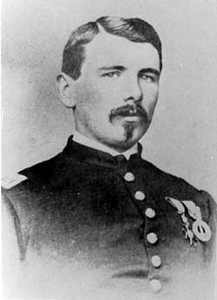
By 1860, a twenty-year-old Keogh volunteers, along with over one thousand of his countrymen, to rally to the defence of Pope Pius IX following a call to arms by the Catholic clergy in Ireland. By August 1860, Keogh is appointed second lieutenant of his unit in the Battalion of St. Patrick, Papal Army under the command of General Christophe Léon Louis Juchault de Lamoricière. Once the fighting is over and duties of the Pontifical Swiss Guard become more mundane, Keogh sees little purpose in remaining in Rome. In March 1862, with civil war raging in America, he resigns his commission in the Company of St. Patrick and sets out for New York City, arriving on April 2.
Perhaps the strongest testimony to Keogh’s bravery and leadership ability comes at the Battle of the Little Bighorn, also known as Custer’s Last Stand, on June 25, 1876. The senior captain among the five companies wiped out with General George Armstrong Custer that day, and commanding one of two squadrons within the Custer detachment, Keogh dies in a “last stand” of his own, surrounded by the men of Company I. When the sun-blackened and dismembered dead are buried three days later, Keogh’s body is found at the center of a group of troopers. The slain officer is stripped but not mutilated, perhaps because of the “medicine” the Indians see in the Agnus Dei (“Lamb of God”) he wears on a chain about his neck or because many of Sitting Bull‘s warriors are believed to be Catholic. Keogh’s left knee has been shattered by a bullet that corresponds to a wound through the chest and flank of his horse, indicating that horse and rider may have fallen together prior to the last rally.
The badly injured animal is found on the fatal battlefield and nursed back to health as the 7th Cavalry’s regimental mascot, which he remains until his death in 1890. This horse, Comanche, is considered the only U.S. military survivor of the battle, though several other badly wounded horses are found and destroyed at the scene. Keogh’s bloody gauntlet and the guidon of his Company I are recovered by the army three months after Little Bighorn at the Battle of Slim Buttes.
Originally buried on the battlefield, Keogh’s remains are disinterred and taken to Auburn, New York as he had requested in his will. He is buried at Fort Hill Cemetery on October 26, 1877, an occasion marked by citywide official mourning and an impressive military procession to the cemetery.
Tongue River Cantonment in southeastern Montana is renamed after him to be Fort Keogh. The fort is first commanded by Nelson A. Miles. The 55,000-acre fort is today an agricultural experiment station. Miles City, Montana is located two miles from the old fort.
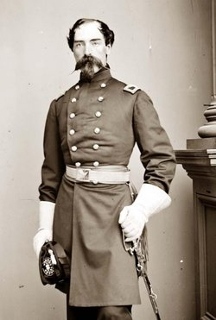
When the unit is originally mustered out of service, the 90-day enlistment terms having expired, Nugent accepts a commission as a captain in the regular army. He is immediately assigned to the 13th Infantry Regiment whose commanding officer, General William Tecumseh Sherman, personally requests. Taking a leave of absence to return to New York, he assists Thomas Francis Meagher in organizing the Irish Brigade. The newly reformed 69th Infantry Regiment is the first unit assigned to the Irish Brigade and, with Nugent as its colonel, he leads the “Fighting 69th” at the Battles of Seven Pines, Gaines’ Mill, Savage’s Station, White Oak Swamp, Glendale, and Malvern Hill.
Nugent is wounded, shot in the stomach, at the Battle of Fredericksburg and is eventually forced to resign his command. He is appointed acting assistant provost marshal for the southern district of New York, which includes New York City and Long Island, by the U.S. Department of War. An Irishman and Democrat, his appointment is thought to assure the Irish American population that conscription efforts would be carried out fairly. The Irish-American, a popular Irish language newspaper, writes that the selection is a “wise and deservedly popular one.” He does encounter resistance from city officials wanting him to remain uninvolved, however by mid-June he reports to his superior officer and provost marshal general Colonel James Fry that conscription efforts are “nearing completion without serious incident.”
Understanding the seriousness of the situation, Nugent attempts to keep the draft selections quiet and in isolated parts of the city. In Manhattan however, lotteries are placed in the heart of Irish tenement and shanty neighborhoods where the draft is most opposed.
In the ensuing New York City draft riots, Nugent takes command of troops and attempts to defend the city against the rioters. Despite issuing the cancellation of the draft, the riots continue for almost a week. His home on West 86th Street is looted and burned by the rioters during that time, his wife and children barely escaping from their home. Upon breaking into his house, furniture is destroyed, and paintings of Nugent and Meagher are slashed, although Brigadier General Michael Corcoran‘s is left untouched.
On October 28, Nugent is relieved of his post and succeeded by General William Hayes. Returning to active duty, he assumes command of the Irish Brigade in November 1864, shortly after the death of Corcoran, and is present at the Battle of Spotsylvania Court House, the Siege of Petersburg and the Appomattox campaign. As its last commanding officer, he and the Irish Brigade also march in the victory parade held in Washington, D.C. following Robert E. Lee‘s surrender at Appomattox Court House.
Nugent is brevetted Brigadier General for distinguished leadership of the 69th Regiment on March 13, 1865. The veterans of the Irish Brigade are honorably discharged and mustered out three months later. Nugent, however, remains in the regular U.S. Army for the next twenty years, a formidable “Indian fighter” during the America Indian Wars with the 13th and 24th Infantry Regiments. In 1879, he retires at the rank of major and resides in New York where he is involved in the Grand Army of the Republic, the War Veterans’ Association of the 7th Regiment and an honorary member of The Old Guard.
Nugent becomes ill in his old age, complications arising from his wounds suffered at Fredericksburg, and remains bedridden for two months before his death at his McDonough Street home in Brooklyn on June 20, 1901. In accordance with his last wishes, he is buried at Cypress Hills National Cemetery, located in the Cypress Hills neighborhood of Brooklyn.
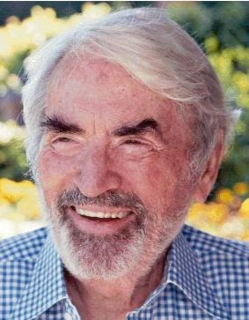
Peck is born in La Jolla, California on April 5, 1916, to Bernice Mary (Ayres) and Gregory Pearl Peck, a chemist and pharmacist in San Diego. Through his Irish-born paternal grandmother, Catherine Ashe, Peck is related to Thomas Ashe, who takes part in the Easter Rising fewer than three weeks after Peck’s birth and dies while on hunger strike in 1917.
Peck’s parents divorce when he is five years old. An only child, he is sent to live with his grandmother. He never feels as though he has a stable childhood. His fondest memories are of his grandmother taking him to the movies every week and of his dog, which follows him everywhere.
At the age of ten Peck is sent to a Catholic military school, St. John’s Military Academy in Los Angeles. While he is a student there, his grandmother dies. At 14, he moves back to San Diego to live with his father and attends San Diego High School. After graduating he enrolls for one year at San Diego State Teacher’s College (now known as San Diego State University).
With a string of hits to his credit, Peck makes the decision to only work in films that interest him. He continues to appear as the heroic, larger-than-life figures in such films as Captain Horatio Hornblower R.N. (1951) and Moby Dick (1956). He works with Audrey Hepburn in her debut film, Roman Holiday (1953).
Peck finally wins the Oscar, after four nominations, for his performance as lawyer Atticus Finch in To Kill a Mockingbird (1962). In the early 1960s, he appears in two darker films than he usually makes, Cape Fear (1962) and Captain Newman, M.D. (1963), which deal with the way people live. He also gives a powerful performance as Captain Keith Mallory in The Guns of Navarone (1961), one of the biggest box-office hits of that year.
In the early 1970s, Peck produces two films, The Trial of the Catonsville Nine (1972) and The Dove (1974), when his film career stalled. He makes a comeback playing, somewhat woodenly, Robert Thorn in the horror film The Omen (1976). After that, he returns to the bigger-than-life roles he is best known for, such as MacArthur (1977) and the monstrous Nazi Dr. Josef Mengele in the huge hit The Boys from Brazil (1978). In the 1980s, he moves into television with the miniseriesThe Blue and the Gray (1982) and The Scarlet and the Black (1983). In 1991, he appears in the remake of his 1962 film, playing a different role, in Martin Scorsese‘s Cape Fear (1991). He is also cast as the progressive-thinking owner of a wire and cable business in Other People’s Money (1991).
In 1967, Peck receives the Academy’s Jean Hersholt Humanitarian Award. He has also been awarded the Presidential Medal of Freedom. Always politically progressive, he is active in such causes as anti-war protests, workers’ rights and civil rights. In 2003, Peck’s portrayal of Atticus Finch is named the greatest film hero of the past 100 years by the American Film Institute.
Peck dies in his sleep at his home in Los Angeles, California from bronchopneumonia at the age of 87 on June 12, 2003. He is entombed in the Cathedral of Our Lady of the Angels mausoleum in Los Angeles. His eulogy is read by Brock Peters, whose character, Tom Robinson, was defended by Peck’s Atticus Finch in To Kill a Mockingbird.
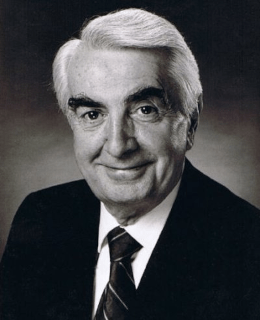
O’Shea is discovered in the 1950s by Harry Dillon, who runs the 37 Theatre Club on the top floor of his shop, the Swiss Gem Company, 51 Lower O’Connell Street, Dublin. Early in his career he tours with the theatrical company of Anew McMaster.
O’Shea begins acting on the stage, then moves into film in the 1960s. He becomes popular in the United Kingdom, as a result of starring in the BBC sitcom Me Mammy alongside Yootha Joyce. In 1967–68 he appears in the drama Staircase, co-starring Eli Wallach and directed by Barry Morse, which stands as Broadway‘s first depiction of homosexual men in a serious light. For his role in that drama, he is nominated for the Tony Award for Best Actor in a Play in 1968.
Other stage appearances include Mass Appeal (1981) in which he originates the role of Father Tim Farley, for which he is nominated for the Tony Award for Best Actor in a Play in 1982, the musical Dear World in which he plays the Sewer Man opposite Angela Lansbury as Countess Aurelia, Corpse! (1986) and a 1994 Broadway revival of Philadelphia, Here I Come!.
O’Shea’s first wife is Maureen Toal, an Irish actress, with whom he has two sons, Colm and Steven. They divorce in 1974. His second wife is Irish actress Kitty Sullivan, whom he meets in Italy, where he is filming Barbarella and she is auditioning for Man of La Mancha. The couple occasionally act together, such as in a 1981 Broadway revival of My Fair Lady. O’Shea and Sullivan have no children together. They both adopt United States citizenship and reside in New York City, where they both live from 1976.
O’Shea dies on April 2, 2013, in New York City following a short illness at the age of 86. He is buried at Deans Grange Cemetery.
Kennedy meets his future wife, Jacqueline Lee “Jackie” Bouvier (1929–1994), while he is a congressman. Charles L. Bartlett, a journalist, introduces the pair at a dinner party. They are married a year after he is elected senator, on September 12, 1953. Following a miscarriage in 1955 and a stillbirth in 1956, they produce three children, Caroline, John, Jr., and Patrick, who dies of complications two days after birth.
In the 1960 presidential election, Kennedy narrowly defeats Republican opponent Richard Nixon, who is the incumbent vice president. His humor, charm, and youth in addition to his father’s money and contacts are great assets in the campaign. His campaign gains momentum after the first televised presidential debates in American history. He is the first Catholic elected president of the United States.
Kennedy’s administration includes high tensions with communist states in the Cold War. As a result, he increases the number of American military advisors in South Vietnam. The Strategic Hamlet Program begins in Vietnam during his presidency. In April 1961, he authorizes an attempt to overthrow the Cuban government of Fidel Castro in the failed Bay of Pigs Invasion. He authorizes the Cuban Project, also known as Operation Mongoose, in November 1961. He rejects Operation Northwoods, plans for false flag attacks to gain approval for a war against Cuba, in March 1962. However, his administration continues to plan for an invasion of Cuba in the summer of 1962.
In October 1962, U.S. spy planes discover Soviet missile bases have been deployed in Cuba. The resulting period of tensions, termed the Cuban Missile Crisis, nearly results in the breakout of a global thermonuclear conflict. He also signs the first nuclear weapons treaty in October 1963.
After Kennedy’s death, Congress enacts many of his proposals, including the Civil Rights Act of 1964 and the Revenue Act of 1964. Despite his truncated presidency, he ranks highly in polls of U.S. presidents with historians and the general public. His personal life has also been the focus of considerable sustained interest following public revelations in the 1970s of his chronic health ailments and extramarital affairs. He is the last U.S. President to have been assassinated as well as the last U.S. president to die in office.
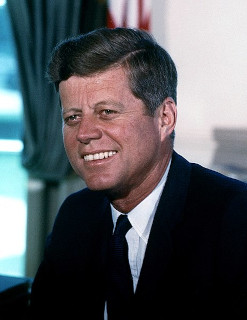
(Pictured: John F. Kennedy, photograph in the Oval Office, July 11, 1963)
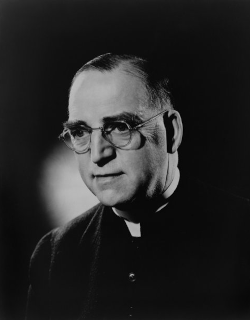
In 1904, Flanagan emigrates to the United States and becomes a US citizen in 1919. He attends Mount St. Mary’s University in Emmitsburg, Maryland, where he receives a Bachelor of Arts degree in 1906 and a Master of Arts degree in 1908. He studies at Saint Joseph’s Seminary in Dunwoodie, Yonkers, New York. He continues his studies in Italy and at the University of Innsbruck in Austria where he is ordained a priest on July 26, 1912. His first parish is in O’Neill, Nebraska, where from 1912 he serves as an assistant pastor at St. Patrick’s Catholic Church. He then moves to Omaha, Nebraska, to serve as an assistant pastor at St. Patrick’s Church and later at St. Philomena’s Church.
In 1917, Flanagan founds a home for homeless boys in Omaha. Bishop Jeremiah James Harty of the Diocese of Omaha has misgivings but endorses Flanagan’s experiment. Because the downtown facilities are inadequate, he establishes Boys Town, ten miles west of Omaha in 1921. Under his direction, Boys Town grows to be a large community with its own boy-mayor, schools, chapel, post office, cottages, gymnasium, and other facilities where boys between the ages of 10 and 16 can receive an education and learn a trade.
Boys Town, a 1938 film starring Spencer Tracy based on Flanagan’s life, wins Tracy an Academy Award for Best Actor for his performance. Mickey Rooney also stars as one of the residents. Tracy spends his entire Oscar acceptance speech talking about Flanagan. Without confirming it with Tracy, an overzealous MGM publicity representative announces incorrectly that Tracy is donating his Oscar to Flanagan. The Academy of Motion Picture Arts and Sciences hastily strikes another inscription, so Tracy keeps his statuette and Boys Town gets one as well. A sequel also starring Tracy and Rooney, Men of Boys Town, is released in 1941.
Flanagan himself appears in a separate 1938 MGM short, The City of Little Men, promoting Boys Town and giving a tour of its facilities. The actor Stephen McNally plays Flanagan in a 1957 episode of the ABC religion anthology series, Crossroads.
Flanagan receives many awards for his work with the delinquent and homeless boys. Pope Pius XI names him a Domestic Prelate with the title Right Reverend Monsignor in 1937. He serves on several committees and boards dealing with the welfare of children and is the author of articles on child welfare. Internationally known, he travels to the Republic of Ireland in 1946, where he is appalled by the children’s institutions there, calling them “a national disgrace.” When his observations are published after returning to Omaha, instead of improving the horrid conditions, vicious attacks are leveled against him in the Irish print media and the Oireachtas. He is invited by General Douglas MacArthur to Japan and Korea in 1947 to advise on child welfare, as well as to Austria and Germany in 1948. While in Germany, he dies of a heart attack on May 15, 1948. He is interred at Dowd Memorial Chapel of the Immaculate Conception Parish in Boys Town, Nebraska.
On February 25, 2012, the Catholic Archdiocese of Omaha, Nebraska opens the canonization process of Flanagan. At a March 17, 2012 prayer service at Boys Town’s Immaculate Conception Church, he is given the title “Servant of God,” the first of three titles bestowed before canonization as a Catholic saint. The investigation is completed in June 2015 and the results forwarded to the Vatican. If the Vatican approves the local findings, Flanagan will be declared venerable. The next steps will be beatification and canonization.
There is a portrait statue dedicated to Fr. Edward J. Flanagan in Ballymoe, County Galway.
Early is ordered by Lee to watch the remaining Union force near Fredericksburg. If he is attacked and defeated, he is to retreat southward to protect the Confederate supply lines. If the Union force moves to reinforce Hooker, then Early is to leave a covering force and rejoin Lee with the remainder of his troops. On May 2, misunderstanding his orders, Early leaves one brigade at Fredericksburg and starts the rest of his force towards Chancellorsville. Lee corrects the misunderstanding and Early then returns to his positions that night before Major GeneralJohn Sedgwick of the Union Army discovers the Confederate retreat.
Sedgwick is left near Fredericksburg with the VI Corps, the I Corps, and the II Corps division of Brigadier GeneralJohn Gibbon. Hooker’s plan calls for Sedgwick to demonstrate near the city in order to deceive Lee about the Union plan. The VI and II Corps seize control of several crossings on April 29, laying down pontoon bridges in the early morning hours, and the divisions of William T. H. Brooks and James S. Wadsworth cross the river. The I Corps is ordered to reinforce the main army at Chancellorsville during the night of May 1. During the evening of May 2, Sedgwick receives orders to attack Early with his remaining forces.
Sedgwick moves his forces into Fredericksburg during dawn on May 3, uniting with Gibbon’s division which had crossed the river just before dawn. Sedgwick originally plans to attack the ends of Marye’s Heights, but a canal and a stream block the Union forces. He then decides to launch an attack on the Confederate center on the heights, which is manned by Barksdale’s brigade, with John Newton’s division. This attack is defeated. Colonel Thomas M. Griffin of the 18th Mississippi Infantry grants the Union forces a truce in order to gather in their wounded. During this truce, the Union commanders notice that the flank of Barksdale’s left regiment is unprotected.
Sedgwick launches another attack against this flank and Barksdale’s front using elements from all three VI Corps divisions, which pushes the Confederate forces off the ridge, capturing some artillery. The first men to mount the stone wall are from the 5th Wisconsin and the 6th Maine Infantry regiments. Barksdale retreats to Lee’s Hill, where he attempts to make another stand but is again forced to retreat southward.
Confederate casualties total 700 men and four cannons. Early withdraws with his division two miles to the south, while Wilcox withdraws westward, slowing Sedgwick’s advance. When he learns of the Confederate defeat, Lee starts moving two divisions east to stop Sedgwick. Following the campaign, Early becomes embroiled in an argument with Barksdale over what Barksdale considered a slight to his brigade in a newspaper letter that Early had written. The exchange continues until Lee orders the two generals to cease.
Sedgwick loses 1,100 men during the engagement. At first, he starts to pursue Early’s division but then follows the orders he received the previous day and starts west along the Plank Road towards Hooker’s army at Chancellorsville. Gibbon’s division is left in Fredericksburg to guard the city.
(Pictured: Three men in a tree on Stafford Heights watching distant fighting on Marye’s Heights during the Second Battle of Fredericksburg, 1863. Smoke from the battle is possibly visible in the distance which would make it one of the earliest combat photographs of a land battle. The destroyed railroad bridge over the Rappahannock River is in the middle ground of the photo. Source: National Park Service via the Western Reserve Historical Society)
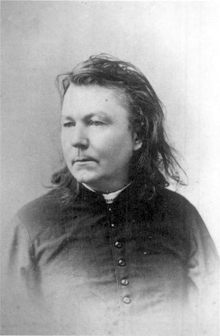
Ryan is born Matthew Abraham Ryan in Hagerstown, Maryland on February 5, 1838, the fourth child of Irish immigrants Matthew Ryan and his wife, Mary Coughlin, both of Clogheen, County Tipperary, and their first to be born in the United States.
In 1840 the family relocates to Ralls County, Missouri, and then, in 1846, to St. Louis, where the father opens a general store. Ryan is educated at St. Joseph’s Academy, run by the De La Salle Brothers. Showing a strong inclination to piety, he is encouraged by his mother and teachers to consider becoming a priest. He decides to test a calling to the priesthood and on September 16, 1851, at the age of 13, enters the College of St. Mary’s of the Barrens, near Perryville, Missouri, a minor seminary for young candidates for the priesthood. By the time of his graduation in 1855, he has decided to pursue Holy Orders.
Ryan then enters the Vincentians, taking the oath of obedience to the Congregation. He does three more years of study at the college during the course of which, on June 19, 1857, he receives minor orders. In 1858, shortly after the death of his father, he is sent to the Seminary of Our Lady of the Angels near Niagara Falls, New York.
As a Southerner, Ryan feels out of place at the seminary, and soon begins to express his opposition to the abolitionist movement then gaining popularity in the Northeastern United States. He then joins in the sentiment expressed by the Catholic bishops and editors of the nation in that period, who feel threatened by the anti-Catholic opinions expressed by the leadership of the Abolitionists. His writings in that period begin to express suspicion of Northern goals. Possibly for that reason, he is sent back to St. Mary of the Barrens.
During the winter of 1860, Ryan gives a lecture series through which he starts to gain notice as a speaker. His abilities as a preacher gain wide approval, and his superiors decide to have him ordained a priest earlier than is the normal age under church law. On September 12, 1860, he is ordained a priest at his home parish in St. Louis, with the ordination being performed by the Bishop of St. Louis, Peter Richard Kenrick.
In the Fall of 1861, soon after the start of the American Civil War, Ryan is transferred back to the Seminary of Our Lady of the Angels in New York. After a couple of bouts of illness, he declares himself fit to teach again in April 1862, but his superiors instead transfer him to parish duties in LaSalle, Illinois. After arriving there, he realizes that he will not be able to express his strong views in support of the Confederacy. Frustrated, and feeling ignored by his immediate superior, he requests his release from his oath of obedience. Upon his release he returns home, where he and his brother David intend to enlist in the Confederate States Army.
Ryan makes sporadic early appearances as a freelance chaplain among Confederate troops from Louisiana and begins making appearances in Tennessee in 1862. He begins full-time pastoral duties in Tennessee in late 1863 or early 1864. Though he never formally joins the Confederate Army, he clearly is serving as a freelance chaplain by the last two years of the conflict, with possible appearances at the Battle of Lookout Mountain and the Battle of Missionary Ridge near Chattanooga, and well-authenticated service at the Battle of Franklin and the subsequent Battle of Nashville. Some of his most moving poems —”In Memoriam” and “In Memory of My Brother”— come in response to his brother’s death, who died while serving in uniform for the Confederacy in April 1863, likely from injuries suffered during fighting near Mount Sterling, Kentucky.
On June 24, 1865, Ryan’s most famous poem, “The Conquered Banner,” appears in the pages of the New York Freeman’s Journal over his early penname “Moina.” Starting in 1865, he moves from parish to parish throughout the South. Beginning in November 1881 he spends a year in semi-retirement at Biloxi, Mississippi while completing his second book, A Crown for Our Queen. In Augusta, Georgia, he founds The Banner of the South, a religious and political weekly in which he republishes much of his early poetry, along with poetry by fellow-southerners James Ryder Randall, Paul Hamilton Hayne, and Sidney Lanier, as well as an early story by Mark Twain.
In 1879, Ryan’s work is gathered into a collected volume of verse, first titled Father Ryan’s Poems and subsequently republished in 1880 as Poems: Patriotic, Religious, Miscellaneous. His collection sells remarkably well for the next half-century. His work also finds a popular following in his family’s ancestral home of Ireland. An article about his work appears in Irish Monthly during his life, and a decade after his death, yet another collection of his poetry is published in Dublin by The Talbot Press under the title Selected Poems of Father Abram Ryan.
In 1880 Ryan’s old restlessness returns, and he heads north for the twofold object of publishing his poems and lecturing. He dies April 22, 1886, at a Franciscanfriary in Louisville, Kentucky, but his body is returned to St. Mary’s in Mobile, Alabama for burial. He is interred in Mobile’s Catholic Cemetery. In recognition of his loyal service to the Confederacy, a stained-glass window is placed in the Confederate Memorial Hall in New Orleans in his memory. In 1912 a local newspaper launches a drive to erect a statue to him. Dedicated in July 1913, it includes a stanza from “The Conquered Banner” below an inscription that reads: “Poet, Patriot, and Priest.”
The contract to build USS The Sullivans is awarded to Bath Iron Works in Bath, Maine on April 8, 1992, and her keel is laid down on July 27, 1994. She is launched on August 12, 1995, and sponsored by Kelly Ann Sullivan Loughren, granddaughter of Albert Sullivan. The ship is commissioned on April 19, 1997, with Commander Gerard D. Roncolato in command. Upon her commissioning, the ship is given the motto that is thought to have been spoken by the brothers when asked to separate during World War II, “We Stick Together.”
On April 26, 1997, USS The Sullivans departs New York City for Norfolk, Virginia, where, after arriving on April 27, the crew completes underway replenishment qualifications with USS Platte (AO-186). The warship then sails for Naval Station Mayport in Jacksonville, Florida, on April 29 and arrives in her new homeport on May 2. After completing two days of gunnery trials in mid-May, USS The Sullivans embarks upon her shakedown deployment to the West Indies on May 27.
Members of al-Qaeda attempt an attack on USS The Sullivans while in port at Aden, Yemen on January 3, 2000, as a part of the 2000 millennium attack plots. The plan is to load a boat full of explosives and detonate it near USS The Sullivans; however, the boat is so overladen that it sinks. Later, al-Qaeda attempts the same type of attack a second time, successfully bombing USS Cole (DDG-67) on October 12, 2000.
In February 2002 USS The Sullivans deploys with the USS John F. Kennedy carrier battle group to the Arabian Sea in support of Operation Enduring Freedom.
On September 14, 2020, it is announced that USS The Sullivans will be part of HMS Queen Elizabeth‘s Task Group for the GROUPEX and Joint Warrior exercises. On January 19, 2021, a declaration confirms that USS The Sullivans will form part of the escort for HMS Queen Elizabeth during her first active deployment as part of the UK Carrier Strike Group in 2021.
(Photo: U.S. Navy photo of USS The Sullivans on the Mediterranean Sea in July 2002 by Photographer’s Mate 1st Class Jim Hampshire)
As a member of the Irish Confederation during the Great Famine, Reilly together with John Mitchel and James Fintan Lalor advocate the refusal to pay rents, retention of crops by small tenant farmers and labourers to feed their own families, and the breaking up of bridges and tearing up of railway lines to prevent the removal of food from the country.
Reilly is involved in the failed Young Ireland Rebellion of 1848 and is forced to flee to the United States where he becomes active in U.S. political affairs in support of Irish independence. He is reported to be the founder of The People newspaper in New York City which folds after six months in 1849.
James Connolly claims that as the editor of the Protective Union labour rights newspaper for the printers of Boston, Reilly is a pioneer of American labour journalism and that Horace Greeley believed of his series of articles in The American Review on the European situation “that if collected and published as a book, they would create a revolution in Europe.”
It is possible that Connolly confuses The United States Magazine and Democratic Review, which is known for its political activism, with The American Review, which for a time had Edgar Allan Poe as an editorial assistant. Other sources refer to Reilly as being editor of the New York Democratic Review and later the Washington Union.
Thomas Devin Reilly dies at the age of 30 on March 5, 1854. He is buried at Mount Olivet Cemetery in Washington, D.C., together with his infant child Mollie and wife Jennie Miller from Enniskillen.