seamus dubhghaill

Promoting Irish Culture and History from Little Rock, Arkansas, USA


Leave a comment

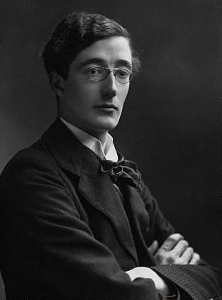
Death of Novelist Edith Anna Œnone Somerville

edith-somerville

Edith Anna Œnone Somerville, Irish novelist who habitually signs herself as “E. Œ. Somerville,” dies at Castletownshend, County Cork, at the age of 91 on October 8, 1949. She writes in collaboration with her second cousin, Violet Florence Martin, who writes under the pseudonym Martin Ross. Together they publish a series of fourteen stories and novels under the pseudonym Somerville and Ross, the most popular of which are The Real Charlotte and Some Experiences of an Irish R. M., published in 1899.

The eldest of eight children, Somerville is born on the island of Corfu, then part of the United States of the Ionian Islands, a British protectorate where her father is stationed. A year later, her father retires to Drishane, Castletownshend, County Cork, where Somerville grows up. She receives her primary education at home, and then attends Alexandra College in Dublin. In 1884 she studies art in Paris, and then spends a term at the Westminster School of Art in Dean’s Yard, Westminster. At home, riding and painting are her absorbing interests.

In January 1886, she meets her second cousin, Violet Martin, and their literary partnership begins the following year. Their first book, An Irish Cousin, appears in 1889, under the names Geilles Herring (from the maiden name of her ancestor, the wife of Sir Walter de Somerville of Linton and Carnwath) and Martin Ross, though the pen names are dropped after the first edition. In 1898, Edith Somerville goes to paint at the Etaples art colony, accompanied by Violet. There they profit from their stay by conceiving together the stories later gathered in Some Experiences of an Irish R. M., completed the following year. By the time Violet dies in 1915, they have published fourteen books together. Her cousin’s death stuns Edith, who continues to write as “Somerville and Ross,” claiming that they keep in contact through spiritualist séances.

Somerville is a devoted sportswoman who in 1903 has become master of the Carbery West Foxhounds. She is also active in the suffragist movement, corresponding with Dame Ethel Smyth. She is in London still recovering from the shock of Violet’s death when the 1916 Easter Rising breaks out. On May 9 she writes a letter to The Times, blaming the British government for the state of affairs in Ireland. After that she tends towards Nationalism and, as an adept musician at parties, she specializes in Irish tunes and Nationalist songs.

She has exhibitions of her pictures in Dublin and in London between 1920 and 1938 and is active as an illustrator of children’s picture books and sporting picture books.

In 1936, her brother Henry Boyle Townsend Somerville, a retired Vice-Admiral in the Royal Navy, is killed by the Irish Republican Army (IRA) at the family home of Castletownshend. She finishes his book Will Mariner after his death.

Leave a comment

Birth of Irish-Australian Novelist Thomas Michael Keneally

thomas-michael-keneally

Thomas Michael Keneally, Irish-Australian novelist, playwright, and author of non-fiction, is born in Sydney, New South Wales, Australia, on October 7, 1935.

The son of Edmund Thomas and Elsie Margaret (Coyle) Keneally, he grows up in Kempsey and is educated at St. Patrick’s College, Strathfield where, subsequently, a writing prize has been named after him. Keneally enters St. Patrick’s Seminary, Manly to train as a Catholic priest. Although he is ordained as a deacon while at the seminary, he leaves without being ordained into the priesthood. He works as a Sydney schoolteacher before his success as a novelist and is a lecturer at the University of New England from 1968–1970.

Keneally is known as “Mick” until 1964 but, upon the advice of his publisher to use his real first name, begins using the name Thomas when he starts publishing. He is most famous for writing Man Booker Prize winner Schindler’s Ark (1982) which is later republished as Schindler’s List, and is later adapted to Steven Spielberg‘s Schindler’s List, which wins the Academy Award for Best Picture. Many of Keneally’s novels are reworkings of historical material, although modern in their psychology and style.

Keneally also acts in a handful of films. He has a small role in The Chant of Jimmie Blacksmith, based on his novel, and plays Father Marshall in the award-winning Fred Schepisi film The Devil’s Playground (1976).

Keneally is a strong advocate of an Australian republic, meaning the abolition of the Australian monarchy, and publishes a book, Our Republic, on the subject in 1993. Several of his Republican essays appear on the web site of the Australian Republican Movement.

Keneally is a keen supporter of rugby league football, in particular the Manly Warringah Sea Eagles club of the National Rugby League. In 2004 he gives the sixth annual Tom Brock Lecture and makes an appearance in the 2007 rugby league drama film The Final Winter.

In March 2009, the Prime Minister of Australia, Kevin Rudd, gives an autographed copy of Keneally’s biography Lincoln to President Barack Obama as a state gift. Recently Keneally has been a featured writer in the critically acclaimed Australian drama Our Sunburnt Country.


Leave a comment

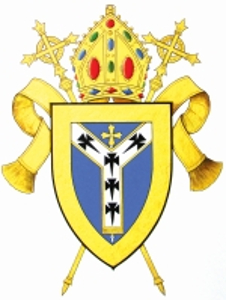
Union of the Dioceses of Glendalough & Dublin

diocese-of-dublin-and-glendalough-arms

The union of the diocese of Glendalough with that of Dublin, having been promulgated by Pope Innocent III, is confirmed by Pope Honorius III on October 6, 1216.

The broad Dublin area is Christian long before Dublin has a distinct diocese, with monasteries such as Glendalough as well as at Finglas, Glasnevin, Rathmichael, Swords, and Tallaght. Several of these function as “head churches” and the most powerful of all is Glendalough.

In the early church in Ireland, the church has a monastic basis, with greatest power vested in the Abbots of the major communities. There are bishops but not organised dioceses in the modern sense, and the offices of abbot and bishop are often comprised in one person. Some early “Bishops of Dublin,” as far back as 633, are mentioned in Ware’s Antiquities of Ireland but the Diocese of Dublin is not considered to have begun until 1038.

The Kingdom of Dublin first seeks to have a bishop of their own in the 11th century, under Sitric MacAulaf, who has been on pilgrimage to Rome. He sends his chosen candidate, Donat, to be consecrated in Canterbury in 1038, and the new prelate sets up the Diocese of Dublin as a small territory within the walled city, over which he presides until 1074. The new diocese is not part of the Church in Ireland but of the Norse Province of Canterbury. Sitric also provides for the building of Christ Church Cathedral in 1038.

At the Synod of Ráth Breasail, convened in 1118 by Gillebert, Bishop of Limerick, on papal authority, the number of dioceses in Ireland is fixed at twenty-four. Dublin is not included as the city is described as lying within the Diocese of Glendalough and still attached to Canterbury.

In 1151, Pope Eugene III commissions Cardinal Giovanni Paparo to go to Ireland and establish four metropolitans. At the Synod of Kells in 1152, Armagh, Dublin, Cashel, and Tuam, are created archiepiscopal sees. In a document drawn up by the then Archbishop of Tuam in 1214, Cardinal Paparo states that he delivered the pallium to Dublin which he determines to be preferred over Glendalough and appoints that the Glendalough diocese should be divided, and that one part thereof should fall to the metropolitan.

The part of North County Dublin known as Fingall is taken from Glendalough Diocese and attached to Dublin City. The new Archdiocese has 40 parishes, in deanaries based on the old senior monasteries. All dependence upon English churches such as Canterbury is also ended.

The founding Archbishop of the larger Dublin Diocese is Gregory, with the Bishops of Kildare, Ossory, Leighlin, Ferns, and Glendalough reporting to him.

In 1185, the Lord of Ireland, John Lackland, grants the merger of the dioceses of Dublin and Glendalough. This is initially without effect as the charter lacks papal approval. When the bishop Macrobius dies in 1192, a synod is held in Dublin under the direction of the papal legate Metthew O Enna. William Piro is elected as Bishop of Glendalough and remains in office at least until 1212. Robert de Bedford is elected as successor in 1213 or 1214 but never has the opportunity to take possession of the diocesan seat. Instead, John, now King of England, reissues a grant to join Glendalough to Dublin which is finally approved in by Pope Innocent III in 1216 and confirmed by his successor Honorius III in the same year.


Leave a comment

Birth of Singer & Political Activist Bob Geldof

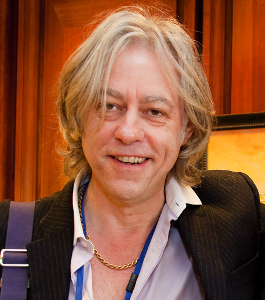
Robert Frederick Zenon “Bob” Geldof, singer, songwriter, author, occasional actor, and political activist, is born in Dún Laoghaire, County Dublin, on October 5, 1951.

Geldof attends Blackrock College, though he later says he did not enjoy his time there because of its Catholic ethos and bullying for his lack of rugby prowess and for his middle name, Zenon. After leaving school he gains certain odd jobs but is not inspired by any of them. He then goes to Vancouver, British Columbia, Canada to work as a music journalist.

Returning to Ireland in 1975, Bob Geldof becomes the lead singer of The Boomtown Rats, a rock group closely linked with the punk movement. He famously states the reason for joining a pop band is “to get rich, to get famous, and to get laid.”

By 1978, The Boomtown Rats achieve their first U.K. hit single with Rat Trap and later achieve a second hit with I Don’t Like Mondays.

In 1981, Geldof is invited to take part in a concert for Amnesty International and this sows a seed of future ideas.

In 1984, Geldof moves from being a rock start to international celebrity for raising awareness of humanitarian charities. During that year, Ethiopia and other African countries experience a severe famine which leads to death by starvation for thousands of people. The plight of starving children is widely seen on television and Geldof, along with Midge Ure, decide to do something about it, releasing the single Do They Know It’s Christmas?. It is a spontaneous event with many of the best-known names in pop music invited. It becomes an instant best seller selling a record 3 million copies.

In the summer of 1985, Geldof is one of the main organisers behind the Live Aid concert at Wembley Stadium. It is a sixteen-hour rock extravaganza aimed at raising money and awareness for Africa. It is a unique musical event capturing the imagination and attention of the world. Following this concert, he becomes more involved in work for non-governmental organisations in Africa and becomes one of the leading spokespersons on Third World debt and relief.

In 2005, he organises a Live 8 concert, coinciding with the Make Poverty History campaign. He seeks the co-operation of leading G8 leaders such as Tony Blair to write off Third World debt. Some criticise him for becoming too close to politicians and some argue his presence in the Third World campaign issue does more harm than good.

However, Geldof remains a powerful figurehead for motivating Western attitudes to pay more attention to the problems and challenges of the poorest parts of the world. He feels a passion for improving conditions in Africa.

Geldof is knighted in 1986 and is often affectionately known as “Sir Bob.”


Leave a comment

Birth of Playwright & Poet Lennox Robinson

lennox-robinson

Esmé Stuart Lennox Robinson, playwright, poet, theatre producer, and director who is involved with the Abbey Theatre, is born in Westgrove, Douglas, County Cork, on October 4, 1886.

Robinson is raised in a Protestant and Unionist family in which he is the youngest of seven children. His father, Andrew Robinson, is a middle-class stockbroker who in 1892 decides to become a clergyman in the Church of Ireland in the small Ballymoney parish, near Ballineen in West Cork. A sickly child, Robinson is educated by private tutor and at Bandon Grammar School. In August 1907, his interest in the theatre begins after he goes to see an Abbey production of plays by W.B. Yeats and Lady Gregory at the Cork Opera House. He publishes his first poem that same year. His first play, The Cross Roads, is performed in the Abbey in 1909 and he becomes manager of the theatre towards the end of that year. He resigns in 1914 as a result of a disastrous tour of the United States but returns in 1919. He is appointed to the board of the theatre in 1923 and continues to serve in that capacity until his death. His Abbey career and production involvement can be found in the Abbey archives.

As a playwright, Robinson shows himself as a nationalist with plays like Patriots (1912) and Dreamers (1915). On the other hand, he belongs to a part of Irish society which is not seen as fully Irish. This division between the majority native Irish (Roman Catholics) on one side and the Anglo-Irish (Protestants) on the other can be seen in a play such as The Big House (1926), which depicts the burning of a Protestant manor home by the Irish Republican Army (IRA). Robinson’s most popular play is The Whiteheaded Boy (1916).

Other plays include Crabbed Youth and Age (1924), The Far Off Hills (1928), Drama at Inish (1933), and Church Street (1935). Drama at Inish, which is presented in London and on Broadway as Is Life Worth Living?, is revived as part of the 2011 season at the Shaw Festival at Niagara-on-the-Lake, Ontario, Canada, with Mary Haney in the role of Lizzie Twohig. Robinson’s fiction includes Eight Short Stories (1919). In 1931 he publishes a biography of Bryan Cooper, who had recently died. In 1951, he publishes Ireland’s Abbey Theatre, the first full-length history of the company.

He publishes an edited edition of Lady Gregory’s diaries in 1947. In 1958 he co-edits with Donagh MacDonagh The Oxford Book of Irish Verse. He is also a director and producer, in 1930 producing a play by Irish playwright Teresa Deevy called The Reapers. In 1931 he is co-director of A Disciple along with W.B. Yeats and Walter Starkie.

Melancholic and alcoholic in later years, Lennox Robinson dies in Monkstown, County Dublin, on October 15, 1958. He is buried St. Patrick’s Cathedral.


Leave a comment

Birth of Professor James Francis “Frank” Pantridge

frank-pantridge

Professor James Francis “Frank” Pantridge, physician and cardiologist from Northern Ireland, is born in Hillsborough, County Down, on October 3, 1916. Pantridge transforms emergency medicine and paramedic services with the invention of the portable defibrillator.

Pantridge is educated at Friends’ School Lisburn and Queen’s University Belfast, graduating in medicine in 1939. During World War II he serves in the British Army and is commissioned into the Royal Army Medical Corps as a lieutenant on April 12, 1940. He is awarded the Military Cross during the Fall of Singapore, when he becomes a POW. He serves much of his captivity as a slave labourer on the Burma Railway. When he is freed at the end of the war, Pantridge is emaciated and has contracted cardiac beriberi. He suffers from ill-health related to the disease for the remainder of his life.

After Pantridge’s liberation he works as a lecturer in the pathology department at Queen’s University, and then wins a scholarship to the University of Michigan, where he studies under Dr. F.N. Wilson, a cardiologist and authority on electrocardiography.

Pantridge returns to Northern Ireland in 1950 and is appointed as cardiac consultant to the Royal Victoria Hospital, Belfast and professor at Queen’s University, where he remains until his retirement in 1982. There he establishes a specialist cardiology unit whose work becomes well known.

By 1957, Pantridge and his colleague, Dr. John Geddes, introduce the modern system of cardiopulmonary resuscitation (CPR) for the early treatment of cardiac arrest. Further study leads Pantridge to the realization that many deaths result from ventricular fibrillation which needs to be treated before the patient is admitted to hospital. This leads to his introduction of the mobile coronary care unit (MCCU), an ambulance with specialist equipment and staff to provide pre-hospital care.

To extend the usefulness of early treatment, Pantridge goes on to develop the portable defibrillator, and in 1965 installs his first version in a Belfast ambulance. It weighs 70 kg and operates from car batteries. By 1968 he has designed an instrument weighing only 3 kg, incorporating a miniature capacitor manufactured for NASA.

His work is backed up by clinical investigations and epidemiological studies in scientific papers, including an influential 1967 The Lancet article. With these developments, the Belfast treatment system, often known as the “Pantridge Plan”, becomes adopted throughout the world by emergency medical services. The portable defibrillator becomes recognised as a key tool in first aid, and Pantridge’s refinement of the automated external defibrillator (AED) allows it to be used safely by members of the public.

Although he is known worldwide as the “Father of Emergency Medicine,” Frank Pantridge is less acclaimed in his own country, and is saddened that it takes until 1990 for all front-line ambulances in the United Kingdom to be fitted with defibrillators.

He died in Hillsborough at the age of 88 on Boxing Day, December 26, 2004. He never married.


Leave a comment

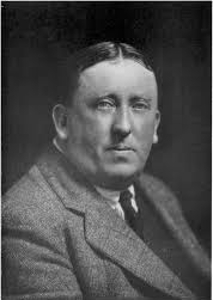
Birth of Arthur William Conway, UCD President

arthur-william-conway

Arthur William Conway FRS, President of University College Dublin between 1940 and 1947, is born in Wexford, County Wexford, on October 2, 1875.

Conway receives his early education at St. Peter’s College, Wexford and proceeds to enter old University College, Dublin in 1892. He receives his BA degree from the Royal University of Ireland in 1896 with honours in Latin, English, Mathematics, and Natural Philosophy. In 1897, he receives his MA degree with highest honours in mathematics and proceeds to Corpus Christi College, Oxford, becoming University Scholar there in 1901. Also in 1901, he is appointed to the professorship of Mathematical Physics in the old University College and holds the Chair until the creation of the new college in 1909. He also teaches for a short time at St. Patrick’s College, Maynooth.

Conway marries Agnes Christina Bingham on August 19, 1903. They have three daughters and one son.

One of Conway’s students is Éamon de Valera, whom he introduces to quaternions which originate in Ireland. De Valera warms to the subject and engages in research of this novelty of abstract algebra. Later, when de Valera becomes Taoiseach, he calls upon Conway while forming the Dublin Institute for Advanced Studies.

Conway is remembered for his application of biquaternion algebra to the special theory of relativity. He publishes an article in 1911, and in 1912 asserts priority over Ludwik Silberstein, who also applies biquaternions to relativity. This claim is backed up by George Temple in his book 100 Years of Mathematics. In 1947 Conway puts quaternions to use with rotations in hyperbolic space. The next year he publishes quantum mechanics applications which are referred to in a PhD thesis by Joachim Lambek in 1950.

In 1918, Conway is the Irish Parliamentary Party candidate in South Londonderry and in the National University of Ireland, coming in second in both.

Conway continues his scholarship in the field of mathematics and theoretical physics and makes a special study of William Rowan Hamilton. With John Lighton Synge, he edits the first volume of Hamilton’s mathematical papers, and, with A. J. McConnell, he edits the second volume of Hamilton’s mathematical papers. Conway is also active in college life, being appointed Registrar, a position he occupies until his election as president in 1940. He retires in 1947 from the presidency of UCD. In 1953, some of his writings are edited by J. McConnell for publication by the Dublin Institute for Advanced Studies.

He is elected President of the Royal Irish Academy from 1937 to 1940.


Leave a comment

Birth of Actor Richard Harris

richard-harris

Richard St. John Harris, actor, singer, songwriter, producer, director, and writer, is born in Limerick, County Limerick, on October 1, 1930. He is brought up in a middle class and staunchly Roman Catholic family.

Harris is schooled by the Jesuits at Crescent College. He is a talented rugby player; however, his athletic career is cut short when he comes down with tuberculosis in his teens. After recovering from tuberculosis, Harris moves to Britain, wanting to become a director. Unable to find any suitable training courses, he enrolls in the London Academy of Music and Dramatic Art (LAMDA) to learn acting.

Harris makes his film debut in 1958 in the film Alive and Kicking and plays the lead role in The Ginger Man in the West End in 1959. Harris’ first starring role is in the film This Sporting Life (1963), as a bitter young coal miner, Frank Machin, who becomes an acclaimed rugby league football player. For his role, Harris wins Best Actor in 1963 at the Cannes Film Festival and an Academy Award nomination. He also wins notice for his role in Sam Peckinpah‘s Major Dundee (1965), as an Irish immigrant who becomes a Confederate cavalryman during the American Civil War.

Harris performs the role of King Arthur in the film adaptation of the musical play Camelot (1967). He continues to appear on stage in this role for many years, including a successful Broadway run in 1981–1982. In 1970 British exhibitors vote him the 9th most popular star at the UK box office.

Other film performances follow, among them a role as a reluctant police informant in the coal-mining tale The Molly Maguires (1970), also starring Sean Connery. Harris stars in Cromwell (1970), a film based on the life of Oliver Cromwell who leads the Parliamentary forces during the English Civil War and, as Lord Protector, ruled Great Britain and Ireland in the 1650s.

Harris’ film career collapses after the late 1970s and in the next decade he is rarely seen on screen, although he continues to act on stage. During his career Harris appears in two films which win the Academy Award for Best Picture. First, as the gunfighter “English Bob” in the Western Unforgiven (1992); second, as the Roman Emperor Marcus Aurelius in Ridley Scott‘s Gladiator (2000).

Harris is diagnosed with Hodgkin’s disease in August 2002, reportedly after being hospitalised with pneumonia. He dies at University College Hospital in Fitzrovia, London on October 25, 2002, at the age of 72. He was in a coma in his final three days. Harris’ body is cremated, and his ashes are scattered in the Bahamas, where he had owned a home.


Leave a comment

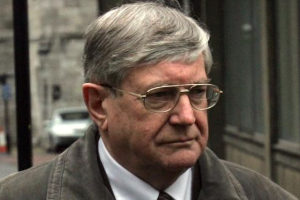
Birth of Fianna Fáil Politician Ray Burke

ray-burke

Raphael Patrick “Ray” Burke, disgraced former Fianna Fáil politician, is born on September 30, 1943, in Dublin. He is a former Teachta Dála and government minister who is convicted and imprisoned on charges arising from political corruption in office. Burke is also highly influential in decisions made by Dublin County Council.

Burke’s political career commences when he is elected to Dublin County Council for Fianna Fáil in 1967. He serves as chairman of the council from 1985 to 1987.

Burke is elected to Dáil Éireann at the 1973 general election for the Dublin County North constituency, succeeding his father Patrick J. Burke, who has held the seat for 29 years. Ray Burke represents this constituency and its successor Dublin North until his resignation almost twenty-five years later.

After Fianna Fáil’s landslide victory at the 1977 general election, Burke is appointed Minister of State at the Department of Industry and Commerce. In October 1980 Burke is promoted to Minister for the Environment, a position he holds until June 1981 and again in the short-lived Fianna Fáil government of 1982. After Fianna Fáil returns to power at the 1987 general election, Burke serves as Minister for Energy, where he makes controversial changes to the legislation governing oil and gas exploration. In 1988, he is appointed Minister for Industry, Commerce and Communications.

Following the formation of the Fianna Fáil–Progressive Democrats Coalition in 1989, he becomes Minister for Justice and Minister for Communications. When Albert Reynolds comes to power in 1992, he does not re-appoint Burke to the Cabinet. Following the 1997 general election, Fianna Fáil is back in power, and Burke is appointed Minister for Foreign Affairs by new Taoiseach Bertie Ahern.

Within months of his appointment as Minister for Foreign Affairs, allegations resurface that Burke has received IR£80,000 from a property developer regarding the former Dublin County Council. Burke denies the allegations but resigns from the Cabinet and from the Dáil on October 7, 1997, after just four months in office.

Having claimed since 1989 that Raidió Teilifís Éireann (RTÉ) is biased against him, Burke is responsible for controversial legislation that severely limits RTÉ’s ability to collect advertising revenue and allows for the establishment of a series of local radio stations and one independent national radio station, Century Radio. RTÉ is ordered to provide a national transmission service for Century Radio at a price that RTÉ complains is far below the economic cost of providing such a service. Nevertheless, Century Radio fails to gain significant audience share and closes in 1991.

In July 2004 Burke pleads guilty to making false tax returns. The charges arise from his failure to declare for tax purposes the payments that he has received from the backers of Century Radio. On January 24, 2005, he is sentenced to six months in prison for these offences, making him one of the most senior Irish politicians to serve time in prison. He is released in June 2005 after four and a half months, earning a 25% remission of sentence because of good behaviour. He serves his time in Arbour Hill Prison in Dublin.


Leave a comment

Pope John Paul II’s Visit to Ireland

pope-john-paul-ii

Pope John Paul II becomes the first pontiff to set foot on Irish soil with his pastoral visit to the Republic of Ireland beginning on September 29, 1979. Over 2.5 million people attend events in Dublin, Drogheda, Clonmacnois, Galway, Knock, Limerick, and Maynooth during what is one of Pope John Paul’s first foreign visits. The visit is occasioned by the centenary of the reputed apparition of Blessed Virgin Mary, Saint Joseph, and Saint John the Evangelist in Knock, County Mayo.

An Aer Lingus Boeing 747, named the St. Patrick, brings Pope John Paul II from Rome to Dublin Airport. The Pope kisses the ground as he disembarks. After being greeted by the President of Ireland, Dr. Patrick Hillery, the Pope flies by helicopter to the Phoenix Park where he celebrates Mass for 1,250,000 people, one quarter of the population of the island of Ireland, one third of the population of the Republic of Ireland. Afterwards he travels to Killineer, near Drogheda, where he leads a Liturgy of the Word for 300,000 people, many from Northern Ireland. There the Pope appeals to the men of violence, “on my knees I beg you to turn away from the path of violence and return to the ways of peace.” The Pope has hopes of visiting Armagh, but the security situation in Northern Ireland renders it impossible. Drogheda is selected as an alternative venue as it is situated in the Catholic Archdiocese of Armagh. Returning to Dublin that evening, the Pope is greeted by 750,000 people as he travels in an open top popemobile through the city centre and visits Aras an Uachtarain, the residence of the Irish President.

The Pope begins the second day of his tour with a short visit to the ancient monastery at Clonmacnois in County Offaly. With 20,000 in attendance, he speaks of how the ruins are “still charged with a great mission.” Later that morning he celebrates a Youth Mass for 300,000 at Ballybrit Racecourse in Galway. It is here that the Pope utters perhaps the most memorable line of his visit, “Young people of Ireland, I love you.” That afternoon, he travels by helicopter to Knock Shrine in County Mayo which he describes as “the goal of my journey to Ireland.” The outdoor Mass at the shrine is attended by 450,000. The Pope meets with the sick and elevates the church to the title of Basilica.

The final day of the visit begins with a trip to St. Patrick’s College, Maynooth, the National Seminary, in County Kildare. Some 80,000 people pack the grounds of the college for the brief visit. A dense fog delays the Pope’s arrival from Dublin by helicopter. The final Mass of the Pope’s visit to Ireland is celebrated at Greenpark Racecourse in Limerick before 400,000 people, many more than had been expected. The Mass is offered for the people of Munster. Pope John Paul leaves Ireland from nearby Shannon Airport travelling to Boston where we begins a six-day tour of the United States.