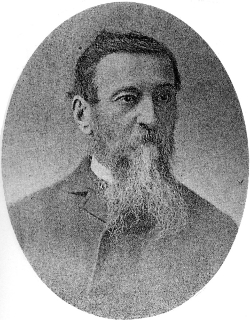
Ford is born to Edward Ford (1805-1880) and Ann Ford (1815-1893), emigrating with his parents to Boston, Massachusetts in 1845, never returning to Ireland. He writes in the Irish World in 1886 that “I might as well have been born in Boston. I know nothing of England. I brought nothing with me from Ireland — nothing tangible to make me what I am. I had consciously at least, only what I found and grew up with in here.”
Ford leaves school at the age of thirteen and two years later is working as a printer’s devil for William Lloyd Garrison‘s The Liberator. He credits Garrison for his advocacy for social reform. He begins writing in 1855 and by 1861 is editor and publisher of the Boston Tribune, also known as the Boston Sunday Tribune or Boston Sunday Times. He is an abolitionist and pro-union.
Ford spends four years after the war in Charleston, South Carolina, editing the Southern Carolina Leader, printed to support newly freed slaves. He settles in New York City in 1870 and founds the Irish World, which becomes the principal newspaper of Irish America. It promises “more reading material than any other paper in America” and outsells John Boyle O’Reilly‘s The Pilot.
In 1878, Ford re-titles his newspaper, the Irish World and American Industrial Liberator. During the early 1880s, he promotes the writings of land reformer, Henry George in his paper.
In 1880, Ford begins to solicit donations through the Irish World to support Irish National Land League activities in Ireland. Funds received are tabulated weekly under the heading “Land League Fund.” Between January and September 1881 alone, more than $100,000 is collected in donations. British Prime MinisterWilliam Ewart Gladstone later states that without the funds from the Irish World, there would have been no agitation in Ireland.”
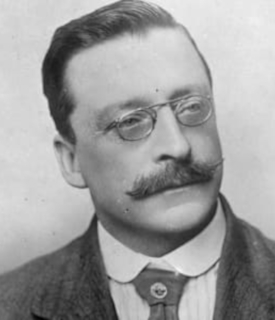
Arthur Joseph Griffith, writer, newspaper editor and politician who founded the political party Sinn Féin, is born in Dublin on March 31, 1871. He leads the Irish delegation at the negotiations that produce the 1921 Anglo-Irish Treaty and serves as President of Dáil Éireann from January 1922 until his death in August 1922.
After a short spell in South Africa, Griffith founds and edits the Irish nationalist newspaper The United Irishman in 1899. In 1904, he writes The Resurrection of Hungary: A Parallel for Ireland, which advocates the withdrawal of Irish members from the Parliament of the United Kingdom and the setting up of the institutions of government at home, a policy that becomes known as Sinn Féin (ourselves). On November 28, 1905, he presents “The Sinn Féin Policy” at the first annual Convention of the National Council. The occasion is marked as the founding date of the Sinn Féin party. Although the organization is still small at the time, Griffith takes over as president of Sinn Féin in 1911.
Griffith is arrested following the Easter Rising of 1916, despite not having taken any part in it. On his release, he works to build up Sinn Féin, which wins a string of by-election victories. At the party’s Ardfheis (annual convention) in October 1917, Sinn Féin becomes an unambiguously republican party, and Griffith resigns the presidency in favour of the 1916 leader Éamon de Valera, becoming vice-president instead. Griffith is elected as a member of parliament (MP) in June 1918, and is re-elected in the 1918 general election, when Sinn Féin wins a huge electoral victory over the Irish Parliamentary Party and refusing to take their seats at Westminster, set up their own constituent assembly, Dáil Éireann.
In the Dáil, Griffith serves as Minister for Home Affairs from 1919 to 1921, and Minister for Foreign Affairs from 1921 to 1922. In September 1921, he is appointed chairman of the Irish delegation to negotiate a treaty with the British government. After months of negotiations, he and the other four delegates sign the Anglo-Irish Treaty, which creates the Irish Free State, but not as a republic. This leads to a split in the Dáil. After the Treaty is narrowly approved by the Dáil, de Valera resigns as president and Griffith is elected in his place. The split leads to the Irish Civil War.
Griffith enters St. Vincent’s Nursing Home, Leeson Street, Dublin, during the first week of August 1922, following an acute attack of tonsillitis. He is confined to his room by his doctors, who had observed signs of what they thought might be a subarachnoid hemorrhage. It is difficult to keep him quiet and he resumes his daily work in the government building. When about to leave for his office shortly before 10:00 AM on August 12, 1922, he pauses to retie his shoelace and falls down unconscious. He regains consciousness but collapses again with blood coming from his mouth. Three doctors render assistance, but to no avail. Father John Lee of the Marist Fathers administers extreme unction, and Griffith expires as the priest recites the concluding prayer. The cause of death, cerebral hemorrhage, is also reported as being due to heart failure. He dies at the age of 51, ten days before Michael Collins‘ assassination in County Cork and two months after the outbreak of the Irish Civil War. He is buried in Glasnevin Cemetery four days later.
The Irish Times, an Irish daily broadsheet newspaper, is launched at 4 Lower Abbey Street in Dublin on March 29, 1859. The first appearance of a newspaper using the name The Irish Times occurs in 1823 but it closes in 1825. The title is revived as a thrice weekly publication by Major Lawrence E. Knox. It is originally founded as a moderate Protestant Irish nationalist newspaper, reflecting the politics of Knox, who stands unsuccessfully as a parliamentary candidate for Isaac Butt’s Home Rule League. In its early days, its main competitor is the Dublin Daily Express.
Though formed as a Protestant nationalist paper, within two decades and under new owners it becomes the voice of British unionism in Ireland. It is no longer marketed as a unionist paper, but rather presents itself politically as “liberal and progressive,” as well as promoting neoliberalism on economic issues. The editorship of the newspaper from 1859 until 1986 is controlled by the Anglo-IrishProtestant minority, only gaining its first nominal Irish Catholic editor 127 years into its existence.
The paper’s most prominent columnists include writer and arts commentator Fintan O’Toole and satirist Miriam Lord. The late TaoiseachGarret FitzGerald is once a columnist. Senior international figures, including Tony Blair and Bill Clinton, have written for its op-ed page. Its most prominent columns have included the political column Backbencher, by John Healy, Drapier, an anonymous piece produced weekly by a politician giving the ‘insider’ view of politics, Rite and Reason, a weekly religious column edited by ‘religious affairs’ editor Patsy McGarry, and the long running An Irishman’s Diary. An Irishman’s Diary is written by Patrick Campbell in the forties (under the pseudonym ‘Quidnunc’), by Seamus Kelly from 1949 to 1979 (also writing as ‘Quidnunc’) and more recently by Kevin Myers. After Myers’ move to the rival Irish Independent, An Irishman’s Diary has usually been the work of Frank McNally. On the sports pages, Philip Reid is the paper’s golf correspondent.
One of its most popular columns is the biting and humorous Cruiskeen Lawn satire column written, originally in Irish, later in English, by Myles na gCopaleen, the pen name of Brian O’Nolan who also writes books using the name Flann O’Brien. Cruiskeen Lawn is an anglicised spelling of the Irish words crúiscín lán, meaning “full little jug.” Cruiskeen Lawn makes its debut in October 1940, and appears with varying regularity until O’Nolan’s death in 1966.
The editor is Paul O’Neill who succeeds Kevin O’Sullivan on April 5, 2017. The deputy editor is Deirdre Veldon. The Irish Times is published every day except Sundays and employs 420 people.
Childers is born to Erskine Hamilton Childers (Ireland’s fourth President) and his first wife Ruth Ellen Dow. He grows up in a multi-cultural atmosphere which influences his whole life. From an early age, he has an obvious fascination with history and world affairs. He studies at Newtown School, Waterford and much later on at Trinity College, Dublin and Stanford University. At Stanford he is actively involved with the National Student Association and rises to Vice-President of the organisation by 1949.
By 1960, Childers is in London working for the BBC in both radio and television. His broadcasts from the BBC World Service range on varying topics from the Suez Crisis and Palestine to the John F. Kennedy assassination in 1963. He is one of the first presenters at the start of the BBC TV show The Money Programme in 1966. The Suez Canal and Palestine issues later form the basis of his writing on the subjects.
Childers is distinguished as one of the first mainstream writers in the West to systematically challenge the contention that Palestinian Arab refugees of the 1947–1948 Civil War in Mandatory Palestine and the 1948 Arab–Israeli War fled their homes primarily from Arab broadcast evacuation orders, rather than from the use of force and terror by armed forces of the newly forming state of Israel.
Childers specialises in UN issues, even serving as a periodic consultant including a special mission in the Congo for Secretary-GeneralU Thant. In 1967, under the leadership of Henry Richardson Labouisse, Jr., he is hired to lead a United Nations, UNICEF and United Nations Development Programme (UNDP) programme called Development Support Communication. In 1968 he co-authors a paper with United Nations colleague Mallica Vajrathon called “Project Support Communication,” later published in an important anthology about social change.
From 1975 to 1988, Childers is based in New York as Director of Information for UNDP. By his retirement in 1989 after 22 years of service as Senior Advisor to the UN Director General for Development and International Economic Co-operation, Childers had worked with most of the organisations of the UN system, at all levels and in all regions.
After his retirement, Childers continues to strive relentlessly for the ideals for which he had worked so hard. He co-authors several notable books for the Ford Foundation and the Dag Hammarskjöld Foundation on the reform of the United Nations with his colleague and equally devoted United Nations civil servant, Sir Brian Urquhart. The best known of these publications is A World in Need of Leadership. He continues writing on United Nations matters while traveling constantly and lecturing on the Organisation and the many challenges confronting it, such as globalisation and democracy, conflict prevention and peacekeeping, humanitarian assistance, human rights, famine, ageing and development, health, financial arrangement of the United Nations, citizen’s rights, female participation, design and perceptions, education, the North South divide and world economy. In 1995 he co-authors a paper with his international law colleague Marjolijn Snippe called The Agenda for Peace and the Law of the Sea, for Pacem in Maribus XXIII, the Annual Conference of the International Ocean Institute, that is held in Costa Rica, December 1995.
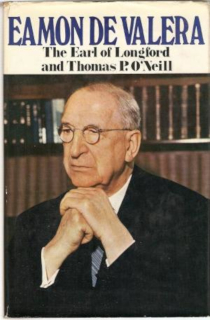
De Valera knows of O’Neill’s reputation as a historian and asks him to undertake the project. A contract is signed with the publishers in 1963, and O’Neill moves to Áras an Uachtaráin to work on the book. He is later joined by Lord Longford as co-author.
O’Neill’s other works include a biography in Irish of James Fintan Lalor and a major study of the Great Famine, which establishes his reputation as a historian.
After the completion of the de Valera work, O’Neill is appointed lecturer and later professor of history in University College, Galway. On his retirement, he returns to live in Dublin, where he renews his association with the National Library, becoming a strong supporter of its expansion.
O’Neill is survived by his wife, Marie, and six children. His funeral Mass takes place at St. Joseph’s Church on March 5, followed by his interment at Shanganagh Cemetery.
(From: “Biographer of de Valera dies at 74,” The Irish Times, Monday, March 4, 1996)
William Carleton, Irish writer and novelist, is born in Clogher, County Tyrone on February 20, 1794. He is best known for his Traits and Stories of the Irish Peasantry, a collection of ethnic sketches of the stereotypical Irishman.
Carleton receives a basic education at various hedge schools. Most of his learning is gained from a curate, Father Keenan, who teaches at a classical school at Donagh, County Monaghan which he attends from 1814 to 1816. He studies for the priesthood at St. Patrick’s Pontifical University, Maynooth, but leaves after two years. Around the age of 19 he undertakes one of the religious pilgrimages then common in Ireland. His experiences as a pilgrim make him give up the thought of entering the church.
Carleton’s vacillating ideas as to a mode of life are determined by reading the picaresque novelGil Blas by Alain-René Lesage. He decides to try what fortune has in store for him, and he goes to Killanny, County Louth. For six months he serves as tutor to the family of a farmer named Piers Murphy. After some other experiments he sets out for Dublin, arriving with two shillings and sixpence in his pocket.
Carleton first seeks occupation as a bird-stuffer, but a proposal to use potatoes and meal as stuffing fails to recommend him. He then tries to become a soldier, but the colonel of the regiment dissuades him. After staying in a number of cheap lodgings, he eventually finds a place in a house on Francis Street which contains a circulating library. The landlady allows him to read from 12 to 16 hours a day. He obtains some teaching and a clerkship in a Sunday School office, begins to contribute to journals. “The Pilgrimage to Lough Derg,” which is published in the Christian Examiner, attracts great attention.
In 1830 Carleton publishes his first full-length book, Traits and Stories of the Irish Peasantry (2 volumes), which is considered his best achievement. A second series (3 volumes) appears in 1833, and Tales of Ireland in 1834. From that time until a few years prior to his death he writes constantly. “Fardorougha the Miser, or the Convicts of Lisnamona” appears in 1837–1838 in the Dublin University Magazine.
Carleton remained active publishing in Dublin magazines through the 1830s and 1840s writing many ethnic stories often drawn from the south Tyrone locality. He also writes a lot of fiction. During the last months of his life, he begins an autobiography which he brings down to the beginning of his literary career. This forms the first part of The Life of William Carleton by David James O’Donoghue, which contains full information about his life, and a list of his scattered writings.
Carleton’s later years are characterised by drunkenness and poverty. In spite of his considerable literary production, he remains poor but receives a pension in 1848 of £200 a year granted by Lord John Russell in response to a memorial on Carleton’s behalf signed by numbers of distinguished persons in Ireland.
William Carleton dies at his home at Woodville, Sandford Road, in Ranelagh, Dublin on January 30, 1869, and is interred at Mount Jerome Cemetery, Harold’s Cross, Dublin. The house, now demolished, is close to the entrance to the Jesuit residence at Milltown Park. Despite his conversion to Protestantism, Carleton remains on friendly terms with one of the priests there, Reverend Robert Carbery, who offers to give him the Last Rites of the Catholic Church. In the final weeks before his death, Carleton politely declines the offer, stating he had not been a Roman Catholic “for half a century and more.”
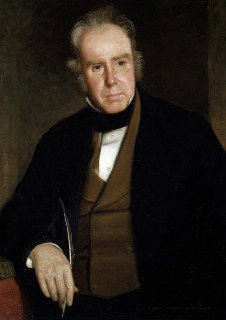
(Pictured: Portrait of Irish author William Carleton (1794-1869) by John Slattery (fl. 1850s))
Gwynn spends his early childhood in rural County Donegal, which shapes his later view of Ireland. He is educated at St. Columba’s College and goes on to Brasenose College, Oxford, where, as scholar, in 1884 he is awarded first-class honours in classical moderations and in 1886 literae humaniores. During term holidays he returns to Dublin, where he meets several of the political and literary figures of the day.
After graduating Gwynn moves to France where he works as a schoolmaster for ten years. In December 1889 he marries his cousin Mary Louisa Gwynn. They have four sons and two daughters. Having dabbled in journalism since his student days, he moves to London in 1896 to pursue a career as a writer. He soon becomes a prominent figure in literary and journalistic circles.
At the outbreak of World War I, Gwynn gives his support to John Redmond that Irishmen should enlist in the British forces. At the age of fifty-one he enlists as a private in the 7th Leinster Regiment and is later commissioned lieutenant in the 6th Battalion Connaught Rangers, attached to the 16th (Irish) Division. He is promoted to captain in 1915 and serves with his battalion at the battles of Ginchy and Guillemont during the Somme offensive and also at Messines in 1917, leaving the front line shortly afterwards.
After the war Gwynn continues with his writing and political life. He receives honorary doctorates from the National University of Ireland in 1940 and the University of Dublin in 1945. He dies on June 11, 1950, at his home in Terenure, Dublin and is buried at Tallaght cemetery.
Luby is the son of a Church of Ireland clergyman from Templemore, County Tipperary, his mother being a Catholic. He is educated at Trinity College Dublin where he studies law and puts in the necessary number of terms in London and Dublin where he acquires a reputation as a scholar and takes his degree. He goes on to teach at the college for a time.
In 1851 Luby travels to France, where he hopes to join the French Foreign Legion to learn infantry tactics but finds the recruiting temporarily suspended. From France he goes to Australia for a year before returning to Ireland. From the end of 1855 he edits the Tribune newspaper founded by John E. Pigot who had been a member of The Nation group. During this time, he remains in touch with the small group of ’49 men including Philip Gray and attempts to start a new revolutionary movement. Luby’s views on social issues grow more conservative after 1848 which he makes clear to James Stephens whom he meets in 1856.
In the autumn of 1857 Owen Considine arrives with a message signed by four Irish exiles in the United States, two of whom are John O’Mahony and Michael Doheny. The message conveys the confidence they have in Stephens and asks him to establish an organisation in Ireland to win national independence. Considine also carries a private letter from O’Mahony to Stephens which is a warning, and which is overlooked by Luby and Stephens at the time. Both believe that there is a strong organisation behind the letter, only later to find it is rather a number of loosely linked groups. On December 23 Stephens dispatches Joseph Denieffe to America with his reply which is disguised as a business letter dated and addressed from Paris. In his reply, Stephen’s outlines his conditions and his requirements from the organisation in America.
On March 17, 1858, Denieffe arrives in Dublin with the acceptance of Stephens’s terms by the New York Committee and the eighty pounds. On that very evening the Irish Republican Brotherhood is established in Peter Langan’s timberyard in Lombard Street.
In mid-1863 Stephens informs his colleagues he wishes to start a newspaper, with financial aid from O’Mahony and the Fenian Brotherhood in America. The offices are established at 12 Parliament Street, almost at the gates of Dublin Castle. The first issue of the Irish People appears on November 28, 1863. The staff of the paper along with Luby are Charles J. Kickham and Denis Dowling Mulcahy as the editorial staff. Jeremiah O’Donovan Rossa and James O’Connor have charge of the business office, with John Haltigan being the printer. John O’Leary is brought from London to take charge in the role of Editor.
On July 15, 1865, American-made plans for a rising in Ireland are discovered. Superintendent Daniel Ryan, head of the G Division of the Dublin Metropolitan Police at Dublin Castle, has an informer within the offices of the Irish People who supplies him with an “action this year” message on its way to the IRB unit in Tipperary. With this information, Ryan raids the offices of the Irish People on Thursday, September 15, followed by the arrests of Luby, O’Leary and O’Donovan Rossa. Kickham is caught after a month on the run. Stephens is also caught with the support of Fenian prison warders. The last number of the paper is dated September 16, 1865.
After his arrest and the suppression of the Irish People, Luby is sentenced to twenty years of penal servitude. He is released in January 1871 but is compelled to remain away from Ireland until the expiration of his sentence.
Upon his release Luby goes first to the Continent and later settles in New York City. He lectures all over the country for years and writes for a number of Irish newspapers on political topics. At the memorial meeting on the death of John Mitchel, he delivers the principal address in Madison Square Garden.
Thomas Clarke Luby dies at 109½ Oak Street, Jersey City, New Jersey of paralysis, on November 29, 1901, and is buried in a grave shared with his wife in Bayview Cemetery in Jersey City. His epitaph reads: “Thomas Clarke Luby 1822–1901 He devoted his life to love of Ireland and quest of truth.”
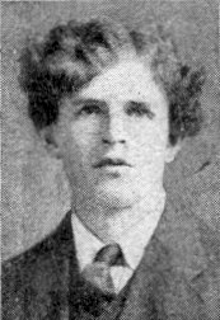
During World War I, MacGill serves with the London Irish Rifles (1/18th Battalion, London Regiment) and is wounded at the Battle of Loos on October 28, 1915. He is recruited into Military Intelligence and writes for MI 7b between 1916 and the Armistice in 1918. He writes a memoir-type novel called Children of the Dead End.
In early 2008, a docu-drama starring Stephen Rea is made about the life of Patrick MacGill, which is released in Ireland in 2009 as Child of the Dead End. One of the film’s locations is the boathouse of Edinburgh Canal Society at Edinburgh on the Union Canal, and one of its rowing boats.
An annual literary MacGill Summer School is held in Glenties in mid-July each year in his honour. A statue in his honour is on the bridge where the main street crosses the river in Glenties. He has three children, Christine, Patricia and Sheila MacGill.
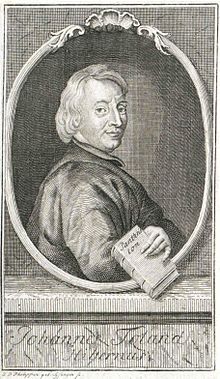
Very little is known of Toland’s early life. His parents are unknown. He later writes that he had been baptised Janus Junius, a play on his name that recalls both the Roman two-faced god Janus and Lucius Junius Brutus, reputed founder of the Roman Republic. According to his biographer, Pierre des Maizeaux, he adopts the name John as a schoolboy with the encouragement of his schoolteacher.
In Toland’s first and best-known book, Christianity not Mysterious (1696), he argues that the divine revelation of the Bible contains no true mysteries. Rather, all the dogmas of the faith can be understood and demonstrated by properly trained reason from natural principles. For this argument he is prosecuted by a grand jury in London. As he is a subject of the Kingdom of Ireland, members of the Parliament of Ireland propose that he should be burned at the stake. In his absence three copies of the book are burned by the public hangman in Dublin as the content is contrary to the core doctrines of the Church of Ireland. Toland bitterly compares the Protestant legislators to “Popish Inquisitors who performed that Execution on the Book, when they could not seize the Author, whom they had destined to the Flames.”
After his departure from Oxford, Toland resides in London for most of the rest of his life but is also a somewhat frequent visitor to Continental Europe, particularly Germany and the Netherlands. He lives on the Continent from 1707 to 1710.
John Toland dies in Putney on March 10, 1722. Just before he dies, he composes his own epitaph: “He was an assertor of liberty, a lover of all sorts of learning … but no man’s follower or dependent. Nor could frowns or fortune bend him to decline from the ways he had chosen.” The 1911 Encyclopædia Britannica says of him that at his death in London at age 51 “he died… as he had lived, in great poverty, in the midst of his books, with his pen in his hand.”
Very shortly after his death a lengthy biography of Toland is written by Pierre des Maizeaux.




 seamus dubhghaill