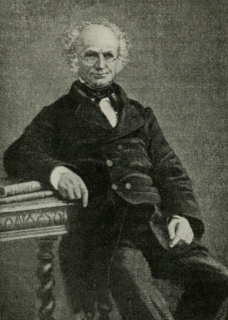
Mahony is born to Martin Mahony and Mary Reynolds. He is educated at the JesuitClongowes Wood College, in County Kildare, and later in the Abbey of Saint-Acheul, a similar school in Amiens, France and then at Rue de Sèvres, Paris, and later in Rome. He begins teaching at the Jesuit school of Clongowes as master of rhetoric but is soon after expelled. He then goes to London and becomes a leading contributor to Fraser’s Magazine, under the signature of “Father Prout” (the original Father Prout, whom Mahony knew in his youth, born in 1757, was parish priest of Watergrasshill, County Cork). At one point he is director of this magazine.
Mahony is witty and learned in many languages. One form which his humour takes is the professed discovery of the originals in Latin, Greek, or mediaeval French of popular modern poems and songs. Many of these jeux d’esprit are collected as Reliques of Father Prout. He pretends that these poems had been found in Fr. Prout’s trunk after his death. He wittily describes himself as “an Irish potato seasoned with Attic salt.” Later he acts as foreign correspondent to various newspapers, and during the last eight years of his life his articles form a main attraction of The Globe.
In his native Cork Mahoney is best remembered for his poem “The Bells of Shandon” and his penname is synonymous with the city and the Church of St. Anne, Shandon.
Mahony spends the last two years of his life in a monastery and dies on May 18, 1866, in Paris reconciled to the Church.
The Reliques of Father Prout originally appear in two volumes in 1836 with illustrations by Maclise. They are reissued in Henry George Bohn‘s Bohn’s Libraries in 1860. Another volume, Final Reliques, is edited by Douglas Jerrold and published in 1876. The Works of Father Prout, edited by Charles Kent, is published in 1881. Facts and Figures from Italy (1847) is made from his Rome letters to London’s The Daily News.
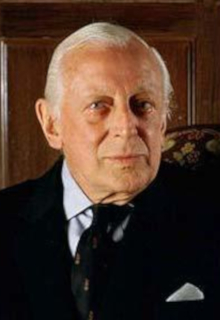
Alistair Cooke, British journalist, television personality, and broadcaster, who describes himself as a “Lancastrian Irishman,” is born in Salford, Lancashire, England on November 20, 1908. He is best known for his lively and insightful interpretations of American history and culture.
From the late 1930s, Cooke reports and comments on American affairs for BBC Radio and several major British newspapers. His weekly 15-minute program, Letter from America, broadcast from 1946 to 2004, is one of the longest-running series on radio. The texts of many broadcasts are collected in One Man’s America (1952) and Talk About America (1968). From 1956 to 1961 he hosts and narrates the weekly television “magazine” Omnibus, which wins numerous broadcasting awards.
Cooke’s interpretation of the American experience culminates in his BBC-produced television series America: A Personal History of the United States (1972–1973). In thirteen installments, filmed on location throughout the United States, he surveys some 500 years of American history in an eclectic and personal but highly coherent narrative. Alistair Cooke’s America (1973), the book based on the award-winning program, is a best-seller in the United States. From the 1970s to the early 1990s, as host of Masterpiece Theatre, he serves as an interpreter of British culture through the presentation of BBC dramatic television programming to American audiences.
Cooke’s other works include the critical biography Douglas Fairbanks: The Making of a Screen Actor (1940), Generation on Trial: The USA v. Alger Hiss (1950), based on his coverage of a celebrated Congressional investigation, The Vintage Mencken (1955), The Patient Has the Floor (1986), America Observed (1988), Memories of the Great and the Good (2000) and, with Robert Cameron, The Americans (1977).
On March 2, 2004, at the age of 95, following advice from his doctors, Cooke announces his retirement from Letter from America—after 58 years, the longest-running speech radio show in the world.
Alistair Cooke dies at midnight on March 30, 2004 at his home in New York City. He had been ill with heart disease, but dies of lung cancer, which had spread to his bones. He is cremated and his ashes are clandestinely scattered by his family in New York’s Central Park.
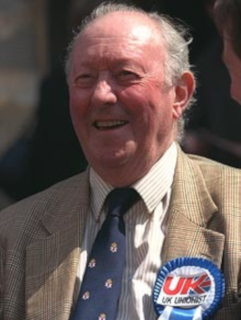
Although he is a fierce advocate of his homeland, Cruise O’Brien is a strong critic of Irish Republican Army violence and of what he considers the romanticized desire for reunification with Northern Ireland. His collection of essays Maria Cross: Imaginative Patterns in a Group of Modern Catholic Writers (1952; written under the pseudonym Donat O’Donnell) impresses UN Secretary-GeneralDag Hammarskjöld, who in 1961 appoints him UN special representative in the Congo, later the Democratic Republic of the Congo. He orders UN peacekeeping forces into the breakaway Katanga province, and the resulting scandal forces him out of office. Despite UN objections, he writes To Katanga and Back (1963) to explain his actions.
After serving as vice-chancellor of the University of Ghana (1962–65) and Albert Schweitzer Professor of Humanities at New York University (1965–69), Cruise O’Brien enters Irish politics. He holds a Labour Party seat in Dáil Éireann from 1969 to 1977 and then in the Senate from 1977 to 1979, representing Trinity College, of which he is pro-chancellor (1973–2008).
In 1979 Cruise O’Brien is named editor in chief of the British Sunday newspaper The Observer, but he leaves after three tumultuous years. He remains an active newspaper columnist, especially for the Irish Independent until 2007. His books include States of Ireland (1972) and On the Eve of the Millennium (1995), as well as perceptive studies of Charles Stewart Parnell, Edmund Burke, and Thomas Jefferson.
Conor Cruise O’Brien dies at the age of 91 on December 18, 2008, in Howth, Dublin.
The first issue of The Nation, an Irish nationalist weekly newspaper, is published on October 15, 1842. It is printed at 12 Trinity Street, Dublin until January 6, 1844. The paper is later published at 4 D’Olier Street from July 13, 1844, until July 28, 1848, when the issue for the following day is seized and the paper suppressed. It is published again in Middle Abbey Street on its revival in September 1849.
John Mitchel joins the staff of The Nation in the autumn of 1845. On Mitchel’s frequent trips from Banbridge, County Down to Dublin, he had come in contact with the Repeal members who gathered about The Nation office and in the spring of 1843, he becomes a member of the Repeal Association. For the next two years he writes political and historical articles and reviews for The Nation. He covers a wide range of subjects, including the Irish Potato Famine, on which he contributes some influential articles which attract significant attention.
Mitchel resigns his position as lead writer for The Nation in 1847 because he comes to regard as “absolutely necessary a more vigorous policy against the English Government than that which William Smith O’Brien, Charles Gavan Duffy and other Young Ireland leaders were willing to pursue.” Upon his resignation he starts his own paper, The United Irishman.
Women also write for The Nation and publish under pseudonyms such as Speranza (Jane Elgee, Lady Wilde, Oscar Wilde‘s mother), Eithne (Marie Thompson) and Eva (Mary Eva Kelly, who would marry Kevin Izod O’Doherty.
The role played by some of its key figures in the paper in the ill-fated Young Ireland Rebellion of 1848 cement the paper’s reputation as the voice of Irish radicalism. Dillon is a central figure in the revolt and is sentenced to death, the sentence later commuted. He flees Ireland, escaping first to France and, eventually, to the United States, where he serves the New York Bar.
The Nation continues to be published until 1900, when it merges with the Irish Weekly Independent. Later political figures associated with the paper included Timothy Daniel Sullivan and J.J. Clancy.
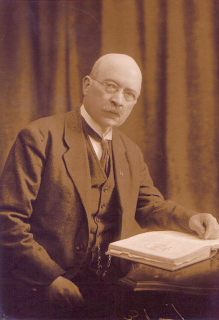
Mac Fhionnlaoich is the son of Micheal McGinley and Susan Toner. He attends school locally until he is seventeen. He then attends Blackrock College in Dublin for two years. Upon leaving school he enters into the British Civil Service becoming an Inland Revenue Officer. In 1895 he marries Elizabeth Woods (Irish: Sibhéal Ní Uadhaigh) and they have twelve children. He speaks Irish from an early age and keeps an interest in the language throughout his life, first publishing an Irish language short story and poem in The Donegal Christmas Annual 1883. It is not until 1895 while living in Belfast that he becomes involved in the Gaelic Movement.
It is in Mac Fhionnlaoich’s Belfast home that the first meeting of the Ulster branch of the Conradh na Gaeilge takes place in 1895. From this point on he becomes very involved in Conradh na Gaeilge becoming the organisations president on several occasions.
O’Brien shares his primary education with a townsman with whom he is later to have a close political connection, CanonPatrick Augustine Sheehan of Doneraile. He enjoys his secondary education at the Cloyne diocesan college, which results in his being brought up in an environment noted for its religious tolerance. He greatly values having had this experience from an early age, which strongly influences his later views for the need of such tolerance in Irish national life.
A journalist from 1869, O’Brien is appointed editor of the Irish Land League’s weekly United Ireland by Parnell in 1881. In October of that year the British authorities suppress the paper and put O’Brien in Kilmainham Gaol in Dublin, along with Parnell and others. There he draws up a No Rent Manifesto, which, when read at a Land League meeting, results in the outlawing of the League. Released from prison in 1882, he resumes the editorship of United Ireland, and in 1883 he is elected to the British House of Commons, remaining there until 1895. His “plan of campaign” is disavowed by Parnell but nonetheless stirs up fierce agitation. To suppress the movement, the British government passes the Criminal Law and Procedure (Ireland) Act 1887, under which O’Brien is jailed again.
For some time following the O’Shea divorce case (1889–90), in which Parnell is corespondent, O’Brien attempts to mediate between the Parnellites and their opponents, although he sides with the majority in rejecting Parnell’s continued leadership of the Irish Home Rule struggle. In 1902 he supports the Land Conference, which secures agreement between landlords and tenants’ representatives and results in George Wyndham‘s Land Purchase Act (1903), which is designed to turn Irish tenant farmers into occupying owners.
Retiring from political life, O’Brien contents himself with writing and declines Éamon de Valera‘s offer to stand for Fianna Fáil in the 1927 general election. He dies suddenly at the age of 75 on February 25, 1928, while on a visit to London with his wife. His remains rest in Mallow, and one of the principal streets in the town bears his name to this day. His head-bust overlooks the town Council’s Chamber Room and one of his finest portraits hangs in University College Cork.
The Freeman’s Journal, the oldest nationalist newspaper in Dublin, is founded by Charles Lucas on September 10, 1763. It is identified with radical 18th-century Protestant patriot politicians Henry Grattan and Henry Flood. This changes from 1784 when it passes to Francis Higgins and takes a more pro-British and pro-administration view. In fact, Higgins is mentioned in the Secret Service Money Book as having betrayed Lord Edward FitzGerald. Higgins is paid £1,000 for information on FitzGerald’s capture.
In the 19th century The Freeman’s Journal becomes more nationalist in tone, particularly under the control and inspiration of Sir John Gray (1815–75).
The Journal, as it is widely known, is the leading newspaper in Ireland throughout the 19th century. Contemporary sources record it being read to the largely illiterate population by priests and local teachers gathering in homes. It is mentioned in contemporary literature as when James Joyce immortalises The Freeman’s Journal as the place of employment of Leopold Bloom in Ulysses. It is seen as symbolising Irish newspapers for most of its time. By the 1880s it becomes the primary media supporter of Charles Stewart Parnell and the Irish Parliamentary Party (IPP).
The Journal is challenged on all sides by rivals. On the nationalist side some prefer The Nation founded by Thomas Davis while others, including radical supporters of Parnell, read the United Irishman. The Anglo-Irish establishment in contrast reads the historically Irish unionistThe Irish Times. With the split in the IPP over Parnell’s relationship with Katharine O’Shea, its readership splits too. While The Journal goes with the majority in 1893 in opposing Parnell, a minority moves to read the Daily Irish Independent. It is also challenged from the turn of the century by William O’Brien‘s The Irish People and the Cork Free Press. With Thomas Sexton becoming Chairman of the Board of Directors (1893–1911), The Journal languishes under his spartanic management.
The collapse of the IPP in 1918, and the electoral success of Sinn Féin, see a more radical nationalism appear that is out of step with the moderation of The Journal. It finds itself overshadowed by the more aggressively marketed Irish Independent, the successor to the Daily Irish Independent. Just prior to the outbreak of the Irish Civil War in March 1922, The Freeman’s Journal printing machinery is destroyed by Anti-Treaty IRA men under Rory O’Connor for its support of the Anglo-Irish Treaty. It does not resume publication until after the outbreak of civil war, when the Irish Free State re-asserts its authority over the country.
The Freeman’s Journal ceases publication in 1924, when it is merged with the Irish Independent. Until the 1990s, the Irish Independent includes the words ‘Incorporating the Freeman’s Journal’ in the masthead over its editorials.
Steele is born in Dublin on March 12, 1672, to Richard Steele, an attorney, and Elinor Symes (née Sheyles). He is largely raised by his uncle and aunt, Henry Gascoigne and Lady Katherine Mildmay. A member of the Protestant gentry, he is educated at Charterhouse School, where he first meets Addison. After starting at Christ Church, Oxford, he goes on to Merton College, Oxford, then joins the Life Guards of the Household Cavalry in order to support King William‘s wars against France. He is commissioned in 1697 and rises to the rank of captain within two years. He leaves the army in 1705, perhaps due to the death of the 34th Foot’s commanding officer, Robert Lucas, 3rd Baron Lucas, which limits his opportunities of promotion.
Steele is a member of the Kit-Kat Club. Both Steele and Addison become closely associated with Child’s Coffee-house in St. Paul’s Churchyard.
Steele’s first published work, The Christian Hero (1701), attempts to point out the differences between perceived and actual masculinity. Written while he is serving in the army, it expresses his idea of a pamphlet of moral instruction.
Steele writes a comedy that same year titled The Funeral. This play meets with wide success and is performed at Theatre Royal, Drury Lane, bringing him to the attention of the King and the Whig party. Next, he writes The Lying Lover, one of the first sentimental comedies, but a failure on stage. In 1705, he writes The Tender Husband with contributions from Addison, and later that year writes the prologue to The Mistake, by John Vanbrugh, also an important member of the Whig Kit-Kat Club with Addison and Steele.
The Tatler, Steele’s first journal, first appears on April 12, 1709, and appears three times a week. He writes this periodical under the pseudonym Isaac Bickerstaff and gives Bickerstaff an entire, fully developed personality. The Tatler is closed down to avoid the complications of running a Whig publication that had come under Tory attack.
While at Drury Lane, Steele writes and directs the sentimental comedyThe Conscious Lovers, which is an immediate hit. However, he falls out with Addison and with the administration over the Peerage Bill (1719), and in 1724 he retires to his second wife’s homeland of Wales. He remains in Carmarthen after his wife’s death, dying there on September 1, 1729. He is buried there at St. Peter’s Church. During restoration of the church in 2000, his skull is discovered in a lead casket, having previously been accidentally disinterred during the 1870s.
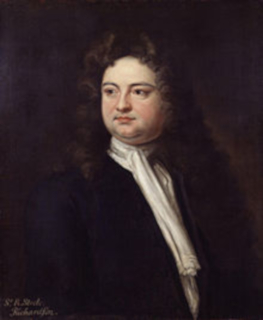
(Pictured: Portrait of Sir Richard Steele by Jonathan Richardson)
In January 1941 Picture Post publishes their “Plan for Britain.” This includes minimum wages throughout industry, full employment, child allowances, a national health service, the planned use of land and a complete overhaul of education. This document leads to discussions about post-war Britain and is a populist forerunner of William Beveridge‘s November 1942 Social Insurance and Allied Services (known as the Beveridge Report).
Sales of Picture Post increase further during World War II and by December 1943 the magazine is selling 1,950,000 copies a week. By the end of 1949 circulation declines to 1,422,000.
Founding editor Stefan Lorant, who has some Jewish ancestry, had been imprisoned by Adolf Hitler in the early 1930s, and wrote a best-selling book thereafter, I Was Hitler’s Prisoner. By 1940, he fears he will be captured in a Nazi invasion of Britain and flees to Massachusetts in the United States, where he writes important illustrated U.S. histories and biographies. He is succeeded by Sir Tom Hopkinson following his departure in 1940.
During World War II, the art editor of the magazine, Edgar Ainsworth, serves as a war correspondent and accompanies the United States 7th Army on their advance across Europe in 1945. He visits the Bergen-Belsen concentration camp three times after the British army liberates the complex in April 1945. Several of his sketches and drawings from the camp are published in a September 1945 article, Victim and Prisoner. Ainsworth also commissions the artist Mervyn Peake to visit France and Germany at the end of the war, and he too reports from Bergen-Belsen.
On June 17, 1950, Leader Magazine is incorporated in Picture Post. Hopkinson is often in conflict with Sir Edward George Warris Hulton, the owner of Picture Post. Hulton mainly supports the Conservative Party and objects to Hopkinson’s socialist views. This conflict leads to Hopkinson’s dismissal in 1950 following the publication of James Cameron‘s article about South Korea‘s treatment of political prisoners in the Korean War.
By June 1952, circulation has fallen to 935,000. Sales continue to decline in the face of competition from television and a revolving door of new editors. By the time the magazine closes in July 1957, circulation is less than 600,000 copies a week.
Picture Post has been digitised as The Picture Post Historical Archive, 1938-1957 and consists of the complete, fully searchable facsimile archive of Picture Post. It is made available in 2011 to libraries and institutions.
(Pictured: Cover of the Picture Post Vol. 8, No. 12, dated September 21, 1940)
Alfred Charles William Harmsworth, Viscount Northcliffe, one of the most successful newspaper publishers in the history of the British press and a founder of popular modern journalism, is born on July 15, 1865 in Chapelizod, near Dublin.
After an impoverished childhood and a few attempts at making a quick fortune, young Harmsworth embarks on freelance journalism as a contributor to popular papers, rises to editorial positions, and starts a paper called Answers to Correspondents. After some difficulty in securing financial backing, he begins publication, soon shortening the name to Answers. As the paper gains public favour, he is joined by his brother Harold, whose financial ability and capacity for attracting advertising, combined with Alfred’s genius for sensing the public taste, make it a success. Answers is followed by many other inexpensive popular periodicals, chief among them Comic Cuts and Forget-Me-Not, for the new reading public of women. These form the basis for what becomes Amalgamated Press, the largest periodical-publishing empire in the world.
In 1894 Harmsworth enters the newspaper field, purchasing the nearly bankrupt London Evening News and transforming it into a popular newspaper with brief news reports, a daily story, and a column for women. Within a year circulation grows to 160,000 copies, and profits are substantial. Conceiving the idea of a chain of halfpenny morning papers in the provinces, he purchases two papers in Glasgow, Scotland, and merges them into the Glasgow Daily Record. He then decides to experiment with a popular national daily in London. The Daily Mail, first published on May 4, 1896, is a sensational success. Announced as “the penny newspaper for one halfpenny” and “the busy man’s daily journal,” it is exactly suited to the new reading public. All news stories and feature articles are kept short, and articles of interest to women, political and social gossip, and a serial story are made regular features. With its first issue, the Daily Mail establishes a world record in daily newspaper circulation, a lead it never loses during Harmsworth’s lifetime.
Next Harmsworth purchases the Weekly Dispatch when it is nearly bankrupt and transforms it into the Sunday Dispatch, the biggest-selling Sunday newspaper in the country. In 1903 he founds the Daily Mirror, which successfully exploits a new market as a picture paper, with a circulation rivaling that of the Daily Mail. He saves The Observer from extinction in 1905, the year in which he is made Baron Northcliffe. In 1908 he reaches the pinnacle of his career by securing control of The Times, which he transforms from a 19th-century relic into a modern newspaper.
Northcliffe’s contributions to the British effort in World War I begin with his early exposure in the Daily Mail of the British army’s shell shortage. His criticisms of Lord Kitchener arouse intense resentment in some quarters, but he also presses for the creation of a separate Ministry of Munitions and for the formation in 1915 of a wartime coalition government. For his service as head of the British war mission in the United States in 1917, he is created a viscount. He acts as the British government’s director of propaganda aimed at Germany and other enemy countries in 1918. By this time Northcliffe’s press empire appears to hold such power over public opinion that he tries unsuccessfully to influence the composition of Prime MinisterDavid Lloyd George’s cabinet. Always unpredictable, he becomes the victim of a megalomania that damages his judgment and leads to the breakdown that precedes his death.
Harmsworth’s health declines during 1921 due mainly to a streptococcal infection. He goes on a world tour to revive himself, but it fails to do so. He dies of endocarditis in a hut on the roof of his London house on August 14, 1922, leaving three months’ pay to each of his six thousand employees. The viscountcy, barony, and baronetcy of Northcliffe become extinct upon his death. His body is buried at East Finchley Cemetery in North London.
Northcliffe’s success as a publisher rests on his instinctive understanding of the new reading public that had been created by compulsory education. Though he wants political power, the effect of his newspapers upon public affairs is generally considered to have been smaller than he believed. His influence lay rather in changing the direction of much of the press away from its traditional informative and interpretative role to that of the commercial exploiter and entertainer of mass publics.