seamus dubhghaill

Promoting Irish Culture and History from Little Rock, Arkansas, USA


1 Comment

Birth of Marguerite Gardiner, Novelist & Journalist

marguerite-power-farmer-gardiner

Marguerite Gardiner, Countess of Blessington, Irish novelist, journalist, and literary hostess, is born near Clonmel, County Tipperary on September 1, 1789. She becomes acquainted with Lord Byron in Genoa and writes a book about him.

Born Margaret Power, she is a daughter of Edmund Power and Ellen Sheehy, small landowners. She is “haphazardly educated by her own reading and by her mother’s friend Ann Dwyer.” Her childhood is blighted by her father’s character and poverty, and her early womanhood made wretched by a compulsory marriage at the age of fifteen to Captain Maurice St. Leger Farmer, an English officer whose drunken habits finally bring him as a debtor to the King’s Bench Prison, where he dies by falling out of a window in October 1817. She had left him after three months of marriage.

Marguerite later moves to Hampshire, England to live for five years with the family of Thomas Jenkins, a sympathetic and literary sea captain. Jenkins introduces her to the Irishman Charles John Gardiner, 1st Earl of Blessington, a widower with four children and seven years her senior. They marry at St. Mary’s, Bryanston Square, Marylebone, on February 16, 1818, only four months after the death of her first husband.

Of rare beauty, charm and wit, Lady Blessington is no less distinguished for her generosity and for the extravagant tastes she shares with her second husband, which results in encumbering his estates with debt. On August 25, 1822, they set out for a continental tour with Marguerite’s youngest sister, the 21-year-old Mary Anne, and servants. On the way they meet Count Alfred D’Orsay, who had first become an intimate of Lady Blessington in London in 1821, in Avignon on November 20, 1822, before settling at Genoa for four months from March 31, 1823. There they meet Lord Byron on several occasions, giving Lady Blessington material for her Conversations with Lord Byron.

After that they settle for the most part in Naples, where she meets the Irish writer Richard Robert Madden, who is to become her biographer. They also spend time in Florence with their friend Walter Savage Landor, author of Imaginary Conversations which she greatly admires.

It is in Italy, on December 1, 1827, that Count D’Orsay marries Harriet Gardiner, Lord Blessington’s only daughter by his former wife. The Blessingtons and the newlywed couple move to Paris towards the end of 1828, taking up residence in the Hôtel Maréchal Ney, where the Earl suddenly dies at the age of 46 of an apoplectic stroke in 1829. D’Orsay and Harriet then accompanied Lady Blessington to England, but the couple separates soon afterwards amidst much acrimony. D’Orsay continues to live with Lady Blessington until her death. Their home, first at Seymour Place, and afterwards Gore House, Kensington, now the site of the Royal Albert Hall, become a centre of attraction for all that is distinguished in literature, learning, art, science and fashion. Benjamin Disraeli writes Venetia whilst staying there, and it is at her home that Hans Christian Andersen first meets Charles Dickens.

After her husband’s death Lady Blessington supplements her diminished income by contributing to various periodicals as well as by writing novels. She is for some years editor of The Book of Beauty and The Keepsake, popular annuals of the day. In 1834 she publishes her Conversations with Lord Byron. Her Idler in Italy (1839–1840), and Idler in France (1841) are popular for their personal gossip and anecdotes, descriptions of nature and sentiment.

Early in 1849, Count D’Orsay leaves Gore House to escape his creditors. Subsequently the furniture and decorations are sold in a public sale successfully discharging Lady Blessington’s debts. She joins the Count in Paris, where she dies on June 4, 1849, of a burst heart. On examination it is discovered that her heart is three times normal size.

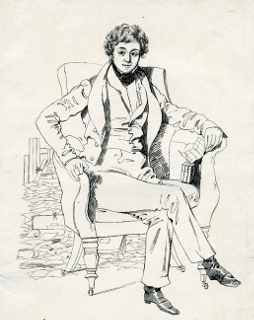
(Pictured: Marguerite, Countess of Blessington, painted by Sir Thomas Lawrence in 1822)

Leave a comment

Birth of William Maginn, Journalist & Writer

william-maginn

William Maginn, journalist and miscellaneous writer, is born in Cork on July 10, 1794.

Maginn becomes a contributor to Blackwood’s Magazine and, after moving to London in 1824, becomes for a few months in 1826 the Paris correspondent to The Representative, a paper started by John Murray, the publisher. When its short career is run, he helps to found in 1827 the ultra Tory Standard, a newspaper that he edits along with a fellow graduate of Trinity College, Dublin, Stanley Lees Giffard. He also writes for the more scandalous Sunday paper, The Age.

In 1830 Maginn instigates and becomes one of the leading supporters of Fraser’s Magazine. His Homeric Ballads, much praised by contemporary critics, are published in Fraser’s between 1839 and 1842. In 1837, Bentley’s Miscellany is launched, with Charles Dickens as editor, and Maginn writes the prologue and contributes over the next several years a series of “Shakespeare Papers” that examine characters in counter-intuitive fashion. From “The Man in the Bell” (Blackwood’s, 1821) through “Welch Rabbits” (Bentley’s, 1842) Maginn is an occasional though skillful writer of short fiction and tales. His only novel, Whitehall (1827) pretends to be a historical novel set in 1820s England written in the year 2227. It is a droll spoof of the vogue for historical novels as well as the contemporary political scene.

In 1836, Maginn fights a duel with Grantley Berkeley, a member of Parliament. Berkeley had brutally assaulted magazine publisher James Fraser over a review Maginn wrote of Berkeley’s novel Berkeley Castle, and Maginn calls him out. Three rounds are fired but no one is struck.

One of the most brilliant periodical writers of his time, Maginn leaves little permanent work behind him. In his later years, his intemperate habits land him in debtor’s prison. When he emerges through the grace of the Insolvent Debtor’s Act he is in an advanced stage of tuberculosis. He writes until the end, including in the first volume of Punch, but he dies in extreme poverty in Walton-on-Thames, London on August 21, 1842, survived by his wife Ellen, and daughters Annie and Ellen, and son John. His nephew Francis Maginn, who is deaf, is a co-founder of the British Deaf and Dumb Association, now called the British Deaf Association (BDA).


Leave a comment

Birth of Januarius MacGahan, Journalist & Correspondent

januarius-macgahan

Januarius Aloysius MacGahan, American journalist and war correspondent for the New York Herald and The Daily News, is born near New Lexington, Ohio on June 12, 1844. His articles describing the massacre of Bulgarian civilians by Turkish soldiers and irregular volunteers in 1876 creates public outrage in Europe and are a major factor in preventing Britain from supporting Turkey in the Russo–Turkish War of 1877–78, which leads to Bulgaria gaining independence from the Ottoman Empire.

MacGahan’s father is an immigrant from Ireland who had served on the Northumberland, the ship which took Napoleon into exile on Saint Helena. He moves to St. Louis, where he briefly works as a teacher and as a journalist. There he meets his cousin, General Philip Sheridan, an American Civil War hero also of Irish parentage, who convinces him to study law in Europe. He sails to Brussels in December 1868.

MacGahan does not get a law degree, but he discovers that he has a gift for languages, learning French and German. He runs short of money and is about to return to America in 1870 when the Franco-Prussian War breaks out. Sheridan happens to be an observer with the German Army, and he uses his influence to persuade the European editor of the New York Herald to hire MacGahan as a war correspondent with the French Army.

MacGahan’s vivid articles from the front lines describing the stunning defeat of the French Army win him a large following, and many of his dispatches to the Herald are reprinted by European newspapers. When the war ends, he interviews French leader Léon Gambetta and Victor Hugo and, in March 1871, he hurries to Paris and is one of the first foreign correspondents to report on the uprising of the Paris Commune. He is arrested by the French military and nearly executed and is only rescued through the intervention of the U.S. Minister to France Elihu B. Washburne.

In 1871 MacGahan is assigned as the Herald‘s correspondent to Saint Petersburg. He learns Russian, mingles with the Russian military and nobility, covers the Russian tour of General William Tecumseh Sherman and meets his future wife, Varvara Elagina, whom he marries in 1873. In 1874 he spends ten months in Spain, covering the Third Carlist War.

In 1876 MacGahan quarrels with James Gordon Bennett Jr., the publisher of the New York Herald, and leaves the newspaper. He is invited by his friend, Eugene Schuyler, the American Consul-General in Constantinople, to investigate reports of large-scale atrocities committed by the Turkish Army following the failure of an attempted uprising by Bulgarian nationalists in April 1876. He obtains a commission from The Daily News, then the leading liberal newspaper in England, and leaves for Bulgaria on July 23, 1876.

MacGahan reports that the Turkish soldiers have forced some of the villagers into the church, then the church is burned, and survivors tortured to learn where they have hidden their treasures. He says that of a population of seven thousand, only two thousand survive. According to his account, fifty-eight villages in Bulgaria are destroyed, five monasteries demolished, and fifteen thousand people in all massacred. These reports, published first in The Daily News, and then in other papers, cause widespread popular outrage against Turkey in Britain. The government of British Prime Minister Benjamin Disraeli, a supporter of Turkey, tries to minimize the massacres and says that the Bulgarians are equally to blame, but his arguments are refuted by the newspaper accounts of MacGahan.

In the wake of the massacres and atrocities committed by the Ottoman forces during the suppression of the April Uprising, as well as centuries-long conflicts between Russia and Turkey in Crimea, the Russian Government, stirred by anti-Turkish and Pan-Slavism sentiment, prepare to invade the Ottoman Empire, and declare war on it on April 24, 1877. The Turkish Government of Sultan Abdul Hamid II appeals for help to Britain, its traditional ally against Russia, but the British government responds that it cannot intervene “because of the state of public feeling.”

MacGahan is assigned as a war correspondent for The Daily News and, thanks to his friendship with General Skobelev, the Russian commander, rides with the first units of the Russian Army as it crosses the Danube into Bulgaria. He covers all the major battles of the Russo–Turkish War, including the Siege of Plevna and the Battle of Shipka Pass. He reports on the final defeat of the Turkish armies and is present at the signing of the Treaty of San Stefano, which ends the war.

MacGahan is in Constantinople, preparing to travel to Berlin for the conference that determines the final borders of Bulgaria, when he catches typhoid fever. He dies on June 9, 1878, and is buried in the Greek cemetery, in the presence of diplomats, war correspondents, and General Skobelev. Five years later his body is returned to the United States and reburied in New Lexington and a statue is erected in his honor by a society of Bulgarian Americans.


Leave a comment

Birth of Novelist Shan Fadh Bullock

shan-fadh-bullock

Novelist Shan Fadh Bullock is born on May 17, 1865, at Inisherk, County Fermanagh just outside the County Cavan border near Belturbet. His works include fourteen novels set in Ulster and he is admired by James Matthew Barrie and Thomas Hardy.

Bullock’s father, Thomas Bullock, is a strict man who has eleven children and drives several to emigration because of his stern demeanour. Thomas Bullock works on the Crom Castle estate which runs along the Cavan/Fermanagh border and has both Catholic and Protestant workers. Protestant workers have the prime jobs and are employed as craftsmen and supervisors while Catholics work in the outer area of the estate at unskilled jobs. Folk memories of the Battle of Newtownbutler in 1689 remain long in the memory in the area where up to 1,500 Jacobite troops are hacked down or drowned in Upper Lough Erne when pursued by the Williamite cavalry. Many of the Williamite army is drawn from the local Protestant population.

Bullock is educated at Crom estate primary school run by the Church of Ireland and Farra School near Bunbrosna, County Westmeath. He fails the entrance exams at the University of Dublin. He tries his hand at farming but finds he is not suited. He moves to London in 1883 and becomes a Civil Service clerk. He takes to journalism to supplement his salary and publishes his first book of stories, The Awkward squads, in 1893. His stories are centered on Irish Catholic and Protestant small farmers and labourers and their struggles and tensions. He marries Emma Mitchell in 1899 and they have a son and daughter.

Bullock is well respected in literary circles, but his books are never successful enough for him to become a full-time writer. He says that the English are not interested in Irish stories and that there is no reading public in Ireland. He dislikes Orange sectarianism and is ambivalent to Irish nationalism. His novel The Red Leaguers looks at sectarianism conflict and Robert Thorne examines the lives of London clerks which is a popular theme at the time. His last and best novel The Loughsiders is published in 1924 and is the story of a conniving smallholder based on William Shakespeare’s Richard III.

Shan Bullock’s wife dies in 1922. He spends the final years of his life in Sutton, Surrey and dies there on February 27, 1935.


Leave a comment

Death of Justin McCarthy, Novelist & Politician

justin-mccarthy

Justin McCarthy, Irish nationalist and Liberal historian, novelist and politician, dies on April 24, 1912. He is a Member of Parliament (MP) from 1879 to 1900, taking his seat in the House of Commons of the United Kingdom of Great Britain and Ireland.

McCarthy is born in Cork, County Cork on November 22, 1830, and is educated there. He begins his career as a journalist at the age of 18 in Cork. From 1853 to 1859 he is in Liverpool, on the staff of the Northern Daily Times. In March 1855, he marries Charlotte Ailman. In 1860 he moves to London, as parliamentary reporter to the Morning Star, of which he becomes editor in 1864. He gives up his post in 1868 and, after a lecturing tour in the United States, joins the staff of The Daily News as leader-writer in 1870. In this capacity he becomes one of the most useful and respected upholders of the liberal politics of the time. He lectures again in America in 1870–71 and in 1886–87.

McCarthy is first elected to Parliament at a by-election on April 4, 1879, when he is returned unopposed as a Home Rule League MP for County Longford. He is re-elected unopposed as a Parnellite Home Ruler in 1880, and when the two-seat Longford constituency is split into two divisions under the Redistribution of Seats Act 1885, he is elected as an Irish Parliamentary Party member for the new single-seat Northern division of Longford. His sole opponent, a Conservative, wins only 6% of the votes.

At the 1886 general election, he is returned unopposed in North Longford, but also stands in Londonderry City, where he is declared the loser to the Irish Unionist Alliance candidate by the narrow margin of 1778 votes to 1781. However, the result is later overturned on petition and McCarthy opts to sit for Derry City. During the divorce controversy surrounding Charles Stewart Parnell in November 1890, the British Prime Minister William Ewart Gladstone expresses a warning, given to McCarthy as intermediary, that if Parnell retains leadership of the Irish Parliamentary Party it will mean the loss of the next election, the end of their alliance and Home Rule. When the annual party leadership election meeting is called later that month, the threat is somehow not conveyed to the members, who re-elect Parnell leader of the Party.

After a further historical meeting of the Irish Party MPs in early December, Parnell refuses to retire and the Party divides. McCarthy becomes chairman of the Anti-Parnellite group, the Irish National Federation, for a year in 1891–1892. His nationalism is of a temperate and orderly kind, and though his personal distinction singles him out for the chairmanship during the party dissensions of this period, he is in no active sense the political leader.

At the 1892 general election, McCarthy again stands both in North Longford and in Derry City. In each seat there is a two-way contest between the Anti-Parnellite McCarthy and a Unionist candidate, but the narrow Unionist victory in Derry is not overturned, and McCarthy sits for North Longford, where he wins over 93% of the votes. He is returned unopposed for North Longford in 1895 United Kingdom general election in Ireland and stands down from Parliament at the 1900 United Kingdom general election in Ireland.

It is claimed that McCarthy’s true vocation is literature. His earliest publications are novels, some of which, such as A Fair Saxon (1873), Dear Lady Disdain (1875), Miss Misanthrope (1878), and Donna Quixote (1879), attain considerable popularity. His most important work is his History of Our Own Times, which treats of the period between Queen Victoria‘s accession and her Diamond Jubilee. He begins a History of the Four Georges (1884–1901) and the latter half is written by his son, Justin Huntly McCarthy.

Justin McCarthy dies at the age of 81 in Folkestone, Kent, England on April 24, 1912.


Leave a comment

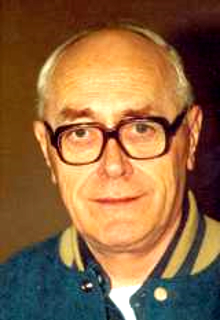
Birth of James White, Science Fiction Writer

james-whiteJames White, author of science fiction novellas, short stories and novels, is born in Belfast, Northern Ireland on April 7, 1928.

White is educated in Belfast at St. John’s Primary School and St. Joseph’s Technical Secondary School. As a teenager he lives with foster parents. He wants to study medicine but financial circumstances prevented this. Between 1943 and 1965 he works for several Belfast tailoring firms and then as assistant manager of a Co-op department store. He marries Margaret “Peggy” Sarah Martin, another science fiction fan, in 1955 and the couple has three children. He later works for the aeroplane builders Short Brothers as a technical clerk, publicity assistant and publicity officer.

White becomes a science fiction fan in 1941, attracted particularly by the works of E. E. “Doc” Smith, which features good aliens as well as evil ones, and of Robert A. Heinlein, many of whose stories concern ordinary people. In 1947 he meets another Irish fan, Walt Willis, and the two help to produce the fan magazines Slant and Hyphen, which feature stories and articles by noted authors including John Brunner, A. Bertram Chandler and Bob Shaw. In 2004 both White and Willis are nominated for the retrospective Hugo Award for Best Fan Writer of 1953, although neither wins. White says that he started writing stories because the Slant team felt that Astounding Stories of Super-Science was too dominated by prophesies of nuclear doom, and his friends dared him to write the kind of story that they all liked to read. Getting published is fairly easy during the 1950s, as the World War II restrictions on paper are ended, and there are at least 12 science magazines in Britain and about 40 in the United States. His first published short story, Assisted Passage, a parody of 1950s Anglo-Australian emigration policies, appears in the January 1953 edition of the magazine New Worlds. Further stories appear in New Worlds during the next few years, but White’s attempt to access the more lucrative American market by submitting stories to Astounding Stories of Super-Science stall after the publication of The Scavengers. As a result, White’s work is little-known outside the UK until the 1960s.

In 1957, Ace Books publishes White’s first novel, The Secret Visitors, which includes locations in Northern Ireland. Ace Books’ science fiction editor, Donald A. Wollheim, thinks the original ending is too tame and suggests that White should insert an all-out space battle just after the climactic courtroom scene. In November of the same year New Worlds publishes White’s novella Sector General, and editor John Carnell requests more stories set in the same universe, founding the series for which White is known best. White gains a steady following for his scientifically accurate stories, which are examples of hard science fiction in New Worlds, despite the magazine’s promotion of literary New Wave science fiction during the 1960s.

White keeps his job with Short Brothers and writes in the evenings, as his stories do not make enough money for him to become a full-time author. In 1980 he teaches a literature course at a Belfast branch of the Workers’ Educational Association. When diabetes has severely impaired his eyesight, he takes early retirement in 1984 and relocates to the north County Antrim resort town of Portstewart, where he continues to write. For many years he is a Council Member of the British Science Fiction Association and, with Harry Harrison and Anne McCaffrey, a Patron of the Irish Science Fiction Association. He is also a strong pacifist.

James White dies of a stroke in Portstewart, Belfast, Northern Ireland on August 23, 1999, while his novels Double Contact and The First Protector are being prepared for publication.


Leave a comment

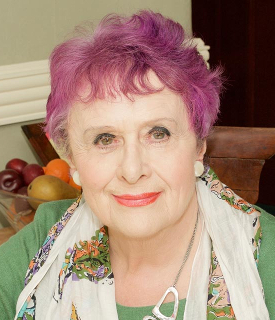
Birth of Author & Journalist Mary Kenny

mary-kenny

Mary Kenny, Irish author, broadcaster, playwright and journalist, is born in Dublin on April 4, 1944. She is a frequent columnist for the Irish Independent and is a founding member of the Irish Women’s Liberation Movement (IWLM). She has modified the radical ideas of her past but not rejected feminist principles.

Kenny grows up in Sandymount and is expelled from convent school at age 16. She begins working at the London Evening Standard in 1966 on the Londoner’s Diary, later as a general feature writer, and is woman’s editor of The Irish Press in the early 1970s.

Kenny is one of the founding members of the Irish Women’s Liberation Movement. Although the group has no formal structure of officials, she is often seen as the “ringleader” of the group. In March 1971, as part of an action by the IWLM, she walks out of Haddington Road church after the Archbishop of Dublin‘s pastoral is read out from the pulpit, confirming that “any contraceptive act is always wrong,” saying “this is Church dictatorship.” In a follow-up letter to The Irish Times she explains her actions by saying Ian Paisley was right, “Home Rule is Rome Rule.”

In 1971, Kenny travels with Nell McCafferty, June Levine and other Irish feminists on the so-called “Contraceptive Train” from Dublin to Belfast to buy condoms, then illegal within the Republic of Ireland. Later that year she returns to London as Features Editor of the Evening Standard.

In 1973, Kenny is allegedly “disturbed in the arms of a former cabinet minister of President Obote of Uganda during a party,” which leads poet James Fenton to coin the euphemism “Ugandan discussions” to mean sexual intercourse. The phrase is first used by the magazine Private Eye on March 9, 1973, but has been widely used since then and is included by the BBC in a list of “The 10 most scandalous euphemisms” in 2013.

Kenny has written for many British and Irish broadsheet newspapers, including the Irish Independent, The Times, The Guardian, The Daily Telegraph and The Spectator and has authored books on William Joyce and Catholicism in Ireland. She also writes for the weekly The Irish Catholic. She is known in the UK as a Roman Catholic journalist. Crown and Shamrock: Love and Hate between Ireland and the British Monarchy (2009), is described by R.F. Foster as “characteristically breezy, racy and insightful.” She is author of the play Allegiance, in which Mel Smith plays Winston Churchill and Michael Fassbender plays Michael Collins, at the Edinburgh Festival in 2006.

Kenny marries journalist and writer Richard West in 1974, and the couple raises two children, Patrick West and Ed West, both journalists.


Leave a comment

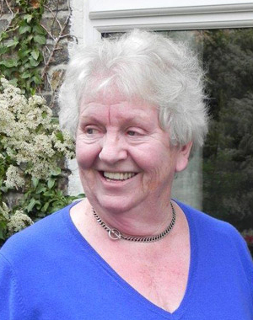
Birth of Nell McCafferty, Journalist & Feminist

nell-mccafferty

Nell McCafferty, Irish journalist, playwright, civil rights campaigner and feminist, is born in Derry, County Londonderry, Northern Ireland on March 28, 1944. In her journalistic work she has written for The Irish Press, The Irish Times, Sunday Tribune, Hot Press and The Village Voice.

McCafferty is born to Hugh and Lily McCafferty and spends her early years in the Bogside area of Derry. She is admitted to Queen’s University Belfast, where she takes a degree in Arts. After a brief spell as a substitute English teacher in Northern Ireland and a stint on an Israeli kibbutz, she takes up a post with The Irish Times.

McCafferty is a founding member of the Irish Women’s Liberation Movement. Her journalistic writing on women and women’s rights reflects her beliefs on the status of women in Irish society. In 1971, she travels to Belfast with other members of the Irish Women’s Liberation Movement in order to protest the prohibition of the importation and sale of contraceptives in the Republic of Ireland.

After the disintegration of the Irish Women’s Liberation Movement, McCafferty remains active in other women’s rights groups, as well as focusing her journalism on women’s rights. Her most notable work is her coverage of the Kerry Babies case, which is recorded in her book, A Woman to Blame. She contributes the piece “Coping with the womb and the border” to the 1984 anthology Sisterhood Is Global: The International Women’s Movement Anthology, edited by Robin Morgan.

In 1990, McCafferty wins a Jacob’s Award for her reports on the 1990 FIFA World Cup for RTÉ Radio 1‘s The Pat Kenny Show. She publishes her autobiography, Nell, in 2004. In it, she explores her upbringing in Derry, her relationship with her parents, her fears about being gay, the joy of finding a domestic haven with the love of her life, the Irish writer Nuala O’Faolain, and the pain of losing it.

In 2009, after the publication of the Murphy Report into the abuse of children in the Dublin archdiocese, McCafferty confronts Archbishop Diarmuid Martin asking him why the Catholic Church has not, as a “gesture of redemption,” relinquished titles such as “Your Eminence” and “Your Grace.”

McCafferty causes a controversy in 2010 with a declaration in a live Newstalk radio interview that the then Minister for Health, Mary Harney, is an alcoholic. This allegation leads to a court case in which Harney is awarded €450,000 the following year. McCafferty has very rarely been featured on live radio or television in Ireland as a commentator since the incident, despite being ever present in those media from 1990 forward. However, she has been featured on a number of recorded programs.

The Irish Times writes that “Nell’s distinctive voice, both written and spoken, has a powerful and provocative place in Irish society.”

McCafferty receives an honorary Doctor of Literature from University College Cork on November 2, 2016, for “her unparalleled contribution to Irish public life over many decades and her powerful voice in movements that have had a transformative impact in Irish society, including the feminist movement, campaigns for civil rights and for the marginalised and victims of injustice.”

McCafferty lives in Ranelagh, an area of Dublin.


Leave a comment

Death of War Correspondent William Howard Russell

william-howard-russell

Sir William Howard Russell, an Irish reporter with The Times and considered to be one of the first modern war correspondents, dies in London, England on February 11, 1907.

Russell is born in Tallaght, County Dublin on March 28, 1820. As a young reporter, he reports on the First Schleswig War, a brief military conflict between Prussian and Danish troops in Denmark in 1850.

Initially sent by editor John Delane to Malta to cover British support for the Ottoman Empire against Russia in 1854, Russell despises the term “war correspondent” but his coverage of the conflict brings him international renown, and Florence Nightingale later credits her entry into wartime nursing to his reports. The Crimean medical care, shelter and protection of all ranks by Mary Seacole is also publicised by Russell and by other contemporary journalists, rescuing her from bankruptcy.

His dispatches are hugely significant as for the first time the public can read about the reality of warfare. Shocked and outraged, the public’s backlash from his reports leads the Government to re-evaluate the treatment of troops and leads to Florence Nightingale’s involvement in revolutionising battlefield treatment.

On September 20, 1854, Russell covers the battle above the Alma River, writing his missive the following day in an account book seized from a Russian corpse. The story, written in the form of a letter to Delane, is supportive of the British troops and pays particular attention to the battlefield surgeons’ “humane barbarity” and the lack of ambulance care for wounded troops. He later covers the Siege of Sevastopol where he coins the phrase “thin red line” in referring to British troops at Balaclava.

Following Russell’s reports of the appalling conditions suffered by the Allied troops conducting the siege, including an outbreak of cholera, Samuel Morton Peto and his partners build the Grand Crimean Central Railway, which is a major factor leading to the success of the siege.

Russell spends December 1854 in Constantinople on holiday, returning in early 1855. He leaves Crimea in December 1855 to be replaced by the Constantinople correspondent of The Times.

In 1856 Russell is sent to Moscow to describe the coronation of Tsar Alexander II and in the following year is sent to India where he witnesses the final re-capture of Lucknow.

In 1861 Russell goes to Washington, D.C., returning to England in 1863. In July 1865 he sails on the SS Great Eastern to document the laying of the transatlantic telegraph cable and writes a book about the voyage with color illustrations by Robert Dudley. He publishes diaries of his time in India, the American Civil War and the Franco-Prussian War, where he describes the warm welcome given him by English-speaking Prussian generals such as Leonhard Graf von Blumenthal.

Russell retires as a battlefield correspondent in 1882 and founds the Army and Navy Gazette. He is knighted in May 1895 and is appointed a Commander of the Royal Victorian Order (CVO) by King Edward VII on August 11, 1902.

Sir William Howard Russell dies on February 11, 1907, and is buried in Brompton Cemetery, London.


Leave a comment

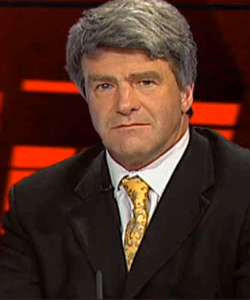
Birth of Journalist Eoghan Corry

eoghan-corry

Eoghan Corry, Irish journalist and author regarded as the most extensively traveled writer in Ireland, averaging over 30 countries a year, is born in Dublin on January 19, 1961.

Corry is the third of four children of Patrick Corry (1916–1971) from Kilmacduane, Cooraclare and Anne Corry (1929–2009) from Clahanmore, Milltown Malbay, both from County Clare. He grows up in Ardclough, Straffan, County Kildare.

Corry is educated at Scoil Mhuire, Clane, at the Dublin Institute of Technology (DIT) and University College Dublin (UCD). His first published work, as a teenager, is poetry in English and the Irish language in literary magazines and the New Irish Writing section of The Irish Press.

He begins his journalistic career as a sportswriter with The Irish Times and Sunday Tribune where he wins several awards and becomes sports editor. Determined to pursue a career outside of sports journalism, he joins The Sunday Press as a feature writer in 1985 and becomes features editor of The Irish Press in 1986, bringing younger writers and a more contemporary, polemical and literary style to the paper. He revives the literary and travel sections of the paper and is an adjudicator of the Dublin Theatre Festival awards.

When The Irish Press closes in 1995, he becomes Features Editor of the short-lived Evening News, storylines the Gaelic Athletic Association (GAA) museum in Croke Park in 1998 and is founding editor of High Ball magazine. Since then, he has been a columnist, first with The Sunday Business Post and then with the Evening Herald and Irish Independent. As a journalism lecturer in the Dublin Institute of Technology he tells students that “journalism is about pissing people off.”

Since 2002 Corry has edited Ireland’s biggest circulation travel publication, Travel Extra. He has fronted travel shows broadcast in Ireland and the Middle East and is a regular commentator on travel affairs to Raidió Teilifís Éireann (RTÉ) and TG4, and an occasional guest contributor to BBC Northern Ireland. He writes the ten-part series GAA@125, screened on Irish television station TG4 in 2009. He appears on Tonight with Vincent Browne from time to time to preview the next day’s newspapers.

Corry is awarded a lifetime “contribution to the industry” award at the Irish Travel Industry Awards in Dublin on January 22, 2016. He receives the Business Travel Journalist of the year award in London in October 2015. Previous awards include Irish sportswriter of the year, young journalist of the year, Seamus Kelly award, MacNamee award for coverage of Gaelic Games and is short listed for sports book of the year.