Bleakley runs for the Westminster seat of Belfast East in 1970 (gaining 41% of the vote), February 1974 and October 1974 for the Northern Ireland Labour Party each time, but never enough to win the Westminister seat from the Ulster Unionist Party (UUP). In 1971, Brian Faulkner appoints him as his Minister for Community Relations at Stormont, but as Bleakley is not an MP, he can only hold the post for six months. He resigns five days before his term expires in order to highlight his disagreement with government policy, specifically the failure to widen the government to include non-Unionist parties, and the decision to introduce internment. He writes a respectful biography of Faulkner and his own memoir of the period.
After the Parliament is abolished, Bleakley stands for, and is elected to, the Northern Ireland Assembly and its successor, the Northern Ireland Constitutional Convention. He stands again for Belfast East in the February and October UK general elections, but wins only 14% of the vote each time.
Morrison is the son of Daniel and Susan Morrison. His father works as a painter at the Harland & Wolff shipyard in East Belfast. His uncles, including Harry White, had been jailed for their part in the IRA‘s Northern Campaign in the 1940s. He joins Sinn Féin in 1966 and helps to organise 50th anniversary commemorations of the Easter Rising in Belfast. At this time, he later recalls, “as far as we were concerned, there was absolutely no chance of the IRA appearing again. They were something in history books.”
After the 1969 Northern Ireland riots, in which nationalist areas of Belfast are attacked and burned, Morrison joins the newly formed Provisional IRA. After this, he is engaged in clandestine republican activities, but as late as 1971, is still attending Belfast College of Business Studies and editing a student magazine there. He is interned in Long Kesh Detention Centre in 1972.
Morrison’s talents for writing and publicity are quickly recognised within the republican movement and after his release in 1975 he is appointed editor of Republican News. In this journal, he criticises many long-standing policies of the movement. At this time, he becomes associated with a grouping of young, left-wing Belfast based republicans, led by Gerry Adams, who want to change the strategy, tactics and leadership of the IRA and Sinn Féin.
With the rise of Adams’ faction in the republican movement in the late 1970s, Morrison succeeds Seán Ó Brádaigh as Director of Publicity for Sinn Féin. During the 1981 Irish hunger strike, he acts as spokesman for the IRA hunger strikers’ leader Bobby Sands, who is elected to the British Parliament on an Anti H-Block platform.
Morrison is elected as a Sinn Féin Member for Mid Ulster of a short-lived Northern Ireland Assembly from 1982 to 1986. He also stands unsuccessfully for the European Parliament in 1984 and again in 1989. He also stands for the Mid Ulster Westminster seat in 1983 and 1986. Along with Owen Carron, he is arrested on January 21, 1982, while attempting to enter the United States illegally from Canada by car. He is deported and later both men are convicted on a charge of making false statements to US immigration officials.
Morrison is director of publicity for Sinn Féin from 1979 until 1990, when he is charged with false imprisonment and conspiracy to murder a British informer in the IRA, Sandy Lynch. He is sentenced to eight years in prison and is released in 1995.
Since 1989, Morrison has published several novels and plays on themes relating to republicanism and events in the modern history of Belfast. His latest play, The Wrong Man, opens in London in 2005. It is based on his 1997 book of the same name and deals with the career of an IRA man who is suspected by his colleagues of working for the police.
The Bobby Sands Trust (BST) is formed after the 1981 Hunger Strike where ten republican prisoners die due to their hunger strike protest against the UK Government. The legal firm Madden & Finucane continues to act for the Trust whose original members are Gerry Adams, Danny Morrison, Tom Hartley, Tom Cahill, Marie Moore and Danny Devenny. For a time, Bobby’s two sisters, Marcella and Bernadette, are members of the Trust. Current members still include Adams, Morrison and Hartley. The BST claims to hold copyright to all the written works of Bobby Sands. The family of Sands has been critical of the BST, and they have called for it to disband.
Morrison lives in West Belfast with his Canadian-born wife, Leslie. He has two sons from his first marriage.
Dobbs is born in County Antrim on November 19, 1871 to barrister Conway Edward Dobbs who is Justice of the Peace for County Antrim, High Sheriff for Carrickfergus in 1875 and High Sheriff for County Louth in 1882. Her mother is Sarah Mulholland, daughter of St. Clair Kelvin Mulholland of Eglantine, County Down. The family spends time living in Dublin where Dobbs is born. She attempts to learn Irish, however, when her father dies in 1898 her mother moves the family back to Glenariff.
Dobbs is interested in learning Irish and finds it easier to learn in County Donegal where it is still spoken. Her first teacher is Hugh Flaitile. She attends the Irish College at Cloughaneely in the Donegal Gaeltacht. She brings the idea of promoting the language to the Glens of Antrim and her circle of friends. She is one of the small number of Protestant women interested in the Gaelic revival.
The year 1904 sees the “Great Feis” in Antrim and Dobbs is a founder member of the Feis na nGleann committee and later a tireless literary secretary. In 1946, the Feis committee decides to honour her by presenting her with an illuminated address. It can be seen today at Portnagolan House with its stained glass windows commemorating a great Irishwoman. During her speech she says, “Ireland is a closed book to those who do not know her language. No one can know Ireland properly until one knows the language. Her treasures are hidden as a book unopened. Open the book and learn to love your language.”
Dobbs writes seven plays, published by Dundalgan Press in 1920, though only three are actually performed. The Doctor and Mrs. McAuley wins the Warden trophy for one-act plays at the Belfast festival in 1913. Her plays, however, are generally not a success and after 1920 she never writes another. She continues to work on historical and archaeological studies and her articles are published in the Ulster Journal of Archaeology, in a German magazine for Celtic studies, in the French Revue Celtique and in the Irish magazine Ériu.
Roger Casement is a good friend and although Dobbs never makes her political opinions known she contributes to his defence costs when he is accused of treason. Although her political views are not clearly known, Dobbs has been a member of the Gaelic League and in the executive of Cumann na mBan.
Dobbs dies at her home, Portnagolan House, Cushendall, on January 2, 1962.
The Irish Republican Army (IRA) begins what it calls “The Campaign of Resistance to British Occupation” on December 12, 1956. Also known as the “Border Campaign,” it is a guerrilla warfare campaign carried out by the IRA against targets in Northern Ireland, with the aim of overthrowing British rule there and creating a united Ireland. Although the campaign is a military failure, but for some of its members, the campaign is justified as it keeps the IRA engaged for another generation.
The border campaign is the first major military undertaking carried out by the IRA since the 1940s, when the harsh security measures of the Republic of Ireland and Northern Ireland governments had severely weakened it. In 1939 the IRA tries a bombing campaign in England to try to force British withdrawal from Northern Ireland. From 1942 to 1944 it also mounts an ineffective campaign in Northern Ireland. Internment on both sides of the border, as well as internal feuding and disputes over future policy, all but destroy the organisation. These campaigns are officially called off on March 10, 1945. By 1947, the IRA has only 200 activists, according to its own general staff.
Chief of Staff of the Irish Republican ArmyTony Magan sets out to create “a new Army, untarnished by the dissent and scandals of the previous decade.” Magan believes that a degree of political mobilization is necessary and the relationship with Sinn Féin, which had soured during the 1930s, is improved. At the 1949 IRA Convention, the IRA orders its members to join Sinn Féin, which partially becomes the “civilian wing” of the IRA.
By the mid-1950s, the IRA has substantially re-armed. This is achieved by means of arms raids launched between 1951 and 1954, on British military bases in Northern Ireland and England. By 1955, splits are occurring in the IRA, as several small groups, impatient for action, launch their own attacks in Northern Ireland. In November 1956, the IRA finally begins planning its border campaign.
On December 12 the campaign is launched with simultaneous attacks by around 150 IRA members on targets on the Border in the early hours. A BBCrelay transmitter is bombed in Derry, a courthouse is burned in Magherafelt by a unit led by an 18-year-old Seamus Costello, as is a B-Specials post near Newry and a half-built Army barracks at Enniskillen is blown up. A raid on Gough Barracks in Armagh is beaten off after a brief exchange of fire.
The IRA issues a statement announcing the start of the campaign, “Spearheaded by Ireland’s freedom fighters, our people have carried the fight to the enemy…Out of this national liberation struggle a new Ireland will emerge, upright and free. In that new Ireland, we shall build a country fit for all our people to live in. That then is our aim: an independent, united, democratic Irish Republic. For this we shall fight until the invader is driven from our soil and victory is ours.”
The year 1957 is the most active year of the IRA’s campaign, with 341 incidents recorded. The most dramatic attack of the whole campaign takes place on January 1 when fourteen IRA volunteers, including Séan Garland, Alan O Brien and Dáithí Ó Conaill plan an attack on a joint Royal Ulster Constabulary (RUC)/B-Specials barracks in Brookeborough, County Fermanagh, though they attack the wrong building. On 11 November, the IRA suffers its worst loss of life in the period when four of its members die preparing a bomb in a farmhouse at Edentubber, County Louth, which explodes prematurely. The civilian owner of the house is also killed.
By 1958, the campaign’s initial impetus has largely dissipated. Certain IRA activities produce public hostility, and by 1958, there are already many within the IRA in favour of calling off the campaign. The Cork IRA, for instance, has effectively withdrawn. By mid-1958, 500 republicans are in gaol or interned, North and South.
The period after the summer of 1958 sees a steep drop in the intensity of the IRA campaign. That the IRA’s campaign had run its course by 1960 is testified by the fact that the Republic of Ireland’s government closes the Curragh Camp, which housed internees in the South, on March 15, 1959, judging them to be no further threat. The Northern Irish government follows suit on April 25, 1961.
In November 1961 a RUC officer, William Hunter, is killed in a gun battle with the IRA in south County Armagh. This is the final fatality of the conflict. Minister for JusticeCharles Haughey reactivates the Special Criminal Court, which hands down long prison sentences to convicted IRA men.
Although it had petered out by the late 1950s, by late 1961 the campaign is over and is officially called off on February 26, 1962, in a press release issued that day, drafted by Ruairí Ó Brádaigh who consults with several other persons including members of the IRA Army Council. The campaign costs the lives of eight IRA men, four republican supporters and six RUC members. In addition, 32 RUC members are wounded. A total of 256 Republicans are interned in Northern Ireland during this period and another 150 or so in the Republic. Of those in Northern Ireland, 89 sign a pledge to renounce violence in return for their freedom.
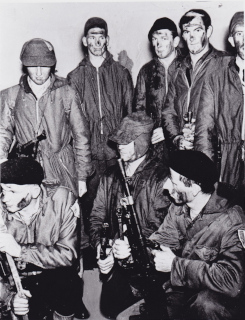
(Pictured: A group of IRA men before embarking on an operation in the 1950s | Photo credited to http://laochrauladh.blogspot.ie/)
Tod is born on May 18, 1836, in Edinburgh into a well-known Irish Presbyterian family, her uncle being the Rev. Hope Masterton Waddell, one of the earliest Irish Presbyterian missionaries who served with the Scottish Missionary Society in Jamaica and whose great grandfather is the Rev. Charles Masterton, one of the most distinguished minsters of the General Synod of Ulster who ministers at Connor and Rosemary Street, Belfast. She is very proud of her Presbyterian heritage and of her Scottish ancestry.
The daughter of James Banks Tod, an Edinburgh merchant, Tod spends her early years in Edinburgh. She is educated at home by her mother, Maria Isabella Waddell, who comes from County Monaghan. The family moves to Belfast in the 1850s following the death of her father. She and her mother join Elmwood Presbyterian Church. Her Presbyterian background no doubt contributes to her radical views on social issues and women’s rights. She earns her living from writing and journalism, contributing, for example, to the Dublin University Magazine, an independent literary, cultural and political magazine, and to the Banner of Ulster, a Presbyterian newspaper.
Tod becomes one of the leading pioneers in the fight to improve the position of women. She is the only woman called to give evidence to a Select Committee of Enquiry on the reform of the married women’s property law in 1868 and serves on the executive of the Married Women’s Property Committee in London from 1873 to 1874. She successfully campaigns for the repeal of the Contagious Diseases Acts of 1864, 1866 and 1869 which enacted that a woman suspected of being a prostitute could be arrested and forced to undergo medical examination for venereal disease. She sees this legislation as an infringement of a woman’s civil liberties.
Tod is also a strong supporter of the temperance movement and, along with her friend Margaret Byers, forms the Belfast Women’s Temperance Association in 1874. Perhaps she is best known for her tireless campaign to extend the educational provision for middle-class women. For example, in 1878 she organises a delegation to London to put pressure on the Government to include girls in the Intermediate Education Act of 1878. The Ladies’ Collegiate School in Belfast, Alexandra College in Dublin and the Belfast Ladies Institute owe their existence largely to her. She writes a paper entitled “An Advanced Education for Girls in the Upper and Middle Classes” which is presented in 1867 at a meeting of the National Association for the Promotion of Social Science and is among the pamphlets held in the Presbyterian Historical Society of Ireland library.
Tod is also an active campaigner for women’s right to vote, embarking on her first campaign in 1872 and addressing meetings in Belfast, Carrickfergus, Coleraine and Londonderry. Following a meeting in Dublin a suffrage committee is established that later becomes the Dublin Women’s Suffrage Society and in 1873 she forms the North of Ireland Women’s Suffrage Society. She extends her meetings to London, Glasgow and Edinburgh and is a frequent visitor to London to lobby politicians during the parliamentary session.
Tod is very much a staunch opponent of Home Rule, establishing a branch of the London-based Women’s Liberal Federation in Belfast and the Liberal Women’s Unionist Association. She sees unionism as the way to progress. “I knew that all the social work in which I had taken so prominent a part for 20 years was in danger and most of it could not exist a day under a petty legislature of the character which would be inevitable,” she says. “What we dread is the complete dislocation of all society, especially in regard to commercial affairs and organised freedom of action.”
Tod suffers from ill-health in her later days and dies in Belfast of pulmonary illness on December 8, 1896. She is buried in Balmoral Cemetery in South Belfast.
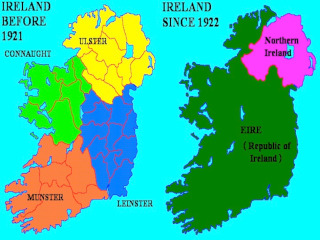
The six counties of what would become Northern Ireland opt out of the Irish Free State on December 7, 1922, and become a separate political entity with allegiance to England.
As originally enacted, the Irish Free State Constitution Act 1922 consists of a preamble, five sections (three of which are very brief), and a schedule. The schedule is the text of the Constitution of the Irish Free State (Saorstát Éireann) Act 1922, which had been passed in Ireland by the Third Dáil sitting as a constituent assembly and provisional parliament for the nascent Free State. This Irish Act itself has two schedules, the first being the actual text of the Constitution, and the second the text of the 1921 Treaty, formally the Articles of Agreement for a treaty between Great Britain and Ireland.
The Irish Act had been approved by the Irish constituent assembly on 25 October 25, 1922. The bill for the UK Act is introduced by the Prime MinisterBonar Law into the Parliament of the United Kingdom in November 1922. The bill’s third reading in the House of Commons is on November 30. The Act receives Royal assent on December 5, 1922.
On December 7, 1922, the day after the establishment of the Irish Free State, the Parliament of Northern Ireland addresses King George V requesting its secession from the Irish Free State. The address is unanimous, with the abstentionistNationalist Party and Sinn Féin members absent. The King replies shortly thereafter to say that he has caused his Ministers and the Government of the Irish Free State to be informed that Northern Ireland is to do so.
After the Statute of Westminster 1931, the UK government recognises the right of the Irish government to amend or repeal the UK act, but in fact the Irish government does not do so until it is formally repealed as spent by the Statute Law Revision Act 2007. The Irish government amends the Irish act in 1933 and the 1937 Constitution of Ireland repeals the entire Free State constitution. The UK Judicial Committee of the Privy Council rules in 1935 that the 1933 Act had implicitly amended the UK Act with respect to the jurisdiction of the Free State. The Supreme Court of Ireland has taken the view that the Free State constitution was enacted by the Irish Act, not by the subsequent UK Act. This reflects the view of popular sovereignty rather than parliamentary sovereignty, with the constitution’s legitimacy ultimately springing from the 1922 Irish general election.
The bomb is manufactured by the INLA in nearby Derry. One of those involved later reveals that the INLA unit had carried out reconnaissance missions to the Droppin’ Well to see if there were enough soldiers to justify the likelihood of civilian casualties.
On the evening of December 6, 1982, an INLA member leaves a bomb inside the pub. There are about 150 people inside. The Royal Ulster Constabulary (RUC) believe that the bomb, estimated to be 5 to 10 pounds of commercial (Frangex) explosives, is small enough to fit into a handbag. It has, however, been left beside a support pillar and, when it explodes at about 11:15 PM, the blast brings down the roof. Many of those killed and injured are crushed by fallen masonry.
Following the blast, it takes a few hours to pull survivors from the rubble. The last survivor is freed at 4:00 AM, but it is not until 10:30 AM that the last of the bodies is recovered. Ultimately, 17 people die and 30 are injured, some seriously. Five of the civilians are young women and three (Alan Callaghan, Valerie McIntyre and Angela Maria Hoole) are teenagers. Angela Hoole is celebrating her engagement to one of the soldiers who survives the incident. Of the eleven soldiers who die, eight are from the 1st Battalion Cheshire Regiment, two from the Army Catering Corps and one from The Light Infantry. One of those on the scene is Bob Stewart, then a company commander in the Cheshire Regiment. He loses six soldiers from his company and is deeply affected as he tends to the dead and injured.
Suspicion immediately falls upon the Provisional Irish Republican Army (IRA), who denies involvement. By December 8, the British Army is blaming the INLA on grounds that the IRA, in a mixed village, would have made greater efforts not to risk killing civilians. Shortly afterwards, the INLA issues a statement of responsibility.
The INLA describes the civilians killed as “consorts.” The attack is criticised by many on both sides of the conflict in Northern Ireland due to the high loss of civilian lives. Soon after the INLA had issued its statement, the government of the Republic of Ireland bans the INLA, making membership punishable by seven years imprisonment.
In an interview after the bombing, INLA leader Dominic McGlinchey says that the Droppin’ Well’s owner had been warned six times to stop offering entertainment to British soldiers. He adds that the owner, and those who socialise with the soldiers, “knew full well that the warnings had been given and that the place was going to be bombed at some stage.” It later emerges that the INLA may also have targeted Ballykelly because it believed that the military base was part of NATO‘s radar and communications network.
Six days after the bombing, RUC officers shoot dead INLA members Seamus Grew and Roddie Carroll near a vehicle checkpoint in Armagh. The officers say they believed that the two men were ferrying McGlinchey into Northern Ireland. Neither was armed, nor was McGlinchey in their car.
In June 1986, four INLA members, sisters Anna Moore and Helena Semple, Eamon Moore (no blood relation) and Patrick Shotter, receive life sentences for the attack. Anna Moore later marries loyalist Bobby Corry while both are in prison. Anna’s daughter, Jacqueline Moore, is given ten years for manslaughter as the court believes she had been coerced into involvement. She is pregnant during her arrest and later gives birth in jail. All of those convicted are from Derry.
(Pictured: The Droppin’ Well bar and disco in Ballykelly destroyed by a Irish National Liberation Army bomb in 1982. Credit: PA Wire)
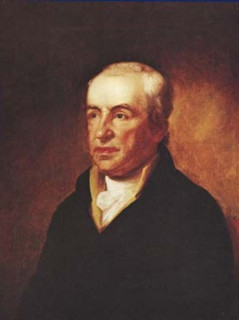
Dunlap is born in 1747 in Strabane, County Tyrone, in what is now Northern Ireland. When he is ten years old, he goes to work as an apprentice to his uncle, William Dunlap, a printer and bookseller in Philadelphia. In 1766, William Dunlap leaves the business in the care of his nephew, who eventually purchases the business. Initially he makes a living by printing sermons, broadsides and handbills. In November 1771, he begins the publication of the Pennsylvania Packet, or General Advertiser, a weekly newspaper. In 1773 he marries Elizabeth Hayes Ellison.
In 1776, Dunlap secures a lucrative printing contract for the Continental Congress. In July 1776, fighting between the American colonists and the British forces had been going on for over a year. On July 2, the Second Continental Congress votes on the Lee Resolution to secede. Two days later, they approve the final wording of a public declaration regarding their decision, which ultimately comes to be known as the Declaration of Independence. President of Congress John Hancock signs the fair copy with Secretary of Congress Charles Thomson attesting it. That evening Hancock orders Dunlap to print broadside copies of the declaration. He prints perhaps 200 broadsides, since known as the Dunlap broadsides, which are the first published versions of the Declaration.
Dunlap also prints items for Pennsylvania’s revolutionary government. In 1777 he takes over the printing of the Journals of the Continental Congress from Robert Aitken, but loses the contract in 1779 after printing in his newspaper a letter from Thomas Paine that leaks news of the secret French aid to the Americans.
In 1784, Dunlap’s paper becomes a daily with a new title: the North American and United States Gazette. It is not the first daily in the United States as the Pennsylvania Evening Post is the first in 1783, but it becomes the first successful daily.
Continuing to serve the changing needs of the government, Dunlap and his partner David Claypoole print the Constitution of the United States on September 19, 1787 for use by the Constitutional Convention, and later publish it for the first time in the Pennsylvania Packet.
Dunlap’s major financial success comes from real estate speculation. During the American Revolutionary War, he purchases property confiscated from Loyalists who refuse to take Pennsylvania’s new loyalty oath. After the war, he purchases land in Kentucky. By 1795, when he is forty-eight, he is able to retire with a sizable estate. Retirement does not agree with him, however. According to his friend, Dr. Benjamin Rush, he becomes a drunkard in his final years. He dies in Philadelphia on November 27, 1812.
McMahon plants a bomb in Shadow V, a 27-foot fishing boat belonging to Mountbatten at Mullaghmore, near Donegal Bay. Lord Mountbatten and the others are killed on August 27, 1979, when the bomb detonates. The other victims are Doreen Knatchbull, Baroness Brabourne, Mountbatten’s elder daughter’s mother-in-law, his grandson Nicholas Knatchbull and 15-year-old crewmember Paul Maxwell.
McMahon is arrested by the Garda, the Republic of Ireland‘s police force, two hours before the bomb detonates at a Garda checkpoint between Longford and Granard on suspicion of driving a stolen vehicle.
The IRA claims responsibility for the act in a statement released immediately afterwards. In the statement from the organisation they say, “This operation is one of the discriminate ways we can bring to the attention of the English people the continuing occupation of our country.”
McMahon is tried for the assassinations in the Republic of Ireland and convicted by forensic evidence supplied by Dr. James O’Donovan that shows flecks of paint from the boat and traces of nitroglycerine on his clothes. He is sentenced to life imprisonment for murder on November 23, 1979, but is released in 1998 under the terms of the Good Friday Agreement.
Following his release, Toby Harnden in Bandit Country: The IRA & South Armagh (1999) reports that McMahon is holding a tricolour in the first rank of the IRA colour party at a 1998 IRA meeting in Cullyhanna. However, according to a BBC report, McMahon says that he left the IRA in 1990.
McMahon twice refuses to meet John Maxwell, the father of Paul Maxwell, who seeks him out to explain the reasons for his son’s death. In a May 2011 interview for The Telegraph, Maxwell states that he had “made two approaches to McMahon, the first through a priest, who warned me in advance that he thought there wouldn’t be any positive response. And there wasn’t. I have some reservations about meeting him, obviously – it might work out in such a way that I would regret having made the contact. On the other hand, if we met and I could even begin to understand his motivation. If we could meet on some kind of a human level, a man-to-man level, it could help me come to terms with it. But that might be very optimistic. McMahon knows the door is open at this end.”
McMahon likewise refuses requests from Nicholas Knatchbull’s twin brother, who lost an eye in the same explosion. The latter, however, has forgiven McMahon and other members of the IRA who committed the act.
McMahon’s wife has stated, “Tommy never talks about Mountbatten, only the boys who died. He does have genuine remorse. Oh God yes.”
McMahon lives with his wife Rose in Lisanisk, Carrickmacross, County Monaghan. He has two grown sons. He helps with Martin McGuinness‘s presidential campaign in 2011, erecting posters for McGuinness around Carrickmacross.
Logue is born in Kilmacrennan, County Donegal in the west of Ulster on October 1, 1840. He is the son of Michael Logue, a blacksmith, and Catherine Durning. From 1857 to 1866, he studies at Maynooth College, where his intelligence earns him the nickname the “Northern Star.” Before his ordination to the priesthood, he is assigned by the Irish bishops as the chair of both theology and belles-lettres at the Irish College in Paris in 1866. He is ordained priest in December of that year.
Logue remains on the faculty of the Irish College until 1874, when he returns to Donegal as administrator of a parish in Letterkenny. In 1876, he joins the staff of Maynooth College as professor of Dogmatic Theology and Irish language, as well as the post of dean.
On May 13, 1879, Logue is appointed Bishop of Raphoe by Pope Leo XIII. He receives his episcopal consecration on the following July 20 from Archbishop Daniel McGettigan, with Bishops James Donnelly and Francis Kelly serving as co-consecrators, at the pro-cathedral of Raphoe. He is involved in fundraising to help people during the 1879 Irish famine, which, due to major donations of food and government intervention never develops into a major famine. He takes advantage of the Intermediate Act of 1878 to enlarge the Catholic high school in Letterkenny. He is also heavily involved in the Irish temperance movement to discourage the consumption of alcohol.
Logue publicly supports the principle of Irish Home Rule throughout his long reign in both Raphoe and Armagh, though he is often wary of the motives of individual politicians articulating that political position. He maintains a loyal attitude to the British Crown during World War I, and on June 19, 1917, when numbers of the younger clergy are beginning to take part in the Sinn Féin agitation, he issues an “instruction” calling attention to the teaching of the Roman Catholic Church as to the obedience due to legitimate authority, warning the clergy against belonging to “dangerous associations,” and reminding priests that it is strictly forbidden by the statutes of the National Synod to speak of political or kindred affairs in the church.
Logue opposes the campaign of murder against the police and military begun in 1919, and in his Lenten pastoral of 1921 he vigorously denounces murder by whomsoever committed. This is accompanied by an almost equally vigorous attack on the methods and policy of the government. He endorses the Anglo-Irish Treaty in 1921.
In 1921, the death of Cardinal James Gibbons makes Logue archpriest (protoprete) of the College of Cardinals. He is more politically conservative than Archbishop of DublinWilliam Joseph Walsh, which creates tension between Armagh and Dublin. In earlier life he was a keen student of nature and an excellent yachtsman.
Cardinal Michael Logue dies in Ara Coeli, the residence of the archbishop, on November 19, 1924, and is buried in a cemetery in the grounds of St. Patrick’s Cathedral, Armagh.





 seamus dubhghaill