Discontented with James Chichester-Clark and Brian Faulkner who come to government after O’Neill’s 1969 fall from power, Boal resigns from the UUP in 1971 and joins Ian Paisley in establishing the Democratic Unionist Party (DUP) in order to provide dissident unionist opinion with a viable political alternative. He works as the first chairman and one of the first public representatives of the DUP and continues to sit in Stormont during the years of 1971–1972. He later resumes his practice as a barrister.
While Boal’s interest in federalism diminishes after the 1970s, the federalist Boal scheme of January 1974 is again put forward by liberal protestants such as John Robb as late as 2007. His friendship with Paisley finally breaks when the DUP agrees to enter government with Sinn Féin in 2007. He tells Paisley, who takes the breach very hard, that he had betrayed everything he ever advocated.
In January 1919, Sinn Féin MPs refuse to recognise the Parliament of the United Kingdom and instead assembles in the Mansion House, Dublin as a revolutionary parliament called Dáil Éireann. McCan never sits in Dáil Éireann, dying in prison on March 6, 1919, during the Spanish flu pandemic. On March 9, 1919, he is buried in Dualla, Cashel, County Tipperary.
No by-election is called to replace him in the UK constituency. After April 1, 1922, the Irish Free State (Agreement) Act 1922 prohibits any by-election, and the constituency is abolished when parliament is dissolved on October 26, 1922, for the general election on November 15.
The First Dáil also considers how to fill the vacancy. A select committee in April recommends that the local Sinn Féin organisation which nominated him should nominate his replacement. A June proposal to postpone action, either for six months or until a Westminster by-election is held, is referred to another committee, which recommends that “in view of the circumstances which occasioned the vacancy, it was due to the memory of the late Pierce McCann that his place should not be filled at present.”
On April 10, 1919, Cathal Brugha tells the First Dáil: “Before I formally move the motion, as I have mentioned the name of Pierce McCan, I would ask the Members of the Dáil to stand up as a mark of our respect to the first man of our body to die for Ireland, and of our sympathy with his relatives. We are sure that their sorrow is lightened by the fact that his death was for the cause for which he would have lived, and that his memory will ever be cherished in the hearts of the comrades who knew him, and will be honoured by succeeding generations of his countrymen with that of the other martyrs of our holy cause.” The McCan Barracks in Templemore, County Tipperary, is named after him.
Sir Henry Sidney, English soldier, politician and Lord Deputy of Ireland from 1565 to 1571 and from 1575 to 1578, is born on July 20, 1529, probably in London. He cautiously implements Queen Elizabeth I’s policy of imposing English laws and customs on the Irish.
Sidney is the eldest son of Sir William Sidney of Penshurst, England and Anne Pakenham. William Sidney is a prominent politician and courtier during the reigns of Henry VIII and Edward VI, from both of whom he receives extensive grants of land, including the manor of Penshurst in Kent, which becomes the principal residence of the family.
Sidney is brought up at court as the companion of Prince Edward, afterward King Edward VI, and continues to enjoy the favour of the Crown, serving under Mary I of England and then, particularly, throughout the reign of Queen Elizabeth I. He is instrumental in the Elizabethan conquest of Ireland, serving as Lord Deputy three times. His career is controversial both at home and in Ireland.
Appointed Lord Deputy by Elizabeth in 1565, Sidney faces a major rebellion in Ulster led by the powerful chieftain Shane O’Neill. Failing to subdue O’Neill by force, he intrigues against him with his enemies, the O’Donnells of Tyrconnell and the MacDonnells of Antrim. Finally, O’Neill is assassinated by the MacDonnells in 1567. Nevertheless, Sidney is still not strong enough to destroy completely the power of Ulster’s native chieftains. He does, however, persuade a number of Irish chiefs to submit to Elizabeth’s authority, and he establishes English presidents of Munster and Connacht to control the chiefs. In addition, by refraining from introducing anti-Roman Catholic legislation in the Parliament of Ireland of 1569–71, he makes possible the containment and ultimate defeat in 1573 of a rebellion of Munster Catholics led by James FitzMaurice FitzGerald.
Resenting the Queen’s failure to provide him with an adequate military force, Sidney resigns in 1571, but is reappointed Lord Deputy four years later. His arbitrary taxation arouses popular resentment and leads to his recall in 1578. Thereafter he serves only as president of the Council of Wales and the Marches, living chiefly at Ludlow Castle for the remainder of his life, dying there at the age of 56 on May 5, 1586.
Born at 35 William Street in Wexford on September 17, 1886, Corish is the eldest child of carpenter Peter Corish and Mary Murphy. He is educated by the Christian Brothers in the town on George’s Street and leaves school at fourteen years old, which is not unusual at this time.
On September 29, 1913, at 27 years of age, he marries Catherine Bergin, daughter of labourer Daniel Bergin. They have six children, including Brendan.
Corish works as a fitter in the Wexford Engineering foundry the Star Iron Works. It is in this job that he witnesses the poor working conditions that industrial workers have to face all over the country. Many people of Ireland feel that this needs to change and so, in 1909, James Larkin forms the Irish Transport and General Workers’ Union (ITGWU). Many important figures join the union including P. T. Daly, James Connolly and eventually Corish himself, who becomes a voice for the Wexford workers.
The Wexford lockout from 1911 to 1912 that ensues because of this union is the event that first brings public attention to Corish in his hometown. Wexford employers counter the ITGWU by locking out their employees. On a conciliation committee, Corish represents the workers of the town and becomes a leader of this local union. During the lockout, he is arrested, spending a night in jail, for expressing his anger to a recently employed non-union foundry worker.
When visiting Wexford to support the workers, ITGWU leader James Larkin and trusted members James Connolly and P. T. Daly are put up in the Corish household on William Street.
In February 1912, the dispute is resolved with the introduction of the Irish Foundry Workers’ Union of which Corish is secretary until 1915. His career as a tradesman however is over as he is blacklisted by all employers. This new union is absorbed by the ITGWU two years later. He remains a respected figure in the town, especially by the foundry workers, and continues as secretary in the ITGWU until 1921.
Corish first takes his seat in the Wexford Borough Council in January 1913, where he is given the title of “Alderman.”
In May 1916, Corish is arrested after being suspected of having involvement in the Easter Rising and is imprisoned in Stafford, England until June. He is often targeted because of his republican activism, receiving a life-threatening letter in 1920 regarding the killing of Royal Irish Constabulary (RIC) officers.
Corish is first elected to Wexford County Council in 1920 and later that year is appointed mayor of the town.
Corish is an Irish Labour Party representative. However, as the Labour Party in the southern 26 counties, later the Irish Free State, choose not to contest the 1921 Irish elections, Corish runs as a Sinn Féin candidate and is elected to Dáil Éireann for the Wexford constituency.
Corish supports the Anglo-Irish Treaty and votes in favour of it. He also runs as a member of the Labour Party at the 1922 Irish general election. His involvement in the trade union movement and his clear speech-giving skills displayed during a visit from Michael Collins to Wexford that same year are what give him a fighting chance in the election. He is elected and serves in Dáil Éireann until his death in 1945.
He is a public supporter of the Garda Síochána, expressing his disagreement with the reductions in Garda pay and allowances in 1924 and 1929.
Corish is a recipient of the Honorary Freedom of the Borough of Wexford in early 1945 and dies later that year, on July 19, 1945, after serving as mayor and council member for 25 years. During exploratory surgery for stomach pain, the doctors of Wexford County Hospital realise that his condition is much worse than imagined and he dies at the age of 58 shortly thereafter. After appearing in the Dáil only a few days prior, his death is unexpected.
His death causes a by-election to the Dáil which is won by his son, Brendan Corish, who is later a leader of the Labour Party and Tánaiste. He serves as mayor up until his retirement in 1982. Another son, Des Corish, later also becomes mayor of the town. Corish’s granddaughter, Helen Corish, is mayor in 1990.
Corish Park is built in his honour in the early 1950s.
Kilfedder leaves the UUP in 1977 in opposition to the party’s policies tending to integrationism, preferring to advocate the restoration of the Stormont administration. For a time he sits as an “Independent Ulster Unionist.” He contests the 1979 European Parliament election under that label, finishing fourth in the count for the three seats, having overtaken the UUP leader Harry West on transfers.
On March 20, 1995, while traveling by train into London from Gatwick Airport, Kilfedder dies of a heart attack. This is the same day that the Belfast Telegraph carries a front-page story saying that an Ulster MP has been targeted as one of twenty MPs invited by the LGBT rights organisation OutRage! in a letter to come out. He dies unmarried and is survived by two sisters.
Hyde is born at Longford House in Castlerea, County Roscommon, on January 17, 1860. In 1867, his father is appointed prebendary and rector of Tibohine, and the family moves to neighbouring Frenchpark, in County Roscommon. He is home schooled by his father and his aunt due to a childhood illness. While a young man, he becomes fascinated with hearing the old people in the locality speak the Irish language.
Rejecting family pressure to follow previous generations with a career in the Church, Hyde instead becomes an academic. He enters Trinity College, Dublin (TCD), where he gains a great facility for languages, learning Latin, Greek, Hebrew, French, and German, but his great passion in life is the preservation of the Irish language.
After spending a year teaching modern languages in Canada, Hyde returns to Ireland. For much of the rest of his life he writes and collects hundreds of stories, poems, and folktales in Irish, and translates others. His work in Irish helps to inspire many other literary writers, such as W. B. Yeats and Lady Gregory.
In 1892, Hyde helps establish the Gaelic Journal and in November of that year writes a manifesto called The necessity for de-anglicising the Irish nation, arguing that Ireland should follow her own traditions in language, literature, and even in dress.
In 1893, Hyde founds the Gaelic League (Conradh na Gaeilge) along with Eoin MacNeill and Fr. Eugene O’Growney and serves as its first president. Many of the new generation of Irish leaders who play a central role in the fight for Irish independence in the early twentieth century, including Patrick Pearse, Éamon de Valera, Michael Collins, and Ernest Blythe first become politicised and passionate about Irish independence through their involvement in the Gaelic League. Hyde does not want the Gaelic League to be a political entity, so when the surge of Irish nationalism that the Gaelic League helps to foster begins to take control of many in the League and politicize it in 1915, Hyde resigns as president.
In 1938, Hyde is unanimously elected to the newly created position of President of Ireland, a post he holds until 1945. Hyde is inaugurated on June 26, 1938, in the first inaugural ceremony in the nation’s history. Despite being placed in a position to shape the office of the presidency via precedent, Hyde by and large opts for a quiet, conservative interpretation of the office. In April 1940, he suffers a massive stroke and plans are made for his lying in state and state funeral, but to the surprise of everyone he survives, albeit paralysed and confined to a wheelchair. One of his last presidential acts is a visit to the German ambassador Eduard Hempel on May 3, 1945, to offer his condolences on the death of Adolf Hitler, a visit which remains a secret until 2005.
Hyde leaves office on June 25, 1945, opting not to nominate himself for a second term. He opts not return to his Roscommon home due to his ill-health, but rather moves into the former Secretary to the Lord Lieutenant’s residence in the grounds of Áras an Uachtaráin, where he lived out the remaining four years of his life.
Hyde dies in Dublin on July 12, 1949, at age 89. As a former President of Ireland he is accorded a state funeral which, as a member of the Church of Ireland, takes place in Dublin’s St. Patrick’s Cathedral. Since contemporary rules of the Roman Catholic Church in Ireland at the time prohibit Roman Catholics from attending services in non-Catholic churches, all but one member of the Catholic cabinet remain outside the cathedral grounds while Hyde’s funeral takes place. Hyde is buried in Frenchpark, County Roscommon at Portahard Church.
Douglas is the eldest of nine children of John Douglas, proprietor of John Douglas & Sons Ltd, drapers and outfitters of Wexford Street and originally of Grange, County Tyrone, and his wife, Emily, daughter of John and Mary Mitton of Gortin, Coalisland, County Tyrone. The genealogy of the Douglas family to which he belongs can be traced to Samuel Douglas of Coolhill, Killyman, County Tyrone.
Douglas attends (1895–98) a small school for Quaker children and is a boarder (1898–1902) in the Friends’ School, Lisburn. In 1902, he begins a three-year apprenticeship in his father’s business.
On February 14, 1911, Douglas marries Georgina (Ena) Culley (1883–1959), originally of Tirsogue, Lurgan, County Armagh, whom he meets during his apprenticeship. Their children are John Harold Douglas, who succeeds to the family business and replaces his father as senator, and James Arthur Douglas, who becomes a well-known architect.
From an early age Douglas is fascinated by politics and influenced by the newspapers edited by Arthur Griffith. He becomes a member of the Dublin Liberal Association, whose members for the most part are Protestanthome rulers. After the 1916 Easter Rising, with George Russell and others, who also regard themselves as neither unionists nor nationalists, he sets out to promote what they term “full dominion status” for Ireland. This paves the way for the Irish Convention (1917–18), which, however, fails to reconcile the polarised political attitudes of the time.
Douglas goes on to become a very active member of Seanad Éireann between 1922 and 1936 under the constitution he had helped to prepare. In 1922, he is elected as the first vice-chairman of the Senate. The Senate is abolished in 1936 and re-established under the terms of the 1937 Constitution of Ireland. He is again an active Senator between 1938 and 1943, and from 1944 to 1954. The topics most associated with him during his work as Senator are international refugees and the League of Nations.
For some thirty years he runs the family business, and is also a director of Aspro (Ireland) Ltd, Nugent & Cooper Ltd, Philips Lamps (Ireland) Ltd, and the Greenmount & Boyne Linen Co. Ltd. In addition, he serves as president of the Linen and Cotton Textile Manufacturers Association and as a member of the council of the Federated Union of Employers.
Molloy’s father, Michael Edward Molloy, is originally from Ballyhaunis, County Mayo, and runs a successful wholesale drapery business in the city. His mother, Rita Stanley, hails from Clifden, County Galway. He is educated at Coláiste Iognáid and University College Galway. Before entering politics, he works for several years in printing, the clothing industry and his family’s drapery firm.
Molloy’s early political career is marked by his loyalty to Fianna Fáil’s leadership under TaoiseachJack Lynch. He quickly rises through the ranks and is appointed Minister for Local Government in 1970, a position he holds until 1973. His tenure as Minister for Local Government is characterised by his efforts to modernise and streamline local government structures in Ireland. His tenure in Fianna Fáil sees him as a stalwart of the party’s establishment, though tensions with its leadership grow over the years, particularly with Charles Haughey.
In opposition from 1973, Molloy serves as the frontbench spokesman, where he becomes involved in a high-profile dispute with James Tully, the Labour Minister for Local Government, over the controversial redrawing of constituencies, known as the “Tullymander.” Molloy, along with fellow Fianna Fáil member Brendan Crinion, used Dáil privilege to accuse Tully of having an improper commercial relationship with a builder in County Meath. The accusation is strongly denied by Tully and Molloy and Crinion later withdraw the charge. Despite this, Molloy faces severe repercussions, being forced to resign from his frontbench position. He is subsequently condemned by a judicial tribunal and censured by the Dáil for abusing parliamentary privilege.
When Fianna Fáil returns to office in 1977, Molloy becomes Minister for Defence in the final government of Jack Lynch.
In 1986, Molloy resigns from Fianna Fáil and joins the newly formed Progressive Democrats, spearheaded by Haughey’s arch-rival Desmond O’Malley. Molloy’s move is seen as a major break from the political establishment, as the Progressive Democrats advocate for low-tax, market-oriented economic policies and a more liberal economic agenda. His decision is driven by his dissatisfaction with the direction of Fianna Fáil under Haughey’s leadership and his belief that the party has become increasingly alienating.
In 1989, Molloy contests the European Parliament elections but is unsuccessful in his attempt. Following the 1989 Irish general election, Molloy, along with newly elected MEP for MunsterPat Cox, represents the Progressive Democrats in the lengthy negotiations with Fianna Fáil to form a coalition government. Once the negotiations conclude, he is reinstated in the Cabinet as Minister for Energy under Taoiseach Charles Haughey, who had previously caused Molloy’s political humiliation a decade earlier. Over the following three years, Molloy and his Progressive Democrat colleague Desmond O’Malley have a working relationship with their former Fianna Fáil colleagues, though tensions grow due to resentment over their presence in the Cabinet. The issue comes to a head when Molloy and O’Malley make it clear they will not serve in a Cabinet that includes Brian Lenihan Snr, following his controversial remarks during the 1990 Irish presidential election about alleged phone calls to PresidentPatrick Hillery from 1982.
In January 1992, Haughey faces further complications when Seán Doherty reveals information about the phone tapping of journalists dating back to 1982. Despite this, the coalition government ends when Albert Reynolds, Haughey’s successor, calls for a general election after accusing O’Malley of giving “dishonest” evidence to the Beef Tribunal. Molloy strongly denounces Reynolds’ accusation, describing it as “outrageous,” and criticises him for what he perceives as a “lack of generosity” in recent North-South negotiations, in which Molloy had represented the Progressive Democrats in talks with British Unionists.
Molloy stands at the European Parliament elections again in 1994 but is again unsuccessful.
Molloy resigns as a minister and quits politics just before the 2002 Irish general election amid controversy surrounding his involvement in the rape case of Barbara Naughton. The controversy stems from a letter Molloy sent to then Minister for Justice, John O’Donoghue, on behalf of a constituent whose relative had been convicted of rape. The letter, which requests the temporary release of the individual pending an appeal, leads to public criticism. The case is high-profile, involving a Connemara man sentenced to eleven years for the systematic abuse of his young daughter. During the trial, the judge, Philip O’Sullivan, notes that someone acting on Molloy’s behalf had tried to contact him in his chambers to clarify whether he had received certain correspondence from the victim’s sister, which the judge describes as “quite improper.” In response to the backlash, Molloy resigns, describing the letter as a “human error of judgment,” but insisting it was not intended to be dishonest. He retires from politics after the election.
Molloy is a member of Fianna Fáil for over 20 years, but his views are not always in line with the mainstream of the party, particularly under the leadership of Charles Haughey. His decision to leave Fianna Fáil in 1986 and join the Progressive Democrats is motivated by ideological differences, notably the party’s move toward a more conservative, state-controlled economy. Molloy, on the other hand, embraces a platform of fiscal conservatism, with an emphasis on reducing taxes, deregulation, and the liberalisation of the economy.
In terms of social issues, Molloy is ahead of his time in advocating for progressive policies, particularly on women’s rights. In a survey conducted in 1976 by the Women’s Political Association (WPA), Molloy scores among the highest of any member of the Dáil for his progressive stance on issues affecting women. He supports measures such as divorce, contraception, and family law reform, which are seen as highly controversial at the time. His responses to the WPA’s questions reveal that he holds views that are in stark contrast to many of his colleagues within Fianna Fáil. His progressive views on women’s rights are notable, as he is the only member of Jack Lynch’s cabinet who consistently supports reformist policies on issues like family law and the role of women in public life.
In 1972, Molloy marries Phyllis Barry, a Montessori teacher from Foxrock, County Dublin, whose father is a cousin of the executed revolutionary Kevin Barry. The couple meet while campaigning in a by-election in mid-Cork. Together, they have four children: Sinead, Sorcha, Donnacha, and Dara.
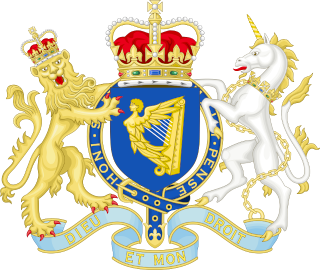
Two acts are passed in 1800 with the same long title: An Act for the Union of Great Britain and Ireland. The short title of the act of the British Parliament is Union with Ireland Act 1800, assigned by the Short Titles Act 1896. The short title of the act of the Irish Parliament is Act of Union (Ireland) 1800, assigned by a 1951 act of the Parliament of Northern Ireland, and hence not effective in the Republic of Ireland, where it was referred to by its long title when repealed in 1962.
Before these acts, Ireland has been in personal union with England since 1542, when the Irish Parliament passes the Crown of Ireland Act 1542, proclaiming King Henry VIII of England to be King of Ireland. Since the 12th century, the King of England has been technical overlord of the Lordship of Ireland, a papal possession. Both the Kingdoms of Ireland and England later come into personal union with that of Scotland upon the Union of the Crowns in 1603.
In 1707, the Kingdom of England and the Kingdom of Scotland are united into a single kingdom: the Kingdom of Great Britain. Upon that union, each House of the Parliament of Ireland passes a congratulatory address to Queen Anne, praying her: “May God put it in your royal heart to add greater strength and lustre to your crown, by a still more comprehensive Union.” The Irish Parliament is both before then subject to certain restrictions that made it subordinate to the Parliament of England and after then, to the Parliament of Great Britain; however, Ireland gains effective legislative independence from Great Britain through the Constitution of 1782.
By this time access to institutional power in Ireland is restricted to a small minority: the Anglo-Irish of the Protestant Ascendancy. Frustration at the lack of reform among the Catholic majority eventually leads, along with other reasons, to a rebellion in 1798, involving a French invasion of Ireland and the seeking of complete independence from Great Britain. This rebellion is crushed with much bloodshed, and the motion for union is motivated at least in part by the belief that the union will alleviate the political rancour that led to the rebellion. The rebellion is felt to have been exacerbated as much by brutally reactionary loyalists as by United Irishmen (anti-unionists).
Furthermore, Catholic emancipation is being discussed in Great Britain, and fears that a newly enfranchised Catholic majority will drastically change the character of the Irish government and parliament also contributes to a desire from London to merge the Parliaments.
According to historian James Stafford, an Enlightenment critique of Empire in Ireland lays the intellectual foundations for the Acts of Union. He writes that Enlightenment thinkers connected “the exclusion of the Irish Kingdom from free participation in imperial and European trade with the exclusion of its Catholic subjects, under the terms of the ‘Penal Laws’, from the benefits of property and political representation.” These critiques are used to justify a parliamentary union between Britain and Ireland.
Complementary acts are enacted by the Parliament of Great Britain and the Parliament of Ireland.
The Parliament of Ireland gains a large measure of legislative independence under the Constitution of 1782. Many members of the Irish Parliament jealously guard that autonomy (notably Henry Grattan), and a motion for union is legally rejected in 1799. Only Anglicans are permitted to become members of the Parliament of Ireland though the great majority of the Irish population are Roman Catholic, with many Presbyterians in Ulster. Under the Roman Catholic Relief Act 1793, Roman Catholics regain the right to vote if they own or rent property worth £2 annually. Wealthy Catholics are strongly in favour of union in the hope for rapid religious emancipation and the right to sit as MPs, which only comes to pass under the Roman Catholic Relief Act 1829.
From the perspective of Great Britain’s elites, the union is desirable because of the uncertainty that follows the French Revolution of 1789 and the Irish Rebellion of 1798. If Ireland adopts Catholic emancipation willingly or not, a Roman Catholic Parliament could break away from Britain and ally with the French, but the same measure within the United Kingdom would exclude that possibility. Also, in creating a regency during King George III‘s “madness”, the Irish and British Parliaments give the Prince Regent different powers. These considerations lead Great Britain to decide to attempt the merger of both kingdoms and Parliaments.
The final passage of the Act in the Irish House of Commons turns on an about 16% relative majority, garnering 58% of the votes, and similar in the Irish House of Lords, in part per contemporary accounts through bribery with the awarding of peerages and honours to critics to get votes. The first attempt is defeated in the Irish House of Commons by 109 votes to 104, but the second vote in 1800 passes by 158 to 115.





 seamus dubhghaill