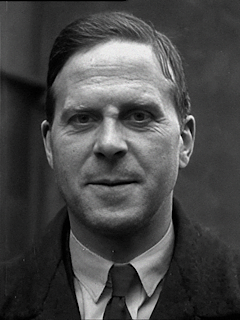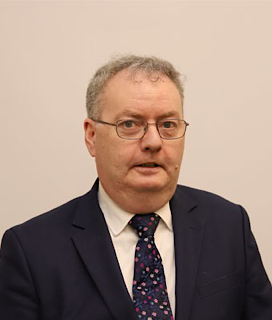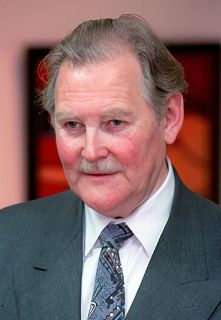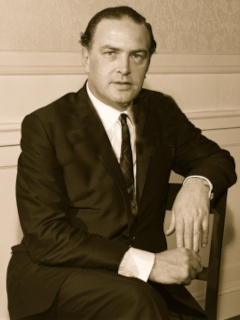
In March 1917, Ryan passes his final medical examinations. That June he sets up medical practice in Wexford. In 1921, he moves to Dublin where he opens a doctor’s practice at Harcourt Street, specialising in skin diseases at the Skin and Cancer Hospital on Holles Street. He leaves medicine in 1925, after he purchases Kindlestown, a large farm near Delgany, County Wicklow. He lives there and it remains a working farm until his death.
In July 1919, Ryan marries Máirín Cregan, originally from County Kerry and a close friend of Sinéad de Valera throughout her life. Cregan, like her husband, also fought in the Easter Rising and is subsequently an author of children’s stories in Irish. They have three children together.
While studying at university in 1913, Ryan joins the Gaelic League at Clonmel. The company commander recruits the young Catholicnationalist, who becomes a founder-member of the Irish Volunteers and is sworn into the Irish Republican Brotherhood (IRB) the following year. In 1916, he goes first to Cork to deliver a message from Seán Mac Diarmada to Tomás Mac Curtain that the Easter Rising is due to happen on Easter Sunday, then to Cork again in a 12-hour journey in a car to deliver Eoin MacNeill‘s cancellation order, which attempts to stop the rising. When he arrives back on Tuesday, he serves as the medical officer in the General Post Office (GPO) and treats many wounds, including James Connolly‘s shattered ankle, a wound which gradually turns gangrenous. He is, along with Connolly, one of the last people to leave the GPO when the evacuation takes place. Following the surrender of the garrison, he is deported to HM Prison Stafford in England and subsequently Frongoch internment camp. He is released in August 1916.
Ryan rejoins the Volunteers immediately after his release from prison, and in June 1917, he is elected Commandant of the Wexford Battalion. His political career begins the following year when he is elected as a Sinn Féin candidate for the constituency of South Wexford in the 1918 United Kingdom general election in Ireland. Like his fellow Sinn Féin MPs, he refuses to attend the Westminster Parliament. Instead he attends the proceedings of the First Dáil on January 21, 1919. As the Irish War of Independence goes on, he becomes Brigade Commandant of South Wexford and is also elected to Wexford County Council, serving as chairman on one occasion. In September 1919, he is arrested by the British and interned on Spike Island and later Bere Island. In February 1921, he is imprisoned at Kilworth Internment Camp, County Cork. He is later moved on Ballykinlar Barracks in County Down and released in August 1921.
In 1926, Ryan is among the Sinn Féin TDs who follow leader Éamon de Valera out of the party to found Fianna Fáil. They enter the Dáil in 1927 and spend five years on the opposition benches.
In 1947, after spending fifteen years as Minister for Agriculture, Ryan is appointed to the newly created positions of Minister for Health and Minister for Social Welfare. Following Fianna Fáil’s return to power at the 1951 Irish general election, he returns as Minister for Health and Social Welfare. Following the 1954 Irish general election, Fianna Fáil loses power and he moves to the backbenches once again.
Following the 1957 Irish general election, Fianna Fáil are back in office and de Valera’s cabinet has a new look to it. In a clear message that there will be a change to economic policy, Ryan, a close ally of Seán Lemass, is appointed Minister for Finance, replacing the conservative Seán MacEntee. The first sign of a new economic approach comes in 1958, when Ryan brings the First Programme for Economic Development to the cabinet table. This plan, the brainchild of T. K. Whitaker, recognises that Ireland will have to move away from self-sufficiency toward free trade. It also proposes that foreign firms should be given grants and tax breaks to set up in Ireland.
When Lemass succeeds de Valera as Taoiseach in 1959, Ryan is re-appointed as Minister for Finance. Lemass wants to reward him for his loyalty by also naming him Tánaiste. However, the new leader feels obliged to appoint MacEntee, one of the party elders to the position. Ryan continues to implement the First Programme throughout the early 1960s, achieving a record growth rate of 4 percent by 1963. That year an even more ambitious Second Programme is introduced. However, it overreaches and has to be abandoned. In spite of this, the annual growth rate averages five percent, the highest achieved since independence.
Ryan does not stand in the 1965 Irish general election, after which he is nominated by the Taoiseach to Seanad Éireann, where he joins his son, Eoin Ryan Snr. At the 1969 dissolution he retires to his farm at Kindlestown, County Wicklow, where he dies at age 77 on September 25, 1970. He is buried at Redford Cemetery, Greystones, County Wicklow. His grandson, Eoin Ryan Jnr, serves in the Oireachtas from 1989 to 2007 and later in the European Parliament from 2004 to 2009.
Molloy’s father, Michael Edward Molloy, is originally from Ballyhaunis, County Mayo, and runs a successful wholesale drapery business in the city. His mother, Rita Stanley, hails from Clifden, County Galway. He is educated at Coláiste Iognáid and University College Galway. Before entering politics, he works for several years in printing, the clothing industry and his family’s drapery firm.
Molloy’s early political career is marked by his loyalty to Fianna Fáil’s leadership under TaoiseachJack Lynch. He quickly rises through the ranks and is appointed Minister for Local Government in 1970, a position he holds until 1973. His tenure as Minister for Local Government is characterised by his efforts to modernise and streamline local government structures in Ireland. His tenure in Fianna Fáil sees him as a stalwart of the party’s establishment, though tensions with its leadership grow over the years, particularly with Charles Haughey.
In opposition from 1973, Molloy serves as the frontbench spokesman, where he becomes involved in a high-profile dispute with James Tully, the Labour Minister for Local Government, over the controversial redrawing of constituencies, known as the “Tullymander.” Molloy, along with fellow Fianna Fáil member Brendan Crinion, used Dáil privilege to accuse Tully of having an improper commercial relationship with a builder in County Meath. The accusation is strongly denied by Tully and Molloy and Crinion later withdraw the charge. Despite this, Molloy faces severe repercussions, being forced to resign from his frontbench position. He is subsequently condemned by a judicial tribunal and censured by the Dáil for abusing parliamentary privilege.
When Fianna Fáil returns to office in 1977, Molloy becomes Minister for Defence in the final government of Jack Lynch.
In 1986, Molloy resigns from Fianna Fáil and joins the newly formed Progressive Democrats, spearheaded by Haughey’s arch-rival Desmond O’Malley. Molloy’s move is seen as a major break from the political establishment, as the Progressive Democrats advocate for low-tax, market-oriented economic policies and a more liberal economic agenda. His decision is driven by his dissatisfaction with the direction of Fianna Fáil under Haughey’s leadership and his belief that the party has become increasingly alienating.
In 1989, Molloy contests the European Parliament elections but is unsuccessful in his attempt. Following the 1989 Irish general election, Molloy, along with newly elected MEP for MunsterPat Cox, represents the Progressive Democrats in the lengthy negotiations with Fianna Fáil to form a coalition government. Once the negotiations conclude, he is reinstated in the Cabinet as Minister for Energy under Taoiseach Charles Haughey, who had previously caused Molloy’s political humiliation a decade earlier. Over the following three years, Molloy and his Progressive Democrat colleague Desmond O’Malley have a working relationship with their former Fianna Fáil colleagues, though tensions grow due to resentment over their presence in the Cabinet. The issue comes to a head when Molloy and O’Malley make it clear they will not serve in a Cabinet that includes Brian Lenihan Snr, following his controversial remarks during the 1990 Irish presidential election about alleged phone calls to PresidentPatrick Hillery from 1982.
In January 1992, Haughey faces further complications when Seán Doherty reveals information about the phone tapping of journalists dating back to 1982. Despite this, the coalition government ends when Albert Reynolds, Haughey’s successor, calls for a general election after accusing O’Malley of giving “dishonest” evidence to the Beef Tribunal. Molloy strongly denounces Reynolds’ accusation, describing it as “outrageous,” and criticises him for what he perceives as a “lack of generosity” in recent North-South negotiations, in which Molloy had represented the Progressive Democrats in talks with British Unionists.
Molloy stands at the European Parliament elections again in 1994 but is again unsuccessful.
Molloy resigns as a minister and quits politics just before the 2002 Irish general election amid controversy surrounding his involvement in the rape case of Barbara Naughton. The controversy stems from a letter Molloy sent to then Minister for Justice, John O’Donoghue, on behalf of a constituent whose relative had been convicted of rape. The letter, which requests the temporary release of the individual pending an appeal, leads to public criticism. The case is high-profile, involving a Connemara man sentenced to eleven years for the systematic abuse of his young daughter. During the trial, the judge, Philip O’Sullivan, notes that someone acting on Molloy’s behalf had tried to contact him in his chambers to clarify whether he had received certain correspondence from the victim’s sister, which the judge describes as “quite improper.” In response to the backlash, Molloy resigns, describing the letter as a “human error of judgment,” but insisting it was not intended to be dishonest. He retires from politics after the election.
Molloy is a member of Fianna Fáil for over 20 years, but his views are not always in line with the mainstream of the party, particularly under the leadership of Charles Haughey. His decision to leave Fianna Fáil in 1986 and join the Progressive Democrats is motivated by ideological differences, notably the party’s move toward a more conservative, state-controlled economy. Molloy, on the other hand, embraces a platform of fiscal conservatism, with an emphasis on reducing taxes, deregulation, and the liberalisation of the economy.
In terms of social issues, Molloy is ahead of his time in advocating for progressive policies, particularly on women’s rights. In a survey conducted in 1976 by the Women’s Political Association (WPA), Molloy scores among the highest of any member of the Dáil for his progressive stance on issues affecting women. He supports measures such as divorce, contraception, and family law reform, which are seen as highly controversial at the time. His responses to the WPA’s questions reveal that he holds views that are in stark contrast to many of his colleagues within Fianna Fáil. His progressive views on women’s rights are notable, as he is the only member of Jack Lynch’s cabinet who consistently supports reformist policies on issues like family law and the role of women in public life.
In 1972, Molloy marries Phyllis Barry, a Montessori teacher from Foxrock, County Dublin, whose father is a cousin of the executed revolutionary Kevin Barry. The couple meet while campaigning in a by-election in mid-Cork. Together, they have four children: Sinead, Sorcha, Donnacha, and Dara.
O’Malley is one of eight surviving children of Joseph O’Malley, civil engineer, and his wife, Mary “Cis” (née Tooher). Born into a wealthy middle-class family, he is educated by the Jesuits at Crescent College and later at Clongowes Wood College, County Kildare. He later studies at University College Galway (UCG), where he is conferred with a degree in civil engineering in 1943. He later returns to Limerick, where he works as an engineer before becoming involved in politics.
O’Malley plays rugby at provincial level for Munster, Leinster and Connacht and at club level for Bohemians and Shannon RFC. His chances at an international career are ruined by the suspension of international fixtures during World War II. It is at a rugby match in Tralee that he first meets Dr. Hilda Moriarty, who he goes on to marry in August 1947.
Although O’Malley runs as a Fianna Fáil candidate, he is born into a politically active family who supports Cumann na nGaedheal until a falling-out with the party in the early 1930s. He first becomes involved in local politics as a member of Limerick Corporation. He becomes Mayor of Limerick in 1961, the third O’Malley brother to hold the office (Desmond from 1941-43 and Michael from 1948-49). He is a strong electoral performer, topping the poll in every general election he runs in.
O’Malley is first elected to Dáil Éireann as a Fianna Fáil TD for Limerick East at the 1954 Irish general election. Fianna Fáil is not returned to government on that occasion. He spends the rest of the decade on the backbenches. However, his party is returned to power in 1957. Two years later, the modernising process begins when Seán Lemass takes over from Éamon de Valera as Taoiseach. Lemass introduces younger cabinet ministers, as the old guard who has served the party since its foundation in 1926 begin to retire.
In 1961, O’Malley joins the government as Parliamentary Secretary to the Minister for Finance. He is part of a new, brasher style of politician that emerges in the 1960s, sometimes nicknamed “the men in the mohair suits.” It is expected that this generation of politician, born after the Irish Civil War, will be a modernising force in post-de Valera Ireland.
Although his sporting background is in rugby and swimming, it is association football which O’Malley gets involved in at a leadership level, becoming President of the Football Association of Ireland despite never having played the sport.
Following Fianna Fáil’s retention of power in the 1965 Irish general election, O’Malley joins the cabinet as Minister for Health. He spends just over a year in this position before he is appointed Minister for Education, a position in which he displays renowned dynamism. Having succeeded Patrick Hillery, another dynamic young minister, he resolves to act swiftly to introduce the recommendations of an official report on education.
As Minister for Education, O’Malley extends the school transport scheme and commissions the building of new non-denominational comprehensive and community schools in areas where they are needed. He introduces Regional Technical Colleges (RTCs), now called Institutes of Technology, in areas where there is no third level college. The best example of this policy is the University of Limerick, originally an Institute of Higher Education, where O’Malley is credited with taking the steps to ensure that it becomes a university. His plan to merge Trinity College Dublin and University College Dublin arouses huge controversy, and is not successful, despite being supported by his cabinet colleague Brian Lenihan. Access to third-level education is also extended, the old scholarship system being replaced by a system of means-tested grants that give easier access to students without well-off parents.
Mid-twentieth century Ireland experiences significant emigration, especially to the neighbouring United Kingdom where, in addition to employment opportunities, there is a better state provision of education and healthcare. Social change in Ireland and policies intending to correct this deficit are often met with strong resistance, such as Noël Browne‘s proposed Mother and Child Scheme. As a former Health Minister, O’Malley has first-hand experience of running the department which had attempted to introduce this scheme and understood the processes that caused it to fail, such as resistance from Department of Finance and John Charles McQuaid. This influences his strategy in presenting the free-education proposal.
Shortly after O’Malley is appointed, he announces that from 1969 all education up to Intermediate Certificate level will be without cost, and free buses will bring students in rural areas to their nearest school, seemingly making this decision without consulting other ministers. However, he does discuss it with Lemass. Jack Lynch, who, as Minister for Finance, has to find the money to pay for the programme, is not consulted and is dismayed at the announcement.
By announcing the decision first to journalists and on a Saturday (during a month when the Dáil is in recess), the positive public reaction tempers resistance to the idea before the next cabinet meeting. O’Malley’s proposals are hugely popular with the public, and it is impossible for the government to go back on his word.
Some Irish commentators consider that O’Malley’s extension of education, changing Ireland from a land where the majority are schooled only to the age of 14 to a country with universal secondary-school education, indirectly leads to the Celtic Tiger boom of the 1990s-2000s when it is followed for some years by an extension of free education to primary degree level in university, a scheme that is launched in 1996 by the Labour Party and axed in 2009 by Fianna Fáil’s Batt O’Keeffe.
In 1967, O’Malley appoints Justice Eileen Kennedy to chair a committee to carry out a survey and report on the reformatory and industrial school systems. The report, which is published in 1970, is considered ground-breaking in many areas and comes to be known as the Kennedy Report. The Report makes recommendations about a number of matters, including the Magdalene laundries, in relation to which they are not acted upon. The report recommends the closure of a number of reformatories, including the latterly infamous reformatory at Daingean, County Offaly.
O’Malley’s reforms make him one of the most popular members of the government. He is affectionately known as “the School Man” for his work in education. His sudden death in Limerick on March 10, 1968, before his vision for the education system is completed, comes as a shock to the public. He is buried with a full Irish state funeral.
Following O’Malley’s death, his widow, Hilda O’Malley, does not run in the subsequent by-election for the seat he has left vacant. It is won narrowly by their nephew Desmond O’Malley. Hilda seeks the Fianna Fáil nomination for the 1969 Irish general election, but Fianna Fáil gives the party nomination to Desmond, as the sitting TD. Hilda runs as an Independent candidate in that election. After what proves a bitter campaign against her nephew, she fails to get the fourth seat in Limerick East by just 200 votes.
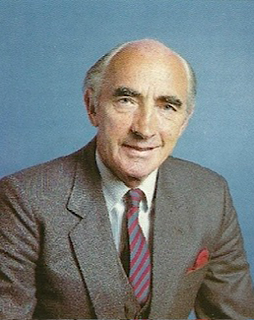
Mac Aonghusa is the son of Criostóir Mac Aonghusa, a writer and Irish language activist, and Mairéad Ní Lupain, a nurse and native Irish speaker. The eldest of four siblings, he grows up speaking Irish as his first language and allegedly does not learn English until the age of eleven. His parents are left-wing Irish republicans who support Fianna Fáil and associate with the like-minded Máirtín Ó Cadhain and Peadar O’Donnell. His parents split when he is ten years of age. His mother takes his siblings away to Dublin while he and his father remain in Rosmuc, a remote village and part of the Galway Gaeltacht. As a teenager he is educated at Coláiste Iognáid (also known as St. Ignatius College), a bilingual school in Galway.
Upon leaving school, Mac Aonghusa first works as an actor at the Abbey Theatre in Dublin, performing in Irish language productions. In 1952, he becomes involved in Radio Éireann, first as an actor but later as a reader of short stories before advancing to becoming a newsreader, presenter and interviewer. As he advances his career, he works for RTÉ, UTV and BBC television from the 1960s. In 1962, he begins presenting An Fear agus An Sceal (The Man & his Story) on RTÉ television, an Irish language show which sees him interviewing a different guest of note about their life each episode. That same year he wins a Jacob’s Award for An Fear agus an Sceal, which he continues to host until 1964.
As well as attracting awards, An Fear agus an Sceal also brings controversy. Two interviews, one with Máirtín Ó Cadhain, one with Con Lehane, both criticise the measures practised by the Fianna Fáil government during World War II to suppress and imprison Irish republicans. In response, the Fianna Fáil government intervenes with RTÉ, and those episodes are not aired. This is not to be Mac Aonghusa’s only run-in with the Fianna Fáil government. After he recorded a programme in which he questioned the effectiveness of Ireland’s civil defence measures in the face of nuclear war, then Minister for DefenceKevin Boland has the episode suppressed. He once again runs afoul of the Fianna Fáil government when, after criticising the party in his anonymous weekly political gossip column in the Sunday Independent, then Minister for AgricultureNeil Blaney sees to it that the column is dropped. He is not deterred and returns anonymously as “Gulliver” in The Sunday Press and a gossip column on the back page of The Hibernia Magazine.
The latter half of Mac Aonghusa’s 1960s/70s broadcasting career is primarily associated with the Irish language current events show Féach, which he both presents and edits. He resigns from Féach in 1972 following a bitter dispute with the broadcaster and commentator Eoghan Harris.
In 1959, Mac Aonghusa writes a series of six articles for The Irish Times in which he vehemently opposes the Fianna Fáil government’s proposal to abolish single transferable vote in Ireland in favour of first-past-the-post voting. He contends that first-past-the-post voting gives too much influence to party bosses, while proportional representation gives even small minorities representation, preventing them from feeling excluded by the state such as nationalists in Northern Ireland. In the referendum held on the matter on June 17, 1959, voters reject first past the vote by a margin of 2%. Fianna Fáil attempts to repeal proportional representation again in the late 60s, at which point Mac Aonghusa once again throws himself into the fight, leading a group called “Citizens for PR.” In the referendum of 1968, voters reject the first past the post system by over 20%. He later recalls that his defence of proportional representation his greatest achievement in politics.
In the 1960s, both Mac Aonghusa and his wife, Catherine, join the Sean Connolly branch of the Labour Party in Dublin. The branch had established a reputation as a haven for intellectuals who want a branch to themselves away from the many other Labour branches dominated by trade unionists. The branch comes to advocate for expressly socialist policies combined with on-the-ground grass-roots campaigning. Through the Sean Connolly Branch, both he and his wife begin to develop significant influence over the leader of the Labour party Brendan Corish.
In the 1965 Irish general election, Mac Aonghusa stands on behalf of the Labour party in the Louth constituency but is not elected. In 1966, he publishes a book of speeches by Corish, the speeches themselves mostly having been ghostwritten by his wife Catherine. The introduction of the book proclaims that Corish had developed a “brand of democratic republican socialism … broadened by experience and built firmly on Irish‐Ireland roots” and had rid the party of “do‐nothing backwoodsmen”, thereby becoming the “first plausible and respected Labour leader in Ireland”. It is at this same time that he is elevated to vice-chairman of the party. As vice-chair, he tries to convince Corish to stand in the 1966 Irish presidential election. When he fails to do so, he supports Fine Gael‘s Tom O’Higgins in his bid for the presidency. O’Higgins comes within 0.5% of beating the incumbent, an ageing Éamon de Valera.
It was around this same time that Mac Aonghusa becomes active in the Wolfe Tone Societies, a republican organisation linked almost directly to Sinn Féin. He suggests that republicans with “progressive views” should join the Labour party. In 1966, alongside Máirtín Ó Cadhain and other Gaeilgeoirí, he counter-protests and disrupts the Language Freedom Movement, an organisation seeking the abolition of compulsory Irish in the education system. For this, he and his allies are criticised as acting illiberally, while he maintains that those who oppose the Irish language are “slaves” unworthy of tolerance.
Mac Aonghusa’s open disdain for the conservative and trade union wings of the Labour, as well as his open embrace of republican sensibilities and tendency to make pronouncements on Labour policy without first consulting the party’s structures, bring him many internal enemies. An attempt is made to censure him for backing breakaway trade unions, but he is able to survive this. In 1966, he encourages the formation of the Young Labour League, an unofficial youth wing of the party led by Brian Og O’Higgins, son of former Sinn Féin president Brian O’Higgins. Mirroring his own position, the Youth League are Corish loyalists that openly rebel against the views of Labour’s conservative deputy leader James Tully. When the youth league begins publishing their own weekly newsletter, Labour’s administrative council condemns it after discovering material which is “violently” critical of Tully and other Labour conservatives. An ensuing investigation into the newsletter leads to Mac Aonghusa admitting that he had financed it and written some of the content, but not the anti-Tully material. After he refuses to co-operate with further investigations into the matter, he is expelled on January 12, 1967 for “activities injurious” to the party. In the aftermath, he portrays himself a left-wing martyr purged by a right-wing “Star chamber,” a tactic that garners him sympathy. Nevertheless, his expulsion is confirmed at the October 1967 party conference, despite one last appeal. His wife leaves the party alongside him.
In the aftermath of his expulsion from Labour, Mac Aonghusa expresses an interest in the social democratic wing of Fine Gael, which had been developing under Declan Costello since the mid-1960s. However, he does not join the party and instead runs as an independent candidate in the 1969 Irish general election in Dún Laoghaire–Rathdown. When he is not elected, he begins to refocus on the revival of the Irish language and with nationalist politics rather than being elected himself.
Upon the onset of the Troubles, Mac Aonghusa is initially supportive of Official Sinn Féin, however by 1972 he comes to resent them and, through the Ned Stapleton Cumann, their secret influence over RTÉ. During the Arms Crisis in 1970, he supports Charles Haughey and Neil Blaney, who stand accused of arranging to supply weapons to the Provisional IRA, in the pages of the New Statesman and other left‐wing journals. In this time period, he warns editors not to reprint his material in the Republic of Ireland as there is a de facto ban on him, and indeed, official attempts are made to block the transmission of his telexed reports.
Despite his earlier famed stark criticism of Fianna Fáil, Mac Aonghusa’s defence of Haughey leads to a friendship between the two men which results in him becoming one of Haughey’s loudest defenders throughout the rest of his career. His columns in The Sunday Press and Irish language paper Anois are accused of descending into self-parody in their stringent defences of Haughey.
During the 1970s, Mac Aonghusa writes a number of books covering significant figures in Irish republicanism. In order, he releases books on James Connolly, Patrick Pearse, Wolfe Tone and Éamon de Valera. In his work on De Valera, he emphasises what he perceives as the more radical aspects of the Fianna Fáil founder. During 1974 and 1975, he works as a United Nations Special Representative to the Southern Africa region with Seán MacBride, where they involve themselves in the South African Border War, and during which time Mac Aonghusa becomes involved in setting up a radio station in Namibia, linked to the South West Africa People’s Organisation (SWAPO) nationalist party.
In the 1980s, Haughey twice appoints Mac Aonghusa to the Arts Council as well as naming him president of Bord na Gaeilge (1989-93). This is an issue as Mac Aonghusa is already president of Conradh na Gaeilge. Being head of the main Irish language lobbying body as well as the state body responsible for the Irish language has an obvious conflict of interest. In 1991, following the announcement by Haughey that the government is to fund the creation of an Irish-language television station (launched in 1996 as Teilifís na Gaeilge), an elated Mac Aonghusa suggests that Haughey would be “remembered among the families of the Gael as long as the Gaelic nation shall survive.”
In 1992 there are calls for Mac Aonghusa to step down from Bord na Gaeilge after he pronounces that “every respectable nationalist” in West Belfast should vote for Sinn Féin’s Gerry Adams over the Social Democratic and Labour Party (SDLP) candidate Joe Hendron in the 1992 United Kingdom general election as he considers a defeat for Adams “a victory for British imperialism.” Nevertheless, he simultaneously advises voters in South Down to vote for the SDLP’s Eddie McGrady over Sinn Féin. He rails against his detractors at the Conradh na Gaeilge ardfheis that year, declaring that “The mind of the slave, of the slíomadóir, of the hireling and the vagabond is still fairly dominant in Ireland.”
As of 1995, Mac Aonghusa continues to label himself a socialist. In the foreword to the book, he writes about James Connolly that is released that year, he declares that “the abolition of capitalism is essential if the great mass of the people in all parts of the globe are to be emancipated.”
However, with the recent collapse of the Soviet Union in mind, Mac Aonghusa declares that the Stalinist regimes of Eastern Europe have not been socialist and argues that the social democracies of Scandinavia are what James Connolly had envisioned as the desired socialist society. In the same text, he accuses the Irish education system as well as Ireland’s media of obfuscating Connolly’s views on socialism and nationalism.
Mac Aonghusa battles through ill health in his final years but remains able to continue writing a number of books. His last publication, Súil Tharam (2001), comes just two years before his death in Dublin on September 28, 2003.
In 1955, Mac Aonghusa marries Catherine Ellis, a member of the Church of Ireland from Belfast. For her married name, she chooses to use “McGuinness,” the English language equivalent of Mac Aonghusa. Catherine McGuinness goes on to become a Senator and a Judge of the Circuit Court, High Court and Supreme Court over the course of her legal career. Together they have three children together.
MacEntee is born as John McEntee at 47 King Street, Belfast, on August 23, 1889, the son of James McEntee, a publican, and his wife, Mary Owens, both of whom are from Monaghan. James McEntee is a prominent Nationalist member of Belfast Corporation and a close friend of Joseph DevlinMP.
MacEntee is educated at St. Mary’s Christian Brothers’ Grammar School, St. Malachy’s College and the Belfast Municipal College of Technology where he qualifies as an electrical engineer. His early political involvement is with the Irish Socialist Republican Party in Belfast. He quickly rises through the ranks of the trade union movement becoming junior representative in the city’s shipyards. Following his education, he works as an engineer in Dundalk, County Louth, and is involved in the establishment of a local corps of the Irish Volunteers in the town. He mobilises in Dundalk and fights in the General Post Office garrison in the Easter Rising in 1916. He is sentenced to death for his part in the rising. This sentence is later commuted to life imprisonment. He is released in the general amnesty in 1917 and is later elected a member of the National Executives of both Sinn Féin and the Irish Volunteers in October 1917. He is later elected Sinn Féin Member of Parliament (MP) for South Monaghan at the 1918 Irish general election.
An attempt to develop MacEntee’s career as a consulting engineer in Belfast is interrupted by the Irish War of Independence in 1919. He serves as Vice-Commandant of the Belfast Brigade of the Irish Republican Army (IRA). He is also a member of the Volunteer Executive, a sort of Cabinet and Directory for the Minister for Defence and the HQ Staff, however, he remains one of the few Sinn Féiners from the north. On August 6, 1920, he presents ‘a Memorial’ lecture to the Dáil from the Belfast Corporation. He tells the Dáil it is the only custodian of public order, that a Nationalist pogrom is taking place, and he advises them to fight Belfast. The Dáil government’s policy is dubbed Hibernia Irredenta or “Greening Ireland.” He is asked to resign his South Monaghan seat after voting against a bunting celebration in Lurgan to mark the signing of the Anglo-Irish Treaty.
In April 1921 MacEntee is transferred to Dublin to direct a special anti-partition campaign in connection with the May general election. It remains Michael Collins‘s policy, he declares, that the largely Protestant shipyard workers of Belfast are being directed by the British, urging all Irishmen to rejoin the Republic. Correspondingly the Ulster Unionist Council rejects the call for a review of the boundary commission decision made on Northern Ireland. But when Ulstermen choose James Craig as Premier, Collins denounces democracy in the north as a sham. It is on the partition of Ireland issue that MacEntee votes against the Anglo-Irish Treaty of 1921. During the subsequent Irish Civil War, he commands the IRA unit in Marlboro Street Post Office in Dublin. He later fights with Cathal Brugha in the Hamman Hotel and is subsequently interned in Kilmainham and Gormanstown until December 1923.
After his release from prison, MacEntee devotes himself more fully to his engineering practice, although he unsuccessfully contests the Dublin Countyby-election of 1924. He becomes a founder-member of Fianna Fáil in 1926 and is eventually elected a TD for Dublin County at the June 1927 Irish general election.
MacEntee founds the Association of Patent Agents in 1929, having gained his interest in Patents when he worked as an assistant engineer in Dundalk Urban District Council. He values his status as a Patent Agent as he maintains his name on the Register for over 30 years while he holds Ministerial rank in the Irish Government, although he is not believed to have taken any active part in the patent business, which is carried on by his business partners.
In 1932, Fianna Fáil comes to power for the very first time, with MacEntee becoming Minister for Finance. In keeping with the party’s protectionist economic policies his first budget in March of that year sees the introduction of new duties on 43 imports, many of them coming from Britain. This sees retaliation from the British government, which in turn provokes a response from the Irish government. This is the beginning of the Anglo-Irish Trade War between the two nations, however, a treaty in 1938, signed by MacEntee and other senior members brings an end to the issue.
In 1939, World War II breaks out and a cabinet reshuffle results in MacEntee being appointed as Minister for Industry and Commerce, taking over from his rival Seán Lemass. During his tenure at this department, he introduces the important Trade Union Act (1941). In 1941, another reshuffle of ministers takes place, with him becoming Minister for Local Government and Public Health. The Health portfolio is transferred to a new Department of Health in 1947. Following the 1948 Irish general election, Fianna Fáil returns to the opposition benches for the first time in sixteen years.
In 1951, Fianna Fáil are back in government, although in minority status, depending on independent deputies for survival. MacEntee once again returns to the position of Minister for Finance where he feels it is vital to deal with the balance of payments deficit. He brings in a harsh budget in 1951 which raises income tax and tariffs on imports. His chief aim is to cut spending and reduce imports, however, this comes at a cost as unemployment increases sharply. The increases are retained in his next two budgets in 1952 and 1953. It is often said that it is his performance during this period that costs Fianna Fáil the general election in 1954. The poor grasp on economics also does his political career tremendous damage as up to that point he is seen as a likely successor as Taoiseach. Seán Lemass, however, is now firmly seen as the “heir apparent.”
In 1957, Fianna Fáil returns to power with an overall majority with MacEntee being appointed Minister for Health. The financial and economic portfolios are dominated by Lemass and other like-minded ministers who want to move away from protection to free trade. He is credited during this period with the reorganisation of the health services, the establishment of separate departments of health and social welfare, and the fluoridation of water supplies in Ireland. In 1959, he becomes Tánaiste when Seán Lemass is elected Taoiseach.
Following the 1965 Irish general election, MacEntee is 76 years old and retires from the government. He re-emerges in 1966 to launch a verbal attack on Seán Lemass for deciding to step down as party leader and Taoiseach. The two men, however, patch up their differences shortly afterwards. MacEntee retires from Dáil Éireann in 1969 at the age of 80, making him the oldest TD in Irish history.
MacEntee dies in Dublin on January 9, 1984, at the age of 94. He is buried in Glasnevin Cemetery, Dublin.
Colley is born in the Dublin suburb of Fairview on October 18, 1925, the son of Harry and Christina Colley. His father is a veteran of the 1916 Easter Rising and a former adjutant in the Irish Republican Army (IRA), who is elected to Dáil Éireann in 1944, as a Fianna Fáil candidate. He is educated at St. Joseph’s Secondary C.B.S. in Fairview, where one of his classmates and closest friends is Charles Haughey, who later becomes his political archrival. He studies law at University College Dublin (UCD) and qualifies as a solicitor in the mid-1940s. He remains friends with Haughey after leaving school and, ironically, encourages him to become a member of Fianna Fáil in 1951. Haughey is elected to Dáil Éireann in the 1957 Irish general election, ousting Colley’s father in the process. This puts some strain on the relationship between the two young men.
Colley is elected to the Dáil at the 1961 Irish general election, reclaiming his father’s old seat in the Dublin North-East constituency. Furthermore, he is elected in the same constituency as Haughey, thereby accentuating the rivalry. Thereafter, he progresses rapidly through the ranks of Fianna Fáil. He becomes a member of the Dáil at a time when a change from the older to the younger generation is taking place, a change facilitated by TaoiseachSeán Lemass.
Colley is active in the Oireachtas as chairman of some of the Joint Labour Committees, which are set up under the Labour Court, to fix legally enforceable wages for groups of workers who have not been effectively organised in trade unions. He is also leader of the Irish parliamentary delegation to the Consultative Assembly of the Council of Europe. His work as a backbencher is rewarded by his appointment as Parliamentary Secretary to the Minister for Lands in October 1964.
Following the return of Lemass’s government at the 1965 Irish general election, Colley joins the cabinet as Minister for Education. He introduces a plan to establish comprehensive schools, set up an advisory council on post-primary school accommodation in Dublin, and introduces a school psychological service.
Colley is promoted as Minister for Industry and Commerce in a cabinet reshuffle in July 1966, and he continues the government policy of economic expansion that had prevailed since the late 1950s.
In November 1966, Seán Lemass resigns suddenly as party leader. Colley contests the subsequent leadership election. He is the favoured candidate of party elders such as Seán MacEntee and Frank Aiken, the latter managing Colley’s campaign. Charles Haughey and Neil Blaney also declare their interest in the leadership; however, both withdraw when the Minister for Finance, Jack Lynch, announces his candidacy. Colley does not back down, and the leadership issue goes to a vote for the first time in the history of the Fianna Fáil party. The leadership election takes place on November 9, 1966, and Lynch beats Colley by 59 votes to 19. When the new Taoiseach announces his cabinet, Colley retains the Industry and Commerce portfolio.
In the wake of the Arms Crisis in 1970, a major reshuffle of the cabinet takes place, with four Ministers either removed, or resigned, or simply retired from the government due to the scandal. Colley remains loyal to the party leader and is rewarded by his appointment as Minister for Finance, the second most important position in government.
In 1973, Fianna Fáil are ousted after sixteen years in government when the national coalition of Fine Gael and the Labour Party come to power. Colley is appointed opposition Spokesman on Finance, in the new Fianna Fáil front bench. As the 1977 Irish general election approaches, Colley and Martin O’Donoghue are the main architects of Fianna Fáil’s election manifesto.
Fianna Fáil sweeps to power at the 1977 Irish general election, with a 20-seat Dáil majority, contrary to opinion polls and political commentators. Colley is re-appointed as Minister for Finance and Minister for the Public Service, and is also appointed as Tánaiste, establishing him firmly as the heir apparent to Taoiseach Jack Lynch.
In December 1979, Jack Lynch resigns unexpectedly as Taoiseach and as Fianna Fáil leader. Colley and Charles Haughey seek the leadership position and are evenly matched. A secret ballot is taken on December 7, 1979. The Minister for Foreign Affairs, Michael O’Kennedy, announces his support for Haughey on the eve of the election. This apparently swings the vote, and Haughey beats Colley by 44 votes to 38. Colley remains as Tánaiste but demands and receives a veto on Haughey’s ministerial appointments to the departments of Justice and Defence.
Fianna Fáil loses power at the 1981 Irish general election. Haughey delays naming a new opposition front bench, but Colley remains a key member of the Fianna Fáil hierarchy. The party regains office at the February 1982 Irish general election. He demands the same veto as before on Haughey’s Defence and Justice appointments but is refused. When it is revealed that Ray MacSharry is to be appointed Tánaiste in his stead, he declines another ministerial position. This effectively brings his front bench political career to an end, but he remains a vocal critic of the party leadership from the backbenches.
When the Fianna Fáil government collapses and are replaced by another coalition government after the November 1982 Irish general election, a number of TDs and Senators express lack of confidence in Haughey’s leadership once again. Several unsuccessful leadership challenges take place in late 1982 and early 1983, with Colley now supporting Desmond O’Malley and the Gang of 22 who oppose Haughey.
Colley dies suddenly on September 17, 1983, aged 57, while receiving treatment for a heart condition at Guy’s Hospital, Southwark, London. He is survived by his wife, three sons, and four daughters, one of whom, Anne Colley, becomes a TD as a member of the Progressive Democrats party.
MacEntee is the son of James McEntee, a publican, and his wife, Mary Owens, both of whom are from Monaghan. James McEntee is a prominent Nationalist member of Belfast Corporation and a close friend of Joseph DevlinMP.
MacEntee is educated at St. Mary’s Christian Brothers’ Grammar School, St. Malachy’s College and the Belfast Municipal College of Technology where he qualifies as an electrical engineer. His early political involvement is with the Irish Socialist Republican Party in Belfast. He quickly rises through the ranks of the trade union movement becoming junior representative in the city’s shipyards. Following his education, he works as an engineer in Dundalk, County Louth, and is involved in the establishment of a local corps of the Irish Volunteers in the town. He mobilises in Dundalk and fights in the General Post Office garrison in the Easter Rising in 1916. He is sentenced to death for his part in the rising. This sentence is later commuted to life imprisonment. He is released in the general amnesty in 1917 and is later elected a member of the National Executives of both Sinn Féin and the Irish Volunteers in October 1917. He is later elected Sinn Féin Member of Parliament (MP) for South Monaghan at the 1918 Irish general election.
An attempt to develop MacEntee’s career as a consulting engineer in Belfast is interrupted by the Irish War of Independence in 1919. He serves as Vice-Commandant of the Belfast Brigade of the Irish Republican Army (IRA). He is also a member of the Volunteer Executive, a sort of Cabinet and Directory for the Minister for Defence and the HQ Staff, however, he remains one of the few Sinn Féiners from the north. On August 6, 1920, he presents ‘a Memorial’ lecture to the Dáil from the Belfast Corporation. He tells the Dáil it is the only custodian of public order, that a Nationalist pogrom is taking place, and he advises them to fight Belfast. The Dáil government’s policy is dubbed Hibernia Irredenta or “Greening Ireland.” He is asked to resign his South Monaghan seat after voting against a bunting celebration in Lurgan to mark the signing of the Anglo-Irish Treaty.
In April 1921 MacEntee is transferred to Dublin to direct a special anti-partition campaign in connection with the May general election. It remains Michael Collins‘s policy, he declares, that the largely Protestant shipyard workers of Belfast are being directed by the British, urging all Irishmen to rejoin the Republic. Correspondingly the Ulster Unionist Council rejects the call for a review of the boundary commission decision made on Northern Ireland. But when Ulstermen choose James Craig as Premier, Collins denounces democracy in the north as a sham. It is on the partition of Ireland issue that MacEntee votes against the Anglo-Irish Treaty of 1921. During the subsequent Irish Civil War, he commands the IRA unit in Marlboro Street Post Office in Dublin. He later fights with Cathal Brugha in the Hamman Hotel and is subsequently interned in Kilmainham and Gormanstown until December 1923.
After his release from prison, MacEntee devotes himself more fully to his engineering practice, although he unsuccessfully contests the Dublin Countyby-election of 1924. He becomes a founder-member of Fianna Fáil in 1926 and is eventually elected a TD for Dublin County at the June 1927 Irish general election.
MacEntee founds the Association of Patent Agents in 1929, having gained his interest in Patents when he worked as an assistant engineer in Dundalk Urban District Council. He values his status as a Patent Agent as he maintains his name on the Register for over 30 years while he holds Ministerial rank in the Irish Government, although he is not believed to have taken any active part in the patent business, which is carried on by his business partners.
In 1932, Fianna Fáil comes to power for the very first time, with MacEntee becoming Minister for Finance. In keeping with the party’s protectionist economic policies his first budget in March of that year sees the introduction of new duties on 43 imports, many of them coming from Britain. This sees retaliation from the British government, which in turn provokes a response from the Irish government. This is the beginning of the Anglo-Irish Trade War between the two nations, however, a treaty in 1938, signed by MacEntee and other senior members brings an end to the issue.
In 1939, World War II breaks out and a cabinet reshuffle results in MacEntee being appointed as Minister for Industry and Commerce, taking over from his rival Seán Lemass. During his tenure at this department, he introduces the important Trade Union Act (1941). In 1941, another reshuffle of ministers takes place, with him becoming Minister for Local Government and Public Health. The Health portfolio is transferred to a new Department of Health in 1947. Following the 1948 Irish general election, Fianna Fáil returns to the opposition benches for the first time in sixteen years.
In 1951, Fianna Fáil are back in government, although in minority status, depending on independent deputies for survival. MacEntee once again returns to the position of Minister for Finance where he feels it is vital to deal with the balance of payments deficit. He brings in a harsh budget in 1951 which raises income tax and tariffs on imports. His chief aim is to cut spending and reduce imports, however, this comes at a cost as unemployment increases sharply. The increases are retained in his next two budgets in 1952 and 1953. It is often said that it is his performance during this period that costs Fianna Fáil the general election in 1954. The poor grasp on economics also does his political career tremendous damage as up to that point he is seen as a likely successor as Taoiseach. Seán Lemass, however, is now firmly seen as the “heir apparent.”
In 1957, Fianna Fáil returns to power with an overall majority with MacEntee being appointed Minister for Health. The financial and economic portfolios are dominated by Lemass and other like-minded ministers who want to move away from protection to free trade. He is credited during this period with the reorganisation of the health services, the establishment of separate departments of health and social welfare, and the fluoridation of water supplies in Ireland. In 1959, he becomes Tánaiste when Seán Lemass is elected Taoiseach.
Following the 1965 Irish general election, MacEntee is 76 years old and retires from the government. He re-emerges in 1966 to launch a verbal attack on Seán Lemass for deciding to step down as party leader and Taoiseach. The two men, however, patch up their differences shortly afterwards. MacEntee retires from Dáil Éireann in 1969 at the age of 80, making him the oldest TD in Irish history.
MacEntee dies in Dublin on January 9, 1984, at the age of 94. He is buried in Glasnevin Cemetery, Dublin. At the time of his death, he is the last surviving member of the First Dáil.
Ben Briscoe, former Fianna Fáil politician, is born on March 11, 1934, in Dublin. He is a Teachta Dála (TD) for 37 years, representing constituencies in the south Dublin city area.
At the 1992 Irish general election Briscoe is involved in a marathon recount battle with Democratic Left‘s Eric Byrne to decide the fate of the final seat in Dublin South-Central. He is declared the victor after ten days of re-counting and re-checking ballot papers, leading to him describing the long count as being like “the agony and the ex-TD.”
Briscoe is sometimes critical of the leader of Fianna Fáil in the 1980s, once describing Charles Haughey‘s leadership as a “Fascist Dictatorship.” He fronts a quietly discontented anti-Haughey faction within the Parliamentary Party, which includes Charlie McCreevy, during Haughey’s time as Taoiseach.
In 1988–1989 Briscoe is Lord Mayor of Dublin, a post previously held by his father. His term covers the second half of Dublin’s Millennium Year 1988. After the Dublin City Council makes him Lord Mayor, he describes his selection for the honour as “one of the proudest moments of my life.”
The Molly Malone statue, previously at the bottom end of Grafton Street and now outside the Dublin Tourist Information Office around the corner, is unveiled by Briscoe during the Dublin Millennium celebrations in 1988, and he declares June 13 as Molly Malone Day in Dublin.
Briscoe is one of Ireland’s most famous Jewish politicians. The small Irish Jewish community have been enthusiastic and active participants in the country’s political and legal world. His father is one of several Jews involved in the Irish War of Independence and Sinn Féin movements. In his time, each of the three main political parties have a Jewish member in Ireland’s 166-member Dáil.
Browne grows up in the Bogside area of Derry. The Browne family also lives in Athlone and Ballinrobe for a period of time. His mother Mary Therese (née Cooney) is born in 1885 in Hollymount, County Mayo. His father Joseph Brown, a Royal Irish Constabulary (RIC) sergeant, later works as an inspector for the National Society for the Prevention of Cruelty to Children and, partly as a result of this work, all of the Browne family becomes infected with tuberculosis. Both parents die of the disease during the 1920s. His father is the first to die, leaving only £100 behind to support a wife and seven children. Fearing that if she and the children remain in Ireland they will be forced into a workhouse, Mary sells all their possessions and takes the family to London. Within two days of their arrival, Mary is dead, later buried in a pauper’s grave. Of her seven children, six contract tuberculosis. Noël is only one of two Browne children to survive into adulthood after those bouts with TB.
In 1929, Browne is admitted free of charge to St. Anthony’s, a preparatory school in Eastbourne, England. He then wins a scholarship to Beaumont College, the Jesuitpublic school near Old Windsor, Berkshire, where he befriends Neville Chance, a wealthy boy from Dublin. Neville’s father, the eminent surgeon Arthur Chance, subsequently pays Browne’s way through medical school at Trinity College Dublin.
In 1940, while still a student, Browne suffers a serious relapse of tuberculosis. His treatment at a sanatorium in Midhurst, Sussex is paid for by the Chance family. He recovers, passes his medical exams in 1942, and starts his career as a medical intern at Dr. Steevens’ Hospital in Dublin, where he works under Bethel Solomons. He subsequently works in numerous sanatoria throughout Ireland and England, witnessing the ravages of the disease. He soon concludes that politics is the only way in which he can make an attack on the scourge of tuberculosis.
The poverty and tragedy that had shaped Browne’s childhood deeply affects him. He considers both his survival and his level of education a complete fluke, a stroke of random chance that saved him when he was seemingly destined to die unknown and in poverty like the rest of his family. He finds this completely distasteful and is moved to enter politics as a means to ensure no one else would suffer the same fate that had befallen his family.
A ‘White Paper’ on proposed healthcare reforms had been prepared by the previous government, and results in the 1947 Health Act. In February 1948, Browne becomes Minister for Health and starts the reforms advocated by the Paper and introduced by the Act.
The health reforms coincide with the development of a new vaccine and of new drugs (e.g., BCG and penicillin) that help to treat a previously untreatable group of medical conditions. Browne introduces mass free screening for tuberculosis sufferers and launches a huge construction program to build new hospitals and sanitoria, financed by the income and accumulated investments from the Department of Health-controlled Hospital Sweeps funds. This, along with the introduction of Streptomycin, helps dramatically reduce the incidence of tuberculosis in Ireland.
As Minister for Health Browne comes into conflict with the bishops of the Catholic Church and the medical profession over the Mother and Child Scheme. This plan, also introduced by the 1947 Health Act, provides for free state-funded healthcare for all mothers and children aged under 16, with no means test, a move which is regarded as radical at the time in Ireland, but not in the rest of Europe. Virtually all doctors in private practice oppose the scheme, because it would undermine the “fee for service” model on which their income depended.
The Church hierarchy, which controls many hospitals, vigorously opposes the expansion of “socialised medicine” in the Irish republic. They claim that the Mother and Child Scheme interferes with parental rights, and fear that the provision of non-religious medical advice to mothers will lead to birth control contrary to Catholic teaching. They greatly dislike Browne, seeing him as a “Trinity Catholic,” one who has defied the Church’s ruling that the faithful should not attend Trinity College Dublin, which had been founded by Protestants and for many years did not allow Catholics to study there.
Under pressure from bishops, the coalition government backs away from the Mother and Child Scheme and forces Browne’s resignation as Minister for Health. Following his departure from government, he embarrasses his opponents by arranging for The Irish Times to publish TaoiseachJohn A. Costello‘s and MacBride’s correspondence with the Catholic hierarchy, which details their capitulation to the bishops.
The controversy over the Mother and Child Scheme leads to the fall of the coalition government in which Browne had served as a Minister. But Church opposition to socialised medicine continues under the subsequent Fianna Fáil-led government. The hierarchy does not accept a no-means-test mother-and-infant scheme even when Fianna Fáil reduces the age limit from sixteen years to six weeks, and the government again backs down.
After his resignation as Minister for Health, Browne leaves Clann na Poblachta, but is re-elected to the Dáil as an Independent TD from Dublin South-East in the subsequent election.
Browne joins Fianna Fáil in 1953 but loses his Dáil seat at the 1954 Irish general election. He fails to be selected as a candidate for the 1957 Irish general election and he resigns from the party. He is re-elected at that election for Dublin South-East as an Independent TD.
In 1977 Browne is the first Irish parliamentarian to call for law reforms in regard to homosexuality, which is illegal at the time, and in 1979 is one of the few Irish politicians to attend the opening of the Hirschfeld Centre, Dublin’s first full-time LGBT community space.
In 1990, a number of left-wing representatives within the Labour Party, led by Michael D. Higgins, approach Browne and suggest that he should be the party’s candidate in the presidential election due later that year. Though in failing health, Browne agrees. However, the offer horrifies party leader Dick Spring and his close associates for two reasons. Firstly, the leadership had secretly decided to run Mary Robinson, a barrister and former senator. Secondly, many around Spring are “appalled” at the idea of running Browne, believing he has “little or no respect for the party” and is “likely in any event to self-destruct as a candidate.” When Spring informs Browne by telephone that the party’s Administrative Council has chosen Robinson over him, Browne hangs up the telephone.
Browne spends the remaining seven years of his life constantly criticising Robinson who had gone on to win the election, thus becoming the seventh President of Ireland, and who is considered highly popular during her term. During the campaign he also indicates support for the rival Fine Gael candidate, Austin Currie.
After retiring from politics, Browne moves with his wife Phyllis to Baile na hAbhann, County Galway. He dies at the age of 81 in the Regional Hospital, Galway, on May 21, 1997. He is buried in a small graveyard near Baile na hAbhann.