seamus dubhghaill

Promoting Irish Culture and History from Little Rock, Arkansas, USA


Leave a comment

Birth of “Buckey” O’Neill, Sheriff, Editor & Member of the Rough Riders

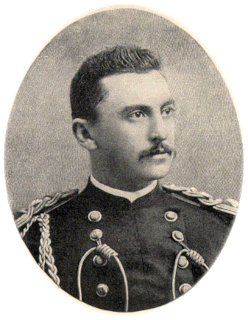
William Owen “Buckey” O’Neill, a sheriff, newspaper editor, miner, politician, Georgist, gambler and lawyer, mainly in Arizona, is born the first of four children to John Owen, an Irish immigrant, and Mary O’Neill (nee McMenimin) in St. Louis, Missouri, on February 2, 1860.

O’Neill’s father most likely arrived in the United States during the 1850s. By Spring 1862, the family has moved to Philadelphia, Pennsylvania. When the American Civil War begins, his father joins the 116th Pennsylvania Volunteers. On December 13, 1862, during the Battle of Fredericksburg, he is wounded and serves the rest of the war as a member of the Invalid Corps. The younger O’Neill is educated at Gonzaga College High School and Georgetown Law School.

During the first part of 1879, O’Neill responds to an item in The Washington Star calling for men to migrate to the Arizona Territory. He arrives in Phoenix, riding a burro, in September of the same year. Upon his arrival in town, he is hired as a printer by the Phoenix Herald. By late 1880, he has become bored with the position and seeks to experience the “Real West” in the boomtown of Tombstone, Arizona.

In Tombstone, O’Neill takes the opportunity to experience the local saloons before taking a job with The Tombstone Epitaph. By mid-1881 he again feels a wanderlust and leaves town. Where he goes next is unknown, one story having him journey to Hawaii, unlikely due to the travel time, and then traveling through California. He is known to visit Santa Fe before going to Albuquerque, New Mexico and works briefly as a court reporter. In early 1882, he is back in Phoenix working as a deputy to Marshal Henry Garfias. Several weeks later he moves to Prescott, his home for the next fifteen years.

In Prescott O’Neill rapidly progresses in his journalistic career. Starting as a court reporter, he soon founds his own newspaper, Hoof and Horn, a paper for the livestock industry. He becomes the editor of the Arizona Miner weekly newspaper in 1884 to February 1885.

In 1886, O’Neill becomes captain of the Prescott Grays, the local unit of the Arizona Militia. On February 5, 1886, Dennis Dilda, a convicted murderer, is hanged. O’Neill and the Prescott Grays stand honor guard for the event. When the trap drops, O’Neill faints, which causes him severe embarrassment. He later writes a story called “The Horse of the Hash-Knife Brand.” In it, a member of a posse admits to nearly fainting at the hanging of a horse thief.

On April 27, 1886, O’Neill marries Pauline Schindler. They have a son, but he dies shortly after being born premature.

In 1888, while serving as Yavapai County, Arizona judge, O’Neill is elected county sheriff, running on the Republican ticket.

On March 20, 1889, four masked men, William Sterin, John Halford, Daniel Harvick, and J. J. Smith, rob the Atlantic and Pacific Railroad passenger train in Canyon Diablo. A four-man posse, made up of O’Neill, Jim Black, Carl Holton, and Ed St. Clair, is soon formed and they take off after the robbers. On April 1, the posse catches up with the robbers. After exchanging rifle shots, the posse captures the four men. During the fight, no men are injured, but one of the robber’s horses is killed. All four are sent to the Yuma Territorial Prison but are pardoned eight years later. There is unfounded speculation that, in 1898, Sterin enlists under a false name in the Rough Riders and is killed in action in the Battle of San Juan Hill.

After his term is up, O’Neill is unanimously elected mayor of Prescott. In 1894 and 1896 he runs for Delegate to the United States House of Representatives from Arizona Territory, running on the People’s Party ticket.

In 1897, after years of speculating on mines, O’Neill sells a group of claims near the Grand Canyon to Chicago backers, who also propose building a railroad from Williams to the mines and the South Rim. He becomes a director of the development companies, and soon begins railroad surveys, mine developments, and building a smelter. He also uses profits to begin building rental buildings, leading him to financial independence.

O’Neill also helps introduce a bill allowing women to vote in municipal elections in 1897. Although he convinces his Populist friends to sign the bill into law, the high court dismisses the bill in 1899.

In 1898, war breaks out between the United States and Spain. O’Neill joins Theodore Roosevelt‘s Rough Riders and becomes Captain of Troop A. First Lieutenant Frank Frantz serves as O’Neil’s Deputy Commander. Along with Alexander Brodie and James McClintock, he tries to make an entire regiment made up of Arizona cowboys. Eventually though, only three troops are authorized.

The Rough Riders land at Daiquirí on June 22, 1898. Two Buffalo Soldiers of the 10th Cavalry Regiment fall overboard. Upon seeing this, O’Neill jumps into the water in full uniform and sabre. He searches for the men for two minutes before having to come up for breath.

On June 25, 1898, the Rough Riders see their first action. O’Neill leads his men at the front of the line in the Battle of Las Guasimas, capturing the Spanish flank. During the action he sees several men, who he believes to be Spaniards, across the road from him, and shouts “Hostiles on our right, fire at will!” He learns after the firing ceases that the men he exchanged shots with were Cuban rebels.

On July 1, 1898, at about 10:00 a.m., the Rough Riders and the 10th Cavalry are stationed below Kettle Hill. The Spaniards, who are on top of the hill, pour Mauser rifle fire down on the Americans. O’Neill is killed in action.

Before the fighting is over, O’Neill’s men bury him on the slope of San Juan Hill. After the war, his family and friends enlist help from the United States Department of War to find and recover his body. After six men fail to find the site, the War Department sends Henry Alfred Brown, the Rough Riders’ Chaplain, to find him. Despite it being eight months since O’Neill’s death, Chaplain Brown locates the site within two hours after arriving in Santiago de Cuba. The well-preserved body is exhumed, placed in a coffin, and returned to the United States on the Army transport Crook. He is buried at Arlington National Cemetery, in Arlington County, Virginia. The epitaph on his gravestone reads, “Who would not die for a new star on the flag?”

On July 3, 1907, a monument by sculptor Solon Borglum is dedicated to O’Neill and the other Rough Riders in their memory in Prescott, Arizona. Seven thousand people gather to witness the unveiling.

O’Neill Spring, in the Pumphouse Wash wetlands south of Flagstaff, Arizona, is named after O’Neill, as is O’Neill Butte in the Grand Canyon and Bucky O’Neill Hill in Bisbee, Arizona. Bucky (sic) O’Neill is a main character in the TNT movie Rough Riders, portrayed by Sam Elliott.

Leave a comment

Birth of Sir John Greer Dill, Irish-born British Army Officer

Sir John Greer Dill, senior British Army officer with service in both World War I and World War II, is born on December 25, 1881, at Lurgan, County Armagh. From May 1940 to December 1941, he is the Chief of the Imperial General Staff (CIGS), the professional head of the British Army, and subsequently serves in Washington, D.C., as Chief of the British Joint Staff Mission and then Senior British Representative on the Combined Chiefs of Staff (CCS).

Dill is the only son of John Dill, bank manager, and Jane Dill (née Greer). He is educated at Cheltenham College in England before entering the Royal Military College (RMC), Sandhurst. Commissioned as a second lieutenant, he joins the Prince of Wales’s Leinster Regiment (Royal Canadians) in May 1901 and serves in South Africa for the remainder of the Second Boer War. Promoted to captain in 1911, he is a student at the Staff College, Camberley, at the outbreak of World War I. He holds several important staff appointments during the war, including brigade major of 25th Brigade (8th Division) and General Staff Officer (Grade 2) to the Canadian Corps. Present at the battles of Neuve Chapelle, Aubers Ridge, Arras, and Third Ypres, at the end of the war he is serving as chief of operations branch at GHQ with the temporary rank of brigadier general. He is awarded the Distinguished Service Order (DSO) (1915), the Order of St. Michael and St. George (CMG) (1918), the French Legion of Honour and the Belgian Order of the Crown.

Remaining active during the interwar years, Dill serves as chief assistant to the commandant of the Staff College (1919–22) before commanding the Welsh Border Brigade, TA (1922–23), and 2nd Infantry Brigade at Aldershot (1923–26). In late 1926, he is appointed army instructor at the newly established Imperial Defence College. A period in India follows as general staff officer of the Western Command (1929–31), based at Quetta. On return to England, he is promoted to major general and made commandant of the Staff College. Appointments as commander of the British forces in Palestine and Transjordan (1936–37) and the Aldershot Command (1937–39) follow. During this period, he shows a remarkable ability to both train and inspire those under his command. Most of his colleagues expect him to become the new chief of the Imperial General Staff and are surprised when Major General Lord Gort, junior to Dill in both rank and seniority, is appointed to the post.

At the outbreak of World War II Dill commands I Corps British Expeditionary Force (BEF) in France and is made a full general. In April 1940, he is made vice-CIGS and in May takes over as CIGS. His initial period in office is not a happy one, and he has to inform the public of setbacks in both Norway and France. His workload is enormous, and after the evacuation at Dunkirk in late May he devotes himself to preparing the defences of Britain against invasion. He clashes with Winston Churchill throughout 1941, advocating a more cautious and realistic approach to the situations in North Africa, Greece, and Crete.

The workload begins to affect his health adversely, and in November 1941 it is announced that he will resign as CIGS on reaching the age of 60 and serve as governor-designate of Bombay with the rank of field marshal. He seeks to be more actively involved in the war effort, however, and in December 1941 he visits the United States with Churchill, remaining there as head of the British joint staff mission in Washington, D.C. He plays a significant role in promoting Anglo–American military cooperation and attends the Casablanca, Quebec, and Tehran conferences.

In late 1944 his health again breaks down and he dies from aplastic anemia on November 4, 1944, at the Walter Reed General Hospital, Washington, D.C. After a memorial service at Washington National Cathedral, he is buried with full military honours at Arlington National Cemetery in Arlington County, Virginia. President Franklin D. Roosevelt later pays tribute to him as a great soldier and friend, “the most important figure in the remarkable accord which has been developed in the combined operations of our two countries.”

Dill first marries (1907) Ada Maud Le Mottée, daughter of Col. William Le Mottée of the 18th Regiment. Their son, Major John de Guerin Dill, serves as an artillery officer throughout World War II. In October 1941, Dill marries Nancy Isabelle Charrington, widow of Brigadier Denis Walter Furlong. Dill’s honours include a GCB (1942), an honorary degree from Princeton University (1944), the Howland Memorial Prize of Yale University (1944), and a posthumous Distinguished Service Medal (DSM) from the United States government. There are portraits of him in Cheltenham College and the Imperial War Museum, and a statue in Washington, D.C.

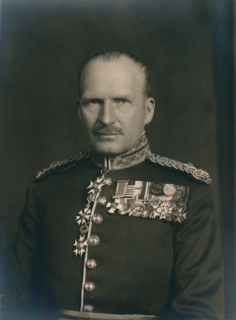
(From: “Dill, Sir John Greer” by David Murphy, Dictionary of Irish Biography, http://www.dib.ie, October 2009 | Pictured: Sir John Greer Dill, bromide print, 1932, by Walter Stoneman, National Portrait Gallery, London)


Leave a comment

Death of John Bourke, U.S. Army Captain

File source: http://en.wikipedia.org/wiki/File:John_Bourke.jpg

John Gregory Bourke, a captain in the United States Army and a prolific diarist and postbellum author, dies in Philadelphia, Pennsylvania on June 8, 1896. He writes several books about the American Old West, including ethnologies of its indigenous peoples.

Bourke is born in Philadelphia on June 23, 1846, to Irish immigrant parents, Edward Joseph and Anna (Morton) Bourke. His early education is extensive and includes Latin, Greek, and Gaelic. When the American Civil War begins, Bourke is fourteen. At sixteen he runs away from home. Claiming to be nineteen, he enlists in the 15th Regiment Pennsylvania Volunteer Cavalry, in which he serves until July 1865. He receives a Medal of Honor for “gallantry in action” at the Battle of Stones River, Tennessee, in December 1862. He later sees action at the Battle of Chickamauga.

Based on his service during the war, Bourke’s commander, Major General George Henry Thomas, nominates him for the United States Military Academy at West Point, New York. He is appointed cadet in the Academy on October 17, 1865. He graduates on June 15, 1869, and is assigned as a second lieutenant in the 3rd Cavalry Regiment. He serves with his regiment at Fort Craig, New Mexico Territory, from September 29, 1869, to February 19, 1870.

Bourke serves as an aide to General George Crook in the Apache Wars from 1872 to 1883. As Crook’s aide, he has the opportunity to witness every facet of life in the Old West — the battles, wildlife, the internal squabbling among the military, the Indian Agency, settlers, and Native Americans.

During his time as aide to General Crook during the Apache Wars, Bourke keeps journals of his observations that are later published as On the Border with Crook. This book is considered one of the best firsthand accounts of frontier army life, as Bourke gives equal time to both the soldier and the Native American. Within it, he describes the landscape, Army life on long campaigns, and his observations of the Native Americans. His passages recount General Crook’s meetings with Sitting Bull, Crazy Horse, and Geronimo as the General attempts to sign peace treaties and relocate tribes to reservations. He provides considerable detail of towns and their citizens in the Southwest, specifically the Arizona Territory.

In 1881 Bourke is a guest of the Zuni tribe, where he is allowed to attend the ceremony of a Newekwe priest. His report of this experience is published in 1888 as The use of human odure and human urine in rites of a religious or semi religious character among various nations.

Bourke marries Mary F. Horbach of Omaha, Nebraska, on July 25, 1883. They have three daughters together.

John Bourke dies in the Polyclinic Hospital in Philadelphia on June 8, 1896, and is buried at Arlington National Cemetery. His wife is buried beside him after her death.


Leave a comment

Birth of General Philip Henry Sheridan

philip-sheridan

Irish American General Philip Henry Sheridan, career United States Army officer and a Union general in the American Civil War, is born in Albany, New York on March 6, 1831.

Sheridan is the third child of six by John and Mary Meenagh Sheridan, immigrants from the parish of Killinkere, County Cavan. Fully grown, he reaches only 5 feet 5 inches in height, a stature that leads to the nickname “Little Phil.” Abraham Lincoln describes his appearance in a famous anecdote, “A brown, chunky little chap, with a long body, short legs, not enough neck to hang him, and such long arms that if his ankles itch, he can scratch them without stooping.”

Sheridan’s career is noted for his rapid rise to major general and his close association with General-in-chief Ulysses S. Grant, who transfers Sheridan from command of an infantry division in the Western Theater to lead the Cavalry Corps of the Army of the Potomac in the East. In 1864, he defeats Confederate forces in the Shenandoah Valley and his destruction of the economic infrastructure of the Valley, called “The Burning” by residents, is one of the first uses of scorched earth tactics in the war. In 1865, his cavalry pursues General Robert E. Lee and is instrumental in forcing his surrender at Appomattox Court House.

In later years, Sheridan fights in the Indian Wars of the Great Plains. Comanche Chief Tosahwi reputedly tells Sheridan in 1869, “Me, Tosahwi; me good Injun,” to which Sheridan supposedly replies, “The only good Indians I ever saw were dead.” Sheridan denies he had ever made the statement. Biographer Roy Morris Jr. states that, nevertheless, popular history credits Sheridan with saying “The only good Indian is a dead Indian.” This variation “has been used by friends and enemies ever since to characterize and castigate his Indian-fighting career.” In Bury My Heart at Wounded Knee, Dee Brown attributes the quote to Sheridan but does not provide documentation to support his contention, so the quote may be more apocryphal than real.

Both as a soldier and private citizen, Sheridan is instrumental in the development and protection of Yellowstone National Park. The protection of the Yellowstone area is Sheridan’s personal crusade. He authorizes Lieutenant Gustavus Doane to escort the Washburn Expedition in 1870 and for Captain John W. Barlow to escort the Hayden Expedition in 1871. Barlow names Mount Sheridan, a peak overlooking Heart Lake in Yellowstone, for the general in 1871. As early as 1875, Sheridan promotes military control of the area to prevent the destruction of natural formations and wildlife.

In 1883, Sheridan is appointed general-in-chief of the U.S. Army, and in 1888 he is promoted to the rank of General of the Army during the term of President Grover Cleveland. Sheridan serves as the ninth president of the National Rifle Association.

Sheridan suffers a series of massive heart attacks two months after sending his memoirs to the publisher. After his first heart attack, the U.S. Congress quickly passes legislation to promote him to general and he receives the news from a congressional delegation with joy, despite his pain. His family moves him from the heat of Washington, D.C. and he dies of heart failure in his summer cottage in the Nonquitt section of Dartmouth, Massachusetts on August 5, 1888.

His body is returned to Washington, and he is buried on a hillside facing the capital city near Arlington House in Arlington National Cemetery. The burial helps elevate Arlington to national prominence.


Leave a comment

Death of Actress Maureen O’Hara

maureen-ohara

Maureen O’Hara, Irish actress and singer, dies peacefully in her sleep at her home in Boise, Idaho on October 24, 2015. The famously red-headed O’Hara is known for her beauty and playing fiercely passionate but sensible heroines, often in westerns and adventure films. She works on numerous occasions with director John Ford and longtime friend John Wayne and is one of the last surviving stars from the Golden Age of Hollywood.

O’Hara is born Maureen FitzSimons on August 17, 1920, in Ranelagh, County Dublin and grows up in an “eccentric” devout Catholic family and aspires to become an actress from a very young age. She trains with the Rathmines Theatre Company from the age of 10 and at the Abbey Theatre from the age of 14. She is given a screen test, which is deemed unsatisfactory, but Charles Laughton sees potential and arranges for her to co-star with him in Alfred Hitchcock‘s Jamaica Inn in 1939. She moves to Hollywood the same year to appear with him in the production of The Hunchback of Notre Dame and is given a contract by RKO Pictures. From there, she goes on to enjoy a long and highly successful career, and acquires the nickname “The Queen of Technicolor,” which she detests, believing that people see her only for her beauty rather than talent.

O’Hara gains a reputation in Hollywood for bossiness and prudishness, avoiding the partying lifestyle. She appears in films such as How Green Was My Valley (1941), her first collaboration with John Ford, The Black Swan (1942) with Tyrone Power, The Spanish Main (1945), Sinbad the Sailor (1947), the Christmas classic Miracle on 34th Street (1947) with John Payne and Natalie Wood and Comanche Territory (1950).

O’Hara appears in her first film with John Wayne, the actor with whom she is most closely associated, with Rio Grande (1950). This is followed by The Quiet Man (1952), her best-known film, and The Wings of Eagles (1957), by which time her relationship with Ford has deteriorated. Such is her strong chemistry with Wayne that many assume they are married or in a relationship. In the 1960s O’Hara increasingly turns to more motherly roles as she ages, appearing in films such as The Deadly Companions (1961), The Parent Trap (1961), and The Rare Breed (1966).

O’Hara retires from the industry in 1971 after starring with Wayne one final time in Big Jake but returns 20 years later to appear with John Candy in Only the Lonely (1991). In the late 1970s, O’Hara helps run her third husband’s flying business in St. Croix in the American Virgin Islands, and edits a magazine, but later sells them to spend more time in Glengariff in Ireland. She is married three times and has one daughter, Bronwyn, born in 1944 to her second husband.

Her autobiography, ‘Tis Herself, is published in 2004 and becomes a New York Times Bestseller. In November 2014, she is presented with an Honorary Academy Award with the inscription “To Maureen O’Hara, one of Hollywood’s brightest stars, whose inspiring performances glowed with passion, warmth and strength.”

Maureen O’Hara dies of natural causes in her sleep at the age of 95 on October 24, 2015, at her home in Boise, Idaho. O’Hara is buried at Arlington National Cemetery in Virginia next to her late husband Charles F. Blair, Jr.


Leave a comment

William J. Brennan Appointed to U.S. Supreme Court

william-brennan

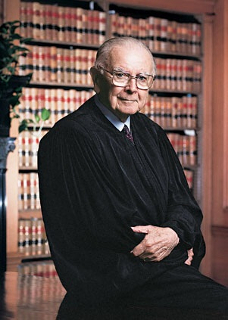
William Joseph Brennan, Jr., American judge, is named an Associate Justice of the Supreme Court of the United States through a recess appointment by President Dwight D. Eisenhower on October 15, 1956, shortly before the 1956 presidential election. He serves from 1956 until July 20, 1990. As the seventh longest-serving justice in Supreme Court history, he is known for being a leader of the Court’s liberal wing.

Brennan is born in Newark, New Jersey to Irish immigrants, originally from County Roscommon, on April 25, 1906. He attends public schools in Newark, graduating from Barringer High School in 1924. He then attends the Wharton School of the University of Pennsylvania, where he graduates cum laude with a degree in economics in 1928. He graduates from Harvard Law School near the top of his class in 1931 and is a member of the Harvard Legal Aid Bureau.

Brennan enters private practice in New Jersey and serves in the United States Army during World War II. He is appointed to the Supreme Court of New Jersey in 1951. After his appointment to the U.S. Supreme Court by Eisenhower in 1956, he wins Senate confirmation the following year.

On the Supreme Court, Brennan is known for his outspoken progressive views, including opposition to the death penalty and support for abortion rights. He authors several landmark case opinions, including Baker v. Carr, establishing the “one person, one vote” principle, and New York Times Co. v. Sullivan, which requires “actual malice” in libel suits brought by public officials. Due to his ability to shape a wide variety of opinions and “bargain” for votes in many cases, he is considered to be among the Court’s most influential members. Justice Antonin Scalia calls Brennan “probably the most influential Justice of the [20th] century.”

Brennan holds the post on the Court until his retirement on July 20, 1990, after suffering a stroke. He is succeeded by Justice David Souter. Brennan then teaches at Georgetown University Law Center until 1994. He dies in Arlington County, Virginia on July 24, 1997, and is buried in Arlington National Cemetery.

With 1,360 opinions, he is second only to William O. Douglas in number of opinions written while a Supreme Court justice. On November 30, 1993, President Bill Clinton presents Brennan with the Presidential Medal of Freedom.


Leave a comment

Birth of William O’Dwyer, 100th Mayor of New York City

william-o-dwyer

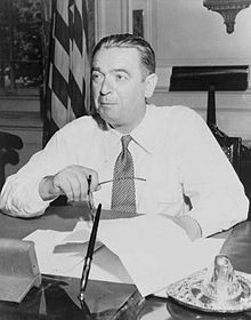
William O’Dwyer, Irish American politician and diplomat who serves as the 100th Mayor of New York City, holding that office from 1946 to 1950, is born in Bohola, County Mayo on July 11, 1890.

O’Dwyer studies at St. Nathy’s College, Ballaghaderreen, County Roscommon. He emigrates to the United States in 1910, after abandoning studies for the priesthood. He sails to New York City as a steerage passenger on board the liner Philadelphia and is inspected at Ellis Island on June 27, 1910. He first works as a laborer, then as a New York City police officer, while studying law at night at Fordham University Law School. He receives his degree in 1923 and then builds a successful practice before serving as a Kings County (Brooklyn) Court judge. He wins election as the Kings County District Attorney in November 1939 and his prosecution of the organized crime syndicate known as Murder, Inc. makes him a national celebrity.

After losing the mayoral election to Fiorello La Guardia in 1941, O’Dwyer joins the United States Army for World War II, achieving the rank of brigadier general as a member of the Allied Commission for Italy and executive director of the War Refugee Board, for which he receives the Legion of Merit. During that time, he is on leave from his elected position as district attorney and replaced by his chief assistant, Thomas Cradock Hughes, and is re-elected in November 1943.

In 1945, O’Dwyer receives the support of Tammany Hall leader Edward V. Loughlin, wins the Democratic nomination, and then easily wins the mayoral election. He establishes the Office of City Construction Coordinator, appointing Park Commissioner Robert Moses to the post, works to have the permanent home of the United Nations located in Manhattan, presides over the first billion-dollar New York City budget, creates a traffic department and raises the subway fare from five cents to ten cents. In 1948, he receives The Hundred Year Association of New York‘s Gold Medal Award “in recognition of outstanding contributions to the City of New York.” In 1948, he receives the epithets “Whirling Willie” and “Flip-Flop Willie” from U.S. Representative Vito Marcantonio of the opposition American Labor Party while the latter is campaigning for Henry A. Wallace.

Shortly after his re-election to the mayoralty in 1949, O’Dwyer is confronted with a police corruption scandal uncovered by the Kings County District Attorney, Miles McDonald. O’Dwyer resigns from office on August 31, 1950. Upon his resignation, he is given a ticker tape parade up Broadway‘s Canyon of Heroes in the borough of Manhattan. President Harry Truman appoints him U.S. Ambassador to Mexico. He returns to New York City in 1951 to answer questions concerning his association with organized crime figures and the accusations follow him for the rest of his life. He resigns as ambassador on December 6, 1952, but remains in Mexico until 1960.

O’Dwyer visits Israel for 34 days in 1951 on behalf of his Jewish constituents. Along with New York’s Jewish community, he helps organize the first Israel Day Parade.

William O’Dwyer dies in New York City on November 24, 1964, in Beth Israel Hospital, aged 74, from heart failure. He is interred at Arlington National Cemetery, Section 2, Grave 889-A-RH.


Leave a comment

Birth of Audie Murphy, Decorated Soldier & Actor

audie-leon-murphy

Audie Leon Murphy, one of the most decorated American combat soldiers of World War II, is born to sharecropping parents of Irish descent in Kingston, Texas on June 20, 1925.

As a child, Murphy is a loner with mood swings and an explosive temper. He grows up in Texas, around Farmersville, Greenville, and Celeste, where he attends elementary school. His father drifts in and out of the family’s life and eventually deserts them. He drops out of school in fifth grade and gets a job picking cotton for a dollar a day to help support his family. After his mother dies of endocarditis and pneumonia in 1941, he works at a radio repair shop and at a combination general store, garage and gas station in Greenville.

After the attack on Pearl Harbor, Murphy’s older sister helps him to falsify documentation about his birthdate in order to meet the minimum-age requirement for enlisting in the military. Turned down by the Navy and the Marine Corps, he enlists in the Army. He first sees action in the 1943 Allied invasion of Sicily. Then, in 1944, he participates in the Battle of Anzio, the liberation of Rome, and Operation Dragoon, the invasion of Southern France. He fights at Montélimar and leads his men on a successful assault at the L’Omet quarry near Cleurie in northeastern France in October.

Murphy receives every military combat award for valor available from the U.S. Army, as well as French and Belgian awards for heroism. He receives the Medal of Honor for valor that he demonstrates at the age of 19 for single-handedly holding off an entire company of German soldiers for an hour at the Colmar Pocket in France in January 1945, then leading a successful counterattack while wounded and out of ammunition.

After the war, Murphy embarks on a 21-year acting career. He plays himself in the 1955 autobiographical film To Hell and Back, based on his 1949 memoirs of the same name, but most of his roles are in westerns. He makes guest appearances on celebrity television shows and stars in the series Whispering Smith. He is a fairly accomplished songwriter. He breeds American Quarter Horses in California and Arizona and becomes a regular participant in horse racing.

Suffering from what would today be described as posttraumatic stress disorder (PTSD), Murphy sleeps with a loaded handgun under his pillow. He looks for solace in addictive sleeping pills. In his last few years, he is plagued by money problems but refuses offers to appear in alcohol and cigarette commercials because he does not want to set a bad example.

Audie Murphy is killed on May 28, 1971 when the private plane in which he is a passenger crashes into Brush Mountain, near Catawba, Virginia, twenty miles west of Roanoke in conditions of rain, clouds, fog and zero visibility. The pilot and four other passengers are also killed. On June 7, 1971, he is buried with full military honors at Arlington National Cemetery. In attendance are United States Ambassador to the United Nations George H.W. Bush, Chief of Staff of the United States Army William Westmoreland, and many of the 3rd Infantry Division. His gravesite is the cemetery’s second most-visited gravesite, after that of President John F. Kennedy.

(Pictured: Audie Murphy as Tom Smith in the television series Whispering Smith, 1961)


Leave a comment

Birth of Astronaut & Test Pilot Michael Collins

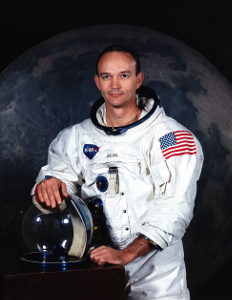
Michael Collins, Irish American former astronaut and test pilot who is part of the Gemini 10 and Apollo 11 missions, is born in Rome, Italy, on October 31, 1930. The Apollo 11 mission includes the first lunar landing in history. His Irish roots can be traced to the town of Dunmanway in County Cork, from which his grandfather, Jeremiah Collins, emigrates in the 1860s.

Collins is born in Rome where his father, United States Army Major General James Lawton Collins, is stationed at the time. After the United States enters World War II, the family moves to Washington, D.C., where Collins attends St. Albans School. During this time, he applies and is accepted to the United States Military Academy in West Point, New York, and decides to follow his father, two uncles, brother and cousin into the armed services.

In 1952, Collins graduates from West Point with a Bachelor of Science degree. He joins the United States Air Force that same year and completes flight training at Columbus Air Force Base in Mississippi. His performance earns him a position on the advanced day fighter training team at Nellis Air Force Base, flying the F-86 Sabres. This is followed by an assignment to the 21st Fighter-Bomber Wing at the George Air Force Base, where he learns how to deliver nuclear weapons. He also serves as an experimental flight test officer at Edwards Air Force Base in California, testing jet fighters.

Collins makes the decision to become an astronaut after watching John Glenn‘s Mercury-Atlas 6 flight. He applies for the second group of astronauts that same year but is not accepted. Disappointed, but undaunted, Collins enters the USAF Aerospace Research Pilot School as the Air Force begins to research space. That year, NASA once again calls for astronaut applications, and Collins is more prepared than ever. In 1963 he is chosen by NASA to be part of the third group of astronauts.

Collins makes two spaceflights. The first, on July 18, 1966, is the Gemini 10 mission, where Collins performs a spacewalk. The second is the Apollo 11 mission on July 20, 1969, the first lunar landing in history. Collins, accompanied by Neil Armstrong and Edwin “Buzz” Aldrin, remains in the Command Module while his partners walk on the moon’s surface. Collins continues circling the moon until July 21, when Armstrong and Aldrin rejoin him. The next day, he and his fellow astronauts leave lunar orbit. They land in the Pacific Ocean on July 24. Collins, Armstrong and Aldrin are all awarded the Presidential Medal of Freedom by Richard Nixon. However, Aldrin and Armstrong end up receiving a majority of the public credit for the historic event, although Collins is also on the flight.

Collins leaves NASA in January 1970, and one year later, he joins the administrative staff of the Smithsonian Institution in Washington, D.C. In 1980, he enters the private sector, working as an aerospace consultant. In his spare time, Collins says he stays active and spends his days “worrying about the stock market” and “searching for a really good bottle of cabernet under ten dollars.”

Collins and his wife, Patricia Finnegan, have three children. The couple lived in both Marco Island, Florida, and Avon, North Carolina until her death in April 2014.

On April 28, 2021, Collins dies of cancer at his home in Naples, Florida, at the age of 90. Buzz Aldrin, who becomes the last survivor of Apollo 11, says that “wherever [Collins has] been or will be, you will always have the Fire to Carry us deftly to new heights and the future.”

On January 30, 2023, Collins’ ashes are interred in Arlington National Cemetery.


Leave a comment

Birth of Actress Maureen O’Hara

maureen-ohara

Maureen O’Hara, Irish actress and singer, is born Maureen FitzSimons on August 17, 1920, in Ranelagh, County Dublin. The famously red-headed O’Hara is known for her beauty and playing fiercely passionate but sensible heroines, often in westerns and adventure films. She works on numerous occasions with director John Ford and longtime friend John Wayne and is one of the last surviving stars from the Golden Age of Hollywood.

O’Hara grows up in the Dublin suburb of Ranelagh to an “eccentric” devout Catholic family and aspires to become an actress from a very young age. She trains with the Rathmines Theatre Company from the age of 10 and at the Abbey Theatre from the age of 14. She is given a screen test, which is deemed unsatisfactory, but Charles Laughton sees potential and arranges for her to co-star with him in Alfred Hitchcock‘s Jamaica Inn in 1939. She moves to Hollywood the same year to appear with him in the production of The Hunchback of Notre Dame and is given a contract by RKO Pictures. From there, she goes on to enjoy a long and highly successful career, and acquires the nickname “The Queen of Technicolor,” which she detests, believing that people see her only for her beauty rather than talent.

O’Hara gains a reputation in Hollywood for bossiness and prudishness, avoiding the partying lifestyle. She appears in films such as How Green Was My Valley (1941), her first collaboration with John Ford, The Black Swan (1942) with Tyrone Power, The Spanish Main (1945), Sinbad the Sailor (1947), the Christmas classic Miracle on 34th Street (1947) with John Payne and Natalie Wood and Comanche Territory (1950).

O’Hara appears in her first film with John Wayne, the actor with whom she is most closely associated, with Rio Grande (1950). This is followed by The Quiet Man (1952), her best-known film, and The Wings of Eagles (1957), by which time her relationship with Ford has deteriorated. Such is her strong chemistry with Wayne that many assume they are married or in a relationship. In the 1960s O’Hara increasingly turns to more motherly roles as she ages, appearing in films such as The Deadly Companions (1961), The Parent Trap (1961), and The Rare Breed (1966).

O’Hara retires from the industry in 1971 after starring with Wayne one final time in Big Jake but returns 20 years later to appear with John Candy in Only the Lonely (1991). In the late 1970s, O’Hara helps run her third husband’s flying business in St. Croix in the American Virgin Islands, and edits a magazine, but later sells them to spend more time in Glengariff in Ireland. She is married three times and has one daughter, Bronwyn, born in 1944 to her second husband.

Her autobiography, ‘Tis Herself, is published in 2004 and becomes a New York Times Bestseller. In November 2014, she is presented with an Honorary Academy Award with the inscription “To Maureen O’Hara, one of Hollywood’s brightest stars, whose inspiring performances glowed with passion, warmth and strength.”

Maureen O’Hara dies of natural causes in her sleep at the age of 95 on October 24, 2015, at her home in Boise, Idaho. O’Hara is buried at Arlington National Cemetery in Virginia next to her late husband Charles Blair.