Hamilton enters Trinity College Dublin on November 17, 1742, at the age of 13 with Thomas McDonnell as his tutor. He graduates Bachelor of Arts (BA) in 1747 and Trinity Master of Arts (MA Dubl) in 1750. He takes the competitive examination for a vacant fellowship of the college in 1750, but the position is secured instead by his friend Richard Murray, who is a few years older. Two fellowships become vacant the following year and Hamilton is elected to one of them at the age of 22. He is appointed Erasmus Smith’s Professor of Natural and Experimental Philosophy at Trinity College Dublin in 1759 and that same year graduates Bachelor of Divinity (BD). He is elected a Fellow of the Royal Society on February 19, 1761, and graduates Doctor of Divinity (DD) in 1762.
Trinity College presents him to the rectory of Kilmacrennan in the diocese of Raphoe, County Donegal, in 1764. This is a small benefice in the gift of the college, for which he resigns his fellowship. He retains the Erasmus Smith’s chair, however, being succeeded in that by Thomas Wilson in 1769. He resigns from Kilmacrenan in 1767 and becomes vicar of St. Ann’s Church in Dublin.
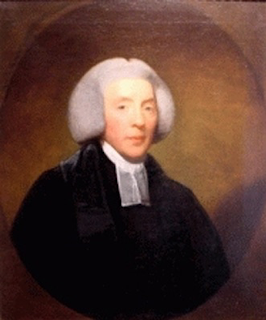
Hamilton then becomes Dean of Armagh, the chief resident cleric of St. Patrick’s Cathedral in Armagh, County Armagh, from April 1768 to 1796. Finding the existing dean’s house inconvenient and poorly situated, he has a new one built in a better location just off Portadown Road, now known as Dean’s Hill. The house, of three stories and a semi-basement, is built in 1772–74. The house is later sold by the church and the present owners provide bed and breakfast accommodation in it. While dean he also acts as treasurer for the infirmary or county hospital, he establishes Sunday schools in the districts of the parish, and he founds a charitable loan for poor tradesmen. He is also instrumental in planning a piped water supply for the town, which is later put into effect. He is one of the 38 original members of the Royal Irish Academy when it is founded in 1785. Gilbert Stuart paints his portrait in about 1790 (pictured above).
Hamilton is promoted to Bishop of Clonfert and Kilmacduagh on January 20, 1796, without seeking it. On January 24, 1799, he is translated to Ossory, where he is bishop until 1805. He dies of a fever at Kilkenny, County Kilkenny, on December 1, 1805. He is buried in the graveyard of St. Canice’s Cathedral at Kilkenny, and there is a memorial to him inside the cathedral.
Hamilton writes a mathematical treatise on conic sections called De Sectionibus Conicis: Tractatus Geometricus, published in 1758. In this book he “was the first to deduce the properties of the conic section from the properties of the cone, by demonstrations which were general, unencumbered by lemmas, and proceeding in a more natural and perspicuous order,” according to writer James Wills in 1847. The work is acclaimed for its lucidity and Leonhard Euler describes it as a perfect book. It is “soon adopted in all the British universities” and is translated from Latin into English as A Geometrical Treatise of the Conic Sections in 1773.
Hamilton also writes Philosophical Essays on Vapours (1767), Four Introductory Lectures on Natural Philosophy (1774), and An Essay on the Existence and Attributes of the Supreme Being (1784). His principal works are collected and republished, with a memoir, as The Works of the Right Rev. Hugh Hamilton by his eldest son, Alexander Hamilton, in two volumes in 1809.
Hamilton marries Isabella, daughter of Hans Widman Wood of Rosmead, County Westmeath, in 1772. Isabella’s mother Frances is the twin sister of Edward King, 1st Earl of Kingston. They have five sons and two daughters. They are Alexander, who was a barrister; Frances; Hans, who is rector of Knocktopher, County Kilkenny, and associated with the Carrickshock incident of 1831; Isabella; Henry; George, who is a biblical scholar; and Hugh, who marries Elizabeth Staples, a daughter of John Staples, a Member of Parliament. The younger Hugh is the great-grandfather of Clive Staples Lewis, better known as C. S. Lewis. Bishop Hugh Hamilton is a great-great-great-grandfather of the mathematicians John Lighton Synge and his brother Edward Hutchinson Synge. Dodgson Hamilton Madden, the High Court judge and noted scholar, is Hamilton’s great-grandson.
(Pictured: “Hugh Hamilton,” oil on canvas by Gilbert Stuart)
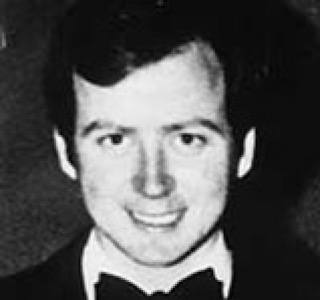
Steenson, a Catholic and the son of Frank Steenson, is born in 1957 and raised in heavily republican West Belfast. He is nicknamed “Doctor Death” by the media and the Royal Ulster Constabulary (RUC) for the multiple assassinations he purportedly accomplishes according to The New York Times. However, Fortnight alleges that he got his nickname after he dressed up in a white coat to attack British soldiers guarding a patient at the Royal Victoria Hospital.
Steenson is widely associated with internecine violence between Irish republican groups. He joins the Official Irish Republican Army‘s Belfast Brigade in 1972 at the age of 14, becoming part of the Brigade’s C Company. Two years later, he leaves to join the Irish National Liberation Army (INLA) upon that paramilitary group’s formation, consequent to their split from the Official IRA. He becomes head of the INLA in Belfast.
Steenson first comes to notoriety as a teenager in 1975 for killing Billy McMillen, the Official IRA’s Belfast leader, during the feud between the INLA and the Official IRA. Jim Cusack, a journalist describes him as the “assassin-in-chief” of Hugh Torney.
During the 1981 Northern Ireland local elections, Steenson and Seán Mackin both lead efforts within the INLA to obstruct Irish Republican Socialist Party (IRSP) candidates which disrupts their votes, viewing the decision to run in the election as wasteful, believing that the allocated resources would be better spent on weapons. Following the election, Steenson later changes his mind with regards to elections, declaring that the party should have run more candidates.
In December 1981, Steenson, fearing that the Dublin INLA leadership will make a move on him following his efforts to set up a parallel organisation, plans an assassination attempt on the Dublin leader, Harry Flynn. Following a meeting of the Ard Comhairle on December 5, Flynn and others go out for drinks in the Flowing Tide pub at the corner of Sackville Place and Marlborough Street in Dublin. Shortly before 11 p.m., Steenson’s gunman enters the pub and fires shots at Flynn before his gun jams and he flees. Though seriously wounded, Flynn survives. After the botched assassination attempt, Steenson then unsuccessfully threatens Seán Flynn for his seat on Belfast City Council. Later, on January 25, 1982, a botched attempt is also made on Seán Flynn and Bernard Dorrian at a bar in the Short Strand area, provoking a feud where a unit from the Derry INLA comes to Belfast searching for Steenson. Failing to secure power, the attacks only demoralise the IRSP and INLA and begin a trend of internal feuds.
In 1985, Steenson is convicted of 67 terrorist offences (including six murders) after his former friend, Harry Kirkpatrick, testifies against him. Kirkpatrick and Steenson are rarely seen apart in public and are given the nicknames “Pinkie and Perky.”
In 1986, Steenson, Jimmy Brown, and Martin “Rook” O’Prey form the Irish People’s Liberation Organisation (IPLO), consisting of disaffected and expelled INLA members, with the express intention of wiping out the INLA and IRSP and replacing them with their own organisation. He argues in letters, written while he is in prison in the early 1980s, that the INLA has become militarily “inefficient” and that the IRSP leadership has become “ineffective” and requires “realignment.”
Steenson is involved in the Rosnaree Hotel shooting on January 20, 1987, where a meeting between the leadership of the INLA and IPLO is to take place to end hostilities. However, IPLO members ambush the four INLA members at the hotel, killing Thomas “Ta” Power and John “Jap” O’Reilly, while Hugh Torney and Peter Stewart manage to escape.
Steenson is viewed highly in the movement with Brown calling him a “committed and highly efficient military activist and a dedicated revolutionary.” However, he is described by Lord Justice Carswell as “a most dangerous and sinister terrorist. A ruthless and highly dedicated, resourceful and indefatigable planner of criminal exploits who did not hesitate to take a leading role in assassinations and other crimes.” Henry McDonald and Jack Holland write, “Both his friends and enemies spoke in a tone of awestruck at his paramilitary abilities.” Ken Wharton refers to him as a “notorious psychopath.” Sean O’Callaghan describes him as someone who “never took to orders.”
Terry George writes of Steenson that he “was extremely clever and even wittier than Billy McMillan. He had an angelic face and women adored him. He was also ruthless, cunning and fearless.”
On March 14, 1987, Steenson and Tony “Boot” McCarthy return to Ballymurphy after a night of drinking which is cut short by anger over the INLA GHQ faction’s show of force in the Divis Flats earlier in the day. After bringing their car to a stop on Springhill Avenue, they are killed in an ambush by an INLA active unit, with a member of the unit closing the security gate at the top of the street to trap the pair. An INLA spokesperson says Steenson was killed for being “actively involved in continuous and concerted efforts to undermine the authority of the … movement.” Jimmy Brown gives the graveside oration.
The IPLO later kills Emmanuel Gargan in the Hatfield Bar on the Lower Ormeau Road and Kevin Barry Duffy in Armagh, County Armagh, in retaliation for the killing of Steenson. The IPLO draws the ire of the Lower Ormeau community through the circumstances surrounding the killing of Gargan, with graffiti appearing in the area labeled “IPLOscum.”
On Halloween 1992, the Provisional Irish Republican Army carries out a large-scale operation (dubbed the “Night of Long Knives”) with the goal of neutralising the IPLO. Following the operation and execution of Jimmy Brown, both the Belfast Brigade and Army Council factions disband.
According to author Tony Geraghty, British authorities learn of the first horizontal mortar produced by the Provisional IRA, the Mark 12, in 1985. The weapon is recovered after an incident in which three IRA volunteers are killed by security forces. The launcher suffers from the limitation of a heavy recoil, which makes the handling of the device difficult. One British intelligence report says that while the launcher is quite crude, the grenade is made of “a number of components which require a high standard of machine manufacturing.” The projectile has a warhead of 40 ounces (1.1 kg) of Semtex and TNT. It is used basically as a standoff weapon, in which the grenade is lofted over the security bases’ fences or against armoured vehicles. The mortar has an effective range of 70 yards, within which it can pierce an armour plate or destroy a sangar.
Later in the conflict the IRA develops the Mark 16, a new version with improved armour-piercing capabilities, usually referred to as a “projected recoilless improvised grenade.”
On the evening of March 1, 1991, a two-vehicle mobile patrol belonging to the 2nd Battalion, Ulster Defence Regiment is approaching the western outskirts of Armagh on Killylea road. When driving along Mullacreevie housing estate, the two Land Rovers are held by temporary traffic lights at roadworks. Unknown to them, an IRA unit from the North Armagh Brigade has set a Mark 12 launcher on a hump of earth in the front garden of a house beside the lights. After the incident, IRA sources describe the device as a “directional missile.”
When the first Land Rover pulls off after the lights turn green, the mortar ‘s improvised grenade is fired by command-wire from the backyard of the house by IRA members concealed behind a digger. The projectile hits the coachwork, blowing away both sides and the roof of the military vehicle. Witnesses report that the Land Rover was “ripped apart.” The soldiers inside are immediately assisted by fellow UDR members, who help to drag the wounded out of the shattered wreckage.
Private Paul Sutcliffe, a 32-year-old Englishman who has served for four years with the Duke of Wellington’s Regiment before becoming a UDR soldier in 1989, dies on the spot. The driver, Private Roger Love, a 20-year-old from Portadown, succumbs to his injuries three days later. Two other servicemen are maimed by the explosion. One of them suffers severe chest wounds, and loses the use of one arm; the other has a leg amputated below the knee.
The ambush at Mullacreevie is the first time that a Mark 12 mortar is used successfully.
Roger Love’s family donates the deceased soldier’s kidneys after they authorize the medical staff to disconnect the life-supporting machine. A UDR party attends Paul Sutcliffe’s funeral at his hometown of Barrowford, Lancashire, the only UDR military funeral held outside Northern Ireland. His ashes are scattered in the Mourne Mountains.
Another horizontal mortar attack on a UDR mobile patrol takes place on November 6, when Private Michael Boxall is killed in Bellaghy, County Londonderry, after the Land Rover he is riding on is hit by a Mark 12 grenade. A fellow soldier loses one eye in the attack. Incidentally, constable Erik Clarke, another Englishmen who had also served in the British Army in Northern Ireland from 1973 to 1978, is killed that year by the same kind of weapon while riding on a combined Royal Ulster Constabulary (RUC) – British Army mobile patrol in an early Mark 12 attack. The incident takes place on September 17 at Swatragh, County Londonderry. Clarke had married a local woman and later joined the RUC.
The Mark 12 mortar is used by the IRA until 1993, when it is superseded by the Mark 16. The Mark 16 is fired on eleven occasions by the IRA from late 1993 to early 1994.
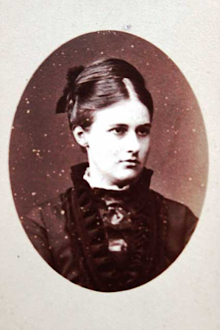
Mitchel is born Jane Verner around 1820 near Newry, County Down. At the time she, her brother and her mother, Mary Ward, are living with Captain James Verner (1777–1847), who is from a prominent Armagh family, and is involved in the Orange Order, going on to become Orange deputy grandmaster of Ireland in 1824. Although James Verner raises Mitchel, she is not believed to be his child. She attends Miss Bryden’s School for Young Ladies in Newry.
Mitchel meets her husband, John Mitchel, when she is fifteen. The couple elopes in November 1836, but do not marry as James Verner pursues them to Chester and brings her home to Ireland. They elope again in 1837, and are married at Drumcree Church, County Armagh, on February 3. At this point, Mitchel is disowned by James Verner, and goes to live with her in-laws at Dromalane, County Down. They then move to Banbridge in 1839 where her husband practises law. The couple goes on to have six children, three daughters and three sons.
The couple moves to Dublin in October 1845 when John Mitchel becomes the assistant editor of The Nation. They live at 8 Ontario Terrace, Rathmines, where they meet Young Irelanders. She is a full supporter of her husband’s nationalism. She aids in his work with The Nation, reading other newspapers, keeping and filing reference clippings, going on to become an editor and anonymous contributor to the United Irishman from February 1848. John Mitchel is convicted of treason for inciting insurrection in May 1848, and is sentenced to fourteen years’ transportation. Mitchel urges his fellow Young Irelanders to fight his removal, and denounces them when they fail to come out in support of him.
Due to her standing in the nationalist community, £1,450 is raised to support her and her family. For three years, Mitchel lives in Newry and Dublin, before she joins her husband in Van Diemen’s Land (Tasmania) in June 1851, where they settle in the village of Bothwell. Their youngest child, Isabel, is born there in 1853.
The Mitchels travel around the island with her husband, visiting fellow Irish exiles, becoming fond of William Smith O’Brien in particular.
When John Mitchel escapes in July 1853, Mitchel travels with her children to join him in Sydney, from where they sail to the United States. They live for a time in Brooklyn, New York, from 1853 to 1855, rekindling friendships with old friends who are fellow Young Ireland exiles.
In May 1855, the family moves to a remote farm at Tucaleechee Cove in Tennessee. She fears that the isolation and life in a primitive log cabin will be detrimental to their children’s education, and at her behest the family moves to Knoxville, Tennessee, in September 1856. From here, John Mitchel runs a pro-slavery newspaper, the Southern Citizen.
The family moves again in December 1858 to Washington, D.C. Mitchel supports her husband in the Southern cause, albeit with some reservation. Nothing, she says, will induce her “to become the mistress of a slave household.” Her objection to slavery is “the injury it does to the white masters.”
Mitchel accompanies her husband to Paris in September 1860, and in opposition to some of the family, she supports her daughter Henrietta’s conversion to Catholicism and entrance into a convent. She remains in Paris and Ireland with her daughters, while her husband and sons assist the Confederacy during the American Civil War. Without letting her husband know, she resolves to return to America when she hears of her youngest son, William’s, death at Gettysburg in July 1863. She sails with her daughters, Mary and Isabel, as Henrietta had died earlier the same year. While their ship runs a blockade by the Union, the ship is shelled, runs aground, and catches fire near the coast of North Carolina. She and her daughters are unhurt, but lose all of their possessions. By December 1863, she has joined her husband in Richmond, Virginia, remaining their for the rest of the Civil War. Their eldest son, John, is killed in action in July 1864.
The family returns to New York after the war, and John Mitchel sets up another paper, The Irish Citizen (1867–72). Due to lack of funding for the Irish American press and her husband’s ill health results in the family falling into poverty. This is alleviated by a testimonial raised by William and John Dillon in 1873. Mitchel is widowed in March 1875, going on to receive $30,000 from nationalist sympathisers. She invests this money in a photolithographic firm she and her son, James, run. She dies at home in Bedford Park, New York, on December 31, 1899. She is buried in Woodlawn Cemetery, Bronx, New York, with her plot marked with a large Celtic cross. She is survived by two of her children, James (1840–1908) and Mary (1846–1910).
Daly studies Classics at Queen’s University Belfast (QUB). He earns his BA with Honours and also the Henry Medal in Latin Studies in 1937 and completes his MA the following year. He enters St. Patrick’s College, Maynooth and is ordained to the priesthood on June 22, 1941. He continues studies in theology in Maynooth, from where he obtains a doctorate in divinity (DD) in 1944. His first appointment is as Classics Master in St. Malachy’s College (1944–45).
In 1945, Daly is appointed Lecturer in Scholastic Philosophy at Queen’s University, Belfast, retaining the post for 21 years. In the academic year 1952–53 QUB grants him sabbatical leave, which he spends studying at the Catholic University of Paris where he receives a licentiate in philosophy. He returns to France at many points, particularly for holidays. He persists with his studies well into his retirement. He is a popular figure with the university and fondly remembered by his students. He is named a Canon of the Cathedral Chapter of Diocese of Down and Connor in 1966.
Daly is a peritus, or theological expert, at the Second Vatican Council (1962–65) to Bishop William Philbin during the first session of the Council and to Cardinal William Conway for the rest of the council. He dedicates himself to scholarship for 30 years, and publishes several books seeking to bring about understanding between the warring factions in Northern Ireland.
Daly is appointed Reader in Scholastic Philosophy at QUB in 1963, a post he holds until 1967, when he is appointed Bishop of Ardagh and Clonmacnoise on May 26.
Daly spends 15 years as bishop in Longford and is diligent about parish visitation and confirmations gradually assume a greater national profile. From 1974 onward, he devotes himself especially to ecumenical activities for the Pontifical Council for Promoting Christian Unity. His pastoral letter to Protestants, written in 1979, pleads for Christian unity.
Daly succeeded William Philbin as the 30th Bishop of Down and Connor when he is installed as bishop of his native diocese at a ceremony in St. Peter’s Cathedral, Belfast, on October 17, 1982.
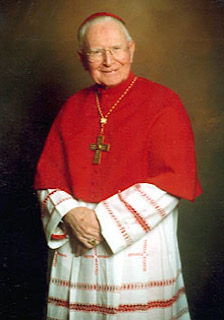
On November 6, 1990, Daly is appointed Archbishop of Armagh and, as such, Primate of All Ireland. His age makes him an unexpected occupant of the post. Despite this it is requested that he stay in the role for three years before usual age of episcopal retirement at 75. Cardinal Daly takes a notably harder line against the Irish Republican Army (IRA) than his predecessor, Cardinal Tomás Ó Fiaich.
Daly is respectful of Protestant rights and opposes integrated education of Catholics and Protestants. This policy is criticised by those who see segregated education as one of the causes of sectarianism in Northern Ireland, but is seen by the Catholic clergy as important for passing on their faith to future generations. He is utterly orthodox in opposing divorce, contraception, abortion, the ordination of women and any idea of dropping clerical celibacy.
Daly is heckled by the audience on live television during a broadcast of The Late Late Show on RTÉ One on the topic of pedophilia in the 1990s. After his retirement in 1996, he makes no public statement on the issue.
Daly retires as Archbishop of Armagh on his 79th birthday, October 1, 1996, and subsequently suffers ill health. Although it is announced that he will attend the funeral of Pope John Paul II, he stays home on the advice of his doctors. His age makes him ineligible to participate in the 2005 conclave that elects Pope Benedict XVI.
Daly is admitted to the coronary unit of Belfast City Hospital on December 28, 2009. His health has already been declining, leading to prayers being ordered for him. He dies in hospital in Belfast on December 31, 2009, aged 92. His family are at his bedside at the time. His death brings to an end a two-year period during which Ireland has, for the first time in its history, three living Cardinals.
Daly lay in state in Belfast and then his remains are taken to Armagh. Pope Benedict XVI pays tribute at this stage. Large numbers of people travel from as far as County Westmeath to attend Mass at Armagh on January 4, at which Monsignor Liam McEntaggart, the former parish priest of Coalisland, says, “When the history of peace making in Ireland comes to be written, the contribution of Cardinal Daly will be accorded a high place.” Monsignor McEntaggart himself dies on August 22, 2010, aged 81, less than eight months after Cardinal Daly’s passing.
Conway is born on January 22, 1913, in Belfast, the eldest of four sons and five daughters of Patrick Joseph Conway and Annie Conway (née Donnelly). His father, a self-employed housepainter, also has a paint shop in Kent Street off Royal Avenue. His mother, who survives her son, is born in Carlingford, County Louth. He attends Boundary Street Primary School, St. Mary’s CBS (now St. Mary’s CBGS Belfast). His academic successes are crowned by a scholarship to Queen’s University Belfast. He decides to study for the diocesan priesthood. In 1933 he is conferred with an honours BA in English literature and goes on to read a distinguished course in theology at St. Patrick’s College, Maynooth.
Conway is ordained on June 20, 1937, and awarded a DD (1938). On November 12, 1938, he enters the Pontifical Irish College in Rome, and in 1941 he receives the DCL degree at the Pontifical Gregorian University. When Italy enters World War II in June 1940, he returns to Belfast to take up duty in the Diocese of Down and Connor. He is appointed to teach English and Latin in St. Malachy’s College in Belfast, but after one year he is named professor of moral theology and canon law in Maynooth. He contributes regular ‘Canon law replies’ to the Irish Ecclesiastical Record, which are later collected as Problems in canon law (1950), the only book published by him.
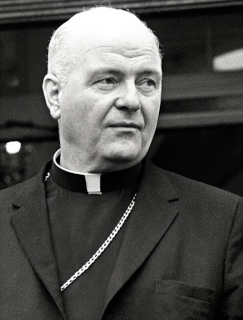
In 1957 Conway becomes vice-president of Maynooth, and in 1958, he is named Ireland’s youngest bishop, Titular Bishop of Neve, and auxiliary bishop to Cardinal John D’Alton, Archbishop of Armagh and Primate of All Ireland. He is consecrated in St. Patrick’s Cathedral, Armagh on July 27, 1958. He serves as administrator of St. Patrick’s Church, Dundalk, for the next five years, gaining valuable pastoral experience, and also uses these years to familiarise himself with his new diocese, especially its geography. On the death of D’Alton, he is chosen to succeed him in September 1963, and is enthroned on September 25 in St. Patrick’s Cathedral, Armagh by the apostolic nuncio, Archbishop Sensi. At the end of 1964, Pope Paul VI chooses him as Ireland’s seventh residential cardinal, and he receives the red hat in the public consistory of February 22, 1965.
The thirteen-odd years of Conway’s ministry as primate are dominated firstly by the Second Vatican Council and secondly by the Troubles in Northern Ireland. His primary concern is the church, to steer it through testing times. He is a very active bishop in a diocese of 160,000 Catholics, with fifty-seven parishes and some 167 priests. He carries the burden alone until 1974 when he is given an auxiliary in the person of his secretary, Fr. Francis Lenny (1928–78). Two new parishes are created, five new churches are built, and many others are renovated to meet the requirements of liturgical reform. Twenty new schools are also provided. He attends all four sessions of the Vatican council (1962–65), as auxiliary bishop and as primate. On October 9, 1963, he addresses the assembly, making a plea that the council might not be so concerned with weightier matters as to neglect to speak about priests. He also makes contributions on the topics of mixed marriages, Catholic schools, and the laity. On the topic of education, he is convinced that integrated schools will not solve Northern Ireland’s problems.
Conway represents the Irish Catholic Bishops’ Conference at each assembly of the Synod of Bishops in Rome, at first with Bishop Michael Browne of the Diocese of Galway and Kilmacduagh, his former professor in Maynooth, and later with the Archbishop of Dublin, Dermot Ryan. With Cardinals Jean-Marie Villot and Pericle Felici, he is chairman of the first synod in 1969, a signal honour conferred on him by Pope Paul VI. He addresses the assembly, opposing the ordination of married men as a move that would release a flood of applications from around the world for dispensations from priestly celibacy. His experience of violence in Northern Ireland is reflected in contributions he makes to later synod assemblies, especially in 1971 and 1974.
Apart from the synod, Conway travels a few times each year to Rome for meetings of the three Roman congregations on which he is called to serve (those of bishops, catholic education, and the evangelisation of peoples) and the commission for the revision of the code of canon law. He also travels further afield in a representative capacity to the International Eucharistic Congress at Bogotá, also attended by Pope Paul VI, and to Madras (1972), where he acts as papal legate for the centenary celebrations in honour of St. Thomas. In 1966 he is invited by the bishops of Poland to join in celebrations for the millennium of Catholicism in that country but is refused an entry visa by the Polish government. In January 1973 he feels obliged to forgo participation in the Melbourne eucharistic congress because of the troubled situation at home. Within Ireland he accepts invitations to become a freeman of Cork and Galway (1965) and of Wexford (1966). In 1976 the National University of Ireland (NUI) confers on him an honorary LL.D.
Conway is acknowledged as an able and diligent chairman of the Irish Catholic Bishops’ Conference. The core problem in the early years is how to lead the Irish church into the difficult new era that follows the council. He shows exceptional leadership qualities in the manner in which he promotes firm but gentle progress, avoiding sudden trauma and divisions. A major event in his term as Archbishop of Armagh, and one that gives him much satisfaction, is the canonization of Oliver Plunkett, his martyred predecessor, in the holy year 1975. He follows with great interest the final stages of the cause from 1968 and is greatly disappointed when grounded by his doctors six weeks before the event. He does however take part, concelebrating with Pope Paul VI at the ceremony on October 12, 1975. He also presides the following evening at the first mass of thanksgiving in the Lateran Basilica, receiving a tumultuous applause from the thousands of Irish present.
More than anything else, the Troubles in Northern Ireland occupy Conway during the second half of his term as archbishop and primate. He is the leading spokesman of the Catholic cause but never fails to condemn atrocities wherever the responsibility lay. He brands as ‘monsters’ the terrorist bombers on both sides. In 1971 he denounces internment without trial, and the following year he is mainly responsible for highlighting the ill-treatment and even torture of prisoners in Northern Ireland. He repudiates the idea that the conflict is religious in nature, emphasising its social and political dimensions, and is openly critical of the British government over conditions in Long Kesh Detention Centre, and of ‘the cloak of almost total silence’ surrounding violence against the Catholic community.
In January 1977 Conway undergoes surgery in a Dublin hospital, and almost immediately comes to know that he is terminally ill. It is the best-kept secret in Ireland until close to the end. On March 29, he writes to his fellow bishops informing them that the prognosis regarding his health is ‘not good, in fact . . . very bad,’ and that he is perfectly reconciled to God’s will. He is still able to work at his desk until Good Friday, April 8, 1977.
Conway dies in Armagh on Low Sunday night, April 17, 1977. Seven countries are represented at his funeral by six cardinals and many bishops. The apostolic nuncio, the bishops of Ireland, the president and Taoiseach, six Irish government ministers, and the Secretary of State for Northern Ireland are also among the mourners. The cardinal is laid to rest in St. Patrick’s Cathedral Cemetery, Armagh. The red hat received from Pope Paul VI is suspended from the ceiling of the Lady chapel, joining those of his four immediate predecessors.
(From: “Conway, John William,” Dictionary of Irish Biography, http://www.dib.ie, contributed by J. J. Hanley)
The Tandragee killings take place in the early hours of Saturday, February 19, 2000, on an isolated country road outside Tandragee, County Armagh, Northern Ireland. Two young Protestant men, Andrew Robb and David McIlwaine, are beaten and repeatedly stabbed to death in what is part of a Loyalist feud between the Ulster Volunteer Force (UVF) and their rivals, the breakaway Loyalist Volunteer Force (LVF). The men are not members of any loyalist paramilitary organisation. It later emerges in court hearings that Robb had made disparaging remarks about the killing of UVF Mid-Ulster Brigade leader Richard Jameson by an LVF gunman the previous month. This had angered the killers, themselves members of the Mid-Ulster UVF, and in retaliation they lure the two men to the remote lane on the outskirts of town, where they kill and mutilate them. The UVF’s Brigade Staff (Belfast leadership) does not sanction the killings.
The origins of the lethal 2000–01 loyalist feud which erupts between the UVF and the LVF begins when a brawl breaks out in the Portadown F.C. Society Club on December 27, 1999. The leader of the UVF Mid-Ulster Brigade, Richard Jameson, is jostled and insulted by members of the LVF who are holding a celebration at the club to commemorate the second anniversary of the shooting death of their former leader and founder, Billy Wright, inside the Maze Prison by the Irish National Liberation Army (INLA).
Shortly after Jameson leaves the club, he returns with a number of UVF men armed with baseball bats and pickaxe handles. A violent altercation breaks out in which 12 people are seriously injured including three LVF prisoners out on Christmas parole. The LVF decides to retaliate and sends a gunman to assassinate Jameson in the driveway outside his home on January 10, 2000. The UVF’s Brigade Staff in Belfast immediately convenes a “war council” at “the Eagle,” their headquarters over a chip shop on the Shankill Road, where they discuss plans to avenge Jameson’s killing. The LVF’s leader, Mark “Swinger” Fulton, who is imprisoned at the time, claims to no avail that his organisation is not involved in the shooting.
At 1:30 a.m. on Saturday, February 19, 2000, Protestant acquaintances, Andrew Robb, a 19-year-old unmarried father, and David McIlwaine, an 18-year-old graphic design student at Lurgan Tech, both of Portadown, leave “The Spot” nightclub in Tandragee together with three others after spending Friday night out. The club is managed by Willie Frazer, well known as a loyalist victims’ advocate and political activist, who has since suggested that the killings were linked to a threat posed to him by the UVF. Billy Wright had reportedly frequented the nightclub before his imprisonment and death.
The group of three men and two women attempt to enter a taxi, but regulations stipulate that no more than four passengers can travel together. Robb and McIlwaine get out of the vehicle and head in search of a house party. The pair knocks on the door of a house in Sinton Park belonging to Mid-Ulster UVF member Stephen Leslie Brown, 19, also known as “Stephen Leslie Revels.” They are invited inside where other UVF members Noel Dillon and Mark Burcombe are also present. Alcoholic beverages are consumed at the party.
The atmosphere inside the house suddenly turns ugly when Dillon asks the teenagers how they feel about the LVF killing of UVF Mid-Ulster brigadier Richard Jameson. McIlwaine remains silent, however Robb replies, “So fucking what, it’s got fuck all to do with me,” to which Dillon takes exception. When he informs Robb that Jameson had been his good friend, Robb makes further disparaging comments which also anger Brown. Brown, out of earshot of the teenagers, decides to assault Robb in retaliation, saying he will “punch the head off Andrew.” Neither Robb nor McIlwaine has been a member of any loyalist paramilitary organisation, although Robb has tenuous links to the LVF having been an associate of Billy Wright and even photographed in 1996 at a march led by Wright. Writers Henry McDonald and Ian S. Wood allege that, unknown to the teenagers, a UVF unit had gone to “The Spot” to seek out two known LVF individuals rumoured to have been involved in Jameson’s killing; however, they had already left the nightclub by the time the UVF arrived. The UVF men encounter Robb and McIlwaine instead and target them as LVF members implicated in Jameson’s death.
Under the pretense of another party elsewhere, Brown lures Robb and McIlwaine into his car along with Dillon and Burcombe. Brown drives off toward Druminure Road where he stops the car at a gate leading to a field and orders the passengers to get out. Burcombe leads McIlwaine away from the vehicle. As they are walking downhill, Burcombe informs McIlwaine that the other two men are going to “give Andrew Robb a beating for slabbering about Richard Jameson. Don’t worry about it, it’s nothing to do with you.” Brown and Dillon proceed to attack Robb with a series of savage kicks. He is then stabbed deeply in the abdomen and throat and dies instantly. He also sustains wounds and gashes to his face and head.
The two perpetrators return, both “walking with a swagger” to where McIlwaine waits downhill from the parked car with Burcombe. McIlwaine makes an attempt to run away but Brown, Dillon, and Burcombe catch up with him as he falls to the ground. Brown gives him a severe kicking, mostly in the head. Dillon produces a butcher’s knife and cuts McIlwaine’s throat while Brown shouts encouragement and Burcombe overlooks the scene from about five feet away. Brown and Dillon leave McIlwaine still breathing on the ground. Once they are back inside the car, Brown proposes to drive the car over his head, but Dillon dissuades him. Brown halts the vehicle, takes the knife and walks back over to where McIlwaine is lying on the road making a “wheezing” sound. Brown stabs McIlwaine repeatedly in the face and chest. When he notices that McIlwaine appears to be looking up at him, Brown stabs him deeply in his left eye, the wound penetrating his brain, killing him. According to Burcombe’s later testimony, Brown appears “crazed” as he hands the knife back to Dillon and says he is “buzzing.” He subsequently goes on to recount stabbing McIlwaine in the eye. He threatens to cut Burcombe’s throat or kill a member of his family if he tells anyone what happened.
Several hours later, at 9:30 a.m., the mutilated bodies of Robb and McIlwaine are discovered lying in pools of blood on the roadside 100 metres apart from one another by a woman taking her children to dancing lessons. Because of the devastating stab wounds inflicted upon the teenagers, the Royal Ulster Constabulary (RUC) assumes that McIlwaine had received a shotgun blast to his face. Both of their throats are slashed so deeply that the teenagers are nearly decapitated. The RUC immediately sets up an inquiry into the killings. Postmortems reveal that Robb had sustained a severe cut to the neck and three penetrating wounds to the abdomen. There are no defence injuries. McIlwaine received a severe throat injury, seven penetrating wounds to the chest and penetrating wounds to the face and to the left eye. Both teenagers were intoxicated at the time of their deaths.
The killings deeply shock the community and are strongly condemned by local politicians. The young men’s funerals attract hundreds of mourners. They are buried in adjacent graves at Kernan Cemetery in Portadown.
After the attacks Adair brands the UVF “Protestant killers” and even produces a newssheet in which he lists McIlwaine and Robb as Protestant victims of the UVF along with the likes of the murdered Frankie Curry and regular targets Jackie Mahood, Kenny McClinton and Clifford Peeples. The UVF Brigade Staff in Belfast does not sanction the killings of Robb and McIlwaine. The LVF leadership, however, maintains that the blame for the killings lies with the UVF and threatens to strike back against carefully selected targets in the Belfast UVF.
The day after the homicides, a number of people are arrested in connection with the crime, including Noel Dillon. The arrests are not made under anti-terrorist legislation, and the suspects are all released unconditionally the same evening. On February 27, 2000, Stephen Brown is brought before the Armagh magistrate’s court after he is charged with both murders. The police tell the court they have plenty of forensic evidence connecting him to the homicides. Ten months later, Brown is released on bail after the court is told the prosecution has expressed doubts about their principal witness and the forensic evidence is not sufficient to secure a conviction. On February 6, 2001, the charges against Brown are unexpectedly dropped by the Director of Public Prosecutions. In April 2001, Mark Burcombe is arrested under the Prevention of Terrorism Acts in relation to his UVF activities but is released without charge.
David McIlwaine’s father, Paul, campaigns for nine years to obtain justice for his son. He enlists the aid of a nationalist human rights group and sets up his own online support group, “Justice for David McIlwaine.”
On November 2, 2005, the Tandragee double killing is reconstructed and featured on the BBC One programme Crimewatch in which a £10,000 award is offered. After viewing the programme, Mark Burcombe consults a clergyman and solicitor and subsequently presents himself to police outside Hillsborough Castle to give them information regarding the events which took place on February 19, 2000. He is interviewed about the killings over a period of four days and admits to having known both Robb and McIlwaine. He is arrested and charged with the murders along with Stephen Brown, who had also been arrested on November 7, 2005, in connection with the double killing. Noel Dillon had committed suicide in January of that same year. When Detective Chief Inspector Tim Hanley charges Brown with the murders, the latter pleads not guilty to each charge. In January 2008, shortly before his trial is due to start, Burcombe decides to turn “Queen’s evidence.” He formally agrees to admit to and give a full account of his own role in the murders and to give evidence against Stephen Brown. He signs an Agreement under the Serious Organised Crime and Police Act 2005 to receive a reduced sentence in return for giving evidence against his co-defendant.
Burcombe pleads guilty to the offence of conspiracy to cause grievous bodily harm to Andrew Robb and is sentenced to 28 months’ imprisonment with two months consecutive for an unrelated suspended sentence. The Robb and McIlwaine families are outraged and disappointed at the leniency shown to Burcombe. Sinn Féin president Gerry Adams asks Patricia Scotland, Baroness Scotland of Asthal, the Attorney General for Northern Ireland, to review the case and consider an appeal to impose a heavier sentence, writing that “all records before the courts on this crime verify it was a barbaric act.” Adams also goes on to affirm that he shares the McIlwaine family’s belief that a state agent was involved in the homicides and was being protected. Lady Scotland, however, backs the plea bargain deal.
Stephen Brown is found guilty of the murders on March 3, 2009. The trial, which commences on November 25, 2008, is held at the Belfast Crown Court without a jury. The prosecution relies upon three pieces of evidence to prove Brown’s culpability. These are the testimony of Mark Burcombe, the forensic material found by the RUC at the crime scene, and the hearsay evidence of Brown’s former girlfriend who claims he had admitted to her that he had killed McIlwaine. Burcombe declares that McIlwaine was murdered because he had witnessed Robb’s killing.
One month later, April 3, Brown is sentenced to 35 years in prison for each count of murder. The trial judge, who had passed sentence on Brown, declares that the murders are “among the most gruesome of the past 40 years.” He goes on to add, “they represent unbridled mindless violence and a total disregard for the value and dignity of human life.” Brown makes an unsuccessful appeal to have his murder conviction overturned on May 24, 2011.
The assault focuses on the English fort which sits at a bridge on the River Blackwater, marking the border between Counties Tyrone and Armagh. It is built by Walter Devereux, 1st Earl of Essex, in 1575 as an outpost of English military strength in the heart of Gaelic Ulster, but also to secure the power of the main Irish ally in the region, Hugh O’Neill, Baron of Dungannon. The fort is composed of a square earthwork bawn “twelve score yards in circuit” reinforced by two bulwarks and punctuated with gun loops in its ramparts. In one corner stands a wooden tower, four stories tall, topped with a wooden walkway and a slate-covered building. It is accessed by two doors, one leading out onto the ramparts, another leading to a cellar. Each story has defensive firing loops, also known as spike holes. This tower overlooks a road and bridge across the river. At the other side of the river, on the Tyrone side, is a stone tower. The stone tower controls access to the bridge, as the road runs through it via large wooden doors.
Hugh O’Neill, Lord of Tyrone, is thought an ally of the English Crown and he is supported by the English authorities in Dublin as a counterweight to the power of other native lords in Ulster such as Turlough Lynagh O’Neill. However, encroachment by English authorities on the liberties of the native Irish lords in Ulster during the 1580s and early 1590s causes O’Neill to create an alliance of Irish lords, which look to throw off English rule with the help of Philip II of Spain. From April 1593, O’Neill orchestrates a proxy war against the English using Hugh Maguire, Lord of Fermanagh, and Hugh Roe O’Donnell, Lord of Tyrconnell. They engage the English in the west of Ulster while O’Neill, outwardly still loyal to the Crown, strengthens his power base in Ulster and subdues the Crown’s Irish allies in the north. The Irish lay siege to Enniskillen Castle and defeat an English force sent to relieve it.
O’Neill’s alliance is not limited to Ulster as he is allied to Fiach McHugh O’Byrne in Leinster. He has come under increasing pressure from Lord DeputyWilliam Russell‘s military expeditions into the Wicklow Mountains. In desperation, Fiach McHugh asks that Tyrone offer help or at least raid the northern Pale to draw Russell out of Wicklow. O’Neill requests a meeting with Russell to discuss how to proceed but this is dismissed by the Lord Deputy as a ploy to draw him out of O’Byrne’s lands. Therefore, to help O’Byrne, O’Neill makes his first open move against the Crown.
On the morning of Sunday, February 16, 1595, Art MacBaron O’Neill approaches the fort from the direction of Armagh with 40 men, escorting what appears to be two prisoners. As they cross the bridge one of the English warders notices the match cords of the Irishmen’s matchlock calivers are lit, a sign that they are ready to fire. The English open fire and MacBaron’s men force their way into the stone tower, but the English withdraw to the upper stories and prevent the Irish from taking the tower. Meanwhile, on the other side of the river, 200 Irish soldiers sweep over the earth ramparts and take the bawn. The English soldiers and their families retreat to the wooden tower. Defensive fire from within keeps the Irish back and twice the warders thwart MacBaron’s attempts to burn the position. Fifteen of MacBaron’s men are killed attempting to storm the towers, and eight more later die of their wounds. The stalemate lasts until five o’clock in the evening when MacBaron calls for a ceasefire. He offers the garrison terms for their surrender. The English, led by Edward Cornwall, are critically low on ammunition but still prevaricate until MacBaron threatens to burn the fort to the ground with all in it. The ward’s surrender is agreed and MacBaron guarantees their safe passage to Newry.
The loss of the fort is doubtless a military setback for the Crown, but of more significance is the presence of the Earl of Tyrone in person. According to the English commander, O’Neill arrives after the surrender and is outraged at the losses suffered in taking the fort and is angry that the defenders had not been executed. After the English soldiers and their families leave, O’Neill looks on as the bridge is demolished and the fort’s defence slighted. Up until this point there is no concrete proof that O’Neill was active in the attacks by Maguire and O’Donnell in the west of Ireland. Now there is indisputable proof that the Crown was at war with O’Neill.
(Pictured: The Blackwater Fort at present-day Blackwatertown in County Armagh, built by the Earl of Essex during a foray into Ulster in 1575 and captured and destroyed by the Irish in 1595. This pen and ink sketch measures 22½ by 16½ inches and is dated March 27, 1587.)
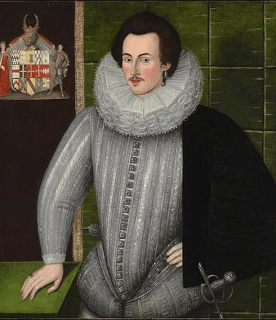
Blount is born in 1563, the second son of James, 6th Baron Mountjoy, and Catherine, only daughter of Sir Thomas Legh. He is among the most distinguished of the family, succeeding as 8th Baron Mountjoy on the death in 1594 of his unmarried elder brother William, 7th Baron Mountjoy. The good fortune of his youthful and handsome looks find favour with Queen Elizabeth I which arouses the jealousy of Robert Devereux, 2nd Earl of Essex, leading to a duel between the two courtiers, who later become close friends.
The downfall of Lord Essex does not damage Blount’s career. After the failure of his rebellion, Essex shocks many by denouncing his sister Penelope, who is Blount’s mistress, as a traitor, which inevitably raises the question of his own possible involvement. But the Crown, anxious to retain Blount’s services, and also to show as much leniency as possible to the defeated rebels, simply ignore the accusation.
On February 24, 1600, Blount lands in Ireland as Lord Deputy following Lord Essex and in the ensuing years brings the Nine Years’ War to an end. The leader of the rebellion, Hugh O’Neill, Earl of Tyrone, writes about Blount’s “refined manners” that he would lose a whole season of campaigning “while waiting until breakfast is prepared to his mind!” Despite this, Blount proves that he is quite qualified to pursue the war.
In early 1600, Blount dispatches Sir Henry Docwra with an army of 4,200 troops to land at Culmore to erect a fortress commanding the shores of Lough Foyle in the northwest of Ulster. To prevent Hugh O’Neill from sending a strong force to repulse Dowcra’s forces, Blount advances in force from Dublin to Newry causing O’Neill to fear a southern advance into Tyrone.
Blount aims to avoid the mistakes of previous Lords-Deputy. After the Battle of Moyry Pass, he has it cleared, and a garrison is established there. It had long been a problem for English forces advancing into Ulster from the south. He also establishes posts with garrisons at Mountnorris and Armagh.
On July 13, 1601, Blount and his army along with Turlough McHenry O’Neill of the Fews who had recently switched to the English side in the war, have a stand-off with Hugh O’Neill’s forces at the River Blackwater. After a few shots in vain from either side, O’Neill’s forces withdraw, and Blount sends his forces to occupy the ruined Blackwater fort destroyed by O’Neill in 1595. Later O’Neill’s forces attack Blount’s camp before withdrawing. In response, the Lord-Deputy sends his forces across the river where they find strong artificially fortified fords, which would have held out against the English.
By July 15, 1601, the Lord-Deputy has secured the surrender of O’Neill’s ally Hugh Magennis. That month, he has a new fort near the old Blackwater fort erected.
Blount reports to the council in England that O’Neill is determined to prevent his forces from advancing into Tyrone and toward Dungannon. As such, he initiates a policy of burning large quantities of corn to induce a famine to drive the rebels out of their strongholds.
Blount sets about trying to entice Hugh’s forces to come out and attack by fetching some materials for the new fort from the Tyrone side of the river as well as burning more corn. Further skirmishes between Blount and O’Neill’s forces ensue during the summer of 1601.
Spanish forces land in Munster in August 1601, forcing Blount to send his forces southward leaving O’Neill remaining in his unbroken heartland of Tyrone. The Spanish arrival culminates in the Siege of Kinsale that December, which sees a major defeat of the rebels and their allies.
O’Neill during this time has also moved south to assist some of his allies, however, after some serious defeats at the hands of the forces of Richard Burke, 4th Earl of Clanricarde of Connacht, he is in no place to offer any effective resistance once Blount marches once more to Tyrone in the summer of 1602.
Blount advances to the location he found the previous summer at the River Blackwater, which commands safe and secure passage into Tyrone, previously inaccessible, and sets about erecting a new fort. Having observed this, O’Neill burns his capital at Dungannon and flees to his last refuge in Glenconkeyne.
Advancing northward through Tyrone, Blount erects a fort in the townland of Magheralamfield, afterward known as Mountjoy Castle. He also christens the new fort at the Blackwater Charlemont Fort after himself.
Once in Tyrone, Blount carries out a campaign of devastation throughout it resulting in the mass hunting of rebels, spoiling of corn, the burning of houses and the killing of churls so as to force the submission of O’Neill and his remaining allies. Most symbolically, Blount has the inauguration site of the O’Neill’s at Tullyhogue Fort destroyed.
On March 30, 1603, six days after the death of Elizabeth and the accession of James I, O’Neill makes peace with Blount, signing the Treaty of Mellifont. Blount continues in office with the more distinguished title of Lord-Lieutenant. He declares amnesty for the rebels and grants them honourable terms, which causes some severe criticism from England. He shows similar moderation in putting down the abortive risings in Cork, Waterford and Wexford, where the aldermen, apparently with some vague idea of gaining greater toleration for Roman Catholics, refuse to proclaim the new King. In Cork, three insurgents are hanged after a summary trial, but the rest are acquitted or pardoned.
As part of the Plantation of Ulster, the majority of the barony of Loughinsholin is detached from County Tyrone and made part of the newly created County Londonderry. The rest of Loughinsholin along with the northern parts of Dungannon barony are merged to create the short-lived barony of Mountjoy. It is later amalgamated with the barony of Dungannon.
On his return to England, Blount serves as one of Sir Walter Raleigh’s judges in 1603, and in the same year King James I appoints him Master-General of the Ordnance as well as creating him Earl of Devonshire, granting him extensive estates. He is one of the founder members of the Spanish Company re-founded by royal charter in 1605.
Toward the end of Blount’s life, on December 26, 1605, at Wanstead House near London, in a ceremony conducted by his chaplain William Laud, afterward Archbishop of Canterbury, he marries his long-time mistress Lady Penelope, formerly wife of Robert Rich, 3rd Baron Rich (later 1st Earl of Warwick) and sister of Robert Devereux, 2nd Earl of Essex.
Blount leaves no legitimate children, and so his hereditary titles become extinct at his death on April 3, 1606, at Savoy House, London.
Dickson is born on December 25, 1744, the eldest son of John Dickson, a tenant farmer of Ballycraigy, in the parish of Carnmoney, County Antrim. His mother is Jane Steel and, on the death of his uncle, William Steel, on May 13, 1747, the family adds his mother’s maiden name to their own.
In his boyhood, Dickson is educated by Robert White, a Presbyterian minister from Templepatrick and enters University of Glasgow in November 1761. Following graduation, he is apparently employed for a time in teaching, and in 1771 he is ordained as a Presbyterian minister. Until the outbreak of the American Revolutionary War, he occupies himself mainly with parochial and domestic duties. His political career begins in 1776, when he speaks and preaches against the “unnatural, impolitic and unprincipled” war with the American colonies, denouncing it as a “mad crusade.” On two government fast-days his sermons on “the advantages of national repentance” (December 13, 1776), and on “the ruinous effects of civil war” (February 27, 1778) create considerable excitement when published. Government loyalists denounce Dickson as a traitor.
Political differences are probably at the root of a secession from his congregation in 1777. The seceders form a new congregation at Kircubbin, County Down, in defiance of the authority of the general synod.
In 1771 Dickson marries Isabella Gamble, a woman of some means, who dies on July 15, 1819. They have at least eight children, but he outlives them all. One of his sons is in the Royal Navy and dies in 1798.
Dickson enters with zest into the volunteer movement of 1778, being warmly in favour of the admission of Roman Catholics to the ranks. This is resisted “through the greater part of Ulster, if not the whole.” In a sermon to the Echlinville volunteers on March 28, 1779, he advocates the enrolment of Catholics and though induced to modify his language in printing the discourse, he offends “all the Protestant and Presbyterian bigots in the country.” He is accused of being a papist at heart, “for the very substantial reason, among others, that the maiden name of the parish priest’s mother was Dickson.”
Though the contrary has been stated, Dickson is not a member of the Volunteer conventions at Dungannon in 1782 and 1783. He throws himself heart and soul into the famous election for County Down in August 1783, when the families of Hill and Stewart, compete for the county seat in Parliament. He, with his forty-shilling freeholders, fails to secure the election of Robert Stewart. But in 1790 he successfully campaigns for the election of Stewart’s son, better known as Lord Castlereagh. Castlereagh proves his gratitude by referring at a later date to Dickson’s popularity in 1790, as proof that he was “a very dangerous person to leave at liberty.”
In December 1791, Dickson joins Robert White’s son, John Campbell White, taking the “test” of the first Society of United Irishmen, organised in October in Belfast following a meeting held with Theobald Wolfe Tone, Protestant secretary of the Catholic Committee in Dublin. According to Dickson himself, he attends no further meetings of the Society but devotes himself to spreading its principles among the volunteer associations, in opposition to the “demi-patriotic” views of the Whig Club.
At a great volunteer meeting in Belfast on July 14, 1792, Dickson opposes a resolution for the gradual removal of Catholic disabilities and assists in obtaining a unanimous pledge in favour of total and immediate emancipation. Parish and county meetings are held throughout Ulster, culminating in a provincial convention at Dungannon on February 15, 1793. He is a leading spirit at many of the preliminary meetings, and, as a delegate from the Barony of Ards, he has a chief hand in the preparation of the Dungannon resolutions. Their avowed object is to strengthen the throne and give vitality to the constitution by “a complete and radical reform.” He is nominated on a committee of thirty to summon a national convention. The Irish parliament goes no further in the direction of emancipation than the Roman Catholic Relief Act 1793, which receives the royal assent on April 9, and remains unextended until 1829. While the passing of Lord Clare‘s Convention Act, still in force, makes illegal all future assemblies of delegates “purporting to represent the people, or any description of the people.”
In March and April 1798, Dickson is in Scotland arranging some family affairs. During his absence plans are made for an insurrection in Ulster, and soon after his return he agrees to take the place of Thomas Russell, who had been arrested, as adjutant-general of the United Irish forces for County Down. A few days before the county is to rise, he is himself arrested at Ballynahinch.
Dickson is conveyed to Belfast and lodged in the “black hole” and other prisons until August 12 when he is removed to a prison ship with William Tennant, Robert Hunter, Robert Simms, David Bailie Warden and Thomas Ledlie Birch, and detained there amid considerable discomfort. On March 25, 1799, Dickson, Tennant, Hunter, and Simms join the United Irish “State Prisoners” on a ship bound for Fort George, Highland prison in Scotland. This group, which includes Samuel Neilson, Arthur O’Connor, Thomas Russell, William James MacNeven, and Thomas Addis Emmet, arrives in Scotland on April 9, 1799. He spends two years there.
Unlike the more high-profile prisoners like O’Connor and MacNeven who are not released until June 1802, Tennant, Dickson, and Simms are permitted to return to Belfast in January 1802.
Dickson returns to liberty and misfortune. His wife has long been a helpless invalid, his eldest son is dead, his prospects are ruined. His congregation at Portaferry had been declared vacant on November 28, 1799. William Moreland, who had been ordained as his successor on June 16, 1800, at once offers to resign, but Dickson will not hear of this. He has thoughts of emigration but decides to stand his ground. At length, he is chosen by a seceding minority from the congregation of Keady, County Armagh, and installed minister on March 4, 1803.
Dickson’s political engagement ends with his attendance on September 9, 1811, of a Catholic meeting in Armagh, on returning from which he is cruelly beaten by Orangemen. In 1815 he resigns his charge in broken health and henceforth subsists on charity. Joseph Wright, an Episcopalian lawyer, gives him a cottage rent-free in the suburbs of Belfast, and some of his old friends make him a weekly allowance. His last appearance in the pulpit is early in 1824. He dies on December 27, 1824, having just passed his eightieth year, and is buried “in a pauper’s grave” at Clifton Street Cemetery, Belfast.




 seamus dubhghaill