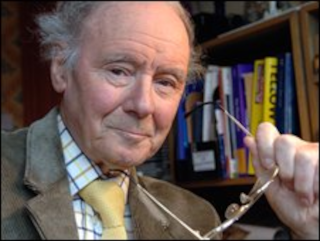
seamus dubhghaill

Promoting Irish Culture and History from Little Rock, Arkansas, USA


Leave a comment

Birth of David Hammond, Singer & Folklorist

David Andrew (Davy) Hammond, singer, folkloristtelevision producer and documentary maker, is born on December 5, 1928, in Miss Kell’s nursing home on the Castlereagh Road in Belfast, Northern Ireland.

Hammond is the son of Leslie Hammond, a tram driver, and his wife Annie (née Lamont). His parents are not city people; his mother grew up near Ballybogy in the Ballymoney area of County Antrim, and his father, though from a family with roots in south County Londonderry, had lived in Ballymoney as a boy, and had been apprenticed to a blacksmith there. Both have a strong sense of their rural identity and maintain the Ulster Scots dialect of their childhood. They are never quite at home in the Belfast suburb of Cregagh, and in particular do not share the sectarian attitudes that are much more present in 1930s Belfast than they had been in north Antrim, one of the last strongholds of Presbyterian radicalism. Even as a boy, Hammond is interested in the old songs that his mother sang and realises that the traditions in which his parents had been nurtured are disappearing quickly in an increasingly urbanising and modernising world. When he encounters the work of Emyr Estyn Evans in the early 1940s, he is encouraged to document both rural tradition and the street life of the city, and he and a couple of friends, though still just teenagers, ride off on their bicycles to look for folklore in the hinterland of Belfast.

After primary school, Hammond wins a scholarship in 1941 to Methodist College Belfast, where he does well in examinations, and then goes to Stranmillis University College to train as a teacher. In his first job, in Harding Memorial primary school in east Belfast, he proves to be a popular, idealistic teacher, and is remembered by his pupils fifty years later as a fine singer and a teller of ghost stories, who had taken the class on memorable youth-hosteling trips to the Mourne Mountains. Youth hosteling and folklore collecting increases his awareness and understanding of the rich traditions of the whole community in the north of Ireland, and he is never constrained by political or religious barriers. His early career mirrors closely that of James Hawthorne, and their paths are to cross in later life.

Hammond is friendly with many others active in the cultural life of Northern Ireland and makes a name for himself as a song collector and eventually as an expert on all aspects of traditional singing. In 1956, he is awarded a scholarship to travel in the United States to meet the important pioneers of folk-music collecting and performance there. He records his first LP record of Ulster songs, I Am The Wee Falorie Man (1958), in the United States, and becomes friends with Pete Seeger, the Appalachian singer Jean Ritchie, with old blues singers, and notably with Liam Clancy, one of the three Clancy brothers who as a quartet with Tommy Makem are to popularise Irish folk music in the United States and elsewhere.

On returning to Belfast, Hammond takes a job in 1958 in Orangefield secondary school in the east of the city, where the highly regarded headmaster John Malone encourages new approaches to education. Among his pupils at Orangefield is George Ivan “Van” Morrison, who credits him with inspiring his interest in Irish traditional music. Hammond enjoys teaching but is increasingly drawn to folk-song performance and recording. He appears regularly on radio programmes of the BBC and Radio Éireann, and in 1964 joins the school’s department in BBC Northern Ireland. There, with colleagues like Sam Hanna Bell, James Hawthorne and others, he works on programmes such as Today and Yesterday in Northern Ireland, which for the first time introduces pupils (and many adults) to local history and to aspects of tradition. In 1968, with two friends, the poets Seamus Heaney and Michael Longley, he puts on poetry and traditional music events in schools all over the province. The Arts Council funds the Room to Rhyme project, which is immensely influential and inspiring, and is still talked about many years later by those who attended as children.

Hammond is creatively involved with hundreds of hours of broadcasting, in television as well as radio, and eventually for adults as well as children. He writes scripts, produces documentary series such as Ulster in Focusand Explorations, and brings an artistic sensibility to filming, as well as working sympathetically with traditional singers and craftspeople. Dusty Bluebells, a sensitively made film of Belfast children’s street games, wins the prestigious Golden Harp award in 1972. After he leaves the BBC to work as a freelance, and founds Flying Fox Films in 1986, he continues making documentaries on many aspects of Ulster life and heritage. His film called Steel Chest, Nail in the Boot and the Barking Dog (1986), about working in the Belfast shipyards, also wins a Golden Harp award. A companion book of the same name is published. Another book is Belfast, City of Song(1989), with Maurice Leyden. In 1979, he edits a volume of the songs of Thomas Moore. His documentary programmes include films about singers from Boho, County Fermanagh, and about the big houses of the gentry in Ireland. The Magic Fiddle (1991/2) examines the role of the instrument in the folk music of Ireland, ScandinaviaCanada, and the American south, while Another Kind of Freedom (1993) is about the experiences of a former Orangefield pupil, the Beirut hostage Brian Keenan. He also produces and directs the films Something to Write Home About (1998), Where Are You Now? (1999), and Bogland (1999), all of which explore Seamus Heaney’s home region and experiences.

The first poem in Heaney’s collection Wintering Out (1972) is entitled “For David Hammond and Michael Longley.” Their lifelong friendship leads to several other creative collaborations. In particular, after a distressing evening in 1972 when Hammond, affected by the despair and terror unleashed by Irish Republican Army (IRA) bombing of his city, is for once unable to sing, Heaney meditates on the experience in an essay and in an important poem, “The singer’s house” (subsequently included in his 1979 Field Work collection). The poem urges the singer to keep singing, to defend the values of art and friendship in a hostile time. Hammond collaborates with Dónal Lunny and other traditional musicians to bring out an LP also called The Singer’s House(1978), which includes Heaney’s poem on the album sleeve, and features some of the songs that he had made famous, such as “My Aunt Jane” and “Bonny Woodgreen,” from his vast repertoire of songs from Ulster. The album is reissued in 1980.

In 1995, Hammond is one of Heaney’s personal guests at the award of his Nobel prize in Stockholm, characteristically wearing his usual, mustard-yellow, cattle-dealer boots with evening dress. On another formal occasion, when he is awarded an honorary doctorate by Dublin City University in November 2003, he surprises the audience by standing up in his academic robes to sing “My Lagan love,” instead of giving an address. His unique, light mellow voice is an ideal vehicle for the traditional ballads which he knows so well. He records a number of records in the 1960s, including Belfast Street Songs, and publishes the book Songs of Belfast (1978). He also encourages traditional musicians like Arty McGlynn, and collaborates with them on various recording projects. He is well known for live and often impromptu performances at festivals and venues in Ireland and the United States. He also performs at the John F. Kennedy Center for the Performing Arts in Washington, D.C.

Hammond is also a notable collaborator with poets and dramatists, especially in the important Field Day Theatre Company project, of which he is a director, along with Seamus Heaney, Tom PaulinSeamus DeaneThomas Kilroy, and the project’s founders, Brian Friel and Stephen Rea. He supports the Field Day search for a “fifth province,” where history and community and culture can intersect, believing that to speak unthinkingly of “two traditions” is to perpetuate superficial political divisions. As he says in an interview in The Irish Times on July 4, 1998, songs can “take you out of yourself” and become bridges to unite people.

Hammond receives many honours. In 1994, he receives the Estyn Evans award for his contribution to mutual understanding, and his work is featured in several major events in his honour: in the University of North Florida (1999), in the Celtic Film Festival in Belfast (2003), and in Belfast’s Linen Hall Library (2005). A Time to Dream, a film about his life and work, is broadcast on BBC Northern Ireland in December 2008.

Hammond dies in hospital in Belfast, after a long illness, on August 25, 2008, survived by his wife Eileen (née Hambleton), whom he marries on July 19, 1954, and by their son and three daughters. His funeral in St. Finnian’s Church is a major cultural event, where friends sing, play and speak in his honour.

In Seamus Heaney’s last collection of poetry, Human Chain (2010), he includes a poignant farewell to Hammond. The poet imagines (or perhaps dreams) of another visit to the singer’s house, but this time “The door was open, and the house was dark.”

(From: “Hammond, David Andrew (‘Davy’)” by Linde Lunney, Dictionary of Irish Biography, http://www.dib.ie, December 2014)


Leave a comment

Death of Sir William Moore, Member of Parliament & Judge

Sir William Moore, 1st BaronetPC (NI)DL, a Unionist member of the British House of Commons from Ireland and a Judge of Ireland, and subsequently of Northern Ireland, dies in Ballymoney, County Antrim, Northern Ireland, on November 28, 1944. He is created a Baronet of Moore Lodge, Ballymoney, in 1932.

Moore is the eldest son of Queen Victoria‘s honorary physician in Ireland, Dr. William Moore of Rosnashane, Ballymoney, and Sidney Blanche Fuller. His ancestors came to Ulster during the Plantation of Ulster, settling at Ballymoney, at which time they were Quakers. The Moore Lodge estate is inherited from a relative. The family owns several other houses: Moore’s Grove and Moore’s Fort. He goes on to become a Deputy Lieutenant for County Antrim and a Justice of the Peace.

Moore is schooled at Marlborough College, then attends Trinity College Dublin (TCD), where he is president of the University Philosophical Society. He marries Helen Gertrude Wilson, the daughter of a Deputy Lieutenant of County Armagh, in 1888. The marriage produces three children. His eldest son, William, inherits his title on his father’s death.

Moore is called to the Irish Bar in 1887, to the English bar in 1899, and becomes an Irish Queen’s Counsel the same year.

In 1903, Moore is one of the first landowners of Ireland to sell off their estates under the land acts. By the early 1920s he owns a Belfast pied-à-terre called “Glassnabreedon,” in the village of Whitehouse, four miles north of Belfast. This house is once owned by the son of Nicholas Grimshaw, Ireland’s first cotton pioneer.

Moore becomes a member of the General Synod of the Church of Ireland and is a founder member of the Ulster Council. He is a passionate Orangeman: his vehemence in defending Ulster’s right to oppose Irish Home Rule is said to alarm even those who share his views. Speaking in England on March 10, 1913, he makes his feelings clear on the possibility of Irish Home Rule: “I have no doubt, if Home Rule is carried, its baptism in Ireland will be a baptism in blood.” He shows little respect for English politicians, and has nothing but contempt for Southern Unionists. The eventual political settlement in 1921 meets with his approval.

Moore is a Member of Parliament, representing North Antrim from 1899 to 1906. From 1903 to 1904, he is an unpaid secretary to the Chief Secretary for Ireland. Having lost his Parliamentary seat in the 1906 United Kingdom general election, he is elected for North Armagh at the 1906 North Armagh by-election in November. He sits for this seat until he is appointed a judge of Ireland’s High Court.

Moore is a Justice of the High Court from 1917 to 1921. He is sworn of the Privy Council of Ireland in the 1921 Birthday Honours, entitling him to the style “The Right .” Following the partition of Ireland, he becomes a Lord Justice of Appeal in the Northern Irish Court of Appeal (1921–25). He is sworn of the Privy Council of Northern Ireland in 1922 and becomes the Lord Chief Justice of Northern Ireland, succeeding Sir Denis Henry. He holds the position until he retires in 1937.

Moore dies at his home, Moore Lodge, in Ballymoney on November 28, 1944, less than a week after his 80th birthday. He is buried in the family burial ground, “Lamb’s Fold,” two days later.


Leave a comment

Birth of Cahal Daly, Archbishop of Armagh

Cahal Brendan Daly KGCHS, a Roman Catholic cardinaltheologian and writer, is born Charles Brendan Daly on October 1, 1917, in Ballybraddin, Loughguile, a village near Ballymoney in County Antrim.

Daly serves as the Catholic Primate of All Ireland and Archbishop of Armagh from late 1990 to 1996, the oldest man to take up this role in nearly 200 years. He is later created a Cardinal-Priest of San Patrizio by Pope John Paul II in the papal consistory of June 28, 1991.

Daly is the third child of seven born to Charles Daly and Susan Connolly. His father is a primary school teacher originally from KeadueCounty Roscommon, and his mother a native of Antrim. He is educated at St. Patrick’s National School in Loughguile, and then as a boarder in St. Malachy’s CollegeBelfast, in 1930. The writer Brian Moore is a near contemporary.

Daly studies Classics at Queen’s University Belfast (QUB). He earns his BA with Honours and also the Henry Medal in Latin Studies in 1937 and completes his MA the following year. He enters St. Patrick’s College, Maynooth and is ordained to the priesthood on June 22, 1941. He continues studies in theology in Maynooth, from where he obtains a doctorate in divinity (DD) in 1944. His first appointment is as Classics Master in St. Malachy’s College (1944–45).

In 1945, Daly is appointed Lecturer in Scholastic Philosophy at Queen’s University, Belfast, retaining the post for 21 years. In the academic year 1952–53 QUB grants him sabbatical leave, which he spends studying at the Catholic University of Paris where he receives a licentiate in philosophy. He returns to France at many points, particularly for holidays. He persists with his studies well into his retirement. He is a popular figure with the university and fondly remembered by his students. He is named a Canon of the Cathedral Chapter of Diocese of Down and Connor in 1966.

Daly is a peritus, or theological expert, at the Second Vatican Council (1962–65) to Bishop William Philbin during the first session of the Council and to Cardinal William Conway for the rest of the council. He dedicates himself to scholarship for 30 years, and publishes several books seeking to bring about understanding between the warring factions in Northern Ireland.

Daly is appointed Reader in Scholastic Philosophy at QUB in 1963, a post he holds until 1967, when he is appointed Bishop of Ardagh and Clonmacnoise on May 26.

Daly converts his forename Charles into Cahal ahead of his episcopal consecration in St. Mel’s CathedralLongford, on July 16, 1967, from Cardinal William Conway, with Archbishop Giuseppe Sensi and Bishop Neil Farren serving as co-consecrators.

Daly spends 15 years as bishop in Longford and is diligent about parish visitation and confirmations gradually assume a greater national profile. From 1974 onward, he devotes himself especially to ecumenical activities for the Pontifical Council for Promoting Christian Unity. His pastoral letter to Protestants, written in 1979, pleads for Christian unity.

Daly succeeded William Philbin as the 30th Bishop of Down and Connor when he is installed as bishop of his native diocese at a ceremony in St. Peter’s Cathedral, Belfast, on October 17, 1982.

On November 6, 1990, Daly is appointed Archbishop of Armagh and, as such, Primate of All Ireland. His age makes him an unexpected occupant of the post. Despite this it is requested that he stay in the role for three years before usual age of episcopal retirement at 75. Cardinal Daly takes a notably harder line against the Irish Republican Army (IRA) than his predecessor, Cardinal Tomás Ó Fiaich.

Daly is respectful of Protestant rights and opposes integrated education of Catholics and Protestants. This policy is criticised by those who see segregated education as one of the causes of sectarianism in Northern Ireland, but is seen by the Catholic clergy as important for passing on their faith to future generations. He is utterly orthodox in opposing divorce, contraception, abortion, the ordination of women and any idea of dropping clerical celibacy.

Daly is heckled by the audience on live television during a broadcast of The Late Late Show on RTÉ One on the topic of pedophilia in the 1990s. After his retirement in 1996, he makes no public statement on the issue.

Daly retires as Archbishop of Armagh on his 79th birthday, October 1, 1996, and subsequently suffers ill health. Although it is announced that he will attend the funeral of Pope John Paul II, he stays home on the advice of his doctors. His age makes him ineligible to participate in the 2005 conclave that elects Pope Benedict XVI.

Daly is admitted to the coronary unit of Belfast City Hospital on December 28, 2009. His health has already been declining, leading to prayers being ordered for him. He dies in hospital in Belfast on December 31, 2009, aged 92. His family are at his bedside at the time. His death brings to an end a two-year period during which Ireland has, for the first time in its history, three living Cardinals.

Daly lay in state in Belfast and then his remains are taken to Armagh. Pope Benedict XVI pays tribute at this stage. Large numbers of people travel from as far as County Westmeath to attend Mass at Armagh on January 4, at which Monsignor Liam McEntaggart, the former parish priest of Coalisland, says, “When the history of peace making in Ireland comes to be written, the contribution of Cardinal Daly will be accorded a high place.” Monsignor McEntaggart himself dies on August 22, 2010, aged 81, less than eight months after Cardinal Daly’s passing.

Daly’s funeral is held on January 5, 2010, and is attended by the president Mary McAleese and Taoiseach Brian Cowen. Daly is buried in the grounds of St. Patrick’s Roman Catholic Cathedral, Armagh, next to his three predecessors in the see, Cardinals Ó Fiaich, Conway and D’Alton.


Leave a comment

Death of David Hammond, Singer, Folklorist & Television Producer

David Andrew (Davy) Hammond, singer, folklorist, television producer and documentary maker, dies in Belfast, Northern Ireland, following a long illness, on August 25, 2008.

Hammond is born on December 5, 1928, in Miss Kells’s nursing home on the Castlereagh Road in Belfast, the son of Leslie Hammond, a tram driver, and his wife Annie (née Lamont). His parents are not city people; his mother grew up near Ballybogy in the Ballymoney area of County Antrim, and his father, though from a family with roots in south County Londonderry, had lived in Ballymoney as a boy, and had been apprenticed to a blacksmith there. Both have a strong sense of their rural identity and maintain the Ulster Scots dialect of their childhood. They are never quite at home in the Belfast suburb of Cregagh, and in particular do not share the sectarian attitudes that are much more present in 1930s Belfast than they had been in north Antrim, one of the last strongholds of Presbyterian radicalism. Even as a boy, Hammond is interested in the old songs that his mother sang and realises that the traditions in which his parents had been nurtured are disappearing quickly in an increasingly urbanising and modernising world. When he encounters the work of Emyr Estyn Evans in the early 1940s, he is encouraged to document both rural tradition and the street life of the city, and he and a couple of friends, though still just teenagers, ride off on their bicycles to look for folklore in the hinterland of Belfast.

After primary school, Hammond wins a scholarship in 1941 to Methodist College Belfast, where he does well in examinations, and then goes to Stranmillis University College to train as a teacher. In his first job, in Harding Memorial primary school in east Belfast, he proves to be a popular, idealistic teacher, and is remembered by his pupils fifty years later as a fine singer and a teller of ghost stories, who had taken the class on memorable youth-hosteling trips to the Mourne Mountains. Youth hosteling and folklore collecting increases his awareness and understanding of the rich traditions of the whole community in the north of Ireland, and he is never constrained by political or religious barriers. His early career mirrors closely that of James Hawthorne, and their paths are to cross in later life.

Hammond is friendly with many others active in the cultural life of Northern Ireland and makes a name for himself as a song collector and eventually as an expert on all aspects of traditional singing. In 1956, he is awarded a scholarship to travel in the United States to meet the important pioneers of folk-music collecting and performance there. He records his first LP record of Ulster songs, I Am The Wee Falorie Man (1958), in the United States, and becomes friends with Pete Seeger, the Appalachian singer Jean Ritchie, with old blues singers, and notably with Liam Clancy, one of the three Clancy brothers who as a quartet with Tommy Makem are to popularise Irish folk music in the United States and elsewhere.

On returning to Belfast, Hammond takes a job in 1958 in Orangefield secondary school in the east of the city, where the highly regarded headmaster John Malone encourages new approaches to education. Among his pupils at Orangefield is George Ivan “Van” Morrison, who credits him with inspiring his interest in Irish traditional music. Hammond enjoys teaching but is increasingly drawn to folk-song performance and recording. He appears regularly on radio programmes of the BBC and Radio Éireann, and in 1964 joins the school’s department in BBC Northern Ireland. There, with colleagues like Sam Hanna Bell, James Hawthorne and others, he works on programmes such as Today and Yesterday in Northern Ireland, which for the first time introduces pupils (and many adults) to local history and to aspects of tradition. In 1968, with two friends, the poets Seamus Heaney and Michael Longley, he puts on poetry and traditional music events in schools all over the province. The Arts Council funds the Room to Rhyme project, which is immensely influential and inspiring, and is still talked about many years later by those who attended as children.

Hammond is creatively involved with hundreds of hours of broadcasting, in television as well as radio, and eventually for adults as well as children. He writes scripts, produces documentary series such as Ulster in Focus and Explorations, and brings an artistic sensibility to filming, as well as working sympathetically with traditional singers and craftspeople. Dusty Bluebells, a sensitively made film of Belfast children’s street games, wins the prestigious Golden Harp award in 1972. After he leaves the BBC to work as a freelance, and founds Flying Fox Films in 1986, he continues making documentaries on many aspects of Ulster life and heritage. His film called Steel Chest, Nail in the Boot and the Barking Dog (1986), about working in the Belfast shipyards, also wins a Golden Harp award. A companion book of the same name is published. Another book is Belfast, City of Song (1989), with Maurice Leyden. In 1979, he edits a volume of the songs of Thomas Moore. His documentary programmes include films about singers from Boho, County Fermanagh, and about the big houses of the gentry in Ireland. The Magic Fiddle (1991/2) examines the role of the instrument in the folk music of Ireland, Scandinavia, Canada, and the American south, while Another Kind of Freedom (1993) is about the experiences of a former Orangefield pupil, the Beirut hostage Brian Keenan. He also produces and directs the films Something to Write Home About (1998), Where Are You Now? (1999), and Bogland (1999), all of which explore Seamus Heaney’s home region and experiences.

The first poem in Heaney’s collection Wintering Out (1972) is entitled “For David Hammond and Michael Longley.” Their lifelong friendship leads to several other creative collaborations. In particular, after a distressing evening in 1972 when Hammond, affected by the despair and terror unleashed by Irish Republican Army (IRA) bombing of his city, is for once unable to sing, Heaney meditates on the experience in an essay and in an important poem, “The singer’s house” (subsequently included in his 1979 Field Work collection). The poem urges the singer to keep singing, to defend the values of art and friendship in a hostile time. Hammond collaborates with Dónal Lunny and other traditional musicians to bring out an LP also called The Singer’s House (1978), which includes Heaney’s poem on the album sleeve, and features some of the songs that he had made famous, such as “My Aunt Jane” and “Bonny Woodgreen,” from his vast repertoire of songs from Ulster. The album is reissued in 1980.

In 1995, Hammond is one of Heaney’s personal guests at the award of his Nobel prize in Stockholm, characteristically wearing his usual, mustard-yellow, cattle-dealer boots with evening dress. On another formal occasion, when he is awarded an honorary doctorate by Dublin City University in November 2003, he surprises the audience by standing up in his academic robes to sing “My Lagan love,” instead of giving an address. His unique, light mellow voice is an ideal vehicle for the traditional ballads which he knows so well. He records a number of records in the 1960s, including Belfast Street Songs, and publishes the book Songs of Belfast (1978). He also encourages traditional musicians like Arty McGlynn, and collaborates with them on various recording projects. He is well known for live and often impromptu performances at festivals and venues in Ireland and the United States. He also performs at the John F. Kennedy Center for the Performing Arts in Washington, D.C.

Hammond is also a notable collaborator with poets and dramatists, especially in the important Field Day Theatre Company project, of which he is a director, along with Seamus Heaney, Tom Paulin, Seamus Deane, Thomas Kilroy, and the project’s founders, Brian Friel and Stephen Rea. He supports the Field Day search for a “fifth province,” where history and community and culture can intersect, believing that to speak unthinkingly of “two traditions” is to perpetuate superficial political divisions. As he says in an interview in The Irish Times on July 4, 1998, songs can “take you out of yourself” and become bridges to unite people.

Hammond receives many honours. In 1994, he receives the Estyn Evans award for his contribution to mutual understanding, and his work is featured in several major events in his honour: in the University of North Florida (1999), in the Celtic Film Festival in Belfast (2003), and in Belfast’s Linen Hall Library (2005). A Time to Dream, a film about his life and work, is broadcast on BBC Northern Ireland in December 2008.

Hammond dies in hospital in Belfast, after a long illness, on August 25, 2008, survived by his wife Eileen (née Hambleton), whom he marries on July 19, 1954, and by their son and three daughters. His funeral in St Finnian’s church is a major cultural event, where friends sing, play and speak in his honour.

In Seamus Heaney’s last collection of poetry, Human Chain (2010), he includes a poignant farewell to Hammond. The poet imagines (or perhaps dreams) of another visit to the singer’s house, but this time “The door was open, and the house was dark.”

(From: “Hammond, David Andrew (‘Davy’)” by Linde Lunney, Dictionary of Irish Biography, http://www.dib.ie, December 2014)
Leave a comment

Death of Playwright George Shiels

George Shiels, playwright, dies following a lengthy illness in Carnlough, County Antrim, Northern Ireland, on September 19, 1949.

Shiels is born on June 24, 1881, in Milltown, Ballybrakes, near Ballymoney, County Antrim, one of seven sons of Robert Shiels, a railway worker, and Eliza Shiels (née Sweeney), who also has one daughter. The family soon moves to Castle Street, Ballymoney, where he attends the local Roman Catholic national school. His elder brothers emigrate to the United States when young. With there being no chance of further schooling even if he wanted it, he leaves Ireland when he is 19 years old. He works as a casual labourer in many places in western North America: as a farmworker and miner in Idaho and Montana, and as a lumber camp worker in British Columbia, Canada. In 1904 he is employed by the Canadian Pacific Railway to supervise a gang of workers who are building a stretch of railway in Saskatchewan. In a serious accident, he is badly injured. Despite surgery on his back, he is never able to walk again, and he receives a disability pension from the railway company.

After a long convalescence in Canada, Shiels returns to his mother’s house in Ballymoney around 1908. He sets up in business in Main Street as a shipping agent and as an agent for the Canadian Pacific Railway, taking bookings from intending emigrants. He is encouraged by his parish priest, Fr. John Hasson, by a local solicitor, Jack Pinkerton, and by James Pettigrew, a teacher, to write short stories. To try to preserve anonymity in a small community, he at first uses the pseudonym “George Morshiel,” and is successful with Western stories and other short fiction. His friends urge him to try writing dramas, and in 1918 Away from the Moss is produced by the Ulster Literary Theatre in Belfast.

After further success there with two short plays in which Shiels is learning his craft, the Abbey Theatre in Dublin accepts a one-act play, Bedmates, which is performed in January 1921. With great regularity for the next twenty years, he writes twenty-two plays for the Abbey Theatre. His work forms the basis of the repertoire in the 1920s and 1930s and attracts large audiences. Plays such as The New Gossoon (1930) provide Dublin theatregoers with entertainment, but also help form the style of acting and production which for many years characterises the Abbey and its actors. Three of his plays, Paul Twyning (1922), Professor Tim (1925) and The New Gossoon, are later performed in theatres in London and are also published in a 1945 volume, which is twice reprinted. Professor Tim, produced by the touring Abbey Theatre, receives enthusiastic reviews in Philadelphia, and The New Gossoon appears successfully on Broadway in New York City in 1932, 1934, and 1937.

Shiels’s earlier work is perhaps easiest for audiences to enjoy. Comedies such as Moodie in Manitoba (1918) portray characters so realistic that north Antrim people believe with some alarm that it might be possible to identify who Shiels had in mind when he created them, and he is at first somewhat less than popular in Ballymoney. He superbly reproduces local language and thoroughly understands the local way of life. Plays he writes late in his career are first performed by the Group Theatre in Belfast, and in these productions (and in the radio versions broadcast by the BBC) his work becomes widely known, almost beloved, in the north of Ireland. During the first half of the twentieth century amateur drama groups throughout Ireland are much more important in local life than they have been since the advent of television. Probably all such societies have at some time staged a Shiels play, and this tradition continues. His plays contain amusing dialogue, carefully crafted plots, and usually more or less happy endings.

However, Shiels’s later works, notably The Passing Day (1936), first broadcast as a radio play, and The Rugged Path (1940), which breaks all records at the Abbey Theatre in a run of three months, tackle darker subject matter and feature characters still less sympathetic even than the rogues and hypocrites of the earlier work. In The Rugged Path and its sequel, The Summit (1941), he explores the moral crisis facing Ireland after the political changes of the 1920s. One critic sees in it an allegory for the contemporary struggle against Adolf Hitler. His view of life in the small towns and farms of Ireland is never in the slightest rosy-tinted, but in the symbolism of The Passing Day, he achieves “bitter intensity” (The Irish Times review, quoted by Casey).

Shiels’s modesty leads him to refuse an honorary doctorate from Queen’s University Belfast (QUB), in 1931. He is reticent about his experiences and beliefs and does little to foster his own reputation. In one early interview he expresses the belief that Ulster theatre needs dramatic material that reflects the psychology and setting of the region. His own work, at its best, achieves this and more. The very qualities which make his work popular in the north of Ireland permit some metropolitan literary critics to dismiss his plays as “kitchen comedies.” However, with the passage of time, his importance as a chronicler of a vanishing way of life can be set alongside the recognition due to him as a prolific and gifted dramatist.

Shiels suffers from a lengthy illness, and though he undergoes an operation in Ballymoney in 1949, dies soon afterwards at his house, New Lodge, in Carnlough, County Antrim, on September 19, 1949. He is buried in the graveyard of Our Lady and St. Patrick in Ballymoney. In the month that he dies, the Group Theatre and Garvagh Young Farmers’ Club are both rehearsing Shiels plays, and there have since been many productions of his plays in the north and elsewhere. Ballymoney Drama Festival presents a portrait of Shiels to the Abbey Theatre, and a new production of The Passing Day is staged there to celebrate his centenary in 1981.


Leave a comment

Birth of Northern Irish Motorcyclist Joey Dunlop

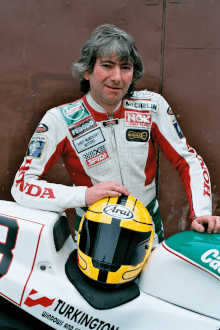
William Joseph Dunlop OBE, Northern Irish motorcyclist, is born in Armoy, County Antrim, near Ballymoney, on February 25, 1952. His achievements include three hat-tricks at the Isle of Man TT meeting (1985, 1988 and 2000), where he wins a record 26 races in total. A curve at the 26th milestone on the Isle of Man is named in his honour. During his career he won the Ulster Grand Prix 24 times.

Dunlop marries on September 22, 1972 at the Ballymoney register office. He is the proprietor of a pub in Ballymoney and is highly superstitious, always wearing a red T-shirt and his yellow crash helmet when racing. He is presented with the Freedom of the Borough by Ballymoney Council in 1993.

Dunlop helps orphans in the Balkans, driving a van loaded with supplies to orphanages in Romania, Albania and Bosnia-Herzegovina before the annual racing season begins. In 1996, he receives an OBE for his humanitarian work.

On the night of May 23, 1985, Dunlop is traveling from Northern Ireland to the Isle of Man for the annual TT races by sea, onboard the Tornamona, a former fishing boat. The vessel departs from Strangford, County Down with Dunlop, other riders, racing bikes and equipment onboard. Strong currents into Strangford Lough push the Tornamona onto St. Patrick’s Rock where her rudder breaks off in a crevice. The boat sinks and all 13 passengers and crew are rescued by the Portaferry Lifeboat. The bikes are later recovered by divers.

In 1986, Dunlop wins a fifth consecutive TT Formula One world title. Initially based on one race at the Isle of Man TT after the loss of World Championship status from 1977-onwards and organised by the Auto-Cycle Union, the title is eventually expanded to take in more rounds in other countries.

Dunlop is awarded the MBE in 1986 for his services to the sport. He is featured in three documentary films regarding his career: V Four Victory (1983), Joey – The Man Who Conquered the TT (2013) and Road (2014).

Dunlop wins his third hat trick at the Isle of Man TT in 2000 and sets his fastest lap on the course of 123.87 mph in the Senior race, in which he finishes third.

Dunlop dies in Tallinn, Estonia, on July 2, 2000 while leading a 125cc race on the Pirita-Kose-Kloostrimetsa Circuit. He appears to lose control of his bike in the wet conditions and dies instantly on impact with trees. As a mark of respect, the Estonian government’s official website is replaced with a tribute to Dunlop within hours of his death. Northern Ireland television carries live coverage of his funeral. Fifty thousand mourners, including bikers from all parts of Britain and Ireland and people from all backgrounds in Northern Ireland, attend the funeral procession to Garryduff Presbyterian church and his burial in the adjoining graveyard.

Following Dunlop’s death, the Leisure Centre in his hometown of Ballymoney is renamed from the Riada Centre to the Joey Dunlop Leisure Centre. Also, a memorial statue is erected in his hometown. The Joey Dunlop Foundation is initiated, a charity that provides appropriate accommodation for disabled visitors to the Isle of Man. In 2001, the Joey Dunlop Memorial Garden is established in the Dunlop family’s hometown, and in 2010 the tribute is extended to include the Robert Dunlop Memorial Garden to honour Joey’s late brother, Robert Dunlop.

The most successful overall rider at the annual TT races is awarded the “Joey Dunlop Cup.” On the Isle of Man, a statue of Dunlop astride a Honda overlooks the Bungalow Bend at Snaefell and the 26th Milestone area of the TT course is named “Joey’s.” A memorial stone is installed at the crash site in Tallinn as well. Irish publishers the O’Brien Press produces a full-colour pictorial tribute to Dunlop following his death. Northern Ireland band Therapy? records a song in memory of Dunlop called “Joey.” It appears on the album Shameless, released in 2001.

On January 30, 2015, Dunlop is voted Northern Ireland’s greatest sports star by readers of the Belfast Telegraph newspaper. In 2016 he is voted through Motorcycle News as the fifth greatest motorcycling icon ever, behind Valentino Rossi.


Leave a comment

The Drumcree Conflict of 1998

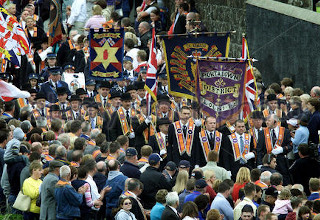
orangemen-drumcree-march

The Drumcree conflict or Drumcree standoff is a dispute over yearly Orange Order parades in the town of Portadown, County Armagh, Northern Ireland. The town is mainly Protestant and hosts numerous Protestant/loyalists marches each summer but has a significant Catholic minority. The Orange Order, a Protestant unionist organization, insists that it should be allowed to march its traditional route to and from Drumcree Church on the Sunday before The Twelfth. However, most of the route is through the mainly Catholic/Irish nationalist section of town. The residents, who see the march as sectarian, triumphalist and supremacist, seek to ban it from their area. The Orangemen see this as an attack on their traditions as they have marched the route since 1807, when the area was mostly farmland.

In 1995 and 1996, residents succeed in stopping the march. This leads to a standoff at Drumcree between the security forces and thousands of Orangemen/loyalists. Following a wave of loyalist violence, police allow the march through. In 1997, security forces lock down the Catholic area and let the march through, citing loyalist threats to kill Catholics if they are stopped. This sparks widespread protests and violence by Irish nationalists. From 1998 onward, the march is banned from Garvaghy Road and the army seals off the Catholic area with large steel, concrete and barbed wire barricades. Each year there is a major standoff at Drumcree and widespread loyalist violence. Since 2001 things have been relatively calm but moves to get the two sides into face-to-face talks have failed.

Early in 1998 the Public Processions (Northern Ireland) Act 1998 is passed, establishing the Parades Commission. The Commission is responsible for deciding what route contentious marches should take. On June 29, 1998, the Parades Commission decides to ban the march from Garvaghy Road.

On Friday, July 3, about 1,000 soldiers and 1,000 police are deployed in Portadown. The soldiers build large barricades made of steel, concrete and barbed wire across all roads leading into the nationalist area. In the fields between Drumcree Church and the nationalist area they dig a trench, fourteen feet wide, which is then lined with rows of barbed wire. Soldiers also occupy the Catholic Drumcree College, St. John the Baptist Primary School and some properties near the barricades.

On Sunday, July 5, the Orangemen march to Drumcree Church and state that they will remain there until they are allowed to proceed. About 10,000 Orangemen and loyalists arrive at Drumcree from across Northern Ireland. A loyalist group calling itself “Portadown Action Command” issues a statement which reads, “As from midnight on Friday 10 July 1998, any driver of any vehicle supplying any goods of any kind to the Gavaghy Road will be summarily executed.”

Over the next ten days, there are loyalist protests and violence across Northern Ireland in response to the ban. Loyalists block roads and attack the security forces as well as Catholic homes, businesses, schools and churches. On July 7, the mainly Catholic village of Dunloy is “besieged” by over 1,000 Orangemen. The County Antrim Grand Lodge says that its members have “taken up positions” and “held” the village. On July 8, eight blast bombs are thrown at Catholic homes in the Collingwood area of Lurgan. There are also sustained attacks on the security forces at Drumcree and attempts to break through the blockade. On July 9, the security forces at Drumcree are attacked with gunfire and blast bombs. They respond with plastic bullets. The police recorded 2,561 “public order incidents” throughout Northern Ireland.

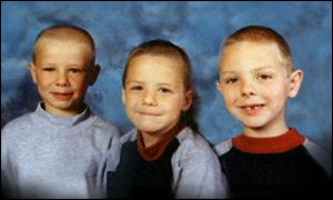
On Sunday, July 12, brothers Jason (aged 8), Mark (aged 9) and Richard Quinn (aged 10) are burned to death when their home is petrol bombed by loyalists. The boys’ mother is a Catholic and their home is in a mainly-Protestant section of Ballymoney. Following the murders, William Bingham, County Grand Chaplain of Armagh and member of the Orange Order negotiating team, says that “walking down the Garvaghy Road would be a hollow victory, because it would be in the shadow of three coffins of little boys who wouldn’t even know what the Orange Order is about.” He says that the Order has lost control of the situation and that “no road is worth a life.” However, he later apologizes for implying that the Order is responsible for the deaths. The murders provoke widespread anger and calls for the Order to end its protest at Drumcree. Although the number of protesters at Drumcree drops considerably, the Portadown lodges vote unanimously to continue their standoff.

On Wednesday, July 15, the police begin a search operation in the fields at Drumcree. A number of loyalist weapons are found, including a homemade machine gun, spent and live ammunition, explosive devices, and two crossbows with more than a dozen homemade explosive arrows.


Leave a comment

Death of the Quinn Brothers in Ballymoney

Three brothers, Jason, Richard and Mark Quinn, are killed by the Ulster Volunteer Force (UVF) in a firebomb attack on their home in Ballymoney, County Antrim, Northern Ireland on July 12, 1998. The crime is committed towards the end of the three-decade period known as “The Troubles.”

The Quinn family, consisting of mother Chrissie and sons Richard, Mark and Jason, live in the Carnany estate in the predominantly Protestant town of Ballymoney. The family is of a mixed religious background. Mother Chrissie is Roman Catholic from a mixed background and the boys’ father Jim Dillon is Catholic. After separating from her estranged husband, Chrissie rears the boys as Protestant “to avoid the hassle.” Chrissie lives with her Protestant partner Raymond Craig in Carnany which is predominately Protestant, reflecting the religious make-up of Ballymoney itself. The boys, aged 9, 10 and 11, attend a local state school and on the evening before their deaths had been helping to build the estate’s Eleventh Night loyalist bonfire. A fourth brother, Lee, is staying with his grandmother in Rasharkin at the time of the attack.

The killings take place at the height of the stand-off over the Orange Order march at Drumcree, which creates a tense atmosphere in various towns across Northern Ireland. In the weeks leading up to the fatal attack, the children’s mother expresses fear that she is not welcome in the area and that there is a possibility the family home might be attacked by loyalists. The Ballymoney Times reports a story the week of the deaths, stating that a resident of the Carnany estate had called in and was concerned about tension in the area adding something serious might happen “unless Catholic residents were left alone.”

The attack occurs at approximately 4:30 in the morning as the inhabitants of the house sleep. A car containing members of the Ulster Volunteer Force (UVF), a loyalist paramilitary organisation, arrive at the house and throw a petrol bomb through a window at the rear of the house. The petrol bomb is made from a whiskey bottle. The sounds of the boys’ shouting awake their mother, who finds her bedroom full of smoke. Chrissie Quinn, Raymond Craig and family friend Christina Archibald escape the resulting fire with minor injuries. Chrissie believes the boys have escaped the fire as she is unable to locate them in the dense smoke before she jumps to safety from a first-floor window. Two of the brother’s bodies are found in their mother’s bedroom and the other in another bedroom. Chrissie is taken to the hospital and released the next day after receiving minor injuries and shock in the attack.

One man, Garfield Gilmour, is found guilty of murdering the three brothers fifteen months later and is sentenced to life imprisonment after admitting that he had driven three other men to the house to commit the fatal petrol-bombing. Although Gilmour names the three alleged killers, they are never charged due to a lack of concrete evidence. Gilmour’s conviction for murder is reduced to manslaughter on appeal on June 5, 2000, and he is released six years later. Nine days after his release, his life sentence is replaced by a fixed prison sentence of 14 years.

(Pictured: The Quinn brothers. Left to right: Jason, Mark, Richard)


Leave a comment

Birth of Dramatist George Shiels

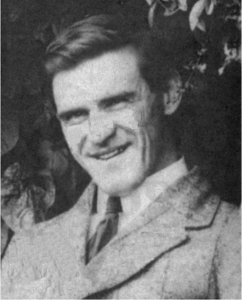
George Shiels, Irish dramatist whose plays are a success both in his native Ulster and at the Abbey Theatre in Dublin, is born in Ballymoney, County Antrim on June 24, 1881. His most famous plays are The Rugged Path, The Passing Day, and The New Gossoon.

Shiels is born to Robert Shiels and Eileen (née MacSweeney). He emigrates to Canada as a young man. While working on the building of the Canadian Pacific Railway in 1913, he is involved in a serious accident that leaves him in a wheelchair for the rest of his life. He returns to Ballymoney and starts a shipping company with his brother and also begins writing. Starting with poems and short stories, he soon progresses to plays, which he provides to the Ulster Literary Theatre under the pen name of George S. Morsheils.

Starting with Bedmates (1921), his plays begin to be regularly accepted by the Abbey Theatre for production. His 1930 work The New Gossoon is so well-received that the Abbey’s touring company, The Abbey Theatre Irish Players, bring the play to Broadway for limited runs three times, in 1932, 1934, and 1937. In 1940, a production of Shiels’ The Rugged Path sets an Abbey record by attracting a total audience of 25,000 people over eight weeks.

When his success as a playwright allows him, he leaves the shipping business and moves to Carnlough on the coast of County Antrim, where he lives from 1932 until his death on September 19, 1949.