seamus dubhghaill

Promoting Irish Culture and History from Little Rock, Arkansas, USA


Leave a comment

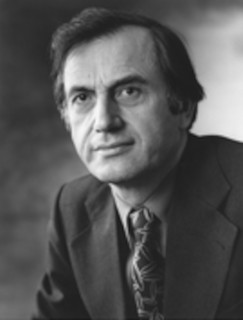
Birth of David Bleakley, Northern Ireland Politician

David Wylie Bleakley, politician and peace campaigner in Northern Ireland, is born in the Strandtown district of Belfast, Northern Ireland on January 11, 1925.

Bleakley works as an electrician in the Harland & Wolff dockyards while becoming increasingly active in his trade union. He studies economics at Ruskin College in Oxford, where he strikes up a friendship with C. S. Lewis, about whom he later writes a centenary memoir. He later attends Queen’s University Belfast. A committed Christian, he is a lifelong Anglican – a member of the Church of Ireland. Throughout his life, he is a lay preacher.

Bleakley joins the Northern Ireland Labour Party (NILP) and contests the Northern Ireland Parliament seat of Belfast Victoria in 1949 and 1953 before finally winning it in 1958. At Stormont, he is made the Chairman of the Public Accounts Committee, but he loses his seat in 1965. He is head of the department of economics and political studies at Methodist College Belfast from 1969 to 1979.

Bleakley runs for the Westminster seat of Belfast East in 1970 (gaining 41% of the vote), February 1974 and October 1974 for the Northern Ireland Labour Party each time, but never enough to win the Westminister seat from the Ulster Unionist Party (UUP). In 1971, Brian Faulkner appoints him as his Minister for Community Relations at Stormont, but as Bleakley is not an MP, he can only hold the post for six months. He resigns five days before his term expires in order to highlight his disagreement with government policy, specifically the failure to widen the government to include non-Unionist parties, and the decision to introduce internment. He writes a respectful biography of Faulkner and his own memoir of the period.

After the Parliament is abolished, Bleakley stands for, and is elected to, the Northern Ireland Assembly and its successor, the Northern Ireland Constitutional Convention. He stands again for Belfast East in the February and October UK general elections, but wins only 14% of the vote each time.

By the late 1970s, the NILP is in disarray, and does not stand a candidate for the 1979 European Assembly election. Bleakley instead stands as an “Independent Community Candidate,” but takes only 1.6% of the votes cast.

During the 1980s, Bleakley sits as a non-partisan member of various quangos. From 1980 to 1992 he is general secretary of the Irish Council of Churches. In 1992, he joins the Alliance Party of Northern Ireland and is an advisor to the group during the all-party talks. For the 1996 Northern Ireland Forum election, he is a prominent member of the Democratic Partnership list and stands in Belfast East, but is not elected. In 1998, he joins the Labour Party of Northern Ireland and stands in Belfast East in the Assembly elections, receiving 369 first preference votes.

Bleakley dies in Belfast at the age of 92 on June 26, 2017.


Leave a comment

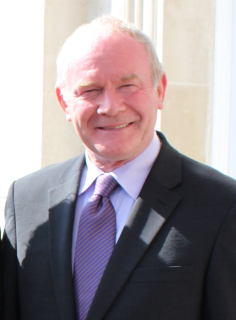
Birth of Danny Morrison, IRA Volunteer, Author & Activist

Daniel Gerard Morrison, former Provisional Irish Republican Army (IRA) volunteer, Irish author and activist, is born in staunchly Irish nationalist Andersonstown, Belfast, on January 9, 1953. He plays a crucial role in public events during the Troubles in Northern Ireland.

Morrison is the son of Daniel and Susan Morrison. His father works as a painter at the Harland & Wolff shipyard in East Belfast. His uncles, including Harry White, had been jailed for their part in the IRA‘s Northern Campaign in the 1940s. He joins Sinn Féin in 1966 and helps to organise 50th anniversary commemorations of the Easter Rising in Belfast. At this time, he later recalls, “as far as we were concerned, there was absolutely no chance of the IRA appearing again. They were something in history books.”

After the 1969 Northern Ireland riots, in which nationalist areas of Belfast are attacked and burned, Morrison joins the newly formed Provisional IRA. After this, he is engaged in clandestine republican activities, but as late as 1971, is still attending Belfast College of Business Studies and editing a student magazine there. He is interned in Long Kesh Detention Centre in 1972.

Morrison’s talents for writing and publicity are quickly recognised within the republican movement and after his release in 1975 he is appointed editor of Republican News. In this journal, he criticises many long-standing policies of the movement. At this time, he becomes associated with a grouping of young, left-wing Belfast based republicans, led by Gerry Adams, who want to change the strategy, tactics and leadership of the IRA and Sinn Féin.

With the rise of Adams’ faction in the republican movement in the late 1970s, Morrison succeeds Seán Ó Brádaigh as Director of Publicity for Sinn Féin. During the 1981 Irish hunger strike, he acts as spokesman for the IRA hunger strikers’ leader Bobby Sands, who is elected to the British Parliament on an Anti H-Block platform.

Morrison is elected as a Sinn Féin Member for Mid Ulster of a short-lived Northern Ireland Assembly from 1982 to 1986. He also stands unsuccessfully for the European Parliament in 1984 and again in 1989. He also stands for the Mid Ulster Westminster seat in 1983 and 1986. Along with Owen Carron, he is arrested on January 21, 1982, while attempting to enter the United States illegally from Canada by car. He is deported and later both men are convicted on a charge of making false statements to US immigration officials.

Morrison is director of publicity for Sinn Féin from 1979 until 1990, when he is charged with false imprisonment and conspiracy to murder a British informer in the IRA, Sandy Lynch. He is sentenced to eight years in prison and is released in 1995.

Since 1989, Morrison has published several novels and plays on themes relating to republicanism and events in the modern history of Belfast. His latest play, The Wrong Man, opens in London in 2005. It is based on his 1997 book of the same name and deals with the career of an IRA man who is suspected by his colleagues of working for the police.

The Bobby Sands Trust (BST) is formed after the 1981 Hunger Strike where ten republican prisoners die due to their hunger strike protest against the UK Government. The legal firm Madden & Finucane continues to act for the Trust whose original members are Gerry Adams, Danny Morrison, Tom Hartley, Tom Cahill, Marie Moore and Danny Devenny. For a time, Bobby’s two sisters, Marcella and Bernadette, are members of the Trust. Current members still include Adams, Morrison and Hartley. The BST claims to hold copyright to all the written works of Bobby Sands. The family of Sands has been critical of the BST, and they have called for it to disband.

Morrison lives in West Belfast with his Canadian-born wife, Leslie. He has two sons from his first marriage.


Leave a comment

Death of Margaret Emmeline Dobbs, Scholar & Playwright

Margaret Emmeline Dobbs, Irish scholar and playwright best known for her work to preserve the Irish language, dies in Cushendall, County Antrim, Northern Ireland on January 2, 1962.

Dobbs is born in County Antrim on November 19, 1871 to barrister Conway Edward Dobbs who is Justice of the Peace for County Antrim, High Sheriff for Carrickfergus in 1875 and High Sheriff for County Louth in 1882. Her mother is Sarah Mulholland, daughter of St. Clair Kelvin Mulholland of Eglantine, County Down. The family spends time living in Dublin where Dobbs is born. She attempts to learn Irish, however, when her father dies in 1898 her mother moves the family back to Glenariff.

Dobbs is interested in learning Irish and finds it easier to learn in County Donegal where it is still spoken. Her first teacher is Hugh Flaitile. She attends the Irish College at Cloughaneely in the Donegal Gaeltacht. She brings the idea of promoting the language to the Glens of Antrim and her circle of friends. She is one of the small number of Protestant women interested in the Gaelic revival.

The year 1904 sees the “Great Feis” in Antrim and Dobbs is a founder member of the Feis na nGleann committee and later a tireless literary secretary. In 1946, the Feis committee decides to honour her by presenting her with an illuminated address. It can be seen today at Portnagolan House with its stained glass windows commemorating a great Irishwoman. During her speech she says, “Ireland is a closed book to those who do not know her language. No one can know Ireland properly until one knows the language. Her treasures are hidden as a book unopened. Open the book and learn to love your language.”

Dobbs writes seven plays, published by Dundalgan Press in 1920, though only three are actually performed. The Doctor and Mrs. McAuley wins the Warden trophy for one-act plays at the Belfast festival in 1913. Her plays, however, are generally not a success and after 1920 she never writes another. She continues to work on historical and archaeological studies and her articles are published in the Ulster Journal of Archaeology, in a German magazine for Celtic studies, in the French Revue Celtique and in the Irish magazine Ériu.

Roger Casement is a good friend and although Dobbs never makes her political opinions known she contributes to his defence costs when he is accused of treason. Although her political views are not clearly known, Dobbs has been a member of the Gaelic League and in the executive of Cumann na mBan.

Dobbs dies at her home, Portnagolan House, Cushendall, on January 2, 1962.


6 Comments

The Hearts of Steel Storm Belfast Barracks

The Hearts of Steel, also known as the Steelboys, an exclusively Protestant movement originating in County Antrim due to grievances about the sharp rise of rent and evictions, is involved in conflict in Ulster on December 23, 1770. Five hundred members of the Hearts of Steel force the release a prisoner in Belfast.

The Hearts of Steel arise in 1769 in opposition to unjust and exorbitant rents, chiefly exacted by middlemen, speculators or “forestallers,” who take lands from absentee landlords at greatly increased rents and make their own profit by doubling the rents on the poor tenants.

In 1770 in Templepatrick, County Antrim, a local landlord evicts tenants and replaces them with speculators who can outbid the locals for the land. At some point a local is arrested and charged with maiming cattle belonging to a merchant from Belfast, which spurs the farmers of Templepatrick to take up arms and march on Belfast to demand his release. The protestors surround the barracks and threaten to burn the house of Waddell Cunningham, who is one of the new speculators in Templepatrick. The soldiers in the barracks fire upon the protestors killing several and wounding others. The protestors eventually set fire to Cunningham’s house and as the fire threatens to spread and destroy the town of Belfast itself, the mayor decides to free the prisoner.

Further consternation is caused by the sharp increase of rents throughout Ulster. At the same time the leases expire for Lord Donegall‘s south County Antrim estate. While he keeps his rent at the old prices, he greatly increases their renewal fee. These coincide with several years of severe harvest failures which result in high bread prices. The result of this is that people are unable to support themselves or their families, being left in the utmost state of deprivation and destitution, with many evicted from their land for failure to pay.

The Hearts of Steel protests and uprisings quickly spread throughout the county and into counties Armagh, Down, and Londonderry, which are also subject to the Hearts of Oak protest movement with which it merges. One tactic of the protestors is the “houghing” of cattle, which involves laming cattle by cutting the leg tendons. They also force farmers to sell food at prices they set, and demand anyone letting out land to do so at the cost of 12 shillings per acre. Landlords are threatened that if they try to collect the cess from anyone that their houses will be destroyed.

The disturbances are so widespread in the affected counties that the Irish government passes legislation to severely punish the “wicked and disorderly persons.” By the later half of 1772 they send the army into Ulster to crush them. Men are hanged while many others are said to have drowned trying to flee across the sea to Scotland. The Lord Lieutenant of Ireland, Lord Townshend, privately blames the landlords and their actions for the disturbances and so issues a general pardon in November 1772.

(Pictured: The Hearts of Steel storming the barracks at Belfast, December 1770 | Linen Hall Library)


Leave a comment

Death of Isabella Tod, Women’s Rights Activist

Isabella Maria Susan Tod, Irish women’s rights activist, dies at her home at 71 Botanic Avenue in Belfast on December 8, 1896. She is a formidable lady who uses her political skills to great advantage in order to further many causes.

Tod is born on May 18, 1836, in Edinburgh into a well-known Irish Presbyterian family, her uncle being the Rev. Hope Masterton Waddell, one of the earliest Irish Presbyterian missionaries who served with the Scottish Missionary Society in Jamaica and whose great grandfather is the Rev. Charles Masterton, one of the most distinguished minsters of the General Synod of Ulster who ministers at Connor and Rosemary Street, Belfast. She is very proud of her Presbyterian heritage and of her Scottish ancestry.

The daughter of James Banks Tod, an Edinburgh merchant, Tod spends her early years in Edinburgh. She is educated at home by her mother, Maria Isabella Waddell, who comes from County Monaghan. The family moves to Belfast in the 1850s following the death of her father. She and her mother join Elmwood Presbyterian Church. Her Presbyterian background no doubt contributes to her radical views on social issues and women’s rights. She earns her living from writing and journalism, contributing, for example, to the Dublin University Magazine, an independent literary, cultural and political magazine, and to the Banner of Ulster, a Presbyterian newspaper.

Tod becomes one of the leading pioneers in the fight to improve the position of women. She is the only woman called to give evidence to a Select Committee of Enquiry on the reform of the married women’s property law in 1868 and serves on the executive of the Married Women’s Property Committee in London from 1873 to 1874. She successfully campaigns for the repeal of the Contagious Diseases Acts of 1864, 1866 and 1869 which enacted that a woman suspected of being a prostitute could be arrested and forced to undergo medical examination for venereal disease. She sees this legislation as an infringement of a woman’s civil liberties.

Tod is also a strong supporter of the temperance movement and, along with her friend Margaret Byers, forms the Belfast Women’s Temperance Association in 1874. Perhaps she is best known for her tireless campaign to extend the educational provision for middle-class women. For example, in 1878 she organises a delegation to London to put pressure on the Government to include girls in the Intermediate Education Act of 1878. The Ladies’ Collegiate School in Belfast, Alexandra College in Dublin and the Belfast Ladies Institute owe their existence largely to her. She writes a paper entitled “An Advanced Education for Girls in the Upper and Middle Classes” which is presented in 1867 at a meeting of the National Association for the Promotion of Social Science and is among the pamphlets held in the Presbyterian Historical Society of Ireland library.

Tod is also an active campaigner for women’s right to vote, embarking on her first campaign in 1872 and addressing meetings in Belfast, Carrickfergus, Coleraine and Londonderry. Following a meeting in Dublin a suffrage committee is established that later becomes the Dublin Women’s Suffrage Society and in 1873 she forms the North of Ireland Women’s Suffrage Society. She extends her meetings to London, Glasgow and Edinburgh and is a frequent visitor to London to lobby politicians during the parliamentary session.

Tod is very much a staunch opponent of Home Rule, establishing a branch of the London-based Women’s Liberal Federation in Belfast and the Liberal Women’s Unionist Association. She sees unionism as the way to progress. “I knew that all the social work in which I had taken so prominent a part for 20 years was in danger and most of it could not exist a day under a petty legislature of the character which would be inevitable,” she says. “What we dread is the complete dislocation of all society, especially in regard to commercial affairs and organised freedom of action.”

Tod suffers from ill-health in her later days and dies in Belfast of pulmonary illness on December 8, 1896. She is buried in Balmoral Cemetery in South Belfast.


Leave a comment

Death of Eoin O’Duffy, Activist, Soldier & Police Commissioner

Eoin O’Duffy, Irish nationalist political activist, soldier and police commissioner, dies in Dublin on November 30, 1944.

O’Duffy is born near Castleblayney, County Monaghan on January 28, 1890. Trained initially as an engineer, he later becomes an auctioneer. He becomes interested in Irish politics and joins Sinn Féin, later becoming a member of the Irish Republican Army (IRA).

During the Irish War of Independence, O’Duffy commands the Monaghan Brigade and in February 1920 he successfully captures the Royal Irish Constabulary (RIC) barracks at Ballytrain taking from it weapons and explosives. Also present at this victory is Ernie O’ Malley, who goes on to organize flying columns, and the socialist guerrilla fighter Peadar O’Donnell.

In the 1921 Irish elections, O’Duffy becomes TD for Monaghan. By 1922, he has been promoted to Chief of Staff of the IRA and is one of Michael Collins foremost supporters when he accepts the Anglo-Irish Treaty and fights in the Irish Civil War as a general of the Free State Army.

As commander of the 2nd Northern Division of the IRA, O’Duffy sees action in Belfast when defending Catholic ghettoes from attacks by Protestant pogromists. He also leads the Free State forces into Limerick city.

In September 1922, following the mutiny in Kildare by Civic Guard recruits, O’Duffy replaces Michael Staines as commissioner. Under him the police force is renamed the Garda Síochána, disarmed and is later merged with the Criminal Investigation Department (CID) and the Dublin Metropolitan Police (DMP). His fervent Catholicism is greatly reflected in the ethos of the Garda Síochána.

In 1933, O’Duffy becomes associated with Cumann na nGaedheal by taking on the leadership of their security organization the Army Comrades Association, later to be known colloquially as the Blueshirts. This organization is to become a participant in many street brawls with anti-treaty sympathizers who try to break up pro-treaty political meetings. When the pro-treaty parties merge in 1933 to become Fine Gael, he is the party President for a short period of time.

It is believed that O’Duffy unsuccessfully encourages W. T. Cosgrave to consider a coup-de’etat in the event of Fianna Fáil winning the 1932 Irish general election. Cosgrave, in the event, puts his trust in a democracy when Fianna Fáil does, in fact, form a government, led by Éamon de Valera, with the help of the Labour Party.

After the 1933 Irish general election, which again sees de Valera in power, O’Duffy is dismissed from his post as Garda Commissioner on the grounds that due to his past political affiliations, he will be unable to carry out his duties without bias.

In Europe, the new phenomenon of fascism is gaining ground and O’Duffy, like many of his pro-treaty colleagues, is drawn to it. His Army Comrades Association is renamed the National Guard, and they begin to take on many of the symbols of fascism such as the outstretched arm salute and the blue uniforms.

When O’Duffy plans a massed march for August 1933 in Dublin to commemorate the deaths of Arthur Griffith and Michael Collins, de Valera, fearing a coup, has it banned. Possibly de Valera is also testing the loyalty of the army and the Garda Síochána. In September the National Guard itself is banned although it reforms under the title The League of Youth.

In 1934 O’Duffy suddenly and inexplicably resigns as president of Fine Gael although it is known that many of its members are growing worried by his actions and statements. The Blueshirt movement begins to unravel at the seams. That same year he forms his own fascist movement, the National Corporate Party.

In 1936, supported by the Catholic Church in Ireland, O’Duffy leads 700 of his followers to Spain to help General Francisco Franco in the Spanish Civil War against the republican government. They form part of the XV Bandera Irlandesa del Terico, a part of the Spanish Legion. The Bandera sees little or no action and are returned to Ireland in 1937.

Although O’Duffy has some low-level dalliance with the Nazis he never does regain any of his political influence. His health is on the decline, and he dies on November 30, 1944. De Valera grants him a state funeral and he is interred in Glasnevin Cemetery in Dublin.


Leave a comment

Birth of Justice Catherine McGuinness

Catherine McGuinness (née Ellis), retired Irish judge, is born in Belfast, Northern Ireland on November 14, 1934. She serves as a Judge of the Supreme Court of Ireland from 2000 to 2006, a Judge of the High Court from 1996 to 2000, a Judge of the Circuit Court from 1994 to 1996 and a Senator for the University of Dublin from 1979 to 1981 and between 1983 and 1987. She is appointed by President Michael D. Higgins to the Council of State from 1988 to 1990 and 2012 to 2019.

McGuinness is President of the Law Reform Commission from 2007 to 2009. In May 2013, she is appointed Chair of the National University of Ireland Galway Governing Authority.

McGuinness is educated in Alexandra College, Trinity College Dublin and the King’s Inns. In the 1960s she works for the Labour Party. She is called to the Irish Bar in 1977 at age 42. In 1989, she is called to the Inner Bar.

In 1979, McGuinness is elected as an independent candidate to Seanad Éireann at a by-election on December 11, 1979, as a Senator for the University of Dublin constituency, following the resignation of Senator Conor Cruise O’Brien, taking her seat in the 14th Seanad. She is re-elected at the 1981 elections to the 15th Seanad, and in 1983 to the 17th Seanad, where she serves until 1987, losing her seat to David Norris. She is appointed to the Council of State on May 2, 1988, by President Patrick Hillery and serves until 1990.

McGuinness is appointed a judge of the Circuit Court in 1994, the first woman to hold that office in Ireland. In 1996, she is appointed to the High Court and remains there until her appointment to the Supreme Court in January 2000.

In November 2005, McGuinness is appointed Adjunct Professor at the Faculty of Law, National University of Ireland, Galway. She is also appointed President of the Law Reform Commission in 2005 and holds that position until 2011.

In April 2009, McGuinness is awarded a “Lord Mayor’s Award” by Lord Mayor of Dublin Eibhlin Byrne “for her contribution to the lives of children and families in the city through her pioneering work.” In September 2010, she is named as one of the “People of the Year” for “her pioneering, courageous and long-standing service to Irish society.” In November 2012, she wins the Irish Tatler Hall of Fame Award.

In addition to her judicial career, McGuinness serves on the Employment Equality Agency, Kilkenny Incest Investigation, the Forum for Peace and Reconciliation, the National Council of the Forum on End of Life in Ireland and the Irish Universities Quality Board. In June 2011, she becomes patron of the Irish Refugee Council. In November 2011, she is appointed Chairperson of the “Campaign for Children.”

McGuinness has received honorary doctorates from the University of Ulster, the National University of Ireland, the University of Dublin, the Higher Education and Training Awards Council (HETAC) and the Royal College of Surgeons in Ireland. In February 2013, she accepts the Honorary Presidency of Trinity College, Dublin’s Free Legal Advice Centre.

In January 2014, McGuinness is appointed by Minister for Communications, Energy and Natural Resources, Pat Rabbitte, to chair the expert panel to oversee the preparation of reports on the best underground route options to compare with the Grid Link and Grid West high voltage power lines in Ireland. In March 2015, McGuinness receives an Alumni Award from Trinity College Dublin.

McGuinness is married to broadcaster and writer Proinsias Mac Aonghusa from 1954 until his death in 2003 and has three children. She resides in Blackrock, Dublin.


Leave a comment

Remembrance Sunday Ceremonies 2016

Taoiseach Enda Kenny and Tánaiste Frances Fitzgerald attend Remembrance Sunday ceremonies in Northern Ireland on November 13, 2016, while a cross commemorating Irish soldiers in World War I is dedicated at Dublin‘s Glasnevin Cemetery.

Kenny, who has taken part in the ceremony every year since 2012, lays a wreath of green laurels alongside the many red poppies at the war memorial in Enniskillen, County Fermanagh. Northern Ireland’s First Minister Arlene Foster, a Member of the Legislative Assembly (MLA) for Fermanagh and South Tyrone, also attends the event.

Although there are no discussions between the pair, Kenny confirms he will meet with Foster in Dublin on Tuesday, November 15. The pair are also due to meet in Armagh on Friday, November 18 for a North/South ministerial meeting, where Brexit-related issues are expected to dominate the agenda.

Tánaiste Frances Fitzgerald travels to Belfast, where she lays a laurel wreath at the Cenotaph at city hall. Fitzgerald is joined at the ceremony by Secretary of State for Northern Ireland James Brokenshire.

Speaking afterwards, Fitzgerald, whose grandfather served as a soldier in the British army and whose father was a colonel in the Irish Army, says it has been an important engagement. “So many people across the island lost their lives; 50,000 families affected by loss of a loved one during the First World War. We have had a government minister here since 2012 and I think it is really important to come together, to remember together and to look at our shared histories.”

In England, British Prime Minister Theresa May is among those who gather at the Cenotaph in London for a commemoration ceremony.

Meanwhile, Heather Humphreys, the Minister for Arts, Heritage, Regional, Rural and Gaeltacht Affairs, dedicates the France-Ireland Memorial at Glasnevin Cemetery. Humphreys is joined by the French Minister of State for Veterans and Remembrance at the Ministry of Defence Jean-Marc Todeschini for the ceremony. The memorial is a gift to Ireland from France in recognition of Irish sacrifices made “in the defence and freedom of France, particularly in the First World War.”

(From: “Taoiseach, Tánaiste attend Remembrance Sunday ceremonies,” Raidió Teilifís Éireann (RTÉ), http://www.rte.ie, November 13, 2016 | Pictured: Taoiseach Enda Kenny lays a wreath of green laurels in Enniskillen)


Leave a comment

Birth of Willie Fay, Actor & Theatre Producer

William George “Willie” Fay, actor and theatre producer who, along with William Butler Yeats and others, is one of the co-founders of Dublin‘s Abbey Theatre, is born in Dublin on November 12, 1872.

Fay attends Belvedere College in Dublin. He works for a time in the 1890s with a touring theatre company in Ireland, Scotland, and Wales. When he returns to Dublin, he works with his brother Frank, staging productions in halls around the city. Finally, they form W. G. Fay’s Irish National Dramatic Company, focused on the development of Irish acting talent.

The brothers participate in the founding of the Abbey Theatre and are largely responsible for evolving the Abbey style of acting. After a falling-out with the Abbey directors in 1908, the brothers emigrate to the United States to work in theatre there.

Fay moves to London in 1914, working as an actor on stage and in films. One of his most notable film roles is as Father Tom in Carol Reed‘s Belfast-set Odd Man Out (1947), whose cast is dense with actors from the Abbey Theatre. His memoir, The Fays of the Abbey Theatre, appears in 1935.

Willie Fay dies in London on October 27, 1947, at the age of 74.

(Pictured: William George Fay 1903, Dublin City Council Image Galleries, http://www.dublincity.ie)


Leave a comment

First Meeting of the Dublin United Irishmen

James Napper Tandy convenes the first meeting of the Society of United Irishmen in Dublin on November 9, 1791. The group had met the previous month in Belfast.

Spurred on by Theobold Wolfe Tone’s pamphlet titled An Argument on Behalf of the Catholics of Ireland, these young radicals propose three resolutions, which are to guide the new movement forward and which leave a lasting impression on generations of Irish men and women.

Firstly, that there exists the need for “a cordial union among all the people of Ireland.” Secondly, that a complete and radical reform of the representation of the people in Parliament is needed and, thirdly, that this reform should include “Irishmen of every religious persuasion.” The new organisation immediately tries to bring about change and Wolfe Tone, through his work as secretary of the Catholic Committee, organises a Catholic Convention in Dublin in 1792.

Although a Catholic Relief Act is passed in 1793, which rescinds some of the harsh Penal Laws, the United Irishmen soon turn their attention to France where they are heavily influenced by the French revolutionary ideals of “Liberty, Equality, Fraternity.”

When the United Irishmen are proclaimed a secret society and members arrested, Wolfe Tone travels to the United States and then France, making known his objectives for Irish Independence and that he wishes:

“To unite the whole people of Ireland, to abolish the memory of all past dissensions, and to substitute the common name of Irishman in place of the denominations of Protestant, Catholic and Dissenter – these were my means.”

The Irish Rebellion of 1798 soon follows and, although achieving initial success is brutally suppressed, thereby ending the ideals of the United Irishmen in uniting the people of Ireland.

(From: “Society of United Irishmen formed in Dublin 09 November 1791” posted on November 9, 2019, Irish News Archives, http://www.irishnewsarchives.com)