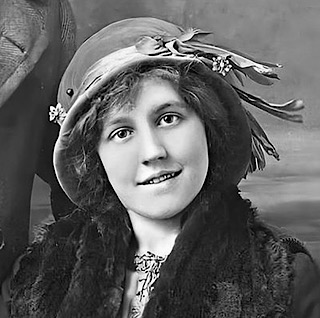
Mernin is born in Clanbrassil Street, Dublin, on November 16, 1886. Her parents are John Mernin and Marianne “Mary” (née McGuire). She has one sister, May. Her father is a baker and confectioner of Dorset Street, Dublin. After his death when Mernin is young, the children are raised by his family in Dungarvan, County Waterford.
In the 1910s, Mernin works as a typist in a number of Dublin companies, and by 1914 she is a shorthand typist in Dublin Castle at the garrison adjutant’s office. She is a member of the Keating branch of the Gaelic League, and through this her cousin, Piaras Béaslaí, introduces her to Michael Collins in 1918. From 1919 she begins working for Collins as an intelligence agent. She uses her position in Dublin Castle to obtain important documents and, in 1920, intelligence on British intelligence officers and the auxiliary police.
Under the alias of “Little Gentleman” or “Lt. G.,” Mernin is one of Collins‘a most important agents, so much so that many believe the Little Gentleman is a British intelligence officer. One of the most important contributions she makes is identifying the homes of British intelligence officers who are later killed on Bloody Sunday, November 21, 1920, by Collins‘s Irish Republican Army (IRA) unit The Squad. She aids Frank Saurin and Tom Cullen in identifying senior British agents in Dublin, typing secret reports for Collins in a room in 19 Clonliffe Road.
In February 1922, Mernin is discharged from the British service, taking up a position as a typist in the Irish Army from July 1922 until February 1952, when she retires. She works primarily at Clancy Barracks. She is awarded a military pension for her service from 1918-1922, and her statement is held in the Bureau of Military History in the Military Archives.
Mernin never marries, although she gives birth to a son in London in June 1922, with some evidence suggesting Béaslaí is the father. She lives at 167 Mangerton Road, Drimnagh. She dies at the age of 70 on February 18, 1957, in Dublin.
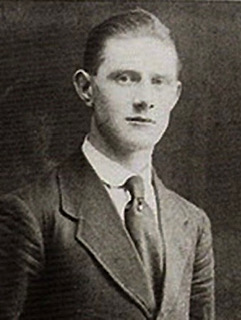
Byrne is born on November 23, 1900, in the National Maternity Hospital, Holles Street, Dublin, the elder among one son and one daughter of Vincent Byrne, carpenter, of 33 Denzille Street (now Fenian Street), and his wife Margaret (née White). By 1911 the family is living with maternal relatives at 1 Anne’s Lane. Educated at St. Andrew’s national school, Westland Row, he is apprenticed as a cabinet maker under Thomas Weafer, a company captain in the Irish Volunteers, who is subsequently killed in the 1916 Easter Rising. At the age of fourteen, he joins the Irish Volunteers in January 1915, and is posted to the 2nd Battalion of the Dublin Brigade. His training includes lectures on street fighting by James Connolly. During the 1916 rising he serves with the 2nd Battalion in Jacob’s biscuit factory under Thomas MacDonagh. At the surrender he is slipped out a factory window to safety by a priest who is acting as an intermediary. Arrested in his home a week later, he is held in Richmond Barracks with other youngsters, all of whom are released after an additional week. Active in the post-rising reorganisation of the Dublin Brigade, he claims to have voted twenty times for Sinn Féin candidates in the 1918 United Kingdom general election in Ireland.
In November 1919, Byrne is recruited to an elite counter-intelligence squad of the Dublin Brigade, whose primary mission is the assassination of plainclothes detectives of the Dublin Metropolitan Police’s (DMP) political (‘G’) division. He participates in the attempted ambush of the Lord Lieutenant of Ireland, John French, at Ashtown, Dublin, on December 19, 1919, a combined operation of the Dublin and the 3rd Tipperary brigades. In March 1920, he leaves his civilian employment with the Irish Woodworkers, Crow Street, when the squad is constituted as a full-time, paid, GHQ guard, under direct orders from Michael Collins. Dubbed “The Twelve Apostles,” the squad also includes James Slattery, a workmate of Byrne since their apprenticeships. For the duration of the Irish War of Independence, Byrne takes part in the stakeouts and killings of police detectives and military intelligence agents. His witness statement to the Bureau of Military History recounts his participation in some fifteen such operations. On Bloody Sunday he commands an IRA detail that kills two of the “Cairo Gang“ agents in their boarding house at 38 Upper Mount Street on November 21, 1920. He takes part in The Custom House raid on May 25, 1921.
Owing largely to his devoted allegiance to Collins, Byrne supports the Anglo–Irish Treaty of December 1921, regarding it as a stepping stone to complete independence. Enlisting in the National Army, he serves in the Dublin Guard. Promoted five times from January 1922 to February 1923, he rises in rank from company sergeant to commandant. He is OC of the guard at the handover of Dublin Castle from British to Irish authority on January 16, 1922. During ensuing months he commands guard details at government buildings and the Bank of Ireland, College Green, Dublin. In March 1922, he foils an attempt by Anti-Treaty forces to seize the bank with the aid of mutinous soldiers within the building’s guard. Having displayed courage and presence of mind throughout the incident, he is promoted captain in the field. Resenting the role given to ex-British-army officers in the National Army, and feeling that the political elite of the Free State are betraying the national interest, he is among the group of officers involved in the failed army mutiny of 1924, and accordingly is forced to resign his commission on March 21. He then works as a carpenter on the industrial staff of the Office of Public Works (OPW), and in the post office stores, St. John’s Road, Kilmainham, Dublin, until his retirement.
Byrne is a founding member of both the Association of Dublin Brigades and the 1916–1921 Club. Long lived, and a willing raconteur with a colourful turn of phrase, he becomes probably the best known of Collins’s squad (of which he is the last surviving member), granting many interviews to journalists and historians. He expresses no misgivings about his role as a revolutionary hit man, arguing the necessity of the ruthless methods employed, which deterred potential informers, and eventually won the struggle by crippling British intelligence.
Byrne lives in Dublin at 59 Blessington Street, and later at 227 Errigal Road, Drimnagh. His last address is 25 Lein Road, Artane. His wife Eileen predeceases him. He dies on December 13, 1992, survived by two daughters and one son. He is buried at Balgriffin Cemetery, Balgriffin, County Dublin.
(From: “Byrne, Vincent (‘Vinnie’)” by Lawrence William White and Pauric J. Dempsey, Dictionary of Irish Biography, http://www.dib.ie, October 2009)
An intelligence officer with the 4th Battalion of the Dublin Brigade of the IRA in the Ranelagh area, Fovargue is captured by the British Army in Dublin. Under interrogation, he allegedly leaks information that results in the arrest of the other members of his unit a few days later. In return for this information, the Intelligence Corps allegedly allows him to escape during a staged ambush in Dublin’s South Circular Road.
This attempted ruse however does not go unnoticed by Michael Collins‘s many moles inside the Crown’s security forces. On the night of the escape, Detective ConstableDavid Neligan of the Dublin Metropolitan Police‘s G Division is on duty in Dublin Castle when a telephone message on a police form is passed to him. The message, issued by the British Military Headquarters, states that a “Sinn Féin” suspect named Fovargue has escaped from three Intelligence Corps officers in a car while en route to prison. It gives a description of his appearance and asks that the British Army be notified in the event of his recapture by the Dublin Metropolitan Police.
Joe Kinsella is the I/O of the 4th Battalion. He is temporarily transferred to take care of munitions under Seán Russell for a few weeks and Fovargue is put in his place. From Joe Kinsella’s own statement to the Irish Bureau of Military History:
“From the outset I personally did not place a lot of trust in him, because on the morning that he took over from me he appeared to me, to be too inquisitive about the movements of Michael Collins and the G.H.Q. staff generally. He wanted to know where they could be located at any time. He said that he had big things in view, and that it would be to the advantage of the movement generally if he was in a position to get in touch with the principal men with the least possible delay. From his attitude I there and then formed the opinion, rightly or wrongly, that he was inclined to overstep his position. I did not feel too happy about him and I discussed him with Sean Dowling. It transpired that my impressions of this man were correct. I told him of two meeting places of Intelligence staff, one of Company Intelligence held at Rathmines Road and one of Brigade Intelligence held at Saville Place. A short time after giving him this information both these places were raided…I was now confirmed in my suspicions that Fovargue was giving away information. He was later shot in England by the IRA.”
Neither was Neligan fooled by this, as he explains:
“Now if they had said that this man (who was completely unknown to both of us) had escaped from one I.O. it might have sounded reasonable enough. But to tell us that an unarmed man had escaped out of a motorcar in the presence of three presumably armed men was imposing a strain on our credulity. Both of us thought this story too good to be true.”
The two men retype the message and pass it to Collins the following day. Meanwhile, Fovargue has been sent to England where he adopts the alias of Richard Staunton. He has in fact been sent to England by Intelligence Corps Colonel Ormonde Winter to infiltrate the IRA in Britain.
Sean Kavanagh, a Kilkenny IRA man, claims that Fovargue is put in a cell with him in Kilmainham Gaol in 1921 in order to try to extract information from him.
On April 2, 1921, a boy walking on the golf links of the Ashford Manor Golf Club in Ashford, Middlesex discovers the body of Fovargue, who had been shot through the chest. Discovered near the corpse is a small piece of paper on which has been scribbled in blue pencil the words “Let spies and traitors beware – IRA.”
(Pictured: Dublin Brigade IRA officer’s cap badge in white metal, “FF” (Fianna Fáil) at centre, surrounded by a garter bearing the motto “Drong Átha Cliath” (Dublin Brigade), all on an eight-pointed rayed star)
Hayes-McCoy is born to Thomas Hayes-McCoy and Mary Kathleen Hayes-McCoy (née Wallace). His grandfather, Thomas Hayes-McCoy, is a Dubliner who as a child came to Galway in 1834 and is later a well-known Parnellite. His maternal grandfather, Thomas Burke, is a Galway artist. He grows up on Eyre Square where his father runs a gentleman’s hairdressing business. His two older siblings are Ignatius and Marguerite. The latter receives a PhD-degree in History at University College Galway (UCG), and later teaches at the Galway Technical School.
Hayes-McCoy receives his early education from the Patrician Brothers, Galway. His earliest notebook of 1927 and a manuscript history of Poland of the same year, now at the National Library of Ireland (NLI), testify to an early interest in history and heritage. From 1928 to 1932 he is a student scholarship holder at University College Galway, graduating in 1932 with a Bachelor of Commerce, and a Bachelor of Arts, with first-class honours in both, and a specialisation in “History, Ethics, Politics” for the latter. Mary Donovan O’Sullivan is one of his professors of history, and Liam Ó Briain, professor of Romance languages, is a stimulating influence. At this time, Hayes-McCoy is a member of the Republican Club, a committee member of the Literary and Debating Society, and in 1931 he is one of the founding members of a new Irish Students’ Association.
Hayes-McCoy pursues his PhD at the University of Edinburgh, and then spends two years at the Institute of Historical Research, London, in the Tudor seminar of J. E. Neale, rewriting his PhD and eventually publishing it as Scots mercenary forces in Ireland, 1565–1603 (Dublin and London, 1937), with a foreword by Eoin MacNeill. This is characterised by meticulous archival research, and it anticipates by sixty years the much-vaunted New British History of the late twentieth century by tracing the interconnections between events in England, Ireland, and Scotland.
In the absence of an academic post, Hayes-McCoy becomes an assistant keeper in the Art and Industrial Division at the National Museum of Ireland (1939–1959), with a responsibility for the Military History, and the Irish War of Independence collections. One of his first tasks is to prepare a standing exhibition on Irish history before 1916. His research, long-standing personal interest in the military, and his curatorial experience, helps form an expert knowledge of historical Irish warfare. This leads to his role in co-founding The Military History Society of Ireland in 1949 whose journal, The Irish Sword, he edits. He describes the vagaries of setting up such a body, its reception, and the historiographical considerations attendant on it, in a paper published posthumously in The Irish Sword.
On August 19, 1941, Hayes-McCoy marries Mary Margaret “May” O’Connor, daughter of C.J. and M.B. O’Connor of New Ross/Enniscorthy. They have three daughters and two sons: Mary, Ann, Ian, Robert, Felicity. The family home is in Dublin.
Earning high reputation by continued research and by publishing leads to Hayes-McCoy’s receipt of the D.Litt. degree from the National University, and to his membership in the Royal Irish Academy in 1950. In his professional career, apart from the broad spectrum of press publications, he publishes prolifically. The works that are judged most influential, are his Scots mercenary forces in Ireland 1565–1603 (1937), the papers “The early history of guns in Ireland” (1938–1939), “Strategy and tactics in Irish warfare, 1593–1601” (1941), “The army of Ulster, 1593–1601” (1951), the controversial “Gaelic society in Ireland in the late sixteenth century” (1963), and the monographs “Irish battles” (London 1969), and “A history of Irish flags from earliest times” (Dublin 1979). A member of the Irish Manuscripts Commission, his most notable contribution is the publication “Ulster and other Irish maps, c.1600” (Dublin 1964).
In 1946, Hayes-McCoy is appointed to a committee of eight historians to advise on setting up the Bureau of Military History, a body established for the creation and compilation of material on the history of the Irish movements for independence, 1913–1921, specifically from witness statements. The committee is also to further offer guidance and oversee progress of the Bureau in coordination with the Ministry of Defence. It subsequently expresses concerns about the state’s role and methods in the collection of statements.
Having begun writing for the press at an early stage, Hayes-McCoy’s public position at the Museum encourages him to go further. He has broad involvement with local history groups to whom he presents papers, and also works for newspapers and for radio and television. To the national and Galway press he usually contributes articles on military aspects of Irish history, as well as book reviews, but he also uses them as a platform to engage with what he sees are flaws in the education of history in Ireland which during his lifetime is constrained by a certain degree of political and cultural state control.
During the 1940s and 1950s, Hayes-McCoy becomes involved in a number of paratheatrical events of national significance one of which – the “Pageant of St.Patrick” for which he writes the script (An Tóstal 1954) – is realised on an immense scale. He scripts these works to begin with and is later principally engaged as historical consultant. In that capacity, he collaborates in 1955 and 1956 with Micheál Mac Liammóir and Denis Johnston on their scripts for pageants on St. Patrick and on the Táin Bó Cuailgne, at times finding it difficult to square the historical liberties taken by these artists with his own role.
On Irish radio and television Hayes-McCoy is most active in the mid-1960s, editing and contributing to Thomas Davis lectures series, writing scripts for a series of thirty children’s programmes on all aspects of Irish history, and preparing/contributing on air to the television series “Irish battles” and “The long winter.” As well as writing for RTÉ, Ireland’s national broadcaster, he contributes scripts to BBC Northern Ireland‘s schools radio programmes.
In 1959, Hayes-McCoy succeeds to the chair of his former history professor at UCG with the full remit of lecturing, administering examinations to undergraduates, and supervising postgraduate theses. Among his students who continue in the field of history are Nicholas Canny, Martin Coen, Patrick Melvin, Peter Toner, Tony Claffey, and Breandán Ó Bric. After his appointment to UCG, the family home remains in Dublin, and he commutes to Galway weekly during term time.
In the early 1960s, Hayes-McCoy becomes a spokesperson for the movement rekindled by the Old Galway Society to preserve the landmark “Lion’s Tower” in the city. The ultimate failure of the campaign informs his regret, expressed a year later, that Ireland is forgetful about its past and that “we don’t bother to find out about it or to maintain our ancient heritage,” and, on a perceived spirit of conformity, “take my own city of Galway, it is now more prosperous than it was, but it is no longer distinctive. I do not believe that it is essential for progress that we should lose our heritage.”
While at one time member and secretary of the London Sinn Féin office and informed by a pride of country and place, Hayes-McCoy’s professional and private outlook are marked by a distrust of nationalism or of any antagonising national agendas compromising genuine scholarship. In a paper drafted on tendencies in modern historical studies, he criticises the two historiographical extremes, each to be avoided, each unfortunately characteristic of the moment – extreme de-bunking and extreme “adding for effect.” “A history is a record of fact; to add pseudo-facts is as grave a sin as to leave out real facts that may change the colour of the whole.”
Hayes-McCoy’s abiding pastime is drawing. Among his papers in the James Hardiman Library, NUI Galway are approximately 40 items with predominantly maritime subjects, and he has a special regard for the history of ships, and a romantic liking of the sea. He also has a lifelong interest in Robert Louis Stevenson, Sir Walter Scott, and their works, and in the Pre-Raphaelite movement.
Hayes-McCoy’s middle age is marked by intermittent ill health. He dies on November 27, 1975, in his room at the Great Southern Hotel, Eyre Square, Galway.
Hayes-McCoy’s papers are held at the James Hardiman Library, National University of Ireland, Galway.
The 1916 Easter Rising is a watershed in O’Donoghue’s life. In December 1916, he joins the Cork branch of the Irish Volunteers. In early 1917, he is elected unanimously First Lieutenant of the Cyclist Company and as a result devotes all his spare time to Volunteer work. He begins writing weekly for two years for TheIrish World newspaper. By May 1917, he is sworn into the Irish Republican Brotherhood (IRB) and in October, Tomás Mac Curtain appoints him head of communications of the Cork Brigade. He replaces Pat Higgins as Brigade Adjutant in February 1917. He is a key organiser in the sensational jailbreak of Captain Donnchadh Mac Niallghuis on Armistice Day 1918 and takes personal responsibility for his protection. Michael Collins is the last officer from Volunteers General Headquarters to visit Cork shortly after Christmas 1919, until the truce in 1921.
O’Donoghue builds up an intelligence network and agents which includes his future wife, Josephine Marchment. She is head female clerk at the 6th Division Headquarters at Victoria Barracks, Cork, and passes on secret British Army correspondence to him. He recruits people to open letters, tap phone lines and intercept telegrams. The Irish Republican Army has 2,000 active members in Cork which are also used for intelligence gathering. By March 1920, after killing a Royal Irish Constabulary (RIC) Inspector, he is on the run and serving full-time in the IRA. In November of that year, the Cork Brigade kills six British Army officers and executes five Cork civilians on suspicion of spying.
After two and a half years of fighting, a truce is agreed upon on July 11, 1921. When the Dáil approves the Anglo-Irish Treaty, in January 1922, the IRA splits into pro- and anti-Treaty camps. Over the coming months and after being elected to the army’s executive as Adjutant General, O’Donoghue warns of the dangers of an Irish Civil War. In June 1922, he resigns from the army’s national executive and a month later, on July 3, 1922, from the army. Civil war does break out on June 28, 1922, between pro- and anti-Treaty factions, much to his dismay.
During the Irish Civil War, O’Donoghue remains neutral and tries to organise a truce to end the fighting. In December 1922, he forms a group called the “Neutral IRA”, along with Seán O’Hegarty, composed of pro-truce IRA men. He claims he has 20,000 members in this group. He campaigns for a month’s truce between the two sides, so that a political compromise could be reached. However, his efforts come to nothing and in March 1923, he winds up the “Neutral IRA,” judging that its objectives cannot be achieved. The Irish Civil War ends on May 24, 1923.
O’Donoghue serves as major in the Irish Army from 1939-1946. He forms a Supplementary Intelligence Service that is to remain behind enemy lines in the event of an invasion. He also teaches guerrilla warfare tactics to new army recruits.
O’Donoghue marries Josephine Brown (née Marchment) in April 1921, and they have four children. The couple also adopts two children from Josephine’s first marriage, including Reggie Brown, whom O’Donoghue kidnaps from his grandparents in Wales in 1920. He becomes a rate collector and remains outside politics.
In later years O’Donoghue becomes a respected historian. While in the army he edits An Cosantóir, the Irish Army’s magazine. He convinces Éamon de Valera to establish the Bureau of Military History to record personal accounts from the Irish War of Independence. He is a recording officer until 1948. His most famous work is his biography on Liam Lynch, entitled No Other Law.
Lucas is commissioned as a second lieutenant into 2nd Battalion, the Royal Berkshire Regiment, on May 7, 1898. He serves with the battalion in South Africa during the Second Boer War from 1899 to 1902, taking part in operations in the Orange Free State from February to July 1900, in Transvaal from July to November 1900, and later in Cape Colony south of the Orange River. He is promoted to lieutenant on August 1, 1900, while in South Africa. After the end of the war in June 1902, he and the rest of the 2nd battalion is sent to Egypt, where they arrive on the SS Dominion in November 1902. He later serves in the Egyptian Army and Sudan Civil Service.
On June 30, 1919, Lucas is appointed a deputy lieutenant of Hertfordshire. He is made Commander of 17th Infantry Brigade in Ireland, and of Fermoy Barracks, on October 30, 1919. On June 26, 1920, during the Irish War of Independence, he is captured by the IRA while he is fishing on the Munster Blackwater near Fermoy along with Colonels Tyrell and Danford. After Danford is wounded during an unsuccessful attempt to escape from a moving car the same day, the volunteers free Tyrell to attend to Danford’s wounds. Both Colonels are subsequently taken to a military hospital at Fermoy.
Lucas is subsequently held in West Limerick and East Clare.
A letter from his wife, announcing the birth of their child, and addressed simply “to the IRA”, is delivered to him and his captors allow a subsequent exchange of letters between the couple. His letters home remain in the possession of his descendants and are shown on an episode of the BBC Television programme Antiques Roadshow.
The IRA moves Lucas to East Limerick from where he escapes four weeks later. It is believed his captors purposely relax the guard to allow him to escape rather than be faced with the possibility of executing him. While being transferred from Pallas Royal Irish Constabulary (RIC) barracks to Tipperary military barracks in a routine army patrol they are ambushed, and Lucas receives a slight injury.
Lucas becomes Assistant Adjutant General at Aldershot Command in 1924 and serves with the staff at General Headquarters, British Army of the Rhine from 1927 before he retires to Stevenage in 1932. He dies on April 7, 1956, and is buried in Graveley, Hertfordshire. His wife, Joan Holdsworth, whom he marries in October 1917, dies on September 6, 1979, and is also buried in Graveley, Hertfordshire.
In 2014, Barbara Scully, a granddaughter of George Power, one of the IRA volunteers involved, publishes his recollections to his family of the kidnap in The Irish Times. This brings a friendly reply from Lucas’ granddaughter, Ruth Wheeler, in which she states that Lucas risked a court-martial for stating that during his kidnap and time in captivity he was treated as “a gentleman by gentlemen” and was held by “delightful people.”
Ireland’s Defence Forces have published online Bureau of Military History witness statements by the IRA volunteers involved in the kidnap, as well as those who guarded General Lucas while he was held as a prisoner of war.
In 2020 Lucas’s granddaughter, Ruth Wheeler, and other members of the Lucas family publish online the letters he wrote and received while in captivity. Limerick Councillor Emmett O’Brien and other local people in March 2019 announce an intent to re-enact the capture, imprisonment, and release of Lucas on the anniversary in 2020.
(Pictured: Cuthbert Henry Tindall Lucas, bromide print by Walter Stoneman, 1919, National Portrait Gallery)
McKenna is born Kathleen Maria Kenna on September 9, 1897, in Oldcastle, County Meath. Her parents are William, a draper and hardware merchant, and Mary Kenna (née Hanley). She is the eldest child of seven, with three sisters and three brothers. She and her siblings add “Mc” to their surname as teenagers. Her maternal grandfather, a Fenian, miller and land agitator, is a strong influence on her. Agnes O’Farrelly is her paternal great aunt. She attends the Oldcastle Endowed School and goes on to pass the National University of Ireland (NUI) matriculation examination. She attends University College Dublin (UCD) briefly, but the family’s circumstances prevent her from completing her course.
McKenna’s father had been an active member of the Irish National Land League and the Meath Labour Union. He is one of the organisers of a short-lived local newspaper, Sinn Féin – Oldcastle Monthly Review, in 1902. Both her parents are members of Conradh na Gaielge. Arthur Griffith and Brian O’Higgins frequently visit the family home. Denounced by the local parish priest, Fr. Robert Barry, her father’s business goes into decline. The family leaves Oldcastle and moves to Dundalk in August 1915, and to Rugby, Warwickshire, England, in March 1916. In Rugby, her father teaches typing and shorthand, and her mother works in an ammunition factory. She works as a secretary for an engineering firm. Members of the family return to Ireland from 1919 to 1922, and by the time of her father’s death in 1939, he is living back in Oldcastle.
McKenna spends some holidays in Ireland and, during a visit to Dublin in the summer of 1919, she presents herself to the Sinn Féin offices in Harcourt Street. She has a letter of introduction from her father to Griffith, which emphasises her willingness to work for Irish independence. For her holidays, she works in the Sinn Féin press bureau and is employed as one of the first “Dáil girls” of the clandestine government. She is informed that if a planned news bulletin comes through, she will be summoned back to Dublin. In October 1919, she receives that summons and, after a typing test on November 11, she joins the Irish Bulletin under Minister for Publicity, Desmond FitzGerald, and director of publicity, Robert Brennan. She also becomes a member of the Conradh na Gaielge Parnell branch.
The Irish Bulletin is published five times a week, circulating the misdeeds of the British government in Ireland. McKenna edits and mimeographs a summary of “acts of aggression” from British forces in Ireland weekly, compiled by Anna Kelly. Frank Gallagher does most of the writing, edited by FitzGerald, and later Erskine Childers. Though she is sometimes described as the Bulletin‘s editor, she is more akin to an editorial assistant. R. M. Smyllie later recalls that she was in regular contact with the media. She types out each issue on a wax stencil in a typewriter which is used to create mimeograph copies, and then circulated to England. In the beginning, about 30 recipients, mostly London journalists, receive the Bulletin but by October 1920 it has grown to 600, and by July 1921 over 1,200. She also keeps the accounts, takes dictation of statements, and at times works up articles from notes given to her by Griffith or others. She also acts as a confidential messenger, couriering between Dáil departments and Irish Republican Army (IRA) leaders such as Michael Collins. Through this, she meets Moya Llewelyn Davies.
The Bulletin becomes a symbol of the underground government and a target for British forces. This necessitates the frequent moving of the operation from one Dublin hideout to another. She fears that if she were captured, she would break under interrogation. When FitzGerald is arrested, he is asked about “the girl wearing a green tam” in reference to McKenna’s tam-o’-shanter hat which prompts her to change her choice of hat. Despite the capture of a number of the Bulletin staff, as well as the capture of the office files and equipment on March 26, 1921, it never misses an issue.
McKenna’s sister Winifred also works as a secretary to the clandestine government. Her brother, Tadhg (Timothy), is a member of Sinn Féin and in Greenore, County Louth, is involved in trade union affairs. He is detained, beaten, and interned in March 1921. He is later an activist with the Irish Labour Party. Her brother William is a messenger for the Irish government during this period and during the Irish Civil War serves in the Free State Army.
After the truce in 1921, McKenna is assigned to the Dáil cabinet secretarial staff at the Mansion House, where she continues to work in the publicity department. She travels as Griffith’s private secretary to London as part of the Irish delegation to the treaty negotiations in October 1921. She is an admirer of both Griffith and Collins and is a firm supporter of the Anglo-Irish Treaty. She works as Griffith’s secretary until just before his death and also does some secretarial work for Collins during the negotiations. One of her sisters is anti-Treaty, and she later recalls that she lost friends due to her support of the treaty.
McKenna marries Vittorio Napoli in 1931. He is a captain, and later a general, in the Italian royal grenadier guards. They meet when she is on holiday in Italy in 1927. For the first five years of their marriage, they live in the port of Derna in Cyrenaica, Libya, while her husband is stationed there. A son and daughter are born there. From September 1939 to June 1940, the family lives in Albania, but after Italy enters World War II, she and the children move to Viterbo. Her husband is taken prisoner in Greece in September 1943, and is detained in Germany and Poland. He returns to Italy in September 1945. Viterbo had been heavily bombed, and after Allied troops arrive, McKenna works as a translator and gives English language lessons to support her family. Her husband remains in the army, and they remain in Viterbo until 1956, later moving to Rome.
After the war, McKenna writes articles for the Irish Independent and other publications from Ireland, the United States and New Zealand, including The Irish Press, Irish Travel, Standard, Word, and Writer’s Digest. Sometimes she writes under her own name, as well as her pen name Kayn or Kayen MacKay. As the wives of Italian officers do not traditionally work, the money she earns from this is kept for travel and other leisure activities. This money allows her to visit her family in Ireland in 1947 for the first time since 1932. After their retirement, she and her husband visit Ireland regularly, and travel around Italy.
McKenna applies for an Irish military pension in 1950/51 and 1970, receiving references in support of her claim from Gallagher. As she had not served in a military organisation, her claims are rejected. As an Irish War of Independence veteran, she is awarded free travel in 1972, which is later extended to her husband. In her later years, she becomes concerned about the inaccuracies in the history around the Irish War of Independence and the Irish Civil War. She gives two talks to Radio Éireann in 1951, speaking about her time with the Irish Bulletin. Copies of these recordings are now held by the Bureau of Military History. During her lifetime, extracts of her memoir are published in the Capuchin Annual and The Irish Times. She drafted and redrafted these memoirs from the late 1940s to the early 1980s. A version edited by her daughter and niece is published in 2014 as A Dáil girl’s revolutionary recollections.
McKenna dies on March 22, 1988, in Rome. She is buried with an Irish flag which she had kept with her. A large collection of her papers is held in the National Library of Ireland (NLI). In 2010, 2011 and 2016, some of her memorabilia is sold in Dublin.
Daly is born in Dublin in 1888. He fights in the 1916 Easter Rising under the command of his namesake Edward Daly, leading the unsuccessful attempt to destroy the Magazine Fort in the Phoenix Park. He is later wounded in the particularly vicious fighting near the Linenhall. He is subsequently interned in Frongoch internment camp for his part in the rebellion until 1918, when he is released as part of a general amnesty for Irish prisoners.
During the Irish War of Independence, Daly serves as leader of the “Squad,”Michael Collins‘ assassination unit.
Daly and the men under his command are responsible for the killing of many British intelligence officers, in particular District Inspector Redmond, who had been putting increasing pressure on the Squad. Daly himself personally kills several people, including Frank Brooke, director of Great Southern and Eastern Railway, who serves on an advisory council to the British military, in June 1920. He does not directly lead any of the attacks on Bloody Sunday but is on standby in one of the Squad’s safe houses. In the aftermath, November 23, 1920, he is arrested and interned in Abercorn Barracks in Ballykinler, County Down.
Daly is released on parole from Ballykinler in March 1921, the British apparently being unaware of his senior position within the Dublin Brigade of the IRA. After his release, he, along with Emmet Dalton, is also involved in the attempt to free Seán Mac Eoin from Mountjoy Prison on May 14, 1921. He and his men hijack a British Army Peerless armoured car in Clontarf at the corporation abattoir, while it is escorting a consignment of meat to a barracks and shoot dead two soldiers in the process. The plan involves Dalton and Joe Leonard impersonating two British army officers and using forged documents to “transfer” MacEoin to Dublin Castle. They gain entry to Mountjoy but are discovered before they can free MacEoin and have to shoot their way out. They later abandon the armoured car after removing the Hotchkiss machine guns and setting fire to what they can. Toward the end of the war, in May 1921, the two principal fighting units of the IRA’s Dublin Brigade, the “Squad” and the “Active Service Unit” are amalgamated after losses suffered in the burning of the Custom House. Daly is named Officer Commanding (OC) of this new unit, which is named the Dublin Guard.
After the Anglo-Irish Treaty splits the IRA, Daly and most of his men side with the pro-treaty party, who go on to found the Irish Free State. He is appointed to the rank of brigadier in the newly created Irish National Army, which is inaugurated in January 1922. When the Irish Civil War breaks out in June 1922, he commands the Free State’s troops who secure Dublin, after a week of fighting.
In August 1922, during the Irish Free State offensive that re-takes most of the major towns in Ireland, Daly commands a landing of 450 troops of the Dublin Guard at Fenit, County Kerry, which goes on to capture Tralee from the anti-treaty forces. Acting with severe brutality in Kerry, he comments that, “nobody had asked me to take kid-gloves to Kerry, so I didn’t.” As the Civil War develops into a vicious guerrilla conflict, he and his men are implicated in a series of atrocities against anti-treaty prisoners, culminating in a series of killings with land mines in March 1923. Daly, and others under his command, claim that those killed were accidentally blown up by their own mines. Statements by the Garda Síochána, two Free State lieutenants on duty, W. McCarthy and Niall Harrington, and one survivor, Stephen Fuller, maintain the claims are fabricated.
Daly resigns from the Free State army in 1924 after an incident in Kenmare, County Kerry, concerning the daughters of a doctor. A court martial is held but collapses as no one is prepared to give evidence. He volunteers his services for the Irish Army again in 1940 and is appointed as a Captain to the non-combatant Construction Corps.
Daly is a carpenter by trade. He marries Daisy Gillies in 1910. His brother James (Seamus) marries Daisy’s sister Nora, a Cumann na mBan activist, in a joint wedding ceremony. After Daisy’s death in 1919, Daly marries Bridget Murtagh, also a Cumann na mBan activist, in 1921. Murtagh and Nora O’Daly carry out intelligence gathering for the planned attack on the Magazine Fort in 1916. She is a sister of Elizabeth Murtagh, the first wife of Commandant Michael Love who serves with Daly in the Collins Squad of the IRA, in the Irish Free State Army of the 1920s and during the Emergency period. Murtagh dies in childbirth in 1930. Daly subsequently marries Norah Gillies, his first wife’s niece.
On his death on January 16, 1957, Daly is buried with full military honours in Mount Jerome Cemetery. He is survived by his brothers, Comdt Seamus O’Daly and Capt Frank O’Daly, his sons Patrick and Colbert, and his daughters Brede and Philomena.
Ryan attributes to Pearse the saying “[G]ive me a hundred men and I will free Ireland!” He becomes part of a group of former students lodging in St. Enda’s while they go to university who join the Irish Republican Brotherhood (IRB). They meet in a safe house at Rathfarnham in 1911. The men take the tram from Rathfarnham to Nelson’s Pillar in central Dublin. Pearse once told his friend, “Let them talk! I am the most dangerous revolutionary of the whole lot of them!” In 1911, the Dungannon Clubs revive the Volunteers Militia movement. These clubs are not initially successful in Dublin but are more so in Belfast amongst nationalists. One of the northern members is the Dubliner Oscar Traynor, in his youth a professional footballer with Belfast Celtic F.C., later a war hero and later again a politician and Minister for Posts and Telegraphs.
Eoin MacNeill is appointed leader of the Irish Volunteers. Ryan writes that Pearse, a risk-taker and idealist, tells him MacNeill is “too tactful.” MacNeill is prepared to entertain the Irish Parliamentary Party with negotiations. Ryan quotes Pearse as saying, “[MacNeill] has the reputation of being tactful, but his tact consists in bowing to the will of the Redmondites every time. He never makes a fight except when they assail his personal honour, when he bridles up at once… very delicate position… he is weak, hopelessly weak.”
Pearse tells Ryan that MacNeill is “a Grattan come to life again.” Henry Grattan is a constitutional orator and MP in the Protestant-only 18th-century Irish House of Commons, but one of those who fiercely opposes the notorious Acts of Union 1800, secured by massive bribery (which is then repaid out of Irish taxes), making Ireland part of the United Kingdom. Moreover, MacNeill is an “inconclusive ditherer.” He wants the Irish Volunteers to be apolitical.
The Easter Rising is preceded by the revelation of the “Castle Document,” a plan by the British government to arrest the leaders of the Irish Volunteers and Irish Citizen Army and other radicals. Ryan claims that this document, presented to MacNeill on the Wednesday before the Rising and said to have been stolen from high-ranking British staff in Dublin Castle, is a forgery. Some claim that it is concocted by Joseph Plunkett with the implicit approval of Catholic Archbishop Cullen of Dublin, a sympathiser with Dublin Castle and Redmond’s war stratagem. “Forgery is a strong word,” Ryan says, “but that in its final form the document was a forgery no doubt can exist whatever.” Modern interpretation from Charles Townshend has judged the document to be genuine, and the opinion attributed to the Archbishop’s Palace as circumstantial. Grace Gifford, Plunkett’s widow, says that she was with Plunkett when he deciphered it at Larkfield House. Prior to his execution, Seán Mac Diarmada is met by a priest, and makes the assumptive response that it is a fraudulent document.
Ryan fights through the Easter Rising from April 24, 1916, in the General Post Office (GPO) under murderous artillery fire and describes the battle vividly in his witness statement to the Bureau of Military History. He describes the garrison retreating to Moore Street and quotes Pearse’s sculptor brother Willie Pearse, who is executed a few days later, as saying “Connolly has been asked out to negotiate. They have decided to go to save the men from slaughter, for slaughter it is.”
Ryan fights in the Irish War of Independence and afterwards writes about his experiences. However, the Irish Civil War which follows from June 1922 to April 1923 repels him. He cannot accept that Irishmen would fight Irishmen.
Ryan marries Sarah Hartley in 1933. In 1939 they return to Ireland, where he edits the Torch, a Labour paper. Finding his views at odds with the Labour Party‘s official line, publication ceases in 1944. He and his wife then move to Swords in north County Dublin, where they operate a poultry farm.
O’Donoghue is born in Rathmore, County Kerry, on July 22, 1894, the son of farmer Patrick O’Donoghue and Margaret Cronin. He moves to Cork in 1910, where he works as an apprentice in the drapery trade.
The 1916 Easter Rising is a watershed in O’Donoghue’s life. In December 1916, he joins the Cork branch of the Irish Volunteers. In early 1917, he is elected unanimously First Lieutenant of the Cyclist Company and as a result devotes all his spare time to Volunteer work. He begins writing weekly for two years for TheIrish World newspaper. By May 1917, he is sworn into the Irish Republican Brotherhood (IRB) and in October, Tomás Mac Curtain appoints him head of communications of the Cork Brigade. He replaces Pat Higgins as Brigade Adjutant in February 1917. He is a key organiser in the sensational jailbreak of Captain Donnchadh Mac Niallghuis on Armistice Day 1918 and takes personal responsibility for his protection. Michael Collins is the last officer from Volunteers General Headquarters to visit Cork shortly after Christmas 1919, until the truce in 1921.
O’Donoghue builds up an intelligence network and agents which includes his future wife, Josephine Marchment. She is head female clerk at the 6th Division Headquarters at Victoria Barracks, Cork, and passes on secret British Army correspondence to him. He recruits people to open letters, tap phone lines and intercept telegrams. The Irish Republican Army has 2,000 active members in Cork which are also used for intelligence gathering. By March 1920, after killing a Royal Irish Constabulary (RIC) Inspector, he is on the run and serving full-time in the IRA. In November of that year, the Cork Brigade kills six British Army officers and executes five Cork civilians on suspicion of spying.
After two and a half years of fighting, a truce is agreed upon on July 11, 1921. When the Dáil approves the Anglo-Irish Treaty, in January 1922, the IRA splits into pro- and anti-Treaty camps. Over the coming months and after being elected onto the army’s executive as Adjutant General, O’Donoghue warns of the dangers of an Irish Civil War. In June 1922, he resigns from the army’s national executive and a month later, on July 3, 1922, from the army. Civil war does break out on June 28, 1922 between pro- and anti-Treaty factions, much to his dismay.
During the Irish Civil War, O’Donoghue remains neutral and tries to organise a truce to end the fighting. In December 1922, he forms a group called the “Neutral IRA”, along with Seán O’Hegarty, composed of pro-truce IRA men. He claims he has 20,000 members in this group. He campaigns for a month’s truce between the two sides, so that a political compromise could be reached. However, his efforts come to nothing and in March 1923, he winds up the “Neutral IRA,” judging that its objectives cannot be achieved. The Irish Civil War ends on May 24, 1923.
O’Donoghue serves as major in the Irish Army from 1939-1946. He forms a Supplementary Intelligence Service that is to remain behind enemy lines in the event of an invasion. He also teaches guerrilla warfare tactics to new army recruits.
O’Donoghue marries Josephine Brown (née Marchment) in April 1921 and they have four children. The couple also adopts two children from Josephine’s first marriage, including Reggie Brown, whom O’Donoghue kidnaps from his grandparents in Wales in 1920. He becomes a rate collector and remains outside politics.
In later years O’Donoghue becomes a respected historian. While in the army he edits An Cosantóir, the Irish Army’s magazine. He convinces Éamon de Valera to establish the Bureau of Military History to record personal accounts from the Irish War of Independence. He is a recording officer until 1948. His most famous work is his biography on Liam Lynch, entitled No Other Law.
O’Donoghue dies on December 18, 1967, and Tom Barry gives the graveside oration. His papers are in the National Library of Ireland (NLI) and his statement to the Bureau of Military History is in the Military Archives.



 seamus dubhghaill