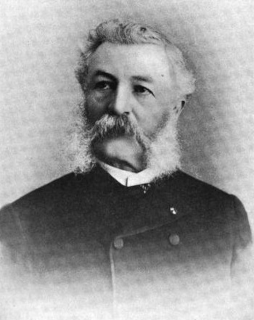
Montgomery is born into a wealthy family in Swords, Dublin, on December 2, 1738. He attends Trinity College Dublin before dropping out to become a Junior Non-Commissioned Officer (NCO) in the British Army. He serves with distinction during the Seven Years’ War, more commonly known as the French and Indian War, and is promoted several times, finally attaining the rank of captain before the end of the war. He is released from duty due to his health and returns to Great Britain to recover. In Britain, he discusses politics and affiliates with the Whigs political party in Parliament, who later supports American independence. When his health finally recovers, he resigns his commission from the British Army and moves to New York, settling into the life of a farmer. On July 24, 1773, he marries Janet Livingston, who is from an anti-British patriot family. He continues to cement his beliefs and begins to identify as an “American” rather than a “Briton.”
Eventually, Montgomery’s political beliefs turn into political action. In May 1775, he is elected as one of the ten deputies to represent Dutchess County in the New York Provincial Congress and is chosen to organize the militias and defenses of New York. After George Washington is chosen to be the commander of the Continental Army in June of the same year, the New York Provincial Congress is asked to choose two people for the rank major general and brigadier general for service in the new army. Philip Schuyler is appointed to the rank of major general. Montgomery protests the promotion, arguing that Schuyler does not have enough combat experience to be an effective leader. Later, the New York Provincial Congress appoints Montgomery as brigadier general because of his military experience. General Washington personally appoints the reluctant Montgomery to be Schuyler’s second in command. This move is just in time as Schuyler falls ill during at the start of the invasion of Canada, thus giving Montgomery control of the campaign.
Once in command, Montgomery begins a successful campaign in Canada as General Benedict Arnold is marching through the wilderness of modern-day Maine to meet him in Quebec. He captures numerous strongpoints and eventually the city of Montreal falls to the Patriots. His numerous victories and kind treatment of British prisoners take a toll on the Patriot militias under his command, who demand rest and the same provisions given to the British prisoners. The commanding general is reluctant to lead his soldiers, who he has seen as undisciplined. It takes a personal letter from General Washington to reassure him that there is insubordination and lack of discipline all throughout the Continental Army and that resignation is not the answer. Nevertheless, he continues to Quebec to meet Arnold and his army.
When Montgomery and his men arrive outside Quebec, his force consists of some 300 men compared to Arnold’s 1,000 men. Now a major general, he establishes siege lines around the city of Quebec and demands the surrender of the defenders within. The terms of surrender are rejected numerous times, leaving him and Arnold with no other choice but to assault the city. He hopes that snow will hide the movement of his troops, thus, he plans on waiting for snowfall in order to attack. General Arnold, however, is worried about his men. A December 31 enlistment expiration is looming, that could drastically reduce the size of the assaulting force. Montgomery discovers waiting for the right time is not an option and coordinates an attack for the early hours of December 31, 1775. That morning, Montgomery leads a group of his men toward the interior of Quebec. With sword drawn and lantern out, the Patriots advance toward a blockhouse where the British and Canadian defenders notice this movement and let loose a volley of grapeshot and muskets, which instantly kills Montgomery and the men close to him.
Montgomery’s body is discovered after the failed attacks by the Continentals. The British defenders of Quebec bring his body to General Guy Carleton, who orders it be buried with respect and dignity. He is laid to rest in Quebec on January 4, 1776. News of his death causes widespread mourning, both in America and in the British Isles. Many Patriots elevate his status to a hero and martyr for independence and the American cause, while British members of parliament, especially the Whigs, use his death to mark the failures in the British response to the insurrection in their colonies. In July 1818 his remains are reinterred in New York.
In 1836, Minty’s father, also named Robert, is promoted to lieutenant in the 1st West India Regiment of Foot, which is a regiment of black enlisted men with white officers. The whole family leaves Ireland and travels with him through Minty’s later childhood and teenage years. They move all around the Caribbean and West Africa ultimately being sent to Sierra Leone.
Minty’s father becomes judge advocate general in Jamaica in 1846 but dies after falling victim to yellow fever in 1848. Though he is only 17 at the time, he is allowed to take over his father’s commission in the regiment. After serving five years in the regiment he resigns his commission, possibly because he nearly becomes a victim of a tropical disease himself.
Minty immigrates to Ontario, Canada, where his mother and the family had moved after his father’s death. He is hired by the Great Western Railroad Company at a time when the railroad business is exploding in both the United States and Canada. He is involved with railroads for the rest of his life, with time out for the American Civil War.
Minty is honorably mustered out of the Union Army on April 15, 1865, at Nashville, Tennessee, and becomes a successful railroad executive in his post-war career. He dies at the age of 74 on August 24, 1906, in Jerome, Arizona. He is buried at Aultorest Memorial Park in Ogden, Utah.
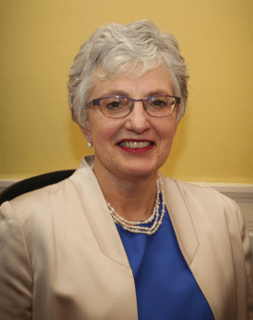
Zappone is nominated by Taoiseach Enda Kenny to the 24th Seanad in 2011, having been recommended by Eamon Gilmore, the then leader of Fine Gael‘s coalition partners, the Labour Party. With her Seanad nomination, she becomes the first openly lesbian member of the Oireachtas and the first member in a recognised same-sex relationship.
Zappone is elected to the Dáil for the Dublin South-West constituency at the 2016 Irish general election, becoming the first openly lesbian TD and, by her own reckoning, the world’s 32nd lesbian to be elected to a national parliament. In May 2016, after a delay in government formation, due to prolonged talks, she becomes Ireland’s first openly lesbian government Minister and the first Minister to have been openly gay at the time of appointment to cabinet, when Taoiseach Enda Kenny appoints her as the Minister for Children and Youth Affairs. She loses her seat at the February 2020 Irish general election and continues to serve as a minister until June 2020 on the election of a new government.
In July 2021, it is announced that Zappone is to be appointed to the newly created position of Special Envoy to the UN for Freedom of Opinion and Expression. It subsequently emerges that the proposed appointment had not been flagged in advance of the Cabinet meeting where it was proposed by Minister Simon Coveney, raising the concerns of the Taoiseach, Micheál Martin. However, he does not block the appointment, attracting criticism from within government, the opposition and the public, with Sinn Féin describing the appointment as “cronyism.”
In the following days it is reported that Zappone had lobbied for the creation of an appointment to the part-time position, which was not openly advertised or subject to a competition. Further controversy arises when it is reported that shortly prior to the announcement of her appointment, she had hosted a party for 50 guests, including politicians such as Leo Varadkar, at the Merrion Hotel, while the COVID-19 pandemic in the Republic of Ireland was ongoing. Comparisons are made between the party and the Oireachtas Golf Society scandal from earlier in the pandemic. On August 4, 2021, she announces that she will not take up the envoy role, saying “While I am honoured to have been appointed by the Government to be the Special Envoy on Freedom of Opinion and Expression, it is clear that criticism of the appointment process has impacted the legitimacy of the role itself. It is my conviction that a Special Envoy role can only be of real value to Ireland and to the global community if the appointment is acceptable to all parties.”
In September 2021, Zappone is invited to appear before the Oireachtas Committee on Foreign Affairs and Defence, but chooses not to attend. As a U.S. citizen and resident, the committee has no power to compel her attendance.
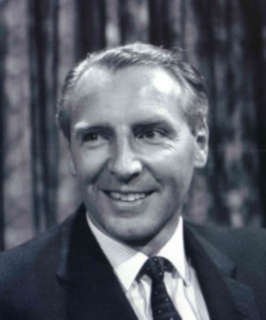
Cleeve is the second of three sons to Charles Edward Cleeve and his wife Josephine (née Talbot). His father, who was born in Limerick, County Limerick, is a scion of a famous and wealthy family that runs several successful Irish enterprises in the late-nineteenth and early twentieth centuries. His mother is a native of Essex. The Cleeves came from Canada originally and emigrated to Ireland in the mid-nineteenth century. As a result of labour troubles and the effects of the Irish Civil War, the Cleeve business fails, and the family moves to England.
Cleeve’s mother dies in 1924 and his maternal grandparents, Alfred and Gertrude Talbot, take over responsibility for his upbringing. At age eight, he is sent as a boarder to Selwyn House in Kent, followed at age 12 by three years at St. Edward’s School, Oxford. He is by nature a free-thinker and rejects the assumptions and prejudices that are then part of upper-middle class English life. His unwillingness to conform means that school life is very difficult for him. In the late summer of 1938, he decides not to return to St. Edward’s for his final year. Instead, he runs away to sea.
In 1945, Cleeve takes an Irish passport and comes to Ireland where, in the space of three weeks, he meets and marries Veronica McAdie. A year later, they leave Ireland with baby daughter Berenice on a protracted odyssey that takes them to London, Sweden, the West Indies, and finally South Africa. In 1948, the family settles in Johannesburg where they set up their own perfume business. A second daughter, Tanga, is born to the couple there in 1953. As a result of his friendship with Fr. Trevor Huddleston, he witnesses the conditions in which the black population has to live in townships such as Sophiatown. He becomes an outspoken critic of Apartheid, and, in 1954, he is branded by the authorities as a ‘political intractable’ and ordered to leave South Africa. He returns to Ireland where he lives for the remainder of his life.
Cleeve starts writing poems in his teens, a few of which are published in his school paper, the St. Edward’s Chronicle. During the war he continues to produce poems of a spiritual or metaphysical nature, most of which are never published. In 1945, he turns to novel-writing. After his first two attempts are rejected, his third novel, The Far Hills, is published in 1952. Two further novels about South Africa follow and their unvarnished descriptions of the reality of life for the native population probably contributes to his eventual expulsion from the country.
In the mid-1950s, Cleeve begins to concentrate on the short story form. During the next 15 years over 100 of his short stories are published in magazines and periodicals across five continents. He sells nearly thirty to The Saturday Evening Post alone. In 1966, his story Foxer is honoured with a scroll at the annual Edgar Awards.
During the 1960s and 1970s, Cleeve returns to writing novels with considerable success. He produced a series of well-received mystery and spy thrillers that do not sacrifice character to plot. In 1971, he publishes Cry of Morning, his most controversial and successful novel to date. It is a panoramic depiction of the economic and social changes that affected Ireland during the 1960s as seen through the eyes of a disparate collection of well-drawn characters. He subsequently achieves even greater commercial success, especially in the United States, with a number of historical novels featuring a strong female character as protagonist.
Cleeve also writes several works of non-fiction, principally the Dictionary of Irish Writers. This is a 20-year project to provide to scholars and the general public alike a comprehensive resource on Irish writers at an affordable price. It is a labour of love that consumes a great deal of his time and is effectively subsidised by his more commercial pursuits. The last edition is published in 1985.
On December 31, 1961, Telefís Éireann is launched as the Republic of Ireland‘s first indigenous television station. Cleeve joins the station as a part-time interviewer on the current affairs programme, Broadsheet. Following appearances on two additional programmes, Telefís Éireann does not renew his contract when it expires in 1973.
Following his wife’s death in 1999, Cleeve moves to the village of Shankill, Dublin. His health deteriorates rapidly following a series of small strokes. In November 2001, he marries his second wife, Patricia Ledwidge, and she cares for him during his final months. He suddenly dies of a heart attack on March 11, 2003. His body now lies under a headstone bearing the inscription “Servant of God.”
Thomas Joseph Clancy, a member of the Irish folk group the Clancy Brothers, dies in Cork, County Cork, on November 7, 1990. He has the most powerful voice of the brothers and has previously been an actor in numerous stage productions, appearing with Orson Welles in King Lear. He also performs often on television and occasionally in the movies.
Discharged from the RAF at the end of the war, Clancy tours with a British repertory company. In 1947 he and his brother Paddy emigrate to Canada. They then move to New York where he meets his first wife and his oldest daughter is born in 1950. They then soon move to Cleveland, Ohio, to live with relatives. He works for a while as a repertory actor at the Cleveland Play House, before returning temporarily to Ireland. While in Ireland, Clancy works for the Shakespeareana Internationale company run by English actor and manager Geoffrey Kendal. After Paddy sends him extra money, he returns to the United States. The brothers plan to move to California, but their car breaks down. They decide to try New York City instead and find work as actors, both on and off Broadway.
In 1956 their brother Liam Clancy joins them, accompanied by his friend Tommy Makem. Liam and Tommy begin singing together, and in 1959 are joined by the older Clancy brothers as The Clancy Brothers and Tommy Makem. The group performs together until Liam leaves in 1976. Makem had left in 1969 to be replaced for a brief time by Bobby Clancy and later Louis Killen.
Clancy continues singing with The Clancy Brothers until 1976, when the group is disbanded. The group reforms in 1977 with a new line-up. Clancy performs with his brothers Paddy and Bobby and their nephew Robbie O’Connell until his death. He also performs with Paddy, Liam, and Tommy Makem during their reunion tour from 1984 to 1985.
After an absence of fifteen years, Clancy returns to Broadway in May 1974 in Eugene O’Neill‘s A Moon for the Misbegotten. The Irish Times reviews his performance of Phil Hogan: “In ‘Moon’ he deftly measures up to the formidable company in which he finds himself – a wily, sly rogue with a whimsical humour and a genuine concern for his daughter.” The play is a hit and wins three Tony Awards.
Clancy dies from stomach cancer at the age of 66 on November 7, 1990 at Mercy University Hospital in Cork, County Cork. He is survived by his wife Joan and their three daughters, Rayleen, Blawneen and Rosie. Prior to his marriage to Joan, he has children, Eileen and Thomas, with Yvonne Marcus, in Cleveland, Ohio. He also has a daughter, Cait, with his second wife Laine, in the mid-1950s.
Clancy’s last recording is made in 1988 with Robbie O’Connell, Bobby Clancy, and Paddy Clancy at Saint Anselm College in Goffstown, New Hampshire. Unfortunately, the recording is marred by unevenly mixed instruments and voices. After his death, Liam returns to the Clancy Brothers to fill in his place.
O’Hara is born and raised in Rosses Point, the daughter of Major John Charles O’Hara, an officer in the British Corps of Royal Engineers and his wife, Mai (née Kirwan). One of her sisters, Mary (born 1935), is a soprano/harpist. Her brother Dermot (born 1934) now lives with his family in Canada. She attends the same Ursulineconvent school as fellow actress and friend Pauline Flanagan.
More recently, O’Hara is best known for appearing in the popular Irish television soap operaFair City, broadcast on RTÉ One. She joins the soap in 1994, portraying the character Eunice Dunstan until her death in 2007. Thus, she is described as both one of Ireland’s most popular actresses and as one of the finest actors of her generation on her death. She admires in particular Samuel Beckett, Federico García Lorca and Ingmar Bergman. While she takes a no-nonsense approach to her craft, famously giving the advice that when in doubt, one should relate to the fireplace, she is educated at the Abbey School of Acting and has a deep appreciation and knowledge of theoretical approaches to acting and is an admirer of the European and American avant-garde. As actor Alan Stanford said after her death, “She had the most amazing energy. She was in the truest sense one of the last of the greats.”
Joan O’Hara Barry (she keeps her maiden name as her stage name) dies in Dublin on July 23, 2007, of complications from heart disease, aged 76. Her death is announced on RTÉ News the following day.
Pádraic Ó Conaire, Irish writer and journalist whose production is primarily in the Irish language, dies in Dublin on October 6, 1928. In his lifetime he writes 26 books, 473 stories, 237 essays and 6 plays. His acclaimed novel Deoraíocht has been described by Angela Bourke as “the earliest example of modernist fiction in Irish.”
Ó Conaire is born in the Lobster Pot public house on the New Docks in Galway, County Galway, on February 28, 1882. His father is a publican, who owns two premises in the town., and his mother is Kate McDonagh. He is orphaned by the age of eleven. He spends a period living with his uncle in Gairfean, Ros Muc, Connemara. The area is in the Gaeltacht (Irish-speaking area) and Ó Conaire learns to speak Irish fluently.
Ó Conaire emigrates to London in 1899 where he gets a job with the Board of Education and becomes involved in the work of the Gaelic League. A pioneer in the Gaelic revival in the last century, he and Pádraig Pearse are regarded as being the two most important Irish language short story writers during the first decades of the 20th century.
Ó Conaire marries Molly Ní Mhanais, with whom he has four children: Eileen (b. 22 Feb 1905), Patrick (b. 3 Nov 1906), Kathleen (b. 24 Feb 1909), and Mary Josephine (b. 28 Jul 1911), who dies of diphtheria in 1922.
Ó Conaire returns to Ireland in 1914, leaving his family in London. Living mostly in Galway, he earns a meagre living through writing, teaching at Gaeltacht summer schools, and as an occasional organiser for the Gaelic League.
Ó Conaire dies at the age of 46 on October 6, 1928, while on a visit to Dublin, after complaining of internal pains while at the head office of the Gaelic League. His fellow poet Frederick Robert Higgins writes a celebrated Lament for Pádraic Ó Conaire.
Ó Conaire has family still living to this day in England, as well as in Galway and Canada. The Ó Conaire surname is still strong in the Ros Muc area.
Ó Conaire’s short story M’asal Beag Dubh is the inspiration for an Internet-based satire on the football transfer market. The fictitious character Masal Bugduv is created. The name sounds similar to the Gaelic pronunciation of M’asal Beag Dubh. Journalists who did not fact check quite as thoroughly as they should have missed the satire and tell the world of the up-and-coming Moldovan star.
A statue of Ó Conaire’s is unveiled in 1935 by Éamon de Valera in Eyre Square in the heart of Galway City. It is popular with tourists until it is decapitated by four men in 1999. It is repaired at a cost of £50,000 and moved to Galway City Museum in 2004. A bronze replica of the statue is unveiled in Eyre Square in November 2017.
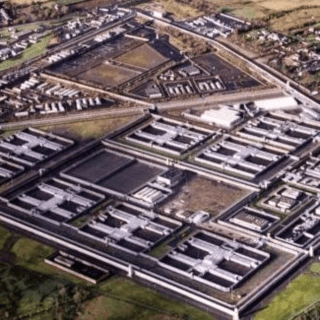
The Maze Prison escape, known to Irish republicans as the Great Escape, takes place on September 25, 1983, in County Antrim, Northern Ireland. HM Prison Maze, also known as Long Kesh, is a maximum-security prison considered to be one of the most escape-proof prisons in Europe, and holds prisoners suspected of taking part in armed paramilitary campaigns during the Troubles. In the biggest prison escape in UK history, 38 Provisional Irish Republican Army (IRA) prisoners escaped from H-Block 7 (H7) of the prison. One prison officer dies of a heart attack during the escape and twenty others are injured, including two who are shot with guns that had been smuggled into the prison. The escape is a propaganda coup for the IRA, and a British government minister faces calls to resign. The official inquiry into the escape places most of the blame onto prison staff, who in turn blame the escape on political interference in the running of the prison.
IRA volunteers regard themselves as prisoners of war with a duty to escape. During the Troubles, Irish republican prisoners escape from custody en masse on several occasions between 1971 and 1981.
Prisoners had been planning the 1983 escape for several months. Bobby Storey and Gerry Kelly start working as orderlies in H7, which allows them to identify weaknesses in the security systems. Six handguns are also smuggled into the prison. Shortly after 2:30 PM on September 25, prisoners seize control of H7 by simultaneously taking the prison officers hostage at gunpoint in order to prevent them from triggering an alarm. One officer is stabbed with a craft knife, and another is knocked down by a blow to the back of the head. One officer who attempts to prevent the escape is shot in the head by Gerry Kelly but survives. By 2:50 PM the prisoners are in control of H7 without an alarm being raised. A dozen prisoners also take uniforms from the officers, and the officers are forced to hand over their car keys and details of where their cars are, for possible later use during the escape. A rearguard is left behind to watch over hostages and keep the alarm from being raised until they believe the escapees are clear of the prison, at which time they return to their cells. At 3:25 PM, a lorry delivering food supplies arrives at the entrance to H7, whereupon Brendan McFarlane and other prisoners take the occupants hostage at gunpoint and move them inside H7. The lorry driver is told the lorry is being used in the escape, and he is instructed what route to take and how to react if challenged.
At 3:50 PM the prisoners leave H7, and the driver and a prison orderly are taken back to the lorry. Thirty-seven prisoners climb into the back of the lorry, while Gerry Kelly lay on the floor of the cab with a gun pointed at the driver, who is also told the cab has been booby trapped with a hand grenade. At nearly 4:00 PM the lorry drives toward the main gate of the prison, where the prisoners intend to take over the gatehouse. Ten prisoners dressed in guards’ uniforms and armed with guns and chisels dismount from the lorry and enter the gatehouse, where they take the officers hostage.
At 4:05 PM the officers begin to resist, and an officer presses an alarm button. When other staff respond via an intercom, a senior officer says while being held at gunpoint that the alarm had been triggered accidentally. By this time the prisoners are struggling to maintain control in the gatehouse due to the number of hostages. Officers arriving for work are entering the gatehouse from outside the prison, and each is ordered at gunpoint to join the other hostages. Officer James Ferris runs from the gatehouse toward the pedestrian gate attempting to raise the alarm, pursued by Dermot Finucane. Ferris had already been stabbed three times in the chest, and before he can raise the alarm he collapses.
Finucane continues to the pedestrian gate where he stabs the officer controlling the gate, and two officers who had just entered the prison. This incident is seen by a soldier on duty in a watchtower, who reports to the British Army operations room that he has seen prison officers fighting. The operations room telephones the prison’s Emergency Control Room (ECR), which replies that everything is all right and that an alarm had been accidentally triggered earlier.
At 4:12 PM the alarm is raised when an officer in the gatehouse pushes the prisoner holding him hostage out of the room and telephones the ECR. However, this is not done soon enough to prevent the escape. After several attempts the prisoners open the main gate and are waiting for the prisoners still in the gatehouse to rejoin them in the lorry. At this time two prison officers block the exit with their cars, forcing the prisoners to abandon the lorry and make their way to the outer fence which is 25 yards away.
Four prisoners attack one of the officers and hijack his car, which they drive toward the external gate. They crash into another car near the gate and abandon the car. Two escape through the gate, one is captured exiting the car, and another is captured after being chased by a soldier. At the main gate, a prison officer is shot in the leg while chasing the only two prisoners who have not yet reached the outer fence. The prisoner who fires the shot is captured after being shot and wounded by a soldier in a watch tower, and the other prisoner is captured after falling. The other prisoners escape over the fence, and by 4:18 PM the main gate is closed and the prison secured, after 35 prisoners had breached the prison perimeter. The escape is the biggest in British history, and the biggest in Europe since World War II.
Outside the prison the IRA has planned a logistical support operation involving 100 armed members, but due to a miscalculation of five minutes, the prisoners find no transport waiting for them and are forced to flee across fields or hijack vehicles. The British Army and Royal Ulster Constabulary immediately activate a contingency plan and by 4:25 PM a cordon of vehicle checkpoints are in place around the prison, and others are later in place in strategic positions across Northern Ireland, resulting in the recapture of one prisoner at 11:00 PM. Twenty prison officers are injured during the escape, thirteen are kicked and beaten, four stabbed, and two shot. One prison officer, James Ferris, who had been stabbed, dies after suffering a heart attack during the escape.
The escape is a propaganda coup and morale boost for the IRA, with Irish republicans dubbing it the “Great Escape.” Leading unionist politician Ian Paisley calls on Nicholas Scott, the Parliamentary Under-Secretary of State for Northern Ireland, to resign. The British Prime MinisterMargaret Thatcher makes a statement in Ottawa during a visit to Canada, saying “It is the gravest [breakout] in our present history, and there must be a very deep inquiry.” The day after the escape, Secretary of State for Northern IrelandJames Prior announces an inquiry to be headed by Her Majesty’s Chief Inspector of Prisons, James Hennessy. The Hennessy Report is published on January 26, 1984, placing most of the blame for the escape on prison staff, and making a series of recommendations to improve security at the prison. The report also places blame with the designers of the prison, the Northern Ireland Office and successive prison governors who had failed to improve security. Prior announces that the prison’s governor has resigned, and that there will be no ministerial resignations as a result of the report’s findings. Four days after the Hennessy Report is published, the Minister for Prisons Nicholas Scott dismisses allegations from the Prison Governors Association and the Prison Officers Association that the escape is due to political interference in the running of the prison.
Fifteen escapees are captured on the day, including four who are discovered hiding underwater in a river near the prison using reeds to breathe. Four more escapees are captured over the next two days, including Hugh Corey and Patrick McIntyre who are captured following a two-hour siege at an isolated farmhouse. Out of the remaining 19 escapees, 18 end up in the republican stronghold of South Armagh where two members of the IRA’s South Armagh Brigade are in charge of transporting them to safehouses and given the option of either returning to active service in the IRA’s armed campaign or a job and new identity in the United States.
On October 25, 1984, nineteen prisoners appear in court on charges relating to the death of prison officer James Ferris, sixteen charged with his murder. A pathologist determines that the stab wounds Ferris suffered would not have killed a healthy man. The judge acquits all sixteen as he cannot correlate the stabbing to the heart attack.
Lever is the second son of James Lever, an architect and builder, and is educated in private schools. His escapades at Trinity College, Dublin (1823–1828), where he earns a degree in medicine in 1831, are drawn on for the plots of some of his novels. The character Frank Webber in the novel Charles O’Malley is based on a college friend, Robert Boyle, who later becomes a clergyman. He and Boyle earn pocket-money singing ballads of their own composing in the streets of Dublin and play many other pranks which he embellishes in the novels Charles O’Malley, Con Cregan and Lord Kilgobbin.
Before seriously embarking upon his medical studies, Lever visits Canada as an unqualified surgeon on an emigrant ship. Arriving in Canada, he journeys into the backwoods, where he is affiliated to a tribe of Native Americans but has to flee because his life is in danger, as later his character Bagenal Daly does in his novel The Knight of Gwynne.
Back in Europe, Lever pretends he is a student from the University of Göttingen and travels to the University of Jena and then to Vienna. He loves German student life and several of his songs, such as “The Pope He Loved a Merry Life,” are based on student-song models. His medical degree earns him an appointment to the Board of Health in County Clare and then as a dispensary doctor in Portstewart, County Londonderry, but his conduct as a country doctor earns him the censure of the authorities.
In 1833 Lever marries his first love, Catherine Baker, and in February 1837, after varied experiences, he begins publishing The Confessions of Harry Lorrequer in the recently established Dublin University Magazine. Before Harry Lorrequer appears in volume form (1839), he has settled on the strength of a slight diplomatic connection as a fashionable physician in Brussels.
In 1842 Lever returns to Dublin to edit the Dublin University Magazine and gathers round him a typical coterie of Irish wits. In June 1842 he welcomes William Makepeace Thackeray, the author of The Snob Papers, to Templeogue, four miles southwest of Dublin, on his Irish tour. The O’Donoghue and Arthur O’Leary (1845) make his native land an impossible place for Lever to continue in. Thackeray suggests London, but Lever requires a new field of literary observation and anecdote. His creative inspiration exhausted, he decides to renew it on the continent. In 1845 he resigns his editorship and goes back to Brussels, whence he starts upon an unlimited tour of central Europe in a family coach. Now and again, he halts for a few months and entertains to the limit of his resources in some ducal castle or other which he hires for an off season.
Depressed in spirit as Lever is, his wit is unextinguished. He is still the delight of the salons with his stories, and in 1867, after a few years’ experience of a similar kind at La Spezia, he is cheered by a letter from Lord Derby offering him the more lucrative consulship of Trieste. The $600 annual salary does not atone to Lever for the lassitude of prolonged exile. Trieste, at first “all that I could desire,” became with characteristic abruptness “detestable and damnable.”
Lever’s depression, partly due to incipient heart disease, partly to the growing conviction that he is the victim of literary and critical conspiracy, is confirmed by the death of his wife on April 23, 1870, to whom he is tenderly attached. He visits Ireland in the following year and seems alternately in high and low spirits. Death had already given him one or two runaway knocks, and, after his return to Trieste, he fails gradually, dying suddenly, however, and almost painlessly, from heart failure on June 1, 1872, at his home, Villa Gasteiger. His daughters, one of whom, Sydney, is believed to have been the real author of A Rent in a Cloud (1869), are well provided for.
Makem’s mother, Sarah Makem, is an important source of traditional Irish music, who is visited and recorded by, among others, Diane Guggenheim Hamilton, Jean Ritchie, Peter Kennedy and Sean O’Boyle. His father, Peter Makem, is a fiddler who also plays the bass drum in a local pipe band named “Oliver Plunkett,” after a Roman Catholic martyr of the reign of Charles II of England. His brother and sister are folk musicians as well. Makem, from the age of eight, is member of the St. Patrick’s church choir for 15 years where he sings Gregorian chant and motets. He does not learn to read music but he makes it in his “own way.”
Makem starts to work at 14 as a clerk in a garage and later he works for a while as a barman at Mone’s Bar, a local pub, and as a local correspondent for The Armagh Observer.
Makem emigrates to the United States in 1955, carrying his few possessions and a set of bagpipes from his time in a pipe band. Arriving in Dover, New Hampshire, he works at Kidder Press, where his hand was accidentally crushed by a press in 1956. With his arm in a sling, he leaves Dover for New York City to pursue an acting career.
The Clancys and Makem are signed to Columbia Records in 1961. The same year, at the Newport Folk Festival, Makem and Joan Baez are named the most promising newcomers on the American folk scene. During the 1960s, the Clancy Brothers and Tommy Makem perform sellout concerts at such venues as Carnegie Hall, and make television appearances on shows like The Ed Sullivan Show and The Tonight Show. The group performs for President John F. Kennedy. They also play in smaller venues such as the Gate of Horn in Chicago. They appear jointly in the UK Albums Chart in April 1966, when Isn’t It Grand Boys reaches number 22.
Makem leaves the group in 1969 to pursue a solo career. In 1975, he and Liam Clancy are both booked to play a folk festival in Cleveland, Ohio, and are persuaded to do a set together. Thereafter they often perform as Makem and Clancy, recording several albums together. He once again goes solo in 1988. Throughout the 1970s and 1980s he performs both solo and with Liam Clancy on The Irish Rovers‘ various television shows, which are filming in Canada and Ireland.
In the 1980s and 1990s, Makem is a principal in a well-known Irish music venue in New York, “Tommy Makem’s Irish Pavilion.” This East 57th Street club is a prominent and well-loved performance spot for a wide range of musicians. Among the performers and visitors are Paddy Reilly, Joe Burke, and Ronnie Gilbert. Makem is a regular performer, often solo and often as part of Makem and Clancy, particularly in the late fall and holiday season. The club is also used for warm-up performances in the weeks before the 1984 reunion concert of The Clancy Brothers and Tommy Makem at Lincoln Center for the Performing Arts. In addition, the after-party for Bob Dylan‘s legendary 30th Anniversary Concert Celebration at Madison Square Garden in 1992 is held at the Irish Pavilion.
In 1997 Makem writes a book, Tommy Makem’s Secret Ireland, and in 1999 premiers a one-man theatre show, Invasions and Legacies, in New York. His career includes various other acting, video, composition, and writing credits. He also establishes the Tommy Makem International Festival of Song in South Armagh in 2000.
Tommy Makem dies in Dover, New Hampshire, on August 1, 2007, following a lengthy battle with lung cancer. He continues to record and perform until very close to the end. Paying tribute to him after his death, Liam Clancy says, “He was my brother in every way.” He is buried next to his wife at New Saint Mary Cemetery in Dover.






 seamus dubhghaill