seamus dubhghaill

Promoting Irish Culture and History from Little Rock, Arkansas, USA


Leave a comment

Birth of Emmet Dalton, Soldier & Film Producer

James Emmet Dalton MC, Irish soldier and film producer, is born in Fall River, Massachusetts, on March 4, 1898. He serves in the British Army in World War I, reaching the rank of captain. However, on his return to Ireland he becomes one of the senior figures in the Dublin Brigade of the Irish Republican Army (IRA) which fights against British rule in Ireland.

Dalton is born to Irish American parents James F. and Katharine L. Dalton. The family moves back to Ireland when he is two years old. He grows up in a middle-class Catholic background in Drumcondra in North Dublin and lives at No. 8 Upper St. Columba’s Road. He is educated by the Christian Brothers at O’Connell School in North Richmond Street. He joins the nationalist militia, the Irish Volunteers, in 1913 and the following year, though only fifteen, is involved in the smuggling of arms into Ireland.

Dalton joins the British Army in 1915 for the duration of the Great War. His decision is not that unusual among Irish Volunteers, as over 20,000 of the National Volunteers join the British New Army on the urgings of Nationalist leader John Redmond. His father, however, disagrees with his son’s decision. He initially joins the 7th battalion of the Royal Dublin Fusiliers (RDF) as a temporary 2nd Lieutenant. By 1916 he is attached to the 9th Battalion, RDF, 16th (Irish) Division under Major-General William Hickie, which contains many Irish nationalist recruits.

During the Battle of the Somme in September 1916, Dalton is involved in bloody fighting during the Battle of Ginchy, in which over 4,000 Irishmen are killed or wounded. He is awarded the Military Cross for his conduct in the battle. Afterwards he is transferred to the 6th Battalion, Leinster Regiment, and sent to Thessaloniki then Palestine, where he commands a company and then supervises a sniper school in el-ʻArīsh. In 1918 he is re-deployed again to France, and in July promoted to captain, serving as an instructor.

On demobilisation in April 1919, Dalton returns to Ireland. There, finding that his younger brother Charlie had joined the IRA, he himself follows suit. He later comments on the apparent contradiction of fighting both with and against the British Army by saying that he had fought for Ireland with the British and fought for Ireland against them.

Dalton becomes close to Michael Collins and rises swiftly to become IRA Director of Intelligence and is involved in The Squad, the Dublin-based assassination unit. On May 14, 1921, he leads an operation with Paddy Daly that he and Collins had devised. It is designed to rescue Gen. Seán Mac Eoin from Mountjoy Prison using a hijacked British armoured car and two of Dalton’s old British Army uniforms.

Dalton follows Collins in accepting the Anglo-Irish Treaty in 1922 and is one of the first officers, a Major General, in the new National Army established by the Irish Provisional Government of the Irish Free State. The Treaty is opposed by much of the IRA and Civil War between pro and anti-treaty factions eventually results.

Dalton is in command of troops assaulting the Four Courts in the Battle of Dublin which marks the start of the war in June 1922. At Collins’ instigation he, as Military liaison officer with the British during the truce, takes control of the two 18 pounder guns from the British that are trained on the buildings. He becomes commander of the Free State Army under Richard Mulcahy‘s direction. He is behind the Irish Free State offensive of July–August 1922 that dislodges the Anti-Treaty fighters from the towns of Munster. He proposes seaborne landings to take the Anti-Treaty positions from the rear and he commands one such naval landing that takes Cork in early August. In spite of firm loyalty to the National Army, he is critical of the Free State’s failure to follow up its victory, allowing the Anti-Treaty IRA to regroup resuming the guerrilla warfare started in 1919.

On August 22, 1922, he accompanies Collins in convoy, touring rural west Cork. The convoy is ambushed near Béal na Bláth and Collins is killed in the firefight. He had advised Collins to drive on, but Collins, who is not an experienced combat veteran, insists on stopping to fight.

Dalton is married shortly afterwards, on October 9, 1922, to Alice Shannon in Cork’s Imperial Hotel. By December 1922 he has resigned his command in the Army. He does not agree with the execution of republican prisoners that mark the latter stages of the Civil War. After briefly working as clerk of the Irish Senate, Seanad Éireann, he leaves the job to work in the movie industry.

Over the following forty years, Dalton works in Ireland and the United States in film production. In 1958 he founds Irish Ardmore Studios in Bray, County Wicklow. His company helps produce films such as The Blue Max, The Spy Who Came In from the Cold and The Lion in Winter, all of which are filmed in Ireland. His daughter is Irish actress Audrey Dalton.

Dalton dies in his daughter Nuala’s house in Dublin on March 4, 1978, his 80th birthday, never having seen the film that Cathal O’Shannon of RTÉ had made on his life. During the making of the film, they visit the battlefields in France, Kilworth Camp in Cork, Béal Na Bláth, and other places that Dalton had not visited since his earlier years. He wishes to be buried as near as possible to his friend Michael Collins in Glasnevin Cemetery in Dublin and is buried there in March 1978 after a military funeral. None of the ruling Fianna Fáil government ministers or TDs attend.

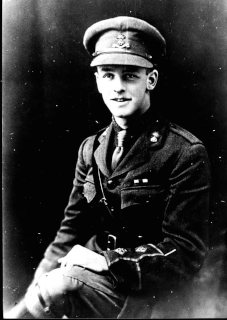
(Pictured: Dalton photographed in lieutenant’s uniform, Royal Dublin Fusiliers, taken circa. 1914-1918)


Leave a comment

Birth of Irish Writer Aidan Higgins

Aidan Higgins, Irish writer of short stories, travel pieces, radio drama and novels, is born on March 3, 1927, in Celbridge, County Kildare. Among his published works are Langrishe, Go Down (1966), Balcony of Europe (1972) and the biographical Dog Days (1998). His writing is characterised by non-conventional foreign settings and a stream of consciousness narrative mode. Most of his early fiction is autobiographical – “like slug trails, all the fiction happened.”

Higgins attends local schools and Clongowes Wood College, a private boarding school. In the early 1950s he works in Dublin as a copywriter for the Domas Advertising Agency. He then moves to London and works in light industry for about two years. He marries Jill Damaris Anders in London on November 25, 1955. From 1960, he sojourns in southern Spain, South Africa, Berlin and Rhodesia. In 1960 and 1961 he works as scriptwriter for Filmlets, an advertising firm in Johannesburg. These journeys provide material for much of his later work, including his three autobiographies, Donkey’s Years (1996), Dog Days (1998) and The Whole Hog (2000).

His upbringing in a landed Catholic family provides material for Higgins first novel, Langrishe, Go Down (1966). The novel is set in the 1930s in a run-down “big house” in County Kildare, inhabited by the last members of the Langrishe family, three spinster sisters, Catholics, living in not-so-genteel poverty in a once-grand setting. One sister, Imogen, has an affair with a German intellectual, Otto Beck, which transgresses the moral code of the time, bringing her a brief experience of happiness. Otto’s intellectual pursuits contrast with the moribund cultural life of mid-20th century Ireland. The book is awarded the James Tait Black Memorial Prize for fiction and is later adapted as a BBC Television film by British playwright Harold Pinter, in association with RTÉ. Langrishe, Go Down also receives the Irish Academy of Letters Award.

Higgins second major novel is Balcony of Europe, taking its name from a feature of the Spanish fishing village, Nerja Andalusia, where it is set. The novel is carefully crafted, and rich in embedded literary references, using Spanish and Irish settings and various languages, including Spanish and some German, in its account of the daily life in the beaches and bars of Nerja of a largely expatriate community. The protagonist, an artist called Dan Ruttle, is obsessed with his friend’s young American wife, Charlotte, and by the contrast between his life among a cosmopolitan artistic community in the Mediterranean, and his Irish origins. The book is re-edited in collaboration with Neil Murphy and published by Dalkey Archive Press in 2010, with the Irish material cut and the affair between Dan Ruttle and Charlotte foregrounded.

Higgins later novels include widely acclaimed Bornholm Night Ferry and Lions of the Grunwald. Various writings have been collected and reprinted by the Dalkey Archive Press, including his three-volume autobiography, A Bestiary, and a collection of fiction, Flotsam and Jetsam, both of which demonstrate his wide erudition and his experience of life and travel in South Africa, Germany and London which gives his writing a largely cosmopolitan feel, utilising a range of European languages in turns of phrase.

Higgins lives in Kinsale, County Cork, from 1986 with the writer and journalist Alannah Hopkin. They are married in Dublin in November 1997. He is a founder member of Irish artists’ association Aosdána. He dies on December 27, 2015, in Kinsale.


Leave a comment

1985 Newry Mortar Attack

On February 28, 1985, the Provisional Irish Republican Army (IRA) launches a heavy mortar attack on the Royal Ulster Constabulary (RUC) base at Corry Square in Newry, County Down, Northern Ireland. The attack kills nine RUC officers and injures almost 40 others, the highest death toll ever suffered by the RUC. Afterwards, a major building scheme is begun to give police and military bases better protection from such attacks.

In the early 1970s, after the onset of the Troubles, the Provisional IRA launches a campaign aimed at forcing the British to withdraw from Northern Ireland.

The IRA, particularly its South Armagh Brigade, has repeatedly attacked the British Army and RUC with home-made mortars, but with limited success. Between 1973 and early 1978 a total of 71 mortar attacks are recorded, but none cause direct British Army or RUC deaths. There are only two deadly mortar attacks before 1985. The first is on March 19, 1979, when Private Peter Woolmore of the Queen’s Regiment is killed in a mortar attack on Newtownhamilton British Army base. The second is on November 12, 1983, when a RUC officer is killed and several hurt in a mortar attack on Carrickmore RUC base.

The attack is jointly planned by members of the South Armagh Brigade and an IRA unit in Newry. The homemade mortar launcher, dubbed the ‘Mark 10,’ is bolted onto the back of a Ford lorry that had been hijacked in Crossmaglen.

Shortly after 6:30 PM on February 28, nine shells are launched from the lorry, which had been parked on Monaghan Street, about 250 yards from the base. At least one 50-lb. shell lands on a portacabin containing a canteen, where many officers are having their evening tea break. Nine police officers are killed and 37 people are hurt, including 25 civilian police employees, the highest death toll inflicted on the RUC in its history. The nine dead officers range in age from 19 to 41, seven male and two female, seven Protestants and two Catholics. Another shell hits the observation tower, while the rest land inside and outside the perimeter of the base.

The day is dubbed “Bloody Thursday” by the British press. British prime minister Margaret Thatcher calls the attack “barbaric,” while Ireland’s Taoiseach, Garret FitzGerald, says it is “cruel and cynical,” and pledges the help of the Irish security forces to catch those responsible. Although not involved in the attack, Newry IRA member Eamon Collins is arrested shortly afterwards and interrogated. After five days of questioning, Collins breaks under interrogation and turns supergrass, leading to more than a dozen arrests of other IRA members. The attack prompts calls from unionist politicians to “increase security,” and the British government launches a multi-million pound programme of construction to protect bases from similar attacks. This involves installing reinforced roofs and building blast-deflecting walls around the base of buildings.

After the successful attack in Newry, the IRA carries out a further nine mortar attacks in 1985. On September 4, an RUC training centre in Enniskillen is attacked. Thirty cadets narrowly escape death due to poor intelligence-gathering by the IRA unit responsible. The cadets are expected to be in bed sleeping, but are instead eating breakfast when the bombs land. In November 1986, the IRA launches another attack on the RUC base in Newry, but the bombs fall short of their target and land on houses. A four-year-old Catholic girl is badly wounded and another 38 people are hurt, prompting the IRA to admit that “this incident left us open to justified criticism.”

Beginning in the 1990s, operations at the Corry Square base are progressively shifted to a new facility on the outskirts of Newry. The base is closed in 2002, and a park occupies the site today.

(Pictured: Destroyed cars and remains of the Newry RUC Corry Square police Station in Catherine Street taken the day after the attack by the Provisional IRA using homemade mortar bombs)


Leave a comment

Death of Novelist Shan Fadh Bullock

Novelist Shan Fadh Bullock dies in Sutton, Surrey, on February 27, 1935. His works include fourteen novels set in Ulster and he is admired by James Matthew Barrie and Thomas Hardy.

Bullock is born on May 17, 1865 at Inisherk, County Fermanagh just outside the County Cavan border near Belturbet, in what is now Northern Ireland. His father, Thomas Bullock, is a strict man who has eleven children and drives several to emigration because of his stern demeanour. Thomas Bullock works on the Crom Castle estate which runs along the Cavan/Fermanagh border and has both Catholic and Protestant workers. Protestant workers have the prime jobs and are employed as craftsmen and supervisors while Catholics work in the outer area of the estate at unskilled jobs. Folk memories of the Battle of Newtownbutler in 1689 remain long in the memory in the area where up to 1,500 Jacobite troops are hacked down or drowned in Upper Lough Erne when pursued by the Williamite cavalry. Many of the Williamite army is drawn from the local Protestant population.

Bullock is educated at Crom estate primary school run by the Church of Ireland and Farra School near Bunbrosna, County Westmeath. He fails the entrance exams at the University of Dublin. He tries his hand at farming but finds he is not suited. He moves to London in 1883 and becomes a Civil Service clerk. He takes to journalism to supplement his salary and publishes his first book of stories, The Awkward squads, in 1893. His stories are centered on Irish Catholic and Protestant small farmers and labourers and their struggles and tensions. He marries Emma Mitchell in 1899 and they have a son and daughter.

Bullock is well respected in literary circles but his books are never successful enough for him to become a full time writer. He says that the English are not interested in Irish stories and that there is no reading public in Ireland. He dislikes Orange sectarianism and is ambivalent to Irish nationalism. His novel The Red Leaguers looks at sectarianism conflict and Robert Thorne examines the lives of London clerks which is a popular theme at the time. His last and best novel The Loughsiders is published in 1924 and is the story of a conniving smallholder based on William Shakespeare’s Richard III.

Bullock’s wife dies in 1922. He spends the final years of his life in Sutton, Surrey and dies there on February 27, 1935.

Bullock’s daughter presents his literary papers, including two unpublished novels, two plays, numerous short stories and essays, and some correspondence to the Queen’s University Belfast library in the 1960s. A portrait of Bullock by Dermod O’Brien, RHA, is also at Queen’s University Belfast. His correspondence with Sir Horace Plunkett is in the archives of the Plunkett Foundation, Long Hanborough Business Park, Woodstock, Oxfordshire. Enniskillen public library has a collection of cuttings on Bullock, including some photocopied letters.


Leave a comment

Birth of Garbhan Downey, Novelist & Editor

Garbhan Downey, novelist and editor, is born in Derry, County Londonderry, Northern Ireland, on February 24, 1966. He is the former Director of Communications and Marketing for Culture Company 2013, which delivers Derry’s City of Culture year.

Downey is a product of St. Columb’s College, the Catholic grammar school whose past pupils include John Hume, Seamus Heaney and Brian Friel.

Downey cuts his teeth in journalism editing University College Galway’s student magazine in the late 1980s. After graduating with an MSc in computing from the University of Ulster, he works as an entertainment columnist with the Derry Journal and then as a staff reporter with the Londonderry Sentinel, before moving to The Irish News to become the paper’s Derry correspondent.

Downey’s offbeat reports of the 1994 FIFA World Cup for The Irish News are subsequently compiled for his first book, Just One Big Party. He spends six years as a BBC news producer in Derry and Belfast, before joining the Derry News as editor in 2001. During his period as editor (2001–2004), the Derry News wins two Newspaper Society awards for Fastest Circulation Growth in the United Kingdom.

Since 2004, Downey has published six comic novels set in the criminal underbelly of post-ceasefire Ireland. His books have been described as “a superb blend of comedy, political dirty tricks, grisly murder and bizarre twists.”

A former deputy-president of the Union of Students in Ireland, Downey is one of the organisers of a student occupation of government offices in Dublin on Budget Day 1988 in protest against education cutbacks.

In June 2002, the Police Service of Northern Ireland (PSNI) get a court order to force Downey to hand over pictures the Derry News had captured of the Real Irish Republican Army attacking a communications post.

In 2006, Downey helps establish the new Northern Ireland literary review Verbal and edits the publication for its first six issues.

A lifelong political anorak, in 2007, Downey works as an election pundit for TV3 (Ireland), alongside the Irish comedian Brendan O’Carroll. In 2010, he wins a contest to predict the winners of Northern Ireland’s 18 Westminster constituencies, missing out on just one, Naomi Long, who surprisingly beat First Minister Peter Robinson in Belfast East. He donates his prize, a framed Ian Knox cartoon, to Long by way of apology.

Downey’s 2010 comedy-thriller The American Envoy is the first novel issued by an Irish publishing house as a Kindle e-book, simultaneously with its paperback release.

In June 2011, Downey is appointed Director of Media for Culture Company 2013, the body tasked with delivering Derry’s UK City of Culture year.

Downey is married to Una McNally, and they have two children.


Leave a comment

Birth of Brian Faulkner, Sixth & Last Prime Minister of Northern Ireland

Arthur Brian Deane Faulkner, Baron Faulkner of Downpatrick, the sixth and last Prime Minister of Northern Ireland, is born on February 18, 1921, in Helen’s Bay, County Down.

Faulkner is the elder of two sons of James, owner of the Belfast Collar Company, and Nora Faulkner. His younger brother is Colonel Sir Dennis Faulkner. He is educated initially at Elm Park preparatory school, Killylea, County Armagh, but at 14, preferring to stay in Ireland, is sent to the Church of Ireland-affiliated St. Columba’s College at Whitechurch, County Dublin, although he is Presbyterian. His best friend at the school is Michael Yeats, son of W. B. Yeats. He enters Queen’s University Belfast in 1939 to study law, but, with the advent of World War II, he quits his studies to work full-time in the family shirt-making business. He is the only Prime Minister of Northern Ireland to have been educated in the Irish Free State and one of only two to have been educated in Ireland.

Faulkner becomes involved in unionist politics, the first of his family to do so, and is elected to the Parliament of Northern Ireland as the Ulster Unionist Party (UUP) Member of Parliament (MP) for the constituency of East Down in 1949. His vociferous traditional unionist approach to politics ensures him a prominent backbench position. He is, at the time, the youngest ever MP in the Northern Irish Parliament. He is also the first Chairman of the Ulster Young Unionist Council in 1949. In 1956 he is offered and accepts the job of Parliamentary Secretary to the Ministry of Finance, or Government Chief Whip.

In 1959, Faulkner becomes Minister of Home Affairs and his handling of security for most of the Irish Republican Army‘s border campaign of 1956–62 bolsters his reputation in the eyes of the right wing of Ulster unionism.

When Terence O’Neill becomes Prime Minister in 1963, he appoints Faulkner, his chief rival for the job, as Minister of Commerce. He resigns in 1969 over the technicalities of how and when to bring in the local government reforms which the British Labour government is pushing for. This is a factor in the resignation of O’Neill, who resigns as Prime Minister in the aftermath of his failure to achieve a good enough result in the 1969 Northern Ireland general election.

In the ensuing leadership contest, Faulkner loses out again when O’Neill gives his casting vote to his cousin, James Chichester-Clark. In 1970, he becomes the Father of the House. He comes back into government as Minister of Development under Chichester-Clark and in a sharp turn-around, begins the implementation of the political reforms that were the main cause of his resignation from O’Neill’s cabinet. Chichester-Clark himself resigns in 1971 as the political and security situation and the more intensive British interest proves difficult.

Faulkner is elected leader of the Ulster Unionist Party and Prime Minister. In his initial innovative approach to government, he gives a non-unionist, David Bleakley, a former Northern Ireland Labour Party (NILP) MP, a position in his cabinet as Minister for Community Relations. In June 1971, he proposes three new powerful committees at Stormont which would give the opposition salaried chairmanships of two of them.

However, this initiative (radical at the time) is overtaken by events. A shooting by soldiers of two nationalist youths in Derry causes the Social Democratic and Labour Party (SDLP), the main opposition, to boycott the Stormont parliament. The political climate deteriorates further when, in answer to a worsening security situation, Faulkner introduces internment on August 9, 1971. This is a disaster and causes the situation to worsen.

Despite this, Faulkner continues his radical approach to Northern Irish politics and, following Bleakley’s resignation in September 1971 over the internment issue, appointes Dr. G. B. Newe, a prominent lay Catholic, as Minister of State in the Cabinet Office. His administration staggers on through the rest of 1971, insisting that security is the paramount issue.

In January 1972, an incident occurs during a Northern Ireland Civil Rights Association march in Derry, during which paratroopers shoot and killed thirteen unarmed civilians. A fourteenth civilian dies later. What history has come to know as Bloody Sunday is, in essence, the end of Faulkner’s government. In March 1972, he refuses to maintain a government without security powers which the British government under Edward Heath decides to take back. The Stormont parliament is subsequently prorogued, initially for a period of one year, and following the appointment of a Secretary of State for Northern Ireland, William Whitelaw, direct rule is introduced.

In June 1973, elections are held to a new devolved parliament, the Northern Ireland Assembly. The elections split the UUP. Faulkner becomes chief executive in a power-sharing executive with the SDLP and the centre-ground Alliance Party, a political alliance cemented at the Sunningdale Conference that year. The power-sharing Executive lasts only six months and is brought down by a loyalist Ulster Workers’ Council strike in May 1974. In 1974, he loses the leadership of the UUP to anti-Sunningdale elements led by Harry West. He subsequently resigns from the Ulster Unionist Party and forms the Unionist Party of Northern Ireland (UPNI).

The UPNI fares badly in the Northern Ireland Constitutional Convention elections of 1975, winning only five out of the 78 seats contested. Faulkner wins the final seat. In 1976 he announces that he is quitting active politics. He is elevated to the House of Lords in the 1977 New Year Honours list, being created Baron Faulkner of Downpatrick on February 7, 1977.

Faulkner, a keen huntsman, dies on March 3, 1977, following a riding accident while hunting with the County Down Staghounds at the Ballyagherty/Station Road junction near Saintfield, County Down. He is riding at full gallop along a narrow country road when his horse slips, throwing him off and killing him instantly. He is laid to rest at Magherahamlet Presbyterian Church near Spa, County Down where he had been a regular member of the congregation. His twenty-four-day life peerage is thus the shortest-lived until the death of Lord Heywood of Whitehall in 2018 just nine days after ennoblement.


Leave a comment

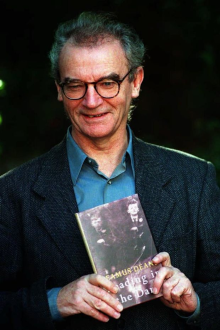
Birth of Seamus Deane, Poet, Novelist, Critic & Historian

Seamus Francis Deane, Irish poet, novelist, critic, and intellectual historian, is born in Derry, County Londonderry, Northern Ireland on February 9, 1940. He is noted for his debut novel, Reading in the Dark, which wins several literary awards and is nominated for the Booker Prize in 1996.

Deane is the fourth child of Frank Deane and Winifred (Doherty) and is brought up as part of a Catholic nationalist family. He attends St. Columb’s College in his hometown, where he befriends fellow student Seamus Heaney. He then attends Queen’s University Belfast (BA and MA) and Pembroke College, Cambridge (PhD). Although he too becomes noted for his poetry, he chooses to go into academia instead. He workws as a teacher in Derry, with Martin McGuinness being one of his students. McGuinness later recalls how Deane was “gentle, kind and never raised his voice at all, an ideal teacher who was very highly thought of.”

After graduating from Cambridge, Deane teaches at the Reed College in Portland, Oregon during the 1960s and the University of California, Berkeley during the 1970s. Over the next two decades, he teaches American college juniors part-time at the School of Irish Studies in the Ballsbridge section of Dublin. He is a professor of Modern English and American Literature at University College Dublin (UCD) until 1992. He subsequently relocates to the University of Notre Dame in South Bend, Indiana, as the Donald and Marilyn Keough Chair of Irish Studies, from which he retires as professor emeritus.

Deane is a member of the Royal Irish Academy and a founding director of the Field Day Theatre Company, together with Heaney, Tom Paulin, and David Hammond.

Deane is the co-editor of Field Day Review, an annual journal of Irish studies. He also serves as general editor of the Penguin Classic James Joyce series and of Critical Conditions, a series in Irish Studies which is jointly published by the University of Notre Dame Press and Cork University Press. He co-founds the book series Field Day Files, which contains key works by David Lloyd, Joe Cleary, Marjorie Howes, and Kerby A. Miller.

The first collection of Deane’s poetry, Gradual Wars, is published in 1972 and receives the AE Memorial Award for Literature. His first novel, Reading in the Dark, is published in 1996 and is partly autobiographical. It wins the 1996 Guardian Fiction Prize and the 1996 South Bank Show Award for Literature, is a New York Times Notable Book, wins The Irish Times International Fiction Prize and the Irish Literature Prize in 1997, besides being shortlisted for the Booker Prize in 1996. The novel is translated into more than twenty languages. He is also the general editor of the monumental Field Day Anthology of Irish Writing, which is 4,000 pages long and whose first volumes are released in 1990. It is later criticised for excluding the voices and experiences of Irish women. He responds to this by stating, “To my astonishment and dismay, I have found that I myself have been subject to the same kind of critique to which I have subjected colonialism … I find that I exemplify some of the faults and erasures which I analyse and characterize in the earlier period.”

Deane’s first marriage is to Marion Treacy. Together, they have four children. He is in a civil partnership with Emer Nolan until his death. They have one child together.

Following a short illness, Deane dies at the age of 81 on May 12, 2021 at Beaumont Hospital in Dublin.


Leave a comment

Birth of Richard Boyd Barrett, People Before Profit-Solidarity Politician

Richard Boyd Barrett, Irish People Before Profit-Solidarity politician, is born in Dublin on February 6, 1967. He has been a Teachta Dála (TD) for the Dún Laoghaire constituency since the 2011 Irish general election.

Boyd Barrett is adopted as a baby and is raised as a Roman Catholic in Glenageary, County Dublin, by his parents, David Boyd Barrett, an accountant, and his wife, Valerie. He attends St. Michael’s College in Dublin. He holds a master’s degree in English literature from University College Dublin (UCD). His birth mother is Sinéad Cusack, with whom he is later reunited in public. Since their reunion, he has had a good relationship with Cusack, her husband Jeremy Irons, and his half-brothers, Sam and Max. In May 2013, he reveals that theatre director Vincent Dowling is his biological father.

Boyd Barrett contests the 2004 Irish local elections for Dún Laoghaire–Rathdown County Council but is not elected. In 2009, he is elected to Dún Laoghaire-Rathdown County Council, winning 22.8% of the vote and topping the poll.

Boyd Barrett stands in the Dún Laoghaire constituency at the 2002 Irish general election for the Socialist Workers Party (SWP) and at the 2007 Irish general election for the People Before Profit. This switch of identification is intended to increase his support from non-socialist voters. He loses to Ciarán Cuffe of the Green Party, by 9,910 votes to 7,890 votes on the 10th count.

Boyd Barrett again contests the Dún Laoghaire constituency at the 2011 Irish general election as part of the United Left Alliance. On the ballot paper, he is named a member of People Before Profit, because the United Left Alliance had not yet been registered as a political party. Following a “nail-biting two days” of counting and recounting votes, he is elected on the 10th count without reaching the quota.

As a TD, Boyd Barrett, supports protests against cuts to Dublin Bus services. In Dáil Éireann, he condemns the 2011 murder of PSNI officer Ronan Kerr as “an utterly brutal action, which leads back down a road which has failed.” Marie O’Halloran in The Irish Times describes his “consistently passionate outrage and opposition to the Government’s handling of the financial and banking crisis.”

Boyd Barrett speaks at the Dublin location of the October 15, 2011 global protests, inspired by the Spanish “Indignants” and the Occupy Wall Street movements. The same month he says Enda Kenny‘s government is engaging in “spin and disingenuity” to cover up its austerity policies, decrying the closure of hospital emergency departments around the country for “health and safety” reasons.

On November 2, 2011, Boyd Barrett leads the United Left Alliance TDs out of the Dáil, in protest against the government’s decision not to hold a debate on the payment of more than €700 million to Anglo Irish Bank bondholders. On December 15, 2011, he helps launch a nationwide campaign against a proposed household charge being brought in as part of the 2012 Irish budget. He is part of an Oireachtas delegation that meets the Bundestag‘s Budgetary and European Affairs committees in Berlin in late January 2012.

On March 10, 2016, at the first sitting of the 32nd Dáil, Boyd Barrett is one of four candidates nominated for the position of Taoiseach, all of whom fail to reach a majority. Ruth Coppinger nominates Boyd Barrett for the role, but the nomination is defeated by 9 votes to 111. As well as the six other AAA–PBP TDs, he also has the support of Séamus Healy of the Workers and Unemployed Action, Tommy Broughan of Independents 4 Change, and Independent TD Catherine Connolly.

At the 2020 Irish general election in February 2020, Boyd Barrett is again re-elected, having topped the poll.


Leave a comment

Execution of Lord “Silken” Thomas FitzGerald

Thomas FitzGerald, 10th Earl of Kildare, also known as Silken Thomas, a leading figure in 16th-century Irish history, is executed along with his five uncles in Tyburn, England, on February 3, 1537.

FitzGerald is born in London in 1513, the son of Gerald FitzGerald, 9th Earl of Kildare, and his first wife Elizabeth Zouche, who is a distant cousin of Henry VII of England.

In February 1534, his father is summoned to London and appoints the 21-year-old FitzGerald, by then Lord Offaly, deputy governor of Ireland in his absence. In June 1534 he hears rumours that his father has been executed in the Tower of London and that the English government intends the same fate for him and his uncles.

FitzGerald summons the council to St. Mary’s Abbey, Dublin, and on June 11, accompanied by 140 armoured gallowglasses with silk fringes on their helmets (from which he gets his nickname), rides to the abbey and publicly renounces his allegiance to his cousin King Henry VIII, Lord of Ireland.

John Alen, Lord Chancellor of Ireland and Archbishop of Dublin, attempts to persuade FitzGerald not to commit himself to such a rash proceeding. But the young lord’s harper, understanding only Irish, and seeing signs of wavering in FitzGerald’s bearing, commences to recite a poem in praise of the deeds of his ancestors, telling him at the same time that he lingered there too long. Roused by this he throws down the sword of state and rushes from the hall, followed by his adherents. The council sends an order for his immediate arrest to the Lord Mayor of Dublin, who, however, has not sufficient force at his disposal.

The Earl of Desmond and many of FitzGerald’s father’s oldest and best friends’ reason with him, but he is not to be turned from his purpose. As Vice-Deputy, he has under his control most of the Pale‘s fortresses, and large government stores.

Dublin Castle alone holds out for the King of England. Lord Offaly calls the lords of the Pale to the siege of the Castle. Those who refuse to swear fidelity to him are sent as prisoners to his Maynooth Castle. Goods and chattels belonging to the King’s subjects are declared forfeited, and he announces his intention of exiling or putting to death all born in England. He sends messengers to his cousin and friend Lord Butler, son of the Earl of Ormond, offering to divide the kingdom with him if he would join his cause, but Butler refuses. Several children of the citizens of Dublin in different parts of the Pale are seized as hostages for the good behavior of the city.

In July, FitzGerald attacks Dublin Castle, but his army is routed. He is, rightly or wrongly, judged to be responsible for the execution at Artane of Archbishop Alen, who had tried to mediate. This loses him support from the clergy. According to a long-established tradition, the killers, John Teeling and Nicholas Wafer, misunderstand his order, given in Irish, to “take this fellow away” as an order to kill Alen. By this time his father has taken ill and died in London, and he succeeds him as 10th Earl of Kildare, but the Crown never confirms his title. He retreats to his stronghold at Maynooth Castle, but in March 1535 it is taken by an English force under Sir William Skeffington by bribing a guard, while FitzGerald is absent gathering reinforcements to relieve it. The surrendered garrison is put to death, which becomes known as the “Maynooth Pardon.” He has wrongly assumed that his cause would attract overwhelming support, in particular from Catholics opposed to Henry VIII’s English Reformation. But Henry’s new policy also outlaws Lutheranism, and so Henry is not finally excommunicated until 1538.

In July, Lord Leonard Grey arrives from England as Lord Deputy of Ireland. Fitzgerald, seeing his army melting away and his allies submitting one by one, asks for pardon for his offences. He is still a formidable opponent, and Grey, wishing to avoid a prolonged conflict, guarantees his personal safety and persuades him to submit unconditionally to the King’s mercy. According to the Tree Council of Ireland, legend has it that FitzGerald plays a lute under the boughs of the now oldest planted tree in Ireland, the Silken Thomas Yew, the night before he surrenders to King Henry VIII. In October 1535 he is sent as a prisoner to the Tower of London. Despite Grey’s guarantee, he is hanged, drawn, and quartered with his five uncles at Tyburn, London, on February 3, 1537.

The Attainder of the Earl of Kildare Act 1536 is passed to permit his execution and the confiscation of his property. The 1536 Act remains law until it is repealed by the Statute Law Revision (Pre-1922) Act 2005.

FitzGerald’s revolt causes Henry VIII to pay more attention to Irish matters and is a factor in the creation of the Kingdom of Ireland in 1541. In particular the powers of the lord’s deputy are curbed, and policies such as surrender and regrant are introduced. To provide for greater security the Royal Irish Army is established as a standing army.


Leave a comment

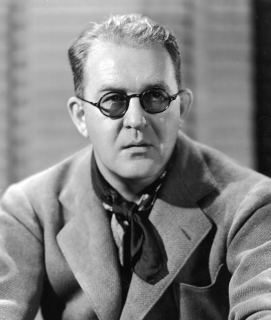
Birth of John Ford, Award Winning Irish American Film Director

John Ford, film director, is born as John Martin Feeney on February 1, 1894 at Cape Elizabeth, Maine. He is the fourth son among five sons and six daughters of Seán Feeney, Roman Catholic farmer and saloon-keeper, and Barbara ‘Abby’ Feeney (née Curran). His father had emigrated to the United States from Spiddal, County Galway, and his mother from Kilronan, Inishmore, one of the Aran Islands.

From an early age Ford has an interest in painting and sailing, and in July 1914 moves to California, where his older brother Francis is an actor with a small film company. Adopting the name ‘Jack Ford,’ he learns his trade as a filmmaker and acts in a number of silent pictures. Reveling in his Irish heritage, he makes his director’s debut with The Tornado (1917) and follows it with more than forty movies over the next six years. On July 3, 1920, he marries Mary McBryde Smith, a former officer in the army medical corps. They meet at a party thrown by the director Rex Ingram and have one son and one daughter.

In 1921 Ford visits Ireland for the first time and later claims to have travelled on the same boat that brought Michael Collins back from the treaty negotiations. He meets his relatives at Spiddal, falls in love with the countryside, and becomes a fervent Irish nationalist. It is later claimed that he brought over funds for his cousin Martin Feeney, a member of an Irish Republican Army (IRA) flying column.

Returning to Hollywood, Ford becomes friends with the retired marshal Wyatt Earp and makes a number of commercially successful films, now as ‘John Ford’. In 1926 he directs The Shamrock Handicap, a horse-racing yarn partly set in Ireland. In 1928 he shoots Mother Machree, a movie about Irish emigration, starring Victor McLaglen, a regular collaborator. McLaglen also stars in Hangman’s House, made the same year, Ford’s first major movie about Ireland.

In 1934 Ford purchases a luxury yacht which he names the Araner after the Aran Islands. He also begins shooting The Informer, a film set in Ireland during the Irish War of Independence, and based on a short novel by Liam O’Flaherty. The picture is a major box office success and wins four Academy Awards, including Best Director. O’Flaherty is so impressed with the film that he dedicates his next book, Famine, to Ford.

In 1934 Ford visits Ireland for the second time, and approaches Seán O’Casey about directing a version of The Plough and the Stars. Released in 1936, the film stars Barry Fitzgerald as Fluther, but it is reedited by the studio, much to Ford’s fury, and is a commercial and critical flop.

Stagecoach, shot in 1938, is one of Ford’s masterpieces. It was a western starring his protégé, John Wayne, and marks the beginning of his golden decade. In 1940 and 1941 he wins Best Director Oscars successively for The Grapes of Wrath and How Green Was My Valley. With American entry into World War II, he serves in the U.S. Navy, and makes important documentaries such as The Battle of Midway (1942).

In 1952 Ford returns to Ireland to film The Quiet Man, starring Wayne, McLaglen, and Maureen O’Hara. Shot at Ashford Castle, County Mayo, the picture becomes one of the most popular Irish films of all time. He is immensely proud of the work and is in tears leaving Ireland. The following year he makes Mogambo, with Clark Gable, Grace Kelly and a young English actor, Donald Sinden, who later recalls that Ford berated him personally for all the problems of Ireland from the time of William of Orange. Ford’s strong sense of Irishness is central to his character and is crucial for any understanding of his work. Back in Ireland in 1956, he shoots The Rising of the Moon, a portmanteau film for which he takes no salary, starring Tyrone Power, Cyril Cusack, and Noel Purcell. A minor film, it makes no impact at the box office.

Two of Ford’s finest movies are made in his later years. The Searchers (1956) is a powerful study of vengeance, while The Man Who Shot Liberty Valance (1962) is an elegiac revisionist western which concludes with the famous line, “When the legend becomes fact, print the legend.”

Struck with cancer in his final years, Ford dies on August 31, 1973 at his home in Palm Desert, California, and is buried at Holy Cross Cemetery, Culver City. His will disinherits his son, Michael Patrick Roper, and leaves everything to his wife, daughter, and grandchildren.

When asked to name the finest American directors, Orson Welles replies simply, “John Ford, John Ford, and John Ford.” An alcoholic, Ford is a difficult and often tyrannical director, but he makes films of extraordinary power and vision. He ranks as one of the greatest film-makers of the twentieth century. As Frank Capra concludes, “John is half-tyrant, half-revolutionary; half-saint, half-Satan; half-possible, half-impossible; half-genius, half-Irish.”

(From: “Ford, John,” contributed by Patrick M. Geoghegan, Dictionary of Irish Biography, http://www.dib.ie)