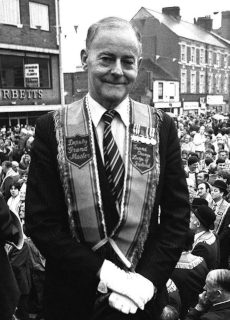
Molyneaux is educated at nearby Aldergrove School. Although he is raised an Anglican, as a child he briefly attends a local Catholic primary school. He leaves school at age 15 and works on his father’s poultry farm. When a Catholic church near his home is burned down by Ulster loyalist arsonists in the late 1990s, he helps to raise funds for its rebuilding.
After demobilization Molyneaux establishes a printing business with his uncle, and in 1946 he joins the UUP. He is first elected to local government in 1964 and enters Parliament six years later. He staunchly opposes all power-sharing deals, notably the Anglo-Irish Agreement (1985) between British Prime MinisterMargaret Thatcher and Irish TaoiseachGarret FitzGerald, which gives Dublin an official consultative role in the affairs of Northern Ireland and paves the way for devolution.
Molyneaux lacks the firebrand public image of his longtime rival Ian Paisley, who in 1971 breaks with the UUP to form the Democratic Unionist Party (DUP). He never acquiesces to the Good Friday Agreement, which calls for the devolution of Northern Ireland’s government from London to Belfast, however, unlike Paisley and David Trimble, who in 1997 succeeds Molyneaux as the UUP leader and in April 1998 signs the devolution accord.
On retiring as UUP leader, Molyneaux is knighted as a Knight Commander of the Order of the British Empire (KBE) in 1996. The following year, after standing down as an MP at the 1997 general election, he is created a life peer on June 10, 1997, as Baron Molyneaux of Killead, of Killead in the County of Antrim.
O’Neill, the eldest legitimate son of Conn O’Neill, 1st Earl of Tyrone, is a chieftain whose support the English consider worth gaining. However, he rejects overtures from Thomas Radclyffe, 3rd Earl of Sussex, the Lord Deputy of Ireland, and refuses to help the English against the Scottish settlers on the coast of Antrim. He allies himself instead with the MacDonnells, the most powerful of these immigrants. Nevertheless, Queen Elizabeth I of England is disposed to come to terms with O’Neill who, after his father’s death, is de facto chief of the O’Neill clan. She recognizes his claims to the chieftainship, thus throwing over a kinsman, Brian O’Neill. O’Neill, however, refuses to put himself in the power of Sussex without a guarantee for his safety and his claims are so exacting that Elizabeth determines to restore Brian. An attempt to incite the O’Donnells against him, however, is frustrated.
Elizabeth, who is not prepared to undertake the subjugation of the Irish chieftain, urgently desires peace with O’Neill, especially when the devastation of his territory by Sussex brings him no nearer to submission. Sussex is not supported by the queen, who sends Gerald FitzGerald, 11th Earl of Kildare to arrange terms with O’Neill. The latter agrees to present himself before Elizabeth. Accompanied by Thomas Butler, 10th Earl of Ormond and Kildare, he reaches London on January 4, 1562. Elizabeth temporizes but, finding that O’Neill is in danger of becoming a tool in the hands of Spanish intriguers, permits him to return to Ireland, recognizing him as “the O’Neill,” and chieftain of Tyrone.
There are at this time three powerful contemporary members of the O’Neill family in Ireland — O’Neill, Turlough Lynagh O’Neill, and Matthew Ó Néill, 1st Baron Dungannon. Turlough had schemed to supplant O’Neill during his absence in London. The feud does not long survive O’Neill’s return to Ireland, where he reestablishes his authority and renews his turbulent tribal warfare. Elizabeth at last authorizes Sussex to take the field against O’Neill, but two expeditions fail. O’Neill then lays the entire blame for his lawless conduct on the lord deputy’s repeated alleged attempts on his life. Elizabeth consents to negotiate, and practically all of O’Neill’s demands are conceded.
O’Neill then turns his hand against the MacDonnells, claiming that he is serving the Queen of England in harrying the Scots. He fights an indecisive battle with Sorley Boy MacDonnell near Coleraine in 1564, and in 1565 he routs the MacDonnells and takes Sorley Boy prisoner near Ballycastle. This victory strengthens O’Neill’s position, but the English make preparations for his subjugation.
Failing in an attempt to arrange terms, and also in obtaining the help which he solicited from France, O’Neill is utterly routed by the O’Donnells at the Battle of Farsetmore near Letterkenny and, seeking safety in flight, throws himself on the mercy of his enemies, the MacDonnells. Attended by a small body of gallowglass, and taking his prisoner Sorley Boy with him, he presents himself among the MacDonnells near Cushendun, on the Antrim coast, hoping to propose an alliance. Here, on June 2, 1567, he is killed by the MacDonnells and his headless body is buried at Crosskern Church at Ballyterrim above Cushendun. His body is possibly later moved to Glenarm Abbey. Unbeknownst to O’Neill, The Scots had already come to an agreement with Henry Sidney and William Piers, Seneschal of Clandeboye, commander of the English garrison at Carrickfergus. The English Government tries to pass this off as a “drunken brawl” turned savage. Piers travels to Cushendun to take O’Neill’s head and send it to Dublin Castle.
Davis starts as a news reporter with the American network ABC and BBC Northern Ireland before spending 11 years in the newsroom at RTÉ. In the early 1980s he becomes a newsreader for The Six-o-clock News and begins to become well-known due to his sometimes-off-the-cuff comments on news stories.
Davis impersonates Big Tom on the RTÉ satirical programme Hall’s Pictorial Weekly and, as a result, is offered a part in a showband in Cork. After a ballroom tour, he joins RTÉ proper in 1975, initially to work as a television news reporter, eventually becoming newsreader on the nine o’clock news. In the mid-1980s, he hosts his own talk show, Davis at Large. It is on this show, which is screened live, that he is attacked and hurled across the studio by a guest female body builder. In addition to this he has an interactive summer current affairs show, simply called Davis. In 1986, he begins co-hosting (with Thelma Mansfield) RTÉ 1’s afternoon programme Live at 3, a role he fills for eleven years.
Davis presents the Rose of Tralee twice in 1995 and 1996, the first of these when Gay Byrne is taken ill at short notice. He memorably thanks the providers of the air conditioning while wiping sweat from his brow. Live at 3 comes to an end in 1997. Davis returns to the screen in the late 1990s with a marine programme devoted to boats and the waters around Ireland called Out of the Blue, which runs for four series, the last of which is broadcast in 2001.
In 2000, Davis presents a radio quiz show called A Question of Food. During the summer season he takes over RTÉ Radio 1‘s mid-morning slot usually occupied by Today with Pat Kenny, and he also hosts the radio phone-in show, Liveline, when regular presenter Joe Duffy is on holiday. Later, he presents Sunday Magazine with Davis on 4 on 4fm.
In 2005, Davis hosts a show called Time on Their Hands, a travel series for older people. One of his last television appearances is on the second season of Celebrity Bainisteoir in 2009, in which he and seven other Irish celebrities manage an intermediate Gaelic football club team from their home county in an official GAA tournament. Davis’s team wins the tournament.
During the 2010s, Davis makes frequent guest appearances on TV3‘s Tonight with Vincent Browne, where he and another guest preview the following morning’s papers.
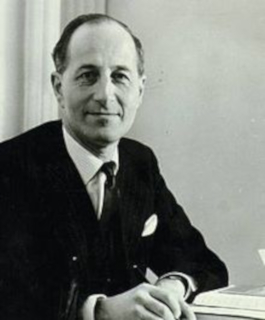
O’Neill is born on September 10, 1914 in London. Having served in the Irish Guards, he comes to live in Northern Ireland in 1945. He is returned unopposed for the Stormont seat of Bannside in November 1946 for the Ulster Unionist Party (UUP) and ten years later reaches cabinet rank. When Lord Brookeborough retires as prime minister in March 1963, O’Neill succeeds as the apostle of technocratic modernization who could see off the Northern Ireland Labour Party. In community relations O’Neill is unprecedentedly liberal, visiting Catholic schools and, more dramatically, meeting with the Taoiseach of the Irish Republic, Seán Lemass, at Stormont on January 14, 1964. O’Neill hopes to encourage Catholic acceptance of the state, but he more quickly aggravates suspicious unionist and loyalist opinion.
The eruption of the civil rights movement of 1968 multiplies pressures for substantive reform from the British government. O’Neill impresses on his cabinet colleagues the necessity of concessions. On November 22 he unveils a program of reforms, notably the closing down of the gerrymandered Londonderry Corporation. However, the local government’s rate-based franchise is for the time untouched. In a television broadcast on December 9, 1968, O’Neill warns that Northern Ireland stands at the crossroads. He calls for an end to street demonstrations but also promises meaningful reforms. There is a massive response from the public, but attitudes polarize again when a radical civil rights march from Belfast to Derry is attacked by loyalists at Burntollet Bridge on January 4, 1969.
O’Neill’s failure to preserve governmental authority by repression or concession leads to discontent in his party. In an attempt to regain the initiative and remake the Ulster Unionist Party, he calls for an election on February 24, 1969. He refuses to campaign for official unionist candidates opposed to his leadership and lends his support to Independent candidates who vow to support him personally. Breaking with unionist convention, O’Neill openly canvasses for Catholic votes. Such strategic innovations fail to produce a clear victory, however, and a phalanx of anti-O’Neill unionists are returned. There is little evidence that O’Neill’s re-branded unionism has succeeded in attracting Catholic votes.
From O’Neill’s point of view, the election results are inconclusive. He is humiliated by his near-defeat in his own constituency of Bannside by Ian Paisley and resigns as leader of the UUP and as Prime Minister on April 28, 1969 after a series of bomb explosions on Belfast’s water supply by the Ulster Volunteer Force (UVF) bring his personal political crisis to a head. Before leaving, he secures “one person, one vote” in place of the ratepayers’ franchise in local elections as well as the succession of the relatively loyal James Chichester-Clarke.
O’Neill retires from Stormont politics in January 1970 when he resigns his seat, having become the Father of the House in the previous year. On January 23, 1970, he is created a life peer as Baron O’Neill of the Maine, of Ahoghill in the County of Antrim. The Maine is a river which flows near Ahoghill.
O’Neill spends his last years at Lisle Court, Lymington, Hampshire, although he continues to speak on the problems of Northern Ireland in the House of Lords where he sits as a crossbencher. His Reform Policies are largely forgotten by British Unionists and Irish Nationalists in Ulster, however he is remembered by historians for his efforts to reform the discrimination and sectarianism within the Province during the 1960s. In retirement he is also a trustee of the Winston Churchill Memorial Trusts.
Terence O’Neill dies at his home of cancer on June 12, 1990.
Although Mulholland later claims that at the Battle of Gettysburg on July 2, 1863, he personally took command of the 140th Pennsylvania Infantry and led it into action, this fact is mentioned in neither his own official report of the battle, nor that of the lieutenant colonel commanding the 140th. When the 116th is returned to full strength in early 1864, he is promoted to colonel. He is wounded a second time at the Battle of the Wilderness on May 5, 1864. At the Battle of Spotsylvania Court House, he is wounded a third time but remains in the hospital only ten days. Resuming his command, he is dangerously wounded again at the Battle of Totopotomoy Creek. He recovers rapidly and commands his brigade in all the actions around the Siege of Petersburg, particularly distinguishing himself by storming a fort on the Boydton Plank Road. He is mustered out of the volunteer service on June 3, 1865.
On May 4, 1866, PresidentAndrew Johnson nominates Mulholland for the brevet grade of brigadier general of volunteers to rank from March 13, 1865, for his conduct at the Battle of the Wilderness and the U.S. Senate confirms the appointment on May 18, 1866. On January 13, 1869, President Johnson nominates Mulholland for appointment to the brevet grade of major general of volunteers, to rank from March 13, 1865, for his actions on the Boydton Plank Road and the Senate confirms the appointment on February 16, 1869. The brevet is issued February 20, 1869. It is the last brevet of major general issued for service during the Civil War.
Returning to civilian life after the war, Mulholland is appointed Chief of Police in Philadelphia in 1868 and signalizes his administration by the good order in which he keeps both the force and the city. President Grover Cleveland appoints him United States Pension Agent, in which office he is continued by Presidents William McKinley and Theodore Roosevelt. He is considered an authority on the science of penology and also devotes much of his leisure time to art studies, and as a lecturer and writer on the Civil War and its records. He compiles a history of the 116th Regiment, and another of those to whom Congress voted the Medal of Honor. In the Catholic affairs of Philadelphia, he is always active and a leader among the best-known laymen.
St. Clair Augustin Mulholland dies on February 17, 1910, in Philadelphia, Pennsylvania. He is buried at Old Cathedral Cemetery, Philadelphia.
The Continuity IRA smashes a window with a brick knowing the PSNI would respond. At about 9:45 PM two police vehicles arrive at the scene. The officers are fired upon as they attempt to exit their vehicles. A gunman shoots Carroll from 50 metres away with an AK-47 while in his patrol car. Carroll is shot in the head.
The Continuity IRA claims responsibility saying their North Armagh Battalion is responsible for the attack and that “As long as there is British involvement in Ireland, these attacks will continue.”
On March 10 there is a one-minute silence in the Northern Ireland Assembly. Prime MinisterGordon Brown states that “These are murderers who are trying to distort, disrupt and destroy a political process that is working for the people of Northern Ireland.” Chief Constable Sir Hugh Orde calls it a “sad day” and says the gunmen are “criminal psychopaths.”
Richard Walsh, the spokesman for Republican Sinn Féin, a party linked to the Continuity IRA, says the killings are “an act of war” rather than murder. “We have always upheld the right of the Irish people to use any level of controlled and disciplined force to drive the British out of Ireland. We make no apology for that.” He also describes the PSNI as “an armed adjunct of the British Army.”
Deputy First Minister of Northern IrelandMartin McGuinness says those responsible are “traitors to the island of Ireland” and that “they have betrayed the political desires, hopes and aspirations of all of the people who live on this island.”
Lewis is born in County Donegal to Colonel John Lewis and his wife Margaret Lynn. In 1732 John Lewis, having killed his landlord in an altercation, flees to Virginia with his sons Andrew and Thomas. They become among the first settlers in western Augusta County.
Lewis receives a basic education and learns the skills of a surveyor. He spends at least fifteen years farming and working as a surveyor in southwestern Virginia. He also serves as county lieutenant and later captain in the Augusta County militia.
Early in the 1740s Lewis marries Elizabeth Givens, daughter of Samuel and Sarah (Cathey) Givens, formerly of County Antrim. They establish their own home, called Richfield, in what later becomes Roanoke County near Salem.
The Virginia frontier becomes a battleground in the French and Indian War, as do the frontiers of the more northerly colonies of Pennsylvania and Maryland. Virginia organizes a militia to defend settlers subject to attacks by Indians upset at encroachments into their territories. Lewis becomes a captain in George Washington‘s regiment. However, after the loss at the Battle of Fort Necessity in 1754, Washington is forced to surrender to the French. Lewis retreats across the Appalachian Mountains.
Washington proposes a series of frontier fortifications to protect settlers east of the Appalachians. Lewis initially serves to build Fort Dinwiddie on the Jackson River of present-day Bath County and is relieved of his command September 21, 1755. The Virginia assembly approves Lewis’ promotion to major and assigns him to oversee the region along the Greenbrier River. On February 18, 1756, he leads the Big Sandy expedition from Fort Frederick with a mixed force of militiamen and Cherokees to raid the Shawnee towns along the Big Sandy and Ohio rivers to retaliate for Shawnee attacks. He leads several expeditions against both Indian settlements and French outposts. During the Forbes Expedition, he is captured during Major James Grant‘s attack on Fort Duquesne during the Battle of Fort Duquesne in September 1758. Taken to Quebec, he remains a prisoner until late 1759.
Upon the formation of Botetourt County from Augusta County in 1769, Lewis is elected to the House of Burgesses and reelected several times until 1780, though the American Revolution precludes much attendance in later years.
When the American Revolution begins, Governor Dunmore suspends Virginia’s legislature. The Whigs form a provisional congress, which includes both Lewis and his brother Thomas as delegates. When the Continental Congress creates a Continental Army in 1775 and makes George Washington its commander, he asks that Lewis be made a brigadier general. However, initially the Continental Congress had decided there should be only one general from each state, and Charles Lee is the first Virginian commissioned as Brigadier General.
On March 1, 1776, Lewis becomes a brigadier general, overseeing Virginia’s defense and raising men for the Continental Army. Virginia’s Committee of Safety calls on Lewis to stop Governor Dunmore’s raids along the coast from his last stronghold, a fortified position on Gwynn’s Island in the Chesapeake Bay. On July 9, 1776, he leads Virginia’s forces which capture the island as Lord Dunmore escapes by sea, sailing to the Caribbean, never to return.
On April 15, 1777, Lewis resigns his commission, alleging poor health. However, he also faces discontent among his men and the army as a whole. Moreover, he is bypassed when promotions are announced for Major General in early 1777. George Washington, in need of every able officer, expresses his disappointment to Lewis.
Lewis remains active in the legislature, and in 1780, Governor Thomas Jefferson appoints him to the Executive Council. The following year, he falls ill while returning home from a council meeting. He dies of fever in Bedford County on September 26, 1781. He is buried in the family plot at his home. His gravesite is not marked. Colonel Elijah McClanahan, who marries Lewis’ granddaughter, Agatha Lewis McClanahan, attended his funeral as a young man, and later identifies his grave to Roanoke County’s Clerk of the Court. In 1887 General Lewis’ remains are re-interred in the East Hill Cemetery at Salem, Virginia.
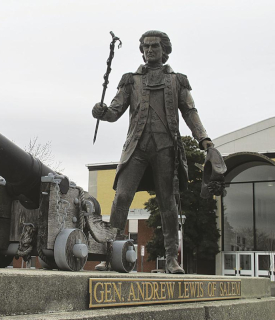
(Pictured: Statue of General Andrew Lewis outside the Salem Civic Center)
While working in Belfast and Inishowen in 1931, Quinn is promoted to the post of deacon. In 1961, he is appointed professor of Biblical Greek at Trinity College and begins work on a new translation of the New Testament. He also translates the Book of Psalms and the Prayer Book of the Church of Ireland into Irish, as well as several Spanish works. Although it is unusual in his lifetime for Protestants to hold leading positions in the Irish language movement, Quinn is for a time President of Oireachtas na Gaeilge. He is made a canon of St. Patrick’s Cathedral in 1966, before retiring from the ministry in 1971.
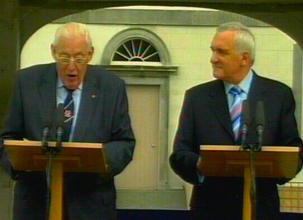
Ahern and Paisley discuss political and economic developments in Northern Ireland and increasing cross-Border co-operation. The Taoiseach says he is honoured to visit the north Antrim heartland of the Democratic Unionist Party (DUP) leader.
“I do not believe even a year back it could have been envisaged we would have been together here,” Ahern says. “It is an honour to be here with the First Minister to talk about progress.”
Paisley jokes that Ahern and his entourage had held a prayer meeting in their helicopter hoping that they would not be pelted with snowballs by him, a reference to his famous protest when former Taoiseach Seán Lemass visited Stormont in 1965.
When asked about welcoming the Fianna Fáil leader to his constituency Paisley quips, “What I am saying is he is in under my control. This is a good day for work. It is a good day for our province. It is a good day for the whole of Ireland because we need help from outside. We cannot live on our own.”
Ahern and Paisley meet again the following week at the Dublin Chamber of Commerce AGM dinner where Paisley has been invited to be a guest speaker.
The engagement is the latest visit to the Republic by the DUP leader since the Assembly was restored in Stormont the previous May. The Taoiseach invites Paisley to the historic Battle of the Boyne battle site in County Louth in July where the DUP leader presents a 17th-century musket to Ahern.
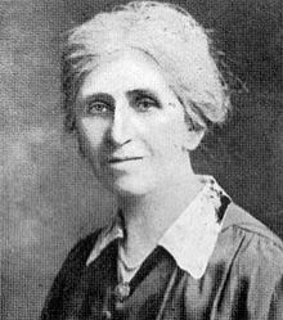
Knowles’ early interest in botany is encouraged by her father, William James Knowles, himself an amateur scientist who takes Matilda and her sister to meetings of the Belfast Naturalists’ Field Club. This is where she first meets Robert Lloyd Praeger who continues to be a lifelong influence. In 1895 she is introduced to the Derry botanist Mary Leebody and together they work on a supplement to Samuel Alexander Stewart‘s and Thomas Hughes Corey‘s 1888 book the Flora of the North-east of Ireland.
Knowles then volunteers to help with the crowdsourcing of material about the plants of County Tyrone. While completing this work Knowles publishes her own first paper about Tyrone’s flowering plants in 1897. She eventually sends in over 500 examples that are considered for inclusion in the Irish Topographical Botany, which Praeger publishes in 1901.
In 1902, after attending the Royal College of Science for Ireland for a year, Knowles is appointed a temporary assistant in the then Botanical Section of the National Science and Art Museum. She works closely with Professor Thomas Johnson to continue the development of the Herbarium collection. She also co-authors with him the Hand List of Irish Flowering Plants and Ferns (1910).
One of Knowles’ first works is The Maritime and Marine Lichens of Howth, which the Royal Dublin Society publishes in 1913. Knowles had gathered the knowledge and experience to do this while diligently assisting with a survey of Clare Island as suggested by Praeger. This novel survey involves not only Irish but also several European scientists including prominent UK lichenologist, Annie Lorrain Smith. This is claimed as the most extensive piece of field work at the time. As a result, Knowles is able to create a foundation for her later specialism in lichens.
Knowles publishes more than thirty scientific papers on a wide range of botanical subjects between 1897 and 1933. It is while studying the lichens of Howth that she discovers how lichens by the shore grow in distinct tidal zones that can be distinguished by their colour: black, orange and grey.
Her major work is The Lichens of Ireland which adds over 100 species of lichen to the Irish List and records the distribution of the eight hundred species identified in Ireland. She achieves this task with the collaboration of thirty other natural scientists. It is published in 1929 and includes twenty lichens that had previously not been identified as Irish.
Professor Thomas Johnson retires in 1923, allowing Knowles to take over curatorship, working with Margaret Buchanan. As she becomes older Knowles’ hearing begins to fail such that she has to rely on an ear trumpet. Despite her deafness she still attends meetings. She cares for and adds to the National Museum Herbarium collection although never gets the credit she deserves. In 1933 she plans to retire but pneumonia ends her life before she ends her career. Knowles dies in Dublin on April 27, 1933.
Knowles is honoured with a commemorative plaque by the Irish National Committee for Science and Engineering in October 2014 to mark the 150th anniversary of her birth.