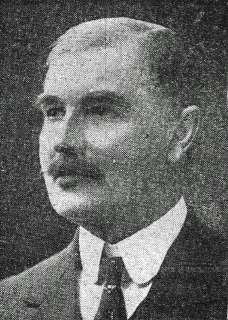
Born to Irish emigrants in Scotland, McCabe moves with his family to Ireland in the early 1940s. He lives on a farm near Lackey Bridge, just outside Clones, County Monaghan. He is educated at Castleknock College.
McCabe’s play King of the Castle causes a minor scandal when first staged in 1964, and is protested by the League of Decency. He writes his award-winning trilogy of television plays, consisting of Cancer, Heritage and Siege, because he feels he has to make a statement about the Troubles. His 1992 novel Death and Nightingales is hailed by Irish writer Colm Tóibín as “one of the great Irish masterpieces of the century” and a “classic of our times” by Kirkus Reviews.
McCabe defends fellow novelist Dermot Healy, who had been negatively reviewed by Eileen Battersby in The Irish Times in 2011, using the Joycean invective “shite and onions”, provoking controversy in the Irish literary community.
Fintan O’Toole notes how living in Monaghan, just across the border from County Fermanagh, informed McCabe’s writing, and described him as “the great laureate of…indeterminacy, charting its inevitably tragic outcomes while holding somehow to the notion that it might someday become a blessing.”
McCabe dies at the age of 90 on August 27, 2020, in Cavan, County Cavan. He is survived by his wife Margot, his four children, Ruth, Marcus, Patrick and Stephen, and thirteen grandchildren.
Duffy is born in 1809 probably in County Cavan, at either Shercock or Kingscourt, and is educated locally at a hedge school. He has at least two brothers and two sisters. He first makes a living as a pedlar in County Cavan and County Meath, dealing with Bryan Geraghty, a bookseller in Anglesea Street, Dublin, with whom he exchanges Irish manuscripts for Catholicprayer books. He also buys up Bibles distributed in Ireland by Protestant missionaries for resale in Great Britain. When aged about thirty he sets up in business in Anglesea Street as a publisher, printer and bookseller, specialising in low-priced Catholic books, such as A pocket missal for the use of the laity (1838) and a new edition of the Catechism (1848) by Andrew Donlevy, made possible by the invention of the stereotype. He moves his business to Wellington Quay in 1846. He also prints and distributes public statements by Catholic prelates, and is able to call himself “bookseller to the cardinal archbishop of Dublin.”
At the request of the editor of The Nation, Charles Gavan Duffy (to whom he is not related), he republishes an anthology of nationalistic ballads, The spirit of the nation (1843; 59th ed., 1934), a successful venture that links him to the Young Ireland movement and expands into the publication of numerous popular historical writings, beginning with Gavan Duffy’s Library of Ireland series. He publishes several periodicals for Catholic readers, which combine pietism and patriotism with hagiography: Duffy’s Irish Catholic Magazine (1847–8), Duffy’s Fireside Magazine (1850–54), and Duffy’s Hibernian Magazine (1860–64).
Judged by the distinction of his authors (who include William Carleton, Thomas Davis, John Mitchel, James Clarence Mangan and Richard Robert Madden, the number and popularity of his productions, and their formative influence on Catholic popular opinion, he can be considered the most important Irish publisher in the middle decades of the nineteenth century. He is particularly significant in providing the Young Ireland movement with a cheap and reliable publisher for the dissemination of their writings. Charles Gavan Duffy describes him as “a man of shrewd sense and sly humour but without cultivation or judgment in literature.” He never takes a holiday and, though a kindly employer, never allows his staff to take holidays. The Irish American newspaper Irish American Weekly credits him with providing employment for 500 people and with having bought enough land to give him an income of £5,000 a year. It also notes that his ruthlessness had made him unpopular within his trade.
In 1840 Duffy marries Frances Lynch in Kingscourt, County Cavan. They have five sons and five daughters. The family susceptibility to pulmonary illnesses takes a dreadful toll: none of the sons live beyond the age of twenty-three, three dying from tuberculosis, while one of his daughters dies of pneumonia at the age of fourteen and another two daughters succumb as relatively young adults to tuberculosis.
Duffy dies at the age of 62 on July 4, 1871, at his home at Clontarf, Dublin. He is buried at Glasnevin Cemetery. His will, which disposes of an estate worth almost £25,000, is contested unsuccessfully in court by the younger of his two surviving sons. His son-in-law, Edmund Burke, becomes managing director of James Duffy and Company Limited, but after his death in 1901 the company passes out of the control of its founder’s family.
(From: “Duffy, James” by C. J. Woods, Dictionary of Irish Biography, http://www.dib.ie, October 2009)
Seán MacManus, Sinn Féin politician, is elected Mayor of Sligo on July 3, 2000. He is the national chairperson of the party from 1984 to 1990.
MacManus is born in 1950 near Blacklion, County Cavan, and moves to London in the 1960s to find work. There he meets and marries Helen McGovern, a native of Glenfarne, County Leitrim. In 1976, he returns to Ireland and settled in the Maugheraboy area of Sligo, County Sligo, so that their family of two boys can be educated in Ireland.
Still based in Maugheraboy, MacManus is involved in Irish Republican politics since the early 1970s and is secretary of the County Sligo Anti-H-Block Committee which campaigns in support of the republican prisoners hunger strikes of 1980/81. He becomes a member of the Sinn Féin Ard Comhairle (National Executive) in 1982 and remains there for over twenty years. He is elected as the first Sinn Féin National Chairperson from 1984 until 1990. After the Irish Republican Army (IRA) ceasefire in 1994 he is part of the first Sinn Féin delegation to meet with the British government in over seventy years. He is also involved in the protracted negotiations leading to the Good Friday Agreement.
First elected to Sligo Corporation (now Sligo Borough Council) in 1994, MacManus remains until its abolition in May 2014. He is also elected to Sligo County Council in 1999 and is re-elected in 2004, 2009 and 2014. He steps down from elected politics in February 2017 being replaced by his son, Chris MacManus.
On July 3, 2000, MacManus is elected Mayor of Sligo, the first Sinn Féin Mayor in the Republic of Ireland since the beginning of the Troubles in 1969. He is also elected mayor in 2003. Sinn Féin PresidentGerry Adams says the election of McManus is a sign of “Sinn Féin’s rise as an active campaigning alternative in politics in the 26 counties”.
MacManus has two sons. Chris MacManus, the youngest, is also an elected member of Sligo Borough Council (1999–2014) and Sligo County Council (2017–2020) and is an MEP since March 2020. His eldest son, Joseph MacManus, was an IRA volunteer who was killed in a firefight against an off-duty Ulster Defence Regiment (UDR) soldier in Belleek, County Fermanagh, in February 1992.
(Robert John) Douglas Gageby, one of the pre-eminent Irish newspaper editors of his generation, dies on June 24, 2004, following a lengthy illness. His life is well documented and a book of essays about him, Bright Brilliant Days: Douglas Gageby and the Irish Times, written by many of his colleagues, some of whom had attained fame for their literary achievements, is published in 2006.
Gageby is educated at Belfast Royal Academy and Trinity College Dublin, where he is elected a scholar in Modern Languages (French and German) in 1940. He is also actively involved with the student newspaper, Trinity News. He enlists in the Irish Army as a private soldier at the outbreak of World War II. He is commissioned later, and he serves as an intelligence officer. He reports from post-war Germany for The Irish Press and goes on to work under Conor Cruise O’Brien in the Irish News Agency. In 1954 he is the first editor of the Evening Press. In 1963 he becomes editor of The Irish Times, a post he holds until 1986, having been brought back from a short retirement in 1974. He is credited with moving The Irish Times from a Unionist organ into a successful Irish journal of record.
In 2003 it is revealed that a director, and later Chairman, of The Irish Times, Major Thomas Bleakley McDowell, had referred to Gageby as a “white nigger” for his views and role in the paper during the Northern Ireland civil rights movement‘s campaign in the 1960s. The comment appears in a letter from the British Ambassador to Dublin, Sir Andrew Gilchrist, to Kelvin White, head of the Irish Section of the British Foreign Office and is dated October 2, 1969. Gilchrist is referring to conversations which he had with McDowell where the latter professes himself to be fully behind the British government in the North and hostile to Gageby’s coverage of the civil rights movement. However, historian Mark O’Brien notes, “Despite his contacts with London, McDowell’s actions did not interfere with Gageby’s editorials on Northern Ireland”, due to the fact McDowell believes in editorial independence (even though McDowell strongly disagrees with Gageby’s nationalist views), and because Gageby is making the newspaper commercially successful. Under the 30 year rule, this letter is made available to newspapers on December 22 and 23, 1999, but no newspaper publishes it at that time.
The communiqué is later discovered by the historian Jack Lane and published in the Irish Political Review, a small magazine strongly antagonistic to The Irish Times, in January 2003. He brings it to the attention of The Irish Times editor, Geraldine Kennedy, on January 10, 2003, and she replies on January 15, 2003 saying she is “unable to confirm the veracity of it” and does not publish it. When, on January 26, 2003, the Sunday Independent (Ireland) publishes the story, The Irish Times finally follows the next day, January 27. Nonetheless, on April 24, 2004, Kennedy defends her position by saying, “The contents of the letter in question were published on January 27, 2003, as soon as its existence was drawn to my attention.”
Gageby dies on June 24, 2004, following a two year illness. His private funeral is conducted by Rev. Terence McCaughey, a family friend. The Irish Times endows an annual Douglas Gageby Fellowship for young journalists and a stand of trees is planted in his memory at Moynalty. His papers are presented to Dublin City University (DCU).
The bombing takes place at a time when the Northern Ireland Office arranges multi-party talks, known as the Brooke/Mayhew talks, on the future of Northern Ireland. Sinn Féin members are not invited to attend because of their links with the IRA, which prevents them from being recognised as a “constitutional” party. The talks end in failure soon after.
Built in 1972, the barracks house two companies of the 2nd Battalion, Ulster Defence Regiment (UDR). Seen as an outpost, it sits on the dividing line between a Protestant area and a Catholic area. Although the military barracks itself had not been attacked by the IRA previously, seven UDR soldiers from the base had already been killed during the Troubles.
At 11:30 PM, a driverless truck loaded with 2,500 lb (1,100 kg) of a new type of homemade explosive is rolled down a hill at the rear of the barracks and crashes through the perimeter fence. According to a witness, a UDR lance corporal who alerts the base, the truck is a Mercedes, and a Toyota HiAce van carrying at least two men acts as a support vehicle. The men are seen outside the parked van, masked and armed, one with a handgun and the other with a submachine gun. This same witness alerts the base believing the IRA team are about to carry out a mortar attack, and debris thrown up on the roof by the lorry as it plunges down the hill is misinterpreted by some inside the base as a mortar projectile. Automatic fire is heard by other witnesses just before the main blast. A Reuters report claims that IRA members trigger the bomb by firing upon the driverless vehicle. It is later determined that the lorry had been stolen the day before in Kingscourt, County Cavan, in the Republic of Ireland.
The blast leaves a crater 200 ft. (61 m) deep and throws debris and shrapnel as far as 300 yards (270 m). The explosion can be heard over 30 miles (48 km) away, as far as Dundalk. This is the biggest bomb detonated by the IRA up to this point. Most of the UDR base is destroyed by the blast and the fire that follows. At first, a massive mortar attack is suspected. Some livestock are killed and windows broken around the nearby Mossfield housing as a result of the explosion. The cars parked outside the base are obliterated. Ceilings are brought down and the local primary school is also damaged.
The barracks is usually manned by eight soldiers, but at the time there are 40 people in the complex, attending a social event. Three UDR soldiers – Lance Corporal Robert Crozier (46), Private Sydney Hamilton (44) and Private Paul Blakely (30) – are killed and ten are wounded. Two of them are caught by the explosion when they come out to investigate after a sentry gives the alarm. A third dies inside the base. Four civilians are also wounded. The Provisional IRA claims responsibility two days later.
The base is never rebuilt. It had outlived its operational usefulness and a decision had already been taken to close it down. The decision not to rebuild the compound raises some controversy among unionists. A memorial stone is erected by the main entrance road with the names of the UDR soldiers killed over the years while serving in Glenanne.
Alan Bell, policeman and resident magistrate, is tasked by British Intelligence to track down Michael Collins’s war chest. By March 26, 1920, he has successfully confiscated over £71,000 from Sinn Féin‘s headquarters and by investigating banks throughout the country and is set to seize much more. On that day he is pulled off a tram in South Dublin and shot three times in the head.
Bell is born in Banagher, King’s County (now County Offaly), one of at least two sons of the Rev. James Adamson Bell, Church of Ireland clergyman. His mother’s name is unknown. Educated locally, he joins the Royal Irish Constabulary (RIC) in September 1879 as a cadet, serving in the counties of Cavan, Galway, Roscommon, Westmeath, and Cork up to the rank of district inspector. During the Land War (1879–82) he investigates sources of Irish National Land League funds and in 1882 arrests the American land reformer and journalist Henry George in Athenry. He, along with District Inspector William Henry Joyce, compile evidence against the nationalist and agrarian agitation for the special commission of 1888–89 which investigates charges against the nationalist leader Charles Stewart Parnell and his associates. His actions make him popular with unionists but a marked man among nationalists.
After almost twenty years’ police service, Bell becomes a resident magistrate on November 12, 1898, a civil service post under the Constabulary Act, 1836. His districts included Athenry, Claremorris, Armagh, Belfast, and Portadown. With many years’ experience in criminal intelligence, he is transferred to Dublin Castle early in the Irish War of Independence as a special investigator and intelligence gatherer. In December 1919 he questions suspects for the attempted Irish Republican Army (IRA) assassination of the viceroy, Lord French, and place suspect premises under surveillance. His vulnerability is made evident by the shooting in January 1920 of Dublin Metropolitan Police assistant commissioner William C. Redmond, one of his informants. He remains in Dublin to investigate the “republican loan” raised by Michael Collins and Sinn Féin, believed to be hidden in suspect bank accounts. Refusing protective accommodation in Dublin Castle where other officials have already retreated, he opts to live with his wife at a private suburban residence, 19 Belgrave Square, Monkstown, County Dublin. He summons bank managers to his office in early March 1920 and progresses sufficiently to force Collins into taking action.
Carrying a pocket revolver for protection, Bell travels to work daily by tram until the morning of March 26, 1920. At the busy junction of Simmonscourt Road, Sandymount Avenue, and Merrion Road, Ballsbridge, a group of men immobilise the crowded vehicle and surround their target, declaring, “Come on, Mr. Bell, your time has come.” Bundling him on to the street, they shoot him dead in public view and run from the scene. In spite of vivid eyewitness accounts in the press, no killer is identified. His death comes amid almost daily violence and barely a week after the shooting of the Sinn Féin Lord Mayor of Cork, Tomás Mac Curtain, allegedly by police assassins. He acts fearlessly, perhaps expecting a violent death as the outcome of his mission.
Godley is the eldest son of Rev. James Godley, rector of Carrigallen, County Leitrim, and Eliza Frances Godley (née La Touche). After attending Tilney Basset’s preparatory school in Dublin, he goes to Harrow College and Balliol College, Oxford, graduating BA in 1878. At Oxford he becomes known for his classical scholarship and wins several prizes, including the Craven scholarship and the Gaisford Prize for Greek Verse. In 1879 he is appointed assistant classical master at Bradfield College. He returns to Oxford in 1883 as tutor and fellow of Magdalen College (1883–1912). Serving as deputy public orator of Oxford (1904–06), he is elected public orator in 1910, a post he holds until his death.
Godley also enjoys renown as a writer of satiric verse and prose, beginning his literary career as a contributor to The Oxford Magazine in 1883. In 1890 he becomes its editor, and two years later publishes his first book of poems, Verses to Order (1892). Later publications include Lyra Frivola (1899), Second Strings (1902) and The Casual Ward (1912). His work is very popular and two volumes, Reliquiae (1926) and Fifty Poems (1927), are published posthumously. He also publishes numerous works of serious scholarship including Socrates and Athenian Society in His Day (1896) and Oxford in the Eighteenth Century (1908). Noted as a translator of Herodotus, Tacitus, and Horace, he serves as joint-editor of The Classical Review (1910–20). He also edits and publishes volumes of the poetry of Thomas Moore and Winthrop Mackworth Praed.
Active in political life, Godley serves as an alderman on Oxford City Council. During the Second Boer War (1899–1901) he organises volunteer forces, commanding a battalion of the 4th Oxfordshire Light Infantry (1900–05). He serves in this capacity again during World War I and is lieutenant-colonel of the Oxfordshire Volunteer Corps (1916–19). A staunch unionist, during the Home Rule Crisis, he supports the formation of the Ulster Volunteer Force (UVF) and writes some political verse, notably The Arrest, which is popular among unionists. A pioneer in the sport of mountaineering, he is a founding member of the Alpine Club and a committee member (1908–11). He is also a member of the governing body of Harrow School. Towards the end of his career he is awarded honorary doctorates from Princeton (1913) and Oxford (1919).
In 1925 Godley goes on a tour of the Levant and contracts a fever which ultimately leads to his death on June 27, 1925, at his Oxford home, 27 Norham Road. He is buried at Wolvercote Cemetery.
Ballyconnell is a small town in western County Cavan. According to the 1911 census it is populated by 125 families, or in the region of 600 people, and is according to local pro-Treaty TDSeán Milroy, “in the values of country towns, a very considerable centre of county life.” Since 1921 it has been wedged up against the new border with County Fermanagh and Northern Ireland to the north and the Arigna Mountains to the south and west. As the Irish Civil War rages south of the border, and with no effective police or military presence, Ballyconnell is particularly vulnerable to the depredations of armed groups of various allegiance.
Cull is part of a contingent of 50-70 anti-Treaty fighters holed up in the Arigna Mountains. As well as guerrilla attacks against the forces of the Irish Free State, one of their most frequent actions, out of necessity, is raids on civilian targets for supplies.
Cull, according to the local newspaper, is holding up Ovens’ hardware and grocery shop in Ballyconnell when he is shot dead by a plain clothes Free State officer. The National Army later derisively refers to “the shooting of a looter named Cull … He and others were raiding in Ballyconnell when a couple of officers who were in the area got in touch with them. This gang of Irregulars have been in the mountains for several months past.”
Cull’s death is by no means the end of Ballyconnell’s troubles. The anti-Treaty column based in the Arigna Mountains, composed of Volunteers from Roscommon, Leitrim and Cavan (which includes Cull’s brother James) and led by Ned Bofin, visits a ferocious revenge on the small town for the death of Cull.
Almost exactly a month later, on the morning of February 5, 1923, at about 7:00 a.m., fifty well-armed anti-Treaty IRA fighters descend on Ballyconnell from the hills in a military lorry and several cars. The guerrillas, armed with rifles and three machine guns, stop the train to nearby Ballinamore so that word cannot get out to adjacent Free State garrisons. They then go in search of those they hold responsible for Cull’s death.
At Oven’s grocery, the proprietor, William Ovens, is shot through the thigh and badly wounded. One of his employees, William Ryan, is dragged out and shot dead. According to the local press, the guerrillas shouted, “Was it you who shot Cull?” at Ryan before they shot him. His 80-year-old father follows the fighters through the streets, shouting “murder, murder.”
Sean McGrath, an Irish language teacher originally from Galway, is also dragged out of bed and shot dead, apparently for no other reason than that he is lodging at the home of Free State supporter John Dunn.
The guerrillas proceed to bomb and burn out three shops, including the car dealership and the Post Office, and to smash the windows of the other premises with shots and rifle butts. The Ulster Bank branch is robbed of £200 and two Ford cars are seized. After a rampage of 35 minutes, the IRA column re-mount their vehicles and head back toward the Arigna Mountains, leaving the little town partially in flames, pockmarked with bullet holes and mourning the death of two of its citizens.
According to the pro-Treaty National Army, “Our troops in Belturbet got word of the raid, and immediately set out in all their transport. They were joined en route by two Fords of troops from Cavan, and all proceeded to Ballyconnell, where they arrived shortly after 9 o’clock. They followed the Irregulars past Ballinamore but failed to get in touch with them.”
(From: “The Tragedies of Ballyconnell” by John Dorney, The Irish Story (www.theirishstory.com), June 19, 2014 | Pictured: The main street of Ballyconnell in the early 20th century)
Sheppard is based in Dublin for almost all of his life, having traveled widely across Europe. His wife Rosie dies in 1931, with whom he has several children. They live at Howth and 30 Pembroke Road in central Dublin.
From 1902 to 1937 Sheppard teaches sculpture at the Dublin Metropolitan School of Art. His annual stipend is £250 but for this he only has to lecture three mornings a week, allowing him plenty of time for work on commissioned projects. One of his most famous students is the sculptor, Kathleen Cox.
The Dying Cuchulain is considered Sheppard’s masterpiece and an important work of Irish art. It is a bronze figure of the mythological warrior-hero Cuchulain, who continued to fight against his enemies while gravely wounded and tied to a tree. It is created in 1911 and later chosen by Éamon de Valera in 1935 as the national memorial to the 1916 Easter Rising. It can still be viewed today in the General Post Office (GPO), O’Connell Street, Dublin.
Sheppard is generally critical of the low standards of sculpture in Ireland: “For the last sixty years or so thousands of figures and groups have been executed in Dublin for ecclesiastical purposes, and, with one or two exceptions … was not up to a reasonable standard. The making of a work of art hardly entered into it at all. The sculptor, well trained and properly encouraged, should collaborate with the architect.”
Sheppard is in the minority of Irish Protestants who support independence, starting with support for the Irish Parliamentary Party in the 1880s, when he is an art student.
In 1890–1910 Sheppard is a part of the Celtic Revival movement, and, from his works such as Inis Fáil, is admired by his student William Pearse. Through him he meets his brother Patrick Pearse who later helps launch the Easter Rising in 1916. While most of the Revival’s artists are writers, playwrights and poets, Sheppard can claim to be the main sculptor working on themes similar to theirs.
After the Irish War of Independence (1919–21) Sheppard says, “They thought me too old to fight but I have tried to help in other ways. My politics are simple. I have always thought that this country should be a free country.” His opinions are not overly dogmatic, considering his work on the war memorials in 1920.
In the mid-1920s the first series of Irish Free State coinage is planned and is finally launched in 1928. Sheppard is one of the designers short-listed but his designs are not accepted.
After his retirement in 1937 from the National College of Art, the now renamed Dublin Metropolitan School of Art, he is appointed in 1938 by the Minister for Education to the College’s standing committee. He is also made a judge in the Royal Dublin Society art competition in 1939 and 1940.
Ordained in 1924, the theology in which McQuaid is trained is conservative — strongly neo-scholastic and hostile to modernism and liberalism. His hatred of the French Revolution is expressed in several pastorals and speeches throughout his career. He also regards Protestantism as a fundamental error from which Irish Catholics should be quarantined as much as possible.
Appointed Dean of Studies at Blackrock College, McQuaid becomes a prominent figure in Catholic education and chairs the Catholic Headmasters’ Association for several years. In 1931 he is appointed president of Blackrock College, in which capacity he becomes acquainted with Éamon de Valera, the future Irish Taoiseach whose sons attend the school. In 1936 while drafting a new Irish constitution, de Valera consults McQuaid, although he rejects McQuaid’s draft “One, True Church” clause which states, among other things, that the Catholic Church is the one true church in Ireland.
When McQuaid is appointed Archbishop of Dublin in 1940, the appointment of a priest from the regular clergy causes considerable surprise. Irish government archives reveal that de Valera, as is suspected at the time, presses McQuaid’s claims at the Vatican. However, it is doubtful whether the Vatican needs much persuasion. There is a dearth of potential episcopal talent and McQuaid has an outstanding reputation as a Catholic educationalist.
Once appointed, McQuaid proves to be one of the ablest administrators in the history of the Irish Church. In the first two years of his episcopate, he sets up the Catholic Social Service Conference to alleviate the poverty and distress in Dublin which is aggravated by the war, and the Catholic Social Welfare Bureau to help the thousands of Irish emigrants going to Britain for war work. These two organizations fill a much-needed gap and continue to exist after the war. The expansion of Dublin city and its suburbs during his episcopate requires the building of new churches, schools, and hospitals. Meeting these demands also necessitates a considerable increase in the number of clergies, secular and regular, whose numbers more than double in the period from 1941 to 1972.
Given his previous career, the importance McQuaid assigns to education is not surprising. He is critical of the low priority accorded to education by successive governments and is particularly critical of the poor and pay conditions of teachers. His intervention in the primary teachers’ strike in 1946 is poorly received by the government and marks the souring of his relationship with de Valera. During his episcopate the number of primary schools increases by a third while the number of secondary schools more than double but, as with social welfare, the government increasingly assumes a dominant role in education from the 1960s onwards. Almost immediately after his appointment in 1940, he takes a hardline stand against the attendance of Catholic students at Trinity College Dublin. The ban lasts until 1970, when the increase in student numbers renders it untenable and he accedes reluctantly.
McQuaid has a formidable list of achievements in health care, especially maternity and pediatric services, physical and mental handicap services, and the treatment of alcoholism. It is ironic, therefore, that the most controversial episode of his career occurs in this area — the Irish hierarchy’s rejection in 1951 of a free mother-and-child health service. This leads to the resignation of the Minister for Health, Dr. Noël Browne, and is a watershed in Church-State relations in Ireland. With Irish tuberculosis and infant mortality statistics ranking among the highest in the world, the hierarchy, and particularly McQuaid, lose considerable support by lining up with the conservative medical establishment to resist efforts at socialized medicine.
From various pastorals that McQuaid issues at the time, it is clear that he does not see the need for the Second Vatican Council. As its deliberations proceed, his unease grows, and he becomes increasingly preoccupied with the issue of episcopal power and independence that he believes are being threatened by the Council. In the areas of liturgical reform, greater lay participation, and ecumenism, he is slow in implementing the Vatican II reforms. His views on ecumenism had always been lukewarm and had led to allegations that he was anti-Protestant. His personality and policies are criticized by a more assertive Dublin laity, but being a shy, reserved man who increasingly feels the isolation of office, he never responds to such comments. In 1968 the reaction to Humanae vitae causes open rebellion in the Dublin diocese, the force of which catches him unaware. His last pastoral as archbishop in 1971 betrays his anger and bemusement at the response to Humanae vitae in Dublin.
McQuaid’s substantial archives are released by the Dublin Diocesan Archives in the late 1990s. In 1999 journalist John Cooney publishes a hostile biography of McQuaid, which makes controversial allegations of sexual abuse against McQuaid. The allegations are based on tenuous evidence gathered by McQuaid’s nemesis from the 1951 Mother and Child controversy, Dr. Noël Browne, who had died in 1997. No corroborating evidence is produced or has since emerged.