seamus dubhghaill

Promoting Irish Culture and History from Little Rock, Arkansas, USA


Leave a comment

Death of Charlotte Brooke, Poet, Dramatist & Author

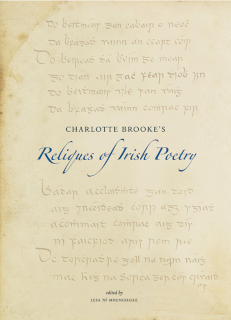
Charlotte Brooke, author of Reliques of Irish Poetry, a pioneering volume of poems collected by her in the Irish language, with facing translations, dies in Longford, County Longford, on March 29, 1793, of a malignant fever.

Brooke is born around 1740 in Rantavan House, Mullagh, County Cavan. She is one of twenty-two children of the writer Henry Brooke, author of the play Gustavus Vasa, and Catherine Brooke (née Meares) of County Westmeath. Only she and her brother Arthur survive childhood.

Brooke is educated by her father and immerses herself in reading history and literature at an early age. While the rest of her family is sleeping, she often goes down to the study where she spends hours reading.

Brooke is part of the first generation of the Protestant Anglo-Irish settler class who take a strong interest in the Irish language and Gaelic history. Her primary interest in Irish language and literature is generated by her hearing it being spoken and recited by the labourers in County Cavan and on the County Kildare estates where her family moves around 1758. She is led to the study of the Irish language, and in less than two years she finds herself in love with it. From reading Irish poetry and admiring its beauties, she proceeds to translate it into English, one of her earliest efforts being a song and monody by Turlough O’Carolan, which appears in Joseph Cooper Walker‘s Historical Memoirs of Irish Bards (1786).

Brooke, who is frail herself, takes care of her father after her mother dies in 1773. Meanwhile, the family has moved back to County Cavan, where they begin living in a house they name Longfield which has been built near the Rantavan Estate. A few years after her father dies in 1783, she runs into financial troubles, after a model industrial village set up in County Kildare by her cousin Captain Robert Brooke goes bankrupt in 1787. Walker and other members of the recently created Royal Irish Academy (RIA) seek to make an income for her, but she realises she has to rely on her writings and translations.

In 1792, though in declining health and poor circumstances, Brooke publishes a selection of her father’s writings in three volumes, prefacing the work with a memoir of her father and a defence of his reputation as a writer. She also publishes a direct and simple presentation of Christian doctrine for children using her father’s didactic method, The school for Christians in dialogue for the use of children (1791). She dies of a malignant fever on March 29, 1793, at Longford, County Longford, in the home of the Brownes, friends with whom she has lived for some years.


Leave a comment

Death of Pascal Vincent Doyle, Hotelier & Developer

Pascal Vincent Doyle, more commonly known as PV Doyle, Irish hotelier and property developer who founds The Doyle Collection hotel group, dies in Blackrock, Dublin, on February 6, 1988.

Doyle is born on May 17, 1923, in Dundrum, Dublin, to Michael and Eileen Doyle (née Lawlor), one of seven children. In 1945, at the age of 22, he builds a pub and leisure complex called the County Club in Churchtown, Dublin. Following the success of this venture, he moves into the hotel business.

The first hotel that Doyle develops is the South County Hotel in Stillorgan, now called the Stillorgan Park Hotel, which opens in 1964. He officially registers his hotel company as P. V. Doyle Hotels Limited on September 4, 1969.

Other hotels developed by Doyle include the Berkeley Court Hotel in Ballsbridge, Dublin, opened on July 21, 1978, and the Burlington Hotel in Dublin, opened in 1972.

Doyle marries Margaret Ellen Briody, a nurse, in Ballynarry Church, Kilnaleck, County Cavan in 1947. They have five children together: sons Michael, David and daughters Anne, Eileen and Bernie.

Doyle dies at the age of 64 on February 6, 1988, in Blackrock Clinic. The funeral is held on February 9, 1988, in St. Laurence’s Church, Kilmacud, followed by internment in Dean’s Grange Cemetery. The President of Ireland Patrick Hillery and Taoiseach Charles Haughey attend the funeral.

Margaret dies at the age of 93 on October 22, 2010, and leaves €31 million in her will.


Leave a comment

Death of Roger McCorley, Irish Republican Activist

Roger McCorleyIrish republican activist, dies on November 13, 1993.

McCorley is born into a Roman Catholic family at 67 Hillman Street in Belfast on September 6, 1901. He is one of three children born to Roger Edmund McCorley, a meat carver in a hotel, and Agnes Liggett. He has two elder brothers, Vincent and Felix. He joins the Fianna in his teens. His family has a very strong republican tradition, and he claims to be the great-grandson of the United Irishmen folk hero Roddy McCorley, who was executed for his part in the Irish Rebellion of 1798.

McCorley is a member of the Belfast Brigade of the Irish Republican Army (IRA) during the Irish War of Independence (1919–22). He is commandant of the Brigade’s first battalion, eventually becoming Commandant of the Belfast Brigade. In June 1920, he is involved in an attack on a Royal Irish Constabulary (RIC) police barracks at CrossgarCounty Down. On Sunday, August 22, 1920, in Lisburn, he is involved in the assassination of RIC District Inspector Oswald Swanzy, who was held responsible by Michael Collins for the assassination of Tomás Mac CurtainLord Mayor of Cork.

McCorley is noted for his militancy, as he is in favour of armed attacks on British forces in Belfast. The Brigade’s leaders, by contrast, in particular, Joe McKelvey, are wary of sanctioning attacks for fear of loyalist reprisals on republicans and the Catholic population in general. In addition, McCorley is in favour of conducting an armed defense of Catholic areas, whereas McKelvey does not want the IRA to get involved in what he considers to be sectarian violence. McCorley writes later that in the end, “the issue settled itself within a very short space of time, when the Orange mob was given uniforms, paid for by the British, and called the Ulster Special Constabulary (USC).” The role of the USC, a temporary police force raised for counter-insurgency purposes, in the conflict is still debated, but republicans maintain that the organization was responsible for the indiscriminate killings of Catholics and nationalists.

On January 26, 1921, McCorley, is involved in the fatal shooting of three Auxiliary Division officers in their beds in the Railway View hotel in central Belfast. Shortly afterwards, he and another IRA man, Seamus Woods, organize an active service unit (ASU) within the first battalion of the Belfast Brigade, with the intention of carrying out attacks, with or without the approval of the Brigade leadership. The unit consists of 32 men. McCorley later writes, “I issued a general order that, where reprisal gangs [State forces] were cornered, no prisoners were to be taken.” In March 1921, he personally leads the ASU in the killing of three Black and Tans in Victoria Street in central Belfast. He is responsible for the deaths of two more Auxiliaries in Donegall Place in April. In reprisal for these shootings, members of the RIC assassinate two republican activists, the Duffin brothers in Clonard Gardens in west Belfast. On June 10, 1921, both and Woods and McCorley units are involved in the killing a RIC man who is suspected in the revenge killings of the Duffin brothers. Two RIC men and a civilian are also wounded in that attack.

Thereafter, there is what historian Robert Lynch has described as a “savage underground war” between McCorley’s ASU and RIC personnel based in Springfield Road barracks and led by an Inspector Ferris. Ferris is accused of murdering the Lord Mayor of Cork Thomas Mac Curtain and had been posted to Lisburn for his safety. Ferris himself is among the casualties, being shot in the chest and neck, but surviving. McCorley claims to have been one of the four IRA men who shot Ferris. In addition, his men bomb and burn a number of businesses including several cinemas and a Reform Club. In May 1921, however, thirteen of his best men are arrested when surrounded by British troops during an operation in County Cavan. They are held in Crumlin Road Gaol and sentenced to death.

On June 3, McCorley organizes an attack on Crumlin Road Gaol in an attempt to rescue the IRA men held there before they are executed. The operation is not a success; however, the condemned men are reprieved after a truce is agreed between the IRA and British forces in July 1921. On Bloody Sunday (July 10, 1921), he is a major leader in the defense of nationalist areas from attacks by both the police and loyalists. On that day twenty people are killed before he negotiates a truce beginning at noon on July 11. At least 100 people are wounded, about 200 houses are destroyed or badly damaged – most of them Catholic homes, leaving 1,000 people homeless.

In April 1922, McCorley becomes leader of the IRA Belfast Brigade after Joe McKelvey goes south to Dublin to join other IRA members who are against the Anglo-Irish Treaty. With McKelvey’s departure, Seamus Woods becomes Officer Commanding of the IRA’s 3rd Northern Division, which has up to 1,000 members, with McCorley designated as Vice Officer Commanding. McCorley for his part, supports the Treaty, despite the fact that it provides for the partition of Ireland and the continued British rule in Northern Ireland. The reason for this is that Michael Collins and Eoin O’Duffy have assured him that this is only a tactical move and indeed, Collins sends men, money and weapons to the IRA in the North throughout 1922.

However, McCorley’s command sees the collapse of the Belfast IRA. In May 1922, the IRA launches an offensive with attacks all across Northern Ireland. In Belfast, he carries out an assault on Musgrave Street RIC barracks. He also conducts an arson campaign on businesses in Belfast. His men also carry out a number of assassinations, including that of Ulster Unionist Party MP William J. Twaddell, which causes the internment of over 200 Belfast IRA men.

To escape from the subsequent repression, McCorley and over 900 Northern IRA men flee south, to the Irish Free State, where they are housed in the Curragh. McCorley is put in command of these men. In June 1922, the Irish Civil War breaks out between Pro and Anti-Treaty elements of the IRA. He takes the side of the Free State and Michael Collins. After Collins is killed in August 1922, his men are stood down. About 300 of them join the National Army and are sent to County Kerry to put down anti-Treaty guerrillas there. In the Spring of 1923, bitterly disillusioned by the brutal counterinsurgency against fellow republicans, he resigns his command.

McCorley later asserts that he “hated the Treaty” and only supported it because it allowed Ireland to have its own armed forces. Both he and Seamus Woods are severe critics of the Irish Free State inertia towards Northern Ireland after the death of Michael Collins. He comments that when Collins was killed “the Northern element gave up all hope.”

In 1936 McCorley is instrumental in the establishment of the All-Ireland Old IRA Men’s Organization, serving as Vice-President with President Liam Deasy (Cork No. 3 Brigade) and Secretary George Lennon (Waterford No. 2 Brigade).

In the 1940s, McCorley is a founding member of Córas na Poblachta, a political party which aspires to a United Ireland and economic independence from Britain. He dies on November 13, 1993, and is buried in the Republican Plot of Glasnevin Cemetery.


Leave a comment

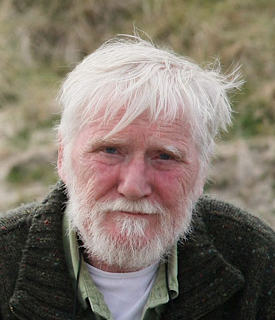
Death of Fr. Des Wilson, Irish Catholic Priest & Church Dissident

Father Des Wilson, Irish Catholic priest and church dissident who in the course of the Northern Ireland Troubles embraces ideas and practice associated, internationally, with liberation theology, dies in his native Belfast on November 5, 2019. He believes the Word of God can never be silent in the face of oppression, injustice and suffering. He seeks to apply the ideas of liberation theology to the North, supporting and empowering marginalised communities, and acting as a voice for the voiceless.

Wilson is born in Belfast on July 8, 1925, the youngest of five sons to William Wilson, a publican and native of County Cavan, and his wife Emma (née McAvoy), a native of south County Down. He spends his earliest years above his father’s pub in Belfast, before the family moves to a house in the suburbs.

Wilson attends primary school locally, then receives secondary education at St. Malachy’s College. During his time there Belfast is blitzed in April and May 1941. Almost 1,000 are killed. The carnage he sees is a factor in his deciding on the priesthood.

After secondary school Wilson enters the seminary at St. Malachy’s, while studying English and Philosophy at Queen’s University Belfast. He proceeds to St. Patrick’s College, Maynooth, being ordained on June 19, 1949, for the Diocese of Down and Connor.

After ordination Wilson serves as chaplain in Belfast’s Mater Infirmorum Hospital, then spends 15 years in St. Malachy’s as spiritual director. Former pupils remember him as fair, and able to play jazz excellently on the organ.

Wilson lives out his beliefs, spending half a century in Belfast’s Ballymurphy estate, among the North’s most deprived, and one of the areas which suffers worst from the Troubles. There he plays a role in community development, establishing projects to provide employment in the area. He suffers, finding himself for years outside the official Catholic Church.

Wilson plays a significant role in providing adult education. He wants an education that does not just provide qualifications and open career paths but is psychologically liberating.

Life changes in 1966 when Wilson is moved to St. John’s Parish in West Belfast as a curate. Having come from a comfortable background in Ballymurphy, he is shocked by the poverty, the poor housing and the treatment of women. Unusual for a priest at the time, he moves into a terraced house in the estate. He finds the Catholic Church unable to respond to the multiple problems people are facing. That inability worsens as the Troubles erupt.

Wilson’s personal probity is so recognised that he is accepted as a mediator in feuds between the Provisional Irish Republican Army and Official Irish Republican Army in the 1970s and is able to broker permanent peace. He also helps bring about the ceasefires in the 1990s.

Wilson does not shirk unpopular stances. In the 1970s he refuses to condemn the Irish Republican Army (IRA). Later he says the conviction of former Real Irish Republican Army leader Michael McKevitt for directing terrorism is unsafe. He also publicly visits and supports a Ballymurphy couple which has a very bitter falling out with Sinn Féin, leading to a picket on their home.

By 1975 relations with his bishop has broken down and Wilson resigns but continues ministering in Ballymurphy. Forbidden to say Mass in a church, his pay cut off, he says Mass in his house. He suffers hardship, living from savings, some earnings from writing, broadcasting and lecturing, and help from Quaker and Presbyterian friends. By the early 1980s his Ballymurphy home becomes too small for the many classes he organises. His classes are rehoused and expanded as the Conway Education Centre in a vacant mill. He is able to offer a range of vocational and non-vocational courses with almost 1,000 students. In the mid-1980s his relationship with the Dioceses of Down and Connor is re-established, and he is allowed to continue his ministry.

Personally, Wilson has great gifts of head and heart and is incapable of rancour. A strong belief is that it is important to share food to talk, as happened in Biblical times. Thus, a lunch would last an afternoon.

Wilson dies on November 5, 2019, in Belfast. Instead of wreaths, he asks mourners to donate to the Ballymurphy Massacre Memorial Garden. The garden is dedicated to the victims of the Ballymurphy massacre of August 1971, which saw the killing in the district of eleven civilians by soldiers of the 1st Battalion, Parachute Regiment. The victims include Fr. Hugh Mullan, who had been a student of Wilson’s at St. Malachy’s. He was shot while going to the aid of a wounded man.

Following a Requiem Mass at Corpus Christi Church in Ballymurphy, Wilson is buried in Milltown Cemetery. Senior Sinn Féin politicians Gerry Adams and Michelle O’Neill are among those who take turns carrying his coffin.

(From: “Fr Des Wilson obituary: Priest who fought oppression and injustice in North,” The Irish Times, http://www.irishtimes.com, December 7, 2019)


Leave a comment

Death of Joseph Whitty, Irish Republican Army Hunger Striker

Michael Joseph Whitty, a Volunteer in the Irish Republican Army (IRA), dies on hunger strike at the Curragh Camp hospital on August 2, 1923. At 19 years of age, he is the youngest of the twenty-two Irish republicans to die while on hunger strike in the 20th century. He fights with the IRA in the Irish War of Independence (1919-21), on the Anti-Treaty side in the Irish Civil War (1922-23) and dies while under internment by the Irish Free State government. Decades after his death another Volunteer, Kieran Doherty, also dies on August 2 during the 1981 Irish hunger strike.

Whitty is born in on January 7, 1904, in Newbawn, County Wexford. He is a Volunteer in the IRA, who serves in the South Wexford Brigade during the Irish War of Independence. After the signing of the 1921 Anglo-Irish Treaty, he joins the Anti-Treaty side in the Irish Civil War.

In late October 1922, Whitty is arrested (although never charged or convicted of any crime) in a roundup of dissidents. He is initially interned by Irish Free State troops at Wexford Prison and from there is transferred to the Curragh Camp. It has been asserted that his arrest was in revenge for the actions of his brothers who are deeply involved with the IRA. The authorities are unable to locate his brothers, so he is arrested instead.

While at the Curragh Camp, Whitty decides to independently start a hunger strike and dies as a result on August 2, 1923, at the Curragh Camp hospital. At the time, hunger strikes are not an official policy of the IRA and are not directed by its General Headquarters. Instead, each hunger striker makes an individual decision to strike. Due to the newly formed Irish Free State government’s news embargo on conditions in prisons at the time, very little is published on Whitty’s motivations and the circumstances of his hunger strike and death, including the number of days of his strike.

Earlier, the high-profile hunger strike deaths of Thomas Ashe, president of the Irish Republican Brotherhood (IRB) in 1917 and Terence MacSwiney, Lord Mayor of Cork in 1920, bring international attention to the Republicans’ cause. The Irish Government’s news embargo prevents the embarrassment of having to publicly announce the death by hunger strike of a 19-year-old internee. From 1922, hunger strikes are of value only when a government is likely to be embarrassed sufficiently by the death of a prisoner.

With the ending of the 1923 Irish Hunger Strikes in late November 1923, the news embargo is relaxed. The November 20, 1923 death of Denny Barry from County Cork and the November 22, 1923 death of Andy O’Sullivan from County Cavan are widely reported in the media, while Whitty’s earlier death in August remains largely unreported.

After Whitty’s non-sanctioned hunger strike and death, Michael Kilroy, the Officer Commanding (OC) of IRA prisoners in Mountjoy Prison announces that 300 men will go on hunger strike on October 13, 1923. By late 1923, thousands of Irish republican prisoners are on hunger strike in multiple prisons and internment camps across Ireland. The mass hunger strikes of October/November 1923 see around 8,000 of the 12,000 Anti-Treaty republican prisoners on hunger strikes in Irish prisons, protesting internment without charge/trial, poor prison conditions and demanding immediate release of all political prisoners. Previously, the Irish Free State government had passed a motion outlawing the release of prisoners on hunger strike.

With the death of Whitty and two other recent Irish republican hunger strikers, Michael Fitzgerald (died October 17, 1920) and Joe Murphy (died October 25, 1920) and the large numbers of Irish republican prisoners on hunger strike, the Irish Free State Government sends a delegation to speak with IRA leadership in late October 1923. On November 23, 1923, the day after Andy O’Sullivan’s death, the hunger strike is called off, eventually setting off a release program for many of the prisoners, although some are not released until as late as 1932. The mass hunger strike of 1923 lasts for 41 days and met with little success.

Whitty is buried at Ballymore Cemetery. Killinick, County Wexford. The inscription on his grave reads: “In Memory of Joseph Whitty, Connolly St, Wexford. South Wexford Brigade who died for Ireland 2nd August 1923.”

The Sinn Féin Cumann (Association) in Wexford is named after Joe Whitty. The annual Joe Whitty Commemoration is held each year on Easter Saturday evening in Ballymore, County Wexford.


Leave a comment

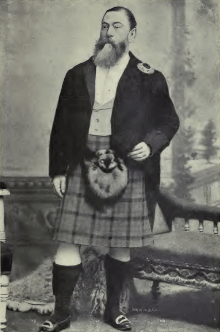
Birth of Charles Cameron, Physician, Chemist & Writer

Sir Charles Alexander Cameron, CB, Irish physician, chemist and writer prominent in the adoption of medical hygiene, is born in Dublin on July 16, 1830. For over fifty years he has charge of the Public Health Department of Dublin Corporation. He is elected president of the Royal College of Surgeons in Ireland (RCSI) in 1885.

Cameron is the son of Captain Ewen Cameron of Scotland and Belinda Smith of County Cavan. He is descended from Clan Cameron of Lochiel. He receives his early education in chemistry and pharmaceutical chemistry in Dublin. In 1852 he is elected professor to the newly founded Dublin Chemical Society while continuing to study medicine at several schools and hospitals in Dublin. In 1854 he goes to Germany where he graduates in philosophy and medicine. While there he publishes his translations of German poems and songs.

Upon his return to Ireland, Cameron becomes scientific advisor to the British government in Ireland in criminal cases and over the years takes part in many notable trials, including those relating to the Phoenix Park Murders. In 1862, he becomes public analyst for the City of Dublin, a position which is later extended to 23 counties in Ireland. In 1867, he is elected Professor of Hygiene in the Royal College of Surgeons in Ireland (RCSI). He is also lecturer in chemistry in Dr. Steevens’ Hospital and the Ledwich School of Medicine, succeeding Dr. Maxwell Simpson, and retains these positions until 1874. In 1875 he is appointed Professor of Chemistry at the Royal College of Surgeons in Ireland.

From 1858 to 1863, Cameron is editor and part proprietor of the Agricultural Review, in which he writes hundreds of articles on various subjects. In 1860–62, he is also editor of the Dublin Hospital Gazette and afterward publishes many reports on public health to the Dublin Journal of Medical Science. At this time, he is in contact with many agricultural associations both in Ireland and abroad and receives a number of awards and tributes.

In 1874, Cameron becomes Co-Medical Officer of Health for Dublin Corporation and two years later becomes Chief Medical Officer. Being in charge of the Public Health Department of Dublin City means that he is always in the public eye, and due to the level of poverty and disease in the city at the time his work is cut out for him. He makes many recommendations for improving the sanitation of dwellings and sees to it that unsanitary housing is either improved or closed down. He publishes numerous sanitary reports, papers on hygiene, the social life of the very poor and proper eating habits, those of the very poor in particular. On the other hand, he is in a position to meet the major figures of the day, from the monarchy and the government downward. He is a member of several clubs in the city and dines with local and visiting celebrities alike, which he describes in his reminiscences.

In 1884, Cameron becomes vice-president of the Royal College of Surgeons of Ireland, and the following year becomes president. He is knighted in 1885 in consideration of “his scientific researches, and his services in the cause of public health.” In 1886, he publishes his History of the Royal College of Surgeons in Ireland, and of the Irish Schools of Medicine. This work contains nearly 300 biographies of the most eminent medical men in Ireland.

Cameron marries Lucie Macnamara of Dublin in 1862, who dies in the early 1880s. They have eight children. His eldest son, Captain Charles J. Cameron, dies in a boating accident in Athlone in 1913, while another son, Lieutenant Ewen Henry Cameron, shoots himself in a train in Newcastle in 1915 while on the way to the Western Front. Two sons, Edwin and Mervyn, die of pulmonary tuberculosis in their 20s.

Cameron is a leading Freemason in Dublin, serving as Deputy Grand Master of the Grand Lodge of Ireland (1911–20), Deputy Grand Master of the Great Priory of Ireland, Sovereign Grand Commander of the Supreme Council of the 33rd degree (Ancient and Accepted Rite for Ireland). He is first initiated as a member of Fidelity Lodge No. 125 in 1858 and is also a member of the Duke of York Lodge No. 25, serving as its secretary for over 50 years.

In 1911, Cameron is made a Freeman of the city and honoured by many from the Sinn Féin Lord Mayor, Alderman Kelly, to the Lord Lieutenant of Ireland, Lord Aberdeen.

Cameron dies at his home on Raglan Road in Dublin on February 27, 1921, and is interred in Mount Jerome Cemetery. At his death he leaves a son, Ernest Stuart Cameron, and two daughters, Lucie Gerrard and Helena Stanley.


Leave a comment

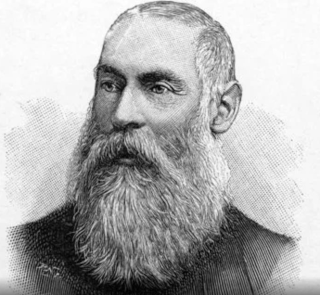
Death of Charles Cunningham Boycott, Land Agent

Charles Cunningham Boycott, land agent and the man who gave the English language the word “boycott,” dies in Flixton, Suffolk, England, on June 19, 1897.

Boycott is born on March 12, 1832, at Burgh St. Peter, Norfolk, England, eldest surviving son of William Boycatt (1798–1877), rector of Wheatacrebury, Norfolk, and Elizabeth Georgiana Boycatt (née Beevor). The family name is changed to Boycott by his father in 1862. Educated at a boarding school in Blackheath, London, and the Royal Military Academy, Woolwich, he is commissioned ensign in the 39th (Dorsetshire) Regiment of Foot on February 15, 1850, and serves briefly in Ireland. He sells his commission on December 17, 1852, having attained the rank of captain, marries Annie Dunne of Queen’s County (County Laois) in 1852, and leases a farm in south County Tipperary.

In 1855, Boycott leaves for Achill Island, County Mayo, where he sub-leases 2,000 acres and acts as land agent for a friend, Murray McGregor Blacker, a local magistrate. He settles initially near Keem Strand but after some years builds a fine house near Dooagh overlooking Clew Bay. He clashes with local landowners and agents and is regularly involved in litigation. Twice summonsed unsuccessfully for assault (1856, 1859), he is involved (1859–60) in a bitter dispute with a land agent over salvage rights for shipwrecks, one of the few lucrative activities on the island. Achill’s remoteness and the difficulties of wresting a living from its harsh environment adds a roughness to the island’s social relations and probably aggravates Boycott’s tendency to high-handedness.

In 1873, Boycott inherits money and moves to mainland County Mayo, leasing Lough Mask House near Ballinrobe and its surrounding 300 acres. He also becomes agent for John Crichton, 3rd Earl Erne‘s neighbouring estate of 1,500 acres, home to thirty-eight tenant farmers paying rents of £500 a year, of which he receives 10 per cent as agent. He also serves as a magistrate and is unpopular because of his brusque and authoritarian manner, and for denying locals such traditional indulgences as collecting wood from the Lough Mask estate or taking short cuts across his farm. In April 1879, he purchases the 95-acre Kildarra estate between Claremorris and Ballinlough and an adjoining wood for £1,125, taking out a mortgage of £600 which stretches his finances.

Boycott is no brutal tyrant, but he is aloof, stubborn, and pugnacious, and believes that the Irish peasantry is prone to idleness and require firm handling. Such qualities and beliefs are unremarkable enough, but in the peculiar circumstances of the land war in County Mayo, they are enough to catapult this rather ordinary man to worldwide notoriety.

In autumn 1879, concerted land agitation begins in County Mayo, and on August 1, 1879, Boycott receives a notice threatening his life unless he reduces rents. He ignores it and evicts three tenants, which embitter relations on the estate. Lough Mask House is placed under Royal Irish Constabulary (RIC) surveillance beginning in November 1879. In August 1880, his farm labourers, encouraged by the Irish National Land League, strike successfully for a wage increase from 7s. –11s. to 9s. –15s. Since the harvest is poor, Lord Erne allows a 10 per cent rent abatement. But in September 1880, when Boycott demands the rent, most tenants seek a 25 per cent abatement. Lord Erne refuses, and on September 22, Boycott attempts to serve processes against eleven defaulters. Servers and police are attacked by an angry crowd of local women and forced to take refuge in Boycott’s house. Almost immediately he is subjected to the ostracism against land grabbers advocated by Charles Stewart Parnell in his September 19 speech at Ennis, County Clare. This weapon proves as devastating against an English land agent as an Irish land-grabber. His servants leave him, labourers refuse to work his land, his walls and fences are destroyed, and local traders refuse to do business with him. He is jeered on the roads, is hissed and hustled by hostile crowds in Ballinrobe, and requires police protection.

The campaign against Boycott is largely orchestrated by Fr. John O’Malley, a local parish priest and president of the Neale branch of the Irish National Land League. It is probably O’Malley who coins the term “boycott” as an alternative to the word “ostracise,” which he believes would mean little to the local peasantry. Propagated by O’Malley’s friend, the American journalist, James Redpath, it is adopted by advocates and opponents alike.

On October 22, 1880, before his story breaks on the world, Boycott gives evidence of his treatment to the Bessborough Commission in Galway. He publicises his plight in an October 18, 1880, letter to The Times, and in a long interview with The Daily News on October 24, which is reprinted in Irish unionist newspapers and arouses considerable sympathy for him. Although he rarely uses his former military rank, he becomes universally known as “Captain Boycott,” since it suits both sides to portray him as someone of social standing. Letters of support appear in unionist papers and the Belfast News Letter sets up a “Boycott Relief Fund” and proposes a relief expedition, portraying Boycott as a peaceable English gentleman unjustly subjected to intimidation.

The prospect of hundreds of armed loyalists descending on County Mayo alarms the government, who announced on November 8 that they will provide protection for a small group of labourers to harvest Boycott’s crops. On November 12, fifty-seven loyalists from counties Cavan and Monaghan, “the Boycott Relief Expedition,” arrive at Lough Mask with an escort of almost a thousand troops. After harvesting Boycott’s crops, they leave on November 26. The entire operation costs £10,000 – about thirty times the value of the crops. Although the expedition passes off largely without incident, it focuses international media attention on the affair and establishes the word “boycott” in English and several other languages as a standard term for communal ostracism.

On November 27, Boycott and his wife go to the Hammam hotel, Dublin, where he receives death threats. On December 1, he travels to London and then to the United States (March–May 1881) to see Murray McGregor Blacker, the friend from his time on Achill Island who has since settled in Virginia. In an interview with the New York Herald, he criticises the liberal government’s weakness toward the Land League and claims that the Irish land question is an intractable problem that can only be solved in the long term by emigration and industrialisation.

Boycott returns to Lough Mask on September 19, 1881, and at an auction in Westport is mobbed and burned in effigy. This, however, is the last outburst of hostility against him, and as the land agitation wanes so does his unpopularity. Although unsuccessful in efforts to win compensation from the government, he receives a public subscription of £2,000. He remains in County Mayo as Lord Erne’s agent until February 1886, when he obtains the post of land agent for Sir Hugh Adair in Flixton, Suffolk, but he keeps the small Kildarra estate, where he continues to holiday. On December 12, 1888, he gives evidence of his treatment to the parliamentary commission on “Parnellism and crime.”

After suffering from ill-health for some years, Boycott dies at Flixton on June 19, 1897, and is buried in the churchyard of Burgh St. Peter. A British-made film, Captain Boycott (1947), stars Cecil Parker in the title role.

(From: “Boycott, Charles Cunningham” by James Quinn, Dictionary of Irish Biography, http://www.dib.ie, October 2009 | Photo credit: Granger NYC/© Granger NYC/Rue des Archives)


Leave a comment

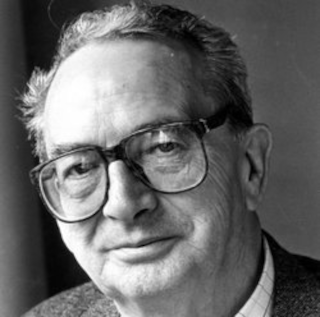
Death of Seán Cronin, Journalist & IRA Chief of Staff

Seán Gerard Cronin, journalist and former Irish Army officer and twice Chief of Staff of the Irish Republican Army (IRA), dies on March 9, 2011, in Baltimore, Maryland.

Cronin is born on August 29, 1922, in Dublin, the only son among three children of Con Cronin, a member of the IRA, and his wife Kate. After his father’s death, his mother works as a cook in a boarding school while the children are brought up by relatives in Ballinskelligs in the County Kerry Gaeltacht. Educated locally, he is deeply influenced by his Gaeltacht childhood; his later writings often refer to the hypocrisy of a state that romanticises the Gaeltacht while neglecting its social problems.

During World War II, Cronin’s sisters emigrate to England to train as nurses while he works as a labourer for Kerry County Council. In December 1941, he joins the Irish Army and is selected in 1943 for an officers’ training course, on which he forms a lifelong friendship with the future theatre director Alan Simpson. He is commissioned and remains in the army until 1948.

Shortly thereafter Cronin emigrates to New York City, where he finds work as a journalist writing for The Advocate, an Irish American newspaper. He is strongly influenced by interviewing 1916 veterans for The Advocate and by contact with left-wing Irish American associates of Michael Quill, who played leading roles in the foundation of the Transport Workers Union of America. He becomes active in the semi-secret separatist organisation Clan na Gael, and in autumn 1955 returns to Ireland with the aim of helping the IRA to prepare for another military campaign.

Cronin begins work as a sub-editor with the Evening Press and also contributes summaries of world affairs to The Irish Times.

Cronin establishes contact with the IRA, and his military experience leads to his rapid assignment to GHQ staff. He is initially placed in charge of training and instruction, composing a manual on guerrilla warfare and twelve lectures on battlefield training. He teaches new military techniques and new recruits, such as the future IRA Chief of Staff Ruairí Ó Brádaigh, find him deeply impressive.

Cronin becomes a leading advocate of an early IRA campaign against Northern Ireland and becomes the chief strategist for Operation Harvest, a campaign which sees the carrying out of a range of military operations from direct attacks on security installations to disruptive actions against infrastructure. He is arrested on January 8, 1957, near the border in County Cavan. He is imprisoned several times over the course of the campaign (1956–1962).

Most of the IRA and Sinn Féin leadership are interned by the Dublin government on July 6, 1957. Cronin, one of the few to escape, becomes IRA Chief of Staff. He also acts for a time as editor of the movement’s newspaper, United Irishman. He tries to secure weapons from various sources, leading an unsuccessful raid on a British Army base at Blandford Camp in Dorset on February 16, 1958, and through contacts with Spanish republican exiles in Paris. The Irish American community remains the IRA’s main source of external support.

Cronin is arrested on September 30, 1958, and interned, causing considerable disarray, as he had been running much of the campaign single-handed. When the internees are released in March 1959, he resumes his position as Chief of Staff after a factional dispute causes the resignations of Tomás Óg Mac Curtain and the former Chief of Staff Tony Magan. He continues to argue that a sustained guerrilla campaign might yet succeed, but in June 1960 is again arrested and imprisoned for six months.

In November 1960, the Irish Freedom Committee (IFC), a Clan na Gael splinter group, accuses Cronin of being a communist and a “Free State agent,” supposedly implicated in the 1944 execution of Charlie Kerins. The IRA supports Cronin, but he nevertheless decides to resign successively as Chief of Staff, as a member of the Army Council, and as an IRA volunteer, on the grounds that his presence endangers the American support necessary for the continuance of the campaign. He then secures a job as a journalist on the Irish Independent. He withdraws his resignation in November 1961 after the Irish government reinstates military tribunals to try suspected IRA men. He is subsequently sentenced to six months’ imprisonment by a military tribunal and is in prison when the border campaign ends on February 26, 1962. Released on amnesty on April 19, 1962, he finally resigns from the IRA the next day.

By February 1966, Cronin has returned to the United States, where he resides for the remainder of his life, with regular visits to Ireland. He works as a journalist on the Newark Evening News and the Dow Jones News Service and is the U.S. correspondent of The Irish Times from 1967 to 1991, becoming that paper’s first Washington, D.C. correspondent.

In the 1970s Cronin takes a degree at New York University, then teaches and studies for a doctorate at The New School for Social Research in New York under Hans Morgenthau. His dissertation forms the basis for his magnum opus, Irish nationalism: its roots and ideology (1980). Although limited by its colonial model and socialist-republican intellectual framework, this historically oriented account draws on his extensive research and personal contacts to some effect.

Cronin is the author of a dozen books and pamphlets, including a biography of republican Frank Ryan, Washington’s Irish Policy 1916-1986: independence, partition, neutrality (1987), an authoritative account of Irish-US relations, Our Own Red Blood: The Story of the 1916 Rising (1966), and a number of works on guerrilla strategy, including an early Sinn Féin pamphlet Resistance under the pseudonym of J. McGarrity.

After the death of his first wife in 1974, Cronin marries Reva Rubinstein, a toxicologist. In 1980 they move to Washington, D.C. He has no children by either marriage, though his second wife brings him a stepson. After several years of illness, he dies in Baltimore, Maryland, on March 9, 2011. He is survived by his second wife, Reva Rubenstein Cronin.

Leave a comment

Birth of Mervyn Archdale, High Sheriff & Member of Parliament

Mervyn Edward Archdale DL, Irish soldier, High Sheriff and Member of Parliament (MP) known as Mervyn Edward Archdall until 1875, is born in Dublin on January 27, 1812.

Archdale is the eldest son of Edward Archdall of Riversdale, County Fermanagh, who serves as Sheriff of Fermanagh in 1813, and his wife Matilda, daughter of William Humphrys of Ballyhaise, County Cavan. He is educated at private schools in England at the expense of his uncle, General Mervyn Archdall, MP for Fermanagh (1801–34), and Brasenose College, Oxford, where he matriculates in 1830 but does not graduate.

Archdale joins the 6th (Inniskilling) Dragoons, becoming a cornet in 1832, a lieutenant in 1835 and a captain in 1841. He retires on half pay in 1847.

In June 1834, Archdale is elected the Member of Parliament for Fermanagh following the retirement of his uncle Mervyn Archdall. He is returned unopposed in the succeeding nine elections. From 1836, he is a noted member of the Orange Order and becomes treasurer of the Grand Lodge of Ireland. He votes in 1856 to disendow Maynooth College. When in 1868 he is asked to support a plea for the reprieve of Michael Barrett, a local Fenian under sentence of death in London, he refuses. He does not stand at the election of January 1874.

On the death of another uncle, Lt. Col. William Archdall, on January 1, 1857, Archdale inherits the family estates of Castle Archdale and Trillick in County Tyrone. He is appointed High Sheriff of Fermanagh in 1879.

Archdale has an interest in and also keeps racehorses. Other pursuits in which he is prominent are coursing and boating. He is a Freemason and member of five clubs.

Archdale marries Emma Inez, the daughter of Jacob Goulding of Kew, Surrey, with whom he has two sons, Mervyn Henry and Hugh James, and three daughters.

Archdale dies on December 22, 1895, at Cannes in the south of France. His estates pass to his brother, William Humphrys Archdale, who also takes over the representation of Fermanagh in Parliament.


2 Comments

Death of Andy O’Sullivan, IRA Intelligence Officer

Andy O’Sullivan, Intelligence Officer and regional leader in the Irish Republican Army (IRA), dies on November 22, 1923, during the 1923 Irish hunger strikes while interned in Mountjoy Prison.

O’Sullivan is a member of the Irish Republican Army and is one of three IRA men to die on hunger strike in 1923. IRA Volunteers Joseph Whitty from Wexford dies on September 2, 1923, and Denny Barry from Riverstick, County Cork, dies on November 20, 1923, in the Curragh Camp hospital. Whitty, Barry and O’Sullivan are three of the twenty-two Irish Republicans in the 20th century who die on hunger strike.

O’Sullivan is born in Denbawn, County Cavan, in 1882, the eldest of eight children. His father, Michael Sorohan, emigrates to the United States but returns to take over the family farm. O’Sullivan works on the family farm but wins a scholarship provided by the local newspaper, The Anglo-Celt, to Monaghan Agricultural College. From there he wins another scholarship to the Royal Albert College in Dublin and attends the college as a full-time student from 1907 to 1909. He graduates as one of the top students in his year and is also elected head of the student union, the highest elected position in the college. In addition, he is secretary of the college hurling team which is undefeated after fourteen games in 1909.

In 1909, O’Sullivan gets a job as an agricultural instructor in the Mallow area of County Cork. In addition to educating and advising local farmers on crops and new techniques, he also judges local agricultural shows.

O’Sullivan is a captain in the IRA in the intelligence unit during the Irish War of Independence. He begins his intelligence activities in 1917 using the code name W.N. – the last 2 letters of his first and last name.

During the Irish Civil War O’Sullivan is officer commanding (OC) Administration in the North Cork area and later in the IRA’s 1st Southern Cork Division, where he had been appointed by Liam Lynch. He dedicates his life to the establishment of an Irish Republic: “His ideal and his goal was a Republic, and he went straight ahead working to achieve it. Nothing else bothered him.” After the signing of the 1921 Anglo-Irish Treaty, he joins the anti-treaty side during the Irish Civil War.

During the Irish Civil War, O’Sullivan is arrested by Free State forces and interned in Mountjoy Prison. In 1923, after the end of the war, thousands of interned Irish republicans protest being held without trial, poor prison conditions and being treated as convicts rather than political prisoners. On October 13, 1923, Michael Kilroy, the OC of the IRA prisoners in Mountjoy Prison, announces that 300 men will go on hunger strike. This action starts the 1923 Irish hunger strikes. Within days, thousands of Irish republican prisoners are on hunger strike in multiple prisons and internment camps across Ireland. The mass hunger strike of 1923 starts at midnight on October 14, 1923. Previously, the Free State government had passed a motion outlawing the release of prisoners on hunger strike. However, because of the large numbers of Republicans on strike, at the end of October, the Government sends a delegation to speak with the IRA leadership. On November 23, 1923, the day after o’Sullivan’s death, the 41-day hunger strike is called off, setting in motion a release program for many of the prisoners. However, some are not released until as late as 1932.

O’Sullivan dies at the age of 41 on November 22, 1923, in St. Bricin’s Military Hospital, Dublin, after 40 days on hunger strike. He is buried in the republican plot in Saint Gobnait’s Cemetery, Goulds Hill, Mallow, County Cork, on November 27, 1923. His funeral cortège is reported to be a mile in length.

O’Sullivan’s name is commemorated on a statue that stands outside Cavan Courthouse in Farnham Street, Cavan, County Cavan.