seamus dubhghaill

Promoting Irish Culture and History from Little Rock, Arkansas, USA


Leave a comment

Death of William O’Brien, Journalist & Politician

William O’Brien, Irish nationalist, journalist, agrarian agitator, social revolutionary, politician, party leader, newspaper publisher, author and Member of Parliament (MP) in the House of Commons of the United Kingdom of Great Britain and Ireland, dies suddenly on February 25, 1928, at the age of 75 while on a visit to London with his wife.

O’Brien, who is for several years second only to Charles Stewart Parnell among Irish Nationalist leaders, is born on October 2, 1852, in Mallow, County Cork. He is perhaps most important for his Plan of Campaign (1886), by which Irish tenant farmers withhold all rent payments from landlords who refuse to lower their rents and instead pay the money into a mutual defense fund on which evicted tenants can draw.

O’Brien shares his primary education with a townsman with whom he is later to have a close political connection, Canon Patrick Augustine Sheehan of Doneraile. He enjoys his secondary education at the Cloyne diocesan college, which results in his being brought up in an environment noted for its religious tolerance. He greatly values having had this experience from an early age, which strongly influences his later views for the need of such tolerance in Irish national life.

A journalist from 1869, O’Brien is appointed editor of the Irish Land League’s weekly United Ireland by Parnell in 1881. In October of that year the British authorities suppress the paper and put O’Brien in Kilmainham Gaol in Dublin, along with Parnell and others. There he draws up a No Rent Manifesto, which, when read at a Land League meeting, results in the outlawing of the League. Released from prison in 1882, he resumes the editorship of United Ireland, and in 1883 he is elected to the British House of Commons, remaining there until 1895. His “plan of campaign” is disavowed by Parnell but nonetheless stirs up fierce agitation. To suppress the movement, the British government passes the Criminal Law and Procedure (Ireland) Act 1887, under which O’Brien is jailed again.

For some time following the Katherine O’Shea divorce case (1889–90), in which Parnell is correspondent, O’Brien attempts to mediate between the Parnellites and their opponents, although he sides with the majority in rejecting Parnell’s continued leadership of the Irish Home Rule struggle. In 1902 he supports the Land Conference, which secures agreement between landlords and tenants’ representatives and results in George Wyndham‘s Land Purchase Act (1903), which is designed to turn Irish tenant farmers into occupying owners.

In 1898 O’Brien founds the United Irish League, and in 1910, after control of that group passes to the Parnellite John Redmond, he establishes the All-for-Ireland League in opposition to the older organization. Most of his personal following, however, join Arthur Griffith’s Sinn Féin party by the end of World War I.

Retiring from political life, O’Brien contents himself with writing and declines Éamon de Valera‘s offer to stand for Fianna Fáil in the 1927 general election. He dies suddenly at the age of 75 on February 25, 1928, while on a visit to London with his wife. His remains rest in Mallow, and one of the principal streets in the town bears his name to this day. His head-bust overlooks the town Council’s Chamber Room and one of his finest portraits hangs in University College Cork.


Leave a comment

The Clonmult Ambush

The Clonmult ambush takes place on February 20, 1921, during the Irish War of Independence.

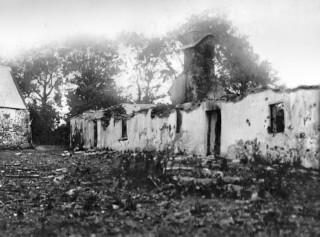
Irish Republican Army (IRA) volunteers occupying a farmhouse in Clonmult, County Cork are surrounded by a force of British Army, Royal Irish Constabulary (RIC) and Auxiliaries. In the action that follows, twelve IRA volunteers are killed, four wounded and four captured. A total of 22 people die in the ambush and subsequent executions – fourteen IRA members, two Black and Tans and six suspected informers.

The 4th battalion of the IRA First Cork Brigade, under Diarmuid O’Hurley and based around Midleton, Youghal and Cobh, had been a successful unit up until the Clonmult ambush. They had captured three RIC barracks and carried out an ambush in Midleton itself. In January 1921, the unit takes possession of a disused farmhouse overlooking the village of Clonmult. O’Hurley plans to ambush a military train at Cobh Junction on Tuesday, February 22, 1921 and at the time of the Clonmult action is scouting a suitable ambush site. However, according to historian Peter Hart, they “had become over-confident and fallen into a traceable routine.” An intelligence officer of the British Army Hampshire Regiment traces them to their billet at a farmhouse in Clonmult.

British troops, a party of the 2nd Battalion, Hampshire Regiment under the command of Lieutenant A. R. Koe, surround the house. Two IRA volunteers notice the advancing troops and open fire. Both are killed, but the shooting warns those sheltering inside the house, and a siege begins. A sortie from the house is attempted in the hope of gaining reinforcements from the local IRA company.

The acting IRA commander, Captain Jack O’Connell, manages to get away but three other volunteers are killed in the attempt. But O’Connell is unable to bring help in time. The Volunteers trapped inside make a desperate but unsuccessful attempt to escape through a narrow opening in the gable. Their hopes are dashed when British reinforcements arrive instead — regular RIC police, Black and Tans and Auxiliaries. The police also bring petrol, which an Army officer uses to set the thatched roof of the farmhouse on fire. With the farmhouse burning around them, an attempt is then made by the IRA to surrender.

What happens next is disputed. In his after-action report, Lieutenant Koe reports that at 6:30 PM six or seven rebels come out of the house with their hands up. As the Crown Forces go to meet them the remaining rebels in the house open fire. Some of the rebels outside the house are killed or wounded by the crossfire that ensues. The Crown Forces rush the house and the eight rebels inside are taken prisoner. By contrast, the surviving Volunteers claim that their men had surrendered in good faith, and had come out with their hands up, only to be shot by the police without any provocation. Opinion is divided amongst historians as to which version of the story to believe.

A total of twelve IRA Volunteers are killed in the action, with four more wounded and only four taken prisoner unscathed. Two of the IRA prisoners, Maurice Moore and Paddy O’Sullivan, are later executed in the Cork military barracks on April 28. Patrick Higgins, an IRA man who survived the killings, is sentenced to death but is reprieved due to the truce that ends the war on July 11. Hampshire Regiment historian Scott Daniell notes on the action that “like all the Irish operations, it was hateful to the British troops.”

The IRA suspects that an informer had led the British to the billet of the column wiped out at Clonmult, and over the following week, six alleged spies are executed by the IRA in the surrounding area. Mick Leahy, a local IRA officer, states that “things went to hell in the battallion” after Clonmult. Diarmuid O’Hurley, the commander of the battalion, is not at Clonmult but is later killed on May 28, 1921.


Leave a comment

Nollaig na mBan (Women’s Little Christmas)

Little Christmas, traditionally known as Nollaig na mBan or Women’s Little Christmas, takes place on January 6 each year. It is also known more widely as the Feast of the Epiphany, celebrated after the conclusion of the twelve days of Christmastide. It is the traditional end of the Christmas season and until 2013 was the last day of the Christmas holidays for both primary and secondary schools in Ireland.

Owing to differences in liturgical calendars, as early as the fourth century, the churches of the Eastern Roman Empire were celebrating Christmas on January 6, while those of the Western Roman Empire were celebrating it on December 25.

In October 1582, Pope Gregory XIII introduces the Gregorian calendar as a correction the Julian calendar, because the latter has too many leap years that cause it to drift out of alignment with the solar year. This has liturgical significance since calculation of the date of Easter assumes that spring equinox in the Northern Hemisphere occurs on March 21. To correct the accumulated error, he ordains the date be advanced by ten days. Most Roman Catholic countries adopt the new calendar immediately and Protestant countries follow suit over the following 200 years. For this reason, in some parts of the world, the Feast of the Epiphany, which is traditionally observed on January 6, is sometimes referred to as Old Christmas or Old Christmas Day.

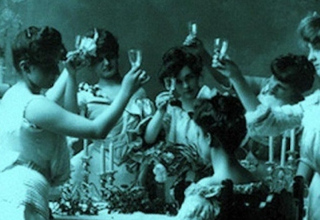
In Ireland, Little Christmas is also called Women’s Christmas (Irish: Nollaig na mBan), and sometimes Women’s Little Christmas. The tradition, still strong in counties Cork and Kerry, is so called because Irish men take on household duties for the day. Goose is the traditional meat served on Women’s Christmas. Some women hold parties or go out to celebrate the day with their friends, sisters, mothers and aunts. As a result, parties of women and girls are common in bars and restaurants on this night.

In Ireland and Puerto Rico, it is the traditional day to remove the Christmas tree and decorations. The tradition is not well documented, but one article from a January 1998 issue of The Irish Times, entitled “On the woman’s day of Christmas,” describes both some sources of information and the spirit of this occasion.

A “Little Christmas” is also a figure in Irish set dancing. It refers to a figure where half the set, four dancers, join together with hands linked behind partners lower back, and the whole figure proceeds to rotate in a clockwise motion, usually for eight bars.

So, to all of the women of Ireland and the Irish diaspora, Nollaig na mBan shona daoibh!


Leave a comment

Birth of Edward Hand, Soldier, Physician & Politician

Edward Hand, Irish soldier, physician, and politician who serves in the Continental Army during the American Revolutionary War, is born in Clyduff, King’s County (now County Offaly) on December 31, 1744. He rises to the rank of general and later is a member of several Pennsylvania governmental bodies.

Hand, the son of John Hand, is baptised in Shinrone. Among his immediate neighbours are the Kearney family, ancestors of United States President Barack Obama. He is a descendant of either the families of Mag Fhlaithimh (of south Ulaidh and Mide) or Ó Flaithimhín (of the Síol Muireadaigh) who, through mistranslation became Lavin or Hand.

Hand earns a medical certificate from Trinity College, Dublin. In 1767, he enlists as a Surgeon’s Mate in the 18th (Royal Irish) Regiment of Foot. On May 20, 1767, he sails with the regiment from Cobh, County Cork, arriving at Philadelphia on July 11, 1767. In 1772, he is commissioned an ensign. He marches with the regiment to Fort Pitt, on the forks of the Ohio River, returning to Philadelphia in 1774, where he resigns his commission.

In 1774, Hand moves to Lancaster, Pennsylvania, where he practices medicine. On March 13, 1775, he marries Catherine Ewing. Lancaster is the region of some of the earliest Irish and Scotch-Irish settlements in Pennsylvania. As a people, they are well known for their anti-English and revolutionary convictions. He is active in forming the Lancaster County Associators, a colonial militia. He is a 32nd degree Freemason, belonging to the Montgomery Military Lodge number 14.

Hand enters the Continental Army in 1775 as a lieutenant colonel in the 1st Pennsylvania Regiment under Colonel William Thompson. He is promoted to colonel in 1776 and placed in command of the 1st Continental, then designated the 1st Pennsylvania. Promoted to brigadier general in March 1777, he serves as the commander of Fort Pitt, fighting British loyalists and their Indian allies. He is recalled, after over two years at Fort Pitt, to serve as a brigade commander in Major General La Fayette‘s division.

In 1778, Hand attacks the Lenape, killing Captain Pipe‘s mother, brother, and a few of his children during a military campaign. Failing to distinguish among the Native American groups, he had attacked the neutral Lenape while trying to reduce the Indian threat to settlers in the Ohio Country, because other tribes, such as the Shawnee, had allied with the British.

After a few months, he is appointed Adjutant General of the Continental Army and serves during the Siege of Yorktown in that capacity. In recognition of his long and distinguished service, he is promoted by brevet to major general in September 1783. He resigns from the Army in November 1783.

Hand returns to Lancaster and resumes the practice of medicine. A Federalist, he is also active in civil affairs. Beginning in 1785, he owns and operates Rock Ford plantation, a 177-acre farm on the banks of the Conestoga River, one mile south of Lancaster, Pennsylvania. The Georgian brick mansion remains today, and the farm is a historic site open to the public.

Hand dies from typhoid fever, dysentery or pneumonia at Rock Ford on September 3, 1802, although medical records are unclear with some sources stating he died of cholera. There is no evidence Lancaster County suffered from a cholera epidemic in 1802. He is buried in St. James’s Episcopal Cemetery in Lancaster, the same church where he had served as a deacon.


Leave a comment

Storm Eva Cuts Power to 6,000

On December 24, 2015, the Electricity Supply Board networks says that around 6,000 customers are without power as a result of Storm Eva. The worst affected areas are Fermoy in County Cork and Kilcoole in County Wicklow. High winds and heavy rain batter the west and northwest as Storm Eva moves across the country.

Storm Eva, also called Chuck, Staffan and other names, is the fifth named storm of the Met Office and Met Éireann‘s Name our Storms project. Heavy rainfall from Eva occur around three weeks after Storm Desmond had brought severe flooding to parts of Northern England, exacerbating the ongoing situation. The low pressure is named Chuck by the Free University of Berlin and Staffan by the Swedish Meteorological and Hydrological Institute.

Eva is the fifth storm to be officially named by Met Éireann on December 22, 2015. An orange wind warning is issued for counties Clare, Galway, Mayo, Sligo and Donegal on the same day. Gales are also expected in the northwest of the United Kingdom, with storm force winds over parts of the Outer Hebrides. There are fears that the storm could cause further disruption to Cumbria in England, where areas were already dealing with the aftermath of flooding from Storm Desmond and in some cases had been flooded twice already. The army and Environment Agency staff are called in to be on stand-by to bolster flood defences.

Rain associated with the passage of Eva causes disruption when rivers burst their banks in the Cumbrian towns of Appleby-in-Westmorland, Keswick and Kendal on the December 22. Appleby-in-Westmorland receives three to four feet of flood water. The village of Glenridding is flooded for the third time in the month. Six thousand houses in Ireland are left without power. In London, Secretary of State for Environment, Food and Rural Affairs Liz Truss convenes a Cabinet Office Briefing Rooms (COBR) meeting to decide on emergency measures, which include the deployment of soldiers from the 2nd Battalion, Duke of Lancaster’s Regiment to the affected areas. On December 24, flood defence gates are closed in Carlisle, Keswick and Cockermouth to limit the damage expected from rainfall and 20 water pumps and two kilometres of temporary flood barriers are transported to northern England. Ferries operating between Dublin and Holyhead are cancelled due to bad weather on the Irish Sea.


Leave a comment

Assassination of RIC Inspector Phillip O’Sullivan

The Irish Republican Army (IRA) kills twenty-three-year-old Royal Irish Constabulary (RIC) District Inspector Phillip O’Sullivan in Dublin on December 17, 1920, while he is walking with his fiancée. O’Sullivan is from County Cork.

O’Sullivan is the son of Florence O’Sullivan and Margaret Aloysius O’Sullivan (née Barry) of Denis Quay, Kinsale, County Cork, who were married in Wicklow, County Wicklow in 1895. His father is a solicitor, practising in Kinsale.

O’Sullivan joins the Royal Naval Volunteer Reserve and is commissioned as a Temporary Lieutenant on June 8, 1918. He is sent for training to HMS Hermione, an Astraea-class cruiser, from where he is sent on August 22, 1918, to “Our Allies,” the mother ship for motor launches. He later serves on Motor Launches 386 and 530. While serving on a motor launch in the Mediterranean Sea, he is awarded the Military Cross for bravery during the Second Battle of Durazzo on October 2-3, 1918. He is demobilised on July 8, 1919, with the rank of Lieutenant, but this is later reversed as he had not yet reached the minimum age of 22.

O’Sullivan then qualifies as a solicitor and subsequently joins the Royal Irish Constabulary on July 24, 1920. He is appointed a District Inspector on October 1, 1920.

O’Sullivan is engaged to a Miss Moore, and he meets her near the General Post Office (GPO) on O’Connell Street in Dublin on December 17, 1920. They are walking down Henry Street when he is assassinated by a group of four men. One man shoots him in the head, but Miss Moore manages to grab the revolver from him. A second man shoots him as he lay on the ground. He dies one hour later in nearby Jervis Street Hospital. The cause of death is listed as shock and haemorrhage resulting from bullet wounds. His body is identified by his father. He is buried in the grave of his grandfather.

O’Sullivan had been identified by Ned Kelliher, possibly also from Kinsale, who had trailed him for a week. He points out O’Sullivan to members of Michael Collins‘s Squad, one of whom is Joe Byrne. Miss Moore states that she had been warned some time previously that O’Sullivan was “one of the Black and Tans” and she should have nothing to do with him. She had dismissed the threat.

O’Sullivan’s death is registered on January 7, 1921, on foot of a certificate received from a Military Court of Inquiry, following an inquest held on December 18, 1920.

The assassination is recorded by Joe Byrne in Witness Statement No. 461 to the Bureau of Military History, dated December 16, 1950. “I remember an evening in December 1920, when I was instructed, with others to proceed to Henry Street to assist in the shooting of D.I. O’Sullivan. About four of us comprised the party. A couple of us were detailed not to take part in the actual shooting but to cover off the men who were to do the job. I saw the D.I. being shot by a member of the Squad and when the shooting was over, we returned to Morelands.” Morelands is a shop on Abbey Street, Dublin, used as a base by The Squad.

O’Sullivan’s name is included on the supplementary list of the Glasnevin Cemetery War Memorial.

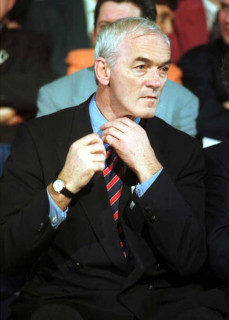
(From: The Royal Irish Constabulary Forum, irishconstabulary.com | Pictured: Photograph of District Inspector Philip John O’Sullivan, Cork Examiner, December 21, 1920)


Leave a comment

Jack Lynch Resigns as Taoiseach of Ireland

Jack Lynch, Irish politician and Taoiseach of Ireland from 1966 to 1973 and from 1977 to 1979, resigns as Taoiseach and leader of Fianna Fáil on December 5, 1979.

In 1946, Lynch has his first involvement in politics when he is asked by his local Fianna Fáil cumann to stand for Dáil Éireann in a by-election. Over the next 35 years he serves as Parliamentary Secretary to the Taoiseach (1951-54), Parliamentary Secretary to the Minister for Lands (1951-54), Minister for the Gaeltacht (March 1957-June 1957), Minister for Education (1957-59), Minister for Industry and Commerce (1959-65), Minister for Finance (1965-66), Leader of Fianna Fáil (1966-79), Leader of the Opposition (1973-77), and 5th Taoiseach of Ireland (1977-79).

The year 1979 proves to be the year in which Lynch finally realises that his grip on power has slipped. The first direct elections to the European Parliament take place in June and see the electorate severely punishing the ruling Fianna Fáil party. A five-month postal strike also led to deep anger amongst people all over the country. On 27 August 1979, the Provisional Irish Republican Army assassinates Earl Mountbatten of Burma in County Sligo. On the same day the IRA kills 18 British soldiers at Warrenpoint in County Down.

A radical security review and greater cross-border co-operation are discussed with the new British Prime Minister, Margaret Thatcher. These discussions lead Síle de Valera, a backbench TD, to directly challenge the leadership in a speech at the Liam Lynch commemoration at Fermoy, County Cork, on September 9. Although Lynch quickly tries to impose party discipline, attempting to discipline her for opposing party policy at a parliamentary party meeting held on September 28, de Valera correctly points out that she had not opposed the party policy regarding the North which called for the declaration of the British intent to withdraw from the north. The result is embarrassing for Lynch.

The visit of Pope John Paul II to Ireland in September proves to be a welcome break for Lynch from the day-to-day running of the country. In November, just before he departs on a visit to the United States, he decides that he will resign at the end of the year. This would allow him to complete his term as President of the European Community. The defining event which makes up his mind is the news that Fianna Fáil had lost two by-elections on November 7 in his native Cork (Cork City and Cork North-East).

In addition, during the trip Lynch claims in an interview with The Washington Post that a five-kilometre air corridor between the border had been agreed upon during the meeting with Thatcher to enhance security co-operation. This is something highly unsavory to many in Fianna Fáil. When Lynch returns, he is confronted openly by Síle de Valera, Dr. Bill Loughnane, a noted hardline Republican backbencher, along with Tom McEllistrim, a member of Charles Haughey‘s gang of five, at a parliamentary party meeting. Lynch stated that the British do not have permission to overfly the border. Afterwards Loughnane goes public with the details of the meeting and accuses Lynch of deliberately misleading the party. An attempt to remove the whip from Loughnane fails.

At this stage Lynch’s position has become untenable, with supporters of Haughey caucusing opinion within the party. George Colley, the man whom Lynch sees as his successor, comes to him and encourages him to resign sooner. Colley is convinced that he has enough support to defeat the other likely candidate, Charles Haughey, and that Lynch should resign early to catch his opponents on the hop. Lynch agrees to this and resigns as leader of Fianna Fáil on December 5, 1979, assured that Colley has the votes necessary to win. However, Haughey and his supporters have been preparing for months to take over the leadership and Lynch’s resignation comes as no surprise. He narrowly defeats Colley in the leadership contest and succeeds Lynch as Taoiseach.

Lynch remained on in Dáil Éireann as a TD until his retirement from politics at the 1981 Irish general election.


Leave a comment

Birth of Richard Croker, Leader of New York’s Tammany Hall

Richard Welstead Croker, American politician who is a leader of New York City‘s Tammany Hall and a political boss also known as “Boss Croker, is born in the townland of Ballyva, in the parish of Ardfield, County Cork on November 24, 1843.

Croker is the son of Eyre Coote Croker (1800–1881) and Frances Laura Welsted (1807–1894). He is taken to the United States by his parents when he is just two years old. There are significant differences between this family and the typical family leaving Ireland at the time. They are Protestant and are not land tenants. Upon arrival in the United States, his father is without a profession but has a general knowledge of horses and soon becomes a veterinary surgeon. During the American Civil War, he serves in that same capacity under General Daniel Sickles.

Croker is educated in New York public schools but drops out at age twelve or thirteen to become an apprentice machinist in the New York and Harlem Railroad machine shops. Not long after, he becomes a valued member of the Fourth Avenue Tunnel Gang, a street gang that attacks teamsters and other workers that gather around the Harlem line’s freight depot. He eventually becomes the gang’s leader. He joins one of the Volunteer Fire Departments in 1863, becoming an engineer of one of the engine companies. That is his gateway into public life.

James O’Brien, a Tammany associate, takes notice of Croker after he wins a boxing match against Dick Lynch whereby, he knocks out all of Lynch’s teeth. He becomes a member of Tammany Hall and active in its politics. In the 1860s he is well known for being a “repeater” at elections, voting multiple times at the polls. He is an alderman from 1868–1870 and Coroner of New York City from 1873–1876. He is charged with the murder of John McKenna, a lieutenant of James O’Brien, who is running for United States Congress against the Tammany-backed Abram S. Hewitt. John Kelly, the new Tammany Hall boss, attends the trial and Croker is freed after the jury is undecided. He moves to Harrison, New York by 1880. He is appointed the New York City Fire Commissioner in 1883 and 1887 and city Chamberlain from 1889-1890.

After the death of Kelly, Croker becomes the leader of Tammany Hall and almost completely controls the organization. As head of Tammany, he receives bribe money from the owners of brothels, saloons and illegal gambling dens. He is chairman of Tammany’s Finance Committee but receives no salary for his position. He also becomes a partner in the real estate firm Meyer and Croker with Peter F. Meyer, from which he makes substantial money, often derived from sales under the control of the city through city judges. Other income comes by way of gifts of stock from street railway and transit companies, for example. At the time, the city police are largely still under the control of Tammany Hall, and payoffs from vice protection operations also contribute to Tammany income.

Croker survives Charles Henry Parkhurst‘s attacks on Tammany Hall’s corruption and becomes a wealthy man. Several committees are established in the 1890s, largely at the behest of Thomas C. Platt and other Republicans, to investigate Tammany and Croker, including the 1890 Fassett Committee, the 1894 Lexow Committee, during which Croker leaves the United States for his European residences for three years, and the Mazet Investigation of 1899.

Croker’s greatest political success is his bringing about the 1897 election of Robert Anderson Van Wyck as first mayor of the five-borough “greater” New York. During Van Wyck’s administration Croker completely dominates the government of the city.

In 1899, Croker has a disagreement with Jay Gould‘s son, George Jay Gould, president of the Manhattan Elevated Railroad Company, when Gould refuses his attempt to attach compressed-air pipes to the Elevated company’s structures. He owns many shares of the New York Auto-Truck Company, a company which would benefit from the arrangement. In response to the refusal, he uses Tammany influence to create new city laws requiring drip pans under structures in Manhattan at every street crossing and the requirement that the railroad run trains every five minutes with a $100 fine for every violation. He also holds 2,500 shares of the American Ice Company, worth approximately $250,000, which comes under scrutiny in 1900 when the company attempts to raise the price of ice in the city.

After Croker’s failure to carry the city in the 1900 United States presidential election and the defeat of his mayoralty candidate, Edward M. Shepard, in 1901, he resigns from his position of leadership in Tammany and is succeeded by Lewis Nixon. He departs the United States in 1905.

Croker operates a stable of thoroughbred racehorses during his time in the United States in partnership with Michael F. Dwyer. In January 1895, they send a stable of horses to England under the care of trainer Hardy Campbell, Jr. and jockey Willie Simms. Following a dispute, the partnership is dissolved in May but Croker continues to race in England. In 1907, his horse Orby wins Britain’s most prestigious race, The Derby. Orby is ridden by American jockey John Reiff whose brother Lester had won the race in 1901. Croker is also the breeder of Orby’s son, Grand Parade, who wins the Derby in 1919.

Croker returns to Ireland in 1905 and dies on April 29, 1922, at Glencairn House, his home in Stillorgan outside Dublin. His funeral, celebrated by South African bishop William Miller, draws some of Dublin’s most eminent citizens. The pallbearers are Arthur Griffith, the President of Dáil Éireann; Laurence O’Neill, the Lord Mayor of Dublin; Oliver St. John Gogarty; Joseph MacDonagh; A.H. Flauley, of Chicago; and J.E. Tierney. Michael Collins, Chairman of the Provisional Government of the Irish Free State, is represented by Kevin O’Shiel; the Lord Lieutenant of Ireland, Edmund Bernard FitzAlan-Howard, 1st Viscount FitzAlan of Derwent, is represented by his under-secretary, James MacMahon.

In 1927, J. J. Walsh claims that just before his death Croker had accepted the Provisional Government’s invitation to stand in Dublin County in the imminent 1922 Irish general election.


Leave a comment

Birth of Architect Benjamin Woodward

Benjamin Woodward, Irish architect who, in partnership with Sir Thomas Newenham Deane, designs a number of buildings in Dublin, Cork and Oxford, is born in Tullamore, County Offaly on November 16, 1816.

Woodward is trained as an engineer but develops an interest in medieval architecture, producing measured drawings of Holy Cross Abbey in County Tipperary. These drawings are exhibited at the Royal Institute of British Architects (RIBA) in London in 1846.

The same year Woodward joins the office of Sir Thomas Deane and becomes a partner in 1851 along with Deane’s son, Thomas Newenham Deane. It seems that Deane looks after business matters and leaves the design work to Woodward.

Woodward’s two most important buildings are the Museum at Trinity College, Dublin (1854-1857) and the Oxford University Museum of Natural History, Oxford, (1854-1860). He is also responsible for the Kildare Street Club in Dublin (1858-1861) and Queen’s College Cork, now University College Cork (1845-1849).

The work of Deane and Woodward is characterised by naturalistic decoration with foliage and animals carved into capitals and plinths around windows and doors. It is extolled by John Ruskin in particular when he visits the Museum at Trinity College, Dublin. Woodward collaborates in particular with the O’Shea brothers, James and John, who are stone carvers from County Cork. They, along with London sculptors, carve the abundant decorative stonework at Trinity, showing owls, lizards, cats and monkeys, as well as other flora and fauna. Later the O’Sheas carve stonework at the Kildare Street Club, including the famous window piece showing the club members as monkeys playing billiards. Some stories tell of the O’Sheas getting into trouble and possibly even being sacked for carving cats or monkeys at the Oxford University Museum.

Benjamin Woodward dies on May 16, 1861.

(Pictured: Benjamin Woodward attributed to Lewis Carroll, albumen print, late 1850s, © National Portrait Gallery, London)


Leave a comment

Death of Risteárd Ó Glaisne, Irish Language Writer & Teacher

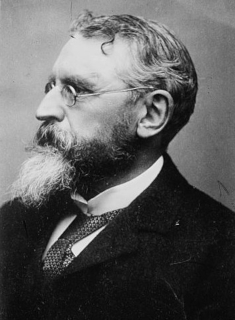
Risteárd Ó Glaisne, teacher and writer with a lifelong commitment to the Irish language, dies in Dublin on November 6, 2003. He is the author of biographies of two former Presidents, Douglas Hyde (pictured) and Cearbhall Ó Dálaigh.

Risteárd Earnán Ó Glaisne is born on September 2, 1927, near Bandon, County Cork, the third of four children of George William Giles and his wife, Sara Jane (née Vickery). Educated at Bandon Grammar School and Trinity College Dublin, he graduates with a BA in 1949 and obtains a master’s degree in 1959. At TCD he is greatly influenced by Daithí Ó hUaithne.

Ó Glaisne first becomes interested in the Irish language at school in Bandon. His headmaster gives him a copy of Liam Ó Rinn‘s Peann agus Pár, along with a book of poems by Ivan Turgenev translated into Irish by Ó Rinn. “I suddenly found myself breaking into a world vastly larger than my own world in Irish,” he recalls. “The quality of mind I encountered made me realise I could never again connect Irish only with poteen and potatoes.”

Ó Glaisne further explores the language by making contact with the few native Irish speakers left in the Bandon area. He gradually comes to the conclusion that he is a member of a nation that has an extremely old and in many ways distinguished culture, of which Irish has been historically an integral part. Deciding that Irish best reflects the society in which he grew up and reflects him as an individual, he adopts it as his first language.

On graduating from TCD Ó Glaisne teaches Irish at Avoca School, Blackrock. He later teaches in St. Andrew’s College, Dublin, and at St. Patrick’s Cathedral Grammar School, where he ends his teaching career in 1989. He took a career break in the mid-1960s to study the French educational system and to travel on the Continent.

To perfect his Irish Ó Glaisne holidays on the Great Blasket Island, where he immerses himself in the rich oral culture. He makes many friends among the islanders, and the friendships continue after they are resettled on the mainland in Dún Chaoin. He regularly visits Corca Dhuibhne to meet friends like Muiris Mhaidhc Léan Ó Guithín, one of the last surviving islanders, and to enjoy the annual Ceiliúradh an Bhlascaoid.

Ó Glaisne holds that Protestants have enjoyed a long association with Irish, pointing to 18th-century followers of John Wesley such as Charles Graham, Gideon Ousley and Tomás Breathnach, who evangelised in Irish. He firmly believes that Protestants can be “every whit as Irish” as Roman Catholics. He urges his co-religionists to identify fully with Ireland.

Ó Glaisne is the founder and editor of Focus (1958-66), a monthly magazine that aims to help Protestants “come to an understanding of their cultural heritage.” He is a regular contributor to programmes on RTÉ and RTÉ Raidió na Gaeltachta, and writes for Comhar, Inniú, An tUltach and The Irish Times.

Ó Glaisne is the author of over 20 books and pamphlets in Irish. These include biographies of Conor Cruise O’Brien, Ian Paisley, Tomás Ó Fiaich and Dúbhglas de hÍde. Other works include a history of Methodism in Ireland, a book of essays on early revivalist writers and a manual for beginners in journalism. He also writes Saoirse na mBan (1973), Gaeilge i gColáiste na Trionóide 1592-1992 (1992) and Coláiste Moibhí (2002), a history of the preparatory college for Protestant teachers.

Generous with his time and knowledge, Ó Glaisne makes a point of encouraging young writers.

(From: “Worked to make Protestants aware of Irish culture heritage,” The Irish Times, Saturday, November 15, 2003)