seamus dubhghaill

Promoting Irish Culture and History from Little Rock, Arkansas, USA


Leave a comment

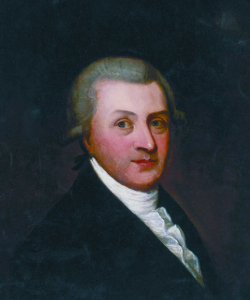
Birth of Robert Blair “Paddy” Mayne

robert-blair-paddy-mayne

Robert Blair “Paddy” Mayne, British Army soldier, solicitor, Ireland rugby union international, amateur boxer, and a founding member of the Special Air Service (SAS), is born in Newtownards, County Down, on January 11, 1915.

Mayne attends school at Regent House School, a school for students aged 4 to 18. While at Regent he discovers his skill and love for the game of rugby. He also enjoys cricket and golf and becomes a marksman with the rifle club. He goes on to Queen’s University Belfast to study law. At university he takes up boxing and becomes the Irish Universities Heavyweight Champion in August 1936. He also wins the Scrabo Golf Club President’s cup in 1937. He graduates from Queen’s University in 1939.

During 1938, Mayne travels to Africa on the 1938 British Lions Tour to South Africa. He plays on a team that tours around Africa playing other local clubs. While traveling, it is discovered that Mayne has a wild side and on various occasions finds himself in trouble. His “go to” is to trash the hotel rooms of his teammates. The team includes some of the best players from around Ireland and Britain.

In 1939, with outbreak of World War II, Mayne joins the Supplementary Reserves in Newtownards and receives a commission in the Royal Artillery. He serves in several units in Ireland and England, generally with light and heavy anti-aircraft units. He volunteers for the No. 11 (Scottish) Commando unit which is sent to the Middle East. There he sees action during the Syria-Lebanon campaign. Specifically, during the Battle of the Litani River, he draws attention from Captain David Stirling who is forming the new Special Air Service (SAS). Sterling recruits Mayne for the new SAS while he is in jail for striking his commanding officer.

From November 1941 to the end of 1942, Mayne is involved in several raids behind enemy lines with the SAS. He uses jeeps to go to various Axis bases and begin blowing up planes and fuel dumps. It is claimed that he personally destroyed 100 planes during these missions. In addition to serving in the Middle East, he serves as well in Sicily, Italy, Belgium, the Netherlands, Germany, Norway and France. In most of these locations he works with the resistance behind the enemy lines. In France he helps to train the French Resistance.

By the end of the war, Mayne has been promoted to the rank of Lieutenant Colonel and has also received the British Army’s Distinguished Service Order with three bars, which means he received the award four times. After the war he joins the British Antarctic Survey in the Falkland Islands. He returns home to Newtownards when back issues, which started while he was serving in the Middle East, become more difficult for him.

Mayne is initiated into Eklektikos Lodge No. 542 in Newtownards in 1945. He is a very enthusiastic mason and joins a second lodge in Newtownards, Friendship Lodge No. 447. On the evening of December 13, 1955, he attends a meeting of Friendship Lodge and then joins some of his masonic brothers at a local bar. At about 4:00 AM on December 14, he is found dead in his Riley RM roadster in Mill Street, Newtownards, having reportedly collided with a farmer’s vehicle.

At his funeral hundreds of mourners turn out to pay their respects and to see him interred in a family plot in the town’s old Movilla Abbey graveyard. After his death his masonic jewel is preserved for many years by an old school friend before it is presented to Newtownards Borough Council where it is displayed in the Mayoral Chamber of the Council Offices.


Leave a comment

Birth of Boxer Jimmy McLarnin

jimmy-mclarnin

James Archibald McLarnin, Irish Canadian professional boxer who became a two-time welterweight world champion and an International Boxing Hall of Fame inductee, is born on December 19, 1907, in Hillsborough, County Down. He has been referred to as the greatest Irish boxer of all time. BoxRec ranks him as the 11th best pound-for-pound fighter of all-time, the second best Canadian boxer of all time after Sam Langford, and the third greatest welterweight of all time.

When McLarnin is three years old the family emigrates to Saskatchewan, Canada via Liverpool. The McLarnins start out as a wheat farmers, but years later, following a particularly harsh winter, the family moves to Vancouver where they open a second-hand clothing store in Vancouver’s east end.

McLarnin is prodigious athlete, his main sports are football, baseball and boxing. He takes up boxing at the age of 10 after getting into a fight defending his newspaper-selling pitch. Former professional boxer Charles “Pop” Foster recognizes McLarnin’s talent at the age of 13. He constructs a makeshift gym for McLarnin to train in, sure that he will one day be the champion of the world. The two of them remain close, and when Foster dies, he leaves everything he has to McLarnin.

Following a successful start to his career in Vancouver, McLarnin grows aggrieved at the low pay he is receiving for bouts and decides to move to San Francisco. There his youthful appearance makes it difficult to get a fight until he lies about his age. It is for this reason that McLarnin is known as the “Baby-faced Assassin.” Despite his youthful appearance, McLarnin has incredible power with both fists, his right being particularly feared. Towards the end of his career he is forced to become more of a scientific boxer to reduce further injuries to his hands.

McLarnin loses his first title shot on May 21, 1928 in New York City against world lightweight champion Sammy Mandell. However, he does go on to beat him twice in the following two years. It is five years before McLarnin gets another title shot, during which time he knocks out gifted Jewish contenders Al Singer, Ruby Goldstein, and Sid Terris.

McLarnin’s second title shot comes against welterweight champion Young Corbett III. McLarnin wins by knockout after only 2 minutes 37 seconds. Following his title success, he fights an epic three-fight series with Barney Ross. The first fight, on May 28, 1934, is won by Ross, but McLarnin regains his title in their next match four months later. In the deciding fight on May 28, 1935, McLarnin loses his title for the final time in a narrow decision.

McLarnin retires in November 1936 still at the top of his game, having won his last two fights against all-time greats Tony Canzoneri and Lou Ambers. His record is 54 wins, 11 losses, and 3 draws in 68 contests. He never returns to the ring despite large incentives for him to do so. Unlike many boxers, he invested his money wisely and retires a wealthy man. He opens an electrical goods store, and also does some acting, golfing, and lecturing.

In 1996 The Ring votes McLarnin the fifth-greatest welterweight of all time.

Jimmy McLarnin dies on October 28, 2004 at the age of 96 in Richland, Washington. He is interred in the Forest Lawn Memorial Park in Glendale, California.


Leave a comment

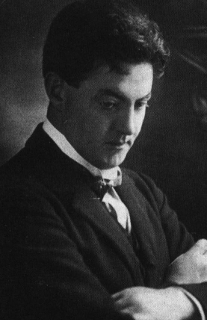
Birth of Composer Sir Herbert Hamilton Harty

herbert-hamilton-harty

Sir Herbert Hamilton Harty, composer, conductor, pianist and organist, is born on December 4, 1879, in Hillsborough, County Down.

Harty’s father teaches him the viola, the piano and counterpoint, and, at the age of twelve, he follows his father’s profession and is appointed organist of Magheracoll Church, County Antrim.

Harty takes further posts in his teenage years as a church organist in Belfast and Bray. While in the latter, he comes under the influence of Michele Esposito, professor of piano at the Royal Irish Academy of Music, who encourages him to pursue a career as a piano accompanist. As Bray is only twelve miles from Dublin, Harty is able go into the city to hear an orchestra for the first time in his life.

After his early career as a church organist in his native Ireland, Harty moves to London at about age 20, soon becoming a well-known piano accompanist. The Musical Times calls him “the prince of accompanists.” As a composer he writes throughout his career, many of his works being well received, though few are regularly performed in the 21st century.

In his career as a conductor, which begins in 1904, Harty is particularly noted as an interpreter of the music of Hector Berlioz. From 1920 to 1933 he is the chief conductor of The Hallé symphony orchestra in Manchester, which he returns to the high standards and critical acclaim that it had enjoyed under its founder, Charles Hallé. His last permanent post is with the London Symphony Orchestra, but it lasts only two years, from 1932 to 1934, as Harty does not prove to be a box-office draw. According to a historian of the orchestra, Richard Morrison, Harty is “brutally and hurtfully” dropped in 1934.

During his conducting career, Harty makes some recordings with his orchestras. Shortly after his dismissal by the London Symphony Orchestra, Harty begins to suffer the symptoms of a brain tumor. After surgery which includes the removal of his right eye, he resumes his career until 1940, but the tumour returns to cause his death at the age of 61 in Hove on February 19, 1941. He is cremated, and his ashes are interred in the grounds of Hillsborough parish church, near the front door. There is a separate memorial in the church.


Leave a comment

Birth of Artist Thomas James Carr

Thomas James Carr, British artist who is associated with the Euston Road School in the 1930s and has a long career as a painter of domestic scenes and landscapes, is born in Belfast to a well-to-do family on September 21, 1909.

Carr attends Oundle School where his art masters include E.M.O’R. Dickey and Christopher Perkins. In 1927 Carr moves to London where he studies at the Slade School of Fine Art. After two years at the Slade, he moves to Italy and spends six months in Florence. Upon returning to London, he establishes himself as a well-regarded painter of domestic scenes.

Although essentially a realist painter, Carr is included in the 1934 Objective Abstractionists exhibition at Zwemmer’s Gallery. In 1937, he shares an exhibition with Victor Pasmore and Claude Rogers at the Storran Gallery and subsequently becomes associated with the representational style of the Euston Road School. Starting in 1940, at Georges Wildenstein‘s gallery, he holds a series of one-man exhibitions at various galleries including at the Leicester Galleries, The Redfern Gallery and also at Thomas Agnew & Sons.

In 1939, Carr returns to Northern Ireland and settles in Newcastle, County Down. During the World War II, he receives a small number of commissions from the War Artists’ Advisory Committee to depict parachute manufacture and the Short Sunderland flying boats being built at the Short Brothers factory in Belfast.

After the war, Carr teaches at the Belfast College of Art and moves to Belfast in 1955. After the death of his wife in 1995, he moves to Norfolk, England to be nearer one of his three daughters and her family. He continues to paint into old age and tends to concentrate on landscape painting.

Carr is a regular exhibitor at the Royal Academy of Arts and is a member of the Royal Ulster Academy, the New English Art Club, the Royal Watercolour Society and is an honorary member of the Royal Hibernian Academy (RHA). Queen’s University awards him an honorary doctorate in 1991. For his services to art in Northern Ireland, he is awarded the MBE in 1974 and receives an OBE in 1993.

Thomas Carr dies at the age of 89 in Norwich, England on February 17, 1999.

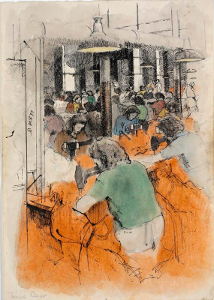
(Pictured: “Making Coloured Parachutes” by Thomas James Carr (http://www.iwm.org.uk/collections/item/object/4674) [Public domain], via Wikimedia Commons)


Leave a comment

Death of Samuel Nielson, Society of United Irishmen Founder Member

Samuel Neilson, one of the founder members of the Society of United Irishmen and the founder of its newspaper the Northern Star, dies in Poughkeepsie, New York on August 29, 1803.

Neilson is born in Ballyroney, County Down, the son of Presbyterian minister Alexander, and Agnes Neilson. He is educated locally. He is the second son in a family of eight sons and five daughters. At the age of 16, he is apprenticed to his elder brother, John, in the business of woolen drapery in Belfast. Eight years later he establishes his own business.

Despite his commercial success, Neilson is naturally drawn to politics and is early on a member of the reformist Irish Volunteers movement. In 1791, inspired by the French Revolution, he suggests to Henry Joy McCracken the idea of a political society of Irishmen of every religious persuasion. He establishes the Society of United Irishmen in Belfast. The following year he launches the newspaper of the United Irishmen, the Northern Star, which effectively throws away his fortune. As its editor he is a high-profile target for the authorities and is prosecuted for libel several times, being twice imprisoned between 1796 and 1798.

Along with several other state prisoners, Neilson is released in February 1798 following several petitions by influential friends, on grounds of bad health. Upon release he immediately involves himself in the United Irishmen aligning with the radicals among the leadership who are pressing for immediate rebellion and oppose the moderates who wish to wait for French assistance before acting.

The United Irishmen are however, severely penetrated by informants who keep Dublin Castle abreast of their plans and discussions. In March 1798, information of a meeting of the United Irish executive at the house of Oliver Bond leads to the arrest of most of the leadership, leaving Neilson and Lord Edward FitzGerald as the only figures of national importance still at liberty. They decide to press ahead as soon as possible and settled on May 23 as the date for the rebellion to begin.

As the date looms closer, the authorities go into overdrive to sweep up the rump leadership and on May 18 Lord Edward is betrayed in his hiding place and critically wounded while resisting capture. Neilson, now with responsibility for finalising plans for the looming rebellion, decides that Fitzgerald is too valuable to do without, and decides to try and rescue him from Newgate Prison in Dublin. Wary of confiding his plans too early for fear of betrayal, Neilson goes on a reconnaissance of the prison but is spotted by chance by one of his former jailers and after a fierce struggle, he is overpowered and dragged into the prison.

Neilson is indicted for high treason and held in Kilmainham Gaol with other state prisoners for the duration of the doomed rebellion outside. After the execution of Oliver Bond, and the brothers John and Henry Sheares, Neilson and the remaining prisoners agree to provide the authorities with details of the organisation of the United Irishmen, plans for the rebellion, etc. in return for exile.

Following the suppression of the rebellion, Neilson is transferred to Fort George in Inverness-shire, Scotland, and in 1802 he is deported to the Netherlands. From there he makes his way to the United States, arriving in December 1802, and settling in Poughkeepsie, New York.  He has little time to enjoy his liberty before his sudden death on August 29, 1803, of yellow fever, or possibly a stroke.

Nielson is not idle during his short life in America as he completes plans to start a new evening newspaper in Poughkeepsie and also has plans in the works to establish a version of the Society of United Irishmen in the United States. Since his death, his remains have been moved to three different cemeteries before coming to rest in the Poughkeepsie Rural Cemetery in 1880.

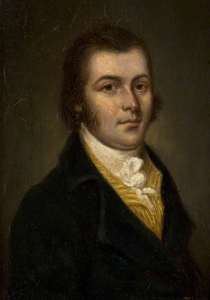
(Photograph: (c) National Museums Northern Ireland; Supplied by The Public Catalogue Foundation)


Leave a comment

Execution of the Sheares Brothers

Brothers John and Henry Sheares, both Irish lawyers and members of the Society of United Irishmen, are executed in Dublin on July 14, 1798 during the Irish Rebellion of 1798.

The Sheares brothers are the sons of Henry Sheares, a liberal banker from County Cork who also sits in the Irish Parliament for the Borough of Clonakilty. Henry attends Trinity College, Dublin, buys an officer’s commission and then studies as a lawyer, being called to the bar as a barrister in 1790. John qualifies as a barrister in 1788.

In 1792 the brothers go to Paris and are swept away by the popular enthusiasms of the French Revolution. They meet leaders such as Jacques Pierre Brissot and Jean-Marie Roland, both of whom are to be executed in 1793. In particular they witness the introduction of the guillotine, on which 1,400 are to die in 1792. On the boat from France to England they meet Daniel O’Connell, then a student, who is disgusted by the increasingly bloodthirsty nature of the revolution. O’Connell remains an advocate of non-violence thereafter.

The brothers join the United Irish movement upon their return to Dublin in January 1793, when it is still legal, and John begins to write articles for the Press, a nationalist paper. However, France declares war on Britain, and by extension on Ireland, in February 1793. The Society’s initial aims of securing Catholic emancipation and universal suffrage are unsuccessful, amounting to the administration’s 1793 Relief Act. Its stance becomes more radical, and in turn the Irish administration fears a group inspired by France, banning it in 1794.

The Sheares brothers principally organise the movement in Cork, while continuing with their legal careers. A Mr. Conway, one of their keenest members in Cork, informs the administration of their activities. During 1793 the brothers also join the Dublin Society of the United Irishmen, where another spy, Thomas Collins, passes on their names. Their other two less famous brothers enlist in the British army and are killed in action. On the arrest of most of the United Irish “Directory” members in March 1798, John is chosen as a replacement on the approach to the outbreak of rebellion. His main act at this point is to decide on the date – May 23.

The Directory fatally stays in Dublin, where the United Irish have less support. Already quietly betrayed by Conway and Collins, John also befriends Captain Warnesford Armstrong from County Down, who claims to be a busy member of the party there. John never verifies this, and Armstrong informs the authorities of the brothers’ whereabouts, also appearing as a witness in the ensuing trial. They are arrested on May 21 and indicted on June 26.

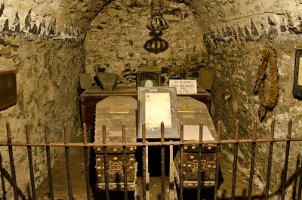
Inevitably the brothers are tried on July 12, as the rebellion is at its height, and are hanged, drawn and quartered two days later outside Newgate Prison. Their lawyer is John Philpot Curran who, with Sir Jonah Barrington, obtain a stay of execution in the hope that Henry will recant, but the brothers are already dead. They are buried at Dublin’s St. Michan’s Church. Visitors are brought to their coffins on a tour of St. Michan’s vaults.

(Pictured: The coffins of the Sheares brothers in the crypt of St. Michan’s Church)


Leave a comment

The Battle of Ballynahinch

The Battle of Ballynahinch is fought outside Ballynahinch, County Down, on June 12, 1798, during the Irish Rebellion of 1798 between British forces led by Major-General George Nugent and the local United Irishmen led by Henry Munro.

Munro is a Lisburn linen merchant and Presbyterian United Irishman who has no military experience but has taken over command of the Down organisation following the arrest on June 5 of the designated leader, Rev. William Steel Dickson. Upon hearing of the victory at Saintfield on June 9, Munro joins the rebel camp there and then moves to Ednavady Hill, Ballynahinch to join the thousands who have gathered in support of the rebellion. The response of the British garrisons is to converge on Ballynahinch from Belfast and Downpatrick in two columns accompanied by several pieces of cannon.

The battle begins on the night of June 12 when two hills to the left and right of Ballynahinch are occupied by the British who pound the town with their cannon. During a pause when night falls, some rebel officers are said to have pressed Munro for a night attack but he refuses on the grounds that it is unchivalrous. As a consequence many disillusioned rebels slip away during the night.

As dawn breaks the battle recommences with the rebels attacked from two sides and although achieving some initial success, confusion in the rebel army sees the United Irishmen retreat in chaos, pursued by regrouping British forces who quickly take advantage by turning retreat into massacre. Initial reports claim four hundred rebels are killed, while British losses are around forty.

Munro escapes the field of battle but is betrayed by a farmer who he has paid to conceal him and is hanged in front of his own house in Lisburn on June 16. Ballynahinch is sacked by the victorious military after the battle with sixty-three houses being burned down. Cavalry scours the surrounding countryside for rebels, raiding homes and killing indiscriminately, the 22nd Dragoons being guilty of some of the worst atrocities. The most famous victim is Betsy Gray, a young female rebel who, with her two brothers, is slaughtered in the post-battle massacre, ensuring her place in legend to this day.

Because of his family’s involvement in this event, Robert Stewart, the future Lord Castlereagh, is made Chief Secretary for Ireland.


Leave a comment

Birth of Sir Kenneth Percy Bloomfield in Belfast

Sir Kenneth Percy Bloomfield, former head of the Northern Ireland Civil Service who is later a member of the Independent Commission for the Location of Victims’ Remains and for a time Northern Ireland Victims Commissioner, is born in Belfast on April 15, 1931. He has also held a variety of public sector posts in Northern Ireland and elsewhere.

Bloomfield is born to English parents and grows up close to Neill’s Hill railway station. Between the years of 1943 and 1949, he attends the Royal Belfast Academical Institution and later goes on to read Modern History at St. Peter’s College, Oxford. On September 12, 1988, he and his wife are the targets of an Irish Republican Army (IRA) attack on their home in CrawfordsburnCounty Down. Neither Bloomfield nor his wife are injured in the blast.

Having joined the Civil Service in 1952, Bloomfield is appointed Permanent Secretary to the power sharing executive in 1974. After the collapse of the executive, he goes on to become Permanent Secretary for the Department of the Environment and the Department of Economic Development, and finally Head of the Northern Ireland Civil Service on December 1, 1984. In that capacity he is the most senior advisor to successive Secretaries of State for Northern Ireland and other Ministers on a wide range of issues. He retires from the post in April 1991.

Since retiring from the Civil Service, Bloomfield has embarked on a life of involvement in a diverse range of organisations. He has taken up roles such as Chairman for the Northern Ireland Legal Services Commission and his alma mater, the Royal Belfast Academical Institution. He has also been involved in the political reform of the States of Jersey and spearheaded the Association for Quality Education, which is fighting to retain academic selection in the Northern Ireland education system. In December 1997 he is asked by the Secretary of State for Northern Ireland, Mo Mowlam, to become the Northern Ireland Victims Commissioner for a fixed term. His role is to produce a report on the way forward for Victims issues in Northern Ireland. His report entitled We Will Remember Them is published in April 1998. From 1991 to 1999 he serves as the BBC‘s National Governor for Northern Ireland.

Bloomfield receives a Knighthood in the 1987 Queen’s Birthday Honours and honorary doctorates from Queen’s University, Belfast, the Open University and the Ulster University. He is also a Member of the Royal Irish Academy.


Leave a comment

Birth of Northern Ireland Politician Gerry Fitt

Gerard FittNorthern Ireland politician, is born in Belfast on April 9, 1926. He is a founder and the first leader of the Social Democratic and Labour Party (SDLP), a social democratic and Irish nationalist party.

Fitt is educated at a local Christian Brothers school in Belfast. He joins the Merchant Navy in 1941 and serves on convoy duty during World War II. His elder brother Geordie, an Irish Guardsman, is killed at the Battle of Normandy.

Living in the nationalist Beechmount neighbourhood of the Falls, he stands for the Falls as a candidate for the Dock Labour Party in a city council by-election in 1956, but loses to Paddy Devlin of the Irish Labour Party, who later becomes his close ally. In 1958, he is elected to Belfast City Council as a member of the Irish Labour Party.

In 1962, he wins a seat in the Parliament of Northern Ireland from the Ulster Unionist Party, becoming the only Irish Labour member. Two years later, he left Irish Labour and joined with Harry Diamond, the sole Socialist Republican Party Stormont MP, to form the Republican Labour Party. At the 1966 general election, Fitt won the Belfast West seat in the Westminster parliament.

Many sympathetic British Members of Parliament (MPs) are present at a civil rights march in Derry on October 5, 1968, when Fitt and others are beaten by the Royal Ulster Constabulary. Fitt also supports the 1969 candidacy of Bernadette Devlin in the Mid Ulster by-election who runs as an anti-abstentionist ‘Unity‘ candidate. Devlin’s success greatly increases the authority of Fitt in the eyes of many British commentators, particularly as it produces a second voice on the floor of the British House of Commons who challenge the Unionist viewpoint at a time when Harold Wilson and other British ministers are beginning to take notice.

In August 1970, Fitt becomes the first leader of a coalition of civil rights and nationalist leaders who create the Social Democratic and Labour Party (SDLP). By this time Northern Ireland is charging headlong towards near-civil war and the majority of unionists remain hostile.

After the collapse of Stormont in 1972 and the establishment of the Northern Ireland Assembly in 1973 Fitt becomes deputy chief executive of the short-lived Power-Sharing Executive created by the Sunningdale Agreement.

Fitt becomes increasingly detached from both his own party and also becomes more outspoken in his condemnation of the Provisional Irish Republican Army. He becomes a target for republican sympathisers in 1976 when they attack his home. He becomes disillusioned with the handling of Northern Ireland by the British government. In 1979, he abstains from a crucial vote in the House of Commons which brings down the Labour government, citing the way that the government had failed to help the nationalist population and tried to form a deal with the Ulster Unionist Party.

In 1979, Fitt is replaced by John Hume as leader of the SDLP and he leaves the party altogether after he agrees to constitutional talks with British Secretary of State Humphrey Atkins without any provision for an ‘Irish dimension’ and then sees his decision overturned by the SDLP party conference. Like Paddy Devlin before him, he claims the SDLP has ceased to be a socialist force.

In 1981, he opposes the hunger strikes in the Maze prison in Belfast. His seat in Westminster is targeted by Sinn Féin as well as by the SDLP. In June 1983, he loses his seat in Belfast West to Gerry Adams, in part due to competition from an SDLP candidate. The following month, on October 14, 1983, he is created a UK life peer as Baron Fitt, of Bell’s Hill in County Down. His Belfast home is firebombed a month later and he moves to London.

Gerry Fitt dies in London on August 26, 2005, at the age of 79, after a long history of heart disease.


Leave a comment

Birth of British General & Explorer Francis Rawdon Chesney

francis-rawdon-chesney

Francis Rawdon Chesney, British general and explorer, is born in Annalong, County Down, on March 16, 1789.

Chesney is a son of Captain Alexander Chesney, an Irishman of Scottish descent who, having emigrated to South Carolina in 1772, serves under Lord Francis Rawdon-Hastings (afterwards Marquess of Hastings) in the American War of Independence, and subsequently receives an appointment as coast officer at Annalong, County Down, where Chesney is born.

Lord Rawdon gives Chesney a cadetship at the Royal Military Academy, Woolwich, and he is gazetted to the Royal Artillery in 1805. Although he rises to be lieutenant-general and colonel-commandant of the 14th brigade Royal Artillery (1864), and general in 1868, Chesney’s memory lives not for his military record, but for his connection with the Suez Canal, and with the exploration of the Euphrates valley, which starts with his being sent out to Constantinople in the course of his military duties in 1829, and his making a tour of inspection in Egypt and Syria. In 1830, after taking command of 7th Company, 4th Battalion Royal Artillery in Malta, he submits a report on the feasibility of making a Suez Canal. This is the original basis of Ferdinand de Lesseps’ great undertaking. In 1831 he introduces to the home government the idea of opening a new overland route to India, by a daring and adventurous journey along the Euphrates valley from Anahto the Persian Gulf. Returning home, Acting Lt. Colonel Chesney busies himself to get support for the latter project, to which the East India Company’s board is favourable. In 1835 he is sent out in command of a small expedition, on which he takes a number of soldiers from 7th Company RA and for which Parliament votes £20,000, in order to test the navigability of the Euphrates.

After encountering immense difficulties, from the opposition of the Egyptian pasha, and from the need of transporting two steamers, one of which is subsequently lost, in sections from the Mediterranean Sea over the hilly country to the river, they successfully arrive by water at Bushirein the summer of 1836, and prove Chesney’s view to be a practical one. In the middle of 1837, Chesney returns to England, and is given the Royal Geographical Society’s gold medal, having meanwhile been to India to consult the authorities there. The preparation of his two volumes on the expedition, published in 1850, is interrupted by his being ordered out in 1843 to command the artillery at Hong Kong.

In 1847, his period of service is completed, and he goes home to Ireland, to a life of retirement. However, in 1856 and again in 1862 he goes out to the East to take a part in further surveys and negotiations for the Euphrates valley railway scheme, which, however, the government does not take up, in spite of a favourable report from the House of Commons committee in 1871. In 1868 Chesney publishes a further volume of narrative on his Euphrates expedition.

In 1869, Lesseps greets him in Paris as the “father “ of the canal. Francis Rawdon Chesney dies at the age of 82 in Mourne, County Down, on January 30, 1872.