Aylward is educated by the Ursuline nuns in Thurles, County Tipperary. After doing some charitable work in Waterford in her early years, she joins her sister in the Sisters of Charity in 1834 as a novice. She leaves the novitiate in 1836 and returns to Waterford to continue her charity work in a secular role. She again attempts to join a religious order in 1846 when she enters the Ursuline novitiate in Waterford, however she leaves after two months.
By 1851, Aylward has moved to Dublin where she is active in re-energising the Ladies’ Association of the Society of St. Vincent de Paul. The Great Famine leads to a large-scale movement of people from rural areas into cities, including Dublin, which leads to increased pressure on the charitable institutions of these areas. Her efforts are part of this wider charitable effort to help the poor, particularly Catholics who are seen to be at risk of coercive religious conversion (known as Souperism). This association is concerned with the “temporal as well as the spiritual relief of the sick poor in Dublin.”
The Ladies’ Association of St. Vincent de Paul opens St. Brigid’s in 1856, an orphanage which has an anti-proselytising mission and claims to rescue Catholic children from Protestant agencies. The Ladies’ Association often comes into dispute with those involved in the Irish Church Missions (ICM) and the ragged schools in Dublin, with members of the Ladies’ Association distributing crucifixes to children attending the Protestant-run ragged schools and visiting the homes of parents who send their children to them. The women involved in St. Brigid’s Orphanage organise themselves into a society called the Daughters of St. Brigid. However, while the establishment of St. Brigid’s brings Aylward closer to religious orders, historian Maria Luddy notes that in the 1850s, she is not concerned with the establishment of a religious community, rather she wants to “live in a community of women who were united by their religious convictions but did not necessarily desire to take formal religious vows.”
There is a growth in religious orders for women in Ireland from the early nineteenth century due to a relaxing of anti-Catholic Penal Laws. These include the Irish Sisters of Charity who are established in 1815 under Mary Aikenhead, the Sisters of Loreto order (1822) under Frances Ball, and Catherine McAuley‘s Sisters of Mercy (1831). Archbishop Paul Cullen of Dublin is an important figure in persuading leaders of religious communities of women, like Catherine McAuley, to formally organise as religious congregations in order to continue their charitable work and be respectable. While Aylward is resistant to this idea for a while, she eventually agrees. In 1857 the Sisters of the Holy Faith are established, and in 1869 the order are approved by Pope Pius IX.
Aylward is arrested in 1860 for “failing to produce a child named Mary Matthews, who had been taken away and concealed from her parents for the purpose of being brought up in the Roman Catholic faith.” Matthews had been placed with a nurse in Saggart, County Dublin, when her father had died, and her mother had emigrated to The Bahamas. When her mother returns, Aylward is notified by Matthews’ foster mother that she is missing. Aylward is acquitted of the charge of kidnapping but is found to be in contempt of court and serves six months in jail. She continues her work after her release.
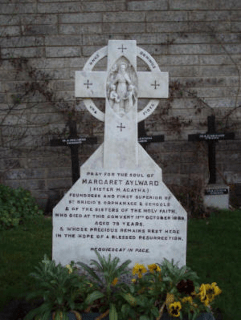
Aylward (now Sister Mary Agatha) dies on October 11, 1889. She had continued wearing her own clothes and travelling after taking her religious vows.
Historian Margaret Helen Preston argues that Aylward is unusual for the time that she lives in because she does not believe that poverty results from sin. Aylward refers to the poor as the “Elect of God” and argues that God sees the poor as special because of their difficult circumstances.
The Sisters of the Holy Faith still work around the world.
Thomas Joseph Clancy, a member of the Irish folk group the Clancy Brothers, dies in Cork, County Cork, on November 7, 1990. He has the most powerful voice of the brothers and has previously been an actor in numerous stage productions, appearing with Orson Welles in King Lear. He also performs often on television and occasionally in the movies.
Discharged from the RAF at the end of the war, Clancy tours with a British repertory company. In 1947 he and his brother Paddy emigrate to Canada. They then move to New York where he meets his first wife and his oldest daughter is born in 1950. They then soon move to Cleveland, Ohio, to live with relatives. He works for a while as a repertory actor at the Cleveland Play House, before returning temporarily to Ireland. While in Ireland, Clancy works for the Shakespeareana Internationale company run by English actor and manager Geoffrey Kendal. After Paddy sends him extra money, he returns to the United States. The brothers plan to move to California, but their car breaks down. They decide to try New York City instead and find work as actors, both on and off Broadway.
In 1956 their brother Liam Clancy joins them, accompanied by his friend Tommy Makem. Liam and Tommy begin singing together, and in 1959 are joined by the older Clancy brothers as The Clancy Brothers and Tommy Makem. The group performs together until Liam leaves in 1976. Makem had left in 1969 to be replaced for a brief time by Bobby Clancy and later Louis Killen.
Clancy continues singing with The Clancy Brothers until 1976, when the group is disbanded. The group reforms in 1977 with a new line-up. Clancy performs with his brothers Paddy and Bobby and their nephew Robbie O’Connell until his death. He also performs with Paddy, Liam, and Tommy Makem during their reunion tour from 1984 to 1985.
After an absence of fifteen years, Clancy returns to Broadway in May 1974 in Eugene O’Neill‘s A Moon for the Misbegotten. The Irish Times reviews his performance of Phil Hogan: “In ‘Moon’ he deftly measures up to the formidable company in which he finds himself – a wily, sly rogue with a whimsical humour and a genuine concern for his daughter.” The play is a hit and wins three Tony Awards.
Clancy dies from stomach cancer at the age of 66 on November 7, 1990 at Mercy University Hospital in Cork, County Cork. He is survived by his wife Joan and their three daughters, Rayleen, Blawneen and Rosie. Prior to his marriage to Joan, he has children, Eileen and Thomas, with Yvonne Marcus, in Cleveland, Ohio. He also has a daughter, Cait, with his second wife Laine, in the mid-1950s.
Clancy’s last recording is made in 1988 with Robbie O’Connell, Bobby Clancy, and Paddy Clancy at Saint Anselm College in Goffstown, New Hampshire. Unfortunately, the recording is marred by unevenly mixed instruments and voices. After his death, Liam returns to the Clancy Brothers to fill in his place.
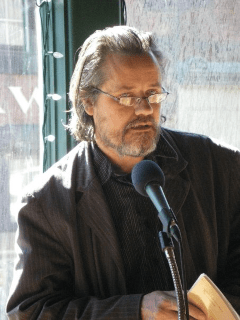
Beirne is the writer in residence for the 2008-2009 academical year at the University of New Brunswick, where he previously worked in the English Department. He is a Fiction Editor of The Fiddlehead, Canada’s longest surviving literary magazine. He also curates the on-line magazines The Irish Literary Times and The New Brunswick Literary Times.
Beirne’s collection of poetry, Digging My Own Grave, published by Dedalus Press, is runner-up for the Patrick Kavanagh Poetry Award. His story, “Sightings of Bono”, is adapted for Irish film and features Bono of the Irish rock band U2. His most recent collection of poems, Games of Chance – A Gambler’s Manual, is published by Oberon Press, Fall 2011.
Beirne’s CD of spoken word poetry, If it’s words you’re after, is released in 2006. He is a past winner of two Sunday Tribune/Hennessey Literary Awards including as New Irish Writer of the Year 1996. His collaboration with classical composer Siobhán Cleary, Hum!, is called “a theatrical tour de force” by The Irish Times.
In 2009, Oberon Press published Beirne’s second novel, Turtle.
Beirne’s first short story collection, In a Time of Drought and Hunger, is published in 2015 and is a shortlisted nominee for the 2016 Danuta Gleed Literary Award.
Michael Fitzgerald also known as Mick Fitzgerald, dies on hunger strike in Cork County Gaol on October 17, 1920. He is among the first members of the Irish Republican Army and plays an important role in organizing it. His death is credited with bringing world-wide attention to the Irish cause for independence.
Born in December 1881 in Ballyoran, Fermoy, County Cork, Fitzgerald is educated at the Christian Brothers School in the town and subsequently finds work as a mill worker in the locality. He joins the Irish Volunteers in 1914 and plays an important role in building the local organisation which is soon to become the Irish Republican Army (IRA). He soon rises to the rank of Battalion Commandant, 1st Battalion, Cork No.2 Brigade.
On Easter Sunday, April 20, 1919, Fitzgerald leads a small group of IRA volunteers who capture Araglin, Cork Royal Irish Constabulary Barracks located on the border with County Tipperary. He is subsequently arrested and sentenced to three months imprisonment at Cork County Gaol. He is released from prison in August 1919 and immediately returns to active IRA duty. He is involved in the holding up of a party of British Army troops at the Wesleyan Church in Fermoy. The troops are disarmed although one of them is killed. Arrested and held on remand, Fitzgerald feels that the only chance he has for release is via a hunger strike.
Fitzgerald, along with Terence MacSwiney and nine other IRA volunteers, are arrested on August 8, 1920. On August 11, MacSwiney begins a hunger strike in Brixton Gaol. Fitzgerald and the other nine volunteers at Cork County Gaol join in. At the age of 24, he is the first to die on October 17, 1920 as a result of his sixty-seven day fast. His death is followed by the deaths of Joe Murphy and Terence MacSwiney. Their deaths are credited with bringing world-wide attention to the Irish cause for independence.
Fitzgerald is buried at Kilcrumper Cemetery, on the outskirts of Fermoy, County Cork. In addition, a road is named after him in Togher, Cork.
During a November 2008 visit to Fermoy, Sinn Féin Vice-President Pat Doherty lays a wreath at Fitzgerald’s grave. Doherty says Fitzgerald’s sacrifice was like that of the hunger strikers in 1981. He says it is a great honour for him to pay homage to a man “to whom we owe so much.” Also buried in the Republican Plot in Fermoy is General Liam Lynch, who was Chief of Staff of the IRA when he was shot dead by Irish Free State troops in the Knockmealdown Mountains on April 12, 1923. His last wish was to be buried with his great friend and comrade, Mick Fitzgerald.
After the Desmond defeat at Battle of Affane in 1565, the 14th Earl and his brother, John of Desmond, are detained in England. During their absence, FitzMaurice becomes captain general of County Desmond with the warrant of the Earl. This means he has authority over the soldiers retained in the service of the Desmond Fitzgeralds. In July 1568, he enters Clanmaurice, the territory of the lord of Lixnaw, to distrain for rent and assert the Desmond authority. Having seized 200 head of cattle and wasted the country, he is confronted by Lixnaw on the way home and utterly defeated.
At the end of 1568, the absent Earl of Desmond grants Sir Warham St. Leger a lease of the barony of Kerricurrihy, which cast FitzMaurice’s inheritance into confusion. In 1569 the Lord Deputy of Ireland, Sir Henry Sidney, is informed by FitzMaurice that he has assembled the people of Desmond to tell them that the Lord Deputy was unable to procure the release of the captive earl, who would be executed or perpetually imprisoned, and that the people should proclaim a new earl or captain. With one voice, the people cry out for FitzMaurice to be captain. The earl’s wife, Eleanor Butler, writes to her husband in November that FitzMaurice is seeking to bring the earl into further disrepute and to usurp his inheritance, “by the example of his father.”
To reassert Geraldine authority, FitzMaurice then launches what becomes known as the first of the Desmond Rebellions. The southern part of Ireland erupts into a general rebellion, owing in part to attempts at establishing plantations. In June 1569, FitzMaurice and the Earl of Clancarty (MacCarthy Mor) invade Kerrycurrihy, spoil the inhabitants, take the castle-abbey of Tracton, hang the garrison, and refuse to depart without the surrender to them of the custody of Lady St. Leger and Lady Grenville, the wives of the principal English colonists. FitzMaurice then joins in league with the turbulent brothers of the Earl of Ormond and enters a bond with the Earl of Thomond and John Burke, son of the Earl of Clanricard. He writes to the mayor and corporation of Cork in July ordering the abolition of the new heresy of Protestantism, at a time when he appears to have been taking instruction from Irish Jesuits.
By September 1569, Sidney has broken the back of the rebellion and leaves Sir Humphrey Gilbert behind to suppress FitzMaurice, who seeks refuge in the woods of Aherlow, and after Gilbert’s departure FitzMaurice raises a new force in February 1570 and by a surprise night attack, takes Kilmallock and after hanging the chief townsmen at the market cross, plunders its wealth and burns the town. In February 1571, Sir John Perrot lands at Waterford as Lord President of Munster and challenges FitzMaurice to a duel, which FitzMaurice declines with the remark, “For if I should kill Sir John Perrot the Queen of England can send another president into this province; but if he do kill me there is none other to succeed me or to command as I do.”
FitzMaurice attacks Perrot but retires on mistaking a small cavalry company for the advance party of a larger force. After a second and successful siege by Perrot of the Geraldine stronghold of Castlemaine, FitzMaurice sues for pardon, which is granted in February 1573, after he prostrates himself in Kilmallock church with the president’s sword point next to his heart. He swears fealty to the crown and gives up his son as hostage.
On the return to Ireland of the Earl of Desmond in 1573, FitzMaurice leaves for the continent, offering his reasons variously as a desire to gain pardon from the Queen through the French court, and the unkindness of the earl. In March 1575 he and his family, along with the Geraldine Seneschal of Imokilly, James Fitzedmund Fitzgerald, and the White Knight, Edmund FitzGibbon, sail on the La Arganys for Saint-Malo, Brittany where they are received by the governor. He has several interviews with Catherine de’ Medici in Paris, offering to help make Henry III of France king of Ireland, and is granted a pension of 5,000 crowns in 1576.
Early in the following year FitzMaurice leaves for the Spanish court, where he offers the crown to the brother of King Philip II, Don John. The king is cautious, however. FitzMaurice leaves his sons Maurice and Gerald with Cardinal Antoine Perrenot de Granvelle, and travels to Italy to meet Pope Gregory XIII.
At the papal court FitzMaurice meets adventurer Captain Thomas Stukley, and together they persuade the pope to underwrite the cost of 1,000 troops to invade Ireland, most of whom, according to Philip O’Sullivan Beare, are desperadoes the pope wishes to get out of Italy. Fitzmaurice and Stukley are to rendezvous in Lisbon and proceed to Ireland, however, Stukley decides to throw his troops and support to King Sebastian‘s expedition to Morocco, where he dies.
Following the diversion of Stukley to Morocco, FitzMaurice sets out with the nuncioNicholas Sanders, and Matthew de Oviedo from Ferrol in Galicia, Spain on June 17, 1579, with a few troops on his vessel and three Spanish shallops. They capture two English vessels in the channel and arrive at Dingle on July 16, 1579, launching the Second Desmond Rebellion.
On July 18 they cast anchor in Ard na Caithne, where they garrison at Dún an Óir (Fort of Gold), and are joined on July 25 by two galleys with 100 troops. Four days later their ships are captured by the English fleet under the command of Sir William Wynter. Having exhorted the Earl of Desmond and the Earl of Kildare, as Geraldine leaders, to fight the heretics, FitzMaurice leaves the fort to await the arrival of Stukley who, unknown to him, had been killed at the Battle of Alcácer Quibir in the previous year, during a campaign by King Sebastian of Portugal.
FitzMaurice goes to make a vow at the monastery of the Holy Cross in County Tipperary but becomes caught in a skirmish with the forces of his cousin, Theobald Burke, during which he is shot with a ball in the hollow of the chest, but cuts his way through to Burke and his brother William, both of whom he kills with single strokes of his sword.
The battle is won, but close to the scene his injuries overcome him. He makes his will and orders his friends to cut off his head after death in order that his enemies might not mutilate his body. He begs his attendants to attest that he had not turned tail on the enemy. They assure him and wish him to be quiet because hostile soldiers are closing in, but he insists, “My wounds are clear, my wounds are clear.” Upon his death, a kinsman orders the decapitation and then wraps the head in cloth. An attempt is made to conceal his trunk under a tree, but it is discovered by a hunter and brought to the town of Kilmallock. For weeks, the trunk is nailed to the gallows, until it is shattered by musket fire and collapses.
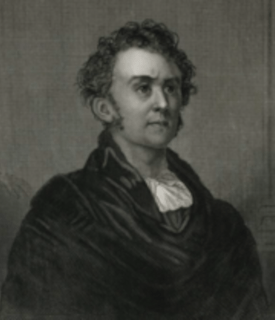
Richard Lalor Sheil, Irish politician, writer and orator, is born at Drumdowney, Slieverue, County Kilkenny on August 17, 1791. The family is temporarily domiciled at Drumdowney while their new mansion at Bellevue, near Waterford, is under construction.
Shiel’s father is Edward Sheil, who acquires considerable wealth in Cadiz in southern Spain and owns an estate in County Tipperary. His mother is Catherine McCarthy of Springhouse, near Bansha, County Tipperary, a member of the old aristocratic family of Mac Cárthaigh Riabhach of Springhouse, who in their time were Princes of Carbery and Counts of Toulouse in France. He is taught French and Latin by the Abbé de Grimeau, a French refugee. He is then sent to a Catholic school in Kensington, London, presided over by a French nobleman, M. de Broglie. For a time, he attends the lay college in St. Patrick’s College, Maynooth. In October 1804, he is removed to Stonyhurst College, Lancashire, and in November 1807 enters Trinity College, Dublin, where he specially distinguishes himself in the debates of the Historical Society.
After taking his degree in 1811 Sheil is admitted a student of Lincoln’s Inn and is called to the Irish bar in 1814. He is one of the founders of the Catholic Association in 1823 and draws up the petition for inquiry into the mode of administering the laws in Ireland, which is presented in that year to both Houses of Parliament.
In 1825, Sheil accompanies Daniel O’Connell to London to protest against the suppression of the Catholic Association. The protest is unsuccessful, but, although nominally dissolved, the association continues its propaganda after the defeat of the Catholic Relief Bill in 1825. He is one of O’Connell’s leading supporters in the agitation persistently carried on until Catholic emancipation was granted in 1829.
In the same year Shiel is returned to Parliament for Milborne Port, and in 1831 for County Louth, holding that seat until 1832. He takes a prominent part in all the debates relating to Ireland, and although he is greater as a platform orator than as a debater, he gradually wins the somewhat reluctant admiration of the House. In August 1839, he becomes Vice-President of the Board of Trade in Lord Melbourne‘s ministry.
After the accession of Lord John Russell to power in 1846, Shiel is appointed Master of the Mint, and in 1850 he is appointed minister at the court of Tuscany. He dies in Florence on May 23, 1851. His remains are conveyed back to Ireland by a British ship-of-war, and interred at Long Orchard, near Templetuohy, County Tipperary.
George W. E. Russell says of Shiel, “Sheil was very small, and of mean presence, with a singularly fidgety manner, a shrill voice, and a delivery unintelligibly rapid. But in sheer beauty of elaborated diction not O’Connell nor anyone else could surpass him.”
Shiel’s play, Adelaide, or the Emigrants, is performed at the Crow Street Theatre in Dublin, on February 19, 1814, with success, and, on May 23, 1816, it is performed at Covent Garden in London. The Apostate, produced at the latter theatre on May 3, 1817, establishes his reputation as a dramatist. His other principal plays are Bellamira (written in 1818), Evadne (1819), Huguenot (produced in 1822) and Montini (1820).
In 1822, Sheil begins, with William Henry Curran, to contribute to The New Monthly Magazine a series of papers entitled “Sketches of the Irish Bar.” Curran, in fact, does most of the writing. These pieces are edited by Marmion Wilme Savage in 1855 in two volumes, under the title of Sketches Legal and Political. Sheil’s Speeches are edited in 1845 by Thomas MacNevin.
In 1816, Shiel marries a Miss O’Halloran, niece of Sir William MacMahon, Master of the Rolls in Ireland. They have one son, who predeceases Sheil. His wife dies in January 1822. In July 1830, he marries Anastasia Lalor Power, a widow. He then adds the middle name Lalor.
In August and September 1920 the town of Templemore in County Tipperary is the sight of alleged Marian apparitions. Thousands of people come to the town daily to see the apparitions. The affair occurs during the Irish War of Independence and results in a short-lived local truce between the Irish Republican Army (IRA) and Crown forces. When the truce ends, pilgrims stop coming to the town and the sightings end. The affair is sometimes referred to as the Templemore miracles.
In January 1919 the Irish War of Independence begins and lasts until July 1921. On the night of August 16, 1920, British soldiers of the Northamptonshire Regiment attack Templemore in reprisal for the killing of an Royal Irish Constabulary (RIC) officer by IRA volunteers earlier that day. They fire volleys and burn homes and businesses. No civilians or IRA men are killed but two soldiers die by accident in the fires.
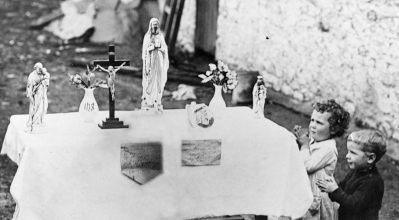
Shortly after the attack, a sixteen-year old farm labourer named James Walsh claims that he was visited by the Virgin Mary in his cottage in the nearby townland of Curraheen. She told him that she was troubled by what was happening in Ireland. At her request he digs a hole in the ground in his bedroom and this soon fills with spring water. Afterwards he claims that all three statues of the Virgin Mary in his home began to bleed. He takes these statues to Templemore, where the bleeding is witnessed. One man who had been crippled for most of his life claims he is dancing in the streets after visiting Walsh’s cottage. He is the first of many who claim to have been cured of their ailments in the presence of Walsh or the statues.
Locals believe that divine intervention had prevented any of them being killed or wounded during the attack by the British. Walsh gathers people around the statues to say the Rosary in Irish. According to Ann Wilson, the statues are seen “as asserting the Catholic Irish identity of the population in the face of the non-Catholic British opponent, a superior spiritual power which would win out against the much more substantial, but merely worldly, advantages of the enemy.”
The affair is soon reported in local and national newspapers, which causes more pilgrims to go to Tipperary, both to see the statues in Templemore and Walsh’s cottage in Curraheen. On August 31, 1920 an RIC inspector writes to the Dublin Castle administration, estimating that over 15,000 pilgrims per day are coming down. Many come seeking cures for various illnesses and report that they had received them. One RIC officer resigns from his job to join a religious order. One soldier is reported to convert to Catholicism. The influx results in a large economic windfall for the town.
The official position of the church is one of ‘extreme reserve.’ The parishpriest Reverend Kiely refuses to see the statues. However, no effort is made to stop people making pilgrimages. Local IRA commander James Leahy notes a division between older and younger clergy in the local church, with older clergy generally being skeptical of Walsh while younger clergy are more enthusiastic about his claims.
Prior to the apparitions beginning, Wilson had given a Virgin Mary statue to a local RIC constable named Thomas Winsey, according to the Tipperary Star. Winsey placed the statue in the barracks. This too is said to be bleeding. One day a large crowd of pilgrims besiege the barracks and have to be physically restrained when they attempt to enter it. The statue is removed from the barracks. Police and military stop appearing on the street shortly after.
The IRA effectively takes over the area at this point. They keep order, organise traffic and help pilgrims. However, they do not appear in the streets in uniform and there is an informal truce in effect between them and Crown forces.
Local IRA commander James Leahy is concerned at the effect that tips given to IRA volunteers were having on discipline. He and other local commanders interrogate Walsh and stop believing him after this. He contacts IRA Director of Intelligence Michael Collins. Collins has Dan Breen interrogate Walsh. Breen reports that Walsh “was a fake.” Collins sarcastically replies, “One can’t take any notice of what you say, Breen, because you have no religion.”
Having failed to get the church to intervene and denounce Walsh, Leahy and other IRA members decide to restart the war anyway. On September 29, IRA volunteers attack a group of RIC men between Templemore and Curraheen. Two constables are killed. As anticipated, this brings police and army reinforcements to the area. Soldiers loot and desecrate sites outside Templemore associated with the pilgrimage. Rumours begin that the town itself would soon be attacked. Pilgrims flee the area. The statues apparently stop bleeding.
Interest in the statues and Walsh’s cottage largely end at this point, ending Templemore as a sight for pilgrimages. However, Michael Collins does receive a statue at his request. Upon receiving the statue, he smashes it. He discovers that inside is an alarm clock connected to fountain pen inserts containing sheep’s blood. When the clock strikes a certain time, it sends a spurt of blood out of the statue, giving the impression it is bleeding. It is not clear whether this statue performed in Templemore or was one of the ones owned by James Walsh. Collins had received complaints from a local priest that IRA volunteers had engineered statues that would bleed at intervals.
James Walsh is labelled as a possible spy by Dan Breen. At the request of Templemore clergy he is taken to Salesian College in Limerick and placed in the care of Father Aloysius Sutherland. He emigrates to Australia in 1923, settling in Sydney. Towards the end of his life he attempts to enter numerous religious orders but is unsuccessful due to a prior divorce. He dies in Sydney in 1977, having never returned to Ireland.
Historian John Reynolds states at a talk that the affair could have been a prank that got out of hand or was a money-making swindle. He speculates that Walsh may have been used by others, who really instigated it. He discounts the local IRA as having been the instigators.
The affair is not well-known despite gaining worldwide attention at the time. However, in November 2012 the Irish-language television broadcaster TG4 screens a documentary about it. In 2019 the book The Templemore Miracles, written by John Reynolds, is published.
(Pictured: Children pray beside statues that were reported to have started bleeding, Belfast Telegraph, http://www.belfasttelegraph.co.uk)
O’Donoghue is born to Irish parents and grows up in the Hans Town area of Chelsea. He is the son of John O’Donoghue, a bricklayer from Kilworth, County Cork, and Bridget Griffin, who is from County Tipperary. He is the third of nine children, and has four brothers, Thomas, John, James, and Edmund, and four sisters, Mary, Ellen, Katherine, and Agnes. He is first an upholsterer‘s apprentice from the age of sixteen before becoming a journalist and author.
O’Donoghue attends a Catholic school and furthers his education at the British Museum. He begins his journalistic work by writing for the Dublin papers upon subjects relating to Irish music, art, and literature. A founder-member of the Irish Literary Society in London, he is also vice president of the National Literary Society, Dublin, and the compiler of a biographical dictionary, The Poets of Ireland (1891–93; revised edition, 1912), with entries on 2,000 authors. His published works also include Irish Poetry of the Nineteenth Century (1894), Humor of Ireland (1894), List of 1300 Irish Artists (1894), The Life and Writings of James Clarence Mangan (1897), Bibliographical Catalogue of Collections of Irish Music (1899), and Geographical Distribution of Irish Ability (1906).
In 1896 O’Donoghue moves to Dublin. In 1909 he becomes librarian of University College Dublin. He is co-editor of Catalogue of the Gilbert Library (in Dublin; 1918). William Butler Yeats writes of him in his Autobiographies of William Butler Yeats (1938).
Keane’s mother is a poet who writes under the pseudonym Moira O’Neill. Her father is a fanatic for horses and hunting. She grows up at Ballyrankin in County Wexford and refuses to go to boarding school in England as her siblings had done. She is educated by her mother, governesses, and at a boarding school in Bray, County Wicklow. Relationships between her and her parents are cold and she states that she had no fun in her life as a child. Her own passion for hunting and horses is born out of her need for fun and enjoyment. Reading does not feature much in her family and, although her mother writes poetry, it is of a sentimental nature, “suitable to a woman of her class.”
Keane claims she had never set out to be a writer, but at seventeen she is bedbound due to suspected tuberculosis, and turns to writing out of sheer boredom. It is then she writes her first book, The Knight of Cheerful Countenance, which is published by Mills & Boon. She writes under the pseudonym “M. J. Farrell,” a name over a pub that she had seen on her return from hunting. She explains writing anonymously because “for a woman to read a book, let alone write one was viewed with alarm: I would have been banned from every respectable house in County Carlow.”
In her teenage years Keane spends much of her time in the Perry household in Woodruff, County Tipperary. Here she befriends the two children of the house, Sylvia and John Perry. She later collaborates with John in writing a number of plays. Among them is Spring Meeting, directed by John Gielgud in 1938, and one of the hits of the West End that year. She and Gielgud become life long friends.
It is through the Perry family that Molly meets Bobby Keane, whom she marries in 1938. He belongs to a County Waterfordsquirearchical family, the Keane baronets. The couple goes on to have two daughters, Sally and Virginia.
Keane loves Jane Austen, and like Austen’s, her ability lay in her talent for creating characters. This, with her wit and astute sense of what lay beneath the surface of people’s actions, enables her to depict the world of the big houses of Ireland in the 1920s and 1930s. She “captured her class in all its vicious snobbery and genteel racism.” She uses her married name for her later novels, several of which, including Good Behaviour and Time After Time, have been adapted for television. Between 1928 and 1956, she writes eleven novels, and some of her earlier plays, under the pseudonym “M. J. Farrell.” She was a member of Aosdána.
Keane’s husband dies suddenly in 1946, after which she moves to Ardmore, County Waterford, a place she knows well, and lives there with her two daughters. Following the failure of a play shortly after her husband’s death, she publishes nothing for twenty years. In 1981 Good Behaviour comes out under her own name. The manuscript, which had languished in a drawer for many years, is lent to a visitor, the actress Peggy Ashcroft, who encourages her to publish it. The novel is warmly received and is short-listed for the Man Booker Prize.
Keane dies at the age of 91 on April 22, 1996 in her Cliffside home in Ardmore. She is buried beside the Church of Ireland church, near the centre of the village.
Deane is educated at Trinity College, Dublin, from 1845 to 1849. On January 29, 1850, he marries Henrietta Manly, daughter of Joseph H. Manly of Ferney, County Cork. He and his wife have several children.
Deane’s work on the conservation of St. Canice’s Cathedral, Kilkenny, is less successful and brings him into conflict with the dean and chapter, and in particular with the treasurer James Graves. It is possibly his interest in the restoration of medieval buildings which leads to his appointment as the first Inspector of National Monuments under the Irish Board of Works after the disestablishment of the Church of Ireland brought ruined buildings under their care. His work includes St. Cronan’s Church, Roscrea, County Tipperary.
In contemporary circles, Deane’s partner Woodward is seen as the creative influence behind the business, and their practice suffers after his early death on May 15, 1861. Nevertheless, Deane continues to work with his son, Thomas Manly Deane, designing the National Museum of Ireland and National Library of Ireland in Kildare Street, Dublin. He is knighted in 1890.
On November 8, 1899, Deane dies suddenly in his office on St. Stephen’s Green, into which he had only just moved. He is buried in Deans Grange Cemetery, where his son Thomas designs and erects a cross in his memory.






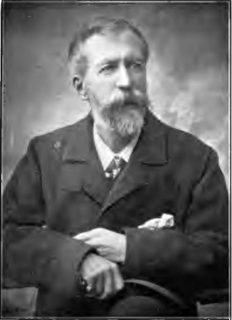
 seamus dubhghaill