In 1866 Monck becomes a peer with the title Baron Monck. When the Canadian colonies become a semi-independent confederation the next year, he becomes the country’s first Governor General. He is also responsible for establishing Rideau Hall as the residence of the Governor General in Ottawa.
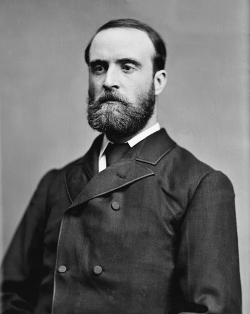
Born into a wealthy and powerful Anglo-IrishProtestant landowning family in County Wicklow on June 27, 1846, Parnell enters the House of Commons in 1875. He is a land reform agitator and becomes leader of the Home Rule League in 1880, insisting on operating independently of the Liberals, and winning great influence by his balancing of constitutional, radical, and economic issues, and by his skillful use of parliamentary procedure. He is imprisoned in Kilmainham Gaol in 1882 but, being a very capable negotiator, is released when he renounces violent extra-Parliamentary action in an informal agreement, the Kilmainham Treaty, with British Prime Minister William Ewart Gladstone. That same year he reforms the Home Rule League as the Irish Parliamentary Party, which he controls minutely as Britain’s first disciplined democratic party.
The hung Parliament of 1885 sees him hold the balance of power between Gladstone’s Liberals and Robert Gascoyne-Cecil, 3rd Marquess of Salisbury‘s Conservatives. His power is one factor in Gladstone’s adoption of Home Rule as the central tenet of the Liberal Party. His reputation peaks in 1889-1890 when letters published in The Times linking him to the Phoenix Park murders of 1882 are shown to have been forged by Richard Pigott. However, the Irish Parliamentary Party splits in 1890 after the revelation of Parnell’s long adulterous love affair, causing many English Liberals, many of them nonconformists, to refuse to work with him, and strong opposition from Catholic bishops. He heads a small minority faction until his death in 1891.
In describing Parnell, Gladstone says, “I do not say the ablest man; I say the most remarkable and the most interesting. He was an intellectual phenomenon.” Liberal leader H. H. Asquith calls him as one of the three or four greatest men of the 19th century, while Richard Haldane, 1st Viscount Haldane describes him as the strongest man the House of Commons has seen in 150 years. Historian A.J.P. Taylor says, “More than any other man he gave Ireland the sense of being an independent nation.”
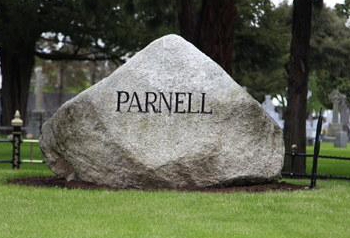
Charles Stewart Parnell dies of pneumonia at age 45 in his home at 10 Walsingham Terrace, Hove, England on October 6, 1891, in the arms of his wife Katharine. Though an Anglican, his funeral on October 11 is at the Irish National nondenominational Glasnevin Cemetery in Dublin and is attended by more than 200,000 people. His notability is such that his gravestone of unhewn Wicklow granite, erected in 1940, reads only “Parnell.”
Parnell is born at Avondale House near Rathdrum, County Wicklow, the tenth of eleven children of John Henry Parnell, a landlord, and Delia Tudor Stewart Parnell, an Irish American and daughter of Admiral Charles Stewart of the United States Navy. She has very little formal education as a child, but the family has an extensive library which she is encouraged to read by her mother. After her father dies in 1859, she moves with the family to Dublin. Delia Parnell is an active socialite while in Dublin and exposes her children to a wide variety of political views.
In 1865 the family moves to Paris, but Parnell feels stifled by upper class society rules imposed upon her. She is in Paris when the Franco-Prussian War breaks out in 1870 and is active in the American Ladies’ Committee fundrasing and setting up hospitals. She returns alone to Dublin in 1870 to study art.
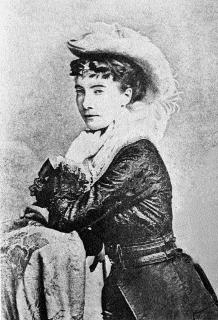
Parnell moves to London in 1875 to continue studying art. When her brother Charles is elected as a Member of Parliament (MP) for Meath, she becomes increasingly political. She frequently visits Parliament during debates, sitting in the Ladies’ Gallery. She writes articles about the debates in a column titled Notes From the Ladies’ Cage in the Celtic Monthly. In 1879 she joins her sister, Fanny Parnell, a poet, in New York City where they raise money in support of the Irish National Land League. The sisters work closely with their brother Charles and Michael Davitt but are critical of how the funds raised in America are being used in Ireland. In October 1880 the sisters found the New York Ladies’ Land League with their mother as president. They raised thousands of dollars sent to Ireland.
Parnell returns in Dublin in late 1880. When it seems that the Land League men are likely to be arrested, it is suggested that a women’s league in Ireland could take over the work in their absence. Public opinion at the time is against women in politics, but the Ladies’ Land League is founded on January 31, 1881, with Parnell as its effective leader.
When Charles Parnell and other leaders are imprisoned in 1881, as predicted, the Ladies’ Land League takes over their work. Though it is envisioned as a place holder until the men are released, Parnell organises branches throughout Ireland, encouraging women to play an active role in Land League activities. Offices are given to the ladies but little help. They raise funds for the League and for the support of prisoners and their families. They distribute Land League wooden huts to shelter evicted tenant families and by the beginning of 1882 they have 500 branches, thousands of women members and considerable publicity. They distribute £60,000 in relief aid.
This puts the Ladies’ Land League in serious debt. Parnell approaches her brother Charles, requesting money to settle the debts. Charles, who distrusts her understanding of politics, agrees to provide the money under the condition that the Ladies’ Land League is disbanded. She agrees, disbanding in 1882, but she never forgives Charles.
After her brother’s death in 1891 Parnell lives the rest of her life in the south of England under the assumed name Cerisa Palmer. She writes an angry account of her Land League experiences in Tale of a Great Sham, which is not published until 1986. She makes one last political appearance when she campaigns for a Sinn Féin candidate in a 1907 by-election.
By the summer of 1911, the 59-year-old Parnell is staying in lodgings at Ilfracombe in Devon. An enthusiastic swimmer since childhood, she bathes every day, and on September 20, disregarding a warning of dangerous seas, she goes swimming as usual. She is seen to be in difficulties and the alarm is raised, but by the time rescuers reached her, she is dead. Unlike her brother, whose funeral in Dublin had been the occasion for a massive outpouring of grief and remorse, Anna Parnell was buried quietly in the churchyard of Holy Trinity Church in Ilfracombe, in the presence of just seven strangers, and far away from the scenes of her greatest efforts and notoriety.
As of June 1900, the world record for the long jump is held by Myer Prinstein of Syracuse University, at 24′ 7-1/4″. In 1900 and 1901, competing with the Irish Amateur Athletic Association (IAAA), a rival association to the GAA, O’Connor sets several unofficial world records in the long jump. He sets an officially recognised world record of 24′ 9″ at the Royal Dublin Society’s grounds in Dublin on May 27, 1901. On August 5, 1901 he jumps 24′ 11-3/4″ in Dublin. This is the first IAAF-recognised long jump world record. It causes a sensation at the time, being only a fraction short of the 25-foot barrier, and remains unbeaten for 20 years, a longevity surpassed only by Jesse Owens‘s 25-year record and Bob Beamon‘s 23-year record. It remains an Irish record for a remarkable 89 years.
In 1906 O’Connor and two other athletes, Con Leahy and John Daly, are entered for the Intercalated Games in Athens by the IAAA and GAA, representing Ireland. However, the rules of the games are changed so that only athletes nominated by National Olympic Committees are eligible. Ireland does not have an Olympic Committee, and the British Olympic Council claims the three. On registering for the Games, O’Connor and his fellow athletes find that they are listed as Great Britain, not Irish, team members.
In the long jump competition, O’Connor finally meets Myer Prinstein of the Irish American Athletic Club who is competing for the U.S. team and whose world record O’Connor had broken five years previously. The only judge for the competition is Matthew Halpin, who is manager of the American team. O’Connor protests, fearing bias, but is overruled. He continues to protest Halpin’s decisions through the remainder of the competition. When the distances are announced at the end of the competition, Prinstein is declared the winner, with O’Connor in Silver Medal position.
At the flag-raising ceremony, in protest of the flying of the Union Flag for his second place, O’Connor scales a flagpole in the middle of the field and waves the Irish flag, while the pole is guarded by Con Leahy.
In the hop, step and jump competition two days later, O’Connor beats his fellow countryman, Con Leahy, to win the Gold Medal. At 34 he is the oldest ever Gold Medal winner in this event. Prinstein, the champion in 1900 and 1904, did not medal.
O’Connor wins no more titles after 1906. He remains involved in athletics all his life. He is a founder member and first Vice-President of Waterford Athletic Club, and attends later Olympics both as judge and spectator. He practises as a solicitor in Waterford and is married with nine children. He dies in Waterford on November 9, 1957.
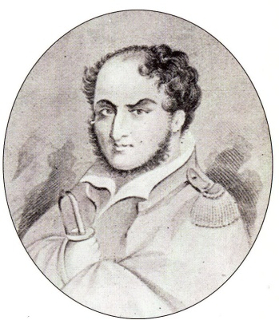
Holt is one of six sons of John Holt, a farmer in County Wicklow. He joins the Irish Volunteers in the 1780s and holds a number of minor public offices but becomes involved in law enforcement as a sub-constable, billet master for the militia and a bounty hunter. He is involved in the Battle of Vinegar Hill which is an engagement during the Irish Rebellion of 1798 on June 21, 1798, when over 15,000 British soldiers launch an attack on Vinegar Hill outside Enniscorthy, County Wexford.
Despite Holt’s apparent loyalism, he becomes a member of the Society of United Irishmen in 1797 and gradually begins to attract suspicion until finally in May 1798, his house is burned down by the militia of Fermanagh. He then takes to the Wicklow mountains, gradually assuming a position of prominence with the United Irish rebels. The defeat of the County Wexford rebels at Vinegar Hill on June 21 sees surviving rebel factions heading towards the Wicklow Mountains to link up with Holt’s forces.
Emerging to meet them, Holt is given much of the credit for the planning of the ambush and defeat of a pursuing force of 200 British cavalry in the Battle of Ballyellis on June 30, 1798. However, the subsequent Midlands campaign to revive the rebellion is a disaster, and he is lucky to escape with his life back to the safety of the Wicklow Mountains.
Holt largely holds out in expectation of the arrival of French aid but news of the defeat of the French in the Battle of Ballinamuck together with his ill-health brought about by the hardships of his fugitive life, age and family considerations prompt him to initiate contact with the Dublin Castle authorities with a view to a negotiated surrender. Dublin Castle is eager to end the rebellion in Wicklow and allows him exile after incarceration in the Bermingham Tower without trial in New South Wales.
Holt goes out on the Minerva and meets Captain William Cox who has been appointed paymaster of the New South Wales Corps. The ship arrives at Sydney on January 11, 1800, and shortly afterwards Holt agrees to manage Captain Cox’s farm. He always claims in Australia that he is a political exile and not a convict. In 1804 when the Castle Hill uprising occurs Holt, who is not involved, has been warned that evening that it is about to happen. During the night he sets up a defense of Captain Cox’s house. He is nonetheless afterwards hounded by Governor Philip Gidley King and many false witnesses are brought against him. Although there is no plausible evidence at all against him, he is exiled by King to Norfolk Island in April 1804, and there put to hard labour.
Holt is officially pardoned on January 1, 1811, and in December 1812, with his wife and younger son, takes passage to Europe on the Isabella. The ship is wrecked by a reef, so the passengers and crew are landed at Eagle Island, one of the Falkland Islands. He shows great resolution and ingenuity in making the best of the conditions on the island. He is rescued on April 4, 1813, but does not reach England until February 22, 1814, as he travels via the United States. He retires to Ireland where he lives for the rest of his life but regrets he had left Australia.
John Blaquiere, 1st Baron de Blaquiere, British soldier, diplomat and politician of French descent, is born on May 15, 1732. He serves as Chief Secretary for Ireland between 1772 and 1776. He is the fifth son of Jean de Blaquiere, a French merchant who had emigrated to England in 1685, and his wife Marie Elizabeth de Varennes.
Blaquiere at first serves in the Army, in the 18th Dragoons, later renumbered the 17th Dragoons, where he achieves the rank of Lieutenant Colonel. In 1771 he is appointed Secretary of Legation at the British Embassy in Paris, a post he holds until 1772. The latter year Simon Harcourt, 1st Earl Harcourt, the British Ambassador in Paris, is appointed Lord Lieutenant of Ireland, and Blaquiere joins him as Chief Secretary for Ireland. He is admitted to the Privy Council of Ireland the same year and made a Knight Companion of the Order of the Bath two years later.
Blaquiere is to remain Chief Secretary until December 6, 1776. He is elected to the Irish House of Commons for Old Leighlin in 1773, a seat he holds until 1783. After representing Enniskillen for a few months in 1783, he sits then for Carlingford from 1783 to 1790, for Charleville from 1790 to 1798 and for Newtownards from 1798 until the Act of Union comes into force in 1801. He is created a Baronet, of Ardkill in County Londonderry, in 1784, and is raised to the Peerage of Ireland as Baron de Blaquiere, of Ardkill in the County of Londonderry, in 1800, for his support for the Act of Union. Lord de Blaquiere also sits as a Member of the British House of Commons for Rye from 1801 to 1802 and for Downton from 1802 to 1806. He is elected a Fellow of the Royal Society in 1803.
Lord de Blaquiere marries Eleanor, daughter of Robert Dobson, in 1775. They have four sons, including Peter de Blaquière, and three daughters. Lord de Blaquiere dies at the age of 80 in Bray, County Wicklow, on August 27, 1812. He is succeeded in his titles by his eldest son, John. Lady de Blaquiere dies at Regent’s Park, Marylebone, London, in December 1833.
On April 11, 2000, Catherine Nevin (née Scully), in a dramatic end to the two-month trial, is found guilty by a jury at the Central Criminal Court of all four charges against her arising out of the 1996 shooting death of her husband, Tom Nevin, at Jack White’s Inn, a pub owned by the couple in County Wicklow. The jury also finds her guilty on three charges of soliciting others to kill him after five days of deliberation, then the longest period of deliberation in the history of the Republic of Ireland. She is subsequentlty dubbed the “Black Widow” by the press. She is the subject of significant coverage by the tabloid press and Justice Mella Carroll orders a ban on the press commenting on Nevin’s appearance or demeanour during the trial.
Catherine Scully meets Tom Nevin in Dublin in 1970 and they are married in Rome in 1976. Within ten years, they own two houses and manage a pub in Finglas, Dublin. In 1986 they open Jack White’s Inn near Brittas Bay in County Wicklow.
On March 19, 1996, Tom Nevin is killed with a shot from a nine pellet shotgun while counting the day’s takings in Jack White’s Inn. According to Catherine Nevin, she is awakened by someone pressing her face into a pillow. She claims it was a man shouting profanities and holding a knife in his left hand. IR£13,000 is taken from the pub, and the Nevins’ car is stolen. It is later found abandoned in Dublin.
After her conviction, Nevin serves her sentence at the Dóchas Centre, Dublin. She loses an appeal in 2003 and, in 2010, also loses an application to have her conviction declared a miscarriage of justice.
Catherine Nevin is diagnosed with a brain tumor in 2016 and given only months to live by doctors at Dublin’s Mater Private Hospital. She receives compassionate release in late 2017 and dies on February 19, 2018. She denies any involvement in her husband’s murder to the very end.
Life in New York is difficult during the Great Depression, so John and his two brothers are shipped back to Ireland in 1933. The two eldest are sent to their maternal grandmother’s house in Fintona, County Tyrone, but John is sent to his father’s ancestral home at Garvaghey, then maintained by two spinster aunts.
A year of graduate school at University of California, Berkeley convinces Montague that he should return to Ireland. He settles in Dublin working at the Irish Tourist Office. In 1961 he moves to Bray, County Wicklow. A regular rhythm of publication sees his first book of stories, Death of a Chieftain (1964) after which the musical group The Chieftains is named, his second book of poems, A Chosen Light (1967), Tides (1970).
All during the 1960s, Montague continues to work on his long poem, The Rough Field, a task that coincides with the outbreak of the Northern Ireland civil rights movement. A Patriotic Suite appears in 1966, Hymn to the New Omagh Road and The Bread God in 1968, and A New Siege, dedicated to Bernadette Devlin which he reads outside Armagh Jail in 1970.
Montague settles in Cork in 1974 and publishes an anthology, theFaber Book of Irish Verse (1974) with a book of lyrics, A Slow Dance (1975). Recognition is now beginning to come, with the award of the Irish American Cultural Institute in 1976, the first Marten Toonder Award in 1977, and the Alice Hunt Bartlett Award for The Great Cloak in 1978.
In 1987, Montague is awarded an honorary doctor of letters by the State University of New York at Buffalo. He serves as distinguished writer-in-residence for the New York State Writers Institute during each spring semester, teaching workshops in fiction and poetry and a class in the English Department of the University at Albany. In 1998, he is named the first Irish professor of poetry, a three-year appointment to be divided among Queen’s University Belfast, Trinity College Dublin, and University College Dublin. In 2008, he publishes A Ball of Fire, a collection of all his fiction including the short novella The Lost Notebook.
John Montague dies at the age of 87 in Nice, France on December 10, 2016, after complications from a recent surgery.
By 1326 FitzGerald’s influence is such that there are rumours of a conspiracy to make him King of Ireland. Modern historians tend to dismiss the story, on the ground that the alleged conspirators were other magnates who were more interested in increasing their own power than aggrandising FitzGerald.
FitzGerald is created Earl of Desmond by Letters Patent dated at Gloucester, England, August 27, 1329, by which patent also the county palatine of Kerry is confirmed to him and his male heirs, to hold of the Crown by the service of one knight’s fee. This is part of a Crown policy of attempting to win the support of the magnates by conferring earldoms on them.
In January 1330 FitzGerald is summoned by Sir John Darcy, Lord Justice of Ireland, to fight armed Irish rebels, with a promise of the King’s pay. It is FitzGerald who introduces the practice of Coigne and Livery, the quartering of troops on the inhabitants of the district they are sent to protect.
Accepting the King’s proposal, in addition to dealing with Munster and Leinster, FitzGerald routs the O’Nolans and O’Murroughs and burns their lands in County Wicklow and forces them to give hostages. He recovers the castle of Ley from the O’Dempsies, and has a liberate of £100 sterling dated at Drogheda August 24, 1335, in return for the expense he has incurred in bringing his men-at-arms, hobelars, and foot-soldiers, from various parts of Munster to Drogheda, and there, with Lord Justice Darcy, disperses the King’s enemies.
In 1331 there are further rumours of an attempt to make him King. Although there seems to be no foundation for them, the Crown takes them seriously enough to imprison FitzGerald for several months. He is released when a number of fellow nobles stand surety for his good behaviour.
In 1339 FitzGerald is engaged against Irish rebels in County Kerry where it is said he slays 1,400 men, and takes Nicholas, Lord of Kerry, prisoner, keeping him confined until he dies as punishment for siding with the rebels against the Crown.
The same year FitzGerald is present in the parliament held in Dublin. He is summoned by Writ dated at Westminster July 10, 1344, with Maurice, Earl of Kildare, and others, to attend the King at Portsmouth “on the octaves of the nativity of the Virgin Mary,” with twenty men-at-arms and fifty hobelars, at his own expense, to assist in the war against Philip V of France.
FitzGerald, who has long been acting “with a certain disregard for the niceties of the law” now decides on open rebellion. In 1345 he presides at an assembly of Anglo-Irish magnates at Callan, County Kilkenny, ignores a summons to attend the Irish Parliament and attacks Nenagh. He is a formidable opponent, and for the next two years his defeat is the main preoccupation of the Crown. He surrenders on a promise that his life will be spared. He is imprisoned and his lands forfeited. He is allowed to go under guard to England to answer the charges against him.
By no means for the last time, the Crown evidently decides that it cannot govern Ireland without the magnates’ support. In 1348 FitzGerald is released and pardoned in 1349. His loyalty does not seem to have been in question during the last years of his life.
In July 1355 FitzGerald is appointed Lord Justice of Ireland for life, dying, however, the following January in Dublin Castle. He is interred in the Church of the Friars-Preachers in Tralee.
Dwyer is born in Camara, a townland in the Glen of Imaal County Wicklow in 1772 and he participates in the Irish Rebellion of 1798. However, unlike most of the leaders and soldiers in that Rising, he does not either leave the country or return to his normal life, nor is he captured. He retreats into the Wicklow Mountains with a band of men and drives the British to distraction in their attempts to apprehend him. A reward is placed on Dwyer’s head and another for each of his men, but he leads the British authorities on a merry chase for five years, with many daring narrow escapes, each adding to his legend. Some call him the “Outlaw of Glenmalure.”
In 1803, he plans to assist Robert Emmet in his rising but he never receives the signal to join the rising. At this point he recognizes the futility of his situation, and he also wishes to relieve the suffering of a number of his family members, including his sister, whom has been jailed for no offense other than their family relationship to him. Some claim that when he contacts the British to ask terms of surrender, he is promised he and his men will be sent to the United States. If so, and not for the first time, their word to an Irishman proves worthless. After two years of brutal treatment in Kilmainham Gaol, under the infamous Edward Trevor, Dwyer is transported to Botany Bay.
Dwyer and his family, along with a number of his men, set sail for Australia on board the Tellicherry on August 25, 1805, arriving in Sydney on February 14, 1806. However, the story of Michael Dwyer does not end there. In Sydney, Dwyer runs afoul of the Governor, a certain Capt. William Bligh, of HMS Bounty fame. Bligh accuses Dwyer of being the leader of a rebellious plot involving other United Irishmen in the area, which, if true, would certainly not be out of character. Bligh ships Dwyer off to Norfolk Island, one of the worst hellholes of the British penal system in Australia.
After six months he is transferred to Tasmania, where he remains for another two years. In 1808, Bligh leaves the Governorship and Dwyer finally makes it back to his family in Sydney and is granted 100 acres of land nearby. Like many transported Irish rebels, he eventually becomes part of the local establishment and, in a bit of irony, the “Outlaw of Glenmalure” is appointed constable.
Michael Dwyer dies in 1825, but his wife lives to be 93, not dying until 1861. With her passes the last connection to the “Boys of ’98” in Australia. Dwyer remains a legend among the people of the Wicklow Mountains to this day.





 seamus dubhghaill