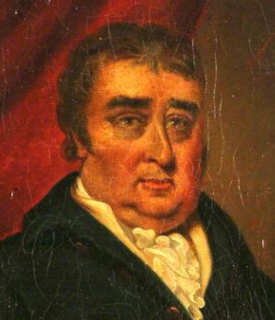
French belongs to the long-established French family of Frenchpark, County Roscommon, who are substantial landowners who also make money in the wine trade. He is the eldest son of Arthur French MP and Alicia Magenis, daughter of Richard Magenis of Dublin and sister of Richard Magenis. He marries Margaret Costello, daughter of Edmond Costello of Edmondstown, County Mayo, and has nine children, including Arthur French, 1st Baron de Freyne, John, 2nd Baron and Charles, 3rd Baron.
In 1783, French is elected a Member of Parliament (MP) for Roscommon County in the Irish House of Commons. After the Act of Union 1800 he represents Roscommon in the Parliament of the United Kingdom. He is alleged to have been offered an Earldom if he would support the union of Ireland with Great Britain but refuses the honour. Later he also refuses a Barony with no strings attached, although in time three of his sons would hold the title of Baron de Freyne. The Crown is frequently irritated by his demands for offices and favours for his brothers and sons, although such behaviour is entirely typical of an Irish politician at the time.
A critic of the policy of collective fines as a deterrent to the illicit distillation of poteen, French incurs the wrath of Chief Secretary for IrelandRobert Peel who calls him “an Abominable fellow,” but his enormous popularity in Roscommon means that he cannot be ignored. He also criticizes the continuation of martial law in Ireland.
By 1817 French is complaining of ill-health. He dies on November 24, 1820. One report at the time states that he had died “from excessive fox hunting.”
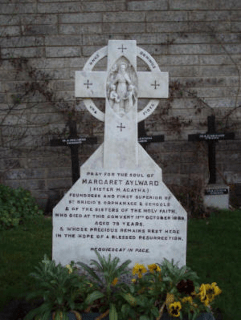
Aylward is educated by the Ursuline nuns in Thurles, County Tipperary. After doing some charitable work in Waterford in her early years, she joins her sister in the Sisters of Charity in 1834 as a novice. She leaves the novitiate in 1836 and returns to Waterford to continue her charity work in a secular role. She again attempts to join a religious order in 1846 when she enters the Ursuline novitiate in Waterford, however she leaves after two months.
By 1851, Aylward has moved to Dublin where she is active in re-energising the Ladies’ Association of the Society of St. Vincent de Paul. The Great Famine leads to a large-scale movement of people from rural areas into cities, including Dublin, which leads to increased pressure on the charitable institutions of these areas. Her efforts are part of this wider charitable effort to help the poor, particularly Catholics who are seen to be at risk of coercive religious conversion (known as Souperism). This association is concerned with the “temporal as well as the spiritual relief of the sick poor in Dublin.”
The Ladies’ Association of St. Vincent de Paul opens St. Brigid’s in 1856, an orphanage which has an anti-proselytising mission and claims to rescue Catholic children from Protestant agencies. The Ladies’ Association often comes into dispute with those involved in the Irish Church Missions (ICM) and the ragged schools in Dublin, with members of the Ladies’ Association distributing crucifixes to children attending the Protestant-run ragged schools and visiting the homes of parents who send their children to them. The women involved in St. Brigid’s Orphanage organise themselves into a society called the Daughters of St. Brigid. However, while the establishment of St. Brigid’s brings Aylward closer to religious orders, historian Maria Luddy notes that in the 1850s, she is not concerned with the establishment of a religious community, rather she wants to “live in a community of women who were united by their religious convictions but did not necessarily desire to take formal religious vows.”
There is a growth in religious orders for women in Ireland from the early nineteenth century due to a relaxing of anti-Catholic Penal Laws. These include the Irish Sisters of Charity who are established in 1815 under Mary Aikenhead, the Sisters of Loreto order (1822) under Frances Ball, and Catherine McAuley‘s Sisters of Mercy (1831). Archbishop Paul Cullen of Dublin is an important figure in persuading leaders of religious communities of women, like Catherine McAuley, to formally organise as religious congregations in order to continue their charitable work and be respectable. While Aylward is resistant to this idea for a while, she eventually agrees. In 1857 the Sisters of the Holy Faith are established, and in 1869 the order are approved by Pope Pius IX.
Aylward is arrested in 1860 for “failing to produce a child named Mary Matthews, who had been taken away and concealed from her parents for the purpose of being brought up in the Roman Catholic faith.” Matthews had been placed with a nurse in Saggart, County Dublin, when her father had died, and her mother had emigrated to The Bahamas. When her mother returns, Aylward is notified by Matthews’ foster mother that she is missing. Aylward is acquitted of the charge of kidnapping but is found to be in contempt of court and serves six months in jail. She continues her work after her release.
Aylward (now Sister Mary Agatha) dies on October 11, 1889. She had continued wearing her own clothes and travelling after taking her religious vows.
Historian Margaret Helen Preston argues that Aylward is unusual for the time that she lives in because she does not believe that poverty results from sin. Aylward refers to the poor as the “Elect of God” and argues that God sees the poor as special because of their difficult circumstances.
The Sisters of the Holy Faith still work around the world.
Cleeve is the second of three sons to Charles Edward Cleeve and his wife Josephine (née Talbot). His father, who was born in Limerick, County Limerick, is a scion of a famous and wealthy family that runs several successful Irish enterprises in the late-nineteenth and early twentieth centuries. His mother is a native of Essex. The Cleeves came from Canada originally and emigrated to Ireland in the mid-nineteenth century. As a result of labour troubles and the effects of the Irish Civil War, the Cleeve business fails, and the family moves to England.
Cleeve’s mother dies in 1924 and his maternal grandparents, Alfred and Gertrude Talbot, take over responsibility for his upbringing. At age eight, he is sent as a boarder to Selwyn House in Kent, followed at age 12 by three years at St. Edward’s School, Oxford. He is by nature a free-thinker and rejects the assumptions and prejudices that are then part of upper-middle class English life. His unwillingness to conform means that school life is very difficult for him. In the late summer of 1938, he decides not to return to St. Edward’s for his final year. Instead, he runs away to sea.
In 1945, Cleeve takes an Irish passport and comes to Ireland where, in the space of three weeks, he meets and marries Veronica McAdie. A year later, they leave Ireland with baby daughter Berenice on a protracted odyssey that takes them to London, Sweden, the West Indies, and finally South Africa. In 1948, the family settles in Johannesburg where they set up their own perfume business. A second daughter, Tanga, is born to the couple there in 1953. As a result of his friendship with Fr. Trevor Huddleston, he witnesses the conditions in which the black population has to live in townships such as Sophiatown. He becomes an outspoken critic of Apartheid, and, in 1954, he is branded by the authorities as a ‘political intractable’ and ordered to leave South Africa. He returns to Ireland where he lives for the remainder of his life.
Cleeve starts writing poems in his teens, a few of which are published in his school paper, the St. Edward’s Chronicle. During the war he continues to produce poems of a spiritual or metaphysical nature, most of which are never published. In 1945, he turns to novel-writing. After his first two attempts are rejected, his third novel, The Far Hills, is published in 1952. Two further novels about South Africa follow and their unvarnished descriptions of the reality of life for the native population probably contributes to his eventual expulsion from the country.
In the mid-1950s, Cleeve begins to concentrate on the short story form. During the next 15 years over 100 of his short stories are published in magazines and periodicals across five continents. He sells nearly thirty to The Saturday Evening Post alone. In 1966, his story Foxer is honoured with a scroll at the annual Edgar Awards.
During the 1960s and 1970s, Cleeve returns to writing novels with considerable success. He produced a series of well-received mystery and spy thrillers that do not sacrifice character to plot. In 1971, he publishes Cry of Morning, his most controversial and successful novel to date. It is a panoramic depiction of the economic and social changes that affected Ireland during the 1960s as seen through the eyes of a disparate collection of well-drawn characters. He subsequently achieves even greater commercial success, especially in the United States, with a number of historical novels featuring a strong female character as protagonist.
Cleeve also writes several works of non-fiction, principally the Dictionary of Irish Writers. This is a 20-year project to provide to scholars and the general public alike a comprehensive resource on Irish writers at an affordable price. It is a labour of love that consumes a great deal of his time and is effectively subsidised by his more commercial pursuits. The last edition is published in 1985.
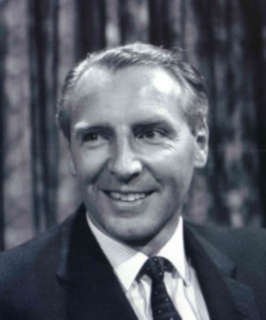
On December 31, 1961, Telefís Éireann is launched as the Republic of Ireland‘s first indigenous television station. Cleeve joins the station as a part-time interviewer on the current affairs programme, Broadsheet. Following appearances on two additional programmes, Telefís Éireann does not renew his contract when it expires in 1973.
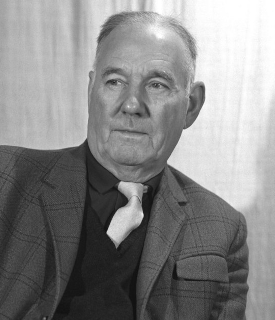
Following his wife’s death in 1999, Cleeve moves to the village of Shankill, Dublin. His health deteriorates rapidly following a series of small strokes. In November 2001, he marries his second wife, Patricia Ledwidge, and she cares for him during his final months. He suddenly dies of a heart attack on March 11, 2003. His body now lies under a headstone bearing the inscription “Servant of God.”
Born into an Anglican family with a military tradition. Russell is intended for an ecclesiastical career in the Church of Ireland, but in 1783 sails with his brother’s regiment to India and fights at the battle of Cannanore. He is, however, disgusted by what he regards as “the unjust and rapacious conduct pursued by the authorities in the case of two native women,” and returns disaffected to Ireland in 1786. After briefly studying for the church ministry, he spends the next four years as a half-pay officer in Dublin pursuing studies of science, philosophy and politics.
In 1790, Russell meets Theobald Wolfe Tone in the visitors’ gallery of the Irish House of Commons and a lifelong friendship begins. At the end of the year, he is commissioned to Belfast as an ensign in the 64th infantry regiment of foot. Being convivial, good looking, charismatic and charming, he fits quickly into Belfast society. He is deeply religious and holds strong millennialist beliefs. On the other hand, he is also of a restless nature, drinks heavily, and is highly promiscuous.
Russell becomes a founder member of the first Society of United Irishmen in Belfast in 1791, writes for the Northern Star, and acts as secretary for the Dublin United Irishmen. He is the most socially radical of all United Irish leaders, an outspoken opponent of slavery and industrial exploitation.
Russell posts bail for a friend in order to secure his release from a debtor’s prison. When the friend defaults, Russell has to sell his ensigncy in July 1791. After several months, and to avoid further debt, he accepts the offer of Thomas Knox, 1st Viscount Northland, the father of an old army friend, to become seneschal (a kind of stipendiary magistrate) to the Northlands’ manor court at Dungannon. However, he resigns within a year, apparently disgusted by the sectarian animosities there. His financial situation worsens until he becomes librarian at the Belfast Society for Promoting Knowledge (the later Linen Hall Library) in 1794.
Russell is arrested on September 16, 1796, is charged with treason, and detained without trial in Newgate Prison, Dublin, until March 1799. He is then sent to Fort George in the north of Scotland. The longest serving United Irish prisoner, he is released in June 1802 on condition of exile to Hamburg. However, he soon makes his way to Paris where he meets Robert Emmet who, with William Putnam McCabe are advancing the plans for insurrection pending the French renewal of the war against England. Having little confidence in the French, however, he returns to Ireland in March 1803 to organise the North in conjunction with the veteran of the Battle of Antrim, James Hope. However, he meets with little success as much of the North is subdued following the suppression of the Irish Rebellion of 1798.
In 1803 Russell joins a general insurrection that is to take place throughout Ireland with blows being struck simultaneously at Dublin, Belfast, and Downpatrick. Unknown to him, Robert Emmet is unable to secure help and promised firearms. In Dublin after a brief street battle on the evening of July 23, 1803, Emmett calls off the rising.
Russell manages to hide for a number of weeks in Dublin but is caught in the authorities’ dragnet on September 9. He is sent under heavy escort to Downpatrick Gaol. There, convicted of high treason, he is hung and beheaded on October 12, 1803. His remains are buried in the graveyard of the parish church, Down Cathedral, in a grave paid for by his friend Mary Ann McCracken.
Derrig is born on November 26, 1897, in Westport, County Mayo. He is educated locally and later at University College Galway. During his time in college, he organises a corps of the Irish Volunteers. After the 1916 Easter Rising, he is arrested and imprisoned, and sent to the prisons of Woking, Wormwood Scrubs and Frongoch internment camp. He is arrested in 1918 and is accused of attempting to disarm a soldier. He is sentenced to five months imprisonment by a court in Belfast. When he is released, he supports Joseph MacBride at the 1918 Irish general election. He also graduates from college and becomes headmaster in a technical college in Mayo.
At the June 1927 Irish general election Derrig is elected to Dáil Éireann as a Fianna Fáil TD for Carlow–Kilkenny. In Éamon de Valera‘s first government in 1932 Derrig is appointed Minister for Education. He initiates a review of industrial and reformatory schools and the rules under the Children Act 1908, resulting in the critical 1936 Cussen Report that follows which he shelves, and a report in 1946-48 by the Irish American priest Father Edward J. Flanagan, which is also shelved. His lack of action wis noted in 2009 when the Ryan Report examines the subsequent management of these “residential institutions.” He is the first Minister to seek a report that could result in much-needed reforms. It is suggested that he does not want to follow British law reforms in the 1920s and 1930s, because of his strong anti-British views, and that Irish children have suffered needlessly as a result. From 1939 to 1943, he serves as Minister for Lands. He is re-appointed to Education in 1943 until 1948. During this period a bitter teachers’ strike, involving the Irish National Teachers Organisation (INTO), takes place, lasting from March 20 to October 30. Between 1951 and 1954, he becomes Minister for Lands again.
The Sweepstake is generally referred to as the Irish Sweepstake or Irish Sweepstakes, frequently abbreviated to Irish Sweep or Irish Sweeps. The Public Charitable Hospitals (Temporary Provisions) Act, 1930 is the act that establishes the lottery. This act expires in 1934, in accordance with its terms, and the Public Hospitals Acts are the legislative basis for the scheme thereafter. The main organisers are Richard Duggan, Captain Spencer Freeman and Joseph McGrath. Duggan is a well known Dublinbookmaker who has organised a number of sweepstakes in the decade prior to setting up the Hospitals’ Sweepstake. Captain Freeman is a Welsh-born engineer and former captain in the British Army. After the Constitution of Ireland is enacted in 1937, the name Irish Hospitals’ Sweepstake is adopted.
The sweepstake is established because there is a need for investment in hospitals and medical services and the public finances are unable to meet this expense at the time. As the people of Ireland are unable to raise sufficient funds, because of the low population, a significant amount of the funds are raised in the United Kingdom and United States, often among the emigrant Irish. Potentially winning tickets are drawn from rotating drums, usually by nurses in uniform. Each such ticket is assigned to a horse expected to run in one of several horse races, including the Cambridgeshire Handicap, Epsom Derby and the Grand National. Tickets that draw the favourite horses thus stand a higher likelihood of winning and a series of winning horses have to be chosen on the accumulator system, allowing for enormous prizes.
The original sweepstake draws are held at the Mansion House, Dublin on May 19, 1939 under the supervision of the Chief Commissioner of Police, and are moved to a more permanent fixture at the Royal Dublin Society (RDS) in Ballsbridge later in 1940.
The Adelaide Hospital in Dublin is the only hospital at the time to not accept money from the Hospitals Trust, as the governors disapprove of sweepstakes.
From the 1960s onwards, revenues decline. The offices are moved to Lotamore House in County Cork. Although giving the appearance of a public charitable lottery, with nurses featured prominently in the advertising and drawings, the Sweepstake is in fact a private for-profit lottery company, and the owners are paid substantial dividends from the profits. Fortune magazine describes it as “a private company run for profit and its handful of stockholders have used their earnings from the sweepstakes to build a group of industrial enterprises that loom quite large in the modest Irish economy. Waterford Glassworks, Irish Glass Bottle Company and many other new Irish companies are financed by money from this enterprise and up to 5,000 people are given jobs.” At the time of his death in 1966, Joe McGrath has interests in the racing industry, and holds the Renault dealership for Ireland in addition to large financial and property assets. He is notorious throughout Ireland for his ruthless business attitude and his actions during the Irish Civil War.
In 1986, the Irish government creates a new public lottery, the National Lottery, and the company fails to secure the new contract to manage it. The final sweepstake is held in January 1986 and the company is unsuccessful for a licence bid for the National Lottery, which is won by An Post later that year. The company goes into voluntary liquidation in March 1987. The majority of workers do not have a pension scheme but the sweepstake has fed many families during lean times and is regarded as a safe job. The Public Hospitals (Amendment) Act, 1990 is enacted for the orderly winding up of the scheme, which has by then almost £500,000 in unclaimed prizes and accrued interest.
A collection of advertising material relating to the Irish Hospitals’ Sweepstakes is among the Special Collections of National Irish Visual Arts Library.
Pearse follows his brother into the Irish Volunteers and the republican movement. He takes part in the Easter Rising in 1916, always staying at his brother’s side at the General Post Office. Following the surrender, he is court-martialed and sentenced to death. It has been said that as he is only a minor player in the struggle it is his surname that condemns him. However, at his court martial he emphasizes his involvement.
On May 3, 1916, Pearse is granted permission to visit his brother in Kilmainham Gaol, to see him for the final time. However, while he is en route, Patrick is executed. He is executed on May 4. He and his brother are the only two brothers to be executed after the Easter Rising.
There are many more public commemorations of Patrick Pearse than of William. In 1966, Dublin’s Westland Row railway station is renamed Dublin Pearse railway station to honour both brothers. Pearse Square and Pearse Street in Dublin are renamed in honour of both, Pearse Street (then Great Brunswick Street) having been their birthplace. Many streets and roads in Ireland bear the name Pearse. Few name William, but there is a Pearse Brothers Park in Rathfarnham. The bridge over the River Dodder on the Rathfarnham Road, between Terenure and Rathfarnham is named after them and carries a plaque depicting the brothers in profile.
Brothers Pearse Athletic Club, founded in Rathfarnham, is named after the two brothers. A number of Gaelic Athletic Association clubs and playing fields are named after both Pearses, and at least one after William.
McAuley is born on September 29, 1778, at Stormestown House in Dublin to James and Elinor (née Conway) McAuley. Her father dies in 1783 when she is five and her mother dies in 1798. She first goes to live with a maternal uncle, Owen Conway, and later joins her brother James and sister Mary at the home of William Armstrong, a Protestant relative on her mother’s side. In 1803, she becomes the household manager and companion of William and Catherine Callaghan, an elderly, childless, and wealthy Protestant couple and friends of the Armstrongs, at their estate in Coolock, a village northeast of Dublin. For 20 years she gives catechetical instruction to the household servants and the poor village children. Catherine Callaghan, who is raised in the Quaker tradition, dies in 1819. When William Callaghan dies in 1822, McAuley becomes the sole residuary legatee of their estate.
McAuley inherits a considerable fortune and chooses to use it to build a house where she and other compassionate women can take in homeless women and children to provide care and education for them. A location is selected at the junction of Lower Baggot Street and Herbert Street in Dublin, and in June 1824, the cornerstone is laid by the Rev. Dr Blake. As it is being refurbished, she studies current educational methods in preparation for her new endeavour. On the feast of Our Lady of Mercy, September 24, 1827, the new institution for destitute women, orphans, and schools for the poor is opened and McAuley, with two companions, undertake its management.
For three years, McAuley and her companions continue their work as lay women. She never intends to found a community of religious women. Her initial intention is to assemble a lay corps of Catholic social workers. In 1828 Archbishop of DublinDaniel Murray permits the staff of the institute to assume a distinctive dress and to publicly visit the sick. The uniform adopted is a black dress and cape of the same material reaching to the belt, a white collar and a lace cap and veil – such a costume as is now worn by the postulants of the congregation. In the same year the archbishop desires McAuley to choose some name by which the little community might be known, and she chooses that of “Sisters of Mercy,” having the design of making the works of mercy the distinctive feature of the institute.
McAuley is desirous that the members should combine with the silence and prayer of the Carmelites, with the active labours of a Sister of Charity. The position of the institute is anomalous, its members are not bound by vows nor are they restrained by rules. The clergy and people of the church of the time, however, are not supportive of groups of laywomen working independently of church structures. The main concern is for the stability and continuity of the works of mercy which the women had taken on. Should any of them get married or lose interest, the poor and the orphans whom they are caring for would then be at a loss.
McAuley’s clerical mentor urges her to form a religious institute. Along with two other women, Mary Ann Doyle and Mary Elizabeth Harley, she enters the novitiate of the Presentation Sisters to formally prepare for life as women religious in September 1830. On December 12, 1831, they profess vows and return to the House of Mercy. The Sisters of Mercy consider December 12, 1831, as the day of their founding as a religious community. Archbishop Murray assists McAuley in founding the Sisters of Mercy and professes the first three members. He then appoints her Mother Superior.
The rule of the Sisters of Mercy is formally confirmed by Pope Gregory XVI on June 6, 1841. McAuley lives only ten years as a Sister of Mercy, Sister Mary Catherine.
McAuley dies of tuberculosis at the age of sixty-three on November 11, 1841, at Baggot Street. She is buried at Baggot Street Cemetery. At the time of her death, there are 100 Sisters of Mercy in ten foundations. Shortly thereafter, small groups of sisters leave Ireland to establish new foundations on the east and west coasts of the United States, in Newfoundland, Australia, New Zealand, and Argentina.
Total worldwide membership consists of about 5,500 Sisters of Mercy, 5,000 Associates, and close to half a million partners in ministry. The Mercy International Centre in Dublin is the international “home” of Mercy worldwide and the mercyworld.org website is the virtual home.
León Ó Broin, senior civil servant, historian, and author, is born Leo Byrne on November 10, 1902, at 21 Aungier Street, Dublin, the second of four sons of James P. Byrne, a potato factor’s bookkeeper, and Mary Byrne (née Killeen), daughter of a seaman who abandoned his family.
After early education in convent school, Ó Broin attends Synge Street CBS, where he is especially adept at languages. After working in several minor clerical employments, he becomes a clerk in the Kingsbridge headquarters of the Great Southern Railway. Joining a local Sinn Féin club, he canvasses for the party in the College Green ward during the 1918 Irish general election. Sent from an early age to Irish language classes by his father, he attends the Irish summer college in Spiddal, County Galway, and joins the Gaelic League, becoming by early 1921 secretary of central branch. He writes articles for the league’s successive weekly organs, each in its turn suppressed by the authorities. Despite regarding such writing as practice work within a language he is yet learning, he is selected best writer of Irish at the 1920 Dublin feis.
Arrested with his father and two brothers just before Christmas 1920 when Black and Tans discover a letter in Irish on his person during a house raid, Ó Broin is imprisoned for several weeks in Wellington Barracks. Leaving his railway job, he works as a clerk in the clandestine office of the Dáil ÉireannDepartment of Agriculture (1921–22). During the Irish Civil War, with departmental work at a standstill, he joins the National Army as a commissioned officer assigned to general headquarters staff at Portobello Barracks. Having recently commenced legal studies at the King’s Inns and University College Dublin (UCD), he handles army legal matters, such as compensation claims for damage to property.
Called to the bar in 1924, Ó Broin enters the civil service. Assigned to the Department of Education (1925–27), he was involved in launching the Irish language publishing imprint An Gúm, intended to redress the paucity of reading material, apart from school texts, in the language. Transferred to the Department of Finance (1927), he serves as estimates officer and parliamentary clerk and is assistant secretary of the economy committee established by the Cumann na nGaedheal government to make recommendations on reductions in current expenditure. Appointed private secretary to the Minister for Finance (1931–32), he serves both Ernest Blythe and the first Fianna Fáil minister, Seán MacEntee. Promoted to assistant principal (1932), and to principal officer (1939), he represents the department on the Irish Folklore Commission, and serves on the interdepartmental committee that, after the disastrous Kirkintilloch bothy fire in 1937, investigates seasonal migration to Scotland. During the emergency he is regional commissioner for Galway and Mayo (1940–45), one of eight such officers charged with organising contingency preparations for dealing with the likely collapse of central administration in the event of invasion by any of the wartime belligerents.
Transferred out of Finance, Ó Broin becomes assistant secretary (1945–48) and secretary (1948–67) of the Department of Posts and Telegraphs, administering both the postal service and telecommunications. He works closely with Fianna Fáil minister Patrick Little to improve the range and quality of music offered by the broadcasting service, playing a large part in the decision to form and adequately staff a full Radio Éireann symphony orchestra. He represents Ireland in several post-war conferences in Europe and America that reorganise the international regulation of broadcasting activities. He is elected to the European Broadcasting Union‘s administrative council (1953). He establishes and serves on a departmental committee in 1953 that studies all facets of launching a television service.
A devout but liberal Catholic, Ó Broin is prominent for many years in the Legion of Mary, founded by his close friend and civil-service colleague Frank Duff. President of a legion presidium of writers, actors, and artists, he is first editor (1937–47) of the quarterly organ Maria Legionis. Sharing Duff’s ecumenism, he belongs to the Mercier Society, the Pillar of Fire Society, and Common Ground, groups organised by Duff in the early 1940s to facilitate discussion between Catholics and, respectively, protestants, Jews, and secular intellectuals. The first two are suspended amid disapproval by the Catholic Archbishop of Dublin, John Charles McQuaid.
On retirement from the civil service in 1967, Ó Broin concentrates on the parallel career of research and writing that he had cultivated over many years. Having begun writing articles and short stories in Irish from his earliest years in the Gaelic League, he publishes his first collection of short stories, Árus na ngábhad, in 1923. With the establishment of An Gúm, he publishes three more collections of original short stories and translations of such masters of the genre as Alexander Pushkin, Prosper Mérimée, Guy de Maupassant, and Jerome K. Jerome. He translates several popular modern novels, including Robert Louis Stevenson‘s Kidnapped and H. G. Wells‘s The War of the Worlds. Active as secretary, actor, and writer with the state-subsidised Gaelic Drama League (An Comhar Drámaíochta), which produces Irish language plays, he publishes many plays in Irish, both original and translated. His best-selling book in Irish is Miss Crookshank agus coirp eile (1951), about the mummified corpses in the vaults of St. Michan’s Church, Dublin.
Ó Broin writes prolifically on modern Irish history and biography. His Irish language biography of Charles Stewart Parnell (1937), the first full-scale study of its kind in Irish since the commencement of the language revival, is a landmark publication, praised for the quality of its prose by such critics as Frank O’Connor and Seán Ó Faoláin. His biography of Robert Emmet, published in Irish in 1954, and awarded the Douglas Hyde prize, pioneers the scholarly subversion of the romantic myth surrounding its subject, and includes consideration of the political and social context. The subjects of subsequent biographies include Richard Robert Madden, Charles Gavan Duffy, Joseph Brenan, Michael Collins, and Frank Duff.
Ó Broin takes a largely biographical approach to historical writing, researching neglected aspects of pivotal historical events, and basing his studies on previously unexploited primary sources, often the papers of a single individual, whose career serves as the linchpin of his narrative, filtering events through the perspective of that person. Another vein of his scholarship is his primary research into the history of Irish separatism, especially with sources in the Irish State Paper Office.
Ó Broin receives an honorary LL. D from the National University of Ireland (NUI) in 1967. Elected a member of the Royal Irish Academy (RIA) in 1971, he is a council member (1974–76) and senior vice-president (1976–77) and chairs the group whose recommendations results in the academy’s establishment of the National Committee on International Affairs. He is president of the Irish Historical Society (1973–74), and a member of the Irish Manuscripts Commission.
In 1925 Ó Broin marries Cait Ní Raghallaigh, an office assistant reared in Baltinglass, County Wicklow, whom he met in the Gaelic League. They have two sons and three daughters. After residing in the south city suburbs, they move to Booterstown, County Dublin in the 1930s, and from there to the Stillorgan Road in the 1950s.
Ó Broin dies February 26, 1990, in Dublin, and is buried in Deans Grange Cemetery. His papers are in the National Library of Ireland (NLI). His eldest son, Eimear Ó Broin, is an accomplished musicologist and assistant conductor of the several Radio Éireann orchestras (1953–89).
(From: “Ó Broin, León” by Lawrence William White, Dictionary of Irish Biography, http://www.dib.ie)
As a young man O’Neill leaves Ireland, one of the ninety-nine involved in the Flight of the Earls escaping the English conquest of his native Ulster. He grows up in the Spanish Netherlands and spends 40 years serving in the Irish regiment of the Spanish army. He sees most of his combat in the Eighty Years’ War against the Dutch Republic in Flanders, notably at the Siege of Arras, where he commands the Spanish garrison. He also distinguishes himself in the Franco-Spanish War by holding out for 48 days with 2,000 men against a French army of 35,000.
O’Neill is, like many Gaelic Irish officers in the Spanish service, very hostile to the English Protestant presence in Ireland. In 1627, he is involved in petitioning the Spanish monarchy to invade Ireland using the Irish Spanish regiments. He proposes that Ireland be made a republic under Spanish protection to avoid in-fighting between Irish Catholic landed families over which of them would provide a prince or king of Ireland. This plot comes to nothing. However in 1642, He returns to Ireland with 300 veterans to aid the Irish Rebellion of 1641.
The subsequent war, known as the Irish Confederate Wars, is part of the Wars of the Three Kingdoms, civil wars throughout Britain and Ireland. Because of his military experience, O’Neill is recognised on his return to Ireland in July 1642, at Doe Castle in County Donegal, as the leading representative of the O’Neills and head of the Ulster Irish. Sir Phelim O’Neill resigns the northern command of the Irish rebellion in his favour and escorts him from Lough Swilly to Charlemont.
Jealousy between the kinsmen is complicated by differences between O’Neill and the Catholic Confederation which meet at Kilkenny in October 1642. O’Neill professes to be acting in the interest of Charles I, but his real aim is the complete Independence of Ireland as a Roman Catholic country, while the Old English Catholics represented by the council desire to secure religious liberty and an Irish constitution under the crown of England. More concretely, O’Neill wants the Plantation of Ulster overturned and the recovery of the O’Neill clan’s ancestral lands. Moreover, he is unhappy that the majority of Confederate military resources are directed to Thomas Preston‘s Leinster army. Preston is also a Spanish veteran but he and O’Neill have an intense personal dislike of each other.
Although O’Neill is a competent general, he is outnumbered by the Scottish Covenanter army that lands in Ulster in 1642. Following a reverse at Clones, he has to abandon central Ulster and is followed by thousands of refugees, fleeing the retribution of the Scottish soldiers for some atrocities against Protestants in the rebellion of 1641. He does his best to stop the killings of Protestant civilians, for which he receives the gratitude of many Protestant settlers. From 1642–1646 a stalemate exists in Ulster, which he uses to train and discipline his Ulster Army. This poorly supplied force nevertheless gains a very bad reputation for plundering and robbing friendly civilians around its quarters in northern Leinster and southern Ulster.
In 1646 O’Neill, with substantial Gallowglass numbers and additionally furnished with supplies by the Papal Nuncio, Giovanni Battista Rinuccini, attacks the Scottish Covenanter army under Major-General Robert Monro, who had landed in Ireland in April 1642. On June 5, 1646 O’Neill utterly routs Monro at the Battle of Benburb, killing or capturing up to 3,000 Scots. However after being summoned to the south by Rinuccini, he fails to take advantage of the victory, and allows Monro to remain unmolested at Carrickfergus.
In March 1646 a treaty is signed between James Butler, 1st Duke of Ormond and the Catholics, which would have committed the Catholics to sending troops to aid the Royalist cause in the English Civil War. The peace terms however, are rejected by a majority of the Irish Catholic military leaders and the Catholic clergy including the Nuncio, Rinuccini. O’Neill leads his Ulster army, along with Thomas Preston’s Leinster army, in a failed attempt to take Dublin from Ormond. However, the Irish Confederates suffer heavy military defeats the following year at the hands of Parliamentarian forces in Ireland at Dungan’s Hill and Knocknanauss, leading to a moderation of their demands and a new peace deal with the Royalists. This time O’Neill is alone among the Irish generals in rejecting the peace deal and finds himself isolated by the departure of the papal nuncio from Ireland in February 1649.
So alienated is O’Neill by the terms of the peace the Confederates have made with Ormond that he refuses to join the Catholic/Royalist coalition and in 1648 his Ulster army fights with other Irish Catholic armies. He makes overtures for alliance to George Monck, 1st Duke of Albemarle, who is in command of the parliamentarians in the north, to obtain supplies for his forces, and at one stage even tries to make a separate treaty with the English Parliament against the Royalists in Ireland. Failing to obtain any better terms from them, he turns once more to Ormond and the Catholic confederates, with whom he prepares to co-operate more earnestly when Oliver Cromwell‘s arrival in Ireland in August 1649 brings the Catholic party face to face with serious danger.
Before, however, anything is accomplished by this combination, O’Neill dies on November 6, 1649 at the O’Reilly stronghold of Cloughoughter Castle located on an island in Lough Oughter in County Cavan. There is no clear evidence of the cause of death, with one belief being that he was poisoned by a priest, while others think it is more likely that he died from an illness resulting from an old wound. Under cover of night he is reputed to have been brought to the Franciscan abbey in Cavan town for burial. However some local tradition still suggests that it may have been at Trinity abbey located upon an island in Lough Oughter, which may be more likely given the logistics of his removal. His death is a major blow to the Irish of Ulster and is kept secret for some time.
The Catholic nobles and gentry meet in Ulster in March 1650 to appoint a commander to succeed O’Neill, and their choice is Heber MacMahon, Roman Catholic Bishop of Clogher, the chief organiser of the recent Clonmacnoise meeting. O’Neill’s Ulster army is unable to prevent the Cromwellian conquest of Ireland, despite a successful defence of Clonmel by O’Neill’s nephew Hugh Dubh O’Neill and is destroyed at the Battle of Scarrifholis in County Donegal in 1650. Its remnants continue guerrilla warfare until 1653, when they surrender at Cloughoughter Castle in County Cavan. Most of the survivors are transported to serve in the Spanish Army.