seamus dubhghaill

Promoting Irish Culture and History from Little Rock, Arkansas, USA


Leave a comment

Birth of Eva Gore-Booth, Suffragist & Sister of Countess Markievicz

Eva Selina Laura Gore-Booth, poet and dramatist, and a committed suffragist, social worker and labour activist, is born at Lissadell HouseCounty Sligo, on May 22, 1870. She is the younger sister of Constance Gore-Booth, later known as the Countess Markievicz.

The work of Gore-Booth, alongside that of Esther Roper, the English woman who would become her lifelong companion, is responsible for the close link between the struggle for women’s rights in industry and the struggle for women’s right to vote. As a middle-class suffragist representing Manchester, the work of Gore-Booth is mainly recognized in the Lancashire cotton towns from 1899 to 1913. Her struggle begins when she becomes a member of the executive committee of the National Union of Women’s Suffrage Societies. Carrying out work at the Ancoats settlement, Eva becomes co-secretary of the Manchester and Salford Women’s Trade Union Council.

In 1902 Gore-Booth campaigns at the Clitheroe by-election on behalf of David Shackleton, a Labour candidate who promises her that he would show support for the women’s enfranchisement. Shackleton is elected but does not act upon his promise. This leads to the founding of the Lancashire and Cheshire Women Textile and Other Worker’s Representation Committee by Gore-Booth, Esther Roper and Sarah Reddish. When the Women’s Trade Union Council refuses to make women’s suffrage one of its aims, Gore-Booth resigns from the council.

In 1902 Gore-Booth campaigns at the Clitheroe by-election on behalf of David Shackleton, a Labour candidate who promises her that he would show support for the women’s enfranchisement. Shackleton is elected but does not act upon his promise. This leads to the founding of the Lancashire and Cheshire Women Textile and Other Worker’s Representation Committee by Gore-Booth, Esther Roper and Sarah Reddish. When the Women’s Trade Union Council refuses to make women’s suffrage one of its aims, Gore-Booth resigns from the council.

In 1907 Gore-Booth, reluctant to give up hope, contributes an essay “The Women’s Suffrage Movement Among Trade Unionists” to The Case for Women’s Suffrage. In this essay Eva gives a summary of reasons for the methods of the LCWTOW campaign to gain a vote for working women.

As World War I breaks out, Gore-Booth and Esther Roper take up welfare work among German women and children in England. Gore-Booth becomes a member of the Women’s Peace Crusade in 1915 and the No-Conscription Fellowship in 1916.

When Gore-Booth embarks on her writing career she is visited by William Butler Yeats who is very much taken with her work. Yeats hopes that she will take up his cause of writing Irish tales to enchant and amuse. Instead, Eva takes Irish folklore and put emphasis on the females in the story. Her widely discussed sexuality in later years is never declared but her poetry reflects it quite overtly. Gore-Booth is also one of a group of editors of the magazine Urania that publishes three issues per year from 1916 to 1940. It is a feminist magazine that reprints stories and poems from all over the world with editorial comment.

After years of playing a lead role in the Women’s Suffrage Movement and fighting for equality of women’s rights in the UK as well as staying true to her literary roots, Gore-Booth and Roper relocate to London from Manchester in 1913 due to Gore-Booth’s deteriorating respiratory health.

Just weeks after the 1916 Easter Rising, Gore-Booth travels to Dublin accompanied by Roper and is pivotal in the efforts to reprieve the death sentence of her sister Constance Markievicz awarded for her instrumental role in the rising, which is successfully converted to a life sentence. She further campaigns to abolish the death sentence overall and to reform prison standards. She attends the trial of Irish nationalist and fellow poet Roger Casement thus showing solidarity and support for the overturning of his death sentence.

During the remaining years of her life, which is claimed by cancer on June 30, 1926, Gore-Booth remains devoted to her poetry, dedicates time to her artistic talents as a painter, studies the Greek language and is known as a supporter of animal rights. She dies in her home in Hampstead, London, which she shares with Roper until her passing. She is buried alongside Roper in St. John’s churchyard, Hampstead.

Leave a comment

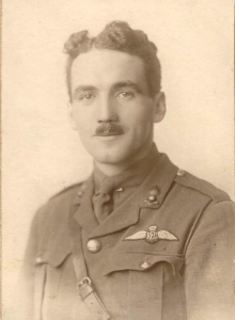
Birth of Fighter Pilot George Edward Henry McElroy

Captain George Edward Henry McElroy, a leading Irish-born fighter pilot of the Royal Flying Corps and Royal Air Force during World War I, is born at DonnybrookCounty Dublin, on May 14, 1893. He is credited with 47 aerial victories.

McElroy enlists promptly at the start of World War I in August 1914 and is shipped out to France two months later. He is serving as a corporal in the Motor Cyclist Section of the Royal Engineers when he is first commissioned as a second lieutenant on May 9, 1915. While serving in the Royal Irish Regiment he is severely affected by mustard gas and is sent home to recuperate. He is in Dublin in April 1916, during the Easter Rising, and is ordered to help quell the insurrection. McElroy refuses to fire upon his fellow Irishmen and is transferred to a southerly garrison away from home.

On June 1, 1916, McElroy relinquishes his commission in the Royal Irish Regiment when awarded a cadetship at the Royal Military Academy, Woolwich, from which he graduates on February 28, 1917, and is commissioned as a second lieutenant in the Royal Garrison Artillery.

McElroy is promptly seconded to the Royal Flying Corps, being trained as a pilot at the Central Flying School at Upavon, and is appointed a flying officer on June 28. On July 27 his commission is backdated to February 9, 1916, and he is promoted to lieutenant on August 9. On August 15 he joins No. 40 Squadron RFC, where he benefits from mentoring by Edward “Mick” Mannock. He originally flies a Nieuport 17, but with no success in battle. By the year’s end McElroy is flying Royal Aircraft Factory S.E.5s and claims his first victory on December 28.

An extremely aggressive dogfighter who ignores often overwhelming odds, McElroy’s score soon grows rapidly. He shoots down two German aircraft in January 1918, and by February 18 has run his string up to eleven. At that point, he is appointed a flight commander with the temporary rank of captain and transferred to No. 24 Squadron RFC. He continues to steadily accrue victories by ones and twos. By March 26, when he is awarded the Military Cross, he is up to 18 “kills.” On April 1, the Army’s Royal Flying Corps (RFC) and the Royal Naval Air Service (RNAS) are merged to form the Royal Air Force, and his squadron becomes No. 24 Squadron RAF. McElroy is injured in a landing accident on April 7 when he brushes a treetop while landing. By then he has run his score to 27. While he is sidelined with his injury, on April 22, he is awarded a bar to his Military Cross. Following his convalescence, McElroy returns to No. 40 Squadron in June, scoring three times, on the 26th, 28th, and 30th. The latter two triumphs are observation balloons. That runs his tally to thirty.

In July, he adds to his score almost daily, a third balloon busting on the 1st, followed by one of the most triumphant months in the history of fighter aviation, adding 17 victims during the month. His run of success is threatened on the 20th by a vibrating engine that entails breaking off an attack on a German two-seater and a rough emergency landing that leaves him with scratches and bruises. There is a farewell luncheon that day for his friend Gwilym Hugh “Noisy” Lewis. Their mutual friend Edward “Mick” Mannock pulls McElroy aside to warn him about the hazards of following a German victim down within range of ground fire.

On July 26, Mannock is killed by ground fire. Ironically, on that same day, “McIrish” McElroy receives the second Bar to his Military Cross. He is one of only ten airmen to receive the second Bar.

McElroy’s continues apparent disregard for his own safety when flying and fighting can have only one end. On July 31, 1918, he reports destroying a Hannoversche Waggonfabrik C for his 47th victory. He then sets out again. He fails to return from this flight and is posted missing. Later it is learned that McElroy has been killed by ground fire. He is 25 years old. McElroy is interred in Plot I.C.1 at the Laventie Military Cemetery in La Gorgue, northern France.

McElroy receives the Distinguished Flying Cross posthumously on August 3, citing his shooting down 35 aeroplanes and three observation balloons. The Bar arrives still later, on September 21, and lauds his low-level attacks. In summary, he shoots down four enemy aircraft in flames and destroys 23 others, one of which he shares with other pilots. He drives down 16 enemy aircraft “out of control” and out of the fight. He also destroys three balloons.


Leave a comment

Birth of Novelist Edith Anna Œnone Somerville

Edith Anna Œnone Somerville, Irish novelist who habitually signs herself as “E. Œ. Somerville,” is born on May 2, 1858, on the island of Corfu, then part of the United States of the Ionian Islands, a British protectorate where her father is stationed. She writes in collaboration with her cousin “Martin Ross” (Violet Martin) under the pseudonym “Somerville and Ross.” Together they publish a series of fourteen stories and novels, the most popular of which are The Real Charlotte, and The Experiences of an Irish R. M., published in 1899.

A year after her birth, her father retires to Drishane, Castletownshend,  County Cork, where Somerville grows up. She receives her primary education at home, and then attends Alexandra College in Dublin. In 1884 she studies art in Paris, and then spends a term at the Westminster School of Art in Dean’s YardWestminster. At home, riding and painting are her absorbing interests.

In January 1886 she meets her cousin Violet Martin, and their literary partnership begins the following year. Their first book, An Irish Cousin, appears in 1889, under the names Geilles Herring (from the maiden name of her ancestor, the wife of Sir Walter de Somerville of Linton and Carnwath) and Martin Ross, though the pen names are dropped after the first edition. In 1898, Somerville goes to paint at the Etaples art colony, accompanied by Violet. There they profit from their stay by conceiving together the stories later gathered in Some Experiences of an Irish R. M., completed the following year. By the time Violet dies in 1915, they have published fourteen books together. Her cousin’s death stuns Somerville, who continues to write as “Somerville and Ross,” claiming that they keep in contact through spiritualist séances.

Somerville is a devoted sportswoman who in 1903 becomes master of the Carbery West Foxhounds. She is also active in the suffrage movement, corresponding with Dame Ethel Smyth. She is in London still recovering from the shock of Violet’s death when the Easter Rising of 1916 breaks out. On May 9, 1916, she writes a letter to The Times, blaming the British government for the state of affairs in Ireland. After that she tends towards Nationalism, and as an adept musician at parties, she specializes in Irish tunes and Nationalist songs.

She has exhibitions of her pictures in Dublin and in London between 1920 and 1938 and is active as an illustrator of children’s picture books and sporting picture books.

In 1936 her brother, Henry Boyle Townsend Somerville, a retired Vice-Admiral in the Royal Navy, is killed by the Irish Republican Army (IRA) at the family home of Castletownshend. She finishes his book “Will Mariner” after his death.

Edith Somerville dies at Castletownshend on October 8, 1949, at the age of 91. She is buried alongside Violet Florence Martin at Saint Barrahane’s Church, Castletownsend, County Cork.


Leave a comment

Birth of Michael Joseph O’Rahilly, Republican & Nationalist

Michael Joseph O’Rahilly, Irish republican and nationalist known as The O’Rahilly, is born in BallylongfordCounty Kerry, on April 22, 1875.

O’Rahilly is educated in Clongowes Wood College. As an adult, he becomes a republican and a language enthusiast. He joins the Gaelic League and becomes a member of An Coiste Gnotha, its governing body. He is well travelled, spending at least a decade in the United States and in Europe before settling in Dublin.

O’Rahilly is a founding member of the Irish Volunteers in 1913, which is organized to work for Irish independence and resist the proposed Home Rule. He serves as the IV Director of Arms. He personally directs the first major arming of the Irish Volunteers, the landing of 900 Mausers at the Howth gun-running on July 26, 1914.

O’Rahilly is not party to the plans for the Easter Rising, nor is he a member of the Irish Republican Brotherhood (IRB), but he is one of the main people who train the Irish Volunteers for the coming fight. The planners of the Rising go to great lengths to prevent those leaders of the Volunteers who are opposed to unprovoked, unilateral action from learning that a rising is imminent, including its Chief-of-Staff Eoin MacNeillBulmer Hobson, and O’Rahilly. When Hobson discovers that an insurrection is planned, he is kidnapped by the Military Council leadership.

Learning this, O’Rahilly goes to Patrick Pearse‘s school, Scoil Éanna, on Good Friday. He barges into Pearse’s study, brandishing his revolver as he announces, “Whoever kidnaps me will have to be a quicker shot!” Pearse calms O’Rahilly, assuring him that Hobson is unharmed, and will be released after the rising begins.

O’Rahilly takes instructions from MacNeill and spends the night driving throughout the country, informing Volunteer leaders in CorkKerryTipperary, and Limerick that they are not to mobilise their forces for planned manoeuvres on Sunday.

Arriving home, O’Rahilly learns that the Rising is about to begin in Dublin on the next day, Easter Monday, April 24, 1916. Despite his efforts to prevent such action which he feels can only lead to defeat, he sets out to Liberty Hall to join Pearse, James ConnollyThomas MacDonaghTom ClarkeJoseph PlunkettCountess MarkieviczSeán Mac DiarmadaEamonn Ceannt and their Irish Volunteers and Irish Citizen Army troops. Arriving in his De Dion-Bouton motorcar, he gives one of the most quoted lines of the rising, “Well, I’ve helped to wind up the clock — I might as well hear it strike!”

O’Rahilly fights with the General Post Office (GPO) garrison during Easter Week. On Friday, April 28, with the GPO on fire, O’Rahilly volunteers to lead a party of men along a route to Williams and Woods, a factory on Great Britain Street, now Parnell Street. A British machine-gun at the intersection of Great Britain and Moore streets cuts him and several of the others down. Wounded and bleeding badly, O’Rahilly slumps into a doorway on Moore Street, but hearing the English marking his position, makes a dash across the road to find shelter in Sackville Lane, now O’Rahilly Parade. He is wounded diagonally from shoulder to hip by sustained fire from the machine-gunner.

The specific timing of O’Rahilly’s death is very difficult to pin down but understanding can be gained from his final thoughts. Despite his obvious pain, he takes the time to write a message to his wife on the back of a letter he received from his son in the GPO. It is this last message to Nancy that artist Shane Cullen etches into his limestone and bronze sculpture. The text reads:

Written after I was shot. Darling Nancy I was shot leading a rush up Moore Street and took refuge in a doorway. While I was there, I heard the men pointing out where I was and made a bolt for the laneway I am in now. I got more [than] one bullet, I think. Tons and tons of love dearie to you and the boys and to Nell and Anna. It was a good fight anyhow. Please deliver this to Nannie O’ Rahilly, 40 Herbert Park, Dublin. Goodbye Darling.


Leave a comment

Birth of Irish Politician Mary MacSwiney

Mary MacSwiney, Irish politician and educationalist, is born in London on March 27, 1872, to an Irish father and English mother. In 1927, she becomes leader of Sinn Féin when Éamon de Valera resigns from the presidency of the party.

MacSwiney returns to Ireland with her family at the age of six and is educated at St. Angela’s School in Cork. At the age of twenty, she obtains a teaching post at a private school in England and studies for a Teaching Diploma at the University of Cambridge, which is normally reserved for men.

Influenced by her younger brother Terence MacSwiney‘s staunch Irish republicanism, MacSwiney joins the Gaelic League and Inghinidhe na hÉireann. She is a founder member of Cumann na mBan when it is formed in 1914 in Cork and becomes a National Vice-President of the organisation. She leads the denunciation of British rule at the Convention of November 1914. In 1916, she is arrested and imprisoned following the Easter Rising and is also dismissed from her teaching position due to her republican activities. Several months later, upon her release from prison, she and her sister Annie re-found Scoil Íte, a sister school to Patrick Pearse‘s St. Enda’s School, and she remains involved with the school for the rest of her life.

MacSwiney supports the Irish War of Independence in 1919–21. After the death of her brother Terence in October 1920 on hunger strike during the height of the war, she is elected for Sinn Féin to the Cork Borough constituency in 1921. She gives evidence in Washington, D.C., before the American Commission on Conditions in Ireland. For nine months she and Terence’s widow, Muriel, tour the United States lecturing and giving interviews.

MacSwiney is active in her friendship with Harry Boland and de Valera, whom she cultivates assiduously. In October 1921, a second delegation is to be sent to London which for the first time includes Michael Collins. MacSwiney, who remains implacably opposed, pleads with de Valera to be allowed to go. She is refused as de Valera thinks her to be “too extreme.” She strongly opposes the Anglo-Irish Treaty, debating during December 1921 to January 1922 to resume the war. On December 21 she speaks for three hours, criticising the agreement from all angles.

MacSwiney is arrested at Nell Ryan’s home, a safe house, at 40 Herbert Park, Ballsbridge, on November 4, 1922, when it is raided by Free State soldiers. She is interned at Mountjoy Gaol and immediately goes on hunger strike. Cumann na mBan organizes vigils outside the prison in protest of Mary’s and the others internment. The Women’s Prisoner’s Defence League is formed in August 1922 to protect their rights. During the hunger strike she refuses doctor’s visits and is resigned to her death. Her condition is critical, and she is given the Last Rites by a Catholic priest. The Government is not prepared to allow strikers die, so she is released.

En route to Liam Lynch‘s funeral, MacSwiney is again arrested when the car in which she is riding is stopped and she is recognised. She is taken with Kate O’Callaghan to Kilmainham Gaol. Fearless of death, she begins another protest. They continued to be interned without charge, but it is explained she is distributing anti-government propaganda. After nineteen days of hunger strike, she is due to be released on April 30, 1923. The Governor allows O’Callaghan to go but stays a decision on MacSwiney. Most of the women on hunger strike are sent to the North Dublin Union.

MacSwiney retains her seat at the 1923 Irish general election and, along with other Sinn Féin members, refuses to enter the Dáil Éireann.

In March 1926 the party holds its Ardfheis. MacSwiney and Father Michael O’Flanagan lead the section from which Éamon de Valera and Fianna Fáil break away. De Valera has come to believe that abstentionism is not a workable tactic and now sees the need to become the elected government of the Dáil. The conference instructs a joint committee of representatives from the two sections to arrange a basis for co-operation. That day, it issues a statement declaring “the division within our ranks is a division of Republicans.” The next day, de Valera’s motion to accept the Free State Constitution, contingent upon the abolition of the Oath of Allegiance, narrowly fails by a vote of 223 to 218. However, de Valera takes the great majority of Sinn Féin support with him when he founds Fianna Fáil.

MacSwiney continues to maintain a republican position until her death. By then she is vice-president of Sinn Féin and Cumann na mBan but loses her seat at the June 1927 Irish general election. When lack of funds prevents Sinn Féin contesting the second election called that year, MacSwiney declares “no true Irish citizen can vote for any of the other parties.”

Mary MacSwiney dies at her home in Cork on March 8, 1942. Her stance, both before and after the Treaty, may be summed up by her statement, “A rebel is one who opposes lawfully constituted authority and that I have never done.”


Leave a comment

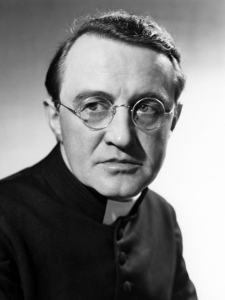
Birth of Actor Arthur Shields

arthur-shields

Arthur Shields, Irish actor on television, stage, and film, is born on February 15, 1896, into an Irish Protestant family in Portobello, Dublin. Shields starts acting in the Abbey Theatre when he is 17 years old. He is the younger brother of Oscar-winning actor Barry Fitzgerald. They are the sons of Adolphus Shields, who is well-known in Dublin as a labor organizer although the 1901 census lists his occupation as “press reader,” and Fanny Sophia Sheilds.

An Irish nationalist, Shields fights in the Easter Rising of 1916. He is captured and held for six months in the Frongoch internment camp in Frongoch, Wales. His obituary in the San Mateo County Times of San Mateo, California, reports, “upon his release he was decorated by the Republic of Eire.”

Shields returns to the Abbey Theatre and has a varied career there from 1914-1939 as actor, assistant director, director, and stage manager. He appears in more than 300 roles in 350 plays while he is at the Abbey. Three of the productions he appears in are by Irish playwright Teresa DeevyThe Reapers, Temporal Powers, and Katie Roche. Three times he brings the Abbey Company to the United States.

In 1936, John Ford brings him to the United States to act in a film version of The Plough and the Stars in the role of Patrick Pearse. Some of his memorable roles are in Ford films. Shields portrays the Reverend Playfair in Ford’s The Quiet Man, opposite John Wayne, Maureen O’Hara, and his brother, Barry Fitzgerald. He plays Dr. Laughlin in She Wore a Yellow Ribbon with Wayne and Joanne Dru and appears yet again with Wayne and Barry Fitzgerald in Ford’s The Long Voyage Home. His other films include Little Nellie Kelly, The Keys of the Kingdom, The Fabulous Dorseys, Gallant Journey, The Shocking Miss Pilgrim, Drums Along the Mohawk, Lady Godiva, National Velvet, and The River. He also makes television appearances including a 1958 role on Perry Mason as Dr. George Barnes in “The Case of the Screaming Woman.”

Shields dies of complications related to emphysema on April 27, 1970, in Santa Barbara, California. He is survived by his wife, actress Laurie Bailey, a daughter, a son, and four great-grandchildren. His body is cremated, with the ashes taken to Dublin, where a burial with full military honors takes place.


Leave a comment

First Edition of the “Irish Independent” Printed

irish-independent-first-issue

The first edition of the Irish Independent, flagship publication of Independent News & Media (INM) and Ireland’s largest-selling daily newspaper, is printed on January 2, 1905.

The Irish Independent is formed in 1905 as the direct successor to the Daily Irish Independent, an 1890s pro-Parnellite newspaper, and is launched by William Martin Murphy, a controversial Irish nationalist businessman, staunch anti-Parnellite and fellow townsman of Charles Stewart Parnell‘s most venomous opponent, Bantry’s Timothy Michael Healy.

During the Great Dublin Lockout of 1913, in which Murphy is the leading figure among the employers, the Irish Independent vigorously sides with its owner’s interests, publishing news reports and opinion pieces hostile to the strikers, expressing confidence in the unions’ defeat and launching personal attacks on the leader of the strikers, James Larkin. The Irish Independent describes the 1916 Easter Rising as “insane and criminal” and famously calls for the shooting of its leaders. In December 1919, during the Irish War of Independence, a group of twenty Irish Republican Army (IRA) men destroy the printing works of the paper, angered at its criticism of the IRA’s attacks on members of the Dublin Metropolitan Police and British government officials. In 1924, the traditional nationalist newspaper, the Freeman’s Journal, merges with the Irish Independent. Until October 1986 the paper’s masthead over the editorial contains the words “incorporating the Freeman’s Journal.”

For most of its history, the Irish Independent is seen as a nationalist, Catholic, anti-Communist, newspaper which gives its political allegiance to the Pro-Treaty party Cumann na nGaedheal and later its successor party, Fine Gael. During the Spanish Civil War, the Irish Independent‘s coverage is strongly pro-Franco, and the paper criticizes the De Valera government for not intervening on behalf of the Spanish Nationalists.

In the 1970s, the Irish Independent is taken over by former Heinz chairman Tony O’Reilly. Under his leadership, it becomes a more populist, market liberal newspaper — populist on social issues but economically right-wing. By the mid-nineties its allegiance to Fine Gael has ended. In the 1997 general election, it endorses Fianna Fáil under a front-page editorial entitled “It’s Payback Time.” While it suggests its headline refers to the fact that the election offers a chance to “pay back” politicians for their failings, its opponents suggest that the “payback” actually refers to its chance to get revenge for the refusal of the Rainbow Coalition to award the company a mobile phone licence.

In late 2004, Independent Newspapers moves from their traditional home in Middle Abbey Street to a new office, “Independent House” in Talbot Street, with the printing facilities already relocated to the Citywest business park near Tallaght.

On September 27, 2005, a fortnight after the paper publishes its centenary edition, it is announced that editor Vinnie Doyle will step down after 24 years in the position. He is replaced by Gerry O’Regan, who has until then been editor of the Irish Independent‘s sister paper, the Evening Herald. The newspaper’s previous editor Stephen Rae is also formerly editor of the Evening Herald and is appointed editor in September 2012. Fionnan Sheahan is appointed editor in January 2015.

In January 2008, at the same time as completing the purchase of Today FM, Ireland’s last national radio station independent of Denis O’Brien and state broadcaster RTÉ, O’Brien increases his INM shareholding to become the company’s second-largest shareholder behind Tony O’Reilly. In May 2008, O’Brien ousts O’Reilly and acquires a majority shareholding. Traditionally a broadsheet newspaper, it introduces an additional compact size in 2004 and in December 2012, following O’Brien’s takeover, it is announced that the newspaper will become compact only.

(Pictured: the first edition of the Irish Independent)


1 Comment

Death of Grace Evelyn Gifford Plunkett

grace-gifford-plunkett

Grace Evelyn Gifford Plunkett, Irish artist and cartoonist who is active in the Republican movement, dies suddenly in her apartment in South Richmond Street, Portobello, Dublin, on December 13, 1955.

Gifford is the second youngest of twelve children born to Frederick Gifford, a solicitor and Roman Catholic, and Isabella Julia Burton Gifford, a Protestant. She grows up in the fashionable suburb of Rathmines in Dublin. The boys are baptised as Catholics and the girls as Protestant, but effectively the children are all raised as Protestants. The girls attend Alexandra College in Earlsfort Terrace, and the boys attend the The High School in Harcourt St.

At the age of 16, Gifford enters the Dublin Metropolitan School of Art, where she studies under the Irish artist William Orpen. Orpen regards Gifford as one of his most talented pupils. He often sketches her and eventually paints her as one of his subjects for a series on “Young Ireland.” Around this time, Gifford’s talent for caricature is discovered and developed. In 1907 she attends a course in Fine Art at the Slade School of Fine Art, London.

Gifford returns to Dublin in 1908 and, with great difficulty, attempts to earn a living as a caricaturist, publishing her cartoons in The Shanachie, Irish Life, Meadowstreet, and The Irish Review, which is edited from 1913 by Joseph Plunkett. She considers emigrating but gives up the idea. Later that year, she meets Plunkett for the first time at the opening of St. Edna’s School, a new bilingual school in Ranelagh, Dublin. Plunkett is a friend of her brother-in-law, another of the future leaders of the 1916 Easter Rising, Thomas MacDonagh, who is married to Gifford’s sister Muriel.

Her growing interest in the Roman Catholic religion leads to the deepening of Gifford and Plunkett’s relationship. Plunkett proposes to her in 1915. She accepts and takes formal instruction in Catholic doctrine. She is received into the Catholic Church in April 1916. The couple plan to marry on Easter Sunday that year, in a double wedding with his sister and her fiancé.

After the Rising, her brother-in-law Thomas MacDonagh is executed by firing squad along with Patrick Pearse and Thomas Clarke on May 3. That same day, Gifford learns that Plunkett is to be shot at dawn. She purchases a ring in a jeweler’s shop in Dublin city centre and, with the help of a priest, persuades the military authorities to allow them to marry. She and Plunkett are married on the night of May 3, 1916, in the chapel of Kilmainham Gaol, a few short hours before he is executed.

Grace Plunkett decides to devote herself through her art to the promotion of Sinn Féin policies and resumes her commercial work to earn a living. She is elected to the Sinn Féin executive in 1917.

During the Irish Civil War, Plunkett is arrested with many others in February 1923 and interned at Kilmainham Gaol for three months. She is released in May 1923.

When the Civil War ends, Plunkett has no home of her own and little money. Like many Anti-Treaty Republicans, she is the target of social ostracism and has difficulty finding work. She moves from one rented apartment to another and eats in the city-centre restaurants. She befriends many people and has many admirers but has no wish to remarry. Her material circumstances improve in 1932 when she receives a Civil List pension from Éamon de Valera‘s Fianna Fáil government. She lives for many years in a flat in Nassau St. with a balcony overlooking the sports ground of Trinity College.

Plunkett’s in-laws refuse to honour her husband’s will, which leaves everything to his widow. Legally, the will is invalid because there is only one of the required two witnesses and also the marriage takes place after the will is made, automatically revoking it. She begins legal proceedings against her in-laws in 1934. The Count and Countess Plunkett settle out of court and Plunkett is paid £700, plus costs.

From the late 1940s onwards, Plunkett’s health declines. In 1950 she is brought to St. Vincent’s Hospital, then in the city centre. She convalesces in a nursing home, which she does not like because it restricts her freedom.

After her sudden death on December 13, 1955, Grace Gifford Plunkett’s body is removed to St. Kevin’s Church, Harrington Street, and among the attendees at her funeral is President Seán T. O’Kelly. She is buried with full military honours near the republican plot in Glasnevin Cemetery.

Grace Gifford Plunkett is the subject of “Grace,” a song written in 1985 by Frank and Seán O’Meara, which becomes popular in Ireland and elsewhere and has been recorded by many musicians.


Leave a comment

Birth of Irish Nationalist Joseph Mary Plunkett

joseph-mary-plunkett

Joseph Mary Plunkett, Irish nationalist, poet, journalist, and a leader of the 1916 Easter Rising, is born at 26 Upper Fitzwilliam Street in Dublin on November 21, 1887.

Both his parents come from wealthy backgrounds, and his father, George Noble Plunkett, has been made a papal count. Despite being born into a life of privilege, young Joe Plunkett does not have an easy childhood.

Plunkett contracts tuberculosis at a young age. This is to be a lifelong burden. His mother is unwilling to believe his health is as bad as it is. He spends part of his youth in the warmer climates of the Mediterranean and North Africa. He spends time in Algiers where he studies Arabic literature and language and composes poetry in Arabic. He is educated at the Catholic University School and by the Jesuits at Belvedere College in Dublin and later at Stonyhurst College, in Lancashire, England, where he acquires some military knowledge from the Officers’ Training Corps. Throughout his life, Plunkett takes an active interest in Irish heritage and the Irish language and also studies Esperanto. He is one of the founders of the Irish Esperanto League. He joins the Gaelic League and begins studying with Thomas MacDonagh, with whom he forms a lifelong friendship. The two are both poets with an interest in theatre, and both are early members of the Irish Volunteers, joining their provisional committee. Plunkett’s interest in Irish nationalism spreads throughout his family, notably to his younger brothers George and John, as well as his father, who allows his property in Kimmage, south Dublin, to be used as a training camp for young men who wish to escape conscription in Britain during the First World War. Men there are instead trained to fight for Ireland.

Sometime in 1915 Plunkett joins the Irish Republican Brotherhood (IRB) and soon after is sent to Germany to meet with Roger Casement, who is negotiating with the German government on behalf of Ireland. Casement’s role as emissary is self-appointed, and, as he is not a member of the IRB, the organisation’s leadership wishes to have one of their own contact Germany to negotiate German aid for an uprising the following year. Plunkett is seeking, but not limiting himself to, a shipment of arms. Casement, on the other hand, spends most of his energies recruiting Irish prisoners of war in Germany to form a brigade to fight instead for Ireland. Some nationalists in Ireland see this as a fruitless endeavour, and prefer to seek weapons. Plunkett successfully gets a promise of a German arms shipment to coincide with the rising.

Plunkett is one of the original members of the IRB Military Committee that is responsible for planning the Easter Rising, and it is largely his plan that is followed. Shortly before the rising is to begin, Plunkett is hospitalised following a turn for the worse in his health. He has an operation on his neck glands days before Easter and has to struggle out of bed to take part in what is to follow. Still bandaged, he takes his place in the General Post Office with several other of the rising’s leaders, including Patrick Pearse and Tom Clarke, though his health prevents him from being terribly active. His energetic aide-de-camp is Michael Collins.

Following the surrender Plunkett is held in Kilmainham Gaol, and faces a court-martial. Seven hours before his execution by firing squad at the age of 28, he is married in the prison chapel to his sweetheart Grace Gifford, a Protestant convert to Catholicism, whose sister, Muriel, had years before also converted and married his best friend Thomas MacDonagh, who is also executed for his role in the Easter Rising. Plunkett is executed by firing squad on May 4, 1916, and is the fourth and youngest signatory of the Proclamation of the Irish Republic to be executed.

Plunkett’s brothers, George Oliver Plunkett and Jack Plunkett, join him in the Easter Rising and later become important Irish Republican Army (IRA) men. His father’s cousin, Horace Plunkett, is a Protestant and unionist who seeks to reconcile unionists and nationalists. Horace Plunkett’s home is burned down by the Anti-Treaty IRA during the Irish Civil War.

The main railway station in Waterford City is named after Plunkett as is Joseph Plunkett Tower in Ballymun. Plunkett barracks in the Curragh Camp, County Kildare is also named after him.


Leave a comment

Birth of Patrick Henry Pearse

patrick-henry-pearse

Patrick Henry Pearse, teacher, barrister, poet, writer, nationalist, and political activist who is one of the leaders of the 1916 Easter Rising, is born in Dublin on November 10, 1879. Pearse’s father, James, is a stone worker who works on church buildings in Dublin and his mother, Margaret, comes from a family that has endured the Great Famine in 1846 and has left County Meath for Dublin. Here she brings up four children, Patrick being the second. Pearse has a comfortable childhood as his father is in constant work.

It is at school that Pearse first develops a love of Irish history. He is also taught the Irish language for the first time and while still a teenager, Patrick joins the Gaelic League, an organisation that wants to promote the Irish language and Irish literature. Pearse graduates with a law degree from the King’s Inns and, in 1901, he starts a BA course in modern languages but is called to the Bar in Dublin.

Regardless of his law training, Pearse is more interested in what he is learning about Ireland as a nation. All his knowledge about law has been based around the English language and he wants to know more about what he considers to be the rightful language of Ireland. This is not the Gaelic used in Dublin. Pearse has convinced himself that the real Irish language is based in Connaught, and he teaches himself the dialect of the area. Connaught is also a region that has been severely affected by the Great Famine. Therefore, the number of people who speak what Pearse considers to be proper Gaelic have been greatly reduced. From 1903 to 1909, Pearse develops his involvement in the Gaelic League’s An Claidheamh Soluis (The Sword of Light) which seeks to expand the use of Gaelic in Irish life, and, in particular, literature.

By 1909, Pearse has developed some political leanings. He cannot accept the impact England, and all things English have on Ireland and the Irish people, but his concern is more for Irish culture rather than Irish politics. Pearse wants Irish history and culture taught as compulsory subjects in both Irish schools and colleges. He breaks with the Roman Catholic Church when its national college, St. Patrick’s College, Maynooth, demotes courses in Irish history/culture to topics for trainee priests. He is keen for Maynooth to have compulsory Irish courses simply because priests then have a major influence in the areas where they work. However, all of Pearse’s protests fall on deaf ears. As a result, he founds his own school in Dublin, an “Irish-Ireland” school called St. Enda’s School.

Between 1909 and 1912, Pearse becomes more interested and involved in politics. Despite a limited income and the problems of keeping St. Edna’s on an even financial keel, Pearse launches his own newspaper called An Barr Buadh (The Trumpet of Victory). At this time the Home Rule issue has reared its head again. Sinn Féin and other republican movements have far more impact than Pearse, who seems to many to be no more than a political maverick. Many feel that Pearse is out of his depths in politics and that his input into Irish politics is no more than romanticism with an Irish slant.

By 1913, Pearse has become more depressed about the way Ireland is going under the rule of London. Those who know him, describe him as becoming more and more melancholy as the year progresses. Others believe that he is becoming more fanatical. He helps to organise the Irish Volunteers, the public face of the outlawed Irish Republican Brotherhood, before the outbreak of World War I. In 1914, he is sent on a fund-raising tour of America by Clan na Gael, an organisation that aids the Irish Republican Brotherhood. While the tour is a reasonable success financially, not many Americans are swayed by Pearse’s speeches.

By the time World War I starts, Pearse has taken an extreme political stance. He wants full Irish independence – not what the suspended Home Rule Bill of 1912 offers. He does not support the part Ireland plays in the war effort. He also splits the Irish Volunteers. He takes a small number of these men with him when John Redmond gives his agreement to suspend the Home Rule Bill until the war is over. By now, Pearse has become extreme. He publishes a pamphlet called The Murder Machine which is a severe condemnation of the Irish educational system. He also realises that with London totally focused on the war in Europe, the time is ripe to overthrow British rule in Ireland.

However, in this respect, Pearse is totally wrong. The young men who have volunteered to fight in the war have done so because they want to. Pearse has no mass support in Ireland whereas John Redmond has far more public support in the south. He also assumes incorrectly that all those in southern Ireland are completely against British rule. What Pearse fails to recognise, is that many people in Dublin itself rely on the British for work. They may not like this, but work brings in money regardless of where or who it comes from.

Those who participate in the Easter Uprising of 1916 are in the minority. Pearse decides to take command of the rebellion, and he reads aloud the declaration of independence at the General Post Office. Pearse also is one of the signatories of “Poblacht na hÉireann” (To the People of Ireland).

If Pearse expects the actions of the rebels in Dublin to spark off other uprisings in other Irish cities and towns, he is mistaken. In Dublin, the people of the city fail to offer the rebels any support. In fact, some Dubliners take the opportunity of the rebellion to loot the shops in Sackville Street. The Uprising is doomed from the start.

During the rebellion, Pearse says, “When we are all wiped out, people will blame us for everything, condemn us…. (but) in a few years they will see the meaning of what we tried to do.” Ironically, he is correct in this assessment.

On Friday, April 28, 1916, Pearse surrenders to the British army. By the following day all the rebels have surrendered. As they are paraded through the streets of Dublin before going to Kilmainham Gaol, they are jeered and verbally abused by Dubliners who have seen parts of their city destroyed. They blame Pearse and his followers rather than the British.

At Kilmainham Gaol, Pearse is charged with treason by a military court and sentenced to death. On May 16, Pearse is shot by firing squad. Eventually fourteen other rebel leaders are also executed by firing squad. Pearse’s body, and those of the other leaders, are thrown into a pit without a coffin or a burial service. Ironically, it is in death that Pearse finds real fame.

No one knows the fate of the rebel leaders until after the executions. Many in Ireland are horrified at the way they have been treated. If Pearse had not received national support during his life, his movement certainly received it after his death. Pearse had written that he wanted his fame and deeds to “live after me.” In death, Patrick Pearse is known as the “First President of Ireland” and Irish history and culture become part of the educational system after 1922.