seamus dubhghaill

Promoting Irish Culture and History from Little Rock, Arkansas, USA


Leave a comment

Death of John Redmond, Politician & Barrister

john-edward-redmond

John Edward Redmond, Irish nationalist politician, barrister, and Member of Parliament (MP) in the House of Commons of the United Kingdom, dies on March 6, 1918, in London, England. He is best known as leader of the moderate Irish Parliamentary Party (IPP) from 1900 until his death. He is also leader of the paramilitary organisation the National Volunteers.

Redmond is born to an old prominent Catholic family in Kilrane, County Wexford on September 1, 1856. Several relatives are politicians. He takes over control of the minority IPP faction loyal to Charles Stewart Parnell after Parnell dies in 1891. He is a conciliatory politician who achieves the two main objectives of his political life: party unity and, in September 1914, the passing of the Irish Home Rule Act.

The Irish Home Rule Act grants limited self-government to Ireland, within the United Kingdom. However, implementation of Home Rule is suspended by the outbreak of the World War I. Redmond calls on the National Volunteers to join Irish regiments of the New British Army and support the British and Allied war effort to restore the “freedom of small nations” on the European continent, thereby to also ensure the implementation of Home Rule after a war that is expected to be of short duration. However, after the Easter Rising of 1916, Irish public opinion shifts in favour of militant republicanism and full Irish independence, resulting in his party losing its dominance in Irish politics.

In sharp contrast to Parnell, Redmond lacks charisma. He works well in small committees but has little success in arousing large audiences. Parnell had always chosen the nominees to Parliament. Now they are selected by the local party organisations, giving Redmond numerous weak MPs over whom he has little control. He is an excellent representative of the old Ireland but grows increasingly old-fashioned because he pays little attention to the new forces attracting younger Irishmen, such as Sinn Féin in politics, the Gaelic Athletic Association in sports, and the Gaelic League in cultural affairs.

Redmond never tries to understand the unionist forces emerging in Ulster. He is further weakened in 1914 by the formation of the Irish Volunteers by Sinn Féin members. His enthusiastic support for the British war effort alienates many Irish nationalists. His party has been increasingly hollowed out, and a major crisis, notably the Easter Rising, is enough to destroy it.

Redmond is increasingly eclipsed by ill-health after 1916. An operation in March 1918 to remove an intestinal obstruction appears to progress well initially, but he then suffers heart failure. He dies a few hours later at a London nursing home on March 6, 1918.

Condolences and expressions of sympathy are widely expressed. After a funeral service in Westminster Cathedral his remains are interred, as requested in a manner characteristic of the man, in the family vault at the old Knights Templars‘ chapel yard of Saint John’s Cemetery, Wexford, amongst his own people rather than in the traditional burial place for Irish statesmen and heroes in Glasnevin Cemetery. The small, neglected cemetery near the town centre is kept locked to the public. His vault, which has been in a dilapidated state, has been only partially restored by Wexford County Council.

4 Comments

Murder of Frank Shawe-Taylor

castle-taylor-ardrahan

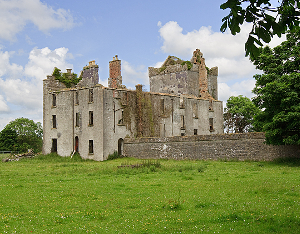
Frank Shawe-Taylor, Irish land agent and ex-High Sheriff of County Galway, is shot and killed in an Irish Republican Army (IRA) ambush on March 3, 1920, during the Irish War of Independence. Shawe-Taylor is a member of the Taylor family of Castle Taylor, Ardrahan, County Galway. He is related to Lady Gregory and Captain John Shawe-Taylor. He serves as High Sheriff of County Galway in 1915.

Land disputes in Ireland had been a contentious issue for much of the 19th century, with tenants of landlords insisting on fixity of tenure, which later grows into a demand to own their own land. In addition, The Wyndham Land Act of 1903 enables the transfer of about 9 million acres, up to 1914, from landlords to tenants. However, tenure and ownership of land is still a live issue on the eve of the Irish War of Independence.

Shawe-Taylor is a land agent to a local landlord and is himself a tenant. Early in January 1920, a group of local IRA soldiers, including Mick Kelly, Bill Freaney and Larry Lardner, approach Shawe-Taylor on behalf of some local people who are requesting a road to travel to Mass. While Shawe-Taylor himself is amenable to their demands, his landlord refuses them outright and makes this known via Shawe-Taylor.

On March 3, 1920, Shawe-Taylor and his driver, Barrett, are making their way to Galway to attend the fair. At 6:00 AM the coach reaches Egan’s Pub, Coshla, where they find the road blocked. The donkey cart of a local, Johnny Kelly, has been stolen and placed across the road. From behind the wall, at least two shooters fire at Barrett and Shawe-Taylor, wounding Barrett and killing Shawe-Taylor. This results in a huge security presence in the area, which in turn leads to more unrest with the locals. This increases with the arrival of the Black and Tans, whose irregular methods result in shootings, assaults, rapes and deaths. Moorpark House is placed under Royal Irish Constabulary protection out of fear of further killings.

Other people who subsequently die as a result of the unrest in Galway include Ellen Quinn, a pregnant mother of six and a tenant of Lady Gregory, Fr. Michael Griffin, Tom Egan and brothers Patrick and Harry Loughnane. In addition, there are numerous incidents of violence, many of which are recorded with horror by Lady Gregory in her journal, who remarks that “the country has gone wild since the killing of Frank Shawe-Taylor.”

No one is ever tried for Frank Shawe-Taylor’s killing, though the identities of those involved are known to some locals at the time. His widow eventually sells their property and, with her young children, moves to England.

Shawe-Taylor is buried in St. Mary’s graveyard, Athenry. The music critic, Desmond Shawe-Taylor (1907–1995) and British racing driver Brian Shawe-Taylor (1915–1999) are his sons. His grandson is Desmond Shawe-Taylor, Surveyor of the Queen’s Pictures since 2005.

(Pictured: Castle Taylor, near to Ardrahan and Caranavoodaun, Galway, Ireland | Photo © Mike Searle (cc-by-sa/2.0))


Leave a comment

Bill Whelan Receives IMRO Lifetime Achievement Award

bill-whelan

Taoiseach Bertie Ahern presents Irish composer and musician Bill Whelan with the IMRO Lifetime Achievement Award at Dublin Castle on March 2, 2001. Such big names as The Corrs, Brian Kennedy, Jean Butler, Jim Sheridan, Paul McGuinness and Moya Doherty join him to celebrate the award.

Whelan is best known for composing a piece for the interval of the 1994 Eurovision Song Contest. The result, Riverdance, is a seven-minute display of traditional Irish dancing that becomes a full-length stage production and spawns a worldwide craze for Irish dancing and Celtic music and also wins him a Grammy Award. It is released as a single in the United Kingdom in 1994, credited to “Bill Whelan and Anúna featuring the RTÉ Concert Orchestra.” It reaches number 9 and stays in the charts for 16 weeks. The album of the same title reaches number 31 in the album charts in 1995. He also composes a symphonic suite version of Riverdance, with its premiere performed by the Ulster Orchestra on BBC Radio 3 in August 2014.

Whelan is a native of Limerick and is educated at Crescent College, University College Dublin and the King’s Inns. While he is best known for his Riverdance composition, he has been involved in many ground-breaking projects in Ireland since the 1970s. As a producer he has worked with U2 (on their War album), Van Morrison, Kate Bush, The Dubliners, Planxty, Andy Irvine & Davy Spillane, Patrick Street, Stockton’s Wing and fellow Limerickman Richard Harris.

In theatre, Whelan receives a Laurence Olivier Award nomination for his adaption of Gilbert and Sullivan‘s H.M.S. Pinafore. He writes original music for fifteen of William Butler Yeats‘s plays for Dublin‘s Abbey Theatre and his film credits include Dancing at Lughnasa (starring Meryl Streep), Some Mother’s Son, Lamb (starring Liam Neeson) and the award-winning At the Cinema Palace.


Leave a comment

Birth of Short Story Writer Seán Ó Faoláin

sean-ofaolain

Seán Proinsias Ó Faoláin, Irish short story writer, is born as John Francis Whelan on February 22, 1900, in Cork, County Cork.

Ó Faoláin is educated at the Presentation Brothers Secondary School in Cork. He comes under the influence of Daniel Corkery, joining the Cork Dramatic Society and increasing his knowledge of the Irish language, which he had begun in school. Shortly after entering University College Cork, he joins the Irish Volunteers and fights in the Irish War of Independence. During the Irish Civil War, he serves as Censor for The Cork Examiner and as publicity director for the Irish Republican Army (IRA). After the Republican loss, he receives M.A. degrees from the National University of Ireland and from Harvard University where he studies for three years. He is a Commonwealth Fellow from 1926 to 1928 and is a Harvard Fellow from 1928 to 1929.

Ó Faoláin writes his first stories in the 1920s, eventually completing 90 stories over a period of 60 years. From 1929 to 1933 he lectures at the Catholic college, St. Mary’s College, at Strawberry Hill in Twickenham, England, during which period he writes his first two books. His first book, Midsummer Night Madness, is published in 1932. It is a collection of stories partly based on his Civil War experiences. He afterwards returns to his native Ireland. He publishes novels, short stories, biographies, travel books, translations, and literary criticism – including one of the rare full-length studies of the short story, The Short Story (1948). He also writes a cultural history, The Irish, in 1947.

Ó Faoláin serves as director of the Arts Council of Ireland from 1956 to 1959, and from 1940 to 1990 is a founder member and editor of the Irish literary periodical The Bell. The list of contributors to The Bell include many of Ireland’s foremost writers, among them Patrick Kavanagh, Patrick Swift, Flann O’Brien, Frank O’Connor and Brendan Behan. His Collected Stories are published in 1983. He is elected Saoi of Aosdána in 1986.

Seán Proinsias Ó Faoláin dies after a short illness on April 20, 1991, in the Dublin nursing home where he had lived for two years.


Leave a comment

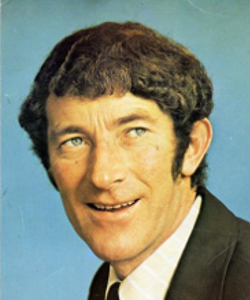
Birth of Singer Larry Cunningham

larry-cunningham

Larry Cunningham, Irish country music singer, who is one of the leading figures of the Irish showband scene in the 1960s and 1970s, is born in Clooneen, Mullinalaghta, County Longford on February 13, 1938. He is regarded as a “trailblazer” and “legend” in the music industry.

Cunningham grows up in the townland of Clooneen in a farming family of seven children. After leaving school at the age of 16 he goes to England and works as a carpenter, playing Irish traditional music and gaelic football during his spare time. In 1958 he returns to Ireland. Still working as a carpenter, he soon joins the part-time Gowna-based Grafton Showband, but leaves it in 1961 to become fully professional as the lead singer of the Mighty Avons, based in Cavan. That band initially specialises in covers of Jim Reeves songs and similar country material.

The band’s first taste of fame comes when they are supporting Jim Reeves during the Irish leg of his European tour in 1963. When Reeves walks off the stage during a concert in Lifford in protest at the poor condition of the supplied piano, the Avons, as they later become popularly called, takes over and entertains the crowd, to much subsequent publicity and acclaim.

In December 1964, Cunningham and the Mighty Avons have a Top-10 hit with the song Tribute to Jim Reeves, which also enters the British charts and is played on Top of the Pops, both firsts for an Irish artist, which further boosted their career. Their major hit is Lovely Leitrim in September 1965, which stays at number one in the charts for four weeks. As well as regularly touring Ireland to large crowds, the Avons make many appearances on television, and often played in Britain, the United States, and other places.

In late 1969, Cunningham leaves the Mighty Avons and merges with Edenderry band The Fairways to form Larry Cunningham and the Country Blue Boys, leaving Gene Stuart to front the Avons. He continues having success with his new band, but after his marriage to Beatrice Nannery in February 1972 he gives up regular touring in favour of occasional concerts and recording. He continues to have top-10 hits until the mid-1970s, and still performs occasionally for the remainder of his life. In recent years, audio and video compilations of his music have been released, as well as a biography.

Larry Cunningham dies in Dublin on September 28, 2012, following a lengthy illness. Among those to pay tribute are U.S. country singer Robert Mizzell who says, “I am so saddened to hear of the passing of country legend Larry. I admired his talent and quick humour. My thoughts are with his family, friends, and the fans who loved the big deep voice that rattled the radio waves.”


Leave a comment

Death of War Correspondent William Howard Russell

william-howard-russell

Sir William Howard Russell, an Irish reporter with The Times and considered to be one of the first modern war correspondents, dies in London, England on February 11, 1907.

Russell is born in Tallaght, County Dublin on March 28, 1820. As a young reporter, he reports on the First Schleswig War, a brief military conflict between Prussian and Danish troops in Denmark in 1850.

Initially sent by editor John Delane to Malta to cover British support for the Ottoman Empire against Russia in 1854, Russell despises the term “war correspondent” but his coverage of the conflict brings him international renown, and Florence Nightingale later credits her entry into wartime nursing to his reports. The Crimean medical care, shelter and protection of all ranks by Mary Seacole is also publicised by Russell and by other contemporary journalists, rescuing her from bankruptcy.

His dispatches are hugely significant as for the first time the public can read about the reality of warfare. Shocked and outraged, the public’s backlash from his reports leads the Government to re-evaluate the treatment of troops and leads to Florence Nightingale’s involvement in revolutionising battlefield treatment.

On September 20, 1854, Russell covers the battle above the Alma River, writing his missive the following day in an account book seized from a Russian corpse. The story, written in the form of a letter to Delane, is supportive of the British troops and pays particular attention to the battlefield surgeons’ “humane barbarity” and the lack of ambulance care for wounded troops. He later covers the Siege of Sevastopol where he coins the phrase “thin red line” in referring to British troops at Balaclava.

Following Russell’s reports of the appalling conditions suffered by the Allied troops conducting the siege, including an outbreak of cholera, Samuel Morton Peto and his partners build the Grand Crimean Central Railway, which is a major factor leading to the success of the siege.

Russell spends December 1854 in Constantinople on holiday, returning in early 1855. He leaves Crimea in December 1855 to be replaced by the Constantinople correspondent of The Times.

In 1856 Russell is sent to Moscow to describe the coronation of Tsar Alexander II and in the following year is sent to India where he witnesses the final re-capture of Lucknow.

In 1861 Russell goes to Washington, D.C., returning to England in 1863. In July 1865 he sails on the SS Great Eastern to document the laying of the transatlantic telegraph cable and writes a book about the voyage with color illustrations by Robert Dudley. He publishes diaries of his time in India, the American Civil War and the Franco-Prussian War, where he describes the warm welcome given him by English-speaking Prussian generals such as Leonhard Graf von Blumenthal.

Russell retires as a battlefield correspondent in 1882 and founds the Army and Navy Gazette. He is knighted in May 1895 and is appointed a Commander of the Royal Victorian Order (CVO) by King Edward VII on August 11, 1902.

Sir William Howard Russell dies on February 11, 1907, and is buried in Brompton Cemetery, London.


Leave a comment

Funeral of Actor Tony Doyle

tony-doyle

Actors from every genre of stage and screen show come together in the chapel at Terenure College in Dublin on February 4, 2000, for the funeral of Irish television and film actor Tony Doyle.

Doyle is born on January 16, 1942, in Ballyfarnon, County Roscommon. He attends Belcamp College, Dublin as a boarder before going on to University College Dublin, which he does not finish.

Doyle first comes to prominence playing a liberal Catholic priest, Father Sheehy, in RTÉ‘s iconic rural drama The Riordans. He appears in such popular shows as Coronation Street, Between the Lines, 1990, Children of the North and Ballykissangel. He wins an Irish Film and Television Academy award for best leading performance for his role in the 1998 miniseries Amongst Women. He also appears in the first Minder episode, “Gunfight at the OK Laundrette,” playing a drunken Irishman.

Doyle’s most famous film role is as the head of the Special Air Service (SAS), Colonel Hadley, in the 1982 British film Who Dares Wins. His other film roles include appearances in Ulysses (1967), Quackser Fortune Has a Cousin in the Bronx (1970), Loophole (1981), Eat the Peach (1986), Secret Friends (1991), Damage (1992), Circle of Friends (1995), and as Tom French in I Went Down (1997).

Tony Doyle collapses at his home and is taken to St. Thomas’ Hospital in Lambeth, London, England where he dies around 2:00 AM on January 28, 2000.

Brian Quigley, Doyle’s Ballykissangel character, is written out of the show after Doyle’s death in the first episode of the final series where Quigley fakes his own suicide and flees to Brazil.

The Tony Doyle Bursary for New Writing is launched by the BBC following his death. Judges include his friend and Ballykissangel co-star Lorcan Cranitch. Cranitch subsequently stars in the BBC detective series McCready and Daughter, which had been written with Doyle in mind.


Leave a comment

Death of Writer Robert Tressell

robert-tressell

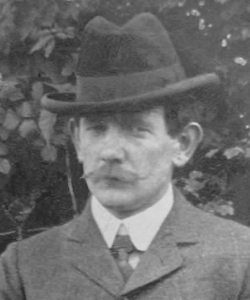
Robert Noonan, Irish writer born Robert Croker and best known by the pen name Robert Tressell, dies in Liverpool, England on February 3, 1911. He is best known for his novel The Ragged-Trousered Philanthropists.

Noonan is born in Dublin on April 18, 1870, the illegitimate son of Samuel Croker, a senior member of the Royal Irish Constabulary. He is baptised and raised a Roman Catholic by his mother Mary Noonan. His father, who is not Catholic, has his own family, but attempts to provide for Robert until his death in 1875.

By 1875 Noonan is living in London. When he is sixteen, he shows signs of a radical political consciousness. He leaves his family declaring he “would not live on the family income derived largely from absentee landlordism.” It is around this time he changes his surname to his mother’s maiden name.

In 1890, Noonan is a sign writer living in Queen’s Road, Everton, Liverpool. On June 10, 1890, he appears at Liverpool County Intermediate Sessions court at Sessions House, Islington, Liverpool on charges of housebreaking and larceny. He is found guilty and given a six-month prison sentence.

By 1891, Noonan has moved to Cape Town, South Africa, where he is a painter and decorator. He marries in 1891, but the marriage is an unhappy one, with his wife having numerous affairs after the birth of their daughter, Kathleen. They divorce in 1895, and Noonan acquires all the property, including their house in an affluent suburb of Cape Town.

Noonan and his daughter move to Johannesburg, where he secures a well-paying job with a construction company. It is here that he learns the ways of the industry he would later write about in his novel, although Noonan’s actual circumstances vary greatly from the proletarian characters of the book. After becoming Secretary of the Transvaal Federated Building Trades Council, he is able to send his daughter to an exclusive convent school and also to employ a black manservant called Sixpence.

In 1897, Noonan leads a successful protest against the employment of black skilled labour. During 1898, he becomes a member of the Transvaal Executive Committee of the Centennial of 1798 Association, which commemorates the revolutionary nationalist Society of United Irishmen. As a 1798 Association member, he helps form the Irish Brigades, an anti-British force that fights alongside the Boers in the Second Boer War. At this point, accounts of his life differ. Some assert he takes up arms and is interned by the British until the end of the war, when he returns to Britain. Others say he leaves South Africa just before hostilities began in October 1899.

In any event, around the turn of the century, Noonan ends up in Hastings, Sussex. Here, he finds work as a sign writer, but at much lower wages and in far poorer conditions than he had experienced in South Africa. He has to take part-time jobs in addition to his full-time position.

Influenced by the Marxist-influenced ideas of designer and socialist William Morris, he joins the Social Democratic Federation in 1906. The next year, after a dispute with his employer, he loses his job. Despite the demand for his skills, his health begins to deteriorate, and he eventually develops tuberculosis. Unemployed and unable to remain politically active, he starts writing, something he hopes will earn enough money to keep him from the workhouse.

He writes under the pen name Robert Tressell as he fears the socialist views expressed in the book will have him blacklisted. He completes The Ragged Trousered Philanthropists in 1910, but the 1,600-page hand-written manuscript is rejected by three publishing houses. The rejections severely depress him, and his daughter has to save the manuscript from being burned.

Unhappy with his life in Britain, Noonan decides that he and Kathleen should emigrate to Canada. However, he only reaches Liverpool when he is admitted to the Royal Liverpool Infirmary, where he dies of pulmonary tuberculosis on February 3, 1911, at the age of 40. He is buried in a pauper’s grave at Liverpool Parochial Cemetery, later known as Walton Park Cemetery. The location of the grave is not rediscovered until 1970. Twelve other people are buried in the same plot. The plot is now marked although the land is no longer used as a cemetery and is now used by Rice Lane City Farm.

Kathleen mentions her father’s novel to a friend, writer Jessie Pope, who recommends it to her publisher. In April 1914, the publisher purchases the rights to the book for £25, and it appears in Britain, Canada and the United States later that year, in the Soviet Union in 1920, and in Germany in 1925. The version as originally published is heavily abridged by Pope, with much of the socialist ideology removed.

The original manuscript is subsequently located by F. C. Ball and, after he raises funds to acquire and reassemble the original version, an unabridged edition is published in 1955.


Leave a comment

Birth of Arctic Explorer Robert McClure

robert-mcclure

Sir Robert John Le Mesurier McClure, Irish explorer of the Arctic, is born in Wexford, County Wexford on January 28, 1807.

McClure is the posthumous son of one of James Abercrombie‘s captains, first cousin of Oscar Wilde and spends his childhood under the care of his godfather, General John Le Mesurier, governor of Alderney, by whom he is educated for the army. The McClures are of Highland Scots ancestry, being a sept of Clan MacLeod of Harris. He enters the navy, however, in 1824, and twelve years later gains his first experience of Arctic exploration as mate of HMS Terror in the expedition (1836–1837) commanded by Captain George Back.

Upon his return he obtains his commission as lieutenant, and from 1838 to 1839 serves on the Canadian lakes, being subsequently attached to the North American and West Indian naval stations, where he remains until 1846. Two years later he joins John Franklin‘s search expedition (1848–1849) under James Clark Ross as first lieutenant of HMS Enterprise.

After he returns from the first Franklin search expedition, a new search expedition is launched in 1850, with Richard Collinson commanding the HMS Enterprise and McClure, as his subordinate, given the command of HMS Investigator. The two ships set out from England, sail south on the Atlantic Ocean, navigate through the Strait of Magellan to the Pacific Ocean with the assistance of steam-sloop HMS Gorgon, where they become separated and have no further contact for the rest of their respective journeys.

The HMS Investigator sails north through the Pacific and enters the Arctic Ocean by way of the Bering Strait, and sails eastward past Point Barrow, Alaska to eventually link up with another British expedition from the northwest. Although the HMS Investigator is abandoned to the pack ice in the spring of 1853, McClure and his crew are rescued by a party from the HMS Resolute, one of the ships under the command of Sir Edward Belcher that are sailing from the east, after a journey over the ice by sledge. Subsequently he completes his journey across the Northwest Passage. HMS Resolute itself does not make it out of the Arctic that year and is abandoned in ice, but later recovered. The wood from that ship becomes quite famous later.

Thus, McClure and his crew are the first both to circumnavigate the Americas, and to transit the Northwest Passage, considerable feats at that time. The HMS Enterprise, meanwhile, having arrived at Point Barrow in 1850 a fortnight later than the HMS Investigator, finds its passage blocked by winter ice and has to turn back and return the following year.

Upon his return to England, in 1854, McClure is court martialed for the loss of the HMS Investigator, which is automatic when a captain loses his ship. Following an honourable acquittal, he is knighted and promoted to post-rank, his commission being dated back four years in recognition of his special services. McClure and his crew share a great monetary reward of £10,000 awarded them by the British Parliament. He subsequently is also awarded gold medals by the English and French geographical societies. In 1855 he is elected a member of the American Antiquarian Society.

From 1856 to 1861 McClure serves in Eastern waters, commanding the division of the Naval Brigade before Canton in 1858, for which he receives a CB in the following year. His latter years are spent in a quiet country life. He attains the rank of rear admiral in 1867, and of vice admiral in 1873. He dies on October 17, 1873 and is buried in Kensal Green Cemetery, London.

McClure Strait is later named after Robert McClure, as well as the crater McClure on the Moon.


Leave a comment

The Battle of Skerries

battle-of-skerries

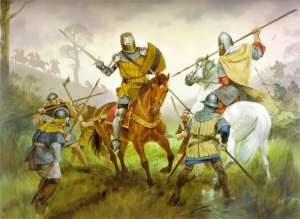
The Battle of Skerries, also named the Battle of Ardscull, a battle in the Bruce campaign in Ireland and part of the First War of Scottish Independence, is fought on January 26, 1316, resulting in a Scottish victory. It is part of the Irish campaign of Edward Bruce, brother of Robert the Bruce, King of Scotland. The site of the battle is Skerries near Ardscull in County Kildare.

Edward Bruce, Earl of Carrick, lands in Ireland in May 1315 and is proclaimed king of the island in June. Bruce continues on his march south, when on January 26, 1316, the Scottish army is advancing from Castledermot when it encounters the English. The Hiberno-Norman forces, summoned by the justiciar of Ireland, consists of men such as John FitzThomas FitzGerald, Maurice FitzThomas FitzGerald, Thomas FitzJohn FitzGerald, John and Arnold Poer, Maurice de Rocheford and Miles and David de la Roche. Though these forces heavily outnumber those of Bruce, internal strife breaks out in the Anglo-Irish ranks, a fact that Bruce can take advantage of. Though suffering heavy losses, the Scots hold the battlefield, effectively winning the battle.

The official English account of the battle blames unfortunate terrain and bad luck for the government forces’ loss, not an entirely convincing explanation. The same account also claims that the Scots lost many of their greatest men, while their opponents only lost one man.

After the battle the Scots plunder the nearby town of Athy before withdrawing to Leix, while the Anglo-Irish forces keep them under surveillance from nearby Castledermot, while their leader withdraws to Dublin. Here John Hotham, the king’s envoy to Ireland, makes a great effort to ensure the loyalty of the Irish nobles. By May, however, Bruce has returned to his safe base in Ulster, while Hotham has returned to his new position in England as Bishop of Ely.