seamus dubhghaill

Promoting Irish Culture and History from Little Rock, Arkansas, USA


Leave a comment

Execution of Robert Emmet, Irish Nationalist & Republican

Robert Emmet, Irish nationalist and Republican, orator and rebel leader, is hung, drawn, and quartered in Dublin on September 20, 1803, following his conviction for high treason.

Emmet is born at 109 St. Stephen’s Green, in Dublin on March 4, 1778, the youngest son of Dr. Robert Emmet, a court physician, and his wife, Elizabeth Mason. He attends Oswald’s school, in Dopping’s-court, off Golden-lane and enters Trinity College, Dublin in October 1793, at the age of fifteen. He becomes secretary of a secret United Irish Committee in college and is expelled in April 1798 as a result. That same year he flees to France to avoid the many British arrests of nationalists that are taking place in Ireland.

After the 1798 rising, Emmet is involved in reorganising the defeated Society of United Irishmen. In April 1799 a warrant is issued for his arrest. He escapes and soon after travels to the continent in the hope of securing French military aid. His efforts are unsuccessful, as Napoleon is concentrating his efforts on invading England.

Emmet returns to Ireland in October 1802 and, along with fellow revolutionaries Thomas Russell and James Hope, begins preparations for another uprising in March of the following year. A premature explosion at one of Emmet’s arms depots forces him to advance the date of the rising before the authorities’ suspicions are aroused.

Emmet is unable to secure the help of Michael Dwyer‘s Wicklow rebels. Many rebels from Kildare turn back due to the scarcity of firearms they had been promised, but the rising proceeds in Dublin on the evening of July 23, 1803. Failing to seize Dublin Castle, which is lightly defended, the rising amounts to a large-scale disturbance in the Thomas Street area. He sees a dragoon pulled from his horse and piked to death, the sight of which prompts him to call off the rising to avoid further bloodshed, but he has no control over of his followers. Sporadic clashes continue into the night until finally quelled by British military forces.

Emmet flees into hiding but is captured on August 25 and taken to Dublin Castle, then removed to Kilmainham Gaol. He is tried for treason on September 19. The Crown repairs the weaknesses in its case by secretly buying the assistance of Emmet’s defence attorney, Leonard McNally, for £200 and a pension. McNally’s assistant Peter Burrowes cannot be bought, and he pleads the case as best he can. Emmet is found guilty of high treason.

Chief Justice John Toler, 1st Earl of Norbury sentences Emmet to be hanged, drawn and quartered, as is customary for conviction of treason. The following day, September 20, Emmet is executed in Thomas Street near St. Catherine’s Church. He is hanged and beheaded once dead. As family members and friends of Emmet had also been arrested, including some who had nothing to do with the rebellion, no one comes forward to claim his remains out of fear of arrest.

Emmet’s remains are first delivered to Newgate Prison and then back to Kilmainham Gaol, where the jailer is under instructions that if no one claims them, they are to be buried in a nearby hospital’s burial grounds. A later search there finds no remains. It is speculated that Emmet’s remains were secretly removed from the site and reinterred in St. Michan’s Church, a Dublin church with strong United Irish associations, though it is never confirmed. It is later suspected that they are buried secretly in the vault of a Dublin Anglican church. When the vault is inspected in the 1950s a headless corpse was found, suspected of being Emmet’s, but cannot be identified. Widely accepted is the theory that Emmet’s remains were transferred to St. Peter’s Church in Aungier St. under cover of the burial of his sister, Mary Anne Holmes, in 1804. In the 1980s the church is deconsecrated, and all the coffins are removed from the vaults. The church has since been demolished.


Leave a comment

Police Raid & Shut Down “The Irish People”

Police raid and close the offices of the Fenian newspaper The Irish People on September 15, 1865. Jeremiah O’Donovan Rossa, Thomas Clarke Luby, and John O’Leary are arrested.

In mid-1863, James Stephens informs his colleagues he wishes to start a newspaper, with financial aid from John O’Mahony and the Fenian Brotherhood in America. The offices are established at 12 Parliament Street, almost at the gates of Dublin Castle. The first edition of The Irish People appears on November 28, 1863. The staff of the paper along with Charles Kickham are Thomas Clarke Luby and Denis Dowling Mulcahy as the editorial staff. Jeremiah O’Donovan Rossa and James O’Connor are in charge of the business office, with John Haltigan being the printer. John O’Leary is brought from London to take charge in the role of Editor. Shortly after the establishment of the paper, James Stephens departs on an American tour, and to attend to organisational matters.

American Fenians make plans for a rising in Ireland, but the plans are discovered on July 15, 1865 when an emissary loses them at Kingstown railway station. They find their way to Dublin Castle and to Superintendent Daniel Ryan head of G Division. Ryan has an informer within the offices of The Irish People named Pierce Nagle, who supplies Ryan with an “action this year” message on its way to the Irish Republican Brotherhood unit in Tipperary. With this information, Ryan raids the offices of The Irish People on September 15, followed by the arrests of John O’Leary, Thomas Clarke Luby and Jeremiah O’Donovan Rossa. The last edition of the paper is dated September 16, 1865.

Before leaving for America, Stephens entrusts to Luby a document containing secret resolutions on the Committee of Organization or Executive of the IRB. Though Luby intimates its existence to O’Leary, he does not inform Kickham as there seems no necessity. This document later forms the basis of the prosecution against the staff of The Irish People. The document reads:

EXECUTIVE

I hereby appoint Thomas Clarke Luby, John O’Leary and Charles J. Kickham, a Committee of Organisation or Executive, with the same supreme control over the Home Organisation (Ireland, England, Scotland, etc.) I have exercised myself. I further empower them to appoint a Committee of Military Inspection, and a Committee of Appeal and Judgment, the functions of which Committee will be made known to each member of them by the Executive. Trusting to the patriotism and ability of the Executive, I fully endorse their action beforehand, and call on every man in our ranks to support and be guided by them in all that concerns our military brotherhood.

9 March 1864, Dublin
J. STEPHENS

Charles Kickham is caught after a month on the run and James Stephens is also eventually caught but with the support of Fenian prison warders John J. Breslin and Daniel Byrne is less than a fortnight in Richmond Bridewell Prison when he vanishes and escapes to France.

(From Stair na hÉireann, https://stairnaheireann.net/2015/09/15/1865-police-raid-and-close-the-irish-people-offices-odonovan-rossa-luby-and-oleary-are-arrested/)


Leave a comment

Death of Arthur Wellesley, 1st Duke of Wellington

Field Marshal Arthur Wellesley, 1st Duke of Wellington, Anglo-Irish soldier and statesman who was one of the leading military and political figures of 19th-century Britain, dies on September 14, 1852. His defeat of Napoleon at the Battle of Waterloo in 1815 puts him in the first rank of Britain’s military heroes.

Wellesley is born in Dublin, into the Protestant Ascendancy in Ireland. He is commissioned as an ensign in the British Army in 1787, serving in Ireland as aide-de-camp to two successive Lords Lieutenant of Ireland. He is also elected as a Member of Parliament in the Irish House of Commons. He is a colonel by 1796, and sees action in the Netherlands and in India, where he fights in the Fourth Anglo-Mysore War at the Siege of Seringapatam. He is appointed governor of Seringapatam and Mysore in 1799 and, as a newly appointed major-general, wins a decisive victory over the Maratha Confederacy at the Battle of Assaye in 1803.

Wellesley rises to prominence as a general during the Peninsular War of the Napoleonic Wars and is promoted to the rank of field marshal after leading the allied forces to victory against the First French Empire at the Battle of Vitoria in 1813. Following Napoleon’s exile in 1814, he serves as the ambassador to France and is granted a dukedom. During the Hundred Days in 1815, he commands the allied army which, together with a Prussian army under Gebhard Leberecht von Blücher, defeats Napoleon at Waterloo. Wellesley’s battle record is exemplary, and he ultimately participates in some 60 battles during the course of his military career.

Wellesley is famous for his adaptive defensive style of warfare, resulting in several victories against numerically superior forces while minimising his own losses. He is regarded as one of the greatest defensive commanders of all time, and many of his tactics and battle plans are still studied in military academies around the world.

After the end of his active military career, Wellesley returns to politics. He is British prime minister as part of the Tory party from 1828 to 1830, and for a little less than a month in 1834. He oversees the passage of the Roman Catholic Relief Act 1829 but opposes the Reform Act 1832. He continues as one of the leading figures in the House of Lords until his retirement and remains Commander-in-Chief of the British Army until his death.

Wellesley dies at Walmer Castle in Deal, Kent, his residence as Lord Warden of the Cinque Ports, on September 14, 1852. He is found to be unwell on that morning and is aided from his military campaign bed, the same one he used throughout his historic military career and seated in his chair where he dies. His death is recorded as being due to the aftereffects of a stroke culminating in a series of seizures.

Although in life Wellesley hates travelling by rail, his body is taken by train to London, where he is given a state funeral, one of only a handful of British subjects to be honoured in that way, and the last heraldic state funeral to be held in Britain. The funeral takes place on November 18, 1852. He is buried in a sarcophagus of luxulyanite in St. Paul’s Cathedral next to Horatio Nelson, 1st Viscount Nelson.


Leave a comment

Birth of John Ireland, First Archbishop of St. Paul

John Ireland, the third Roman Catholic bishop and first Roman Catholic archbishop of Saint Paul, Minnesota, is born in Burnchurch, County Kilkenny, on September 11, 1838. He becomes both a religious as well as civic leader in Saint Paul during the turn of the 20th century.

Ireland is known for his progressive stance on education, immigration and relations between church and state, as well as his opposition to saloons and political corruption. He promotes the Americanization of Catholicism, especially in the furtherance of progressive social ideals. He is a leader of the modernizing element in the Roman Catholic Church during the Progressive Era. He creates or helps to create many religious and educational institutions in Minnesota. He is also remembered for his acrimonious relations with Eastern Catholics.

Ireland’s family immigrates to the United States in 1848 and eventually moves to Saint Paul, Minnesota, in 1852. One year later Joseph Crétin, first bishop of Saint Paul, sends Ireland to the preparatory seminary of Meximieux in France. Ireland is consequently ordained in 1861 in Saint Paul. He serves as a chaplain of the Fifth Minnesota Volunteer Infantry Regiment in the American Civil War until 1863 when ill health leads to his resignation. Later, he is famous nationwide in the Grand Army of the Republic.

Ireland is appointed pastor at Saint Paul’s cathedral in 1867, a position which he holds until 1875. In 1875, he is made coadjutor bishop of St. Paul and in 1884 he becomes bishop ordinary. In 1888 he becomes archbishop with the elevation of his diocese and the erection of the ecclesiastical province of Saint Paul. Ireland retains this title for thirty years until his death in 1918. Before Ireland dies, he burns all of his personal papers.

Ireland is awarded an honorary doctorate (LL.D.) by Yale University in October 1901, during celebrations for the bicentenary of the university.

Ireland is personal friends with Presidents William McKinley and Theodore Roosevelt. At a time when most Irish Catholics are staunch Democrats, Ireland is known for being close to the Republican party. He opposes racial inequality and calls for “equal rights and equal privileges, political, civil, and social.” Ireland’s funeral is attended by eight archbishops, thirty bishops, twelve monsignors, seven hundred priests and two hundred seminarians.

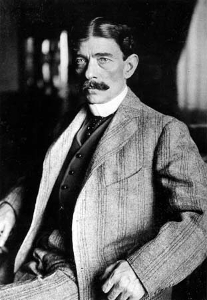
A friend of James J. Hill, Archbishop Ireland has his portrait painted in 1895 by the Swiss-born American portrait painter Adolfo Müller-Ury almost certainly on Hill’s behalf, which is exhibited at M. Knoedler & Co., New York, January 1895 and again in 1897.


Leave a comment

Death of Frank Harris, Novelist & Journalist

Frank Harris, British editor, novelist, short story writer, journalist and publisher, dies on August 26, 1931. He is friendly with many well-known figures of his day.

Harris is born James Thomas Harris on February 14, 1855, in Galway, County Galway, to Welsh parents. While living with his older brother he is, for a year or more, a pupil at The Royal School, Armagh. At the age of twelve he is sent to Wales to continue his education as a boarder at the Ruabon Grammar School in Denbighshire, a time he is to remember later in My Life and Loves. Harris is unhappy at the school and runs away within a year.

Harris runs away to the United States in late 1869, arriving in New York City virtually penniless. The 13-year-old takes a series of odd jobs to support himself, working first as a shoeshiner, a porter, a general laborer, and a construction worker on the erection of the Brooklyn Bridge. He later turns these early occupational experiences into art, incorporating tales from them into his book The Bomb.

From New York Harris moves to the American Midwest, settling in Chicago, where he takes a job as a hotel clerk and eventually a manager. Owing to Chicago’s central place in the meat packing industry, Harris makes the acquaintance of various cattlemen, who inspire him to leave the big city to take up work as a cowboy. He eventually grows tired of life in the cattle industry and enrolls at the University of Kansas, where he studies law and earns a degree, gaining admission to the Kansas state bar association.

Harris is not cut out to be a lawyer and soon decides to turn his attention to literature. He returns to England in 1882, later traveling to various cities in Germany, Austria, France, and Greece on his literary quest. He works briefly as an American newspaper correspondent before settling down in England to seriously pursue the vocation of journalism.

Harris first comes to general notice as the editor of a series of London papers including The Evening News, The Fortnightly Review and the Saturday Review, the last-named being the high point of his journalistic career, with H. G. Wells and George Bernard Shaw as regular contributors.

From 1908 to 1914 Harris concentrates on working as a novelist, authoring a series of popular books such as The Bomb, The Man Shakespeare, and The Yellow Ticket and Other Stories. With the advent of World War I in the summer of 1914, Harris decides to return to the United States.

From 1916 to 1922 he edits the U.S. edition of Pearson’s Magazine, a popular monthly which combines short story fiction with socialist-tinted features on contemporary news topics. One issue of the publication is banned from the mails by United States Postmaster General Albert S. Burleson during the period of American participation in the Great War. Despite this Harris manages to navigate the delicate situation which faces the left wing press and to keep the Pearson’s Magazine functioning and solvent during the war years.

Harris becomes an American citizen in April 1921. In 1922 he travels to Berlin to publish his best-known work, his autobiography My Life and Loves. It is notorious for its graphic descriptions of Harris’ purported sexual encounters and for its exaggeration of the scope of his adventures and his role in history. Years later, Time Magazine reflects in its March 21, 1960 issue “Had he not been a thundering liar, Frank Harris would have been a great autobiographer….he had the crippling disqualification that he told the truth, as Max Beerbohm remarked, only ‘when his invention flagged’.” A fifth volume, supposedly taken from his notes but of doubtful provenance, is published in 1954, long after his death.

Harris also writes short stories and novels, two books on Shakespeare, a series of biographical sketches in five volumes under the title Contemporary Portraits and biographies of his friends Oscar Wilde and George Bernard Shaw. His attempts at playwriting are less successful. Only Mr. and Mrs. Daventry (1900), which is based on an idea by Oscar Wilde, is produced on the stage.

Married three times, Harris dies of a heart attack in Nice at the age of 75 on August 26, 1931. He is subsequently buried at Cimetière Caucade in the same city. Just after his death a biography written by Hugh Kingsmill (pseudonym of Hugh Kingsmill Lunn) is published.


1 Comment

Death of James Napper Tandy, Irish Revolutionary

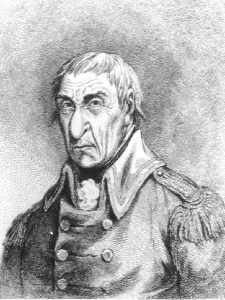
James Napper Tandy, Irish revolutionary and member of the Society of United Irishmen, dies in Bordeaux, France on August 24, 1803.

A Dublin Protestant and the son of an ironmonger, Tandy is baptised in St. Audoen’s Church on February 16, 1739. He attends the Quaker boarding school in Ballitore, County Kildare. He starts life as a small tradesman. Turning to politics, he becomes a member of Dublin Corporation and is popular for his denunciation of municipal corruption and his proposal of a boycott of English goods in Ireland in retaliation for the restrictions imposed by the government on Irish commerce.

Tandy and John Binns persuade Dublin Corporation to condemn by resolution William Pitt the Younger‘s amended commercial resolutions in 1785. He becomes a member of the Whig club founded by Henry Grattan, and he actively co-operates with Theobald Wolfe Tone in founding the Society of United Irishmen in 1791, of which he becomes the first secretary.

Sympathy with the French Revolution is rapidly spreading in Ireland. A meeting of some 6,000 people in Belfast votes a congratulatory address to the French nation in July 1791. In the following year, Tandy takes a leading part in organising a new military association in Ireland modelled after the French National Guard. Tandy also, with the purpose of bringing about a fusion between the Defenders and the United Irishmen, took the oath of the Defenders, a Roman Catholic society whose agrarian and political violence had been increasing for several years.

Tandy is about to be tried in 1793 for distributing a seditious pamphlet in County Louth when the government discovers he has taken the oath of the Defenders. Being threatened with prosecution for this step, and also for libel, he takes refuge by changing his Dublin address often until he flees to the United States in 1795, where he remains until 1798. In February 1798 he goes to Paris, where a number of Irish refugees are assembled and planning rebellion in Ireland to be supported by a French invasion but quarrelling among themselves over tactics.

Tandy accepts the offer of a corvette, the HMS Anacreon, from the French government and sails from Dunkirk accompanied by a few United Irishmen, a small force of men and a considerable quantity of arms and ammunition for distribution in Ireland. He arrives at the isle of Arranmore, off the coast of County Donegal, on September 16, 1798.

Tandy takes possession of the village of Rutland, where he hoists an Irish flag and issues a proclamation. He soon discovers that the French expedition of General Jean Joseph Amable Humbert to aid the Irish rebellion has failed. He sails his vessel around the north of Scotland to avoid the British fleet. He reaches Bergen in safety having brought with him a British ship captured along the way. Tandy then made his way with three or four companions to the free port of Hamburg but a peremptory demand from the British government to detain the fugitives was acceded to despite a counter-threat from the French Directory. In 1799 HMS Xenophon, under Commander George Sayer, brings Tandy and some of his associates back to England as state prisoners.

On February 12, 1800, Tandy is put on trial at Dublin and is acquitted. He remains in prison in Lifford Gaol in County Donegal until April 1801, when he is tried for the treasonable landing on Rutland Island. He pleads guilty and is sentenced to death although he is reprieved and allowed to go to France.

In France, where his release is regarded as a French diplomatic victory, he is received, in March 1802, as a person of distinction. When he dies on August 24, 1803, in Bordeaux, his funeral is attended by the military and an immense number of civilians. James Napper Tandy is buried in his family’s burial crypt, St. Mary’s churchyard, Julianstown, County Meath. His fame is perpetuated in the Irish ballad The Wearing of the Green.


Leave a comment

The Beginning of the Battle of the Somme

On July 1, 1916, the first day of the Battle of the Somme, twenty thousand soldiers of the British Army are killed and forty thousand are wounded. The 36th (Ulster) Division suffers heavy casualties.

The Battle of the Somme, also known as the Somme Offensive, is a battle of the World War I fought by the armies of the British and French empires against the German Empire. It takes place between July 1 and November 18, 1916, on both sides of the upper reaches of the river Somme in France. The battle is intended to hasten a victory for the Allies and is the largest battle of World War I on the Western Front. More than 3 million men fight in this battle and one million men are wounded or killed, making it one of the bloodiest battles in human history.

The French and British commit themselves to an offensive on the Somme during Allied discussions at Chantilly, Oise, in December 1915. The Allies agree upon a strategy of combined offensives against the Central Powers in 1916, by the French, Russian, British and Italian armies, with the Somme offensive as the Franco-British contribution. Initial plans call for the French army to undertake the main part of the Somme offensive, supported on the northern flank by the Fourth Army of the British Expeditionary Force (BEF). When the Imperial German Army begins the Battle of Verdun on the Meuse on February 21, 1916, French commanders divert many of the divisions intended for the Somme and the “supporting” attack by the British becomes the principal effort.

The first day on the Somme, July 1, sees a serious defeat for the German Second Army, which is forced out of its first position by the French Sixth Army, from Foucaucourt-en-Santerre south of the Somme to Maricourt on the north bank and by the Fourth Army from Maricourt to the vicinity of the AlbertBapaume road. The first day on the Somme is, in terms of casualties, also the worst day in the history of the British army, which suffers 57,470 casualties. These occur mainly on the front between the Albert–Bapaume road and Gommecourt, where the attack is defeated, and few British troops reach the German front line. The British troops on the Somme comprise a mixture of the remains of the pre-war standing army, the Territorial Force, and Kitchener’s Army, a force of volunteer recruits including many Pals Battalions, recruited from the same places and occupations.

The battle is notable for the importance of air power and the first use of the tank. At the end of the battle, British and French forces have penetrated 6 miles into German-occupied territory, taking more ground than in any of their offensives since the First Battle of the Marne in 1914. The Anglo-French armies fail to capture Péronne and halt three miles from Bapaume, where the German armies maintain their positions over the winter. British attacks in the Ancre valley resume in January 1917 and force the Germans into local withdrawals to reserve lines in February, before the scheduled retirement to the Siegfriedstellung (Hindenburg Line) begins in March.

Debate continues over the necessity, significance and effect of the battle. David Frum opines that a century later, “‘the Somme’ remains the most harrowing place-name” in the history of the British Commonwealth.


Leave a comment

Assassination of Field Marshal Sir Henry Hughes Wilson

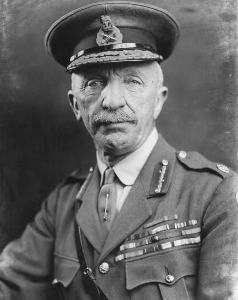
Field Marshal Sir Henry Hughes Wilson is shot and killed by two Irish Republican Army (IRA) men in London on June 22, 1922.

Wilson is born in County Longford and a long-time opponent of the Irish Home Rule movement. He joins the British army in 1884 and sees action during the Boer War. He is assigned to British army headquarters during the infamous Curragh incident and supports the near-mutiny of British officers who refuse to lead troops against Ulster opponents of home rule. He serves in France during the World War I and, when the war ends, continues his staunch support of the Unionist cause while serving as Chief of General Staff. He is a strong supporter of the coercion tactics of the British in Ireland during the Irish War of Independence, even suggesting that the leaders of Sinn Féin be executed. He leaves the army when David Lloyd George decides not to renew his term as chief of staff and is elected Member of Parliament (MP) for North Down as a Conservative in 1922. In Parliament, he urges even stronger coercion methods than those then being carried out by the Black and Tans.

On June 22, 1922, two London-based volunteers of the Irish Republican Army, Reginald Dunne and Joseph O’Sullivan, assassinate Wilson outside his house at 36 Eaton Place at approximately 2:20 PM. He is in full uniform as he is returning from unveiling the Great Eastern Railway War Memorial at Liverpool Street station at 1:00 PM. He has six wounds, two of them fatal wounds to the chest.

Stories later circulate that the first shot misses but rather than taking shelter in the house, he draws his sword and advances on his attackers, who are able to shoot and kill him. These stories often stress that he dies a martyr. His housemaid testifies that she found his drawn sword lying by his side. These details do not feature in the witness accounts by Reginald Dunne, which is smuggled out of prison, the inquest testimony of one of two road menders working nearby, and the taxi driver who had just dropped Wilson off. One of the road mender’s accounts, as published in the Daily Mail, mentions Wilson turning on his attackers with the words “you cowardly swine!” but this is believed to be a possible embellishment by the newspaper.

Two police officers and a chauffeur are also shot as the men attempt to avoid capture. They are then surrounded by a crowd and arrested by other policemen after a struggle. Dunne and O’Sullivan are convicted of murder and hanged on August 10, 1922. On the day Wilson’s killers were hanged, Currygrane, the family homesite in Ballinalee, County Longford is burned to the ground, possibly as a reprisal although possibly as an unrelated part of the unrest in that county.

Wilson’s widow blames the government for his death and is only persuaded to allow government representation at the funeral on the grounds that not to do so would be disrespectful to the King. Wilson’s funeral is a public affair attended by David Lloyd George and the cabinet, Ferdinand Foch, Robert Nivelle and Maxime Weygand from France as well as many of his former army colleagues including John French, Nevil Macready, Douglas Haig and William Robertson. He is buried in the crypt of St. Paul’s Cathedral in London.


Leave a comment

Birth of Brian Coffey, Poet & Publisher

Brian Coffey, Irish poet and publisher, is born in Dún LaoghaireCounty Dublin on June 8, 1905. His work is informed by his Catholicism and by his background in science and philosophy, and his connection to surrealism. For these reasons, he is seen as being closer to an intellectual European Catholic tradition than to mainstream Irish Catholic culture.

Coffey attends the Mount St. Benedict boarding school in GoreyCounty Wexford from 1917 to 1919 and then Clongowes Wood College, in ClaneCounty Kildare from 1919 until 1922. In 1923, he goes to France to study for the Bachelor’s degree in Classical Studies at the Institution St. Vincent, SenlisOise. While still at college, Coffey begins writing poetry. He publishes his first poems in University College Dublin‘s The National Student under the pseudonym Coeuvre.

In the early 1930s, Coffey moves to Paris where he studies Physical Chemistry under Jean Baptiste Perrin, who won the Nobel Prize for Physics in 1926. He completes these studies in 1933, and his Three Poems is printed in Paris by Jeanette Monnier that same year. In 1934 he enters the Institut Catholique de Paris to work with the noted French philosopher Jacques Maritain, taking his licentiate examination in 1936. He then moves to London for a time and contributes reviews and a poem to T.S. Eliot‘s The Criterion magazine. He returns to Paris in 1937 as an exchange student to work on his doctoral thesis on the idea of order in the work of Thomas Aquinas. In 1938, Coffey’s second volume of poetry, Third Person, is published by George Reavey‘s Europa Press.

During the war, Coffey teaches in schools in London and Yorkshire, leaving his young family in Dublin. After the war, he returns to Paris and completes his doctoral thesis. The family then moves so that Coffey can take up a teaching post at the Jesuit Saint Louis University.

By the early 1950s, Coffey becomes uncomfortable for a number of reasons, including the nature of his work, his distance from Ireland and the pressures that inevitably come to bear on an academic who has previously associated with well-known left-wing writers in Paris. For these reasons, he resigns in 1952.

In 1952, Coffey returns to live in London and, from 1973, Southampton. He begins again to publish his poetry and translations, mainly of French poetry. The first work in English to appear after this period of silence is Missouri Sequence, apparently begun in St. Louis but first appearing in the University Review, later known as the Irish University Review, in 1962.

Over the next decade or so, he publishes regularly in the University Review. He also sets up his own publishing enterprise, Advent Press, which publishes work by himself and by younger writers he wants to support.

Brian Coffey dies at the age of 89 on April 14, 1995, and is buried in Southampton, England.


Leave a comment

Birth of Fighter Pilot George Edward Henry McElroy

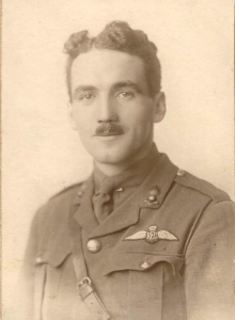
Captain George Edward Henry McElroy, a leading Irish-born fighter pilot of the Royal Flying Corps and Royal Air Force during World War I, is born at DonnybrookCounty Dublin, on May 14, 1893. He is credited with 47 aerial victories.

McElroy enlists promptly at the start of World War I in August 1914 and is shipped out to France two months later. He is serving as a corporal in the Motor Cyclist Section of the Royal Engineers when he is first commissioned as a second lieutenant on May 9, 1915. While serving in the Royal Irish Regiment he is severely affected by mustard gas and is sent home to recuperate. He is in Dublin in April 1916, during the Easter Rising, and is ordered to help quell the insurrection. McElroy refuses to fire upon his fellow Irishmen and is transferred to a southerly garrison away from home.

On June 1, 1916, McElroy relinquishes his commission in the Royal Irish Regiment when awarded a cadetship at the Royal Military Academy, Woolwich, from which he graduates on February 28, 1917, and is commissioned as a second lieutenant in the Royal Garrison Artillery.

McElroy is promptly seconded to the Royal Flying Corps, being trained as a pilot at the Central Flying School at Upavon, and is appointed a flying officer on June 28. On July 27 his commission is backdated to February 9, 1916, and he is promoted to lieutenant on August 9. On August 15 he joins No. 40 Squadron RFC, where he benefits from mentoring by Edward “Mick” Mannock. He originally flies a Nieuport 17, but with no success in battle. By the year’s end McElroy is flying Royal Aircraft Factory S.E.5s and claims his first victory on December 28.

An extremely aggressive dogfighter who ignores often overwhelming odds, McElroy’s score soon grows rapidly. He shoots down two German aircraft in January 1918, and by February 18 has run his string up to eleven. At that point, he is appointed a flight commander with the temporary rank of captain and transferred to No. 24 Squadron RFC. He continues to steadily accrue victories by ones and twos. By March 26, when he is awarded the Military Cross, he is up to 18 “kills.” On April 1, the Army’s Royal Flying Corps (RFC) and the Royal Naval Air Service (RNAS) are merged to form the Royal Air Force, and his squadron becomes No. 24 Squadron RAF. McElroy is injured in a landing accident on April 7 when he brushes a treetop while landing. By then he has run his score to 27. While he is sidelined with his injury, on April 22, he is awarded a bar to his Military Cross. Following his convalescence, McElroy returns to No. 40 Squadron in June, scoring three times, on the 26th, 28th, and 30th. The latter two triumphs are observation balloons. That runs his tally to thirty.

In July, he adds to his score almost daily, a third balloon busting on the 1st, followed by one of the most triumphant months in the history of fighter aviation, adding 17 victims during the month. His run of success is threatened on the 20th by a vibrating engine that entails breaking off an attack on a German two-seater and a rough emergency landing that leaves him with scratches and bruises. There is a farewell luncheon that day for his friend Gwilym Hugh “Noisy” Lewis. Their mutual friend Edward “Mick” Mannock pulls McElroy aside to warn him about the hazards of following a German victim down within range of ground fire.

On July 26, Mannock is killed by ground fire. Ironically, on that same day, “McIrish” McElroy receives the second Bar to his Military Cross. He is one of only ten airmen to receive the second Bar.

McElroy’s continues apparent disregard for his own safety when flying and fighting can have only one end. On July 31, 1918, he reports destroying a Hannoversche Waggonfabrik C for his 47th victory. He then sets out again. He fails to return from this flight and is posted missing. Later it is learned that McElroy has been killed by ground fire. He is 25 years old. McElroy is interred in Plot I.C.1 at the Laventie Military Cemetery in La Gorgue, northern France.

McElroy receives the Distinguished Flying Cross posthumously on August 3, citing his shooting down 35 aeroplanes and three observation balloons. The Bar arrives still later, on September 21, and lauds his low-level attacks. In summary, he shoots down four enemy aircraft in flames and destroys 23 others, one of which he shares with other pilots. He drives down 16 enemy aircraft “out of control” and out of the fight. He also destroys three balloons.