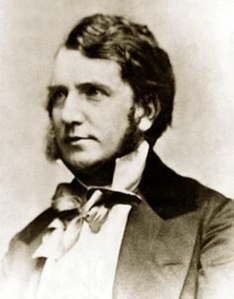
Dillon is born on May 5, 1814, in the town of Ballaghaderreen, on the border of counties Mayo and Roscommon. He is a son of Anne Blake and her husband Luke Dillon (d. 1826), who had been a land agent for his cousin Patrick Dillon, 11th Earl of Roscommon. His niece is Anne Deane, who helps to raise his family after his death.
Dillon is educated at St. Patrick’s College, Maynooth, leaving after only two years there, having decided that he is not meant for the priesthood. He later studies law at Trinity College, Dublin, and in London, before being called to the Irish Bar. It is during his time at Trinity College that he first meets and befriends Thomas Davis.
The young wing of the party, of which they are key members with William Smith O’Brien and Thomas Francis Meagher, come to be known as Young Ireland and advocate the threat of force to achieve repeal of the Act of Union. This is in contrast to the committed pacifism of O’Connell’s “Old Ireland” wing. This posturing eventually leads to the Young Ireland rebellion of 1848 where a countryside devastated by the Great Famine fails to rise up and support the rebels.
According to fellow Irish nationalist, Justin McCarthy, “…it has been said of him that while he strongly discouraged the idea of armed rebellion and had no faith in the possibility of Ireland’s succeeding by any movement of insurrection, yet when Smith O’Brien risked Ireland’s chances in the open field, he cast his lot with his leader and stood by his side in Tipperary.”
After the failure of Young Ireland’s uprising, Dillon flees Ireland, escaping first to France and, eventually, to the United States, where he serves the New York Bar.
McNamara retains his seat at the 1966 general election, and at subsequent elections until the constituency is abolished for the February 1974 general election, when he transfers to the new Kingston upon Hull Central constituency. When that constituency is abolished for the 1983 election, he is re-elected for the re-created Kingston upon Hull North constituency.
During the 2005 general election campaign McNamara claims some of the policies regarding illegal travelers’ sites of the leader of the Conservative Party, Michael Howard, had a “whiff of the gas chambers” about them. Howard’s grandmother died at Auschwitz.
McNamara is known throughout his parliamentary career as a supporter of Irish nationalism and favours a United Ireland. After entering parliament, he soon becomes interested in reports of discrimination against the Catholic minority in Northern Ireland and supports the Campaign for Democracy in Ulster (CDU). He serves as a frontbench spokesman for the Labour Party, including Shadow Secretary of State for Northern Ireland under Neil Kinnock, 1987–94, an appointment that is widely criticised by Unionists.
After Tony Blair becomes Labour leader, he replaces McNamara as Northern Ireland spokesman with Mo Mowlam. In 1997, he helps persuade the newly elected Labour government to donate £5,000 (thereby matching the contribution of the Irish government) for the erection of a memorial in Liverpool to the victims of the Great Irish Famine. He also supports Republicanism in the United Kingdom and joins the All-Party Parliamentary Republic Group.
McNamara is a Roman Catholic and a Knight of the Pontifical Order of Saint Gregory the Great. He is married to Nora McNamara, and is the father of four sons and a daughter.
In 2006, McNamara receives the honorary degree of Doctor of Laws from the University of Hull in recognition of his long service in politics. He graduates with a Ph.D from the University of Liverpool in 2007 having completed a thesis on the MacBride Principles at the Institute of Irish Studies, where he gives the 2008 John Kennedy Lecture in Irish Studies, Perhaps It Will All Go Away – an Examination of the British Response to the Civil Rights Movement in Northern Ireland.
In 2017, McNamara is diagnosed with pancreatic cancer while on holiday in Spain. He dies on August 6, 2017 at Formby, England, at the age of 82.
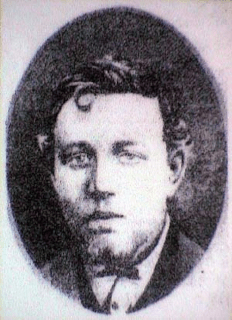
Casey is born to a teacher during the height of the Great Famine of 1846. Eight years later he moves to Gurteen, near Ballymahon in County Longford, when his father is given the post of headmaster at the local school. His work would come to be closely associated with Ballymahon.
As a teenager Casey works as an assistant to his father and is expected to follow him into teaching. However, he is disillusioned by the insufficiently nationalistic nature of the curriculum and spends a great deal of time writing poetry. It is at this time, reputedly at the age of fifteen, that he writes his best-known song, “The Rising of the Moon,” which commemorates the Irish Rebellion of 1798.
Following the increasing popularity of his songs and ballads at nationalist gatherings, Casey moves to Dublin in the 1860s and becomes active in the Fenian movement. He is a major contributor to The Nation newspaper, for which he assumes his pen name of ‘Leo.’
In 1866, at the age of 20, Casey publishes a collection of poems, entitled A Wreath of Shamrocks. Most of the poems therein had already been published elsewhere, primarily in The Nation. The further fame engendered by the success of the book leads him to be sought after as a speaker. He addresses mass rallies in Dublin, Liverpool and London that year, in the lead up to the Fenian Rising in 1867.
When the uprising fails, Casey is imprisoned without trial for eight months in Mountjoy Prison. He is released on the understanding that he would leave for Australia and not return to Ireland. However, he chooses to stay on in Summerhill, Dublin in disguise, living as a Quaker and continuing to write and publish in secret.
Casey marries Mary Josephine Briscoe in January 1868 and they have a son Michael, who dies shortly after birth in October 1869. Casey’s health had been broken by the treatment he had received in prison. He falls from a cab on or near O’Connell Bridge in the centre of Dublin in 1870. He dies from his injuries on St. Patrick’s Day, March 17, 1870.
Following his death, Casey is buried in Glasnevin Cemetery. The newspapers report that between fifty and one hundred thousand mourners walk in his funeral procession.
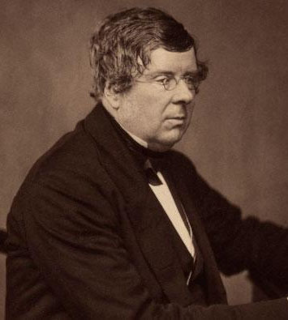
William Parsons, 3rd Earl of Rosse, Anglo-Irishastronomer, naturalist, and engineer, is born in York, England on June 17, 1800. He is President of the Royal Society (UK), the most important association of naturalists in the world in the nineteenth century. He builds several giant telescopes. His 72-inch telescope, built in 1845 and colloquially known as the “Leviathan of Parsonstown,” is the world’s largest telescope, in terms of aperture size, until the early 20th century. From April 1807 until February 1841, he is styled as Baron Oxmantown.
Parsons marries Mary Field, daughter of John Wilmer Field, on April 14, 1836. They have thirteen children, of which four sons survive to adulthood: Lawrence, 4th Earl of Rosse, Rev. Randal Parsons, the Hon. Richard Clere Parsons, and the Hon. Sir Charles Algernon Parsons.
During the 1840s, Parsons has the Leviathan of Parsonstown built, a 72-inch telescope at Birr Castle, Parsonstown, County Offaly. He has to invent many of the techniques he uses for constructing the Leviathan, both because its size is without precedent and because earlier telescope builders had guarded their secrets or had not published their methods. Details of the metal, casting, grinding and polishing of the 3-ton ‘speculum’ are presented in 1844 at the Belfast Natural History Society. His telescope is considered a marvelous technical and architectural achievement, and images of it are circulated widely within the British commonwealth. Building of the Leviathan begins in 1842, and it is first used in 1845, with regular use waiting another two years due to the Great Famine. Using this telescope, he sees and catalogues a large number of nebulae, including a number that would later be recognised as galaxies.
Parsons performs astronomical studies and discovers the spiral nature of some nebulas, today known to be spiral galaxies. His telescope Leviathan is the first to reveal the spiral structure of M51, a galaxy nicknamed later as the “Whirlpool Galaxy,” and his drawings of it closely resemble modern photographs.
Parsons’s son publishes his father’s findings, including the discovery of 226 New General Catalogue of Nebulae and Clusters of Stars (NGC) objects in the publication Observations of Nebulae and Clusters of Stars Made With the Six-foot and Three-foot Reflectors at Birr Castle From the Year 1848 up to the Year 1878, Scientific Transactions of the Royal Dublin Society Vol. II, 1878.
As a member of the Irish Confederation during the Great Famine, Reilly together with John Mitchel and James Fintan Lalor advocate the refusal to pay rents, retention of crops by small tenant farmers and labourers to feed their own families, and the breaking up of bridges and tearing up of railway lines to prevent the removal of food from the country.
Reilly is involved in the failed Young Ireland Rebellion of 1848 and is forced to flee to the United States where he becomes active in U.S. political affairs in support of Irish independence. He is reported to be the founder of The People newspaper in New York City which folds after six months in 1849.
James Connolly claims that as the editor of the Protective Union labour rights newspaper for the printers of Boston, Reilly is a pioneer of American labour journalism and that Horace Greeley believed of his series of articles in The American Review on the European situation “that if collected and published as a book, they would create a revolution in Europe.”
It is possible that Connolly confuses The United States Magazine and Democratic Review, which is known for its political activism, with The American Review, which for a time had Edgar Allan Poe as an editorial assistant. Other sources refer to Reilly as being editor of the New York Democratic Review and later the Washington Union.
Thomas Devin Reilly dies at the age of 30 on March 5, 1854. He is buried at Mount Olivet Cemetery in Washington, D.C., together with his infant child Mollie and wife Jennie Miller from Enniskillen.
On March 23, 1847, the Native Americans of the Choctaw Nation take up an amazing collection. They raise $170 for Irish Famine relief, an incredible sum at the time worth in the tens of thousands of dollars today.
The Choctaw have an incredible history of deprivation themselves, forced off their lands in 1831, they embark on a 500-mile trek to Oklahoma called the “Trail of Tears.” Ironically the man who forces them off their lands is Andrew Jackson, the son of Irish immigrants.
On September 27, 1830, the Treaty of Dancing Rabbit Creek is signed. It represents one of the largest transfers of land that is signed between the United States Government and Native Americans without being instigated by warfare. By the treaty, the Choctaws sign away their remaining traditional homelands, opening them up for European American settlement. The tribes are then sent on a forced march.
As historian Edward O’Donnell writes “Of the 21,000 Choctaws who started the journey, more than half perished from exposure, malnutrition, and disease. This despite the fact that during the War of 1812 the Choctaws had been allies of then-General Jackson in his campaign against the British in New Orleans.”
Sixteen years later the Choctaws meet in their new tribal land and send money to a U.S. famine relief organization for Ireland. It is the most extraordinary gift of all to famine relief in Ireland. The Choctaws send the money at the height of the Famine, “Black 47,” when close to a million Irish are starving to death.
In 1992 Irish commemoration leaders take part in the 500-mile trek from Oklahoma to Mississippi. The Choctaw make Ireland’s presidentMary Robinson an honorary chief. They do the same for Don Mullan. Even better, both groups become determined to help famine sufferers, mostly in Africa and the Third World, and have done so ever since.
The gift is remembered in Ireland. A plaque on Dublin‘s Mansion House that honors the Choctaw contribution reads: “Their humanity calls us to remember the millions of human beings throughout our world today who die of hunger and hunger-related illness in a world of plenty.”
(From: “How Choctaw Indians raised money for Irish Great Hunger relief” by IrishCentral Staff, http://www.irishcentral.com, November 27, 2020 | Pictured: Kindred Spirits monument, a tribute to the Choctaw Nation, in Midleton, County Cork, Ireland)
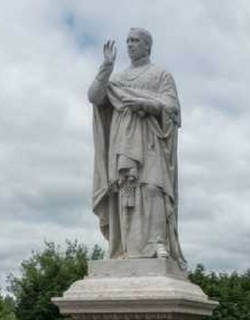
MacHale’s parents are Patrick and Mary Mulkieran MacHale. He is so feeble at birth that he is baptised at home by Father Andrew Conroy. By the time he is five years of age, he begins attending a hedge school. Three important events happen during his childhood: the Irish Rebellion of 1798, the landing at Killala of French troops, whom the boy, hidden in a stacked sheaf of flax, watches marching through a mountain pass to Castlebar, and a few months later the brutal hanging of Father Conroy on a false charge of high treason.
With his friend and ally, Daniel O’Connell, MacHale takes a prominent part in the important question of Catholic emancipation, impeaching in unmeasured terms the severities of the former penal code, which had branded Catholics with the stamp of inferiority. During 1826 his zeal is omnipresent. He calls on the Government to remember how the Act of Union in 1800 was carried by William Pitt the Younger on the distinct assurance and implied promise that Catholic emancipation, which had been denied by the Irish Parliament, should be granted by the Parliament of the Empire.
Oliver Kelly, Archbishop of Tuam, dies in 1834, and the clergy selects MacHale as one of three candidates, to the annoyance of the Government who despatches agents to induce Pope Gregory XVI not to nominate him to the vacant see. Disregarding their request, the pope appoints MacHale Archbishop of Tuam. He is the first prelate since the Reformation who has received his entire education in Ireland. The corrupt practices of general parliamentary elections and the Tithe War cause frequent rioting and bloodshed and are the subjects of denunciation by the new archbishop, until the passing of a Tithes bill in 1838. He also leads the opposition to the ProtestantSecond Reformation, which is being pursued by evangelical clergy in the Church of Ireland, including the Bishop of Tuam, Killala and Achonry, Thomas Plunket.
The repeal of the Acts of Union 1800, advocated by O’Connell, enlists MacHale’s ardent sympathy and he assists the Liberator in many ways, and remits subscriptions from his priests for this purpose. In his zeal for the cause of the Catholic religion and of Ireland, so long downtrodden, but not in the 1830s, he frequently incurs from his opponents the charge of intemperate language, something not altogether undeserved. In his anxiety to reform abuses and to secure the welfare of Ireland, by an uncompromising and impetuous zeal, he makes many bitter and unrelenting enemies, particularly British ministers and their supporters.
The Great Famine of 1846–47 affects his diocese more than any. In the first year he announces in a sermon that the famine is a divine punishment on his flock for their sins. Then by 1846 he warns the Government as to the state of Ireland, reproaches them for their dilatoriness, and holds up the uselessness of relief works. From England as well as other parts of the world, cargoes of food are sent to the starving Irish. Bread and soup are distributed from the archbishop’s kitchen. Donations sent to him are acknowledged, accounted for, and disbursed by his clergy among the victims.
The death of O’Connell in 1847 is a setback to MacHale as are the subsequent disagreements within the Repeal Association. He strongly advises against the violence of Young Ireland. Over the next 30 years he becomes involved in political matters, particularly those involving the church. Toward the end of his life he becomes less active in politics.
MacHale attends the First Vatican Council in 1869. He believes that the favourable moment has not arrived for an immediate definition of the dogma of papal infallibility. Better to leave it a matter of faith, not written down, and consequently he speaks and votes in the council against its promulgation. Once the dogma had been defined, he declares the dogma of infallibility “to be true Catholic doctrine, which he believed as he believed the Apostles’ Creed“. In 1877, to the disappointment of the archbishop who desires that his nephew should be his co-adjutor, Dr. John McEvilly, Bishop of Galway, is elected by the clergy of the archdiocese, and is commanded by Pope Leo XIII after some delay, to assume his post. He had opposed this election as far as possible but submits to the papal order.
Every Sunday MacHale preaches a sermon in Irish at the cathedral, and during his diocesan visitations he always addresses the people in their native tongue, which is still largely used in his diocese. On journeys he usually converses in Irish with his attendant chaplain and has to use it to address people of Tuam or the beggars who greet him whenever he goes out. He preaches his last Irish sermon after his Sunday Mass, April 1881. He dies in Tuam seven months later, on November 7, 1881.
Mitchel is the son of a Presbyterian minister. At the age of four, he is sent to a classical school, run by an old minister named Moor, nicknamed “Gospel Moor” by the students. He reads books from a very early age. When a little over five years old, he is introduced to Latin grammar by his teacher and makes quick progress. In 1830, not yet 15 years old, he enters Trinity College, Dublin and obtains a law degree in 1834.
In the spring of 1836 Mitchel meets Jane Verner, the only daughter of Captain James Verner. Though both families are opposed to the relationship, they become engaged in the autumn and are married on February 3, 1837, by the Rev. David Babington in Drumcree Church, the parish church of Drumcree.
Mitchel works in a law office in Banbridge, County Down, where he eventually comes into conflict with the local Orange Order. He meets Thomas Davis and Charles Gavan Duffy during visits to Dublin. He joins the Young Ireland movement and begins to write for The Nation. Deeply affected by the misery and death caused by the Great Famine, he becomes convinced that nothing will ever come of the constitutional efforts to gain Irish freedom. He then forms his own paper, United Irishmen, to advocate passive resistance by Ireland’s starving masses.
In May 1848, the British tire of Mitchel’s open defiance. Ever the legal innovators in Ireland, they invent a crime especially for the Young Irelanders – felony-treason. They arrest him for violating this new law and close down his paper. A rigged jury convicts him, and he is deported first to Bermuda and then to Australia. However, in June 1853, he escapes to the United States.
Mitchel works as a journalist in New York City and then moves to the South. When the American Civil War erupts, he is a strong supporter of the Southern cause, seeing parallels with the position of the Irish. His family fully backs his commitment to the Southern cause. He loses two sons in the war, one at the Battle of Gettysburg in 1863 and another at the Battle of Fort Sumter in 1864, and another son loses an arm. His outspoken support of the Confederacy causes him to be jailed for a time at Fort Monroe, where one of his fellow prisoners is Confederate PresidentJefferson Davis.
In 1874, the British allow Mitchel to return to Ireland and in 1875 he is elected in a by-election to be a member of the Parliament of the United Kingdom representing the Tipperary constituency. However, his election is invalidated on the grounds that he is a convicted felon. He contests the seat again in the resulting by-election and is again elected, this time with an increased vote.
Unfortunately, Mitchel, one of the staunchest enemies to English rule of Ireland in history, dies in Newry on March 20, 1875, and is buried there. Thirty-eight years later, his grandson, John Purroy Mitchel, is elected Mayor of New York City.
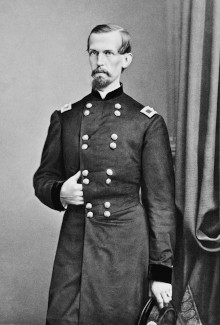
Corcoran is the only child of Thomas Corcoran, an officer in the British Army, and Mary McDonagh. Through his mother, he claims descent from Patrick Sarsfield, hero of the Williamite War in Ireland and leader of the Wild Geese. In 1846 he takes an appointment to the Revenue Police, enforcing the laws and searching for illicit stills and distilling activities in Creeslough, County Donegal. He also joins a guerrilla group called the Ribbonmen.
On August 30, 1849, Corcoran emigrates from Sligo to the United States and settles in New York City where he finds work as a clerk in the tavern owned by John Heaney, whose niece, Elizabeth, he marries in 1854.
Corcoran enlists as a Private in the 69th New York Militia. By 1859 he is appointed colonel of the regiment. The regiment is a state militia unit at the time composed of citizens, not soldiers, and is involved in the maintenance of public order. On October 11, 1860, he refuses to march the regiment on parade for the 19-year-old Prince of Wales, who is visiting New York City at the time, protesting the British imposition of the Irish Famine. He is removed from command and a court martial is pending over that matter when the Civil War begins.
Corcoran also becomes involved in Democratic politics at Tammany Hall. He becomes district leader, a member of the judicial nominations committee, an elected school inspector for his ward, and a member of the Fourteenth Ward General Committee. He is one of the founders of the Fenian Brotherhood in America.
With the outbreak of war, the court martial is dropped and Corcoran is restored to his command because he had been instrumental in bringing other Irish immigrants to the Union cause. He leads the 69th to Washington, D.C. and serves for a while in the Washington defenses building, Fort Corcoran. In July 1861 he leads the regiment into action at the First Battle of Bull Run and is taken prisoner.
While Corcoran is imprisoned, the United States makes threats to execute captured Confederateprivateers. Corcoran and several other Union prisoners are selected by lot for execution if the United States carries out its threats against the privateers. This event is known as the Enchantress Affair, but no executions are ever carried out by either side. Corcoran is then offered a parole under the conditions that he does not take up arms against the Confederacy. Intending to resume his place in the Union army upon his release he refuses the offer of parole. He is appointed Brigadier General of volunteers in July and exchanged in August 1862. His role in the Enchantress Affair and his refusal for parole gains him some attention and upon his release he is invited to dinner with President Abraham Lincoln.
In April 1863 Corcoran is involved in an incident that ends with Corcoran shooting and killing Edgar A. Kimball, commander of the 9th New York Volunteer Infantry Regiment. Corcoran attempts to pass through the 9th New York’s area without giving the required password after receiving the challenge from a sentry. When Kimball intervenes on the side of the sentry, Corcoran shoots him. Corcoran is not charged with a crime or reprimanded and continues to serve.
Corcoran returns to the army and sets about recruiting more Irish volunteers. He raises and takes command of what becomes known as the Corcoran Legion. Placed in command of the 1st Division, VII Corps he is engaged in the Battle of Deserted House and takes part in the Battle of Suffolk. In late 1863 he is placed in command of a division in the XXII Corps and returns to serve in the Washington defenses. While riding alone in Fairfax, Virginia he is thrown from a runaway horse and suffers a fractured skull. He dies at the age of 36 at the William Gunnell House on December 22, 1863.
New York City MayorMichael Bloomberg unveils Ireland’s national monument to the Fighting 69th in Ballymote on August 22, 2006. The monument is sculpted by Philip Flanagan. The inscription around the top of the monument reads “Michael Corcoran 1827–1863” Around the base is inscribed “New York Ballymote Creeslough Bull Run.” Underneath the monument is a piece of steel from the World Trade Center, donated by the family of Michael Lynch, who died in the tower on September 11, 2001. Lynch’s family are also from County Sligo.
Le Fanu is born at 45 Lower Dominick Street in Dublin to Thomas Philip Le Fanu and Emma Lucretia Dobbin, a literary family of Huguenot, Irish, and English descent. Within a year of his birth the family moves to the Royal Hibernian Military School in Phoenix Park where his father, a Church of Ireland clergyman, is appointed to the chaplaincy of the establishment.
In 1826, the family moves to Abington, County Limerick, where Le Fanu’s father takes up his second rectorship. Le Fanu uses his father’s library to educate himself and by the age of fifteen he was writing poetry.
The disorders of the Tithe War (1831–1836) affect the region in 1832 and the following year the family temporarily moves back to Dublin, where Le Fanu works on a government commission. Although Thomas Le Fanu tries to live as though he is well-off, the family is in constant financial difficulty. At his death, Thomas has almost nothing to leave to his sons and the family has to sell his library to pay off some of his debts.
Le Fanu studies law at Trinity College, Dublin, where he is elected Auditor of the College Historical Society. He is called to the bar in 1839 but never practices and soon abandons law for journalism. In 1838 he begins contributing stories to the Dublin University Magazine, including his first ghost story, The Ghost and the Bone-Setter (1838). He becomes owner of several newspapers from 1840, including the Dublin Evening Mail and the Warder.
In 1856 the family moves from Warrington Place to the house of his wife Susanna’s parents at 18 Merrion Square. His personal life becomes difficult at this time, as his wife suffers from increasing neurotic symptoms. She suffers from anxiety after the deaths of several close relatives, including her father two years previous. In April 1858, Susanna suffers a “hysterical attack” and dies the following day. She is buried in the Bennett family vault in Mount Jerome Cemetery beside her father and brothers. He does not write any fiction from this point until the death of his mother in 1861.
He becomes the editor and proprietor of the Dublin University Magazine in 1861 and begins to take advantage of double publication, first serializing in the Dublin University Magazine, then revising for the English market. He publishes both The House by the Churchyard and Wylder’s Hand in this manner. After lukewarm reviews of The House by the Churchyard, which is set in the Phoenix Park area of Dublin, Le Fanu signs a contract with Richard Bentley, his London publisher, which specifies that future novels be stories “of an English subject and of modern times,” a step Bentley thinks necessary for Le Fanu to satisfy the English audience. Le Fanu succeeds in this aim in 1864, with the publication of Uncle Silas, which is set in Derbyshire. In his very last short stories, however, Le Fanu returns to Irish folklore as an inspiration and encourages his friend Patrick Kennedy to contribute folklore to the Dublin University Magazine.
Le Fanu dies in his native Dublin on February 7, 1873, at the age of 58. Today there is a road and a park in Ballyfermot, near his childhood home in south-west Dublin, named after him.





 seamus dubhghaill