seamus dubhghaill

Promoting Irish Culture and History from Little Rock, Arkansas, USA


1 Comment

Final Rally of the Peace People’s Campaign

A rally of twelve to fifteen thousand Peace People from both north and south takes place at the new bridge over the River Boyne at Drogheda, County Louth, on December 5, 1976. In general, the Peace People’s goals are the dissolution of the Irish Republican Army (IRA) and an end to violence in Northern Ireland. The implicit goals of the Peace People rallies are delegitimization of violence, increasing solidarity, and gaining momentum for peace.

In the 1960s, Northern Ireland begins a period of ethno-political conflict called the Troubles. Through a series of social and political injustices, Northern Ireland has become a religiously divided society between historically mainland Protestants and Irish Catholics. Furthermore, the Irish people have become a fragmented body over a range of issues, identities, circumstances and loyalties. The conflict between Protestants and Catholics spills over into violence, marked by riots and targeted killings between the groups beginning in 1968. In addition, paramilitary groups, including the prominent IRA, launch attacks to advance their political agendas.

The violence continues to escalate. On August 10, 1976, Anne Maguire and her children are walking along Finaghy Road North in Belfast. Suddenly, a Ford Cortina slams into them. The car is being driven by Danny Lennon, who moments before had been shot dead by pursuing soldiers.  The mother is the only survivor. The collision kills three of her four children, Joanne (8), John (2), and Andrew (6 months). Joanne and Andrew die instantly while John is injured critically.

The next day, immediately following John’s death, fifty women from the Republican neighborhoods of Andersonstown and Stewartstown protest Republican violence by marching with baby carriages. That evening, Mairead Corrigan, Anne Maguire’s sister, appears on television pleading for an end to the violence. She becomes the first leader of the Peace People to speak publicly.

However, she was not the only one to initiate action. As soon as she hears Mairead speak on the television, Betty Williams begins petitioning door-to-door for an end to sectarian violence. She garners 6,000 signatures of support within a few days.  This support leads directly into the first unofficial action of the Peace People. On 14 August, only four days after the incident, 10,000 women, both Protestant and Catholic, march with banners along Finaghy Road North, the place of the children’s death, to Milltown Cemetery, their burial site.  This march mostly includes women along with a few public figures and men. The marchers proceed in almost utter silence, only broken by short bouts of singing from the nuns in the crowd and verbal and physical attacks by Republican opposition.

The following day, the three who become leaders of the Peace People – Mairead Corrigan, Betty Williams, and journalist Ciaran McKeown – come together for their first official meeting.  During these initial meetings they establish the ideological basis of nonviolence and goals for the campaign.  The essential goals for the movement are the dissolution of the IRA and an end to the violence in Northern Ireland.  The goals of the campaign implicit in their declaration are awareness, solidarity, and momentum. 
Peace People’s declaration:

“We have a simple message to the world from this movement for Peace. We want to live and love and build a just and peaceful society. We want for our children, as we want for ourselves, our lives at home, at work, and at play to be lives of joy and peace. We recognise that to build such a society demands dedication, hard work, and courage. We recognise that there are many problems in our society which are a source of conflict and violence. We recognise that every bullet fired, and every exploding bomb make that work more difficult. We reject the use of the bomb and the bullet and all the techniques of violence. We dedicate ourselves to working with our neighbours, near and far, day in and day out, to build that peaceful society in which the tragedies we have known are a bad memory and a continuing warning.”

During the four-month campaign, Peace People and partners organize and participate in 26 marches in Northern Ireland, Britain, and the Republic of Ireland. In order to organize these marches effectively they establish their main headquarters in Belfast.

After the initial Finaghy Road March, the Peace People, both Protestants and Catholics, rally in Ormeau Park on August 21. The official Declaration of the Peace People is first read at this rally, the largest rally of the entire campaign.   The group numbers over 50,000. The rally even includes some activists from the Republic of Ireland, most notably Judy Hayes from the Glencree Centre of Reconciliation near Dublin. After the rally, she and her colleagues return to the south to organize solidarity demonstrations.     

In the few days before the next march, the organization “Women Together” request Peace People to call off the march, disapproving of Catholics and Protestants participating in a joint march. The Peace People are not dissuaded. The next Saturday, 27,000 people march along Shankill Road, the loyalist/Protestant neighborhood.

In the next three months, Peace People organize and participate in a rally every Saturday; some weeks even have two. Some of the most notable marches include the Derry/Londonderry double-march, the Falls march, the London march, and the Boyne march.

The Saturday following the Shankill march marks the Derry/Londonderry double-march. At this march, Catholics march on one side of the River Foyle and Protestants on the other.  The groups meet on the Craigavon Bridge.  Simultaneously, 50,000 people march in solidarity in Dublin.

On October 23, marchers meet in the Falls, Belfast, in the pouring rain on the same Northumberland street corner where the Shankill March had started.  The Falls Road rally is memorable for the fear and violence that ensues. During this rally Sinn Féin supporters throw stones and bottles at the marchers.  The attackers escalate the violence as the marchers near Falls Park. The marchers are informed by others that more attackers await them at the entrance to the park, inciting fear within the body of the rally.  The leaders decide that this is an important moment of conflict in the rally and that they must push on.  They continue verbally encouraging the marchers through the cloud of bottles, bricks, and stones.

The leaders plan to escalate the campaign momentum for the last two major symbolic rallies in London and Boyne, Drogheda.  A week before the rallies, on November 20-21, they plan a membership drive. Over 105,000 people sign within two days.

The symbolic week of the culminating rallies begins on November 27 at the glamorous London Rally. They begin to march at Hyde Park, cut through Westminster Abbey, and end at Trafalgar Square. Some groups sing “Troops Out,” and others resound with civil rights songs.  

On December 5, Peace People holds its final march of the campaign, along the River Boyne. The Northern and Southern Ireland contingents met at the Peace Bridge. This is an important point in the legacy of the Peace People movement. Now that the enthusiastic rallies are over, the people are responsible for the tedious local work and continuing the momentum and solidarity that the rallies have inspired. The shape of the Peace People is changing.

After the planned marches are over, the rally portion of the campaign fades and the Peace People take a new shape. Corrigan, Williams, and McKeown stop planning marches, but continue to be involved in action that takes the form of conferences and traveling overseas. However, the leaders begin doing more separated work. Ciaran McKeown increases his focus on radical political restructuring.

In 1977, Betty Williams and Mairead Corrigan receive the Nobel Peace Prize.  Issues regarding the use of the monetary award impact the two leaders’ relationships in an irreconcilable manner.  

Due to the fact that many people, unlike McKeown, are less interested in the political side of the equation, the People continue actions along the lines of rallies and social work. Actions continue through the People’s initiative in the form of Peace Committees that each does separate work in local areas.

The Peace People makes a substantial impact.  They help to de-legitimize violence, increase solidarity across sectarian lines, and develop momentum for peace.  Although the violence does not fully subside until 1998 with the negotiation of political change, Ireland sees in 1976 one of its most dramatic decreases in political violence, accompanying the Peace People’s marches and rallies. The campaign dramatizes how tired the people are of bloodshed, their desperate desire for peace, and the clear possibility of alternatives.

(From: “Peace People march against violence in Northern Ireland, 1976” by Hannah Lehmann, Global Nonviolent Action Database, https://nvdatabase.swarthmore.edu/, 2011 | Pictured: The Peace People organisation rally in Drogheda, County Louth, December 5, 1976)


Leave a comment

The Birmingham Pub Bombings

The Birmingham pub bombings are carried out on November 21, 1974, when bombs explode in two public houses in Birmingham, England, killing 21 people and injuring 182 others. The bombings are one of the deadliest acts of the Troubles, and the deadliest act of terrorism to occur in England between World War II and the 2005 London bombings.

In 1973, the Provisional Irish Republican Army (IRA) extends its campaign to mainland Britain, attacking military and symbolically important targets to both increase pressure on the British government, via popular British opinion, to withdraw from Northern Ireland and to maintain morale amongst their supporters. By 1974, mainland Britain sees an average of one attack — successful or otherwise — every three days.

In the early evening hours of November 21, at least three bombs connected to timing devices are planted inside two separate public houses and outside a bank located in and around central Birmingham. It is unknown precisely when these bombs were planted. If official IRA protocol of preceding attacks upon non-military installations with a 30-minute advance warning to security services is followed, and subsequent eyewitness accounts are accurate, the bombs would have been planted at these locations after 7:30 p.m. and before 7:47 p.m.

According to testimony delivered at the 1975 trial of the six men wrongly convicted of the bombings, the bomb planted inside the Mulberry Bush pub is concealed inside either a duffel bag or briefcase, whereas the bomb planted inside the Tavern in the Town is concealed inside a briefcase or duffel bag (possibly concealed within a large, sealed plastic bag) and Christmas cracker boxes. The remnants of two alarm clocks recovered from the site of each explosion leaves the possibility that two bombs had been planted at each public house. The explosion crater at each location indicates that if two bombs had been planted at each public house, they would each have been placed in the same location and likely the same container.

Reportedly, those who plant the bombs then walk to a preselected phone box to telephone the advance warning to security services. However, the phone box has been vandalised, forcing the caller to find an alternative phone box and thus shortening the amount of time police have to clear the locations.

At 8:11 p.m., an unknown man with a distinct Irish accent telephones the Birmingham Post newspaper. The call is answered by operator Ian Cropper. The caller says, “There is a bomb planted in the Rotunda and there is a bomb in New Street at the tax office. This is Double X,” before terminating the call. (“Double X” is an IRA code word given to authenticate any warning call.) A similar warning is also sent to the Birmingham Evening Mail newspaper, with the anonymous caller again giving the code word, but again failing to name the public houses in which the bombs had been planted.

The Rotunda is a 25-story office block, built in the 1960s, that houses the Mulberry Bush pub on its lower two floors. Within minutes of the warning, police arrive and begin checking the upper floors of the Rotunda, but they do not have sufficient time to clear the crowded pub at street level. At 8:17 p.m., six minutes after the first telephone warning had been delivered to the Birmingham Post, the bomb, which had been concealed inside either a duffel bag or briefcase located ner the rear entrance to the premises, explodes, devastating the pub. The explosion blows a 40-inch crater in the concrete floor, collapsing part of the roof and trapping many casualties beneath girders and concrete blocks. Many buildings near the Rotunda are also damaged, and pedestrians in the street are struck by flying glass from shattered windows. Several of the victims die at the scene, including two youths who had been walking past the premises at the moment of the explosion.

Ten people are killed in this explosion and dozens are injured, including many who lose limbs. Several casualties are impaled by sections of wooden furniture while others have their clothes burned from their bodies. A paramedic called to the scene of this explosion later describes the carnage as being reminiscent of a slaughterhouse. One fireman says that, upon seeing a writhing, “screaming torso,” he begs police to allow a television crew inside the premises to film the dead and dying at the scene, in the hope the IRA would see the consequences of their actions. However, the police refuse this request, fearing the reprisals would be extreme.

The Tavern in the Town is a basement pub on New Street located a short distance from the Rotunda and directly beneath the New Street Tax Office. Patrons there hear the explosion at the Mulberry Bush, but do not believe that the sound, described by one survivor as a “muffled thump,” is an explosion.

Police have begun attempting to clear the Tavern in the Town when, at 8:27 p.m., a second bomb explodes there. The blast is so powerful that several victims are blown through a brick wall. Their remains are wedged between the rubble and live underground electric cables that supply the city centre. One of the first police officers on the scene, Brian Yates, later testifies that the scene which greeted his eyes was “absolutely dreadful,” with several of the dead stacked upon one another, others strewn about the ruined pub, and several screaming survivors staggering aimlessly amongst the debris, rubble, and severed limbs. A survivor says the sound of the explosion is replaced by a “deafening silence” and the smell of burned flesh.

Rescue efforts at the Tavern in the Town are initially hampered as the bomb had been placed at the base of a set of stairs descending from the street, the sole entrance to the premises, had been destroyed in the explosion. The victims whose bodies are blown through a brick wall and wedged between the rubble and underground electric cables take up to three hours to recover, as recovery operations are delayed until the power can be isolated. A passing West Midlands bus is also destroyed in the blast.

This bomb kills nine people outright, and injures everyone in the pub, many severely. Two later die of their injuries. After the second explosion, police evacuate all pubs and businesses in Birmingham city centre and commandeer all available rooms in the nearby City Centre Hotel as an impromptu first-aid post. All bus services into the city centre are halted, and taxi drivers are encouraged to transport those lightly injured in the explosions to hospital. Prior to the arrival of ambulances, rescue workers remove critically injured casualties from each scene upon makeshift stretchers constructed from devices such as tabletops and wooden planks. These severely injured casualties are placed on the pavement and given first aid prior to the arrival of ambulance services.

At 9:15 p.m., a third bomb, concealed inside two plastic bags, is found in the doorway of a Barclays Bank on Hagley Road, approximately two miles from the site of the first two explosions. This device consists of 13.5 pounds of Frangex connected to a timer and is set to detonate at 11:00 p.m. The detonator to the device activates when a policeman prods the bags with his truncheon, but the bomb does not explode. The device is destroyed in a controlled explosion early the following morning.

The bombings stoke considerable anti-Irish sentiment in Birmingham, which then has an Irish community of 100,000. Irish people are ostracised from public places and subjected to physical assaults, verbal abuse and death threats. Both in Birmingham and across England, Irish homes, pubs, businesses and community centres are attacked, in some cases with firebombs. Staff at thirty factories across the Midlands go on strike in protest of the bombings, while workers at airports across England refuse to handle flights bound for Ireland. Bridget Reilly, the mother of the two Irish brothers killed in the Tavern in the Town explosion, is herself refused service in local shops.

The bombings are immediately blamed on the IRA, despite the organisation not having claimed responsibility. Due to anger against Irish people in Birmingham after the bombings, the IRA Army Council places the city “strictly off-limits” to IRA active service units. In Northern Ireland, loyalist paramilitaries launch a wave of revenge attacks on Irish Catholics and within two days of the bombings, five Catholic civilians have been shot dead by loyalists. The Provisional IRA never officially admits responsibility for the Birmingham pub bombings.

Six Irishmen are arrested within hours of the blasts and in 1975 are sentenced to life imprisonment for the bombings. The men, who become known as the Birmingham Six, maintain their innocence and insist police had coerced them into signing false confessions through severe physical and psychological abuse. After 16 years in prison, and a lengthy campaign, their convictions are declared unsafe and unsatisfactory, and quashed by the Court of Appeal in 1991. The episode is seen as one of the worst miscarriages of justice in British legal history.

In 2001, each of the Birmingham Six is subsequently paid between £840,000 and £1.2 million in compensation.

(Pictured: The Mulberry Bush pub after the November 21, 1974, bombing)


Leave a comment

The Darkley Killings

The Darkley killings or Darkley massacre is a gun attack carried out on November 20, 1983, near the village of Darkley, County Armagh, Northern Ireland. Three gunmen attack worshippers attending a church service at Mountain Lodge Pentecostal Church, killing three Protestant civilians and wounding seven. The attackers are rogue members of the Irish National Liberation Army (INLA). They claim responsibility using the cover name “Catholic Reaction Force,” saying it is retaliation for recent sectarian attacks on Catholics by the loyalist Protestant Action Force (PAF). The attack is condemned by INLA leadership.

In the months before the Darkley killings, several Catholic civilians are killed by loyalists. On October 29, 1983, a Catholic civilian member of the Workers’ Party, David Nocher (26), is shot dead in Belfast. On November 8, Catholic civilian Adrian Carroll (24) is shot dead in Armagh. Ulster Defence Regiment (UDR) personnel are later convicted but the convictions are cleared on appeal for three of them (see UDR Four case). Carroll is the brother of an INLA member who was killed a year earlier. These attacks are claimed by the Protestant Action Force, a cover name used mostly by members of the Ulster Volunteer Force (UVF). It is believed the Darkley killings are primarily a retaliation for the killing of Carroll.

On the evening of Sunday, November 20, about sixty people are attending a church service at Mountain Lodge Pentecostal Church. The small, isolated wooden church is outside the village of Darkley, near the border with the Republic of Ireland and several miles from Armagh. As the service begins, three masked gunmen arrive, at least one of whom is armed with a Ruger semi-automatic rifle, and open fire on those standing in the entrance. Three church elders are killed: Harold Browne (59), Victor Cunningham (39) and David Wilson (44). The fatally wounded Wilson staggers into the service, where he collapses and dies. The gunmen then stand outside the building and spray it with bullets, wounding an additional seven people before fleeing in a car. The service is being tape-recorded when the attack takes place. On the tape, the congregation can be heard singing the hymn “Are You Washed in the Blood of the Lamb,” followed by the sound of gunfire. All of the victims are Protestant civilians.

In a telephone call to a journalist, a caller claims responsibility for the attack on behalf of the “Catholic Reaction Force.” He says it is “retaliation for the murderous sectarian campaign carried out by the Protestant Action Force” and adds, “By this token retaliation we could easily have taken the lives of at least 20 more innocent Protestants. We serve notice on the PAF to call an immediate halt to their vicious indiscriminate campaign against innocent Catholics, or we will make the Darkley killings look like a picnic.” The caller names nine Catholics who had been attacked.

The name “Catholic Reaction Force” had never been used before and police say they believe the attack is carried out by members of the INLA. The INLA condemn the attack and deny direct involvement, but say it is investigating the involvement of INLA members or weapons. A week later, INLA leader Dominic McGlinchey admits that one of the gunmen had been an INLA member and admits supplying him with the gun but says there is no justification for the attack. The INLA member’s brother had been killed by loyalists. McGlinchey explains that the INLA member had asked him for a gun to shoot a known loyalist who had been involved in sectarian killings. However, “clearly deranged by the death of his brother,” he “used it instead to attack the Darkley Gospel Hall.” McGlinchey says, “he must have been unbalanced or something to have gone and organised this killing. We are conducting an inquiry.”

There are reprisal sectarian attacks on Catholics in North Belfast, Lisburn, and Portadown within 24 hours of the Darkley massacre. On December 5, fifteen days after the Darkley attack, the PAF shoot dead INLA member Joseph Craven (26) in Newtownabbey.

The name “Catholic Reaction Force” is used several other times. In August 1984, it is used to issue a threat to newspapers against the families of Royal Ulster Constabulary (RUC) officers, after Sean Downes, a Catholic man, dies after the RUC shot him with a plastic bullet during an anti-internment march on the Andersontown Road, Belfast. In May 1986, it is used to claim the killing of Protestant civilian David Wilson (39), who is shot while driving his firm’s van in Donaghmore. The Irish Republican Army (IRA) also claims responsibility, saying Wilson was a member of the UDR. The “Catholic Reaction Force” declares a ceasefire on October 28, 1994. In 2001, the name is used to claim two attacks on homes in which there are no injuries, and in 2002 is used to issue a threat to hospital workers suspected of links to the security forces.

(Pictured: The Mountain Lodge Pentecostal Church at Aughnagurgan outside Darkley, County Armagh, Northern Ireland)


Leave a comment

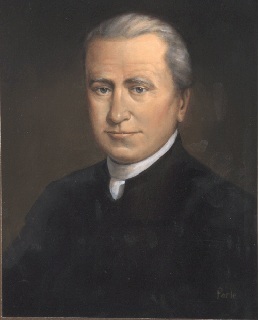
Death of Edmund Ignatius Rice, Missionary & Educationalist

Edmund Ignatius Rice, Catholic missionary and educationalist, dies on August 29, 1844, at Mount Sion, Waterford, County Waterford, after living in a near-comatose state for more than two years.

Rice is born on June 1, 1766, at Westcourt, Callan, County Kilkenny, the fourth of seven sons of Robert Rice, a farmer, and his wife, Margaret Tierney. His education begins at a local hedge school. He subsequently transfers to a school in Kilkenny before being apprenticed in 1779 to his uncle, a prosperous merchant at Waterford. He amasses a fortune in the lucrative provisioning trade of the city, and in 1785 he marries Mary Elliott, the daughter of a local tanner. Their only child, Mary, has intellectual disabilities and Rice suffers additional heartbreak with the death of his wife in 1789 following an accident, possibly by a fever that set in afterwards.

The death of his wife clearly affects Rice’s life. While he continues in trade and is an active member of the Catholic committee in the city, his priorities are radically changed. From this point he becomes increasingly involved in pious and charitable pursuits. He assists in the foundation of the Trinitarian Orphan Society in 1793 and the Society for the Relief of Distressed Roomkeepers in 1794. He joins religious confraternities and devotes considerable attention to the plight of prisoners. His endeavours become more focused in 1797 when, in response to a controversial pastoral of Bishop Thomas Hussey of Waterford and Lismore, he embraces the cause of Catholic education. In 1802, he establishes a religious community of laymen who set out to do for the neglected poor boys of Waterford what Nano Nagle had done for poor girls in Cork. His community is the genesis of both the Presentation Brothers and the Irish Congregation of Christian Brothers. Rice’s “monks” follow a variation of the Presentation rule, and his school curriculum is a pragmatic combination of best practice of the time overlaid by an uncompromisingly Catholic emphasis. By the time of his death in 1844, the Christian Brothers run forty-three schools, including six in England.

Rice is pivotal in the revival of Irish Catholicism following the severe dislocation of the penal era. Among the urban poor the Brothers make a landmark contribution in widening the social base of the institutional church. Through their teaching and catechetical instruction, they introduce the poor to the new forms of devotion which become the hallmark of nineteenth-century Catholicism. This effort brings a previously marginalised class within the ranks of the institutional church, which in time becomes the backbone of the emerging Catholic Ireland. The Brothers also play a determined role in the Catholic response to the proselytising efforts of the protestant Second Reformation in the country. Rice’s Brothers assist in the moulding of a distinctively Catholic urban working class, by promoting literacy alongside piety and instilling in their pupils the middle-class virtues of personal discipline, hard work, and sobriety.

Rice collaborates closely with other Catholic leaders of his age. His congregation is central to the success of Theobald Mathew‘s temperance movement. In 1828, at the height of the emancipation campaign, he invites Daniel O’Connell to lay the foundation stone of the Brothers’ model school at North Richmond Street, Dublin. This “monster meeting” attracts an attendance of 100,000, before which O’Connell hails Rice as the “patriarch of the monks of the west.” During the Repeal campaign, too, the Brothers frequently host the Liberator. Reflecting on their efforts, O’Connell declares that “education to be suited to this country must be Catholic and Irish in its tone, having as its motto Faith and Fatherland.”

Rice’s uncompromising adherence to these principles is not without difficulty. It leads to a predictably acrimonious relationship with the secular national board and his eventual withdrawal of the Brothers’ schools from the system in 1836. Rejection of the national board imposes serious financial burdens on the Christian Brothers which are relieved only by the bounties provided by the Intermediate Education Act (1878). Withdrawal also serves to alienate many friends and benefactors, including Daniel Murray, Archbishop of Dublin, who is a commissioner of national education. But the bishops gradually adopt Rice’s stance. After 1838 they become increasingly hostile to the national board, and the Brothers’ schools, with their acclaimed textbooks, are recognised as a bulwark against non-denominational education. For similar reasons, the Brothers become closely associated with Irish nationalism. In 1892, the MP William O’Brien observes that “the Christian Brothers system was regarded in Ireland as the really national system.”

The 1830s bring a rapid deterioration in Rice’s health. Financial difficulties frustrate his plans, and the plight of the three Dublin foundations is particularly acute. Rice resigns as superior general of his congregation in 1838, but fraught relations with his successor, Br. Michael Paul Riordan, blights his later years.

From this time on, Rice spends an increasing proportion of his time at Mount Sion and the adjoining school, showing a continued interest in the pupils and their teachers. He also takes a short walk each day on the slope of Mount Sion, but his increasingly painful arthritis leads the community superior, Joseph Murphy, to purchase a wheelchair for his benefit. At Christmas time in 1841, his health takes a turn for the worse and even though expectations of his imminent death do not turn out to be justified, he is increasingly confined to his room.

After living in a near-comatose state for more than two years and in the constant care of a nurse since May 1842, Rice dies on August 29, 1844, at Mount Sion, Waterford, where his remains lie in a casket to this day. Large crowds fill the streets around his house in Dublin to honour him. He is beatified by Pope John Paul II in 1996.

(From: “Rice, Edmund Ignatius” by Dáire Keogh, Dictionary of Irish Biography, http://www.dib.ie, October 2009)


Leave a comment

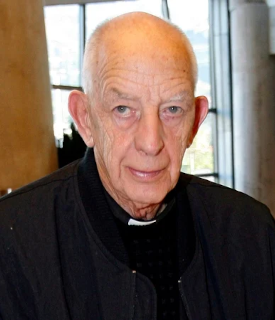
Birth of Fr. Alec Reid, Facilitator in the Northern Ireland Peace Process

Alexander Reid CSsR, Irish Catholic priest noted for his facilitator role in the Northern Ireland peace process, is born in Dublin on August 5, 1931. BBC journalist Peter Taylor subsequently describes Reid’s role as “absolutely critical” to the success of the peace process.

Reid is raised in Nenagh, County Tipperary, from the age of six following the death of his father. He studies English, history and philosophy at University College Galway.

Reid is professed as a Redemptorist in 1950 and ordained a priest seven years later. For the next four years, he gives Parish Missions in Limerick, Dundalk and Galway (Esker), before moving to Clonard Monastery in Belfast, where he spends almost the next forty years. The Redemptorist Monastery at Clonard stands on the interface between the Catholic nationalist Falls Road and the Protestant loyalist Shankill Road areas of west Belfast.

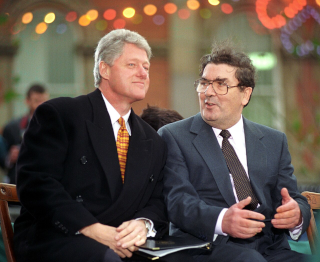
In the late 1980s, Reid facilitates a series of meetings between Gerry Adams and John Hume, in an effort to establish a “Pan-Nationalist front” to enable a move toward renouncing violence in favour of negotiation. Reid, himself a staunch nationalist who favours a united Ireland and the withdrawal of British forces from Northern Ireland, then acts as their contact person with the Irish Government in Dublin from a 1987 meeting with Charles Haughey up to the signing of the Good Friday Agreement in 1998. In this role, which is not public knowledge at the time, he holds meetings with various Taoisigh, and particularly with Martin Mansergh, advisor to various Fianna Fáil leaders. After the eventual success of the peace negotiations, Gerry Adams says, “there would not be a peace process at this time without [Father Reid’s] diligent doggedness and his refusal to give up.”

In 1988 in Belfast, Reid delivers the last rites to two British Army corporals, David Howes and Derek Wood of the Royal Corps of Signals, who are killed by the Provisional Irish Republican Army (IRA) – an event known as the corporals killings – after they drive into the funeral cortège of IRA member Kevin Brady, who had been killed in the Milltown Cemetery attack. A photograph of his involvement in that incident becomes one of the starkest and most enduring images of the Troubles. Unknown until years later, he is carrying a letter from Sinn Féin President Gerry Adams to Social Democratic and Labour Party (SDLP) leader John Hume outlining Adams’ suggestions for a political solution to the Troubles. Adams later tells the BBC in 2019 that Reid also advised U.S Ambassador to Ireland Jean Kennedy Smith during the peace process, stating “He was talking to her on the side and she was talking to her brother Teddy.”

After he moves to Dublin, Reid is involved in peace efforts in the Basque Country. In January 2003, he is awarded the Sabino Arana 2002 “World Mirror” prize, by the Sabino Arana Foundation in Bilbao, in recognition of his efforts at promoting peace and reconciliation. He and a Methodist minister, the Rev. Harold Good, announce that the IRA has decommissioned their arms at a news conference in September 2005.

Reid is involved in controversy in November 2005 when he makes comments during a meeting in Fitzroy Presbyterian Church concerning the Unionist community in Northern Ireland. When the loyalist activist Willie Frazer makes remarks that Catholics had butchered Protestants during the Troubles, Reid angrily responds, “You don’t want to hear the truth. The reality is that the nationalist community in Northern Ireland were treated almost like animals by the unionist community. They were not treated like human beings. They were treated like the Nazis treated the Jews.” Reid later apologises, saying his remarks had been made in the heat of the moment. In an interview with CNN, he says that “The IRA were, if you like, a violent response to the suppression of human rights.”

Reid dies in a Dublin hospital on November 22, 2013. He is survived by two sisters and an aunt, and is buried in Milltown Cemetery, Belfast.


Leave a comment

Birth of Gerry Cooney, Former Professional Boxer

Gerald Arthur Cooney, American former professional boxer who competes from 1977 to 1990, is born into a blue-collar Irish Catholic family on August 4, 1956, in Manhattan, New York City. He challenges twice for world heavyweight titles in 1982 and 1987. He is widely regarded as one of the hardest punchers in heavyweight history.

Cooney is encouraged to become a professional fighter by his father. His brother, Tommy Cooney, is also a boxer and reaches the finals of the New York Golden Gloves Sub-Novice Heavyweight division. His grandparents lived in Placentia, Newfoundland, in Canada.

Fighting as an amateur, Cooney wins international tournaments in England, Wales, and Scotland, as well as the New York Golden Gloves titles. He wins two New York Golden Gloves Championships, defeating Larry Derrick to win the 1973 160-lb Sub-Novice Championship and Earlous Tripp to win the 1976 Heavyweight Open Championship. In 1975 he reaches the finals of the 175-lb Open division, but is defeated by Johnny Davis. He trains at the Huntington Athletic Club in Long Island, New York, where his trainer is John Capobianco. His amateur record consists of 55 wins and 3 losses.

When Cooney turns professional, he signs with co-managers Mike Jones and Dennis Rappaport. He is trained by Victor Valle. Known for his big left-hook and his imposing size, he has his first paid fight on February 15, 1977, beating Billy Jackson by a knockout in one round. Nine wins follow and he gains attention as a future contender, although his opponents are carefully chosen. He moves up a weight class and fights future world cruiserweight champion S. T. Gordon in Las Vegas, winning by a fourth round disqualification. He has eleven more wins, spanning 1978 and 1979. Among those he defeats are Charlie Polite, former U.S. heavyweight champion Eddie Lopez, and Tom Prater. These are not rated contenders, however.

By 1980, Cooney is being featured on national television. Stepping up, he beats one-time title challengers Jimmy Young and Ron Lyle, both by knockout. The Young fight is stopped because of cuts sustained by Young. By then Cooney is ranked number 1 by the World Boxing Council (WBC) and eager for a match with champion Larry Holmes.

In 1981, Cooney defeats former world heavyweight champion Ken Norton by knockout just 54 seconds into the first round with a blisteringly powerful attack. This ties the record set in 1948 by Lee Savold for the quickest knockout in a main event in Madison Square Garden. Since his management team is unwilling to risk losing a big future pay day with Holmes by having him face another viable fighter, Cooney does not fight for 13 months after defeating Norton.

The following year, Holmes agrees to fight Cooney with the fight held on June 11, 1982. With a purse of ten million dollars for the challenger, it is the richest fight in boxing history to that time. The promotion of the fight takes on racial overtones that are exaggerated by the promoters, something Cooney does not agree with. He believes that skill, not race, should determine if a boxer is good. However, if he wins, he would become the first Caucasian world heavyweight champion since Swede Ingemar Johansson defeated Floyd Patterson 23 years earlier. Don King calls Cooney “The Great White Hope.” The bout draws attention worldwide, and Larry Holmes vs. Gerry Cooney is one of the biggest closed-circuit/pay-per-view productions in history, broadcast to over 150 countries.

Cooney fights bravely after he is knocked down briefly in the second round. He is fined three points for repeated low blows. After 12 rounds, the more skillful and experienced Holmes finally wears him down. In round 13, his trainer, Victor Valle, steps into the ring, forcing the referee to stop the fight. Two of the three judges would have had Cooney ahead after the 12th round if it were not for the point deductions. He and Holmes become friends after the fight, a relationship that endures for them. On December 14, 1982, he fights Harold Rice, the heavyweight champion of Connecticut, in a four-round bout. No winner is declared, so he tells the crowd following the bout, “This is only an exhibition. I’m sorry if I disappointed anybody. I’m trying to work myself back in shape so I can knock out Larry Holmes. Everything is OK. I felt a little rusty, but that is normal. It has been a while. I felt good in front of the people.”

After a long layoff, Cooney fights in September 1984, beating Phillip Brown by a 4th-round knockout in Anchorage, Alaska. He fights once more that year and wins, but personal problems keep him out of the ring.

Although Cooney fights only three official bouts in five years following his loss to Holmes, in 1987 he challenges former world heavyweight and world light heavyweight champion Michael Spinks in a title bout. He appears past his prime and Spinks, boxing carefully with constant sharp counters, knocks him out in the fifth round. His last fight is in 1990. He is knocked out in a match-up of power-punching veterans in two rounds by former world champion George Foreman. He does stagger Foreman in the first round, but he is over-matched, and Foreman knocks him out two minutes into the second round.

The losses to Holmes, Spinks, and Foreman exposes Cooney’s Achilles’ heel: his inability to clinch and tie up his opponent when hurt. In the Foreman fight, he rises from a second-round knockdown and stands in the center of the ring as Foreman delivers the coup de grâce.

Cooney compiles a professional record of 28 wins and 3 losses, with 24 knockouts. Not a single one of his fights ever goes the distance in a 12 or 15-round match. He is ranked number 53 on The Ring‘s list of “100 Greatest Punchers of All Time.”

Cooney founds the Fighters’ Initiative for Support and Training, an organization which helps retired boxers find jobs. He is deeply involved in J.A.B., the first union for boxers. He becomes a boxing promoter for title bouts featuring Roberto Durán, Héctor Camacho, and George Foreman. He is a supporter of the “hands are not for hitting” program, which tries to prevent domestic violence. He guides young fighters in the gym. In June 2010, he becomes the co-host of “Friday Night at the Fights” on Sirius XM radio.

Cooney resides in Fanwood, New Jersey, with his wife Jennifer and two of their three children, Jackson and Sarah. His son Chris resides in New York. He has been inducted into the Hall of Fame at Walt Whitman High School (New York), where he graduated.


Leave a comment

Birth of Irish American Writer Cormac McCarthy

Cormac McCarthy, Irish American writer who authors twelve novels, two plays, five screenplays, and three short stories, spanning the Western and post-apocalyptic genres, is born in Providence, Rhode Island, on July 20, 1933. He is known for his graphic depictions of violence and his unique writing style, recognizable by a sparse use of punctuation and attribution. He is widely regarded as one of the greatest American novelists.

McCarthy is one of six children born into the Irish Catholic family of Gladys Christina McGrail and Charles Joseph McCarthy. Although he is born in Rhode Island, he is raised primarily in Tennessee where his father works as a lawyer for the Tennessee Valley Authority. He attends St. Mary’s Parochial School and Knoxville Catholic High School and is an altar boy at Knoxville‘s Church of the Immaculate Conception. In 1951, he enrolls at the University of Tennessee, but drops out to join the United States Air Force.

McCarthy’s debut novel, The Orchard Keeper, is published in 1965. Awarded literary grants, he is able to travel to southern Europe, where he writes his second novel, Outer Dark (1968). Suttree (1979), like his other early novels, receives generally positive reviews, but is not a commercial success. A MacArthur Fellowship enables him to travel to the American Southwest, where he researches and writes his fifth novel, Blood Meridian (1985). Although it initially garners a lukewarm critical and commercial reception, it has since been regarded as his magnum opus, with some labeling it the Great American Novel.

McCarthy first experiences widespread success with All the Pretty Horses (1992), for which he receives both the National Book Award and the National Book Critics Circle Award. It is followed by The Crossing (1994) and Cities of the Plain (1998), completing The Border Trilogy. His 2005 novel No Country for Old Men receives mixed reviews. His 2006 novel The Road wins the 2007 Pulitzer Prize for Fiction and the James Tait Black Memorial Prize for Fiction.

Many of McCarthy’s works have been adapted into film. The 2007 film adaptation of No Country for Old Men is a critical and commercial success, winning four Academy Awards, including Best Picture. The films All the Pretty Horses, The Road, and Child of God are also adapted from his works of the same names, and Outer Dark is turned into a 15-minute short. He has a play adapted into a 2011 film, The Sunset Limited.

McCarthy works with the Santa Fe Institute, a multidisciplinary research center, where he publishes the essay “The Kekulé Problem” (2017), which explores the human unconscious and the origin of language. He is elected to the American Philosophical Society in 2012. His final novels, The Passenger and Stella Maris, are published on October 25, 2022, and December 6, 2022, respectively.

McCarthy dies of natural causes at his home in Santa Fe, New Mexico, on June 13, 2023, aged 89. Stephen King says McCarthy is “maybe the greatest American novelist of my time … He was full of years and created a fine body of work, but I still mourn his passing.”


1 Comment

The Philadelphia Nativist Riots

The Philadelphia nativist riots (also known as the Philadelphia Prayer Riots, the Bible Riots and the Native American Riots) are a series of riots that take place on May 6—8 and July 6—7, 1844, in Philadelphia, Pennsylvania, and the adjacent districts of Kensington and Southwark. The riots are a result of rising anti-Catholic sentiment at the growing population of Irish Catholic immigrants.

On July 3, Father John Patrick Dunn of the Church of St. Philip Neri in the Southwark District is warned that the church might be attacked during an upcoming parade held by the Native American Party. The Native American Party, a nativist political party, plans to hold a large parade the next day on Independence Day.

To prepare for violence, the church applies for an arsenal that a volunteer company could use in case the church is attacked. Pennsylvania Governor David R. Porter authorizes the formation of a company and the procurement of twenty-five muskets from the Frankford Arsenal. Major General Robert Patterson, commander of the Pennsylvania militia, puts the troops on alert in case of violence.

Five of the muskets placed in St. Philip Neri’s Church are discovered to be defective and are sent back to the Frankford Arsenal to be repaired. No violence occurs before or during the parade, but on July 5, a nativist mob numbering in the thousands gathers at the church after some observe five defective muskets being returned to the church. They then demand that the sheriff remove the weapons, while Father Dunn and volunteers rally to protect the church. Sheriff Morton McMichael and two aldermen search the church and remove twelve muskets. After leaving the church, the sheriff urges the crowd to disperse and leaves a volunteer posse to guard the church. The mob remains, and a man injured in the May riots makes a speech to the crowd, calling for a second search of the church. The sheriff, an alderman, and seventeen nativists enter the church and find three armed men, fifty-three muskets, ten pistols, a keg of gunpowder and ammunition. To avoid inciting the mob, the sheriff decides not to remove the armaments, and the search party stays in the church. Just after midnight, July 6, Major General Patterson orders a company of city guards to clear the streets. After the crowd disperses, the arms found within the church are removed.

By midday, the crowds return around St. Philip Neri’s Church. General George Cadwalader orders the crowds to disperse, but they do not. By the evening, the sheriff arrives with a 150-strong posse. Throughout the evening, the military presence grows, and three cannons are stationed on the streets. The soldiers clear the streets near the church, despite being pelted with rocks by the mob. Responding to the rock throwers, General Cadwalader orders a cannon to be fired at the crowd on Third Street. Former U.S. Congressman Charles Naylor begs the general not to fire. He and several others are arrested and held within the church. By the morning of July 7, most of the soldiers have left, but the crowds, led by an alderman and the sheriff, return and demand that the remaining guard release Naylor. Everyone except Naylor is released. The crowds grow, and a cannon is brought from a nearby wharf and used to threaten the church. After further negotiations, Naylor is released and carried home to cheers on people’s shoulders.

After Naylor is brought home, the mob attacks the church, damaging a wall with the cannon. A second cannon is brought from the wharfs and fired at the church, after which the mob pelts the building with rocks and break in through a side door. The soldiers fire on the men breaking into the church, who promptly retreat. After retreating, the nativists negotiate with the guard, who agrees to withdraw, allowing the nativists to guard the church. The crowd pelts the soldiers with rocks and some soldiers fire back, which only incites the mob further. The mob forces its way into the church, causing extensive damage to the interior. After about an hour, a group of twenty men organizes themselves to guard St. Philip Neri’s, and the mob leaves the church.

By the evening, a large number of soldiers arrive with orders to clear the streets, only to be stoned in the process. After a captain is attacked, the order is given to fire on the mob, which results in seven fatalities and nine injuries. Not long after, people with muskets and cannons arrive and fierce fighting breaks out between the soldiers and the mob. The fighting lasts for several hours, with the soldiers being fired upon from alleyways and the windows of nearby buildings. The soldiers bring in two cannons of their own and fire on the mob. The mob returns fire using their own cannons, armed with items such as nails, chains, knives and broken bottles. In an attempt to capture the mob’s cannons, soldiers charge one cannon’s position, only to be knocked off their horses by a rope tied across the street. The cannons are all eventually captured, and by early morning on July 8, the fighting has ended.

At least fifteen people, including rioters and soldiers, are killed in the riot, and at least fifty people are injured. Under Governor Porter’s orders, state troops continue to arrive in the city in the days afterward, but no further violence takes place. An estimated 5,000 militia are used to stop violence. Troops begin to withdraw from the city on July 10, and the church takes over responsibility from the district of Southwark of protecting the church on July 11. As with the May riots, a grand jury blames the Irish Catholics for the riots but supports the military’s response to the violence.

The riots gain national attention and condemnation. The riots are used as an issue in the 1844 U.S. Presidential election, the Democratic Party condemning the growing Native American Party and the Whig Party, which the Democrats accuse of involvement in the nativist movement. In Philadelphia, the Native American Party ends up making a strong showing in the city’s October election.

On July 11, 1844, Philadelphia passes an ordinance that gives the city a battalion of artillery, a regiment of infantry, and at least one full troop of cavalry to preserve peace within the city when necessary. The difficulty of quelling the riots and other crime leads the Pennsylvania General Assembly to pass an 1845 act that requires Philadelphia, the township of Moyamensing and the unincorporated districts of Spring Garden, Northern Liberties, and Penn to maintain a police force of one man per 150 taxable inhabitants. In 1850, another act is passed that establishes that the Philadelphia police force will police the city and seven surrounding districts. The inability to maintain order effectively in Philadelphia’s suburbs is an important argument for the consolidation of the city in 1854.

After the riots, Bishop Kenrick ends his efforts to influence the public education system and begins encouraging the creation of Catholic schools, with 17 being founded by 1860. The friars of the Church of St. Augustine sue the city of Philadelphia for not providing the church with adequate protection, claiming $80,000 in damages. The city argues that the friars cannot claim their civil rights were violated, as the Order of Saint Augustine is a foreign organization under the Pope. Furthermore, the city argues that the friars took a vow of poverty and cannot be property owners. The Augustinians end up proving the Order is incorporated in 1804 and is awarded $45,000. The church is rebuilt in 1848.

(Pictured: “Riot in Philadelphia,” lithograph by H. Bucholzer, 1844, Library of Congress)


Leave a comment

Birth of Eleanor Charlotte Butler, Recluse of Llangollen

Eleanor Charlotte Butler, recluse of Llangollen, is born in Cambrai, France, on May 11, 1739.

Butler is the youngest daughter of Walter Butler of Garryricken, County Tipperary, and his wife, Ellen (née Morres), of Latargh, County Tipperary. Her family are members of the old Catholic gentry, and her father is the sole lineal representative of James Butler, 2nd Duke of Ormonde. In 1740 her family returns to the Garryricken estate, where she spends part of her childhood. She is educated by the English Benedictine nuns of the convent of Our Lady of Consolation in Cambrai, where her Jacobite grand-aunt is a pensioner. Reared in the liberal and anti-clerical environment at Cambrai, she is open about her opposition to Irish Catholicism. She is also well read in literature.

By the time Butler returns to Ireland, her brother John had claimed the family titles and was recognised as 16th Earl of Ormond. Though he never uses the title, his sisters are recognised as the daughters of an earl. As the family is impoverished, and she is not disposed to marriage, a decade is passed in unhappiness. Then, in 1768, the thirteen-year-old Sarah Ponsonby arrives in Kilkenny to attend a local school. Following her visit to the Butler home at Kilkenny Castle, and despite the difference in age, the two form an immediate friendship and corresponded secretly, having discovered their mutual interest in the arts and Rousseau‘s ideal of pastoral retirement.

Ponsonby, upon finishing school, is sent to live with relatives at nearby Woodstock Estate, and there is subject to the uninvited attention of a middle-aged guardian. Butler is discontented with her life and the prospects of her family’s wish to send her back to Cambrai, so the two plan to leave their difficulties behind and settle in England. In their first attempt to flee in March 1778, they leave for Waterford disguised as men and wielding pistols, but their families manage to catch up with them. Butler is then sent to the home of her brother-in-law, Thomas ‘Monarch’ Kavanagh of Borris, County Carlow, but makes a second, successful attempt and runs away to find Ponsonby at Woodstock Estate. Her persistence wins out when both families finally capitulate and accepted their plans to live together.

Butler and Ponsonby set out for Wales in May 1778 and, after an extensive tour of Wales and Shropshire, eventually settle in Llangollen Vale, where they rent a cottage which is renamed Plas Newydd. They are accompanied by Mary Carryll, a former servant of the Woodstock household, who remains in their service until her death in 1809. Having made a deliberate decision to retire from the world, they spend the greater part of their days corresponding with friends, reading, building up a large library and making alterations to Plas Newydd, which takes on a fashionable Gothic look. Their garden, landscaped under their direction, becomes a popular attraction for visitors. Butler meticulously records their daily routine in a series of journals, some of which are now lost.

Their seclusion, eccentricities, semi-masculine dress and short-cropped powdered hair gain them notoriety, and it becomes fashionable to call on them. Their numerous and illustrious visitors include Hester Lynch Piozzi, Charles and Erasmus Darwin, Sir Walter Scott, Sir Arthur Wellesley, the Duke of Gloucester and Josiah Wedgwood. In 1792 they entertain Stéphanie Caroline Anne Syms, later that year to become the wife of Lord Edward FitzGerald, and her mother, Madame de Genlis. Following the arrest of Edward FitzGerald in 1798, Stéphanie and her suite flee to London and on May 27 pass through Llangollen, where the events in Dublin are already known. On hearing that she is staying in the local inn, Butler and Ponsonby invite her to call in. However, when she wishes to stay for the day, their apprehension of Jacobinism leads them to persuade her “principally for her own sake and a little for [our] own to proceed as fast and as incognito as possible for London.”

Both Anna Seward and William Wordsworth, who stay at Plas Newydd, write poems celebrating their friendship, and Lord Byron sends them a copy of The Corsair. Owing to her support of the Bourbons, Butler is sent the Croix St. Louis, which she wears about her neck. Though generally considered a hospitable couple, Seward, who is a good friend, admits that the “incessant homage” they received could make Butler “haughty and imperious,” while Lady Lonsdale thinks her “very clever, very odd.” Their celebrity does have its drawbacks: an article in the General Evening Post of July 24, 1790, entitled “Extraordinary female affection,” suggests indirectly that their relationship is unnatural. Butler is particularly angered by this publicity and appeals to Edmund Burke for legal advice. Their retirement is also continually dogged by financial difficulties. They live mainly off their respective allowances and Butler’s royal pension (granted through the influence of Lady Frances Douglas), but spend beyond their means and are often in debt. To add to their problems, Butler receives no mention in her father’s will. However, the Gothic eccentricities of their cottage, which they succeed over time in purchasing, and garden attract even the interest of Queen Charlotte.

Though it is claimed that neither woman spends a night away from Plas Newydd, in January 1786 they stay with their friends, the Barretts of Oswestry, and that September they visit Sir Henry Bridgeman of Weston Park, near Staffordshire. In June 1797 they take their only holiday, at the coastal resort of Barmouth. Despite their isolation they are well informed about international events and society gossip. The Irish serjeant-at-law Charles Kendal Bushe recalls how they gave him all the news of Dublin, London, Cheltenham, and Paris.

In later years Butler’s eyesight deteriorates, preventing her from keeping her journal. She is secretly painted as an old woman with Ponsonby by Lady Mary Leighton and sketched by Lady Henrietta Delamere. A distinctive, anonymous silhouette shows the two generously proportioned women in traditional riding habits (National Portrait Gallery, London). Butler dies on June 2, 1829, and is buried alongside Carryll at Llangollen church. Sarah Ponsonby is subsequently buried with them.

(From: “Butler, Lady (Charlotte) Eleanor” by Frances Clarke, Dictionary of Irish Biography, http://www.dib.ie)


1 Comment

The Film Premiere of “Angela’s Ashes”

Despite the controversy over the book, people in Frank McCourt‘s hometown of Limerick turn out in huge numbers to attend the sold-out film premiere of Angela’s Ashes on January 12, 2000. A simultaneous premiere takes place in Dublin.

The 1999 drama film is based on McCourt’s memoir Angela’s Ashes: A Memoir, published in 1996. An international co-production between the United States, the United Kingdom, and Ireland, it is co-written and directed by Alan Parker, and stars Emily Watson, Robert Carlyle, Joe Breen, Ciaran Owens, and Michael Legge, the latter three playing the young, middle aged, and older Frank McCourt, respectively.

Although set in Limerick, many street scenes are filmed in Cork. For example, the “fleas in the mattress” scene is filmed at Farren Street, Blackpool, and other scenes are shot at Roche’s Buildings, Lower John Street and Barrack Street.

With an estimated $25 million budget, the film grosses only $13,042,112 in the United States, making it a box-office bomb.

On Rotten Tomatoes, the film has an approval rating of 52%, based on reviews from 87 critics, with an average rating of 5.8/10. The site’s consensus states: “In spite of its attempts to accurately record Frank McCourt’s memoirs, the onscreen adaptation fails to capture any of the drama or humor of his life.” On Metacritic, the film has a score of 54 out of 100, based on reviews from 32 critics, indicating “mixed or average reviews.”

Michael Legge is praised for his portrayal of the adolescent Frank. In particular, he is said to excel in his role as an innocent teenager growing up with typical coming of age rites involving sexuality, maturity and peer pressure in a Catholic Irish setting.

Despite the low approval ratings with the critics, the film captures several awards: Best Picture and Best Costume Design at the Irish Film & Television Awards, Best Director at the Karlovy Vary International Film Festival, Best Original Score from the Las Vegas Film Critics Society, and Best Actress (Emily Watson) from the London Film Critics’ Circle.

(Pictured: Film poster for Angela’s Ashes, © Paramount Pictures)