D’Alton is born to Joseph D’Alton and his wife Mary Brennan, at the height of the Land Wars in Ireland. He is baptised four days later, on October 15, 1882, with Michael and Mary Brennan acting as his godparents. His mother has a daughter, Mollie Brennan, from a previous marriage, she remarries again after the Cardinal’s father dies in 1883.
D’Alton occupies important roles at the National Seminary and is successively Professor of Ancient Classics (1912), Greek (1922), Vice-President (1934), and President (1936). He is raised to the rank of Monsignor on June 27, 1938.
D’Alton is named Archbishop of Armagh and thus Primate of All Ireland on June 13, 1946, and is created Cardinal Priest of Sant’ Agata de’ Goti in Rome by Pope Pius XII in the consistory of January 12, 1953. As a cardinal elector in the 1958 papal conclave, he gives a hint of the difficulties involved in that papal conclave and achieving unanimity in the voting.
One highlight of D’Alton’s time in Armagh is the Patrician Year Celebrations in 1961, marked by the Irish Catholic hierarchy as the 1,500th anniversary of the death of Saint Patrick and as such an opportunity to promote the “spiritual empire” created by the Irish Catholic church in the wider anglophone world. He writes a pastoral letter to mark the occasion.
Cardinal D’Alton is seen to be more ecumenical in outlook than other members of the Irish hierarchy. He tries to broker talks between the Irish Free State and the United Kingdom to ease the tensions between both countries, even going so far as to address the situation regarding the Irish ports, but to little avail.
In 1952, D’Alton becomes the first individual from the Republic of Ireland to receive an honorary degree from Queen’s University Belfast (QUB), when he is conferred with a Doctorate in Literature. He already possesses a Doctor of Divinity, so this degree is a recognition of his earlier works such as Horace and His Age: A Study in Historical Background (1917), Roman Literary Theory and Criticism: A Study in Tendencies (1931), and Selections from St. John Chrysostom (1940).
In D’Alton’s hometown of Claremorris, the Dalton Inn Hotel and Dalton Street (formerly Church Street) are named after him. A plaque commemorating him is unveiled at the Dalton Inn Hotel on September 28, 2023. Plans to canonise him have been discussed.
The Great Chicago Fire, a conflagration that destroys roughly 3.3 square miles of Chicago, Illinois, including over 17,000 structures, kills approximately 300 people and leaves more than 100,000 residents homeless, starts at about 8:30 p.m. on October 8, 1871, in or around a small barn belonging to the Irish immigrant O’Leary family that borders the alley behind 137 W. DeKoven Street.
The shed next to the barn is the first building to be consumed by the fire. City officials never determine the cause of the blaze, but the rapid spread of the fire due to a long drought in that year’s summer, strong winds from the southwest, and the rapid destruction of the water pumping system, explain the extensive damage of the mainly wooden city structures. There has been much speculation over the years on a single start to the fire. The most popular tale blames Catherine O’Leary‘s cow, who allegedly knocked over a lantern; others state that a group of men were gambling inside the barn and knocked over a lantern. Still other speculation suggests that the blaze was related to other fires in the Midwest that day.
The fire’s spread is aided by the city’s use of wood as the predominant building material in a style called balloon framing. More than two-thirds of the structures in Chicago at the time of the fire are made entirely of wood, with most of the houses and buildings being topped with highly combustible tar or shingle roofs. All of the city’s sidewalks and many roads are also made of wood. Compounding this problem, Chicago receives only 1 inch of rain from July 4 to October 9, causing severe drought conditions before the fire, while strong southwest winds help to carry flying embers toward the heart of the city.
In 1871, the Chicago Fire Department has 185 firefighters with just 17 horse-drawn steam pumpers to protect the entire city. The initial response by the fire department is timely, but due to an error by the watchman, Matthias Schaffer, the firefighters are initially sent to the wrong place, allowing the fire to grow unchecked. An alarm sent from the area near the fire also fails to register at the courthouse where the fire watchmen are, while the firefighters are tired from having fought numerous small fires and one large fire in the week before. These factors combined to turn a small barn fire into a conflagration.
When firefighters finally arrive at DeKoven Street, the fire has grown and spread to neighboring buildings and is progressing toward the central business district. Firefighters hope that the South Branch of the Chicago River and an area that had previously thoroughly burned would act as a natural firebreak. All along the river, however, are lumber yards, warehouses, and coal yards, and barges and numerous bridges across the river. As the fire grows, the southwest wind intensifies and becomes superheated, causing structures to catch fire from the heat and from burning debris blown by the wind. Around midnight, flaming debris blows across the river and lands on roofs and the South Side Gas Works.
With the fire across the river and moving rapidly toward the heart of the city, panic sets in. About this time, Mayor Roswell B. Mason sends messages to nearby towns asking for help. When the courthouse catches fire, he orders the building to be evacuated, and the prisoners jailed in the basement to be released. At 2:30 a.m. on October 9, the cupola of the courthouse collapses, sending the great bell crashing down. Some witnesses report hearing the sound from a mile away.
As more buildings succumbed to the flames, a major contributing factor to the fire’s spread is a meteorological phenomenon known as a fire whirl. As overheated air rises, it comes into contact with cooler air and begins to spin, creating a tornado-like effect. These fire whirls are likely what drives flaming debris so high and so far. Such debris is blown across the main branch of the Chicago River to a railroad car carrying kerosene. The fire has jumped the river a second time and is now raging across the city’s north side.
Despite the fire spreading and growing rapidly, the city’s firefighters continue to battle the blaze. A short time after the fire jumps the river, a burning piece of timber lodges on the roof of the city’s waterworks. Within minutes, the interior of the building is engulfed in flames and the building is destroyed. With it, the city’s water mains go dry and the city is helpless. The fire burns unchecked from building to building, block to block.
Finally, late into the evening of October 9, it starts to rain, but the fire has already started to burn itself out. The fire had spread to the sparsely populated areas of the north side, having thoroughly consumed the densely populated areas.
Once the fire has ended, the smoldering remains are still too hot for a survey of the damage to be completed for many days. Eventually, the city determines that the fire destroyed an area about 4 miles long and averaging 3⁄4 mile wide, encompassing an area of more than 2,000 acres. Destroyed are more than 73 miles of roads, 120 miles of sidewalk, 2,000 lampposts, 17,500 buildings, and $222 million in property, which is about a third of the city’s valuation in 1871.
On October 11, 1871, General Philip H. Sheridan comes quickly to the aid of the city and is placed in charge by a proclamation, given by mayor Roswell B. Mason.
To protect the city from looting and violence, the city is put under martial law for two weeks under Gen. Sheridan’s command structure with a mix of regular troops, militia units, police, and a specially organized civilian group “First Regiment of Chicago Volunteers.”
For two weeks Sheridan’s men patrol the streets, guard the relief warehouses, and enforce other regulations. On October 24, the troops are relieved of their duties and the volunteers are mustered out of service.
Of the approximately 324,000 inhabitants of Chicago in 1871, 90,000 residents (about 28% of the population) are left homeless. One hundred twenty bodies are recovered, but the death toll is believed to possibly exceed 300. The county coroner speculates that an accurate count is impossible, as some victims may have drowned or been incinerated, leaving no remains.
In the days and weeks following the fire, monetary donations flow into Chicago from around the country and abroad, along with donations of food, clothing, and other goods. These donations come from individuals, corporations, and cities.
Almost from the moment the fire breaks out, various theories about its cause begin to circulate. The most popular and enduring legend maintains that the fire began in the O’Leary barn as Mrs. O’Leary is milking her cow. The cow kicks over a lantern (or an oil lamp in some versions), setting fire to the barn. The O’Leary family denies this, stating that they were in bed before the fire started, but stories of the cow begin to spread across the city. Catherine O’Leary seems the perfect scapegoat: she is a poor, Irish Catholic immigrant. During the latter half of the 19th century, anti-Irish sentiment is strong in Chicago and throughout the United States. This is intensified as a result of the growing political power of the city’s Irish population.
Furthermore, the United States has been distrustful of Catholics since its beginning, carrying over attitudes in England in the 17th century. As an Irish Catholic, Mrs. O’Leary is a target of both anti-Catholic and anti-Irish sentiment. This story is circulating in Chicago even before the flames die out and is noted in the Chicago Tribune‘s first post-fire issue. In 1893, the reporter Michael Ahern retracts the “cow-and-lantern” story, admitting it is fabricated, but even his confession is unable to put the legend to rest. Catherine O’Leary turns into a recluse after the fire and dies in 1895. Although the O’Learys are never officially charged with starting the fire, the story becomes so engrained in local lore that Chicago’s city council officially exonerates them — and the cow — in 1997.
(Pictured: A Currier & Ives lithograph showing people fleeing across the Randolph Street Bridge)
When appointed Lord Chancellor of Ireland in 1789, FitzGibbon is granted his first peerage as Baron FitzGibbon, of Lower Connello in the County of Limerick, in the Peerage of Ireland that year. This does not entitle him to a seat in the British House of Lords, only in the Irish House of Lords. His later promotions come mostly in the Peerage of Ireland, being advanced to a Viscountcy in 1793 and the Earldom of Clare in 1795. He finally achieves a seat in the British House of Lords in 1799 when created Baron FitzGibbon, of Sidbury in the County of Devon, in the Peerage of Great Britain.
As Lord Chancellor for Ireland, FitzGibbon is a renowned champion of the Protestant Ascendancy and an opponent of Catholic emancipation. He despises the Parliament of Ireland‘s popular independent Constitution of 1782. He is also personally and politically opposed to the Irish politician Henry Grattan who urges a moderate course in the Irish Parliament and is responsible for defeating Grattan’s efforts to reform the Irish land tithe system under which Irish Catholic farmers (and all non-Anglican farmers) are forced to financially support the minority Anglican Church of Ireland. These are not fully repealed until 1869 when the Church of Ireland is finally disestablished, although Irish tithes are commuted after the Tithe War (1831–1836).
FitzGibbon opposes the Irish Roman Catholic Relief Act 1793 personally but apparently recommends its acceptance in the House of Lords, being forced out of necessity when that Act had been recommended to the Irish Executive by the British Cabinet led by William Pitt the Younger. Pitt expects Ireland to follow the British Roman Catholic Relief Act 1791 and allow Catholics to vote again and hold public offices. At the same time, FitzGibbon apparently denounces the policy this Act embodies, so it is probably safe to say that FitzGibbon’s own beliefs and principles conflict with his obligations as a member of the Irish executive of the time.
FitzGibbon’s role in the recall, soon after his arrival, of the popular pro-Emancipation Lord Lieutenant of Ireland, William Fitzwilliam, 4th Earl of Fitzwilliam, is debatable. Although he is probably politically opposed to the Lord Lieutenant of Ireland, Fitzwilliam is apparently recalled, because of his own independent actions. Fitzwilliam is known to be friendly to the Ponsonby family and is generally a Foxite liberal Whig. His close association with and patronage of Irish Whigs led by Grattan and Ponsonby during his short tenure, along with his alleged support of an immediate effort to secure Catholic emancipation in a manner not authorized by the British cabinet is likely what leads to his recall. Thus, if anyone is to blame in the short-lived “Fitzwilliam episode” it is Henry Grattan and the Ponsonby brothers – presumably William Ponsonby, later Lord Imokilly, and his brother George Ponsonby — not to mention Lord Fitzwilliam himself. Irish Catholics at the time and later naturally see things very differently and blame hardline Protestants such as FitzGibbon.
Irish Catholics and FitzGibbon apparently agree on one point – Irish political and economic union with Great Britain, which eventually takes place in 1801. Pitt wants Union with Ireland concomitantly with Catholic emancipation, commutation of tithes, and the endowment of the Irish Catholic priesthood. Union is opposed by most hardline Irish Protestants, as well as liberals such as Grattan. FitzGibbon is a strong supporter of the Union since 1793 but refuses to have Catholic emancipation with the Union.
In the end, FitzGibbon’s views wins out, leading to the Union of Ireland with Great Britain to form the United Kingdom of Great Britain and Ireland without any concessions for Ireland’s Catholic majority, or for that matter, Catholics in the rest of the new United Kingdom. He later claims that he has been duped by the way in which the Act is passed and is bitterly opposed to any concessions during the short remainder of his life.
FitzGibbon’s role as Lord Chancellor of Ireland during the period of the 1798 rebellion is questionable. According to some, he supports a hardline policy which uses torture, murder and massacre to crush the rebellion, or that as Lord Chancellor, he has considerable influence on military affairs, and that martial law cannot be imposed without his consent. Others allege that as Lord Chancellor, he has no say in military affairs. His former side is displayed by sparing the lives of the captured United Irish leaders in return for their confession of complicity and provision of information relating to the planning of the rebellion. However, this willingness of the prisoners to partake of the agreement is spurred by the execution of the Sheares brothers on July 14, 1798.
In contrast to the leniency shown to the largely upper-class leadership, the full weight of military repression is inflicted upon the common people throughout the years 1797–98 with untold thousands suffering imprisonment, torture, transportation and death. Fitzgibbon ss inclined to show no mercy to unrepentant rebels and in October 1798 he expressed his disgust upon the capture of Wolfe Tone that he had been granted a trial and his belief that Tone should have been hanged as soon as he set foot on land.
FitzGibbon is quick to recognise that sectarianism is a useful ally to divide the rebels and prevent the United Irishmen from achieving their goal of uniting Protestant, Catholic and Dissenter, writing in June 1798, “In the North nothing will keep the rebels quiet but the conviction that where treason has broken out the rebellion is merely popish.”
FitzGibbon is noted by some as a good, improving landlord to both his Protestant and Catholic tenants. Some claim that the tenants of his Mountshannon estate call him “Black Jack” FitzGibbon. However, there is no evidence to support this claim, although there is little to no evidence on his dealings as a landlord. Irish nationalists and others point out that while he might have been interested in the welfare of his own tenants on his own estate, he treats other Irish Catholics very differently. Without further evidence, his role as a Protestant landowner in mainly Catholic Ireland is of little importance against his known dealings as Lord Chancellor.
FitzGibbon dies at his home, 6 Ely Place near St. Stephen’s Green, Dublin, on January 28, 1802, and is buried in the churchyard at St. Peter’s Church, Aungier Street, Dublin. A hero to Protestant hardliners, but despised by the majority Catholic population, his funeral cortege is the cause of a riot and there is a widespread story that a number of dead cats are thrown at his coffin as it departs Ely Place.
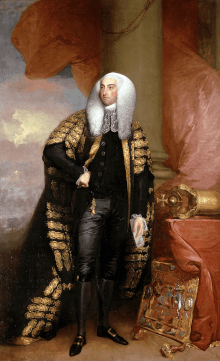
(Pictured: “Portrait of John FitzGibbon, 1st Earl of Clare,” painting by Gilbert Stuart, 1789)
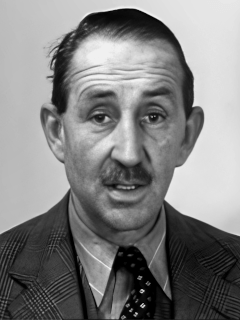
Brooke is born on June 9, 1888, at Colebrooke Park, his family’s neo-Classicalancestral seat on what is then the several-thousand-acre Colebrooke Estate, just outside Brookeborough, a village near Lisnaskea in County Fermanagh. He is the eldest son of Sir Arthur Douglas Brooke, 4th Baronet, whom he succeeds as 5th Baronet when his father dies in 1907. His mother is Gertrude Isabella Batson. He is a nephew of Field MarshalAlan Brooke, 1st Viscount Alanbrooke, Chief of the Imperial General Staff (CIGS) during World War II, who is only five years his senior. His sister Sheelah marries Sir Henry Mulholland, Speaker of the Stormont House of Commons and son of Lord Dunleath. He is educated for five years at St. George’s School in Pau, France, and then at Winchester College (1901–05).
Brooke is a very active Ulster Unionist Party member and ally of Edward Carson. He founds his own paramilitary group, Brooke’s Fermanagh Vigilance, from men returning from the war front in 1918. Although the umbrella Ulster Volunteers had been quiescent during the war, it is not defunct. It re-emerges strongly in 1920, subsuming groups like Brooke’s.
In 1920, having reached the rank of captain, Brooke leaves the British Army to farm the Colebrooke Estate, the family estate in west Ulster, at which point he turns toward a career in politics.
Brooke has a very long political career. When he resigns the Premiership of Northern Ireland in March 1963, he is Northern Ireland’s longest-serving prime minister, having held office for two months short of 20 years. He also establishes a United Kingdom record by holding government office continuously for 33 years.
On May 2, 1943, Brooke succeeds John M. Andrews as Prime Minister of Northern Ireland. In 1952, while Prime Minister, was raised to the peerage as Viscount Brookeborough, the title taken from the village named after the Brookes. Although a peer, he retained his seat in the House of Commons at Stormont and remained Prime Minister for another decade.
As the Northern Ireland economy begins to de-industrialise in the mid-1950s, leading to high unemployment amongst the Protestant working classes, Brooke faces increasing disenchantment amongst UUP backbenchers for what is regarded as his indifferent and ineffectual approach to mounting economic problems. As this disenchantment grows, British civil servants and some members of the UUP combine to exert discreet and ultimately effective pressure on Brooke to resign to make way for Captain Terence O’Neill, who is Minister of Finance.
Brooke is noted for his casual style toward his ministerial duties. Terence O’Neill later writes of him, “he was good company and a good raconteur, and those who met him imagined that he was relaxing away from his desk. However, they did not realise that there was no desk.”
In his retirement Brooke develops commercial interests as chairman of Carreras (Northern Ireland), a director of Devenish Trade, and president of the Northern Ireland Institute of Directors. He is also made an honorary LL.D. of Queen’s University Belfast.
From 1970 to 1973, years in which the Stormont institution comes under its greatest strain and eventually crumbles, Brooke makes only occasional forays into political life. In 1972, he appears next to William Craig MP on the balcony of Parliament Buildings at Stormont, a diminutive figure beside the leader of the Vanguard Unionist Progressive Party (VUPP) who is rallying right-wing Unionists against the Government of Northern Ireland. He opposes the Westminsterwhite paper on the future of Northern Ireland and causes some embarrassment to his son, Captain John Brooke, the UUP Chief Whip and an ally of Brian Faulkner, by speaking against the Faulkner ministry‘s proposals.
Brooke dies at his home, Colebrooke Park, on the Colebrooke Estate, on August 18, 1973. His remains are cremated at Roselawn Cemetery, East Belfast, three days later, and, in accordance with his wishes, his ashes are scattered on the demesne surrounding his beloved Colebrooke Park.
Talbot is born likely in 1630, probably in Dublin. He is one of sixteen children, the youngest of eight sons of William Talbot and his wife Alison Netterville. His father is a lawyer and the 1st Baronet Talbot of Carton, County Kildare. His mother is a daughter of John Netterville of Castletown, Kildare. The Talbots are descended from a Norman family that had settled in Leinster in the 12th century. They adhere to the Catholic faith, despite the founding of the Reformed Church of Ireland under Henry VIII. Little is recorded of Talbot’s upbringing. As an adult he grows to be unusually tall and strong by standards of the time.
Talbot marries Katherine Baynton in 1669, and they have two daughters, Katherine and Charlotte. Katherine dies in 1679. In 1681, he marries Frances Jennings, sister of Sarah Jennings, the future Sarah Churchill, Duchess of Marlborough.
Talbot’s early career is spent as a cavalryman in the Irish Confederate Wars. Following a period on the European continent, he joins the court of James, Duke of York, then in exile following the English Civil War, becoming a close and trusted associate. After the 1660 restoration of James’s older brother, Charles, to the thrones of England, Ireland and Scotland, he begins acting as agent or representative for Irish Catholics attempting to recover estates confiscated after the Cromwellian conquest, a role that defines the remainder of his career. James converts to Catholicism in the late 1660s, strengthening his association with Talbot.
When James takes the throne in 1685, Talbot’s influence increases. He oversees a major purge of Protestants from the Irish Army, which had previously barred most Catholics. James creates him Earl of Tyrconnell and later makes him Viceroy, or Lord Deputy of Ireland. He immediately begins building a Catholic establishment by admitting Catholics to many administrative, political and judicial posts.
Talbot’s efforts are interrupted by James’s 1688 deposition by his Protestant son-in-law William of Orange. He continues as a Jacobite supporter of James during the subsequent Williamite War in Ireland, but also considers a peace settlement with William that would preserve Catholic rights. Increasingly incapacitated by illness, he dies of a stroke on August 14, 1691, shortly before the Jacobite defeat. He is thought to have been buried in St. Mary’s Cathedral, Limerick. By depriving the Jacobites of their most experienced negotiator, his death possibly has a substantial impact on the terms of the Treaty of Limerick that ends the war.
Talbot’s widow, Frances, and his daughter, Charlotte, remain in France, where Charlotte marries her kinsman, Richard Talbot, son of William Talbot of Haggardstown. Their son is Richard Francis Talbot. Talbot’s other daughter, Katherine, becomes a nun. An illegitimate son, Mark Talbot, serves as an officer in France before his death in the Battle of Luzzara in 1702. Talbot’s estate in nearby Carton, renamed Talbotstown, is uncompleted at the time of his death. Tyrconnell Tower on the site is originally intended by him as a family mausoleum to replace the existing vault at Old Carton graveyard but is also left unfinished.
Talbot is controversial in his own lifetime. His own Chief Secretary, Thomas Sheridan, later describes him as a “cunning dissembling courtier […] turning with every wind to bring about his ambitious ends and purposes.” Many 19th and early 20th century historians repeat this view. Recent assessments have suggested a more complex individual whose career was defined by personal loyalty to his patron James and above all by an effort to improve the status of the Irish Catholic gentry, particularly the “Old English” community to which he belonged.
(Pictured: Watercolour portrait of Richard Talbot by John Bulfinch (d.1728) after painting by Sir Godfrey Kneller)
In effect a special extension of the Defence of the Realm Acts, the aim of the Act is to increase convictions of nationalist rebels while averting the need to declare martial law. Under Section 3(6) of the Act, military authorities are empowered to jail any Irish person without charge or trial. Secret courts-martial are established, and lawyers (appointed by Crown agents) can be present only if the death penalty is involved. Inquests of military or police actions are banned.
By the middle of 1920, Ireland is in the throes of a full-fledged rebellion that is barely recognized by the British Government in Ireland headquartered in Dublin Castle. The Irish Republican Army (IRA), the military arm of the Dáil Éireann revolutionary government, is engaged in a guerilla campaign to destroy elements of British power, particularly burning down courthouses and attacking members of the Royal Irish Constabulary (RIC), Britain’s police force in the countryside.
The British response to the increase in violence and the assassination of police officers is twofold. To suppress the IRA “murderers,” Major GeneralHugh Tudor, commander of the RIC and self-styled “Chief of Police,” begins supplementing that body with the employment of World War I veterans known as the “Black and Tans” because of the colour of their surplus World War I uniforms, and an additional temporary force of Auxiliaries. With little discipline and utter indifference to the plight or moral indignation of the Irish population, these groups raid and burn villages, creameries, and farm buildings to intimidate supporters of the IRA.
The second measure is the enactment of the Restoration of Order in Ireland Act (ROIA). The Act is envisioned as a remedy to the problem perceived by Chief Secretary for Ireland Sir Hamar Greenwood that “throughout the greater part of Ireland criminal justice can no longer be administered by the ordinary constitutional process of trial by judge and jury.”
The genesis of the Act may be seen in a Cabinet discussion on May 31, 1920, in which the members focus on the violence in Ireland. Rather than addressing violence as the product of rebellion, Greenwood insists that, “The great task is to crush out murder and arson.” He asserts that the violence is perpetrated by handsomely paid thugs. Commenting on a pending Irish bill, Secretary of State for WarWinston Churchill states, “You should include in the Bill a special tribunal for trying murderers. It is monstrous that we have some 200 murders, and no one hung.” The prime minister agrees that convicted murderers should be hanged but questions whether convictions can be obtained from Catholics. The concern of all is that the civil courts are incapable of strictly administering justice to the revolutionaries because the juries largely consisted of Irish Catholics. The ensuing discussion of possibly imposing court-martial jurisdiction is inconclusive.
After the May 31 meeting, Greenwood investigates the feasibility of imposing martial law in Ireland and raises martial law as the specific subject of a July 23, 1920, conference committee meeting of the Cabinet led by Prime MinisterDavid Lloyd George to which the key members of the Dublin Castle administration are invited. William E. Wylie, the law advisor at Dublin Castle, notes that the RIC is disintegrating through resignations brought on by terrorist attacks, and that with “regard to the Civil Courts, the entire administration of the Imperial Government had ceased.” The civilian participants from Dublin Castle, especially Wylie, maintain that martial law is counter-productive, and will only antagonize the Irish people. As an alternative to martial law, General Tudor argues for the imposition of court-martial jurisdiction. Tudor argues forcefully that court-martial jurisdiction over all crimes will support the Black and Tans and Auxiliaries that he is recruiting. He declaims that “not a single criminal had been brought to justice for murder.” Lloyd George closes the discussion directing the Dublin Castle participants to provide final proposals for enforcement of the laws.
A draft bill to establish military criminal jurisdiction is considered by the Cabinet on July 26. The prime minister’s most telling contribution is his question as to whether a convicted man would be shot or hanged. It appears that he is comforted by the response that the defendant will be tried under the ordinary law which implies death by hanging. The resulting bill is completed by July 30, 1920, and is then quickly pushed through Parliament and receives royal assent on August 9, 1920. The ROIA provides that all crimes punishable under the laws in Ireland can be brought before a court-martial. The court-martial will have the power to impose any punishment authorized by statute or common law including the death penalty. The final step is taken on August 20, 1920, when the final regulations for implementation go into effect.
The combination of growing police and military pressure and recourse to the ROIA lead to increased internments of known or suspected IRA members and a steady increase in convictions to 50-60 per week. This makes it more difficult for IRA soldiers to continue openly working day jobs while carrying on part-time guerrilla activities. As a result, the IRA shifts its approach to guerrilla warfare in the rural counties. Volunteers from IRA units are organized into elite, full-time, mobile flying columns of around 25 men who live off the land and on the run. These flying columns prove to be more suited to ambushes of patrols and convoys and other targets of opportunity, rather than attacks on barracks which had become better defended.
On December 10, 1920, martial law is proclaimed in counties Cork, Kerry, Limerick, and Tipperary. In January 1921 martial law is extended to counties Clare and Waterford.
In a crucial judgement, R (Egan) v Macready, the Irish courts rule that the Act does not give power to impose the death penalty. This would no doubt have proved politically contentious had not hostilities ended the same day.
Despite its name, the courts are of the view that ROIA applies in England as well. Following the creation of the Irish Free State, when the Act is repealed by implication, it is still used to deport ex-members of the Irish Self-Determination League to Ireland.
D’Arcy is born to a Russian-Jewish mother and an Irish Catholic father. She works in small theatres in Dublin from the age of fifteen and later becomes an actress.
D’Arcy is married in 1957 to English playwright and author John Arden. They write several plays together which are highly critical of the British presence in Ireland. They settle in Galway in 1971 and establish the Galway Theatre Workshop in 1976. The couple has five sons, one of whom predeceases his mother.
The couple writes a number of stage pieces and improvisational works for amateur and student players, including The Happy Haven (1960) and The Workhouse Donkey (1964). She writes and produces many plays, including The Non-Stop Connolly Show (1977).
D’Arcy has also written a number of books, including Tell Them Everything (1981), Awkward Corners (with John Arden, 1988), and Galway’s Pirate Women: A Global Trawl (1996).
As an activist, in 1961, D’Arcy joins the anti-nuclear Committee of 100, led by Bertrand Russell. In 1981, her peace-activism results in her incarceration in Armagh Jail, after defacing a wall at the Ulster Museum. Her book Tell Them Everything (Pluto Press, 1981) tells the story of her time during the Armagh and H-Blockdirty protests and is one of the earliest accounts about the Armagh women, their republicanism and imprisonment.
D’Arcy also directs Yellow Gate Women (2007), a film about the attempts by women of Greenham Common Women’s Peace Camp to outwit the British and United States military at RAF Greenham Common with bolt cutters and legal challenges. Challenging censorship since 1987, she runs a women’s kitchen pirate radio from her home in Galway.
In 2011, D’Arcy refuses to stand for a minute’s silence to honour Police Service of Northern Ireland (PSNI) officer Ronan Kerr, killed by dissident republicans, at an Aosdána meeting. Her actions are deliberate, she tells the media afterwards, which attracts fierce criticism of her perceived support for armed republican groups in Northern Ireland.
Along with Niall Farrell, D’Arcy is arrested in October 2012 for scaling the perimeter fence of Shannon Airport, in protest at the use of the airport as a stopover for U.S. military flights. As a consequence of her trespassing on airport property, she is imprisoned in 2014 after she refuses to sign a bond saying that she will not trespass on non-public parts of Shannon Airport.
Duffy is born on April 12, 1816, in Dublin Street, Monaghan, County Monaghan. Both of his parents die while he is still a child and his uncle, Fr. James Duffy, who is the Catholic parish priest of Castleblayney, becomes his guardian for a number of years. He is educated at St. Malachy’s College in Belfast and is admitted to the Irish Bar in 1845. He becomes a leading figure in Irish literary circles.
In August 1850, Duffy forms the Tenant Right League to bring about reforms in the Irish land system and protect tenants’ rights, and in 1852 is elected to the House of Commons for New Ross. By 1855, the cause of Irish tenants seems more hopeless than ever. Broken in health and spirit, Duffy publishes a farewell address to his constituency, declaring that he has resolved to retire from parliament, as it is no longer possible to accomplish the task for which he has solicited their votes.
In 1871, Duffy leads the opposition to Premier Sir James McCulloch‘s plan to introduce a land tax, on the grounds that it unfairly penalised small farmers. When McCulloch’s government is defeated on this issue, he becomes Premier and Chief Secretary. The majority of the colony is Protestant, and he is accused of favouring Catholics in government appointments. In June 1872, his government is defeated in the Assembly on a confidence motion allegedly motivated by sectarianism.
When Graham Berry becomes Premier in 1877, he makes Duffy Speaker of the Legislative Assembly, a post he holds without much enthusiasm until 1880, when he quits politics and retires to the south of France. Duffy remains interested in both the politics of his adoptive country and of Ireland. He is knighted in 1873 and is made KCMG in 1877.
Duffy spends his last years in Nice and dies at the age of 86 on February 9, 1903, at his home there, 12 Boulevard Victor Hugo. He is buried at Glasnevin Cemetery, Glasnevin, Dublin on March 8. 1903. The length of his career, the breadth of his experience, and his voluminous labours as a chronicler make him an important figure in the history of Ireland and the Irish diaspora in the nineteenth century. He also deserves attention as the most prominent and articulate Ulster catholic nationalist of his time. There are Duffy papers in the Royal Irish Academy and National Library of Ireland.
Mac Liammóir is born Alfred Willmore on October 25, 1899. He is born to a Protestant family living in the Kensal Green district of London.
As Alfred Willmore, he is one of the leading child actors on the English stage, in the company of Noël Coward. He appears for several seasons in Peter Pan. He studies painting at London’s Slade School of Fine Art, continuing to paint throughout his lifetime. In the 1920s he travels all over Europe. He is captivated by Irish culture and learns the Irish language which he speaks and writes fluently. He changes his name to an Irish version, presenting himself in Ireland as a descendant of Irish Catholics from Cork. Later in his life, he writes three autobiographies in Irish and translates them into English.
While acting in Ireland with the touring company of his brother-in-law Anew MacMaster, Mac Liammóir meets the man who becomes his partner and lover, Hilton Edwards. Their first meeting takes place in the Athenaeum, Enniscorthy, County Wexford. Deciding to remain in Dublin, where they live at Harcourt Terrace, the pair assists with the inaugural production of Galway‘s Irish language theatre, An Taibhdhearc. The play is Mac Liammóir’s version of the mythical story Diarmuid agus Gráinne, in which Mac Liammóir plays the lead role as Diarmuid.
Mac Liammóir and Edwards then throw themselves into their own venture, co-founding the Gate Theatre in Dublin in 1928. The Gate becomes a showcase for modern plays and design. Mac Liammóir’s set and costume designs are key elements of the Gate’s success. His many notable acting roles include Robert Emmet/The Speaker in Denis Johnston‘s The Old Lady Says “No!” and the title role in Hamlet.
In 1948, Mac Liammóir appears in the NBC television production of Great Catherine with Gertrude Lawrence. In 1951, during a break in the making of Othello, he produces Orson Welles‘s ghost-story Return to Glennascaul which is directed by Hilton Edwards. He plays Iago in Welles’s film version of Othello (1951). The following year, he goes on to play ‘Poor Tom’ in another Welles project, the TV film of King Lear (1953) for CBS.
Mac Liammóir claims when talking to Irish playwright Mary Manning, to have had a homosexual relationship with General Eoin O’Duffy, former Garda Síochána Commissioner and head of the paramilitary Blueshirts in Ireland, during the 1930s. The claim is revealed publicly by RTÉ in a documentary, The Odd Couple, broadcast in 1999. However, Mac Liammóir’s claims have not been substantiated.
Mac Liammóir’s life and artistic development are the subject of a major study by Tom Madden, The Making of an Artist. Edwards and Mac Liammóir are the subject of a biography, titled The Boys by Christopher Fitz-Simon.
Micheál Mac Liammóir dies at his and Edwards’s Dublin home, 4 Harcourt Terrace, at the age of 78 on March 6, 1978. Edwards and Mac Liammóir are buried alongside each other at St. Fintan’s Cemetery, Sutton, Dublin.
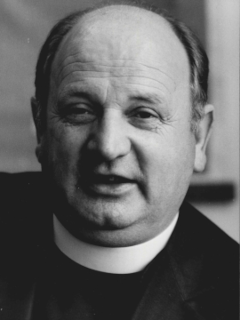
Eamonn Casey, Irish Catholicprelate who serves as bishop of Galway and Kilmacduagh from 1976 until his resignation 1992, returns to Ireland on February 5, 2006, following fourteen years in exile. He fled Ireland after he admitted to fathering his son, Peter.
Casey holds this position until 1976, when he is appointed Bishop of Galway and Kilmacduagh and apostolic administrator of Kilfenora. While in Galway, he is seen as a progressive. It is a significant change in a diocese that had been led for nearly forty years by the very conservative Michael Browne, bishop from 1937 to 1976. He is highly influential in the Irish Catholic hierarchy and a friend and colleague of another highly prominent Irish priest, Father Michael Cleary.
In 1992 it is reported that, despite the vow of chastity undertaken by Catholic clergy, Casey has a sexual relationship in the early 1970s with American woman Annie Murphy. When Murphy becomes pregnant, he is determined that the child should be given up for adoption in order to avoid any scandal for himself or the Catholic church. By contrast, Murphy is determined to accept responsibility for her child, and she returns to the United States with their son, Peter, who is born in 1974 in Dublin. He makes covert payments for the boy’s maintenance, fraudulently made from diocesan funds and channeled through intermediaries. In order to continue the cover up of his affair with Murphy and his fraudulent activities, he refuses to develop a relationship with his son, or acknowledge him. Murphy is very disappointed by this, and in the early 1990s contacts The Irish Times to tell the truth about Casey’s hypocrisy and deception. Having been exposed, he reluctantly admits that he had “sinned” and wronged the boy, his mother and “God, his church and the clergy and people of the dioceses of Galway and Kerry,” and his embezzlement of church funds. He is forced to resign as bishop and flees the country under a cloud of scandal. He is succeeded by his secretary, James McLoughlin, who serves in the post until his own retirement on July 3, 2005.
Murphy publishes a book, Forbidden Fruit, in 1993 revealing the truth of their relationship and the son she bore by Casey, exposing the institutional level of hypocrisy, moral corruption and misogyny within the Irish Catholic Church.
Casey is ordered by the Vatican to leave Ireland and become a missionary alongside members of the Missionary Society of St. James in a rural parish in Ecuador, whose language, Spanish, he does not speak. During this time, he travels long distances to reach the widely scattered members of his parish but does not travel to meet his own son. After his missionary position is completed, he takes a position in the parish of St. Pauls, Haywards Heath, West Sussex, England.
In 2005, Casey is investigated in conjunction with the sexual abuse scandal in Galway, Kilmacduagh and Kilfenora diocese, and cleared of any wrongdoing. In 2019, it emerges that he had faced at least three accusations of sexual abuse before his death, with two High Court cases being settled. The Kerry diocese confirms that it had received allegations against him, that Gardaí and health authorities had been informed and that the person concerned was offered support by the diocese.
Casey returns to Ireland on February 5, 2006, with his reputation in tatters, and is not permitted to say Mass in public.
In August 2011, Casey, in poor health, is admitted to a nursing home in County Clare. He dies on March 13, 2017, a month before his 90th birthday. He is interred in Galway cathedral’s crypt.
Casey is the subject of Martin Egan’s song “Casey,” sung by Christy Moore. He is also the subject of The Saw Doctors‘ song “Howya Julia.”