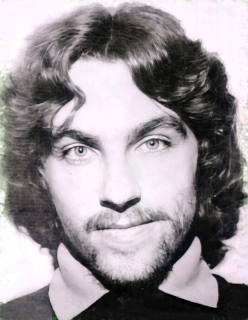
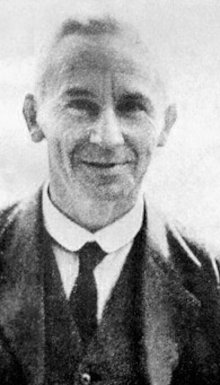
Born on December 18, 1895, Roe is the daughter of William Ernest Roe and Anne Lambert Sheilds of Mountrath, County Laois. Her grandfather is Francis Henry Sheilds of Parsonstown (now Birr, County Offaly), owner of the King’s County Chronicle. She is sent first to the local primary school and then to the Preston School in Abbeyleix. Although she attends Trinity College Dublin (TCD), she does not begin her career due to the outbreak of World War I. She joins the St. John’s Ambulance Brigade and serves at the Cambridge Military Hospital and at Aldershot Barracks. In the immediate aftermath, she continues her medical career with the Military Hospital in Bray, County Wicklow. She also spends time touring in Europe visiting museums and beginning her appreciation for medieval art. She is raised Protestant and has done her duty as part of the aristocracy by serving in the war. But the soldiers treat her as Irish and abuse her especially during the Easter Rising of 1916. The result is that she supports nationalism from that point forward. She goes back to TCD and completes her degree in modern languages in 1921. She finally completes her MA in 1924 and begins a teaching career. She spends time working in the Royal School, Dungannon, and Alexandra College, Milltown, Dublin.
In 1926, Roe’s parents need her, and she returns home. She then becomes the County Librarian in Laois. While working as a librarian she is able to study further and, as a rare person with a car, she tours sites and visits schools. One result of her presentations to schools is to inspire Ireland’s first female archaeologist, Ellen Prendergast. In 1940, she retires from the library and moves to Dublin where she is able to buy a house and garden. Apart from her antiquarian work, she is a regular supporter of charities and is honorary secretary of The Queen’s County Protestant Orphan’s Society and actively involved in The Dublin University Mission to Chota Nagpur, India.
Roe becomes a regular contributor to various journals and newspapers including Journal of the Royal Society of Antiquaries of Ireland, An Leabharlann, Béaloideas, Seanchas Ard Mhacha, Carloviana, the The Irish Press and the Leinster Express. From 1965 until 1968 she serves as the president of the Royal Society of Antiquaries of Ireland, the first woman to be elected to the position. She is elected to be a member of the Royal Irish Academy in 1984. She continues touring and lecturing into her nineties.
Roe lives at Santry, Dublin, and later at Oak House, Sussex Road, Dublin. She dies on May 28, 1988, at Grove Nursing Home, Killiney, County Dublin, and is buried beside her parents at St. Peter’s Churchyard, Mountrath, County Laois.
The Royal Society of Antiquaries of Ireland have an annual lecture in her honour and have named one of their lecture rooms after her.
Ernest Bernard (Ernie) O’Malley, Irish republican revolutionary and writer, is born on May 26, 1897, in Ellison Street, Castlebar, County Mayo, the second child among nine sons and two daughters of Luke Malley, solicitor’s clerk, of County Mayo, and Marion Malley (née Kearney) of County Roscommon. Christened Ernest Bernard Malley, his adoption of variations on this name reflects his enthusiasm for a distinctively Irish identity – an enthusiasm that lay at the heart of his republican career and outlook.
In 1906, O’Malley’s family moves to Dublin, where he attends the Christian Brothers‘ School, North Richmond Street. In 1915, he begins to study medicine at University College Dublin (UCD). Having initially intended to follow his older brother into the British Army, he rather joins the Irish Volunteers in the wake of the 1916 Easter Rising, as a member of F Company, 1st Battalion, Dublin Brigade. He becomes a leading figure in the Irish Republican Army (IRA) during the Irish War of Independence which the Easter Rising helps to occasion. In 1918, having twice failed his second-year university examination, he leaves home to commit himself to the republican cause. He is initially a Volunteer organiser with the rank of second lieutenant, under the instruction of Richard Mulcahy, operating in Counties Tyrone, Offaly, Roscommon, and Donegal. His work in 1918 involves the reorganisation, or new establishment, of Volunteer groups in the localities.
In August 1918, O’Malley is sent to London by Michael Collins to buy arms. During 1919 he works as an IRA staff captain attached to General Headquarters (GHQ) in Dublin, and also trains and organises Volunteers in Counties Clare, Tipperary, and Dublin. He has a notable military record with the IRA during the Irish War of Independence and is a leading figure in attacks on Hollyford barracks in County Tipperary (May 1920), Drangan barracks in County Kilkenny (June 1920), and Rearcross barracks in County Tipperary (July 1920). His IRA days thus involve him with comrades such as Dan Breen, Séumas Robinson, and Seán Treacy. In December 1920, he is captured in County Kilkenny by Crown forces. He escapes from Dublin’s Kilmainham Gaol in February 1921, to take command of the IRA’s 2nd Southern Division, holding the rank of commandant-general.
O’Malley’s republican commitment has political roots in his conviction that Ireland should properly be fully independent of Britain, and that violence is a necessary means to achieve this end. But the causes underlying his revolutionism are layered. Family expectations of respectable, professional employment combined with a religious background and an enthusiasm for soldiering provide some of the foundations for his IRA career. As an IRA officer he enjoys professional, military expression for a visceral CatholicIrish nationalism. He also finds excitement, liberation from the frequent dullness of his life at home, defiant rebellion against his non-republican parents, an alternative to his stalled undergraduate career, and, in political and cultural Irish separatism, a decisive resolution of the profound tension between his anglocentrism and his anglophobia.
O’Malley rejects the 1921 Anglo–Irish Treaty as an unacceptable compromise. He spends the 1921 truce period training IRA officers in his divisional area, in preparation for a possible renewal of fighting. He is, in the event, to be a leading anti-treatyite in the 1922–23 Irish Civil War. In the Four Courts in 1922, at the start of the latter conflict, he is captured on the republicans’ capitulation on June 30 but then manages to escape from captivity. Subsequently he is appointed assistant Chief of Staff of the anti-Treaty IRA and also becomes part of a five-man anti-Treaty army council, along with Liam Lynch, Liam Deasy, Frank Aiken and Thomas Derrig.
O’Malley is dramatically captured and badly wounded by Free State forces in Dublin in November 1922. Imprisoned until July 1924, he is during the period of his incarceration elected as a TD for Dublin North in the 1923 Irish general election and is also a forty-one-day participant in the republican hunger strike later that year. Following release from prison, he returns home to live with his parents in Dublin. He decides not to focus his post-revolutionary energy on a political career. During 1926–28 and 1935–37 he unsuccessfully tries to complete his medical degree at UCD, but increasingly his post-1924 efforts are directed toward life as a Bohemian traveler and writer. He spends much of 1924–26 on a recuperative journey through France, Spain, and Italy; and 1928–35 traveling widely in North America. During 1929–32 he spends time in New Mexico and Mexico City. In Taos, New Mexico, he mixes with, and is influenced by, writers and artists as he works on what are to become classic autobiographies of the Irish revolution: On Another Man’s Wound (1936) and The Singing Flame (1978).
O’Malley meets Helen Hooker, daughter of Elon and Blanche Hooker, in Connecticut in 1933. They marry in London in 1935, each rejecting something of their prior lives in the process: he, his Irish republicanism, through marriage to somebody entirely unconnected with that world; she, her wealthy and respectable upbringing, through liaison with a Catholic, Irish, unemployed, bohemian ex-revolutionary. They settle first in Dublin then, from 1938 onward, primarily in County Mayo. Burrishoole Lodge, near Newport, is his main base until 1954, when he moves to Dublin. Three children are born to the O’Malleys: Cahal (1936), Etáin (1940), and Cormac (1942). Sharing enthusiasm for the arts, he and Helen enjoy several years of intimacy. However, by the mid-1940s their relationship has frayed. In 1950, Helen kidnaps (the word is used by both parents and by all three children) the couple’s elder two children and takes them to the United States. From there she divorces O’Malley in 1952. Cormac remains with his father.
O’Malley’s post-American years are devoted to a number of projects. He writes extensively, including work for The Bell and Horizon. He is involved with the film director John Ford in the making of his Irish films, including The Quiet Man (1952). He gives radio broadcasts on Mexican painting for BBC Third Programme (1947), and on his IRA adventures for Radio Éireann (1953). In the latter year he suffers a heart attack, and his remaining years are scarred by ill health. He dies of heart failure on March 25, 1957, in Howth, County Dublin, at the house of his sister Kathleen. Two days later he is given a state funeral with full military honours. He is buried in the Malley family plot in Glasnevin Cemetery, Dublin.
O’Malley exemplifies some important themes in modern Irish political and intellectual history. His powerful memoirs form part of a tradition of writing absorbedly about Ireland, while under idiosyncratic emigrant influences which lend the writing much of its distinctiveness. His aggressive republicanism exemplifies a persistent but ultimately unrealisable tradition of uncompromising IRA politics. His unflinching single-mindedness is the condition for much courageous and striking activity, but also lay behind his infliction and his suffering of much pain. Literary, intellectual, and defiantly dissident, he is the classic bohemian revolutionary. His historical significance lies in his having been both a leading Irish revolutionary and the author of compelling autobiographical accounts of those years. His memoirs are distinguished from their rivals on the shelf by subtlety, self-consciousness, and literary ambition. In particular, his preparedness to identify motives for Irish revolutionary action, beyond the terms of ostensible republican purpose, renders his writing of great value to historians. Similarly, the large body of archival material left in his name (especially, perhaps, the papers held in UCD archives, and those in the private possession of his children) leaves scholars in his debt. The most striking and evocative visual images of O’Malley are, arguably, the set of photographic portraits taken in 1929 by Edward Weston and held at the University of Arizona‘s Center for Creative Photography (CCP). These capture with precision his reflective concentration, his piercing earnestness, and his troubled intensity.
(From: “O’Malley, Ernest Bernard (‘Ernie’)” by Richard English, Dictionary of Irish Biography, http://www.dib.ie, October 2009 | Pictured: Photograph of Ernie O’Malley taken by Helen Hooker, New York City, 1934)
On Friday, May 17, 1918, the British government orders the arrest and imprisonment of all leading members of Sinn Féin, claiming they were involved in a plan to import arms from Germany. The British cover for these arrests is a bogus “German Plot,” which has since been thoroughly discredited.
The “German Plot” is a spurious conspiracy that the Dublin Castle administration in Ireland claims to exist between the Sinn Féin movement and the German Empire in May 1918. Allegedly, the two factions conspire to start an armed insurrection in Ireland during World War I, which would divert the British war effort. The administration uses these claims to justify the internment of Sinn Féin leaders, who are actively opposing attempts to introduce conscription in Ireland and more Irishmen being used as cannon fodder in service to their oppressors.
Historian Paul McMahon characterises the “Plot” as “a striking illustration of the apparent manipulation of intelligence in order to prod the Irish authorities into more forceful action.” Republicans are tipped off about the impending arrests, allowing some to escape capture while others choose to be taken in order to secure a propaganda victory. The internment is counterproductive for the British, imprisoning the more accommodating Sinn Féin leadership while failing to capture members of the Irish Republican Brotherhood who are more committed to physical force republicanism.
The British live to regret one man who slips through their fingers that spring. Michael Collins uses the months he might have spent in an English prison assembling and consolidating his control of an intelligence organisation and putting it on a more focused military footing that soon makes the Empire squeal.
Even at the time, the proposition that the Sinn Féin leadership are directly planning with the German authorities to open another military front in Ireland is largely seen as spurious. Irish nationalists generally view the “German Plot” not as an intelligence failure but as a black propaganda project to discredit the Sinn Féin movement, particularly to an uninformed public in the United States. McMahon comments that this belief is mistaken, and that the authorities acted honestly but on the basis of faulty intelligence. It is still a matter of study and conjecture what impact it had on U.S. foreign policy regarding the 1919 bid for international recognition of the Irish Republic.
Hughes is born in Bellaghy, County Londonderry, Northern Ireland, on February 28, 1956, into a republican family, the youngest of four brothers in a family of ten siblings. His father, Joseph, had been a member of the Irish Republican Army in the 1920s and one of his uncles had smuggled arms for the republican movement. This results in the Hughes family being targeted when internment is introduced in 1971, and his brother Oliver is interned for eight months without trial in Operation Demetrius. He leaves school at the age of 16 and starts work as an apprentice painter and decorator.
Hughes is returning from an evening out in Ardboe, County Tyrone, when he is stopped at an Ulster Defence Regiment (UDR) checkpoint. When the soldiers realise he comes from a republican family, he is badly beaten. His father encourages him to see a doctor and report the incident to the police, but he refuses, saying he “would get his own back on the people who did it, and their friends.”
Hughes initially joins the Official Irish Republican Army but leaves after the organisation declares a ceasefire in May 1972. He then joins up with Dominic McGlinchey, his cousin Thomas McElwee and Ian Milne, before the three decide to join the Provisional Irish Republican Army in 1973. He, Milne and McGlinchey take part in scores of IRA operations, including daylight attacks on Royal Ulster Constabulary (RUC) stations, bombings, and attacks on off-duty members of the RUC and UDR. Another IRA member describes the activities of Hughes:
“He led a life perpetually on the move, often moving on foot up to 20 miles for one night then sleeping during the day, either in fields and ditches or safe houses; a soldierly sight in his black beret and combat uniform and openly carrying a rifle, a handgun and several grenades as well as food rations.”
On April 18, 1977, Hughes, McGlinchey and Milne are travelling in a car near the town of Moneymore when an RUC patrol car carrying four officers signals them to stop. The IRA members attempt to escape by performing a U-turn but lose control of the car which ends up in a ditch. They abandon the car and open fire on the RUC patrol car, killing two officers and wounding another, before running off through the fields. A second RUC patrol comes under fire while attempting to prevent the men from fleeing, and despite a search operation by the RUC and British Army the IRA members escape. Following the Moneymore shootings, the RUC name Hughes as the most wanted man in Northern Ireland, and issue wanted posters with pictures of Hughes, Milne and McGlinchey. Milne is arrested in Lurgan, County Armagh, in August 1977, and McGlinchey later in the year in the Republic of Ireland.
Hughes is arrested on March 17, 1978, at Lisnamuck, near Maghera in County Londonderry, after an exchange of gunfire with the British Army the night before. British soldiers manning a covert observation post spot Hughes and another IRA volunteer approaching them wearing combat clothing with “Ireland” sewn on their jackets. Thinking they might be from the Ulster Defence Regiment, one of the soldiers stands up and calls to them. The IRA volunteers open fire on the British troops, who return fire. A soldier of the Special Air Service (SAS), Lance Corporal David Jones, is killed and another soldier wounded. Hughes is also wounded and is arrested nearby the next morning.
In February 1980, Hughes is sentenced to a total of 83 years in prison. He is tried for, and found guilty of, the murder of one British Army soldier (for which he receives a life sentence) and wounding of another (for which he receives 14 years) in the incident which leads to his arrest, as well as a series of gun and bomb attacks over a six-year period. Security sources describe him as “an absolute fanatic” and “a ruthless killer.” Fellow republicans describe him as “fearless and active.”
Hughes is involved in the mass hunger strike in 1980 and is the second prisoner to join the 1981 Irish Hunger Strike in the H-Blocks at the Long Kesh Detention Centre. His hunger strike begins on March 15, 1981, two weeks after Bobby Sands began his hunger strike. He is also the second striker to die, at 5:43 p.m. BST on May 12, after 59 days without food, refusing requests from the IRA leadership outside the prison to end the strike after the death of Sands. The journey of his body from the prison to the well-attended funeral near Bellaghy is marked by rioting as the hearse passes through loyalist areas. His death leads to an upsurge in rioting in nationalist areas of Northern Ireland.
Hughes’s cousin Thomas McElwee is the ninth hunger striker to die. Oliver Hughes, one of his brothers, is elected twice to Magherafelt District Council.
Gerard “Jock” Davison, a former commander of the Provisional Irish Republican Army (IRA) in Belfast and later a supporter of Sinn Féin’s peace strategy, is shot dead in the city shortly after 9:00 a.m. on May 5, 2015, in the Markets area of south Belfast at the junction of Welsh Street and Upper Stanfield.
One of the first operations Davison is involved in is the shooting of Irish People’s Liberation Organisation (IPLO) Belfast Brigade commander Sammy Ward on October 31, 1992, during the Night of the Long Knives in Belfast.
Davison, the former IRA man, who more recently is a community worker in the working-class Markets area of Belfast, is questioned about the murder of 33-year-old Robert McCartney in January 2005. He is released without charge. He always denies ordering the murder of the father of two following an argument outside Magennis’s Bar in the city centre.
On May 5, 2015, around 9:00 a.m., Davison is shot numerous times at Welsh Street in the Markets area of south Belfast. While police do not identify who killed him, Kevin McGuigan, a former subordinate of Davison’s, is named as the chief suspect after he is also shot dead, reportedly by members of the Provisional IRA, on August 12, 2015.
On the evening of the killing, The Guardian’s Henry McDonald reports: “Davison is the most senior pro-peace processrepublican to have been killed since the IRA ceasefire of 1997. Security sources said it was highly unlikely that any Ulster loyalist group was behind the murders, adding that the killers may instead have come from within the nationalist community, possibly from people who had a longstanding grudge against the victim.”
Alasdair McDonnell, the Belfast SouthSocial Democratic and Labour Party (SDLP) Westminster candidate, condemns the shooting, saying, “This is a horrendous crime and those responsible have shown no regard for anyone that could have been caught in the middle of it during the school rush hour. My thoughts and prayers are with the individual’s family at this traumatic time.” He adds, “People here want to move on from the violence of the past. This community will reject those who bring murder and mayhem to our streets. I would appeal to anyone with any information to bring it forward as soon as possible.”
Sinn Féin president Gerry Adams says, “People will be appalled by this morning’s murder in the Markets area of south Belfast. This brutal act will be condemned by all sensible people. There can be no place today for such actions. I would urge anyone with any information to bring that forward to the PSNI (Police Service of Northern Ireland).”
Following his arrest in Fuengirola in August 2021, it is revealed Gerry ‘The Monk’ Hutch is to be questioned in relation to a weapon used in Davison’s murder.
In April 1916, Germany offers the Irish 20,000 Mosin–Nagant 1891 rifles, ten machine guns and accompanying ammunition, but no German officers. It is a fraction of the quantity of the arms Casement had hoped for, with no military expertise on offer. The weapons leave Germany bound for Ireland on a German cargo vessel named the SS Libau, disguised as a Norwegian vessel, Aud-Norge.
Casement confides his personal papers to Dr. Charles Curry, with whom he has stayed at Riederau on the Ammersee, before leaving Germany. He departs with Robert Monteith and Sergeant Daniel Beverley (Bailey) of the Irish Brigade in a submarine, initially the SM U-20, which develops engine trouble, and then the SM U-19, shortly after the Aud sails. According to Monteith, Casement believes the Germans are toying with him from the start and providing inadequate aid that will doom a rising to failure. He wants to reach Ireland before the shipment of arms and to convince Eoin MacNeill, who he believes is still in control, to cancel the rising.
Casement sends John McGoey, a recently arrived Irish American, through Denmark to Dublin, ostensibly to advise what military aid is coming from Germany and when, but with Casement’s orders “to get the Heads in Ireland to call off the rising and merely try to land the arms and distribute them.” McGoey does not reach Dublin, nor does his message. His fate is unknown until recently. Evidently abandoning the Irish Nationalist cause, he joins the Royal Navy in 1916, survives the war, and later returns to the United States, where he dies in an accident on a building site in 1925.
About 2:00 a.m. on the morning of April 21, 1916, three days before the rising begins, Robert Monteith, Daniel Bailey (calling himself Beverly), and Casement climb into a small boat for the trip to shore at Banna Strand in Tralee Bay, County Kerry. Their boat, now in the Imperial War Museum in London, capsizes before they reach shore.
Monteith helps an exhausted Casement to safety on shore. Casement is convinced that the Rising cannot be successful without a large number of German troops, and the best he has been able to obtain is one boatload of arms. Suffering from a recurrence of the malaria that had plagued him since his days in the Congo, and too weak to travel, Monteith and Bailey leave Casement at the ruins of McKenna’s Fort, an ancient ring fort in Rahoneen, Ardfert, now renamed Casement’s Fort, and head for Tralee.
About 1:30 p.m., Casement is discovered by two Royal Irish Constabulary (RIC) officers. He nearly talks his way out of being arrested, but a 12-year-old boy at the scene points out a piece of paper Casement had tossed away as the police approach. On that paper is a German code list. He is arrested on charges of high treason, sabotage and espionage against the Crown. He manages to send word to Dublin about the inadequate German assistance.
The Kerry Brigade of the Irish Volunteers might have tried to rescue Casement over the next three days, but its leadership in Dublin holds that not a shot is to be fired in Ireland before the Easter Rising is in train and therefore orders the Brigade to “do nothing.” A subsequent internal inquiry attaches “no blame whatsoever” to the local Volunteers for failing to attempt a rescue. Casement is taken to Brixton Prison and placed under special observation for fear of an attempt of suicide as there is no staff at the Tower of London to guard suicidal cases.
On the day of his execution by hanging at Pentonville Prison, August 3, 1916, Casement is received into the Catholic Church at his request. He is attended by two Catholic priests, Dean Timothy Ring and Father James Carey, from the East London parish of SS Mary and Michael. The latter, also known as James McCarroll, says of Casement that he was “a saint … we should be praying to him [Casement] instead of for him.” At the time of his death he is 51 years old.
Casement’s body is buried in quicklime in the prison cemetery at the rear of Pentonville Prison, though his last wish was to be buried at Murlough Bay on the north coast of County Antrim, in present-day Northern Ireland. Finally, in 1965, his remains are repatriated to Ireland. His remains lay in state at the Garrison Church, Arbour Hill (now Arbour Hill Prison) in Dublin for five days, close to the graves of other leaders of the 1916 Easter Rising, although he would not be buried beside them. After a state funeral, the remains are buried with full military honours in the republican plot in Glasnevin Cemetery in Dublin, alongside other Irish republicans and nationalists. The President of Ireland, Éamon de Valera, who is then in his mid-eighties and the last surviving leader of the Easter Rising, attends the ceremony, along with an estimated 30,000 others.
Boland is born on September 16, 1870, at 135 Capel Street, Dublin, to Patrick Boland, businessman, and Mary Donnelly. Following the death of his mother in 1882, he is placed with his six siblings under the guardianship of his uncle, Nicholas Donnelly, auxiliary bishop of Dublin.
Boland is educated at two private Catholic schools, the Catholic University School, Dublin, and Birmingham Oratory in Birmingham, England, where he becomes head boy. His secondary education at the two schools help give him the foundation and understanding to play an influential role in the politics of Great Britain and Ireland at the beginning of the 20th century, when he is a member of the Irish Parliamentary Party, which pursues constitutional Home Rule.
In 1892, Boland graduates with a BA from London University. He studies for a semester in Bonn, Germany, where he is a member of Bavaria Bonn, a student fraternity that is member of the Cartellverband. He studies law at Christ Church, Oxford, graduating with a BA in 1896 and MA in 1901. Although called to the Bar in 1897, he never practises.
Boland is the first Olympic champion in tennis for Great Britain and Ireland at the first modern Olympics, which take place in Athens in 1896. He visits his friend Thrasyvoulos Manos in Athens during the Olympics, and Manos, a member of the organising committee, enters Boland in the tennis tournament. He promptly wins the singles tournament, defeating Friedrich Traun of Germany in the first round, Evangelos Rallis of Greece in the second, Konstantinos Paspatis of Greece in the semifinals, and Dionysios Kasdaglis of Greece in the final.
Boland then enters the doubles event with Traun, the German runner whom he had defeated in the first round of the singles. Together, they win the doubles event. They defeat Aristidis and Konstantinos Akratopoulos of Greece in the first round, have a bye in the semifinals, and defeat Demetrios Petrokokkinos of Greece and Dimitrios Kasdaglis in the final. When the Union Jack and the German flag are run up the flagpole to honour Boland and Traun’s victory, Boland points out to the man hoisting the flags that he is Irish, adding “It [the Irish flag]’s a gold harp on a green ground, we hope.” The officials agreed to have an Irish flag prepared.
Following a visit to County Kerry, Boland becomes concerned about the lack of literacy among the native population. He also has a keen interest in the Irish Language.
Boland’s patriotic stand is well received in nationalist circles in Ireland. This and a lifelong friendship with John Redmond gain for him an invitation to stand as a candidate for the Irish Parliamentary Party in the safe seat of South Kerry, which he holds from 1900 to 1918. He is unopposed in the general elections of 1900 and 1906, and the first of 1910. In the second election of 1910 he is challenged by a local man, T. B. Cronin, who stands as an independent nationalist in the interest of William O’Brien. Boland stands down at the 1918 United Kingdom general election.
In 1908, Boland is appointed a member of the commission for the foundation of the National University of Ireland (NUI). From 1926 to 1947, he is General Secretary of the Catholic Truth Society. He receives a papal knighthood, becoming a Knight of St. Gregory in recognition for his work in education. In 1950, he is awarded an honorary Doctor of Law by the NUI.
Boland marries Eileen Moloney at SS Peter and Edward, Palace Street, Westminster, on October 22, 1902, the daughter of an Australian Dr. Patrick Moloney. They have one son and five daughters. His daughter Honor Crowley succeeds her husband Frederick Crowley upon his death sitting as Fianna FáilTD for South Kerry from 1945 until her death in 1966. His daughter Bridget Boland is a playwright who notably writes The Prisoner and co-writes the script for Gaslight, and, among other books, co-authors Old Wives’ Lore for Gardeners with her sister, Maureen Boland.
McKenna is born Kathleen Maria Kenna on September 9, 1897, in Oldcastle, County Meath. Her parents are William, a draper and hardware merchant, and Mary Kenna (née Hanley). She is the eldest child of seven, with three sisters and three brothers. She and her siblings add “Mc” to their surname as teenagers. Her maternal grandfather, a Fenian, miller and land agitator, is a strong influence on her. Agnes O’Farrelly is her paternal great aunt. She attends the Oldcastle Endowed School and goes on to pass the National University of Ireland (NUI) matriculation examination. She attends University College Dublin (UCD) briefly, but the family’s circumstances prevent her from completing her course.
McKenna’s father had been an active member of the Irish National Land League and the Meath Labour Union. He is one of the organisers of a short-lived local newspaper, Sinn Féin – Oldcastle Monthly Review, in 1902. Both her parents are members of Conradh na Gaielge. Arthur Griffith and Brian O’Higgins frequently visit the family home. Denounced by the local parish priest, Fr. Robert Barry, her father’s business goes into decline. The family leaves Oldcastle and moves to Dundalk in August 1915, and to Rugby, Warwickshire, England, in March 1916. In Rugby, her father teaches typing and shorthand, and her mother works in an ammunition factory. She works as a secretary for an engineering firm. Members of the family return to Ireland from 1919 to 1922, and by the time of her father’s death in 1939, he is living back in Oldcastle.
McKenna spends some holidays in Ireland and, during a visit to Dublin in the summer of 1919, she presents herself to the Sinn Féin offices in Harcourt Street. She has a letter of introduction from her father to Griffith, which emphasises her willingness to work for Irish independence. For her holidays, she works in the Sinn Féin press bureau and is employed as one of the first “Dáil girls” of the clandestine government. She is informed that if a planned news bulletin comes through, she will be summoned back to Dublin. In October 1919, she receives that summons and, after a typing test on November 11, she joins the Irish Bulletin under Minister for Publicity, Desmond FitzGerald, and director of publicity, Robert Brennan. She also becomes a member of the Conradh na Gaielge Parnell branch.
The Irish Bulletin is published five times a week, circulating the misdeeds of the British government in Ireland. McKenna edits and mimeographs a summary of “acts of aggression” from British forces in Ireland weekly, compiled by Anna Kelly. Frank Gallagher does most of the writing, edited by FitzGerald, and later Erskine Childers. Though she is sometimes described as the Bulletin‘s editor, she is more akin to an editorial assistant. R. M. Smyllie later recalls that she was in regular contact with the media. She types out each issue on a wax stencil in a typewriter which is used to create mimeograph copies, and then circulated to England. In the beginning, about 30 recipients, mostly London journalists, receive the Bulletin but by October 1920 it has grown to 600, and by July 1921 over 1,200. She also keeps the accounts, takes dictation of statements, and at times works up articles from notes given to her by Griffith or others. She also acts as a confidential messenger, couriering between Dáil departments and Irish Republican Army (IRA) leaders such as Michael Collins. Through this, she meets Moya Llewelyn Davies.
The Bulletin becomes a symbol of the underground government and a target for British forces. This necessitates the frequent moving of the operation from one Dublin hideout to another. She fears that if she were captured, she would break under interrogation. When FitzGerald is arrested, he is asked about “the girl wearing a green tam” in reference to McKenna’s tam-o’-shanter hat which prompts her to change her choice of hat. Despite the capture of a number of the Bulletin staff, as well as the capture of the office files and equipment on March 26, 1921, it never misses an issue.
McKenna’s sister Winifred also works as a secretary to the clandestine government. Her brother, Tadhg (Timothy), is a member of Sinn Féin and in Greenore, County Louth, is involved in trade union affairs. He is detained, beaten, and interned in March 1921. He is later an activist with the Irish Labour Party. Her brother William is a messenger for the Irish government during this period and during the Irish Civil War serves in the Free State Army.
After the truce in 1921, McKenna is assigned to the Dáil cabinet secretarial staff at the Mansion House, where she continues to work in the publicity department. She travels as Griffith’s private secretary to London as part of the Irish delegation to the treaty negotiations in October 1921. She is an admirer of both Griffith and Collins and is a firm supporter of the Anglo-Irish Treaty. She works as Griffith’s secretary until just before his death and also does some secretarial work for Collins during the negotiations. One of her sisters is anti-Treaty, and she later recalls that she lost friends due to her support of the treaty.
McKenna marries Vittorio Napoli in 1931. He is a captain, and later a general, in the Italian royal grenadier guards. They meet when she is on holiday in Italy in 1927. For the first five years of their marriage, they live in the port of Derna in Cyrenaica, Libya, while her husband is stationed there. A son and daughter are born there. From September 1939 to June 1940, the family lives in Albania, but after Italy enters World War II, she and the children move to Viterbo. Her husband is taken prisoner in Greece in September 1943, and is detained in Germany and Poland. He returns to Italy in September 1945. Viterbo had been heavily bombed, and after Allied troops arrive, McKenna works as a translator and gives English language lessons to support her family. Her husband remains in the army, and they remain in Viterbo until 1956, later moving to Rome.
After the war, McKenna writes articles for the Irish Independent and other publications from Ireland, the United States and New Zealand, including The Irish Press, Irish Travel, Standard, Word, and Writer’s Digest. Sometimes she writes under her own name, as well as her pen name Kayn or Kayen MacKay. As the wives of Italian officers do not traditionally work, the money she earns from this is kept for travel and other leisure activities. This money allows her to visit her family in Ireland in 1947 for the first time since 1932. After their retirement, she and her husband visit Ireland regularly, and travel around Italy.
McKenna applies for an Irish military pension in 1950/51 and 1970, receiving references in support of her claim from Gallagher. As she had not served in a military organisation, her claims are rejected. As an Irish War of Independence veteran, she is awarded free travel in 1972, which is later extended to her husband. In her later years, she becomes concerned about the inaccuracies in the history around the Irish War of Independence and the Irish Civil War. She gives two talks to Radio Éireann in 1951, speaking about her time with the Irish Bulletin. Copies of these recordings are now held by the Bureau of Military History. During her lifetime, extracts of her memoir are published in the Capuchin Annual and The Irish Times. She drafted and redrafted these memoirs from the late 1940s to the early 1980s. A version edited by her daughter and niece is published in 2014 as A Dáil girl’s revolutionary recollections.
McKenna dies on March 22, 1988, in Rome. She is buried with an Irish flag which she had kept with her. A large collection of her papers is held in the National Library of Ireland (NLI). In 2010, 2011 and 2016, some of her memorabilia is sold in Dublin.
O’Hegarty comes from a family with strong nationalist roots. His parents are John, a plasterer and stucco worker, and Katherine (née Hallahan) Hegarty. His elder brother is Patrick Sarsfield O’Hegarty, the writer. His parents’ families emigrated to the United States after the Great Famine, and his parents married in Boston. His father is a member of the Irish Republican Brotherhood (IRB). In 1888, his father dies of tuberculosis at the age of 42, and his mother has to work to support the family.
O’Hegarty is educated at the Christian BrothersNorth Monastery school in Cork. By 1902, he has left school to work as a sorter in the local post office, rising to post office clerk. He is a supporter of the Gaelic revival, Irish traditional music, and Gaelic games. A committed sportsman, in his twenties he is captain of the Post Office HQ’s hurling team. He follows his brother Patrick into Conradh na Gaeilge and eventually the Irish Volunteers and the Irish Republican Brotherhood. He is a member of the Celtic Literary Society by 1905 and founds the Growney branch of Conradh na Gaeilge in 1907. A puritanical character by nature, he is a non-smoker and never drinks.
O’Hegarty is a founder of the local branch of the Irish Volunteers in Cork in December 1913. In June of the following year, he is appointed to the Cork section of the Volunteer Executive, and then to the Military Council. In October, the Dublin government discovers his illegal activities, and he is dismissed. Excluded from Cork under the Defence of the Realm Act (DORA) regulations, he moves to Ballingeary, where he works as a labourer. From there he moves to Enniscorthy, County Wexford, where he lives with Larry de Lacy. On February 24, 1915, he is arrested and tried under the Defence of the Realm Act for putting up seditious posters. But for this and a second charge of “possession of explosives” he is discharged. The explosives belonged to de Lacy.
The Volunteers appoint O’Hegarty as Commandant of Ballingeary and Bandon. During the Easter Rising, he is stationed in Ballingeary when visited by Michael McCarthy of Dunmanway to propose an attack on a Royal Irish Constabulary (RIC) post at Macroom. But their strength is fatally weakened and, having no reserves, they call off the attempt. In 1917, he becomes Vice-commandant of No.1 Cork Brigade. He works as a storekeeper at the workhouse but is intimidating, and clashes with the Poor Law Guardians.
During the Irish War of Independence, O’Hegarty is one of the most active in County Cork. Like others, he is exasperated with Tomás Mac Curtain’s inactivity and refusal to be more bellicose. One such is battalion commander Richard Langford, who joins with O’Hegarty’s unit to make an unauthorized raid on the RIC post at Macroom. Langford is court-martialed, but O’Hegarty continues to rise in the ranks. When a RIC Inspector is murdered, Mac Curtain condemns the shootings and calls for their end. On March 19, 1920, Mac Curtain is shot and killed in his home in Cork. The coroner blames the British establishment in Dublin, but the police never make any attempt to investigate the killings. Shortly after these events General Hugh Tudor begins the policy of official reprisals.
In January 1920, an inquiry is held into corruption alleged against “Hegarty’s Mob” or “Hegarty’s Crowd” running Cork City. O’Hegarty blames the former mayors for the charges of incompetence but remains on good terms with them.
In a raid on Cork City Hall on August 12, 1920, the British manage to net all the top brass of the IRA in Cork. In an incredible failure of intelligence, they do not identify the leadership as their prisoners. They are all released, including Liam Lynch, and O’Hegarty. Only Terence MacSwiney, the new Lord Mayor of Cork, is kept in custody and sent to England.
On February 25, 1921, the Coolavokig ambush is carried out by the 1st Cork Brigade under O’Hegarty at Ballyvourney village, on the road between Macroom and Ballyvourney. The IRA suffers no casualties; however, the number of British casualties has been disputed to this day.
The brigade commanders in the southern division retain a residual lingering resentment of Dublin GHQ’s lack of leadership and supplies. Seán Moylan, commandant of No. 2 Cork Brigade, thinks good communications with No.1 Brigade are to be vital, but little of this is seen via the organizer, Ernie O’Malley, at GHQ. At a meeting set up for April 26, 1921, when the manual of Infantry Training 1914 is produced, the document raises great anger. The meeting ends in uproar when O’Hegarty, who is “a master of invective, tore the communication and its authors to ribbons.”
O’Malley and Liam Lynch, the general, meet with O’Hegarty in the mountains of West Cork, near a deserted farmhouse, just off the main road. In the retreat that follows, the Irish take heavy casualties and leave their wounded to the good care of the British. These are the “Round-ups” in which the Irish sleep outside in order to avoid being at home when the Army calls. They are told by the Brigade to learn the national anthem of England to avoid arrest.
In East Cork brigade, O’Hegarty uncovers a spy ring. He is ruthless in the treatment of Georgina Lindsay and her chauffeur, who give away information to the Catholic clergy, but is remarkably lenient on brigade traitors within. He is allegedly not too bothered about evidence but is reminded that all executions of a traitor have to be approved by Dublin first.
O’Hegarty becomes more and more aggressive toward the establishment, using tough language to impose his will over the area. He attempts to force the civilian Teachtai Dála (TDs) for Cork to stand down, to give way to military candidates, telling the Dáil in December 1921, that any TD voting for the treaty will be guilty of treason. But Éamon de Valera is decided and overrules any interference with the Civil Government. Like the commanders, de Valera rejects the treaty but has already been defeated in the Dáil on a vote by W. T. Cosgrave‘s majority.
On February 1, 1922, O’Hegarty marries Maghdalen Ni Laoghaire, a prominent member of Cumann na mBan.
O’Hegarty is on the IRA’s Executive Council, but when there is a meeting on April 9, 1922, it is proposed that the Army should oppose the elections by force. As a result, Florence O’Donoghue and Tom Hales join him in resigning. In May, he and Dan Breen enter into negotiations with Free Stater Richard Mulcahy. A statement is published in the press asking for unity and acceptance of the Treaty. During this time, the republicans become very demoralized and ill-disciplined, but they have to gain strength before announcing independence from Dublin. The debate amongst the anti-Treaty IRA command is increasingly rancorous.
The bitter divisions split the anti-treatyites into two camps. Two motions are debated at the Army Convention on June 18, 1922. At first, the motion to oppose the treaty by force is passed. These men include Tom Barry, Liam Mellows, and Rory O’Connor, who are all in favour of continuing the fight until the British are driven out of Ireland altogether. However, one brigade’s votes have to be recounted, and then the motion is narrowly defeated. Joe McKelvey is appointed the new chief of staff, but the IRA is in chaos. While he strongly opposes the Anglo-Irish Treaty, O’Hegarty takes a neutral role in the Irish Civil War and tries to avert hostilities breaking out into full-scale civil war. He emerges as a leader of the “Neutral IRA” with O’Donoghue. This is a “loose” confederation of 20,000 men who have taken part in the pre-truce wars but have remained neutral during the Civil War from January 1923. Over 150 persons attend its convention in Dublin on February 4, 1923. By April 1923, O’Malley is imprisoned in Mountjoy Prison. In a letter to Seamus O’Donovan on April 7, he blames Hegarty for all this compromise and “peace talk.”
It has been alleged by the author Gerard Murphy that O’Hegarty had a role in the assassination of the Commander-in-Chief, Michael Collins, in August 1922, along with Florrie O’Donoghue and Joe O’Connor. It is alleged that as members of the 1st Southern Division Cork, they are actually feigning claims of neutrality but remain part of the IRB in order to set up talks towards peace and the cessation of hostilities at the start of the Irish Civil War.
Although probably an atheist during the Irish War of Independence, O’Hegarty returns to the Catholic church later in life. On forming the Neutral Group of the IRA in December 1922, he tries to unify differences in the volunteers between Republicans and the Free Staters. He communicates with the Papal Nuncio during the inter-war years in an attempt to have Bishop of CorkDaniel Cohalan‘s excommunication bill lifted. Instead, he turns to commemoration as a way to earn favour in Rome, with the dedication of a Catholic church at St. Finbarr’s Cemetery. After his wife’s passing, he becomes a close friend with Florence O’Donoghue until his own death.
Eoin MacNeill is the first editor of the newspaper, overseeing its publication from 1899 to 1901. In 1900, Conradh na Gaeilge takes control of the weekly bilingual paper Fáinne an Lae, when its editor goes bankrupt. Fáinne an Lae is merged with An Claidheamh Soluis under the title An Claidheamh Soluis agus Fáinne an Lae.
From 1903 to 1909 the paper is edited by Patrick Pearse, the teacher and barrister who later becomes a key figure in the Easter Rising in 1916. Under his editorship, the paper plays a prominent role in the Irish Literary Revival, publishing original literary works in both Irish and English and devoting considerable space to commentary on cultural matters. From 1909 to 1916 the editor is Seán Mac Giollarnáth.
The paper continued under the names Fáinne an Lae (1918–19, 1922–30) and Misneach (1919–22), reverting briefly to An Claidheamh Soluis in 1930–31. It ceases publication in 1931.