seamus dubhghaill

Promoting Irish Culture and History from Little Rock, Arkansas, USA


Leave a comment

Death of Madeleine ffrench-Mullen, Revolutionary & Labour Activist

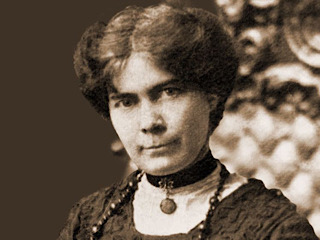
Madeleine ffrench-Mullen, Irish revolutionary and labour activist who takes part in the Easter Rising in Dublin in 1916, dies in Dublin on May 26, 1944.

Ffrench-Mullen is born on December 30, 1880, in Malta, where her father, St. Lawrence ffrench-Mullen, a Royal Navy surgeon, is stationed. She has two brothers, St. Lawrence Patrick Joseph (1890–1891) and Douglas (1893–1943).

Ffrench-Mullen’s interest in politics starts young. Her father is a committed Parnellite and their Dundrum home is a campaign headquarters. She is a radical feminist and republican during her life. Like many others of the time, she regards it as a woman’s right to vote. She joins the suffrage movement, and meets women with a similar worldview and values. The women’s suffrage movement is included in the Movements of Extremists reports of the Dublin Metropolitan Police. Ffrench-Mullen goes on to join Inghinidhe na hÉireann, a radical nationalist women’s group founded by Maud Gonne in 1900. The organisation develops into Cumann na mBan in 1913. Suffragist values are central to Cumann na mBan’s goal of standing side-by-side with men in the fight for the Irish Republic. Some members see this as women regaining the rights that had belonged to them in pre-invasion Gaelic civilisation. She is on the socialist wing of the moment, holding to the ideals of universal social equality of the syndicalist James Connolly and the Irish Citizen Army (ICA).

During the 1916 Easter Rising, ffrench-Mullen serves as a lieutenant in the Irish Citizen Army. She sees action with the St. Stephen’s Green and Royal College of Surgeons garrison. In St. Stephen’s Green she is in command of the 15 Citizen Army women who set up a medical station and field kitchen. While occupying St. Stephen’s Green, she and her comrades come under sustained heavy fire from the Shelbourne Hotel and buildings on the north side of the Green. After the surrender of the College of Surgeons garrison, ffrench-Mullen is one of the 77 women who had fought in the Rising who are imprisoned, among them her life partner Kathleen Lynn. While in captivity ffrench Mullen is moved three times, spending time in Richmond BarracksKilmainham Gaol and Mountjoy Prison. She is released on June 5, 1916.

Ffrench-Mullen meets Kathleen Lynn through Inghinidhe na h-Éireann. In 1915, she moves into Lynn’s home in Belgrave Road, Rathmines, where they live together for thirty years, until ffrench-Mullen’s death in 1944.

Ffrench-Mullen records in her prison diary in 1916 that she can face prison without fear once Lynn (whom she refers to as “the Doctor”) and she are together. Katherine Lynch of the Women’s Studies Centre at University College Dublin (UCD) describes them as partners, calling them part of a network of lesbians living in Dublin—which includes Helena MolonyLouie Bennett and Elizabeth O’Farrell—who meet through the suffrage movement and later become involved with the national and trade union movement. These women are featured, along with Eva Gore-Booth and others, in a 2023 TG4 documentary about “the radical queer women at the very heart of the Irish Revolution”: Croíthe Radacacha (Radical Hearts).

In 1919, Madeleine ffrench-Mullen and Kathleen Lynn establish Saint Ultan’s Children’s Hospital, also known as Teach Ultan, which is a female-run hospital for infants at 37 Charlemont Street, Dublin. The hospital focuses on children’s health and wellbeing, an area that is perceived at the time as women’s concern. In the aftermath of World War I many health problems have arisen including a rise in venereal diseases such as syphilis, carried from soldiers returning home from war. Many of Ireland’s infants of the time suffer from congenital syphilis (inherited disease from mother at birth), and this is a driving factor in the opening of St Ultan’s hospital. Tuberculosis is endemic in Ireland during its time as a British colony. Against steadfast opposition by the State and the Catholic Church, Lynn and ffrench-Mullen establish a vaccination project, vaccinating thousands of impoverished children who would have died of tuberculosis without their vaccines. Their success leads to the foundation of Ireland’s BCG vaccine programme, which has vaccinated all babies since the 1950s.

Ffrench-Mullen dies at the age of 63 in a Dublin nursing home on May 26, 1944. She is interred with her parents as well as her younger brothers (whom she outlives) in the ffrench-Mullen family plot in Glasnevin Cemetery. Her funeral takes place on the same day as the 1944 Irish general election.


Leave a comment

The 1992 Coalisland Riots

The 1992 Coalisland riots are a series of clashes in the town of Coalisland, County Tyrone, Northern Ireland, on May 12 and 17, 1992, between local Irish nationalist civilians and British Army soldiers of the 3rd Battalion, Parachute Regiment and the King’s Own Scottish Borderers (KOSB). The Third Battalion 1992 tour’s codename is “Operation Gypsy.”

On May 12, 1992, a unit of the Provisional Irish Republican Army (IRA) East Tyrone Brigade launches a bomb attack on a British Army foot patrol near the republican stronghold of Cappagh, County Tyrone. One soldier of the Parachute Regiment, Alistair Hodgson, loses both legs as a result. The improvised land mine is described in an IRA statement as an “anti-personnel device.” Other paratroopers receive lesser wounds, according to the same statement. The incident triggers a rampage by members of the Parachute Regiment in the nearby, overwhelmingly Irish nationalist town of Coalisland, some ten miles to the east. The IRA attack is described as a “provocation” tactic, devised to produce an over-reaction by troops to make them even more unpopular among local nationalists.

The deployment of the paratroopers, which begins in April has already been criticised by republican activist and former Member of Parliament Bernadette Devlin McAliskey, who denounces beatings, shootings and damages to property reportedly carried out by the troops. These previous incidents include the destruction of fishing gear and boats in the townland of Kinturk, near Ardboe, and a brawl on April 22 between soldiers and motorists at a checkpoint in Stewartstown, in which plastic bullets are fired that end with a civilian and two paratroopers wounded. Unionist politician and Ulster Defence Regiment (UDR) officer Ken Maginnis, then-Member of Parliament for the area, calls for the withdrawal of the regiment after receiving a large number of complaints about their behaviour.

On May 12, two hours after the IRA ambush at Cappagh, members of the regiment seal off the town of Coalisland, ten miles east of Cappagh. According to a Social Democratic and Labour Party (SDLP) politician, the soldiers fabricate a bogus bomb warning, while the Royal Ulster Constabulary (RUC) states that the operation began when a joint police/military patrol was stoned by a crowd. Two pubs are ransacked by the troops and a number of civilian cars are damaged. Several people are allegedly hit with sticks. Following this, a lieutenant is suspended from duty and the regiment is removed from patrol duties in Coalisland.

On the evening of May 17, a fistfight begins at Lineside Road, where a group of young men are having a drink. A passing four-man patrol of the King’s Own Scottish Borderers regiment is challenged to a “boxing match” by the residents. The soldiers set aside their weapons and engage the youths. Noncritical injuries are reported on both sides. The official claim is that the patrol was attacked by a mob of at least 30 people. In the melée, a rifle and a light machine gun are stolen. The rifle is later recovered nearby. The youths smash a backpack radio which is left behind by the troops. Two KOSB soldiers are hospitalised, while in the end seven other soldiers, including paratroopers, receive lesser injuries, one of them hit by a car that crashes through two roadblocks set up by the British Army.

The Parachute Regiment is called to the scene again, and at 8:30 p.m., a major riot starts outside The Rossmore pub between local people and about 20 to 25 paratroopers. The soldiers claim one of their colleagues is isolated and dragged by the crowd. Some witnesses claim paratroopers were in a frenzy, showing their guns and inviting civilians to try to take them. Suddenly, shots are fired by the troops — first into the air and then toward the people outside the pub. Three civilians are rushed to hospital in Dungannon with gunshot wounds, while the soldiers return to their barracks. Another four civilians suffer minor injuries. The paratroopers claim that a “member of the growing crowd” attempted to fire the stolen machine gun at them, but the weapon jammed. One of the wounded is the brother of IRA volunteer Kevin O’Donnell, who had been killed by the Special Air Service (SAS) in February during an ambush at the nearby hamlet of Clonoe, shortly after carrying out a machine-gun attack on the local RUC base.

About 500 people attend a protest rally in Coalisland on May 19, and the wisdom of deploying the troops to patrol the town is questioned by members of the Dáil in Dublin. The Minister for Foreign Affairs of the Republic of Ireland, David Andrews, asks the British Government to withdraw the regiment. As a result, the paratroopers are redeployed outside the urban areas. The RUC claims that the stolen machine gun is found 11 days later at a farmhouse near Cappagh, along with another light machine gun and an AK-47 rifle. The IRA denies they had the machine gun in their possession. Republicans question whether the weapon had really been stolen, suggesting this was merely an excuse for the soldiers’ rampage in Coalisland. Bernardette McAliskey goes even further, suggesting that the recovery of the machine gun near Cappagh, where the initial IRA attack had taken place, was actually staged by the security forces as a publicity stunt. British officials accuse Sinn Féin of being the instigators of the riots, while Michael Mates, then Minister of State at the Northern Ireland Office, states that the incidents were due to “a gang of thugs motivated by the IRA.” Eventually the battalion’s 1992 tour in Northern Ireland is scaled down, with the patrols suspended before the official end of the deployment. The Third Brigade’s commander, Brigadier Tom Longland, is replaced by Brigadier Jim Dutton. This is the first occasion that a high-ranking officer is disciplined in such a way during the Troubles.

The last patrol takes place on June 27, when two paratroopers drown while crossing the River Blackwater. The same day there are further clashes with local residents, this time in the town of Cookstown, when a group of people that the Belfast News Letter calls “drunken hooligans” assault a number of paratroopers trying to help an elderly man who is suffering a heart attack.

The 3rd Battalion of the Parachute Regiment is replaced by the 1st Battalion of the Coldstream Guards.

Six soldiers face criminal charges for their roles in the May riots but are acquitted one year later. Five are bound over. Maurice McHugh, the presiding magistrate, avers that the soldiers were “not entirely innocent,” while Sinn Féin sources dub the ruling “a farce.” Dungannon priest Father Denis Faul is of the opinion that the soldiers should have been charged with conspiracy. The Ulster Television documentary Counterpoint of June 1993 claims that Director of Public Prosecutions for Northern Ireland, Sir Alasdair Fraser, returned the case file to the RUC recommending no prosecution. The programme also interviews Alistair Hodgson, the soldier maimed at Cappagh, who says that “had another member of my unit been injured in the way that I was, I would have been with the rest of the lads attacking the locals.” Authors Andrew Sanders and Ian S. Wood suggest that the deployment of the battalion in Coalisland and elsewhere hindered the British policy of police primacy in Northern Ireland.

Fresh clashes between local residents and troops are reported at Coalisland on March 6, 1994, a few months before the first IRA ceasefire, when a crowd assaults two soldiers after the RUC searched a car. Plastic bullets are fired, and three civilians and two soldiers are slightly injured.

(Pictured: Confrontation between a British paratrooper and a civilian in Coalisland, May 1992)


Leave a comment

Birth of Richard Mulcahy, Fine Gael Politician & Army General

Richard James Mulcahy, Irish Fine Gael politician and army general, is born in Manor Street, Waterford, County Waterford, on May 10, 1886, the son of post office clerk Patrick Mulcahy and Elizabeth Slattery. He is educated at Mount Sion Christian Brothers School and later in Thurles, County Tipperary, where his father is the postmaster.

Mulcahy joins the Royal Mail (Post Office Engineering Dept.) in 1902, and works in Thurles, Bantry, Wexford and Dublin. He is a member of the Gaelic League and joins the Irish Volunteers at the time of their formation in 1913. He is also a member of the Irish Republican Brotherhood.

Mulcahy is second-in-command to Thomas Ashe in an encounter with the armed Royal Irish Constabulary (RIC) at Ashbourne, County Meath, during the 1916 Easter Rising, one of the few stand-out victories won by republicans in that week and generally credited to Mulcahy’s grasp of tactics. In his book on the Rising, Charles Townshend principally credits Mulcahy with the defeat of the RIC at Ashbourne, for conceiving and leading a flanking movement on the RIC column that had engaged with the Irish Volunteers. Arrested after the Rising, he is interned at Knutsford and at the Frongoch internment camp in Wales until his release on December 24, 1916.

On his release, Mulcahy immediately rejoins the republican movement and becomes commandant of the Dublin Brigade of the Irish Volunteers. He is elected to the First Dáil in the 1918 Irish general election for Dublin Clontarf. He is then named Minister for Defence in the new government and later Assistant Minister for Defence. In March 1918, he becomes Irish Republican Army (IRA) chief of staff, a position he holds until January 1922.

Mulcahy and Michael Collins are largely responsible for directing the military campaign against the British during the Irish War of Independence. During this period of upheaval in 1919, he marries Mary Josephine (Min) Ryan, sister of Kate and Phyllis Ryan, the successive wives of Seán T. O’Kelly. Her brother is James Ryan. O’Kelly and Ryan both later serve in Fianna Fáil governments.

Mulcahy supports the Anglo-Irish Treaty of December 1921. Archive film shows that Mulcahy, as Minister of Defence, is the Irish officer who raises the Irish tricolour at the first hand-over of a British barracks to the National Army in January 1922. He is defence minister in the Provisional Government on its creation and succeeds Collins, after the latter’s assassination, as Commander-in-Chief of the Provisional Government’s forces during the subsequent Irish Civil War.

Mulcahy earns notoriety through his order that anti-Treaty activists captured carrying arms are liable for execution. A total of 77 anti-Treaty prisoners are executed by the Provisional Government. He serves as Minister for Defence in the new Free State government from January 1924 until March 1924, but resigns in protest because of the sacking of the Army Council after criticism by the Executive Council over the handling of the “Army Mutiny,” when some National Army War of Independence officers almost revolt after he demobilises many of them at the end of the Irish Civil War. He re-enters the cabinet as Minister for Local Government and Public Health in 1927.

During Mulcahy’s period on the backbenches of Dáil Éireann his electoral record fluctuates. He is elected as TD for Dublin North-West at the 1921 and 1922 Irish general elections. He moves to Dublin North for the election the following year and is re-elected there in four further elections: June 1927, September 1927, 1932, and 1933.

Dublin North is abolished for the 1937 Irish general election, at which Mulcahy is defeated in the new constituency of Dublin North-East. However, he secures election to Seanad Éireann as a Senator, the upper house of the Oireachtas, representing the Administrative Panel. The 2nd Seanad sits for less than two months, and at the 1938 Irish general election he is elected to the 10th Dáil as a TD for Dublin North-East. Defeated again in the 1943 Irish general election, he secures election to the 4th Seanad by the Labour Panel.

After the resignation of W. T. Cosgrave as Leader of Fine Gael in 1944, Mulcahy becomes party leader while still a member of the Seanad. Thomas F. O’Higgins is parliamentary leader of the party in the Dáil at the time and Leader of the Opposition. Facing his first general election as party leader, Mulcahy draws up a list of 13 young candidates to contest seats for Fine Gael. Of the eight who run, four are elected. He is returned again to the 12th Dáil as a TD for Tipperary at the 1944 Irish general election. While Fine Gael’s decline had been slowed, its future is still in doubt.

Following the 1948 Irish general election Mulcahy is elected for Tipperary South, but the dominant Fianna Fáil party finishes six seats short of a majority. However, it is 37 seats ahead of Fine Gael, and conventional wisdom suggests that Fianna Fáil is the only party that can possibly form a government. Just as negotiations get underway, however, Mulcahy realises that if Fine Gael, the Labour Party, the National Labour Party, Clann na Poblachta and Clann na Talmhan band together, they would have only one seat fewer than Fianna Fáil and, if they can get support from seven independents, they will be able to form a government. He plays a leading role in persuading the other parties to put aside their differences and join forces to consign the then Taoiseach and Fianna Fáil leader Éamon de Valera, to the opposition benches.

Mulcahy initially seems set to become Taoiseach in a coalition government. However, he is not acceptable to Clann na Poblachta’s leader, Seán MacBride. Many Irish republicans had never forgiven him for his role in the Irish Civil War executions carried out under the Cosgrave government in the 1920s. Consequently, MacBride lets it be known that he and his party will not serve under Mulcahy. Without Clann na Poblachta, the other parties would have 57 seats between them — 17 seats short of a majority in the 147-seat Dáil. According to Mulcahy, the suggestion that another person serve as Taoiseach comes from Labour leader William Norton. He steps aside and encourages his party colleague John A. Costello, a former Attorney General of Ireland, to become the parliamentary leader of Fine Gael and the coalition’s candidate for Taoiseach. For the next decade, Costello serves as the party’s parliamentary leader while Mulcahy remained the nominal leader of the party.

Mulcahy goes on to serve as Minister for Education under Costello from 1948 until 1951. Another coalition government comes to power at the 1954 Irish general election, with Mulcahy once again stepping aside to become Minister for Education in the Second Inter-Party Government. The government falls in 1957, but he remains as Fine Gael leader until October 1959. In October the following year, he tells his Tipperary constituents that he does not intend to contest the next election.

Mulcahy dies from natural causes at the age of 85 in Dublin on December 16, 1971. He is buried in Littleton, County Tipperary.


Leave a comment

Birth of Mary Lou McDonald, Current President of Sinn Féin

Mary Louise McDonald, Irish politician and President of Sinn Féin since February 2018, is born in Dublin on May 1, 1969.

McDonald is born into a middle-class family in south Dublin. Her father Patrick McDonald, a builder and surveyor, and her mother Joan, separate when she is nine years old, and she stays with her mother in Rathgar. She has three siblings, one older and two younger. Her great-uncle, James O’Connor, was a member of the Anti-Treaty IRA and was executed at the Curragh Camp during the Irish Civil War.

McDonald is educated at Rathgar National School and at the Catholic all-girls, Notre Dame des Missions in Churchtown, South Dublin, where she is involved in debating. She then attends Trinity College Dublin (TCD), the University of Limerick and Dublin City University (DCU), studying English Literature, European Integration Studies and Human Resource Management.

She works as a researcher for the Institute of European Affairs, a consultant for the Irish Productivity Centre, a human resources consultancy that is jointly operated by Ibec and Irish Congress of Trade Unions (ICTU), and a trainer in the Partnership Unit of the Educational and Training Services Trust.

McDonald starts her political career by first joining Fianna Fáil in 1998 but leaves the party after a year due to core policy differences, particularly in relation to Northern Ireland and social justice. She quickly realises that Sinn Féin is a more appropriate party for her Republican views after meeting Sinn Féin members through the Irish National Congress.

She first runs for office at the 2002 Irish general election when she unsuccessfully contests the Dublin West constituency for Sinn Féin, polling 8.02% of first preference votes.

In 2004, McDonald becomes Sinn Féin’s first Member of the European Parliament (MEP) in Ireland, when she is elected at the 2004 European Parliament election in Ireland for the Dublin constituency, receiving over 60,000 first preference votes. She serves until 2009 and is a prominent member of the Employment and Social Affairs committee and Civil Liberties committee.

McDonald is an unsuccessful candidate in the Dublin Central constituency at the 2007 Irish general election. In 2009 she becomes the vice president of Sinn Féin.

McDonald contests the Dublin Central constituency again at the 2011 Irish general election, this time picking up 13.1% of first preference votes. She is successful in taking the last seat in the constituency. Following the election, she becomes Sinn Féin’s Spokesperson for Public Expenditure and Reform and is a member of the Public Accounts Committee from then until 2017.

After her re-election to the Dáil at the 2016 Irish general election, in which she tops the poll in Dublin Central, she becomes Sinn Féin’s All-Ireland Spokesperson for Mental Health and Suicide Prevention, which she holds until being elected president of Sinn Féin in 2018.

At a Sinn Féin party conference on November 18, 2017, Gerry Adams is re-elected party leader but announces that he will ask party leadership to call for a special Ard Fheis to be held within three months to choose a new president, and that he will not stand for re-election as TD for the Louth constituency in the next election.

At the close of nominations to succeed Adams on January 20, 2018, McDonald is announced as the president-elect of Sinn Féin, as she is the sole nominee to enter the race. She is confirmed as president at a special Ard Fheis on February 10, 2018, in Dublin.

McDonald is nominated as Taoiseach on February 20, 2020, but is defeated 45 to 84. On June 26, 2020, Fianna Fáil, Fine Gael, and the Green Party form a coalition government, leaving Sinn Féin as the largest opposition party, and McDonald as Leader of the Opposition. She dismisses the coalition agreement as a “marriage of convenience,” and accuses Fianna Fáil and Fine Gael of conspiring to exclude Sinn Féin from government.

At the 2024 Irish general election, McDonald is re-elected to the Dáil topping the poll in Dublin Central with Sinn Féin increasing their seat share by two seats, remaining the second largest party by representation in the Dáil and attaining 19% of the first preference votes, a fall of 5.5% from 2020 and fall behind Fianna Fáil by 2.9% and Fine Gael by 1.8%.

McDonald is again nominated as Taoiseach on December 18, 2024, but is defeated 44 to 110.

McDonald’s husband, Martin Lanigan, works as a gas control superintendent for the emergency dispatch division of Gas Networks Ireland, a state infrastructure provider. They have two children and live in Cabra, Dublin.


Leave a comment

Death of Billy McMillen, Official Irish Republican Army Officer

William McMillen, Irish republican activist and an officer of the Official Irish Republican Army (OIRA) from Belfast, Northern Ireland, is killed during a feud with the Irish National Liberation Army (INLA) on April 28, 1975.

McMillen is born in Belfast on May 19, 1927, and joins the Irish Republican Army (IRA) at age 16 in 1943. During the IRA’s border campaign (1956–62), he is interned and held in Crumlin Road Gaol. In 1964, he runs in the British general election as an Independent Republican candidate. When he places the Irish tricolour in the window of his election office in the lower Falls Road area, this sparks a riot between republicans, loyalists and the Royal Ulster Constabulary (RUC). There have been tensions on the issue since the government of Northern Ireland banned the flying of the tricolour under the Flags and Emblems (Display) Act (Northern Ireland) 1954.

In October 1964, during the general election campaign, a photo of McMillen is placed in the window of the election office in Divis Street flanked on one side by the Starry Plough flag and on the other by the tricolour. His campaign draws national attention after Ian Paisley demands that police remove the tricolour from McMillen’s election offices. The RUC raids the premises and confiscates the flag, sparking several days of rioting during which McMillen leads several thousand protesters in defiantly displaying the tricolour. He recalls the IRA gaining a “couple of dozen recruits” following the election, but he finishes at the bottom of the poll with 3,256 votes (6%). Around this time, he succeeds Billy McKee as the Officer commanding (OC) of the Belfast Brigade.

McMillen is keen to work for the unity of Protestant and Catholic workers. Roy Garland recalls that McMillan’s grandfather was master of an Orange lodge in Edinburgh and McMillan knew of that heritage and the meaning of the colours of the Irish flag. He prominently displays in his election offices a verse of a poem by John Frazier, a Presbyterian from County Offaly: “Till then the Orange lily be your badge my patriot brother. The everlasting green for me and we for one and other.”

In 1967, McMillen is involved in the formation of the Northern Ireland Civil Rights Association (NICRA) and is a member of a three-man committee which draws up the Association’s constitution. The NICRA’s peaceful activities result in violent opposition from many unionists, leading to fears that Catholic areas will come under attack. In May 1969, when asked at an IRA army council meeting by Ruairí Ó Brádaigh how many weapons the Belfast Brigade has for defensive operations, McMillen states they have only one pistol, a machine gun and some ammunition.

By August 14, 1969, serious rioting has broken out in Belfast and Catholic districts come under attack from both civilian unionists and the RUC. McMillen’s IRA command by this point still has only a limited number of weapons because the leadership in Dublin are reluctant to release guns. While he is involved in some armed actions on this day, he is widely blamed by those who established the Provisional IRA for the IRA’s failure to adequately defend Catholic neighbourhoods from Ulster loyalist attack. He is arrested and temporarily detained by the RUC on the morning of August 15 but is released shortly afterward.

McMillen’s role in the 1969 riots is very important within IRA circles, as it is one of the major factors contributing to the split in the movement in late 1969. In a June 1972 lecture organised by Official Sinn Féin in Dublin, he defends his conduct, stating that by 1969 the total membership of the Belfast IRA is approximately 120 men, and their armaments have increased to a grand total of 24 weapons, most of which are short-range pistols.

In September, McMillen calls a meeting of IRA commanders in Belfast. Billy McKee and several other republicans arrive at the meeting armed and demand McMillen’s resignation. He refuses, but many of those unhappy with his leadership break away and refuse to take orders from him or the Dublin IRA leadership. Most of them join the Provisional Irish Republican Army, when this group splits off from the IRA in December 1969. McMillen himself remains loyal to the IRA’s Dublin leadership, which becomes known as the Official IRA. The split rapidly develops into a bitter rivalry between the two groups. In April 1970, he is shot and wounded by Provisional IRA members in the Lower Falls area of Belfast.

In June 1970, McMillen’s Official IRA have their first major confrontation with the British Army, which had been deployed to Belfast in the previous year, in an incident known as the Falls Curfew. The British Army mounts an arms search in the Official IRA stronghold of the Lower Falls, where they are attacked with a grenade by Provisional IRA members. In response, the British flood the area with troops and declare a curfew. This leads to a three-day gun battle between 80 to 90 Official IRA members led by McMillen and up to 3,000 British troops. Five civilians are killed in the fighting and about 60 are wounded. In addition, 35 rifles, 6 machine guns, 14 shotguns, grenades, explosives and 21,000 rounds of ammunition, all belonging to the OIRA, are seized. McMillen blames the Provisionals for instigating the incident and then refusing to help the Officials against the British.

This ill-feeling eventually leads to an all-out feud between the republican factions in Belfast in March 1971. The Provisionals attempt to kill McMillen again, as well as his second-in-command, Jim Sullivan. In retaliation, McMillen has Charlie Hughes, a young PIRA member, killed. Tom Cahill, brother of leading Provisional Joe Cahill, is also shot and wounded. After these deaths, the two IRA factions in Belfast negotiate a ceasefire and direct their attention instead at the British Army.

When the Northern Ireland authorities introduce internment in August 1971, McMillen flees Belfast for Dundalk in the Republic of Ireland, where he remains for several months. During this time, the Official IRA carries out many attacks on the British Army and other targets in Northern Ireland. However, in April 1972, the organisation in Belfast is badly weakened by the death of their commander in the Markets area, Joe McCann. In May of that year, the Dublin leadership of the OIRA calls a ceasefire, a move which McMillen supports. Nevertheless, in the year after the ceasefire, his command kills seven British soldiers in what they term “retaliatory attacks.” McMillen serves on the Ard Chomhairle (leadership council) of Official Sinn Féin.

By 1974, a group of OIRA members around Seamus Costello are unhappy with the ceasefire. In December 1974, they break away from the Official movement, forming the Irish Republican Socialist Party (IRSP) and the Irish National Liberation Army (INLA). Some OIRA members under McMillen’s command, including the entire Divis Flats unit, defect to the new grouping. This provokes another intra-republican feud in Belfast. The feud begins with arms raids on OIRA dumps and beatings of their members by the INLA. McMillen, in response is accused of drawing up a “death list” of IRSP/INLA members and even of handing information on them over to the loyalist Ulster Volunteer Force (UVF).

The first killing comes on February 20, 1975, when the OIRA shoot dead an INLA member named Hugh Ferguson in west Belfast. A spate of shootings follows on both sides.

On April 28, 1975, McMillen is shot dead by INLA member Gerard Steenson, as he is shopping in a hardware shop on Spinner Street with his wife Mary. He is hit in the neck and dies at the scene. His killing is unauthorised and is condemned by INLA/IRSP leader Seamus Costello. Despite this, the OIRA tries to kill Costello on May 9, 1975, and eventually kills him two years later. McMillen’s death is a major blow to the OIRA in Belfast.


Leave a comment

Death of Leslie Mary de Barra, Irish Nationalist & Republican

Leslie Mary de Barra (née Price), Irish nationalist and republican active during the Easter Rising of 1916, the Irish War of Independence and the Irish Civil War, dies in Cork, County Cork, on April 9, 1984. She becomes Director of Cumann na mBan and goes on to be chairman and President of the Irish Red Cross.

She is born Leslie Mary Price in Dublin on January 9, 1893, to Michael and Mary Price. Her father is a blacksmith, and she is one of six children. She wants to be a teacher and by 1911 has become a Monitress, a common way for girls to get into the teaching profession. Two of her brothers are involved in the Irish Volunteers and she is a member of Cumann na mBan. In advance of the Easter Rising, with the confusion over orders and lack of information, she states that she “did not question anything” as, with all that was happening, there are often odd events in her house. But they all wait for the mobilisation orders for the Rising.

De Barra’s role during the republican rebellion in Ireland, Easter 1916, is to act as a courier carrying messages and ammunition between the main headquarters in the General Post Office (GPO) and other posts. She does her role well during the Rising and gains the respect of many Irish Republicans. On the orders of Seán Mac Diarmada, one of the principal leaders of the rising, she and fellow Cumann na mBan member Bríd Dixon are promoted in the field and treated as officers. She later admits that the job was stressful. She is stationed both in the GPO and in the Hibernian Bank. It is while she is in the bank that she comes closest to death, standing beside Captain Thomas Weafer while he is shot. Another soldier who goes to his aid is also shot. She barely has time to grab Captain Weafer before he dies. She is the person sent to fetch a priest for the dying and wounded soldiers on the Thursday. By Friday evening, she is in the GPO and is with the group evacuated with Louise Gavan Duffy. Once they reach the hospital on Jervis Street, she parts company from Duffy and heads to Jacob’s factory to see how the rebels are getting on there. She is also arrested and held in Broadstone Station but quickly released.

By 1918, de Barra represents West Cork in the Cumann na mBan convention and becomes a member of the executive committee. She leaves her teaching career to focus fully on the organisation required by the republican movement in 1918. She travels the country by train and by bicycle to get women to join the local branches of the Cumann and take part in the activities needed by the movement. She is tasked by the Irish Republican Army’s (IRA) General Headquarters to set up specific lines of communication between Dublin and the Provincial commands. Within the year the organisation has grown from 17 to over 600 branches. She is Director of the organisation during the period up to the end of the war.

De Barra marries Tom Barry on August 22, 1921, in Cork during the Truce period in the lead up to the Anglo-Irish Treaty. At the wedding are men who later end up on opposite sides. Both Éamon de Valera and Michael Collins are guests. Her husband is staunchly Anti-Treaty even though he has been friends with Collins. Although her husband is a staunch republican and a major figure in the Irish War of Independence and the Irish Civil War, while she is serving in the GPO in Dublin during the rising, he is in Mesopotamia serving in the British Army in World War I.

In later years de Barra is central to the Irish Red Cross. Initially she gets involved by organising the care of children orphaned by World War II. She represents the Irish Red Cross at conferences in Toronto, Oslo, Monaco, New Delhi, Geneva, Vienna, The Hague, Athens, Istanbul and Prague. She and her husband handle refugees from Czechoslovakia and Poland. Through the Red Cross she is able to ascertain the status of Irish held by the Spanish during the Spanish Civil War, as officially Ireland remains neutral and cannot get involved. She is Chairman of the Irish Red Cross from 1950 to 1973.

De Barra is instrumental in the setting up of the Voluntary Health Insurance organisation in the late 1950s. In 1962, with the Red Cross she launches the “Freedom from hunger” campaign in Ireland which later becomes the organisation Gorta. She serves as chairman of Gorta also.

In 1956, a memorial to 1916 is unveiled in Limerick. It is designed by Albert Power and the commemoration of the Rising is held in May 1956 and the monument is unveiled by de Barra. In 1963 she is awarded an honorary degree from University College Dublin (UCD) along with Éamon de Valera and others.

In 1971, de Barra is part of a series to look back on the events leading to Irish Independence and her story is broadcast by Raidió Teilifís Eireann. In 1979 she wins the Henry Dunant Medal which is the highest award of the Red Cross Movement.

De Barra and her husband live on St. Patrick’s Street in Cork from the 1940s until his death in 1980. She dies in Cork on April 9, 1984, and is buried with her husband in St. Finbarr’s Cemetery. She is remembered today in the Leslie Bean de Barra Trophy awarded for the Cork Area Carer of the Year.


Leave a comment

Birth of John Kelly, Northern Irish Politician & IRA Volunteer

John Kelly, Northern Irish republican politician, is born in the New Lodge area of Belfast, Northern Ireland, on April 5, 1936. He joins the Irish Republican Army (IRA) in the 1950s and is a founder member and a leader of the Provisional Irish Republican Army in the early 1970s.

Kelly is one of five sons and four daughters born to William Kelly, retail and wholesale fruitier, and his wife Margaret (née Maginness). Living off Carlisle Circus in a flashpoint area of north Belfast and close to Crumlin Road Gaol, the Kellys are a strongly republican family, regularly supplying republican inmates with fruit and assisting them on their release.

Later in life Kelly moves to Maghera, County Londonderry, where he lives until his death in 2007. He and his wife have a daughter. He is a dedicated member of local Gaelic Athletic Association (GAA) club Watty Graham’s GAC, Glen and a keen supporter of Gaelic games and the Irish language.

Kelly joins the IRA in the early 1950s when he is eighteen and takes part in the Border Campaign of 1956–62 but is arrested in December 1956 and imprisoned until 1963. He is a member of the Northern Ireland Civil Rights Association (NICRA) in 1967–69 which leads on to sectarian riots in Belfast. A leader of the newly formed Provisional IRA in 1969, he is involved in the formation of “citizens’ defence groups” to protect nationalist areas of Belfast from loyalist rioters who are largely unhampered by the police.

Kelly is jailed on three occasions for IRA related activity spending a total of fifteen years in prison in Northern Ireland and the Republic of Ireland. His first term is for his activity in the 1956 IRA border campaign. He also serves a six-month term in 1973 in the Republic of Ireland for being a member of the IRA.

Commenting later on the Troubles, Kelly says, “Yes, it was a terrible period. But you can’t turn the clock back. The Irish government did not create the Provisional IRA. What happened was as inevitable as the changing seasons.”

The citizens’ defence groups seek help from the government in Dublin in 1969, then led by Jack Lynch. Several ministers respond and arrange a fund of £100,000 but the planned arms shipment fails. Kelly later says, “These discussions were all about guns. The whole thing was government-sponsored, government-backed and government-related.” The planning includes travel to Britain, Europe, and on to the United States where he meets the founders of NORAID. He is one of the co-defendants in the subsequent Dublin “Arms Trial” with ministers Charles Haughey and Neil Blaney, accused of conspiring to import arms illegally into the Republic of Ireland. The trial eventually collapses from a lack of evidence, as the relevant government files are kept secret, but the Irish government sacks several ministers as a result.

Kelly goes into electoral politics, serving on Magherafelt District Council from 1997. At the 1998 Northern Ireland Assembly election he is elected to the Northern Ireland Assembly as a Sinn Féin member for Mid Ulster. He is deselected before the 2003 election, and criticises the decision by the Sinn Féin leadership to support policing reforms. In January 2006 he co-writes a letter with Brendan Hughes which casts doubt on the claims that dissident republicans have threatened Sinn Féin leaders and claims that the real threats are being made by the Sinn Féin leadership against those who seek a debate on policing. He leaves Sinn Féin which he considers too controlled from the centre, opposing the leadership “deceit and the philosophy of creative ambiguity,” and he retires from politics.

Kelly dies in Maghera following a long battle with cancer on September 5, 2007. Many tributes are paid to him including a minute’s silence before the Derry Senior Football Championship quarter final between St. Patrick’s GAC, Loup, and Dungiven GAC on September 8, 2007, at the home of his local club, Watty Graham GAC, Glen. A Na Piarsaigh Belfast GAC jersey is draped over his coffin before he is interred at Maghera Catholic Graveyard.


Leave a comment

Birth of Máire Mhac an tSaoi, Diplomat, Poet & Memoirist

Máire Mhac an tSaoi, Irish civil service diplomat, writer of Modernist poetry in the Dingle Peninsula dialect of Munster Irish, a memoirist, and a highly important figure within modern literature in Irish, is born Máire MacEntee in Dublin on April 4, 1922. Along with Seán Ó Ríordáin and Máirtín Ó Direáin, she is, in the words of Louis de Paor, “one of a trinity of poets who revolutionised Irish language poetry in the 1940s and 50s.” She has a lifelong passion for the Irish language and is one of the leading authorities on Munster Irish.

Mhac an tSaoi’s father, Seán MacEntee, is born in Belfast and is a veteran of the Irish Volunteers during the 1916 Easter Rising and the subsequent Irish War of Independence, and of the Anti-Treaty Irish Republican Army (IRA) during the Irish Civil War. He is also a founding member of Fianna Fáil, a long-serving TD and Tánaiste in the Dáil. Her mother, Margaret Browne (or de Brún) of County Tipperary, is also an Irish republican and a distinguished Celticist who teaches courses in Irish literature in the Irish language at Alexandra College and University College Dublin (UCD).

Mhac an tSaoi is influenced by her stays in the Dingle Peninsula in County Kerry with her uncle, Monsignor De Brún, at his parish of Dún Chaoin. Monsignor de Brún, similarly to his sister, is a distinguished linguist and Celticist, the literary translator of Homer, Dante Alighieri, Sophocles, and Jean Racine into Modern Irish, “and one of the most distinguished literary figures of his time.”

Mhac an tSaoi studies Modern Languages and Celtic Studies at UCD, before going to further research at the Dublin Institute for Advanced Studies and at the University of Paris. She writes the famous work of Christian poetry in Munster Irish, Oíche Nollag (“Christmas Eve”), when she is only 15-years of age.

Mhac an tSaoi spends two years studying in post-war Paris (1945–47) before joining the Irish diplomatic service and is working at the Irish embassy in Madrid when she commits herself to writing poetry in Irish following her discovery of the works of Federico García Lorca.

She remains a prolific poet and is credited, along with Seán Ó Ríordáin and Máirtín Ó Direáin, with reintroducing literary modernism into Irish literature in the Irish language, where it had been dormant since the 1916 execution of Patrick Pearse, in the years and decades following World War II. Her poetry draws on the vernacular spoken by the native Irish speakers of the Munster Gaeltacht of West Kerry during the first half of the twentieth century. Formally, she draws on the song metres of the oral tradition and on older models from the earlier literary tradition. In later work, she explores looser verse forms but continues to draw on the remembered dialect of Dún Chaoin and on a scholarly knowledge of the older literature.

Mhac an tSaoi is elected to Aosdána in 1996 but resigns in 1997 after Francis Stuart is elevated to the position of Saoi. She had voted against Stuart because of his role as an Abwehr spy and in radio propaganda broadcasts from Nazi Germany aimed at neutral Ireland during World War II.

In 2001, she publishes an award-winning novel A Bhean Óg Ón… about the relationship between the 17th-century County Kerry poet and Irish clan chief Piaras Feiritéar and Meg Russell, the woman for whom he composed some of the greatest works of love poetry ever written in the Irish language.

Her poems Jack and An Bhean Óg Ón are both featured on the Leaving Certificate Irish course, at both Higher and Ordinary Levels, from 2006 to 2010. Her literary translation of Rainer Maria Rilke‘s Duino Elegies from Austrian German into the Irish language is published in 2013.

Mhac an tSaoi marries Irish politician, writer, and historian Conor Cruise O’Brien in a Roman Catholic wedding Mass in Dublin in 1962. This makes her the stepmother to O’Brien’s children from his 1939 civil marriage. Her mother is deeply embarrassed by the exposure of the relationship and staunchly opposes the match, as she has long been a close friend of O’Brien’s Presbyterian first wife. Despite their subsequent marriage, the exposure of their extramarital relationship ends Mhac an tSaoi’s diplomatic and civil service career. They later adopted two children, Patrick and Margaret.

She then lives with her husband in New York City, where he becomes a professor at New York University (NYU) after the Congo Crisis destroys O’Brien’s diplomatic career. He is long blamed by the United Nations for the escalation of the Congo Crisis.

Mhac an tSaoi and her husband, who is then serving as Albert Schweitzer Professor of the Humanities at NYU, are both staunchly opposed to the Vietnam War. They are both arrested by the New York City Police Department (NYPD), along with Dr. Benjamin Spock and Beat Generation poet Allen Ginsberg, during an allegedly violent protest outside a United States military induction centre in New York City on December 5, 1967. Afterward, during an interview with The New York Times, she accuses the NYPD of using excessive force both during and after her husband’s arrest.

She later returns with O’Brien to live in Dublin, where she attends another protest rally against the Vietnam War along O’Connell Street in 1969.

Mhac an tSaoi dies peacefully at the age of 99 on October 16, 2021, at home where she has been cared for by her daughter Margaret.


Leave a comment

Birth of Irish Artist Estella Solomons

Estella Frances Solomons, one of the leading Irish artists of her generation, is born into a prominent Jewish family in Dublin on April 2, 1882. She is noted for her portraits of contemporaries in the republican movement and her studio is a safe house during the Irish War of Independence.

Solomons is born to Maurice Solomons and poet Rosa Jane Jacobs. Her father is an optician whose practice in 19 Nassau Street, Dublin, is mentioned in Ulysses. Her father is also the Vice-Consul of Austria-Hungary. The Solomons family, who came to Dublin from England in 1824, are one of the oldest continuous lines of Jews in Ireland.

Solomons grandmother, Rosa Jacobs Solomons, who is born in Hull in England, is the author of a book called Facts and Fancies (Dublin 1883). Her brother, Bethel Solomons, a renowned physician, a master of the Rotunda Hospital and Irish international rugby player, is mentioned in Finnegans Wake. Her brother Edwin is a stockbroker and prominent member of the Dublin Jewish community. Her younger sister Sophie is a trained opera singer. A portrait of Sophie, by her cousin the printmaker Louise Jacobs, survives in the Estella Solomons archives in the Library of Trinity College Dublin (TCD).

In 1898, at the age of 16, Solomons enters the Dublin Metropolitan School of Art where she wins a significant prize. Her classmates include future Irish artists including Mary Swanzy, Eva Hamilton and William J. Leech. She also attends the Chelsea School of Art from 1903 to 1906. A visit to the tercentenary exhibition of the work of Rembrandt in Amsterdam in 1903 impacts her creative practice and possibly influences her adoption of printmaking as her principal vehicle of expression. She studies under two of Ireland’s leading artists, Walter Osborne, who is another major influence, and William Orpen. With her friends Cissie Beckett (aunt of Samuel Beckett) and Beatrice Elvery, she goes to study in Paris at Académie Colarossi. On her return she exhibits in Leinster Hall, Molesworth Street, with contemporaries such as Beatrice Elvery, Eva Hamilton and Grace Gifford. Her work is also included in joint exhibitions with other artists at Mills Hall and the Arlington Gallery, London. She also exhibits at her Great Brunswick Street studio in December 1926.

Solomons illustrates Padraic Colum‘s The Road Round Ireland (1926) and DL Kelleher’s The Glamour of Dublin in 1928. Originally published after the devastation of the 1916 Easter Rising, the later edition features eight views of familiar locations in the city centre including Merchant’s Arch and King’s Inns. Her etching “A Georgian Doorway” is included in Katherine MacCormack’s Leabhar Ultuin in 1920. This publication features illustrations by several prominent Irish artists and is sold in aid of the new Saint Ultan’s Children’s Hospital in Charlemont Street, Dublin, that had been founded by two prominent members of Cumann na mBan, Dr. Kathleen Lynn and Madeleine ffrench-Mullen.

Solomons paints landscapes and portraits, including of artist Jack Yeats, politician Arthur Griffith, poet Austin Clarke, and writers James Stephens and George Russell (Æ).

Solomons is elected an associate of the Royal Hibernian Academy (RHA) in July 1925, but it is not until 1966 that she is elected an honorary member. Her work is included in the Academy’s annual members’ exhibition every year for sixty years.

Solomons is married to poet and publisher Seumas O’Sullivan, whose birth name is James Sullivan Starkey. Her parents oppose the relationship as O’Sullivan is not of the Jewish faith. They marry in 1925, when she is 43 and he 46, after her parents have died. She collaborates with her husband on The Dublin Magazine (1923–58), the renowned literary and art journal, of which O’Sullivan is editor for 35 years. She provides vital financial support to the magazine, particularly in sourcing advertising, which is difficult in the tough economic climate of the new Free State. She is helped in this endeavour by poet and writer, Kathleen Goodfellow, a lifelong friend. When Solomons and O’Sullivan are looking to move from their house in Rathfarnham because of a damp problem, Goodfellow offers them the house beside her own on Morehampton Road for a nominal rent. Two of Solomons’ portraits of Goodfellow are in the Model Arts and Niland Gallery in Sligo.

Solomons joins the Ranelagh branch of Cumann na mBan at the same time as Goodfellow. They are taught first aid, drilling and signaling by Phyllis Ryan. She is active before and during the Irish War of Independence. She conceals ammunition in the family vegetable garden before delivering it to a Sinn Féin agent. Her studio at Great Brunswick Street is used as a safe house by republican volunteers. During this time, she paints the portraits of a number of revolutionaries, some of which she has to later destroy to avoid incriminating them. Her work includes a portrait of Frank Aiken when we was chief of staff of the Irish Republican Army (IRA).

Solomons takes up a teaching position at Bolton Street College, Dublin. In 1939, she organises an exhibition in Dublin to help refugee artists from Europe.

Solomons dies on November 2, 1968, and is buried in Woodtown Cemetery, Rathfarnham. Her friend Kathleen Goodfellow gifts the Morehampton Road Wildlife Sanctuary, where Solomons liked to paint, to An Taisce. Two plaques have subsequently been erected there, one in memory of Solomons and one for Goodfellow.

Some of Solomons works are held in the Niland Collection, at The Model gallery in Sligo and in the National Gallery of Ireland. Her archives, which include artwork and photographs (and prints by Louise Jacobs), and the archives of The Dublin Magazine are in the Library of Trinity College Dublin.


Leave a comment

Birth of Moya Llewelyn Davies, Republican Activist & Gaelic Scholar

Moya Llewelyn Davies, born Mary Elizabeth O’Connor, an Irish Republican activist during the Irish War of Independence (1919-21) and a Gaelic scholar, is born in Blackrock, Dublin, on March 25, 1881.

O’Connor is one of five children of Irish Republican Brotherhood (IRB) Supreme Council member and later MP James O’Connor. He is IRB treasurer in 1870 and party to the discussions on the New Departure, a collaboration between constitutional and physical force nationalists, the open and the secret movements. Her uncle, John O’Connor, is a leading member of the Supreme Council.

In 1890, when O’Connor’s father is a journalist, her mother, Mary O’Connor, and four of her sisters – Annie, Aileen, Kathleen and Norah – die after eating contaminated mussels gathered on the seashore near where they lived in what became known as the Seapoint tragedy. She becomes violently ill, but survives.

O’Connor travels to London after a falling out with her stepmother six years later. She finds work as a civil servant and a paid speaker for the Liberal Party, through which she meets Crompton Llewelyn Davies, adviser to David Lloyd George and solicitor to the General Post Office, brother of Arthur Llewelyn Davies and uncle of the boys who inspire the creation of Peter Pan. They marry on December 8, 1910. The marriage produces two children: Richard and Catherine.

Davies is an orthodox home ruler but is radicalised by the 1916 Easter Rising. Davies and her husband raise funds for Roger Casement‘s legal defence and later lobby for his death sentence to be commuted. She is saluted as one of the “fond ones” in a letter from Casement to Margaret Gavan Duffy on the eve of his August 3, 1916, execution in Pentonville Prison.

Following the Easter Rising, Davies takes her two children to Ireland and purchases Furry Park, a crumbling mansion near Dublin. She collaborates with Michael Collins during the Irish War of Independence and her home in Clontarf becomes one of Collins’ many safe houses as he directs the war. She is arrested and imprisoned in 1920. Collins also stays at her Portmarnock house, using it as a safe house.

Davies says in later life that she and Michael Collins had been lovers, but the historian Peter Hart claims her to be a stalker. It has been suggested that Collins is the father of her son Richard. Historian Meda Ryan denies this saying “Letters from him and a phone call confirmed that he was born December 24, 1912, before his mother met Collins.”

Historian Tim Pat Coogan in his book Michael Collins says that Davies claimed on the night that Collins learned that Éamon de Valera was going to reject the Anglo-Irish Treaty “he was so distressed that I gave myself to him.” Coogan refuses to give a source and in the footnotes, he says, “Confidential source.”

Davies makes a lasting contribution to Irish literature with a translation, with George Thomson, of the Muiris Ó Súilleabháin book Fiche Bliain faoi Bhláth as Twenty Years a-Flowering. She is thought to have helped Collins write his book The Path to Freedom.

Davies dies from cancer in a Dublin nursing home on September 28, 1943.