seamus dubhghaill

Promoting Irish Culture and History from Little Rock, Arkansas, USA


Leave a comment

Death of Stephen Lucius Gywnn, Writer & Politician

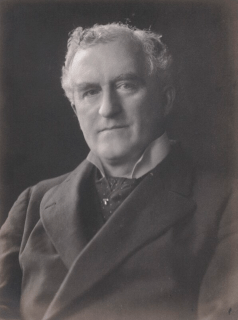
Stephen Lucius Gwynn, Irish journalist, biographer, author, poet and Protestant Nationalist politician, dies on June 11, 1950, at Terenure, Dublin. As a member of the Irish Parliamentary Party (IPP) he represents Galway Borough as its Member of Parliament from 1906 to 1918. He serves as a British Army officer in France during World War I and is a prominent proponent of Irish involvement in the Allied war effort. He founds the Irish Centre Party in 1919, but his moderate nationalism is eclipsed by the growing popularity of Sinn Féin.

Gwynn is born in St. Columba’s College in Rathfarnham, County Dublin, where his father John Gwynn (1827–1917), a biblical scholar and Church of Ireland clergyman, is warden. His mother, Lucy Josephine (1840–1907), is the daughter of the Irish nationalist William Smith O’Brien. He is the eldest of ten children (eight brothers and two sisters). Shortly after his birth the family moves to Ramelton in County Donegal to the parish where his father has been appointed parson. He later becomes Regius Professor of Divinity at Trinity College Dublin (TCD).

Gwynn spends his early childhood in rural County Donegal, which is to shape his later view of Ireland. He attends Brasenose College, Oxford, where, as scholar, in 1884 he is awarded first-class honours in classical moderations and in 1886 literae humaniores. During term holidays he returns to Dublin, where he meets several of the political and literary figures of the day.

After graduating, Gwynn spends ten years from 1886 tutoring as a schoolmaster, for a time in France, which creates a lifelong interest in French culture, as expressed in his Praise of France (1927). By 1896 he has developed an interest in writing, becoming a writer and journalist in London focused on English themes, until he comes into contact with the emerging Irish literary revival, when he serves as secretary of the Irish Literary Society.

This is the beginning of a long and prolific career as a writer covering a wide range of literary genres, from poetry and biographical subjects to general historical works. The eighteenth century is Gwynn’s particular specialism. He writes numerous books on travel and on the topography of his own homeland, as well as on his other interests: wine, eighteenth-century painting and fishing.

Gwynn returns to Ireland in 1904 when he enters politics. In the 1906 Galway Borough by-election he wins a seat for Galway Borough, which he represents as a member of the Irish Parliamentary Party until 1918. During this period, he is active in the Gaelic League and is one of the few Irish MPs to have close links to the Irish literary revival. Along with Joseph Maunsel Hone and George Roberts he founds the Dublin publishing house of Maunsel and Company. He is opposed to the demand for the Irish language to be a compulsory subject for matriculation. He supports the campaign which wins the establishment of a Catholic university when he serves on the Irish University Royal Commission in 1908. During the debate on the third Home Rule Bill, and at the request of his party leader John Redmond, he writes The case for Home Rule (1911) and is in charge of much of the party’s official publicity and its replies to criticism from Sinn Féin.

On the outbreak of World War I in August 1914, Gwynn strongly supports Redmond’s encouragement of Irish nationalists and the Irish National Volunteers to support the Allied and British war effort by enlisting in Irish regiments of the Irish Divisions, especially as a means to ensure the implementation of the suspended Home Rule Act at the end of an expectedly short war. Now over fifty, he enlists in January 1915 with the 7th Leinster Regiment in the 16th (Irish) Division. In July he is commissioned as a captain in the 6th (Service) Battalion, Connaught Rangers and serves with them on the Western Front at Messines, the Somme and elsewhere.

Gwynn is one of five Irish Nationalist MPs who enlist and serve in the army, the others being John L. Esmonde, Willie Redmond, William Redmond and D. D. Sheehan, as well as former MP Tom Kettle. Together with Kettle and William Redmond, he undertakes a recruitment drive for the Irish divisions, co-operating with Kettle on a collection of ballads called Battle Songs for the Irish Brigade (1915). He is made a chevalier of the Legion of Honour in July 1915. In 1916, he is appointed to the Dardanelles Commission.

Recalled to Ireland in late 1917 to participate in the Irish Convention chaired by Sir Horace Plunkett, Gwynn sides with the Redmondite faction of the Irish Party in supporting a compromise with the southern unionists in an attempt to reach consensus on a Home Rule settlement which would avoid partition. On the death of Redmond in March 1918, he takes over as leader of the moderate nationalists in the Convention. He opposes the threat of compulsory military service during the Conscription Crisis of 1918, though as a member of the Irish Recruiting Council he continues to support voluntary recruitment, encountering intense opposition led by Sinn Féin.

Gwynn forms the Irish Centre Party in 1919 and stands unsuccessfully as an Independent Nationalist for Dublin University in the 1918 Irish general election. The party merges with Plunkett’s Irish Dominion League to press for a settlement by consent on the basis of dominion status, but Gwynn subsequently breaks with Plunkett due to his willingness to accept partition as a temporary compromise. The polarities which divide Ireland during the Irish War of Independence and Irish Civil War increasingly sideline his brand of moderate cultural nationalism. Although he supports the newly emergent nation, he equally condemns some of the excesses, such as the burning of houses belonging to Free State senators.

Gwynn’s personal life also becomes complicated at this stage and around 1920. He has a romantic association with married artist Grace Henry who is perhaps the best-known female artist in Ireland at the time. During this period, he and Grace travel in France and Italy and at various stages in his life she painted portraits of him including a very distinguished looking one of him in his late 60s or early 70s. Their relationship contributes significantly to the separation of Henry from her artist husband Paul Henry in 1930.

During the 1920s, Gwynn also devotes himself to writing, covering political events as Irish correspondent to The Observer and The Times. Later in his career, he writes some substantial works, and together with his son Denis Gwynn (The Life of John Redmond, 1932) does much to shape the retrospective image and self-justification of John Redmond. In the mid-1930s he authors three books with a connecting theme of fishing with the artist Roy Beddington serving as illustrator: The Happy Fisherman (1936), From River to River (1937), and Two in a Valley (1938).

Gwynn is awarded an honorary D.Litt. by the National University of Ireland in 1940, and a Litt.D. by the University of Dublin in 1945. The Irish Academy of Letters awards him the Gregory Medal in April 1950. In his literary writings he stands for a humanism and tolerance, which qualities, due to political upheavals, were relatively rare in the Ireland of his day.

Gwynn dies on June 11, 1950, at his home in Terenure, Dublin, and is buried at Tallaght Cemetery, south County Dublin.

Gwynn marries his cousin Mary Louisa (d. 1941), daughter of Rev. James Gwynn. She later converts to Catholicism. They have three sons and two daughters who are brought up in her religion, of whom Aubrey (1892–1983) becomes a Jesuit priest and professor of medieval history at University College Dublin (UCD). Their second son, Denis Rolleston (1893–1971), is professor of modern Irish history at University College Cork (UCC).

Gwynn’s brother Edward John (1868–1941) becomes provost of Trinity College and another brother Robert Malcolm becomes its senior dean. His sister Lucy Gwynn is the first woman registrar of Trinity. A third brother, Charles, has a successful career in the British Army and retires as a Major General. Younger brothers Lucius and Jack are noted cricketers.


Leave a comment

Birth of Edward Dowden, Critic, Professor & Poet

Edward Dowden, Irish critic, professor and poet, is born in Cork, County Cork, on May 3, 1843.

Dowden is the son of John Wheeler Dowden, a merchant and landowner, and is born three years after his brother John, who becomes Bishop of Edinburgh in 1886. His literary tastes emerge early, in a series of essays written at the age of twelve. His home education continues at Queen’s College, Cork and at Trinity College, Dublin. He contributes to the literary magazine Kottabos.

Dowden has a distinguished career, becoming president of the University Philosophical Society, and wins the vice-chancellor’s prize for English verse and prose, and the first senior moderatorship in ethics and logic. In 1867 he is elected professor of oratory and English literature in Dublin University.

Dowden’s first book, Shakespeare: A Critical Study of His Mind and Art (1875), results from a revision of a course of lectures, and makes him widely known as a critic: translations appear in German and Russian; his Poems (1876) goes into a second edition. His Shakespeare Primer (1877) is translated into Italian and German. In 1878 the Royal Irish Academy awards him the Cunningham gold medal “for his literary writings, especially in the field of Shakespearian criticism.”

Later works by Dowden in this field include an edition of The Sonnets of William Shakespeare (1881), Passionate Pilgrim (1883), Introduction to Shakespeare (1893), Hamlet (1899), Romeo and Juliet (1900), Cymbeline (1903), and an article entitled “Shakespeare as a Man of Science” (in the National Review, July 1902), which criticizes T. E. Webb’s Mystery of William Shakespeare. His critical essays “Studies in Literature” (1878), “Transcripts and Studies” (1888), “New Studies in Literature” (1895) show a profound knowledge of the currents and tendencies of thought in various ages and countries; but his The Life of Percy Bysshe Shelley (1886) makes him best known to the public at large. In 1900 he edits an edition of Shelley‘s works.

Other books by Dowden which indicate his interests in literature include: Southey (1879), his edition of Southey’s Correspondence with Caroline Bowles (1881), and Select Poems of Southey (1895), his Correspondence of Sir Henry Taylor (1888), his edition of William Wordsworth‘s Poetical Works (1892) and of his Lyrical Ballads (1890), his French Revolution and English Literature (1897), History of French Literature (1897), Puritan and Anglican (1900), Robert Browning (1904) and Michel de Montaigne (1905). His devotion to Johann Wolfgang von Goethe leads to his succeeding Max Müller in 1888 as president of the English Goethe Society.

In 1889 Dowden gives the first annual Taylorian Lecture at the University of Oxford, and from 1892 to 1896 serves as Clark lecturer at Trinity College, Cambridge. To his research are due, among other matters of literary interest, the first account of Thomas Carlyle‘s Lectures on periods of European culture; the identification of Shelley as the author of a review (in The Critical Review of December 1814) of a romance by Thomas Jefferson Hogg; a description of Shelley’s Philosophical View of Reform; a manuscript diary of Fabre d’Églantine; and a record by Dr Wilhelm Weissenborn of Goethe’s last days and death. He also discovers a Narrative of a Prisoner of War under Napoleon (published in Blackwood’s Magazine), an unknown pamphlet by Bishop George Berkeley, some unpublished writings of William Hayley relating to William Cowper, and a unique copy of the Tales of Terror.

Dowden’s wide interests and scholarly methods make his influence on criticism both sound and stimulating, and his own ideals are well described in his essay on The Interpretation of Literature in his Transcripts and Studies. As commissioner of education in Ireland (1896–1901), trustee of the National Library of Ireland, secretary of the Irish Liberal Union and vice-president of the Irish Unionist Alliance, he enforces his view that literature should not be divorced from practical life. His biographical/critical concepts, particularly in connection with Shakespeare, are played with by Stephen Dedalus in the library chapter of James Joyce‘s Ulysses. Leslie Fiedler is to play with them again in The Stranger in Shakespeare.

Dowden marries twice, first to Mary Clerke in 1866, and secondly in 1895 to Elizabeth Dickinson West, daughter of the dean of St Patrick’s. His daughter by his first wife, Hester Dowden, is a well-known spiritualist medium.

Dowden dies in Dublin on April 4, 1913. His Letters are published in 1914 by Elizabeth and Hilda Dowden.

A Dublin City Council plaque commemorating Dowden is unveiled on November 29, 2016.


Leave a comment

The 1918 Irish General Election & Rise of Sinn Féin

The 1918 Irish general election is the part of the 1918 United Kingdom general election which takes place in Ireland on December 14, 1918. It is a key moment in modern Irish history because it sees the overwhelming defeat of the moderate nationalist Irish Parliamentary Party (IPP), which had dominated the Irish political landscape since the 1880s, and a landslide victory for Sinn Féin. Sinn Féin had never previously stood in a general election but had won six seats in by-elections in 1917–18. The party vows in its manifesto to establish an independent Irish Republic. In Ulster, however, the Irish Unionist Alliance (IUA) is the most successful party.

In 1918, a system called plural voting is in place in both Britain and Ireland. Plural voting is a practice whereby one person might be able to vote multiple times in an election. Property and business owners can vote both in the constituency where their property lay and that in which they live, if the two are different. In the newly formed Irish Free State this system is ended by the Electoral Act 1923 and is abolished in the United Kingdom by the Representation of the People Act 1948. Plural voting remains in effect in Northern Ireland until 1969.

The 1918 election is held in the aftermath of World War I, the Easter Rising and the Conscription Crisis. It is the first general election to be held after the Representation of the People Act 1918. It is thus the first election in which women over the age of 30, and all men over the age of 21, can vote.

Sinn Féin is founded by Arthur Griffith in 1905. He believes that Irish nationalists should emulate the Ausgleich of Hungarian nationalists who, in the 19th century under Ferenc Deák, had chosen to boycott the imperial parliament in Vienna and unilaterally establish their own legislature in Budapest.

Griffith initially favours a peaceful solution based on “dual monarchy” with Britain, that is two separate states with a single head of state and a limited central government to control matters of common concern only. However, by 1918, under its new leader, Éamon de Valera, Sinn Féin has come to favour achieving separation from Britain by means of an armed uprising if necessary and the establishment of an independent republic.

In the aftermath of the 1916 Easter Rising, the party’s ranks are swelled by participants and supporters of the rebellion as they are freed from British gaols and internment camps. At its 1917 Ardfheis (annual conference) de Valera is elected leader, and the new, more radical policy is adopted.

Prior to 1916, Sinn Féin had been a fringe movement having a limited cooperative alliance with William O’Brien‘s All-for-Ireland League and enjoyed little electoral success. However, between the Easter Rising of that year and the 1918 general election, the party’s popularity increases dramatically. This is due to the failure to have the Home Rule Bill implemented when the IPP resists the partition of Ireland demanded by Ulster Unionists in 1914, 1916 and 1917, but also popular antagonism towards the British authorities created by the execution of most of the leaders of the 1916 rebels and by their botched attempt to introduce Home Rule on the conclusion of the Irish Convention linked with military conscription in Ireland (see Conscription Crisis of 1918).

Sinn Féin demonstrates its new electoral capability in four by-election successes in 1917 in which George Noble Plunkett, Joseph McGuinness, de Valera and W. T. Cosgrave are each elected, although it loses three by-elections in early 1918 before winning two more with Patrick McCartan and Arthur Griffith. In one case there are unproven allegations of electoral fraud. The party benefits from a number of factors in the 1918 elections, including demographic changes and political factors.

In the aftermath of the elections, Sinn Féin’s elected members refuse to attend the British Parliament in Westminster, and instead form a parliament in Dublin, Dáil Éireann (“Assembly of Ireland”), which declares Irish independence as a republic. The Irish War of Independence is conducted under this revolutionary government which seeks international recognition and sets about the process of state-building. The next election is part of 1921 Irish elections.

(Pictured: L to R, Éamon de Valera of Sinn Féin, Sir Edward Carson on the Irish Unionist Alliance, and John Dillon of the Irish Parliamentary Party)


Leave a comment

Birth of Justin McCarthy, Historian, Novelist & Politician

Justin McCarthy, Irish nationalist and Liberal historian, novelist and politician, is born in Cork, County Cork on November 22, 1830. He is a Member of Parliament (MP) from 1879 to 1900, taking his seat in the House of Commons of the United Kingdom of Great Britain and Ireland.

McCarthy is educated in Cork. He begins his career as a journalist at the age of 18 in Cork. From 1853 to 1859 he is in Liverpool, on the staff of the Northern Daily Times. In March 1855, he marries Charlotte Ailman. In 1860 he moves to London, as parliamentary reporter to the Morning Star, of which he becomes editor in 1864. He gives up his post in 1868 and, following a lecturing tour in the United States, joins the staff of The Daily News as leader-writer in 1870. In this capacity he becomes one of the most useful and respected upholders of the liberal politics of the time. He lectures again in America in 1870–71 and in 1886–87.

McCarthy is first elected to Parliament at a by-election on April 4, 1879, when he is returned unopposed as a Home Rule League MP for Longford. He is re-elected unopposed as a Parnellite Home Ruler in 1880, and when the two-seat Longford constituency is split into two divisions under the Redistribution of Seats Act 1885, he is elected as an Irish Parliamentary Party member for the new single-seat North Longford constituency. His sole opponent, James Mackay Wilson of the Irish Conservative Party, wins only 6% of the votes.

At the 1886 United Kingdom general election, McCarthy is returned unopposed in North Longford, but also stands in Londonderry City, where he is declared the loser to the Irish Unionist Alliance candidate by the narrow margin of 1778 votes to 1781. However, the result is later overturned on petition and McCarthy opts to sit for Londonderry City. During the divorce controversy surrounding Charles Stewart Parnell in November 1890, the British Prime Minister William Ewart Gladstone expresses a warning, given to McCarthy as intermediary, that if Parnell retains leadership of the Irish Parliamentary Party, it will mean the loss of the next election, the end of their alliance and Home Rule. When the annual party leadership election meeting is called later that month, the threat is somehow not conveyed to the members, who re-elect Parnell leader of the Party.

After a further historical meeting of the Irish Party MPs in early December, Parnell refuses to retire and the Party divides. McCarthy becomes chairman of the Anti-Parnellite group, the Irish National Federation, for a year in 1891–92. His nationalism is of a temperate and orderly kind, and though his personal distinction singles him out for the chairmanship during the party dissensions of this period, he is in no active sense the political leader.

At the 1892 United Kingdom general election, McCarthy again stands both in North Longford and in Londonderry City. In each seat there is a two-way contest between the Anti-Parnellite McCarthy and a Unionist candidate, but the narrow Unionist victory in Londonderry is not overturned, and McCarthy sits for North Longford, where he wins over 93% of the votes. He is returned unopposed for North Longford in 1895 United Kingdom general election in Ireland and stands down from Parliament at the 1900 United Kingdom general election In Ireland.

It is claimed that McCarthy’s true vocation is literature. His earliest publications are novels, some of which, such as A Fair Saxon (1873), Dear Lady Disdain (1875), Miss Misanthrope (1878), and Donna Quixote (1879), attain considerable popularity. His most important work is his History of Our Own Times, which treats of the period between Queen Victoria‘s accession and her Diamond Jubilee. He begins a History of the Four Georges (1884–1901) and the latter half is written by his son, Justin Huntly McCarthy.

Justin McCarthy dies at the age of 81 in Folkestone, Kent, England on April 24, 1912.

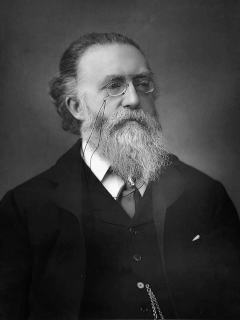
(Pictured: Portrait style photograph of Irish politician Justin McCarthy, taken in 1891 by Herbert Rose Barraud)


Leave a comment

Death of Edward Cecil Guinness, 1st Earl of Iveagh

Edward Cecil Guinness, 1st Earl of Iveagh, Irish businessman and philanthropist, dies at his London home in Grosvenor Place on October 7, 1927

Guinness is born on November 10, 1847 at St. Anne’s, Clontarf, County Dublin, the youngest of three sons of Sir Benjamin Lee Guinness, brewer, of Dublin, and Elizabeth, third daughter of Edward Guinness of Dublin. He is not sent to public school but is taught at home by a private tutor before entering Trinity College Dublin, where he takes his degree in 1870. His father dies in 1868, leaving him a share in the brewery, and he takes over management of the business with his brother Arthur, who in 1876 sells his shares, making Edward sole proprietor.

Guinness is also prominent in municipal life, holding the offices of Sheriff of Dublin City in 1876 and High Sheriff of the County of Dublin in 1885, the year in which he is created a baronet. He is a brilliantly effective businessman, with close attention to detail and a focus solely on the brewery, to the extent of remaining independent from the rest of the brewing trade. In 1888 he bluntly tells the Country Brewers’ Association, “I have always declined to identify myself with any trade question, or to take any side in a controversy on the liquor question, and to this I must adhere.” In 1886 Guinness is floated as a public company, a superbly successful venture with applications for shares exceeding £100 million, and Edward remains as chairman until 1890, although his formal retirement in that year brings little reduction in his involvement with the company, and he continues to make the final decision on many minor matters as well as all major questions of policy.

Socially innovative, with a concern for the welfare of employees, from as early as 1870 Guinness establishes a free dispensary for his workforce and makes provisions for pension and other allowances – acts of social reform that are remarkable for the time. To mark his retirement in 1890 he places in trust £250,000 to be expended in the erection of working-class housing in London and Dublin. Both funds are administered from London until 1903, when the Dublin fund is amalgamated by the Iveagh Trust act with other schemes carried out in Dublin by Edward, who had been raised to the peerage of the United Kingdom in 1891 as Baron Iveagh of Iveagh, County Down. The funds, which increase considerably from the original amount, are thereafter managed entirely in Dublin as a separate undertaking under the name of the Iveagh Trust, still in existence in the early twenty-first century.

As one of the pioneers of the voluntary housing movement Guinness is essentially carrying on the tradition of “merchant prince and city father” established by his father and shared by his brother. Wealthy, ambitious, and resolutely unionist, he gives generous financial support to the Irish Unionist Alliance, and is also public-spirited, religious, and devoted to duty. Acknowledging that the Iveagh Trust is essentially ameliorative, he believes that major social change will only be achieved if numerous other wealthy people follow his example. He insists that gifts of money from the fund are permissible only to assist individuals to improve their condition “without placing them in the position of being the recipients of a bounty.” Numerous other philanthropic donations follow, including another £250,000 for slum clearance in the Bull Alley district of Dublin; various contributions to Dublin hospitals, particularly in 1903 and 1911 on the occasion of royal visits; and in 1907 the opening of the Iveagh Markets, situated in the Francis Street and Patrick Street areas of Dublin, are made possible with his financial backing. Generous contributions are also made to Trinity College Dublin, of which he is elected chancellor in 1908, and he donates land in Iveagh Gardens to University College Dublin (UCD).

In 1905 Guinness is raised to a viscountcy and in September 1909 the nationalist corporation of Dublin presents him with an address of thanks for his many gifts, and even discusses the possibility of offering him the lord mayoralty of the city, which he declines owing to his political affiliations. By this time he lives chiefly in England, having bought Elveden Hall in Suffolk, where he frequently entertains royalty. He also purchases Lord Kensington’s London estate and makes many donations to medical research societies in England, and in conjunction with Sir Ernest Cassel he founds the London Radium Institute, as well as donates £250,000 to the Laster Institute of Tropical Medicine for the endowment of bacteriological research.

In 1919 Guinness is elevated to an earldom and in 1925 purchases the remainder of the Kenwood estate to the north of Hampstead Heath and arranges for it to become public property, ensuring the estate will not be sold for building purposes, and also bequeaths to the nation a valuable collection of art for use in the gallery at the same location. As well as being elected a fellow of the Royal Society, he is awarded honorary doctorates from the University of Dublin and the University of Aberdeen.

In 1873, Guinness marries his third cousin Adelaide Maud, nicknamed “Dodo.” She is descended from the banking line of Guinnesses, and is the daughter of Richard Samuel Guinness, barrister and MP, and his wife Katherine, a daughter of Sir Charles Jenkinson. They have three sons, the eldest of whom, Rupert Edward Cecil Lee, succeeds his father as 2nd Earl of Iveagh.

Guinness dies at his London home in Grosvenor Place on October 7, 1927, and is buried at Elveden, Suffolk. He leaves an estate valued at £11 million.


Leave a comment

Death of Gobnait Ní Bhruadair, Irish Republican & Lifelong Radical

Gobnait Ní Bhruadair, Irish republican and lifelong radical, dies in Sneem, County Kerry, on January 16, 1955. She campaigns passionately for causes as diverse as the reform of nursing, protection and promotion of the Irish language and the freedom of Ireland from British rule.

Ní Bhruadair is born the Hon. Albinia Lucy Brodrick on December 17, 1861, at 23 Chester Square, Belgrave, London, the fifth daughter of William Brodrick, 8th Viscount Midleton (1830–1907), and his wife, Augusta Mary (née Freemantle), daughter of Thomas Fremantle, 1st Baron Cottesloe. She spends her early childhood in London until the family moves to their country estate in Peper Harow, Surrey in 1870. Educated privately, she travels extensively across the continent and speaks fluent German, Italian and French, and has a reading knowledge of Latin.

Ní Bhruadair’s family is an English Protestant aristocratic one which has been at the forefront of British rule in Ireland since the 17th century. In the early twentieth century it includes leaders of the Unionist campaign against Irish Home Rule. Her brother, St. John Brodrick, 1st Earl of Midleton, is a nominal leader of the Irish Unionist Alliance from 1910 until 1918 when he and other Unionists outside Ulster establish the Irish Unionist Anti-Partition League.

The polar opposite of Ní Bhruadair, her brother is consistent in his low opinion of the Irish and holds imperialist views that warmly embrace much of the jingoism associated with social Darwinism. The young Albinia Lucy Brodrick conforms to her familial political views on Ireland, if her authorship of the pro-Unionist song “Irishmen stand” is an indicator. However, by the start of the twentieth century she becomes a regular visitor to her father’s estate in County Cork. There she begins to educate herself about Ireland and begins to reject the views about Ireland that she had been raised on. In 1902 she writes about the need to develop Irish industry and around the same time she begins to develop an interest in the Gaelic revival. She begins to pay regular visits to the Gaeltacht where she becomes fluent in Irish and is horrified at the abject poverty of the people.

From this point on, Ní Bhruadair’s affinity with Ireland and Irish culture grows intensely. Upon her father’s death in 1907 she becomes financially independent and in 1908 purchases a home near West Cove, Caherdaniel, County Kerry. The same year she establishes an agricultural cooperative there to develop local industry. She organises classes educating people on diet, encourages vegetarianism and, during the smallpox epidemic of 1910, nurses the local people. Determined to establish a hospital for local poor people, she travels to the United States to raise funds.

There Ní Bhruadair takes the opportunity to study American nursing, meets leading Irish Americans and becomes more politicised to Ireland’s cause. Upon her return to Kerry, she establishes a hospital in Caherdaniel later in 1910. She renames the area Ballincoona (Baile an Chúnaimh, ‘the home of help’), but it is unsuccessful and eventually closes for lack of money. She writes on health matters for The Englishwoman and Fortnightly, among other journals, is a member of the council of the National Council of Trained Nurses and gives evidence to the royal commission on venereal disease in 1914.

Ní Bhruadair is a staunch supporter of the 1916 Easter Rising. She joins both Cumann na mBan and Sinn Féin. She visits some of the 1,800 Irish republican internees held by the British in Frongoch internment camp in Wales and writes to the newspapers with practical advice for intending visitors. She canvasses for various Sinn Féin candidates during the 1918 Irish general election and is a Sinn Féin member on Kerry County Council (1919–21), becoming one of its reserve chairpersons. During the Irish War of Independence, she shelters Irish Republican Army (IRA) volunteers and consequently her home becomes the target for Black and Tans attacks.

Along with Dr. Kathleen Lynn she works with the Irish White Cross to distribute food to the dependents of IRA volunteers. By the end of the Irish War of Independence she has become hardened by the suffering she has seen and is by now implacably opposed to British rule in Ireland. She becomes one of the most vociferous voices against the Anglo-Irish Treaty of December 6, 1921. She becomes a firebrand speaker at meetings in the staunchly republican West Kerry area. In April 1923 she is shot by Irish Free State troops and arrested. She is subsequently imprisoned in the North Dublin Union, where she follows the example of other republicans and goes on hunger strike. She is released two weeks later. Following the formation of Fianna Fáil by Éamon de Valera in 1926, she continues to support the more hardline Sinn Féin.

In October 1926 Ní Bhruadair represents Munster at the party’s Ardfheis. She owns the party’s semi-official organ, Irish Freedom, from 1926–37, where she frequently contributes articles and in its later years acts as editor. Her home becomes the target of the Free State government forces in 1929 following an upsurge in violence from anti-Treaty republicans against the government. She and her close friend Mary MacSwiney leave Cumann na mBan following the decision by its members at their 1933 convention to pursue social radicalism. The two then establish an all-women’s nationalist movement named Mná na Poblachta, which fails to attract many new members.

Ní Bhruadair continues to speak Irish and regularly attends Conradh na Gaeilge branch meetings in Tralee. Although sympathetic to Catholicism, she remains a member of the Anglican Church of Ireland, and regularly plays the harmonium at Sneem’s Church of Ireland services. Described by a biographer as “a woman of frugal habits and decided opinions, she was in many ways difficult and eccentric.” She dies on January 16, 1955, and is buried in the Church of Ireland graveyard in Sneem, County Kerry.

In her will Ní Bhruadair leaves most of her wealth (£17,000) to republicans “as they were in the years 1919 to 1921.” The vagueness of her bequest leads to legal wrangles for decades. Finally, in February 1979, Justice Seán Gannon rules that the bequest is void for remoteness, as it is impossible to determine which republican faction meets her criteria.


Leave a comment

Death of Sir Denis Stanislaus Henry, 1st Baronet

Sir Denis Stanislaus Henry, 1st Baronet, KBE, PC (Ire), QC, Irish lawyer and politician who becomes the first Lord Chief Justice of Northern Ireland, dies in Belfast on October 1, 1925.

Henry is born on March 7, 1864, in Cahore, Draperstown, County Londonderry, the son of a prosperous Roman Catholic businessman. He is educated at Marist College, Dundalk, Mount St. Mary’s College, Chesterfield, Derbyshire (a Jesuit foundation) and Queen’s College, Belfast, where he wins every law scholarship available to a student in addition to many other prizes and exhibitions. In 1885, he is called to the Bar of Ireland.

During the 1895 United Kingdom general election in Ireland campaign, Henry speaks in support of unionist candidates in two constituencies: Thomas Lea in South Londonderry, Henry’s native constituency, and E. T. Herdman in East Donegal.

Henry’s legal career flourishes. He becomes Queen’s Counsel in 1896, a Bencher of the King’s Inns in 1898 and ultimately Father of the North-West Circuit – but his interest in politics does not diminish. In March 1905, he is a delegate at the inaugural meeting of the Ulster Unionist Council and in the 1907 North Tyrone by-election he is the Unionist candidate, losing by a mere seven votes.

On May 23, 1916, Henry is elected as an MP in the South Londonderry by-election, the first by-election to be held in Ireland after the Easter Rising, which occurred a month earlier. The rebellion has had no discernible impact on the contest.

In November 1918, Henry becomes Solicitor-General for Ireland and in July 1919, Attorney-General for Ireland. He later serves as the first Lord Chief Justice of Northern Ireland from 1921 to 1925. In 1923, he becomes a Baronet, of Cahore in the County of Londonderry.

Henry marries Violet Holmes, daughter of Hugh Holmes, a judge of the Court of Appeal in Ireland, and Olivia Moule. They have five children, including James Holmes Henry, who succeeds as second baronet. It is a mixed marriage as Violet is and remains a staunch member of the Church of Ireland. Despite their religious differences, the marriage is said to be happy.

Henry dies in Belfast on October 1, 1925, aged 61, and is buried near his native Draperstown.

(Pictured: Sir Denis Stanislaus Henry, 1st Baronet, bromide print by Walter Stoneman, 1920, National Portrait Gallery, London)


Leave a comment

“The Irish Times” Is Launched In Dublin

The Irish Times is launched at 4 Lower Abbey Street in Dublin on March 29, 1859. The first appearance of a newspaper using the name occurs in 1823 but it closes in 1825. The title is revived as a thrice weekly publication by Major Lawrence E. Knox. It is originally founded as a moderate Protestant newspaper, reflecting the politics of Knox, who stands unsuccessfully as a parliamentary candidate for Isaac Butt’s Home Rule League. In its early days, its main competitor is the Dublin Daily Express.

After Knox’s death in 1873, the paper is sold to the widow of Sir John Arnott, MP, a former Lord Mayor of Cork and owner of Arnotts, one of Dublin’s major department stores. The sale, for £35,000, leads to two major changes. Its headquarters is shifted to 31 Westmoreland Street, remaining in buildings on or near that site until 2005. Its politics also shifts dramatically, becoming predominantly Unionist in outlook, and it is closely associated with the Irish Unionist Alliance. The paper, along with the Irish Independent and various regional papers, calls for the execution of the leaders of the failed 1916 Easter Rising.

Though the paper becomes a publicly listed company in 1900, the family continues to hold a majority shareholding until the 1960s. The last member of the Arnott family to sit on the paper’s board is Sir Lauriston Arnott, who dies in 1958.

The editor during the 1930s, R. M. “Bertie” Smyllie, has strong anti-fascist views: he angers the Irish Catholic hierarchy by opposing General Francisco Franco during the Spanish Civil War. Later, The Irish Times, like other national newspapers, has problems with Irish Government censorship during World War II. The newspaper is largely pro-Allied and is opposed to the Éamon de Valera government’s policy of neutrality.

In 1974, ownership is transferred to a non-charitable trust, The Irish Times Trust. The Trust is set up as “a company limited by guarantee” to purchase The Irish Times Limited and to ensure that The Irish Times will be published as an independent newspaper with specific editorial objectives. The former owner, Major Thomas Bleakley McDowell, is made “president for life” of the trust which runs the paper and is paid a large dividend. However several years later the articles of the Trust are adjusted, giving Major McDowell ten preference shares and one more vote than the combined votes of all the other directors should any move be made to remove him. Major McDowell dies in 2009.

The Trust is regulated by a legal document, the Memorandum and Articles of Association, and controlled by a maximum of eleven Governors under company law. It is not a charity and does not have charitable status. It has no beneficial shareholders and it cannot pay dividends. Any profits made by The Irish Times cannot be distributed to the Trust but must be used to strengthen the newspaper, directly or indirectly.

In 1994, The Irish Times establishes a website called Irish-times.ie, the first newspaper in Ireland and one of the first 30 newspapers in the world to do so. The company acquires the domain name Ireland.com in 1997, and from 1999 to 2008, uses it to publish its online edition. On June 30, 2008, the company relaunches Ireland.com as a separate lifestyle portal and the online edition of the newspaper is now published at irishtimes.com. It is supplied free of charge, but a subscription is charged to view its archives.

On October 15, 2012, John O’Shea, Head of Online, The Irish Times, announces that the ireland.com domain name has been sold to Tourism Ireland, and that the ireland.com email service will end on November 7, 2012, affecting about 15,000 subscribers. The newspaper announces on February 17, 2015 the reintroduction of a paywall for its website, irishtimes.com, beginning on February 23.

In December 2017, it is reported that The Irish Times has reached an agreement to purchase the newspaper, radio and website interests of Landmark Media Investments which include the Irish Examiner. Initially subject to regulatory approval, this sale is completed in July 2018. In September 2018, following the Landmark Media Investments acquisition, The Irish Times starts a voluntary redundancy scheme.

Average print circulation is approximately 100,000 copies per issue in 2011, dropping to approximately 62,000 by 2017. The circulation of the newspaper is no longer audited.


Leave a comment

Death of Arthur Edward Guinness, 1st Baron Ardilaun

Arthur Edward Guinness, 1st Baron Ardilaun, Irish businessman, politician, and philanthropist, best known for giving St. Stephen’s Green back to the people of Dublin, dies on January 20, 1915.

Guinness is born on November 1, 1840 at St. Anne’s, Raheny, near Dublin, the eldest son of Sir Benjamin Guinness, 1st Baronet, and elder brother of Edward Guinness, 1st Earl of Iveagh. He is the great-grandson of Arthur Guinness. He is educated at Eton College and Trinity College Dublin and, in 1868, succeeds his father as second Baronet.

In the 1868 United Kingdom general election Guinness is elected Conservative Member of Parliament for Dublin City, a seat he holds for only a year. His election is voided because of his election agent’s unlawful efforts, which the court finds were unknown to him. He is re-elected the following year in the 1874 United Kingdom general election.

A supporter of Benjamin Disraeli‘s one-nation conservatism, Guinness’s politics are typical of “constructive unionism,” the belief that the union between Ireland and Britain should be more beneficial to the people of Ireland after centuries of difficulties. In 1872 he is a sponsor of the “Irish Exhibition” at Earlsfort Terrace in Dublin, which is arranged to promote Irish trade. Correcting a mistake about the exhibition in the Freeman’s Journal leads to a death threat from a religious extremist, which he does not report to the police. In the 1890s he supports the Irish Unionist Alliance.

After withdrawing from the Guinness company in 1876, when he sells his half-share to his brother Edward for £600,000, Guinness is in 1880 raised to the peerage as Baron Ardilaun, of Ashford in County Galway. His home there is at Ashford Castle on Lough Corrib, and his title derives from the Gaelic Ard Oileáin, a ‘high island’ on the lake.

Between 1852 and 1859, Guinness’s father acquires several large Connacht estates that are up for sale. With these purchases, he becomes landlord to 670 tenants. With his father’s death in 1868, Guinness continues in his father’s footsteps, purchasing vast swaths of Galway. When his acquisitions are combined with those of his father, total acreage for the Ashford estate is 33,298 acres, with Guinness owning most of County Galway between Maam (Maum) Bridge and Lough Mask.

Like many in the Guinness family, Guinness is a generous philanthropist, devoting himself to a number of public causes, including the restoration of Marsh’s Library in Dublin and the extension of the city’s Coombe Lying-in Hospital. In buying and keeping intact the estate around Muckross House in 1899, he assists the movement to preserve the lake and mountain landscape around Killarney, now a major tourist destination.

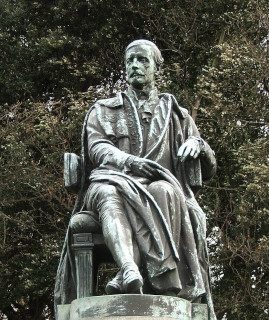
In his best-known achievement, Guinness purchases, landscapes, and donates to the capital, the central public park of St. Stephen’s Green, where his statue commissioned by the city can be seen opposite the Royal College of Surgeons in Ireland. To do so he sponsors a private bill that is passed as the Saint Stephen’s Green (Dublin) Act 1877, and after the landscaping it is formally opened to the public on July 27, 1880. It has been maintained since then by the Commissioners of Public Works in Ireland, now the Office of Public Works.

Guinness dies on January 20, 1915 at his home at St. Anne’s, Raheny, and is buried at All Saints Church, Raheny, whose construction he had sponsored. Those present at the funeral include representatives of the Royal Dublin Society, of which he is president for many years, the Royal Horticultural Society of Ireland, the Irish Unionist Alliance, and the Primrose League. His barony becomes extinct at his death, but the baronetcy devolves upon his nephew Algernon.


Leave a comment

1918 Irish General Election

irish-general-election-1918

Sinn Féin, pledged to an Irish Republic, wins 73 of 105 Irish Member of Parliament (MP) seats in the 1918 United Kingdom general election in Ireland held on December 14, 1918. Winners include Constance Markievicz who becomes the first woman elected to the Parliament of the United Kingdom. In 1919 she is appointed Minister for Labour, the first female minister in a democratic government cabinet.

The Irish general election is that part of the 1918 United Kingdom general election which takes place in Ireland. The election is now seen as a key moment in modern Irish history because it sees the overwhelming defeat of the moderate nationalist Irish Parliamentary Party (IPP), which had dominated the Irish political landscape since the 1880s, and a landslide victory for the radical Sinn Féin party. The party had never stood in a general election but had won six seats in by-elections in 1917–1918. Sinn Féin vows in its manifesto to establish an independent Irish Republic. In Ulster, however, the Unionist Party is the most successful party.

The election is held in the aftermath of World War I, the Easter Rising and the Conscription Crisis. It is the first general election to be held after the Representation of the People Act 1918. It is thus the first election in which women over the age of 30, and all men over the age of 21, can vote. Previously, all women and most working-class men had been excluded from voting.

In the aftermath of the elections, Sinn Féin’s elected members refuse to attend the British Parliament in Westminster. Instead, they form a parliament in Dublin, the First Dáil Éireann, which declares Irish independence as a republic. The Irish War of Independence is conducted under this revolutionary government which seeks international recognition and sets about the process of state-building.