seamus dubhghaill

Promoting Irish Culture and History from Little Rock, Arkansas, USA


Leave a comment

Death of Sinn Féin Leader Margaret Buckley

Margaret Buckley, Irish republican and leader of Sinn Féin from 1937 to 1950, dies on July 24, 1962.

Originally from Cork, Buckley joins Inghinidhe na hÉireann, which was founded in 1900, taking an active role in the women’s movement. She is involved in anti-British royal visit protests in 1903 and 1907 and is among the group that founds An Dún in Cork in 1910. In 1906, she marries Patrick Buckley, described as “a typical rugby-playing British civil servant.” After his death she moves into a house in Marguerite Road, Glasnevin, Dublin. Later, she returns to Cork to care for her elderly father.

Arrested in the aftermath of 1916 Easter Rising, she is released in the amnesty of June 1917 and plays a prominent role in the reorganisation of Sinn Féin. She is involved in the Irish War of Independence in Cork.

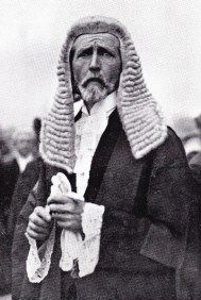
After the death of her father, Buckley returns to Dublin. In 1920, she becomes a Dáil Court judge in the North city circuit, appointed by Austin Stack, the Minister for Home Affairs of the Irish Republic. She opposes the Anglo-Irish Treaty and is interned in Mountjoy Gaol and Kilmainham Gaol, where she goes on a hunger strike. She is released in October 1923. During her imprisonment, she is elected Officer Commanding (OC) of the republican prisoners in Mountjoy, Quartermaster (QM) in the North Dublin Union and OC of B-Wing in Kilmainham. She is an active member of the Women Prisoners’ Defence League, founded by Maud Gonne and Charlotte Despard in 1922.

In 1929, she serves as a member of Comhairle na Poblachta which unsuccessfully attempts to resolve the differences between Sinn Féin and the Irish Republican Army (IRA). She is also an organiser for the Irish Women Workers’ Union.

At the October 1934 Sinn Féin ardfheis, Buckley is elected one of the party’s vice-presidents. Three years later, in 1937, she succeeds Cathal Ó Murchadha, who is a former Teachta Dála (TD) of the second Dáil Éireann, as President of Sinn Féin at an ardfheis attended by only forty delegates.

When she assumes the leadership of Sinn Féin, the party is not supported by the IRA, which had severed its links with the party in the 1920s. When she leaves the office in 1950, relations with the IRA have been resolved. As President she begins the lawsuit Buckley v. Attorney-General, the Sinn Féin Funds case, in which the party seeks unsuccessfully to be recognised as owners of money raised by Sinn Féin before 1922 and held in trust in the High Court since 1924.

In 1938, her book, The Jangle of the Keys, about the experiences of Irish Republican women prisoners interned by the Irish Free State forces is published. In 1956, her Short History of Sinn Féin is published.

Buckley serves as honorary vice-president of Sinn Féin from 1950 until her death in 1962. She is the only member of the Ard Chomhairle of the party not to be arrested during a police raid in July 1957.

Margaret Buckley dies on July 24, 1962, and is buried in St. Finbarr’s Cemetery in Cork.


Leave a comment

Birth of Cathal Brugha, Revolutionary & Politician

Cathal Brugha, Irish revolutionary and politician, is born in Dublin on July 18, 1874. He is active in the Easter Rising, the Irish War of Independence, and the Irish Civil War and is the first Ceann Comhairle (chairman) of Dáil Éireann as well as the first President of Dáil Éireann, then the title of the chief of government.

Born Charles William St. John Burgess, Brugha is the tenth of fourteen children and is educated at the Jesuit Belvedere College but is forced to leave at the age of sixteen because of the failure of his father’s business.

In 1899 Brugha join the Gaelic League, and he subsequently changes his name from Charles Burgess to Cathal Brugha. He meets his future wife, Kathleen Kingston, at an Irish class in Birr, County Offaly and they marry in 1912. They have six children, five girls and one boy. Brugha becomes actively involved in the Irish Republican Brotherhood (IRB) and in 1913 he becomes a lieutenant in the Irish Volunteers. He leads a group of twenty Volunteers to receive the arms smuggled into Ireland in the Howth gun-running of 1914.

He is second-in-command at the South Dublin Union under Commandant Éamonn Ceannt in the Easter Rising of 1916. On the Thursday of Easter Week, being badly wounded, he is unable to leave when the retreat is ordered. Brugha, weak from loss of blood, continues to fire upon the enemy and is found by Eamonn Ceannt singing “God Save Ireland” with his pistol still in his hands. He is initially not considered likely to survive. He recovers over the next year but is left with a permanent limp.

Brugha is elected speaker of Dáil Éireann at its first meeting on January 21, 1919, and he reads out the Declaration of Independence in Irish, which ratifies “the establishment of the Irish Republic.” On the following day, he is appointed president of the ministry pro tempore. He retains this position until April 1, 1919, when Éamon de Valera takes his place.

In October 1917 Brugha becomes Chief of Staff of the Irish Republican Army and holds that post until March 1919. He is elected as a Sinn Féin MP for the County Waterford constituency at the 1918 general election. In January 1919, Sinn Féin MPs refuse to recognise the Parliament of the United Kingdom and instead assemble at the Mansion House in Dublin as a revolutionary parliament called Dáil Éireann. Due to the absence of Éamon de Valera and Arthur Griffith, Brugha presides over the first meeting of Dáil Éireann on January 21, 1919.

Brugha has differences with Michael Collins, who, although nominally only the IRA’s Director of Intelligence, has far more influence in the organisation as a result of his position as a high-ranking member of the Irish Republican Brotherhood, an organisation that Brugha sees as undermining the power of the Dáil and especially the Ministry for Defence. Brugha opposes the oath of allegiance required for membership of the IRB and, in 1919, his proposition that all Volunteers should swear allegiance to the Irish Republic and the Dáil is adopted.

At a top-level IRA meeting in August 1920, Brugha argues against ambushes of Crown forces unless there is first a call to surrender, but it is dismissed as unrealistic by the brigade commanders present. Brugha also has the idea of moving the front line of the war to England but is opposed by Collins.

On January 7, 1922, Brugha votes against the Anglo-Irish Treaty. During the Treaty debates, he points out that Collins has only a middling rank in the Department of Defence, which supervises the IRA even though Arthur Griffith hails him as “the man who had won the war.” He leaves the Dáil and is replaced as Minister for Defence by Richard Mulcahy.

In the months between the Treaty debates and the outbreak of Civil War, Brugha attempts to dissuade his fellow anti-treaty army leaders including Rory O’Connor, Liam Mellows and Joe McKelvey from taking up arms against the Free State. When the IRA occupies the Four Courts, he and Oscar Traynor call on them to abandon their position. When they refuse, Traynor orders the occupation of the area around O’Connell Street in the hope of easing the pressure on the Four Courts and of forcing the Free State to negotiate.

On June 28, 1922, Brugha is appointed commandant of the forces in O’Connell Street. The outbreak of the Irish Civil War ensues in the first week of July when Free State forces commence shelling of the anti-treaty positions.

Most of the anti-Treaty fighters under Oscar Traynor escape from O’Connell Street when the buildings they are holding catch fire, leaving Brugha in command of a small rearguard. On July 5, he orders his men to surrender but refuses to do so himself. He then approaches the Free State troops, brandishing a revolver. He sustains a bullet wound to the leg which severs a major artery.

Cathal Brugha dies on July 7, 1922, eleven days before his 48th birthday. He has been re-elected as an anti-Treaty Teachta Dála (TD) at the 1922 Irish general election but dies before the Dáil assembles. He is buried in Glasnevin Cemetery.


Leave a comment

Belfast’s Bloody Sunday

Bloody Sunday or Belfast’s Bloody Sunday is a day of violence in Belfast, Ireland (present-day Northern Ireland) on July 10, 1921, during the Irish War of Independence.

Belfast sees almost 500 people die in political violence between 1920 and 1922. Violence in the city breaks out in the summer of 1920 in response to the Irish Republican Army (IRA) killing of Royal Irish Constabulary Detective Oswald Swanzy after Sunday services outside a Protestant church in nearby Lisburn. Seven thousand Catholics and some Protestant trade unionists are driven from their jobs in the Belfast shipyards and over 50 people are killed in rioting between Catholics and Protestants.

Violence in Belfast wanes until the following summer of 1921. At the time, Irish republican and British authorities are negotiating a truce to end the war but fighting flares up in Belfast. On June 10, an IRA gunman, Jack Donaghy, ambushes three RIC constables on the Falls Road, fatally wounding one, Thomas Conlon, a Roman Catholic from County Roscommon, who, ironically, is viewed as “sympathetic” to the local nationalists. Over the following three days, at least 14 people lose their lives and 14 are wounded in fighting in the city, including three Catholics who are taken from their homes and killed by uniformed police.

Low-level attacks continue in the city over the next month until another major outbreak of violence that leads to “Bloody Sunday.” On July 8, the RIC attempt to carry out searches in the mainly Catholic and republican enclave around Union Street and Stanhope Street. However, they are confronted by about fifteen IRA volunteers in an hour-long firefight.

On July 9, a truce to suspend the war is agreed in Dublin between representatives of the Irish Republic and the British government, to come into effect at noon on July 11. Many Protestants/unionists condemn the truce as a “sell-out” to republicans.

On the night of July 9/10, hours after the truce is announced, the RIC attempt to launch a raid in the Lower Falls district of west Belfast. Scouts alert the IRA of the raid by blowing whistles, banging dustbin lids and flashing a red light. On Raglan Street, a unit of about fourteen IRA volunteers ambush an armoured police truck, killing one officer and wounding at least two others.

This sparks an outbreak of ferocious fighting between Catholics and Protestants in west Belfast the following day, Sunday July 10, in which 16 civilians lose their lives and up to 200 houses are destroyed. Of the houses destroyed, 150 are owned by Catholics. Most of the dead are civilians and at least four of the Catholic victims are ex-World War I servicemen.

Protestants, fearful of absorption into a Catholic Ireland and blindly angered by the presence of heresy and treason in their midst, strike at the Catholic community while vengeful Catholics strike back with counter-terror. Gun battles rage all day along the sectarian “boundary” between the Catholic Falls and Protestant Shankill districts and rival gunmen use rifles, machine guns and grenades in the clashes. Gunmen are seen firing from windows, rooftops and street corners. A loyalist mob, several thousand strong, attempt to storm the Falls district, carrying petrol and other flammable materials.

A tram travelling from the Falls into the city centre is struck by snipers’ bullets, and the service has to be suspended. Catholics and republicans claim that police, mostly from the Ulster Special Constabulary (USC), drive through Catholic enclaves in armoured cars firing indiscriminately at houses and bystanders. The police return to their barracks late on Sunday night, allegedly after a ceasefire has been agreed by telephone between a senior RIC officer and the commander of the IRA’s Belfast Brigade, Roger McCorley.

The truce is due to come into effect at midday on Monday, July 11, but violence resumes that morning. Three people are shot dead that day, including an IRA volunteer who is shot minutes before midday. In the north the official truce does not end the fighting. While the IRA is involved in the violence, it does not control the actions of the Catholic community. Tuesday July 12 sees the Orange Order‘s annual Twelfth marches pass off peacefully and there are no serious disturbances in the city. However, sporadic violence resumes on Wednesday, and by the end of the week 28 people in all have been killed or fatally wounded in Belfast.

The violence of the period in Belfast is cyclical, and the events of July 1921 are followed by a lull until a three-day period beginning on August 29, when another 20 lives are lost in the west and north of the city. The conflict in Belfast between the IRA and Crown forces and between Catholics and Protestants continues until the following summer, when the northern IRA is left isolated by the outbreak of the Irish Civil War in the south and weakened by the rigorous enforcement of internment in Northern Ireland.

At the time the day is referred to as “Belfast’s Bloody Sunday.” However, the title of “Bloody Sunday” is now more commonly given in Ireland to events in Dublin in November 1920 or Derry in January 1972.


Leave a comment

The Killings at Coolacrease

The killings at Coolacrease is an incident that takes place in County Offaly on June 30, 1921 during the Irish War of Independence.

In June 1921 the Kinnitty Company of the South Offaly No. 2 Brigade Irish Republican Army (IRA) is ordered to construct a roadblock in the rural area of Coolacrease near Cadamstown as part of county-wide military manoeuvres. The roadblock is located at the boundary of land owned by loyalist farmer William Pearson. At around midnight some of the Pearsons are said to have come to the roadblock and fire a shot or shots as a warning to rebels who are damaging their property. A brief gun battle ensues and a man is injured on each side.

Following official investigation into the identity of the men who attacked the roadblock, Thomas Burke, the IRA Officer Commanding South Offaly No. 2 Brigade, orders that the three brothers Richard, Abraham, and Sidney Pearson are to be executed and their houses destroyed.

On June 30, 1921, about a week after the roadblock shootings, a party of about thirty IRA men arrest Richard and Abraham Pearson. They are taken to their house and held under guard there with their mother, three sisters, younger brother, and two female cousins while the house is prepared to be burned. Their father, William Pearson, and brother Sidney are away from home at the time. The brothers Richard and Abraham Pearson are shot by a firing squad of about ten men, and the house is burned. Richard and Abraham Pearson die after six hours and fourteen hours, respectively.

The medical reports declare that the death of Richard Pearson is due to haemorrhage and shock caused by gunshot wounds to the left shoulder, right groin, right buttock, left lower leg and to the back with the most serious being the wound to the right groin. In the case of Abraham Pearson, death is declared to be the result of shock from gunshot wounds to the left cheek, left shoulder, left thigh, lower third of left leg and through the abdomen.


Leave a comment

Oscar Traynor Leads Anti-Treaty IRA Occupation of O’Connell Street

On June 29, 1922, during the Irish Civil War, Oscar Traynor leads Anti-Treaty members of the Irish Republican Army‘s (IRA) 1st Dublin Brigade to occupy O’Connell Street in order to help the Four Courts garrison. His men also take up positions in York Street, South Circular Road, Capel Street, Parnell Square, and Dolphin’s Barn.

Traynor is an Irish politician and republican born into a strongly nationalist family in Dublin on March 21, 1886. He serves in a number of cabinet positions, most notably as the country’s longest-serving Minister for Defence. He is educated by the Christian Brothers in Dublin. In 1899 he is apprenticed to John Long, a famous woodcarver. As a young man he is a noted footballer and tours Europe as a goalkeeper with Belfast Celtic F.C. whom he plays with from 1910 to 1912.

Traynor joins the Irish Volunteers and takes part in the Easter Rising in 1916, following which he is interned in Wales. During the Irish War of Independence, he is brigadier of the Dublin Brigade of the Irish Republican Army. He leads the attack on The Custom House in 1921 and an ambush on the West Kent Regiment at Claude Road, Drumcondra on June 16, 1921, when the Thompson submachine gun is fired for the first time in action. When the Irish Civil War breaks out in June 1922, Traynor takes the republican side.

The Dublin Brigade is split however, with many of its members following Michael Collins in taking the pro-Treaty side. On June 29, 1922, Traynor and his supporters occupy O’Connell Street in an attempt to help the republicans who have occupied the Four Courts but are under attack by Free State forces. Traynor and his men hold out for a week of street fighting before making their escape. He organises guerilla activity in south Dublin and County Wicklow, before being captured by Free State troops in September. He is then imprisoned for the remainder of the war.

On March 11, 1925, Traynor is elected to Dáil Éireann in a by-election as a Sinn Féin Teachta Dála (TD) for the Dublin North constituency, though he does not take his seat due to the abstentionist policy of Sinn Féin. He is re-elected as one of eight members for Dublin North in the June 1927 Irish general election but just one of six Sinn Féin TDs. Once again, he does not take his seat. He does not contest the second general election called that year but declares his support for Fianna Fáil. He stands again in the 1932 general election and is elected as a Fianna Fáil TD for Dublin North.

In 1936 Traynor is first appointed to the Cabinet as Minister for Posts and Telegraphs. In September 1939 he is appointed Minister for Defence and holds the portfolio until February 1948. In 1948 he becomes President of the Football Association of Ireland, a position he holds until his death. He serves as Minister for Defence in several Fianna Fáil governments and as Minister for Justice, where he is undermined by his junior minister, and later Taoiseach, Charles Haughey, before he retires in 1961.

Oscar Traynor dies on December 15, 1963, in Dublin at the age of seventy-seven. He has a road named in his memory on the Coolock to Santry stretch in North Dublin.

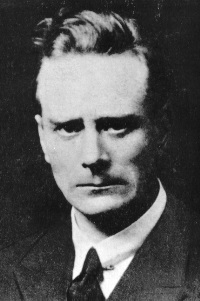
(Pictured: Oscar Traynor in Dublin in July 1922)


Leave a comment

Assassination of Field Marshal Sir Henry Hughes Wilson

Field Marshal Sir Henry Hughes Wilson is shot and killed by two Irish Republican Army (IRA) men in London on June 22, 1922.

Wilson is born in County Longford and a long-time opponent of the Irish Home Rule movement. He joins the British army in 1884 and sees action during the Boer War. He is assigned to British army headquarters during the infamous Curragh incident and supports the near-mutiny of British officers who refuse to lead troops against Ulster opponents of home rule. He serves in France during the World War I and, when the war ends, continues his staunch support of the Unionist cause while serving as Chief of General Staff. He is a strong supporter of the coercion tactics of the British in Ireland during the Irish War of Independence, even suggesting that the leaders of Sinn Féin be executed. He leaves the army when David Lloyd George decides not to renew his term as chief of staff and is elected Member of Parliament (MP) for North Down as a Conservative in 1922. In Parliament, he urges even stronger coercion methods than those then being carried out by the Black and Tans.

On June 22, 1922, two London-based volunteers of the Irish Republican Army, Reginald Dunne and Joseph O’Sullivan, assassinate Wilson outside his house at 36 Eaton Place at approximately 2:20 PM. He is in full uniform as he is returning from unveiling the Great Eastern Railway War Memorial at Liverpool Street station at 1:00 PM. He has six wounds, two of them fatal wounds to the chest.

Stories later circulate that the first shot misses but rather than taking shelter in the house, he draws his sword and advances on his attackers, who are able to shoot and kill him. These stories often stress that he dies a martyr. His housemaid testifies that she found his drawn sword lying by his side. These details do not feature in the witness accounts by Reginald Dunne, which is smuggled out of prison, the inquest testimony of one of two road menders working nearby, and the taxi driver who had just dropped Wilson off. One of the road mender’s accounts, as published in the Daily Mail, mentions Wilson turning on his attackers with the words “you cowardly swine!” but this is believed to be a possible embellishment by the newspaper.

Two police officers and a chauffeur are also shot as the men attempt to avoid capture. They are then surrounded by a crowd and arrested by other policemen after a struggle. Dunne and O’Sullivan are convicted of murder and hanged on August 10, 1922. On the day Wilson’s killers were hanged, Currygrane, the family homesite in Ballinalee, County Longford is burned to the ground, possibly as a reprisal although possibly as an unrelated part of the unrest in that county.

Wilson’s widow blames the government for his death and is only persuaded to allow government representation at the funeral on the grounds that not to do so would be disrespectful to the King. Wilson’s funeral is a public affair attended by David Lloyd George and the cabinet, Ferdinand Foch, Robert Nivelle and Maxime Weygand from France as well as many of his former army colleagues including John French, Nevil Macready, Douglas Haig and William Robertson. He is buried in the crypt of St. Paul’s Cathedral in London.


Leave a comment

Birth of Conel Hugh O’Donel Alexander, Cryptanalyst & Chess Player

Conel Hugh O’Donel Alexander, Irish-born British cryptanalyst, chess player, and chess writer, is born in CorkCounty Cork, on April 19, 1909. He works on the German Enigma machine at Bletchley Park during World War II, and is later the head of the cryptanalysis division at Government Communications Headquarters (GCHQ) for over 20 years. In chess, he twice wins the British Chess Championship and earns the title of International Master. He is usually referred to as C.H.O’D. Alexander in print and Hugh in person.

Alexander is born into an Anglo-Irish family, the eldest child of Conel William Long Alexander, an engineering professor at University College Cork (UCC), and Hilda Barbara Bennett. His father dies during the Irish War of Independence in 1920, and the family moves to Birmingham in England where he attends King Edward’s School. He wins a scholarship to study mathematics at King’s College, Cambridge, in 1928, graduating with a first in 1931. He represents the University of Cambridge in the Varsity chess matches of 1929, 1930, 1931 and 1932.

From 1932, Alexander teaches mathematics in Winchester and marries Enid Constance Crichton Neate on December 22, 1934. In 1938 he leaves teaching and becomes head of research at the John Lewis Partnership.

In February 1940 Alexander arrives at Bletchley Park, the British codebreaking centre during the World War II. He joins Hut 6, the section tasked with breaking German Army and Air Force Enigma messages. In 1941, he transfers to Hut 8, the corresponding hut working on Naval Enigma. He becomes deputy head of Hut 8 under Alan Turing and formally becomes the head of Hut 8 in November 1942. In October 1944, Alexander is transferred to work on the Japanese JN-25 code.

In mid-1946, Alexander joins GCHQ, which is the post-war successor organisation to the Government Code and Cypher School (GC&CS) at Bletchley Park. By 1949, he has been promoted to the head of “Section H” (cryptanalysis), a post he retains until his retirement in 1971.

Alexander is twice a winner of the British Chess Championship, in 1938 and 1956. He represents England in the Chess Olympiad six times, in 1933, 1935, 1937, 1939, 1954 and 1958. At the 1939 Olympiad in Buenos AiresArgentina, Alexander has to leave part-way through the event, along with the rest of the English team, due to the declaration of World War II, as he is required at home for codebreaking duties. He is also the non-playing captain of England from 1964 to 1970. He is awarded the International Master title in 1950 and the International Master for Correspondence Chess title in 1970. He wins the Hastings International Chess Congress 1946/47 with the score 7½/9, a point ahead of Savielly Tartakower. His best tournament result may have been first equal Hastings 1953/54, where he goes undefeated and beats Soviet grandmasters David Bronstein and Alexander Tolush in individual games. He is also the chess columnist of The Sunday Times in the 1960s and 1970s.

Many knowledgeable chess people believe that Alexander had Grandmaster potential, had he been able to develop his chess abilities further. Many top players peak in their late twenties and early thirties, but for Alexander this stretch coincided with World War II, when high-level competitive opportunities were unavailable. After this, his professional responsibilities as a senior cryptanalyst limited his top-class appearances. He defeats Mikhail Botvinnik in one game of a team radio match against the Soviet Union in 1946, at a time when Botvinnik is probably the world’s top player. Alexander makes important theoretical contributions to the Dutch Defence and Petrov’s Defence.

Conel Hugh O’Donel Alexander dies on February 15, 1974, in CheltenhamGloucestershire, England.


Leave a comment

Birth of Irish Politician Mary MacSwiney

Mary MacSwiney, Irish politician and educationalist, is born in London on March 27, 1872, to an Irish father and English mother. In 1927, she becomes leader of Sinn Féin when Éamon de Valera resigns from the presidency of the party.

MacSwiney returns to Ireland with her family at the age of six and is educated at St. Angela’s School in Cork. At the age of twenty, she obtains a teaching post at a private school in England and studies for a Teaching Diploma at the University of Cambridge, which is normally reserved for men.

Influenced by her younger brother Terence MacSwiney‘s staunch Irish republicanism, MacSwiney joins the Gaelic League and Inghinidhe na hÉireann. She is a founder member of Cumann na mBan when it is formed in 1914 in Cork and becomes a National Vice-President of the organisation. She leads the denunciation of British rule at the Convention of November 1914. In 1916, she is arrested and imprisoned following the Easter Rising and is also dismissed from her teaching position due to her republican activities. Several months later, upon her release from prison, she and her sister Annie re-found Scoil Íte, a sister school to Patrick Pearse‘s St. Enda’s School, and she remains involved with the school for the rest of her life.

MacSwiney supports the Irish War of Independence in 1919–21. After the death of her brother Terence in October 1920 on hunger strike during the height of the war, she is elected for Sinn Féin to the Cork Borough constituency in 1921. She gives evidence in Washington, D.C., before the American Commission on Conditions in Ireland. For nine months she and Terence’s widow, Muriel, tour the United States lecturing and giving interviews.

MacSwiney is active in her friendship with Harry Boland and de Valera, whom she cultivates assiduously. In October 1921, a second delegation is to be sent to London which for the first time includes Michael Collins. MacSwiney, who remains implacably opposed, pleads with de Valera to be allowed to go. She is refused as de Valera thinks her to be “too extreme.” She strongly opposes the Anglo-Irish Treaty, debating during December 1921 to January 1922 to resume the war. On December 21 she speaks for three hours, criticising the agreement from all angles.

MacSwiney is arrested at Nell Ryan’s home, a safe house, at 40 Herbert Park, Ballsbridge, on November 4, 1922, when it is raided by Free State soldiers. She is interned at Mountjoy Gaol and immediately goes on hunger strike. Cumann na mBan organizes vigils outside the prison in protest of Mary’s and the others internment. The Women’s Prisoner’s Defence League is formed in August 1922 to protect their rights. During the hunger strike she refuses doctor’s visits and is resigned to her death. Her condition is critical, and she is given the Last Rites by a Catholic priest. The Government is not prepared to allow strikers die, so she is released.

En route to Liam Lynch‘s funeral, MacSwiney is again arrested when the car in which she is riding is stopped and she is recognised. She is taken with Kate O’Callaghan to Kilmainham Gaol. Fearless of death, she begins another protest. They continued to be interned without charge, but it is explained she is distributing anti-government propaganda. After nineteen days of hunger strike, she is due to be released on April 30, 1923. The Governor allows O’Callaghan to go but stays a decision on MacSwiney. Most of the women on hunger strike are sent to the North Dublin Union.

MacSwiney retains her seat at the 1923 Irish general election and, along with other Sinn Féin members, refuses to enter the Dáil Éireann.

In March 1926 the party holds its Ardfheis. MacSwiney and Father Michael O’Flanagan lead the section from which Éamon de Valera and Fianna Fáil break away. De Valera has come to believe that abstentionism is not a workable tactic and now sees the need to become the elected government of the Dáil. The conference instructs a joint committee of representatives from the two sections to arrange a basis for co-operation. That day, it issues a statement declaring “the division within our ranks is a division of Republicans.” The next day, de Valera’s motion to accept the Free State Constitution, contingent upon the abolition of the Oath of Allegiance, narrowly fails by a vote of 223 to 218. However, de Valera takes the great majority of Sinn Féin support with him when he founds Fianna Fáil.

MacSwiney continues to maintain a republican position until her death. By then she is vice-president of Sinn Féin and Cumann na mBan but loses her seat at the June 1927 Irish general election. When lack of funds prevents Sinn Féin contesting the second election called that year, MacSwiney declares “no true Irish citizen can vote for any of the other parties.”

Mary MacSwiney dies at her home in Cork on March 8, 1942. Her stance, both before and after the Treaty, may be summed up by her statement, “A rebel is one who opposes lawfully constituted authority and that I have never done.”


Leave a comment

Birth of George Brent, Irish-Born Actor

george-brent

George Brent, Irish-born American stage, film, and television actor in American cinema, is born on March 15, 1904 in Ballinasloe, County Galway.

Brent was born George Patrick Nolan to John J. and Mary (née McGuinness) Nolan. His mother is a native of Clonfad, Moore, County Roscommon. During the Irish War of Independence, Brent is part of the Irish Republican Army (IRA). He flees Ireland with a bounty set on his head by the British government, although he later claims only to have been a courier for guerrilla leader and tactician Michael Collins.

Brent arrives in the United States in 1921. Some time later he tours with a production of Abie’s Irish Rose. During the next five years, he acts in stock companies in Colorado, Rhode Island, Florida, and Massachusetts. In 1930, he appears on Broadway in Love, Honor, and Betray, alongside Clark Gable.

He eventually moves to Hollywood, and makes his first film, Under Suspicion, in 1930. Over the next two years, he appears in a number of minor films produced by Universal Studios and 20th Century Fox, before being signed to contract by Warner Bros. in 1932. He remains at Warner Bros. for the next 20 years, carving out a successful career as a top-flight leading man during the late 1930s and 1940s.

Highly regarded by Bette Davis, Brent becomes her most frequent male co-star, appearing with her in 13 films, including Front Page Woman (1935), Special Agent (1935), The Golden Arrow (1936), Jezebel (1938), The Old Maid (1939), Dark Victory (1939), and The Great Lie (1941). Brent also plays opposite Ruby Keeler in 42nd Street (1933), Greta Garbo in The Painted Veil (1934), Ginger Rogers in In Person (1935), Madeleine Carroll in The Case Against Mrs. Ames (1936), Jean Arthur in More Than a Secretary (1936), Myrna Loy in Stamboul Quest (1934) and The Rains Came (1939), Merle Oberon in ‘Til We Meet Again (1940), Ann Sheridan in Honeymoon for Three (1941), Joan Fontaine in The Affairs of Susan (1945), Barbara Stanwyck in So Big! (1932), The Purchase Price (1932), Baby Face (1933), The Gay Sisters (1942), and My Reputation (1946), Claudette Colbert in Tomorrow Is Forever (1946), Dorothy McGuire in The Spiral Staircase (1946), Lucille Ball in Lover Come Back (1946), and Yvonne De Carlo in Slave Girl (1947).

Brent drifts into “B” pictures from the late 1940s and retires from film in 1953. He continues to appear on television until 1960, having appeared on the religion anthology series, Crossroads. He is cast in the lead in the 1956 television series, Wire Service. In 1978, he makes one last film, the made-for-television production Born Again.

George Brent receives two stars on the Hollywood Walk of Fame, the first, at 1709 Vine St., for his film contributions, the second star, at 1614 Vine St., for his work in television.

Brent is married five times: Helen Louise Campbell (1925–1927), Ruth Chatterton (1932–1934), Constance Worth (1937), Ann Sheridan (1942–1943), and Janet Michaels (1947-1974). His final marriage to Janet Michaels, a former model and dress designer, lasts 27 years until her death in 1974. They have a son and a daughter.

Brent also carries on a lengthy relationship with his frequent Warner Bros. co-star, actress Bette Davis, who describes her last meeting with Brent after many years of estrangement. He is suffering from advanced emphysema, and she expresses great sadness at his ill health and deterioration. George Brent dies on May 26, 1979 in Solana Beach, California.


Leave a comment

Death of Irish Painter Sir John Lavery

john-lavery

Sir John Lavery, Irish painter best known for his portraits and wartime depictions, dies of natural causes at the age of 84 in Kilmoganny, County Kilkenny, on January 10, 1941.

Born in Belfast on March 20, 1856, Lavery attends Haldane Academy in Glasgow in the 1870s and the Académie Julian in Paris in the early 1880s. He returns to Glasgow and is associated with the Glasgow School. In 1888 he is commissioned to paint the state visit of Queen Victoria to the Glasgow International Exhibition of Science, Art and Industry. This launches his career as a society painter, and he moves to London soon thereafter. In London he becomes friends with James McNeill Whistler and is clearly influenced by him.

Like William Orpen, Lavery is appointed an official artist in World War I. Ill-health, however, prevents him from travelling to the Western Front. A serious car crash during a Zeppelin bombing raid also keeps him from fulfilling this role as war artist. He remains in Britain and mostly paints boats, aeroplanes, and airships. During the war years he is a close friend of H.H. Asquith‘s family and spends time with them at their Sutton Courtenay Thames-side residence, painting their portraits and idyllic pictures like Summer on the River (Hugh Lane Gallery).

After the war Lavery is knighted and in 1921 he is elected to the Royal Academy of Arts.

michael-collins-love-of-ireland

During this time, he and his wife, Hazel, are tangentially involved in the Irish War of Independence and the Irish Civil War. They give the use of their London home to the Irish negotiators during the negotiations leading to the Anglo-Irish Treaty. After Michael Collins is assassinated, Lavery paints Michael Collins, Love of Ireland, now in the Hugh Lane Gallery. In 1929, Lavery makes substantial donations of his work to both the Ulster Museum and the Hugh Lane Gallery and in the 1930s he returns to Ireland. He receives honorary degrees from the University of Dublin and Queen’s University Belfast. He is also made a free man of both Dublin and Belfast. A long-standing member of Glasgow Art Club, Lavery exhibits at the club’s annual exhibitions, including its exhibition in 1939 in which his The Lake at Ranelagh is included.

Sir John Lavery dies in Rossenarra House, Kilmoganny, County Kilkenny on January 10, 1941, and is interred in Putney Vale Cemetery.