seamus dubhghaill

Promoting Irish Culture and History from Little Rock, Arkansas, USA


Leave a comment

Birth of John Barry, Victoria Cross Recipient

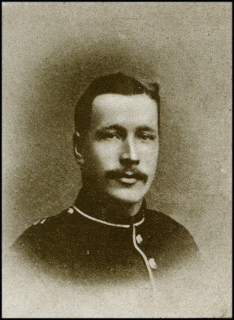
john-barry-vc

John Barry is born on February 1, 1873, in St. Mary’s Parish, Kilkenny, County Kilkenny. He is by birth an Irish recipient of the Victoria Cross (VC), the highest and most prestigious award for gallantry in the face of the enemy that can be awarded to British and Commonwealth forces.

Little is known of Barry’s early life prior to his enlistment with the 1st Battalion, Royal Irish Regiment of the British Army. Shortly after his enlistment, he finds himself sailing to South Africa for the outbreak of the Second Boer War, a conflict which ultimately leads to the award of the Victoria Cross, albeit tragically posthumously.

During the night attack on Monument Hill on January 7-8, 1901, Private Barry, although surrounded and threatened by the Boers at the time, smashes the breach of the Maxim gun, thus rendering it useless to its captors. It is in doing this splendid act for his country that he meets his death.

Barry dies of wounds received during his VC action at Monument Hill, South Africa. At the time, no posthumous awards of the VC can be made. However, as so often in the history of the Victoria Cross it is an individual, the mother of Alfred Atkinson, that brings about a decisive move to investigate those servicemen who would have been recommended for the award of the VC if they had not died beforehand. The outcome of the War Office investigation results in an announcement being published in The London Gazette on August 8, 1902. In fact, Barry’s family had already received his medal via registered post on April 30, 1902.

Barry is buried in Belfast Cemetery, east of Johannesburg, South Africa. His medals are sold at auction on September 22, 2000, and purchased at a hammer price of £85,000 by the Ashcroft Trust and displayed in the Lord Ashcroft Gallery in the Imperial War Museum, London.


Leave a comment

Birth of Ardal O’Hanlon, Comedian & Actor

ardal-o-hanlon

Ardal O’Hanlon, comedian and actor, is born in Carrickmacross, County Monaghan on October 8, 1965. He plays Father Dougal McGuire in Father Ted, George Sunday/Thermoman in My Hero, and DI Jack Mooney in Death in Paradise.

O’Hanlon is the son of politician and doctor Rory O’Hanlon and Teresa Ward. The episode of Who Do You Think You Are? which airs on October 6, 2008, reveals that his paternal grandfather, Michael O’Hanlon, was a medical student at University College Dublin (UCD) who joined the Irish Republican Army (IRA) during the Irish War of Independence and was a member of Michael Collins‘s squad which assassinated British secret service agents on the morning of Bloody Sunday. Details of his grandfather’s activities survive in UCD Archives, as well as Blackrock College. It also transpires that, on his mother’s side, he is a close relative of Peter Fenelon Collier.

O’Hanlon is schooled in Blackrock College in Dublin and graduates in 1987 from the National Institute for Higher Education, Dublin (now Dublin City University) with a degree in Communications Studies.

Together with Kevin Gildea and Barry Murphy, O’Hanlon founds the International Comedy Cellar, upstairs in the International Bar on Dublin’s South Wicklow Street. Dublin has no comedy scene at the time. As a stand up, he wins the Hackney Empire New Act of the Year competition in 1994. For a time, he is the presenter of The Stand Up Show.

O’Hanlon is spotted by Graham Linehan, who casts him as Father Dougal McGuire in Father Ted (1995–98). In 1995 he receives the Top TV Comedy Newcomer at the British Comedy Awards for this role. In 1995, he appears as Father Dougal in a Channel 4 ident and during Comic Relief on BBC One. This is followed by the award-winning short comedy film Flying Saucer Rock ‘n’ Roll.

O’Hanlon moves into straight acting alongside Emma Fielding and Beth Goddard in the ITV comedy-drama Big Bad World, which airs for two series in summer 1999 and winter 2001. He also plays a minor role in The Butcher Boy and appears in an episode of the original Whose Line is it Anyway?.

In 2000, O’Hanlon stars in the comedy series My Hero, in which he plays a very naive superhero from the planet Ultron. His character juggles world-saving heroics with life in suburbia. He stays in the role until the first episode of series 6 in July 2006 where he is replaced by James Dreyfus during the same episode.

O’Hanlon also provides the voice of the lead character in the three Christmas television cartoon specials of Robbie the Reindeer. He appears in the 2005 BBC One sitcom Blessed, written by Ben Elton. Towards the end of 2005, he plays an eccentric Scottish character, Coconut Tam, in the family-based film, The Adventures of Greyfriars Bobby. Although more commonly on television, he also appears on radio. In 2015 he appears as incompetent angel Smallbone in the sitcom The Best Laid Plans, also on BBC Radio 4.

In 2006, O’Hanlon writes and presents an RTÉ television series called Leagues Apart, which sees him investigate the biggest and most passionate football rivalries in a number of European countries. He follows this with another RTÉ show, So You Want To Be Taoiseach? in 2007. It is a political series where he gives tongue-in-cheek advice on how to go about becoming Taoiseach of Ireland.

O’Hanlon appears in the Doctor Who episode “Gridlock“, broadcast on April 14, 2007, in which he plays a cat-like creature named Thomas Kincade Brannigan. He appears in Series 3 of the TV show Skins, playing Naomi Campbell’s Politics teacher named Kieran. He then goes on to form a relationship with Naomi’s mother, played by Olivia Colman. He plays the lead role in Irish comedy television programme Val Falvey, TD on RTÉ One.

In February 2011, O’Hanlon returns to the Gate Theatre, Dublin starring in the Irish premiere of Christopher Hampton‘s translation of Yasmina Reza’s God of Carnage, alongside Maura Tierney. In 2011, he appears in the comedy panel show Argumental.

O’Hanlon has written a novel, The Talk of the Town, which is published in 1998. The novel is about a teenage boy, Patrick Scully, and his friends.

In February 2015 O’Hanlon officially launches the 2015 Sky Cat Laughs Comedy Festival which takes place in Kilkenny from May 28–June 1. In 2015 he plays the role of Peter the Milkman in the Sky One sitcom After Hours.

On February 2, 2017, it is announced O’Hanlon will play the lead role in the BBC crime drama Death in Paradise taking the role of DI Jack Mooney following Kris Marshall‘s departure the same day.


Leave a comment

Birth of Cosslett Quinn, Priest & Linguist

cosslett-o-cuinn-book

The Rev. Canon Cosslett Quinn (in Irish Cosslett Ó Cuinn), scholar, linguist, and priest of the Church of Ireland who translates the New Testament into Irish, is born in Derriaghy, County Antrim in what is now Northern Ireland on February 27, 1907.

Quinn is born to Charles Edward Quinn, rector of Derriaghy, and Edith Isobel Wadell. He studies at Campbell College in Belfast, and later at Trinity College Dublin, where he receives his Bachelor of Divinity in Theology in 1940.

Quinn is a poet, theologian, critic, biblical scholar, member of the ecumenical movement, and a scholar of the Irish language. During his studies, he develops a strong interest in Ulster Irish and often visits the Irish-speaking Gola Island and Derrybeg. He also publishes articles in Éigse: A Journal of Irish Studies on the dialects of Irish spoken on Rathlin Island and Kilkenny. He compiles the folklore of native Irish speakers from the islands of Tory and Arranmore off the coast of County Donegal.

While working in Belfast and Inishowen in 1931, Quinn is promoted to the post of deacon. In 1961, he is appointed professor of Biblical Greek at Trinity College and begins work on a new translation of the New Testament. He also translates the Book of Psalms and the Prayer Book of the Church of Ireland into Irish, as well as several Spanish works. Although it is unusual in his lifetime for Protestants to hold leading positions in the Irish language movement, Quinn is for a time President of Oireachtas na Gaeilge. He is made a canon of St. Patrick’s Cathedral in 1966, before retiring from the ministry in 1971.

Cosslett Quinn dies on December 6, 1995.


Leave a comment

Birth of James Butler, 2nd Earl of Ormond

james-butler-2nd-earl-of-ormond

James Butler, 2nd Earl of Ormond, a noble in the Peerage of Ireland, is born in Kilkenny CastleKilkenny on October 4, 1331. He is Lord Justice of Ireland in 1359, 1364, and 1376, and a dominant political leader in Ireland in the 1360s and 1370s. He is usually called The Noble Earl, being a great-grandson, through his mother, of King Edward I of England.

Butler is the son of James Butler, 1st Earl of Ormond and Lady Eleanor de Bohun. He is given in ward on September 1, 1344 to Maurice FitzGerald, 1st Earl of Desmond for the fine of 2306 marks and afterward to John Darcy, 1st Baron Darcy de Knayth.

On May 15, 1346, Butler marries Elizabeth Darcy, daughter of Sir John Darcy and Joan de Burgh. They have five children: James Butler, 3rd Earl of Ormond (1362-1405), Thomas Butler (1359-1396), Justice of Cork, Eleanor Butler (1350-1392), Joan Butler (1360-1393), and Ralph Butler (1356-1367).

In 1362, Butler slays six hundred of Art Óg Mac Murchadha Caomhánach‘s followers at Tiscoffin in what is now County Kilkenny. On April 22, 1364, he is appointed Lord Deputy of Ireland to Lionel of Antwerp, 1st Duke of Clarence. Clarence, from his first arrival in Ireland, places great trust in him, and for a few years it seems that as Deputy he is almost all-powerful.

In the 1360s Butler clashes with Maurice FitzGerald, 4th Earl of Kildare. In 1364 the Irish House of Commons sends a delegation to England, headed by Kildare, to complain of misgovernment, and to ask for the removal of “corrupt” officials, some of whom have links to Butler. A number of these officials are removed, but Butler’s position is not seriously threatened.

Butler is Lord Justice by July 24, 1376, with a salary of £500 per year, in which office he is continued by King Richard II of England. On April 2, 1372, he is made constable of Dublin Castle, with the fee of £18 5s per year. He is summoned to the Parliaments held by Richard II.

James Butler dies October 18, 1382 at Knocktopher Castle in Kilkenny, Leinster, near which he had founded a priory for Carmelite friars in 1356. He is buried in St. Canice’s Cathedral, Kilkenny.


2 Comments

Execution of Father John Murphy

father-john-murphy

John Murphy, Irish Roman Catholic priest and one of the leaders of the Irish Rebellion of 1798 in Wexford, is executed by British soldiers on July 2, 1798.

Murphy is born at Tincurry in the Parish of Ferns, County Wexford in 1753, the youngest son of Thomas and Johanna Murphy. Studying for the priesthood is then illegal in Ireland and so priests are trained abroad. He sails for Spain in early 1772 and studies for the priesthood in Seville, where many of the clergy in Ireland receive their education due to the persecution of Catholics as a result of the Penal Laws.

Fr. Murphy is initially against rebellion and actively encourages his parishioners to give up their arms and sign an oath of allegiance to the British Crown. On May 26, 1798, a company of men armed with pikes and firearms gather under Fr. Murphy to decide what to do for safety against the regular yeomanry patrols at a townland called the Harrow. At about eight o’clock that evening, a patrol of some twenty Camolin cavalry spot the group and approach them, demanding to know their business. They leave after a brief confrontation, having burned the cabin of a missing suspected rebel whom they had been tasked to arrest. As the patrol returns, they pass by Fr. Murphy’s group, who are now angry at the sight of the burning cabin. As the cavalry passes by the men an argument develops, followed by stones being thrown and then an all-out fight between the men and the troops. Most of the cavalry quickly flees, but two of the yeomen are killed. The Wexford Rebellion has begun and Fr. Murphy acts quickly. He sends word around the county that the rebellion has started and organises raids for arms on loyalist strongholds.

Parties of mounted yeomen respond by killing suspects and burning homes, causing a wave of panic. The countryside is soon filled with masses of people fleeing the terror and heading for high ground for safety in numbers. On the morning of May 28, a crowd of some 3,000 gather on Kilthomas Hill but is attacked and put to flight by Crown forces who kill 150. At Oulart Hill, a crowd of over 4,000 combatants gather, plus many women and children. Spotting an approaching North Cork Militia party of 110 rank and file, Fr. Murphy and the other local United Irishmen leaders such as Edward Roche, Morgan Byrne, Thomas Donovan, George Sparks and Fr. Michael Murphy organise their forces and massacre all but five of the heavily outnumbered detachment.

The victory is followed by a successful assault on the weak garrison of Enniscorthy, which swells the Irish rebel forces and their weapon supply. However, defeats at New Ross, Arklow, and Bunclody mean a loss of men and weapons. Fr. Murphy returns to the headquarters of the rebellion at Vinegar Hill before the Battle of Arklow and is attempting to reinforce its defences. Twenty thousand British troops arrive at Wexford with artillery and defeat the rebels, armed only with pikes, at the Battle of Vinegar Hill on June 21. However, due to a lack of coordination among the British columns, the bulk of the rebel army escapes to fight on.

Eluding the crown forces by passing through the Scullogue Gap, Fr. Murphy and other leaders try to spread the rebellion across the country by marching into Kilkenny and towards the midlands. On June 26, 1798, at the Battle of Kilcumney Hill in County Carlow, their forces are tricked and defeated. Fr. Murphy and his bodyguard, James Gallagher, become separated from the main surviving group. Fr. Murphy decides to head for the safety of a friend’s house in Tullow, County Carlow, when the path clears. They are sheltered by friends and strangers. One Protestant woman, asked by searching yeomen if any strangers have passed, answers “No strangers passed here today.” When she is later questioned about why she had not said Murphy and Gallagher had not passed, she explains that they had not passed because they were still in her house when she was questioned.

After a few days, some yeomen capture Murphy and Gallagher in a farmyard on July 2, 1798. They are brought to Tullow later that day where they are brought before a military tribunal, charged with committing treason against the British crown, and sentenced to death. Both men are tortured in an attempt to extract more information from them. Fr. Murphy is stripped, flogged, hanged, decapitated, his corpse burned in a barrel of tar and his head impaled on a spike. This final gesture is meant to be a warning to all others who fight against the British Crown.

Fr. John Murphy’s remains are buried in the old Catholic graveyard with Fr. Ned Redmond in Ferns, County Wexford.


Leave a comment

“The Beauty Queen of Leenane” Wins Four Tony Awards

the-beauty-queen-of-leenane

After being nominated in six categories, Galway’s Druid Theatre Company wins four Tony Awards on June 8, 1998, for its production of The Beauty Queen of Leenane, a 1996 comedy by Irish playwright Martin McDonagh.

The play receives its world premiere when the Druid Theatre Company opens the production at the Town Hall Theatre, Galway on February 1, 1996. It then tours Ireland, stopping off in Longford, Kilkenny and Limerick. It transfers to London‘s West End, where it opens at the Royal Court Theatre on February 29, 1996.

The Druid production returns to Ireland to embark on an extensive national tour, playing in Galway, Cork, Kerry, Limerick, Fermanagh, Donegal and Derry amongst others. The play returns to London where it is revived at the Duke of York’s Theatre on November 29, 1996, for several months.

The play is produced as part of Druid’s Leenane Trilogy, which includes two other plays by Martin McDonagh, in 1997 where it plays as part of another Irish and UK tour, which includes stops at the Olympia Theatre, Dublin and the Royal Court Theatre in London again.

The play receives its American premiere opening Off-Broadway on February 11, 1998, presented by the Atlantic Theatre Company at the Linda Gross Theater. It transfers to the Walter Kerr Theater on Broadway where it opens on April 14, 1998. It receives six Tony Award nominations, winning four for Best Supporting Actor (Tom Murphy), Best Actress (Marie Mullen), Best Supporting Actress (Anna Manahan), and Best Director (Garry Hynes), the first female recipient of a Tony Award for directing a play.

The play is produced in Australia in 1998 and again in 1999. The 1999 production is a tour by the Royal Court Theatre Company, appearing at the Adelaide Festival Centre (May – June 1999) and Wharf 1 (July 1999) and directed by Garry Hynes. The production returns to Ireland in 2000 as part of a final national tour.

The play is revived in July 2010 at the Young Vic Theatre in the West End, starring Irish actress Rosaleen Linehan. The production transfers to Dublin’s Gaiety Theatre where Linehan reprises her role opposite Derbhle Crotty. It then returns to the Young Vic for another run, closing in September 2011.

The Druid Theatre Company presents a revival in 2016–2017. The production starts in Ireland in Galway at the Town Hall Theatre in September 2016, and then tours to The Everyman in Cork, the Lime Tree Theatre in Limerick and the Gaiety Theatre, Dublin. The play then tours in the United States starting in November 2016. The play runs at the Mark Taper Forum in Los Angeles in November 2016 then opens at the Brooklyn Academy of Music in New York City, running from January 11, 2017, to February 5. The production returns to Ireland, playing at The Gaiety Theatre from March 28 to April 15, 2017.


Leave a comment

Birth of Mary McAleese, 8th President of Ireland

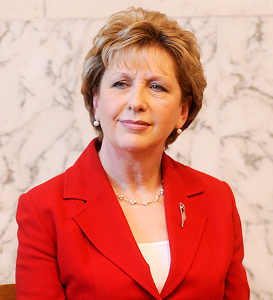
Mary Patricia McAleese, Irish Independent politician who serves as the 8th President of Ireland from November 1997 to November 2011, is born in Belfast, Northern Ireland on June 27, 1951. She is the second female president and is first elected in 1997 succeeding Mary Robinson, making McAleese the world’s first woman to succeed another as president. She is re-elected unopposed for a second term in office in 2004 and is the first President of Ireland to have come from either Northern Ireland or Ulster.

Born Mary Patricia Leneghan, McAleese is the eldest of nine children in a Roman Catholic family. Her family is forced to leave the area by loyalists when The Troubles break out. Educated at St. Dominic’s High School, she also spends some time when younger with the Poor Clares, Queen’s University Belfast, from which she graduates in 1973, and Trinity College, Dublin. She is called to the Bar of Northern Ireland in 1974 and remains a member of the Bar Council of Ireland. She opposes abortion and divorce.

In 1975, McAleese is appointed Professor of Criminal Law, Criminology and Penology at Trinity College, Dublin and in 1987, she returns to her Alma Mater, Queen’s, to become Director of the Institute of Professional Legal Studies. In 1994, she becomes the first female Pro-Vice-Chancellor of Queen’s University. She works as a barrister and also works as a journalist with RTÉ.

McAleese uses her time in office to address issues concerning justice, social equality, social inclusion, anti-sectarianism and reconciliation. She describes the theme of her Presidency as “Building Bridges.” This bridge-building materialises in her attempts to reach out to the unionist community in Northern Ireland. These steps include celebrating The Twelfth at Áras an Uachtaráin and she even incurs criticism from some of the Irish Catholic hierarchy by taking communion in a Church of Ireland cathedral in Dublin. Despite being a practising Roman Catholic, she holds liberal views regarding homosexuality and women priests. She is a member of the Council of Women World Leaders and is ranked the 64th most powerful woman in the world by Forbes. In spite of some minor controversies, McAleese remains popular, and her Presidency is regarded as successful.

McAleese receives awards and honorary doctorates throughout her career. On May 3, 2007, she is awarded The American Ireland Fund Humanitarian Award. On October 31, 2007, she is awarded an honorary Doctor of Laws from the University of Otago, New Zealand. On May 19, 2009, she becomes the third living person to be awarded the freedom of Kilkenny, succeeding Brian Cody and Séamus Pattison. The ceremony, at which she is presented with two hurleys, takes place at Kilkenny Castle. On May 24, 2009, she is awarded an honorary Doctor of Laws from Mount Holyoke College in South Hadley, Massachusetts. On May 22, 2010, she is awarded an honorary Doctor of Law from Fordham University, in the Bronx, New York City, where she delivers the commencement speech to the class of 2010. On November 8, she is awarded an honorary doctorate at University of Massachusetts Lowell in Lowell, Massachusetts.

On June 8, 2013, a ceremony is held to rename a bridge on the M1 motorway near Drogheda as the Mary McAleese Boyne Valley Bridge to honour McAleese’s contribution to the Northern Ireland peace process.


Leave a comment

Death of Author & Journalist Standish James O’Grady

Standish James O’Grady, author, journalist, and historian, dies on May 18, 1928, at ShanklinIsle of WightHampshireEngland.

O’Grady is born on March 22, 1846, at Castletown, County Cork, the son of Reverend Thomas O’Grady, the scholarly Church of Ireland minister of Castletown Berehaven, County Cork, and Susanna Doe. After a rather severe education at Tipperary Grammar School, O’Grady follows his father to Trinity College, Dublin, where he wins several prize medals and distinguishes himself in several sports.

O’Grady proves too unconventional of mind to settle into a career in the church and earns much of his living by writing for the Irish newspapers. Reading Sylvester O’Halloran‘s General history of Ireland sparks an interest in early Irish history. After an initial lukewarm response to his writing on the legendary past in History of Ireland: Heroic Period (1878–81) and Early Bardic Literature of Ireland (1879), he realizes that the public wants romance, and so follows the example of James Macpherson in recasting Irish legends in literary form, producing historical novels including Finn and his Companions (1891), The Coming of Cuculain (1894), The Chain of Gold (1895), Ulrick the Ready (1896) and The Flight of the Eagle (1897), and The Departure of Dermot (1913).

O’Grady also studies Irish history of the Elizabethan period, presenting in his edition of Sir Thomas Stafford‘s Pacata Hibernia (1896) the view that the Irish people have made the Tudors into kings of Ireland in order to overthrow their unpopular landlords, the Irish chieftains. His The Story of Ireland (1894) is not well received, as it sheds too positive a light on the rule of Oliver Cromwell for the taste of many Irish readers. He is also active in social and political campaigns in connection with such issues as unemployment and taxation.

Until 1898, he works as a journalist for the Daily Express of Dublin, but in that year, finding Dublin journalism in decline, he moves to Kilkenny to become editor of the Kilkenny Moderator. It is here he becomes involved with Ellen Cuffe, Countess of Desart and Captain Otway Cuffe. He engages in the revival of the local woolen and woodworking industries. In 1900 he founds the All-Ireland Review and returns to Dublin to manage it until it ceases publication in 1908. O’Grady contributes to James Larkin‘s The Irish Worker paper.

O’Grady’s works are an influence on William Butler Yeats and George Russell and this leads to him being known as the “Father of the Celtic Revival.” Being as much proud of his family’s Unionism and Protestantism as of his Gaelic Irish ancestry, identities that are increasingly seen as antithetical in the late 1800s, he is described by Augusta, Lady Gregory as a “fenian unionist.”

Advised to move away from Ireland for the sake of his health, O’Grady passes his later years living with his eldest son, a clergyman in England, and dies on the Isle of Wight on May 18, 1928.

O’Grady’s eldest son, Hugh Art O’Grady, is for a time editor of the Cork Free Press before he enlists in World War I early in 1915. He becomes better known as Dr. Hugh O’Grady, later Professor of the Transvaal University College, Pretoria, who writes the biography of his father in 1929.


Leave a comment

Passage of the Statutes of Kilkenny

lionel-of-antwerp

The Statutes of Kilkenny, a series of thirty-five acts aiming to curb the decline of the Hiberno-Norman Lordship of Ireland, are passed at Kilkenny on February 18, 1366.

By the middle decades of the 13th century, the Hiberno-Norman presence in Ireland is perceived to be under threat, mostly due to the dissolution of English laws and customs among English settlers. These English settlers are described as “more Irish than the Irish themselves,” referring to their taking up Irish law, custom, costume, and language.

The statutes attempt to prevent this “middle nation,” which is neither true English nor Irish, by reasserting English culture among the English settlers.

There are also military threats to the Norman presence, such as the failed invasion by Robert the Bruce‘s brother Edward Bruce in 1315, which is defended by the Irish chief Domhnall Ó Néill in his Remonstrance to Pope John XXII, complaining that “For the English inhabiting our land…are so different in character from the English of England…that with the greatest propriety they may be called a nation not of middle medium, but of utmost, perfidy.” Further, there was the de Burgh or Burke Civil War of 1333–1338, which leads to the disintegration of the estate of the Earldom of Ulster into three separate lordships, two of which are in outright rebellion against the crown.

The prime author of the statutes is Lionel of Antwerp, better known as the Duke of Clarence, and who is also the Earl of Ulster. In 1361, he has been sent as viceroy to Ireland by Edward III to recover his own lands in Ulster if possible and to turn back the advancing tide of the Irish. The statutes are enacted by a parliament that he summons in 1366. The following year, he leaves Ireland.

The statutes begin by recognizing that the English settlers have been influenced by Irish culture and customs. They forbid the intermarriage between the native Irish and the native English, the English fostering of Irish children, the English adoption of Irish children, and use of Irish names and dress. Those English colonists who do not know how to speak English are required to learn the language on pain of losing their land and belongings, along with many other English customs. The Irish pastimes of “hockie” and “coiting” are to be dropped and pursuits such as archery and lancing are to be taken up, so that the English colonists will be more able to defend against Irish aggression, using English military tactics.

Other statutes require that the English in Ireland be governed by English common law, instead of the Irish March law or Brehon law and ensures the separation of the Irish and English churches by requiring that “no Irishman of the nations of the Irish be admitted into any cathedral or collegiate church…amongst the English of the land.”

The mistrust the English have of the Irish is demonstrated by Statute XV, which forbids Irish minstrels or storytellers to come to English areas, guarding against “the Irish agents who come amongst the English, spy out the secrets, plans, and policies of the English, whereby great evils have often resulted.”

While the Statutes are sweeping in scope and aim, the English never have the resources to fully implement them. Clarence is forced to leave Ireland the following year, and Hiberno-Norman Ireland continues to gain a primarily Irish cultural identity. Only at the beginning of the 17th century would another attempt to colonise Ireland begin to make appreciable gains. The Statutes of Kilkenny ultimately help to create the complete estrangement of the two “races” in Ireland for almost three centuries.

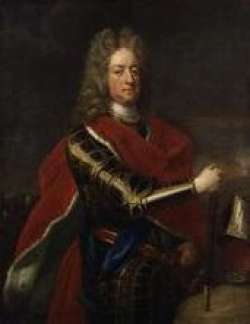
(Pictured: Lionel of Antwerp, 1st Duke of Clarence)


Leave a comment

The Sack of Wexford

sack-of-wexford

The Sack of Wexford takes place on October 11, 1649, during the Cromwellian conquest of Ireland, when the New Model Army under Oliver Cromwell takes Wexford town in southeastern Ireland. The English Parliamentarian troops break into the town while the commander of the garrison, David Synnot, is trying to negotiate a surrender, massacring soldiers and civilians alike. Much of the town is burned and its harbour is destroyed. Along with the Siege of Drogheda, the sack of Wexford is still remembered in Ireland as an infamous atrocity.

Wexford is held by Irish Catholic forces throughout the Irish Confederate Wars. In the Irish Rebellion of 1641, over 1,500 local men muster in the town for the rebels. In 1642, Lord Mountgarret, the local Commander of the Confederate Catholic regime, orders Protestants to leave Wexford.

Wexford is also the base for a fleet of Confederate privateers, who raid English Parliamentary shipping and contribute 10% of their plunder to the Confederate government based in Kilkenny. In 1642, Parliamentary ships begin throwing captured Wexford sailors overboard with their hands tied. In reprisal, 150–170 English prisoners are kept in Wexford and threatened with death if such killing continued.

In 1648, the Confederates and Royalists in Ireland sign a treaty joining forces against the English Parliament. After Cromwell’s landing in Ireland in August 1649, therefore, Wexford is a key target for the Parliamentarians, being an important port for the Royalist alliance and a base for the privateers.

Cromwell arrives at Wexford on October 2, 1649 with about 6,000 men, eight heavy siege guns, and two mortars. The town’s garrison initially consists of 1,500 Confederate soldiers under David Synnot. However, the morale of the town is low and many of the civilians in Wexford want to surrender. Synnot, however, strings out surrender negotiations with Cromwell insisting on several conditions for surrender that Cromwell does not countenance, including the free practice of the Catholic religion, the evacuation of the garrison with their arms, and the free passage of the privateer fleet to a friendly port.

Negotiations are reopened when Cromwell’s guns blast two breaches in the walls of Wexford castle, opening the prospect of an assault on the town. However, while negotiations are still ongoing, the town is unexpectedly stormed and sacked on October 11, 1649.

Stafford, the English Royalist captain of Wexford Castle, surrenders the castle for reasons that have never been determined. The troops of the New Model Army, on their own initiative, immediately assault the walls of the town, causing the Confederate troops to flee in panic from their positions. The Parliamentarians pursue them into the streets of Wexford, killing many of the town’s defenders. Several hundred, including David Synnot, the town governor, are shot or drowned as they try to cross the River Slaney. Estimates of the death toll vary. Cromwell himself believes that over 2,000 of the town’s defenders have been killed compared with only 20 of his troops. Several Catholic priests, including seven Franciscans are killed by the Roundheads. Much of the town, including its harbour, is burned and looted. As many as 1,500 civilians are also killed in the sacking. This figure is difficult to corroborate but most historians accept that many civilians are killed in the chaos surrounding the fall of Wexford.

The destruction of Wexford is so severe that it can not be used either as a port or as winter quarters for the Parliamentarian forces. One Parliamentarian source therefore describes the sack as “incommodious to ourselves.” Cromwell reports that the remaining civilians have “run off” and asks for soldiers to be sent from England to repopulate the town and reopen its port.