With his father as the captain, Neill is born on a ship off the coast of Ireland. His birth name is Roland de Gostrie. He begins directing silent films in 1917 and goes on to helm 107 films, 40 of them silent. Although most of his films are low-budget B-movies, he is known for directing films with meticulously lit scenes with carefully layered shadows that become the style of film noir in the late 1940s. In fact, his last film, Black Angel (1946), is considered a film noir.
Neill is also credited in some works as R. William Neill, Roy W. Neill, and Roy Neill. He lives in the United States for most of his career and is a U.S. citizen. He does go to London from 1935 until 1940 where better opportunities exist for American directors. During this period, British film producerEdward Black hires him to direct The Lady Vanishes. However, due to delays in production, Black hires Alfred Hitchcock to direct instead.
Roy William Neill dies at the age of 59 from a heart attack in London, England on December 14, 1946.
James (Joseph) Hanley, British novelist, short story writer, and playwright of Irish descent, is born in Kirkdale, Liverpool, Lancashire on September 3, 1897. He publishes his first novel, Drift, in 1930. The novels and short stories about seamen and their families that he writes in the 1930s and 1940s include Boy (1931), the subject of an obscenity trial. He comes from a seafaring family and spends two years at sea himself. After World War II there is less emphasis on the sea in his works. While frequently praised by critics, his novels do not sell well. In the late 1950s, 1960s, and early 1970s he writes plays, mainly for the BBC, for radio and then for television, and also for the theatre. He returns to the novel in the 1970s. His last novel, A Kingdom, is published in 1978, when he is 80 years old.
Hanley is born to a working class family. Both his parents are born in Ireland, his father Edward Hanley around 1865, in Dublin, and his mother, Bridget Roache, in Queenstown, County Cork, around 1867. Both are well established in Liverpool by 1891, when they are married. Hanley’s father works most of his life as a stoker, particularly on Cunard Line liners, and other relatives have also gone to sea. He grows up living close to the docks. He leaves school in the summer of 1910 and works for four years in an accountants’ office. Then early in 1915 at the age of 17, he goes to sea for the first time. Thus life at sea is a formative influence and much of his early writing is about seamen.
In April 1917, Hanley jumps ship in Saint John, New Brunswick, Canada, and shortly thereafter joins the Canadian Expeditionary Force in Fredericton, New Brunswick. He fights in France in the summer of 1918, but is invalided out shortly thereafter. After the war he works as a railway porter in Bootle and devotes himself to a prodiguous range of autodidactic, high cultural activities – learning the piano, regularly attending concerts, reading voraciously and, above all, writing. However, it is not until 1930 that his novel Drift is accepted.
Hanley moves from Liverpool to near Corwen, North Wales in 1931, where he meets Dorothy Enid “Timothy” Thomas, neé Heathcote, a descendant of Lincolnshire nobility. They live together and have a child, Liam Powys Hanley, in 1933, but do not marry until 1947. In July 1939, as World War II is approaching, he moves to London to write documentaries and plays for the BBC. He moves back to Wales during the early years of the war, settling in Llanfechain on the other side of the Berwyn range from Corwen. In 1963, the Hanleys move to North London to be close to their son.
In 1937 Hanley publishes an autobiographical work, Broken Water: An Autobiographical Excursion, and while this generally presents a true overall picture of his life, it is seriously flawed, incomplete and inaccurate. Chris Gostick describes it as “a teasing palimpsest of truth and imagination.”
Hanley’s brother is the novelist Gerald Hanley and his nephew is the American novelist and playwright William Hanley. Hanley’s wife also publishes three novels, as Timothy Hanley. She dies in 1980. James Hanley himself dies in London on November 11, 1985 and is buried in Llanfechain, Wales.
Born Margaret Power, she is a daughter of Edmund Power and Ellen Sheehy, small landowners. She is “haphazardly educated by her own reading and by her mother’s friend Ann Dwyer.” Her childhood is blighted by her father’s character and poverty, and her early womanhood made wretched by a compulsory marriage at the age of fifteen to Captain Maurice St. Leger Farmer, an English officer whose drunken habits finally bring him as a debtor to the King’s Bench Prison, where he dies by falling out of a window in October 1817. She had left him after three months of marriage.
Marguerite later moves to Hampshire, England to live for five years with the family of Thomas Jenkins, a sympathetic and literary sea captain. Jenkins introduces her to the Irishman Charles John Gardiner, 1st Earl of Blessington, a widower with four children and seven years her senior. They marry at St. Mary’s, Bryanston Square, Marylebone, on February 16, 1818, only four months after the death of her first husband.
Of rare beauty, charm and wit, Lady Blessington is no less distinguished for her generosity and for the extravagant tastes she shares with her second husband, which results in encumbering his estates with debt. On August 25, 1822, they set out for a continental tour with Marguerite’s youngest sister, the 21-year-old Mary Anne, and servants. On the way they meet Count Alfred D’Orsay, who had first become an intimate of Lady Blessington in London in 1821, in Avignon on November 20, 1822, before settling at Genoa for four months from March 31, 1823. There they meet Lord Byron on several occasions, giving Lady Blessington material for her Conversations with Lord Byron.
It is in Italy, on December 1, 1827, that Count D’Orsay marries Harriet Gardiner, Lord Blessington’s only daughter by his former wife. The Blessingtons and the newlywed couple move to Paris towards the end of 1828, taking up residence in the Hôtel Maréchal Ney, where the Earl suddenly dies at the age of 46 of an apoplectic stroke in 1829. D’Orsay and Harriet then accompanied Lady Blessington to England, but the couple separates soon afterwards amidst much acrimony. D’Orsay continues to live with Lady Blessington until her death. Their home, first at Seymour Place, and afterwards Gore House, Kensington, now the site of the Royal Albert Hall, become a centre of attraction for all that is distinguished in literature, learning, art, science and fashion. Benjamin Disraeli writes Venetia whilst staying there, and it is at her home that Hans Christian Andersen first meets Charles Dickens.
After her husband’s death Lady Blessington supplements her diminished income by contributing to various periodicals as well as by writing novels. She is for some years editor of The Book of Beauty and The Keepsake, popular annuals of the day. In 1834 she publishes her Conversations with Lord Byron. Her Idler in Italy (1839–1840), and Idler in France (1841) are popular for their personal gossip and anecdotes, descriptions of nature and sentiment.
Early in 1849, Count D’Orsay leaves Gore House to escape his creditors. Subsequently the furniture and decorations are sold in a public sale successfully discharging Lady Blessington’s debts. She joins the Count in Paris, where she dies on June 4, 1849, of a burst heart. On examination it is discovered that her heart is three times normal size.
(Pictured: Marguerite, Countess of Blessington, painted by Sir Thomas Lawrence in 1822)
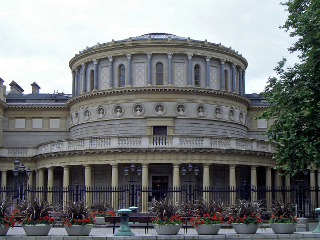
The Museum of Science and Art, Dublin on Kildare Street opens on August 29, 1890. The museum is founded on August 14, 1877, by act of Parliament. The decision to establish a state-run museum arises from requests by the Royal Dublin Society for continued government funding for its expanding museum activities.
A number of developments lead to the Science and Art Museums Act of 1877, which has the effect of transferring the buildings and collections of the Royal Dublin Society to state ownership. The collections are further enhanced by the transfer of other notable collections from institutions such as the Royal Irish Academy and Trinity College Dublin.
The Museum is the responsibility of the Department of Science and Art, which is also responsible for the South Kensington museums in London. State support for the institution is manifested in the construction of the new building on Kildare Street. It is built in the VictorianPalladian style and has been compared with the Altes Museum in Berlin, designed by Karl Friedrich Schinkel in the 1820s. Neoclassical influences can be seen in the colonnaded entrance and the domed rotunda, which rises to a height of 20 metres, and is modeled on the Pantheon in Rome.
The new museum houses coins, medals and significant Irish antiquities from the Royal Irish Academy including the Tara Brooch and Ardagh Chalice, ethnographical collections with material from Captain James Cooke‘s voyages from Trinity College Dublin, and the collections of the Geological Survey of Ireland.
These are joined by material from the decorative arts and ethnographical collections of the Royal Dublin Society along with their Irish collections of antiquities, minerals and plants. The old Royal Dublin Society museum on the Merrion Street side of Leinster House, erected with government assistance and opened in 1856, is devoted to natural history. It is dominated by zoology throughout much of its subsequent history and has an annex devoted to geology.
The building on Kildare Street is designed by Thomas Newenham Deane and is used to show contemporary Irish, British and Continental craftsmanship in its construction. State involvement in the running of the Museum allows for steady funding and a connection with other state museums in London and Edinburgh which is of considerable benefit. The collections grow with material acquired through purchase, public donation and shares of significant collections acquired by the state and dispersed by the London museums.
Catalogues are prepared by leading experts in various disciplines and printed in the Museum’s own press. In 1900 control passes to the Department of Agriculture and Technical Instruction and in 1908 its name is changed from “The Dublin Museum of Science and Art” to the “National Museum of Science and Art.” The name of the institution is changed again in 1921 to the “National Museum of Ireland.”
Foley is born May 24, 1818, at 6 Montgomery Street, Dublin, in what is then the city’s artists’ quarter. The street has since been renamed Foley Street in his honour. His father is a glassblower and his step-grandfather Benjamin Schrowder is a sculptor. At the age of thirteen he begins to study drawing and modelling at the Royal Dublin Society, where he takes several first-class prizes. In 1835 he is admitted as a student in the schools of the Royal Academy of Arts in London. He exhibits there for the first time in 1839, and comes to fame in 1844 with his Youth at a Stream. Thereafter commissions provide a steady career for the rest of his life. In 1849 he is made an associate, and in 1858 a full member of the Royal Academy of Arts.
In 1851, inspired by the recently closed Great Exhibition, the Corporation of London votes a sum of £10,000 to be spent on sculpture to decorate the Egyptian Hall in the Mansion House. Foley is commissioned to make sculptures of Caractacus and Egeria.
In 1864 Foley is chosen to sculpt one of the four large stone groups, each representing a continent, at the corners of George Gilbert Scott‘s Albert Memorial in Kensington Gardens. His design for Asia is approved in December of that year. In 1868, he is also asked to make the bronze statue of Prince Albert himself, to be placed at the centre of the memorial, following the death of Carlo Marochetti, who had originally received the commission but had struggled to produce an acceptable version.
Foley exhibits at the Royal Academy of Arts between 1839 and 1861. Further works are shown posthumously in 1875. His address is given in the catalogues as 57, George St., Euston Square, London until 1845, and 19, Osnaburgh Street from 1847.
John Henry Foley dies at Hampstead, north London on August 27, 1874, and is buried in St. Paul’s Cathedral on September 4. He leaves his models to the Royal Dublin Society, where he had his early artistic education, and a large part of his property to the Artists’ Benevolent Fund. He does not see the Albert Memorial completed before his death. A statue of Foley himself, on the front of the Victoria and Albert Museum, depicts him as a rather gaunt figure with a moustache, wearing a floppy cap.
Foley’s pupil Thomas Brock brings several of Foley’s works to completion after his death, including his statue of Prince Albert for the Albert Memorial. Foley’s articled pupil and later studio assistant Francis John Williamson becomes a successful sculptor in his own right, reputed to have been Queen Victoria‘s favourite. Other pupils and assistants are Charles Bell Birch, Samuel Ferris Lynn, Charles Lawes, and Richard Belt.
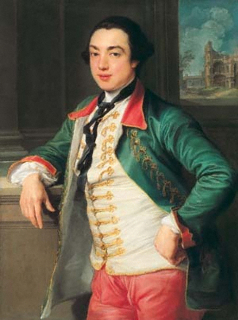
Caulfeild, the son of the 3rd Viscount Charlemont, succeeds his father as 4th Viscount in 1734. The title of Charlemont descends from Sir Toby Caulfeild, 1st Baron Caulfeild (1565–1627) of Oxfordshire, England, who is given lands in Ireland, and creates Baron Charlemont (the name of a fort on the Blackwater), for his services to King James I in 1620. The 1st Viscount is the 5th Baron (d. 1671), who is advanced by Charles II.
Lord Charlemont is well known for his love of Classical art and culture and spends nine years on the Grand Tour in Italy, Greece, Turkey and Egypt. He returns to Dublin and employs the Scottish architect Sir William Chambers to remodel his main residence Marino House, to design his town house Charlemont House and the unique Neoclassical Garden pavilion building, the Casino at Marino.
Lord Charlemont is historically interesting for his political connection with Henry Flood and Henry Grattan. He is a cultivated man with literary and artistic tastes, and both in Dublin and in London he has considerable social influence. He is the first President of the Royal Irish Academy and is a member of the Royal Dublin Society. He is appointed Custos Rotulorum of County Armagh for life in 1760. For various early services in Ireland, he is made an earl in 1763, but he disregards court favours and cordially joins Grattan in 1780 in the assertion of Irish independence. In 1783 he is made a founding Knight of the Order of St. Patrick.
Lord Charlemont is president of the volunteer convention in Dublin in November 1783, having taken a leading part in the formation of the Irish Volunteers, and he is a strong opponent of the proposals for the Acts of Union 1800. His eldest son, who succeeds him, is subsequently created an English Baron in 1837.
Lord Charlemont dies on August 4, 1799.
(Pictured: Charlemont as painted by Pompeo Batoni, c. 1753-56)
Warren is born on March 10, 1703, in Warrenstown, County Meath, the youngest son of Michael Warren and Catherine Plunkett, née Aylmer, who was the first wife of Sir Nicholas Plunkett.
In 1716, when he is 13 years old, Warren signs on as an ordinary seaman in Dublin and he and his brother initially serve together. He rapidly rises in the ranks, becoming a Captain in 1727. His ship patrols American colonial waters to provide protection from French forces. He becomes involved in colonial politics and land speculation.
In 1744, Warren is made commodore and commands a 16-ship squadron off the Leeward Islands, capturing 24 ships in four months. In 1745, he commands a group of ships that support the Massachusetts forces in the capture of the Fortress of Louisbourg. The prize system of the time allows naval officers to profit from the capture of enemy ships, and this expedition earns Warren a fortune, a promotion to the rank of Rear Admiral of the Blue, and a knighthood.
Warren’s lands include several thousand acres on the south side of the Mohawk River west of Schenectady, New York, now known as Florida, Montgomery County, New York, roughly across from present day Amsterdam. He brings two nephews, William Johnson, eventually Sir William Johnson, and Michael Tyrrell to clear and manage the land. Tyrrell soon leaves, asking his uncle for support with a naval appointment. Tyrrell has a very distinguished naval career, rising to Admiral. He becomes sick while headed to London from the West Indies and is buried at sea. In 1741, Warren builds Warren House, a mansion overlooking the Hudson River on his 300-acre estate in Greenwich Village. He also owns property on Long Island, the van Cortland Estate in Westchester County, New York and South Carolina.
While on a visit to Ireland in 1752, Peter Warren dies suddenly in Dublin on July 29, 1752 “of a most violent fever.” The towns of Warren, Rhode Island and Warren, New Hampshire are named after him, as well as Warren Street in Lower Manhattan.
During World War II, Bing serves in the Royal Corps of Signals, attaining the rank of major. A 1943 experiment with parachutes at the GSO2 Airborne Forces Development Centre leaves him disfigured and he bears the scars for many years.
At the 1945 general election, Bing stands for Labour in Hornchurch, winning the seat. He is re-elected in 1950 and 1951, serving until 1955. He serves briefly as a junior whip in 1945-1946 but this is widely thought to have been the unintended result of confusion on the part of Clement Attlee, who confuses him for another Labour MP of a similar name.
On the backbenches, Bing is, according to his Times obituary, “the unrestrained leader of a small group of radicals, never fully trusted by their colleagues and known as ‘Bing Boys.'” He takes a particular interest in the cases of Timothy Evans and John Christie, and he supports the campaign to overturn the conviction of Evans, which is ultimately successful. He supports Communist China and takes a keen interest in Northern Ireland, the brewers’ monopoly and parliamentary procedure.
Bing also builds a practice in West Africa. He becomes close to Kwame Nkrumah, the first post-colonial president of Ghana and is appointed Ghana’s attorney-general, a post he holds until 1961. When Nkrumah is ousted in 1966, Bing is arrested and ill-treated, before being sent home some months later. His memoir of Nkrumah’s Ghana, Reap the Whirlwind, is published in 1968.
Geoffrey Henry Cecil Bing dies in London on April 24, 1977, at the age of 67.
In the early years of his career Olcott sings in minstrel shows, before studying singing in London during the 1880s. Lillian Russell plays a major role in helping make him a Broadway star. When the producer Augustus Pitou approaches him in 1893 to succeed William J. Scanlan as the leading tenor in sentimental operettas on Irish themes, Olcott accepts and performs pseudo-Irish roles for the remainder of his career.
Olcott combines the roles of tenor, actor, lyricist and composer in many productions. He writes the complete scores to Irish musicals such as Sweet Inniscara (1897), A Romance of Athlone (1899), Garrett O’Magh (1901), and Old Limerick Town (1902). For other productions he collaborates with Ernest Ball and George Graff, Jr. in works such as The Irish Artist (1894), Barry of Ballymore (1910), Macushla (1912), and The Isle o’ Dreams (1913). There are some twenty such works between 1894 and 1920.
Olcott is a good songwriter who captures the mood of his Irish American audience by combining melodic and rhythmic phrases from traditional Irish music with melancholy sentiment. Some numbers from his musicals become very popular, such as “My Wild Irish Rose” from A Romance of Athlone, “Mother Machree” from Barry of Ballymore, and “When Irish Eyes Are Smiling” from The Isle o’ Dreams. Sometimes he uses tunes from others, such as that of the title song from Macushla from Irish composer Dermot Macmurrough (pseudonym of Harold R. White) or Too Ra Loo Ra Loo Ral (Irish Lullaby) by James Royce Shannon for his production Shameen Dhu (1914).
Talbot receives a commission in the army as ensign before he is twelve years old, and is appointed at sixteen to aid his relative, the Lord Lieutenant of Ireland. He sees active service in Holland and at Gibraltar.
Talbot immigrates to Canada in 1791, where he becomes personal secretary to John Graves Simcoe, Lieutenant Governor of Upper Canada. After returning to England, Talbot convinces the government to allow him to implement a land settlement scheme along the shore of Lake Erie. His petition for 5,000 acres is granted in 1803. On May 21, 1803 he lands at a spot which has since been called Port Talbot and builds a log cabin. Nearby, he adds a sawmill, a cooper shop, a blacksmith shop, and a poultry house along with a barn. When settlers begin to arrive in 1809, Talbot adds a gristmill as well.
Here Talbot rules as an absolute, if erratic, potentate, doling out strips of land to people of his choosing, a group that emphatically does not include supporters of the American Revolution, liberals or anyone insufficiently respectful. For every settler he places on 50 acres of land, he receives an additional 200 acres for himself. One of the conditions attached to the free grant of 50 acres is the right to purchase an additional 150 acres at $3 each, and the promise of a road in front of each farm within three and a half years. The other condition is the building of a small house and the clearing and sowing of 10 acres of land.
The result of the road-making provision is that the settlement becomes noted for its good roads, especially for that named Talbot Road. By the late 1820s Talbot has organized the construction of a 300 mile long road linking the Detroit River and Lake Ontario as part of grand settlement enterprise in the south western peninsula. By 1820, all of the land originally allotted to Talbot has been taken up. From 1814 to 1837 he settles 50,000 people on 650,000 acres of land in the Thames River area. Many, if not most of the settlers, are American. He places about 20,000 immigrants on the Talbot settlement by 1826.
Because Talbot has done his work so well, the government places the southwestern part of the province under his charge. This affords him the opportunity of extending the Talbot road from the Long Point region to the Detroit River. In 1823, he decides to name the port after his friend Baron Edward Smith-Stanley, 14th Earl of Derby, whose son, Frederick Arthur Stanley eventually becomes Governor General of Canada and donates to the hockey world the elusive trophy, which still bears his name.
Talbot’s administration is regarded as despotic. He is infamous for registering settlers’ names on the local settlement map in pencil and if displeased is alleged to erase their entry. However, his insistence on provision of good roads, maintenance of the roads by the settlers, and the removal of Crown and clergy reserves from main roads quickly results in the Talbot Settlement becoming the most prosperous part of the province. Eventually, however, he begins to make political demands on the settlers, after which his power is reduced by the provincial government. His abuse of power is a contributing factor in the Upper Canada Rebellion of 1837.
Talbot dies in the home of George Macbeth at London, Ontario on February 5, 1853 and is interred in the cemetery of St. Peters Anglican Church near Tyrconnell, Ontario in Elgin County. Talbot’s home in Port Talbot, called Malahide, is demolished in 1997 generating much public outcry from heritage preservationists. Talbotville, a community in Southwold, Ontario, and the city of St. Thomas, Ontario are named after him, as well as Colonel Talbot Road and Talbot Street in both London and St. Thomas.

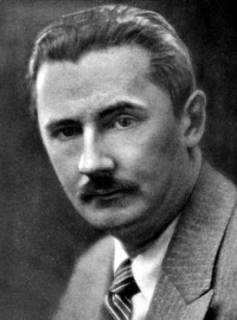 Roy William Neill, English film director best known for directing the last eleven of the fourteen Sherlock Holmes films starring Basil Rathbone and Nigel Bruce, is born on September 4, 1887. These films were made between 1943 and 1946 and released by Universal Studios.




 seamus dubhghaill