seamus dubhghaill

Promoting Irish Culture and History from Little Rock, Arkansas, USA


1 Comment

Death of Actor Henry Wilfrid Brambell

henry-brambell-john-lennon

Henry Wilfrid Brambell, Irish film and television actor best known for his role in the British television series Steptoe and Son, dies of cancer in Westminster, London, on January 18, 1985.

Brambell is the youngest of three sons born to Henry Lytton Brambell, a cashier at the Guinness Brewery, and his wife, Edith Marks, a former opera singer. His first appearance is as a child, entertaining the wounded troops during World War I. Upon leaving school he works part-time as a reporter for The Irish Times and part-time as an actor at the Abbey Theatre before becoming a professional actor for the Gate Theatre. He also does repertory at Swansea, Bristol and Chesterfield. In World War II, he joins the British military forces entertainment organisation Entertainments National Service Association (ENSA).

His television career begins during the 1950s, when he is cast in small roles in three Nigel Kneale/Rudolph Cartier productions for BBC TelevisionThe Quatermass Experiment (1953), Nineteen Eighty-Four (1954), and Quatermass II (1955). All of these roles earn him a reputation for playing old men, though he is only in his forties at the time.

It is this ability to play old men that leads to his casting in his best remembered role, as Albert Steptoe, the irascible father in Steptoe and Son. This begins as a pilot on the BBC’s Comedy Playhouse, and its success leads to a full series being commissioned, running from 1962 to 1974 including a five-year hiatus. There are two feature film spin-offs, a stage show, and an American incarnation entitled Sanford and Son, some episodes of which are almost exact remakes of the original British scripts.

The success of Steptoe and Son makes Brambell a high-profile figure on British television, and earns him the supporting role of Paul McCartney‘s grandfather in The Beatles‘ first film, A Hard Day’s Night (1964). In 1965, Brambell tells the BBC that he does not want to do another series of Steptoe and Son and, in September that year, he goes to New York City to appear in the Broadway musical Kelly at the Broadhurst Theatre, however, it closes after just one performance.

Apart from his role as the older Steptoe, Brambell achieves recognition in many films. His performance in The Terence Davies Trilogy wins him critical acclaim, far greater than any achieved for Steptoe and Son. Although he appears throughout the full 94-minute piece, Brambell does not speak a single word.

After the final series of Steptoe and Son is made in 1974, Brambell has some guest roles in films and on television. He and Harry H. Corbett also undertake a tour of Australia in 1977 in a Steptoe and Son stage show.

Brambell dies of cancer in Westminster, London, on January 18, 1985, at the age of 72. He is cremated on January 25, 1985 at Streatham Park Cemetery, where his ashes are scattered.

(Pictured: Henry Wilfrid Brambell and John Lennon in The Beatles’ first motion picture, A Hard Day’s Night)


Leave a comment

Birth of Actress Máire O’Neill

maire-oneill

Mary Agnes “Molly” Allgood, actress of stage and film under the stage name of Máire O’Neill, is born at 40 Middle Abbey Street in Dublin on January 12, 1885.

Allgood is one of eight children of compositor George and french polisher Margaret (née Harold) Allgood. Her father is sternly Protestant and against all music, dancing and entertainment, while her mother is a strict Catholic. After her father dies in 1896, she is placed in an orphanage. She is apprenticed to a dressmaker and her brother Tom becomes a Catholic priest.

Maud Gonne sets up Inghinidhe na hÉireann (Daughters of Ireland) in 1900 to educate women about Irish history, language and the arts, and Allgood and her sister Sara join the association’s drama classes around 1903. Their acting teacher, William “Willie” Fay, enrolls them in the National Theatre Society, later known as the Abbey Theatre. Allgood is part of the Abbey Theatre from 1906-1918 where she appears in many productions. In 1904 she is cast in a play by Irish playwright Teresa Deevy called Katie Roche where she plays the part of Margaret Drybone. There are 38 performances in this production.

In 1905 Allgood meets Irish playwright John Millington Synge, and they fall in love, a relationship regarded as scandalous because it crosses the class barriers of the time. In September 1907 he has surgery for the removal of troublesome neck glands, but a later tumour is found to be inoperable. They become engaged before his death in March 1909. Synge writes the plays The Playboy of the Western World and Deirdre of the Sorrows for Allgood.

In June 1911 Allgood marries G. H. Mair, drama critic of the Manchester Guardian, and later Assistant Secretary of the British Department of Information, Assistant Director of the League of Nations Secretariat in Geneva, and head of the League of Nations office in London, with whom she has two children. He dies suddenly on January 3, 1926. Six months later she marries Arthur Sinclair, an Abbey actor. They have two children, but the marriage ends in divorce.

Under her professional name Maire O’Neill, Allgood appears in films from 1930-53, including Alfred Hitchcock‘s film version of Seán O’Casey‘s play Juno and the Paycock (1930). She makes her American debut in New York City in 1914 in the play General John Regan at the Hudson Theatre.

Allgood dies at the age of 66 in Park Prewett Hospital, Basingstoke, England, on November 2, 1952, where she is receiving treatment after being badly burned in a fire at her London home.

Joseph O’Connor‘s 2010 novel, Ghost Light, is loosely based on Allgood’s relationship with Synge.


Leave a comment

British Release of Fenian Prisoners

cuba-five

The British, in a general amnesty, release 33 Fenian prisoners on January 5, 1871. Most of these prisoners are men who have either been swept up by the British in 1865, when they suppressed the Fenian newspaper The Irish People for taking part in the Fenian Rising of March 1867, or had been rounded up after the “Smashing of the Van” rescue of Thomas J. Kelly and Timothy Deasy in September 1867.

The British penal system of the period is brutal under normal circumstances, and the Fenians receive much harsher treatment than that received by the normal inmates. Those Fenians still on the outside agitate constantly for the release of their comrades. The man most responsible for the release of 1871 is John “Amnesty” Nolan, who thus earns his sobriquet.

The names of many of the men released by William Ewart Gladstone’s government are well known to those who have studied the Irish republican movement. One of them is Jeremiah O’Donovan Rossa, as steadfast an enemy of English rule in Ireland as any who has ever lived. After Rossa’s death in the United States, his body is returned to Ireland for burial, and his funeral in 1915 includes the famous eulogy by Patrick Pearse, one of the seminal moments in the renewal of armed struggle for Irish freedom. Another Fenian released that day is John Devoy, who perhaps more than any other man keeps the struggle for Irish freedom alive among Irish exiles in America.

The British government releases the Fenians on condition that they exile themselves to the country of their choice and not return until their sentences have expired. Many chose to go to Australia, but Rossa, Devoy, John McClure, Henry Mulleda, and Charles Underwood O’Connell, who have all been imprisoned together, chose to go to the United States and ship together from Liverpool on board the Cuba. The so-called Cuba Five arrive in New York City to a hero’s welcome from the city’s large Irish community and even receive a resolution of welcome from the United States House of Representatives.

(Pictured: “The Cuba Five” – John Devoy, Jeremiah O’Donovan Rossa, Charles Underwood O’Connell, Henry Mulleda and John McClure)


Leave a comment

Birth of Boxer Jimmy McLarnin

jimmy-mclarnin

James Archibald McLarnin, Irish Canadian professional boxer who became a two-time welterweight world champion and an International Boxing Hall of Fame inductee, is born on December 19, 1907, in Hillsborough, County Down. He has been referred to as the greatest Irish boxer of all time. BoxRec ranks him as the 11th best pound-for-pound fighter of all-time, the second best Canadian boxer of all time after Sam Langford, and the third greatest welterweight of all time.

When McLarnin is three years old the family emigrates to Saskatchewan, Canada via Liverpool. The McLarnins start out as a wheat farmers, but years later, following a particularly harsh winter, the family moves to Vancouver where they open a second-hand clothing store in Vancouver’s east end.

McLarnin is prodigious athlete, his main sports are football, baseball and boxing. He takes up boxing at the age of 10 after getting into a fight defending his newspaper-selling pitch. Former professional boxer Charles “Pop” Foster recognizes McLarnin’s talent at the age of 13. He constructs a makeshift gym for McLarnin to train in, sure that he will one day be the champion of the world. The two of them remain close, and when Foster dies, he leaves everything he has to McLarnin.

Following a successful start to his career in Vancouver, McLarnin grows aggrieved at the low pay he is receiving for bouts and decides to move to San Francisco. There his youthful appearance makes it difficult to get a fight until he lies about his age. It is for this reason that McLarnin is known as the “Baby-faced Assassin.” Despite his youthful appearance, McLarnin has incredible power with both fists, his right being particularly feared. Towards the end of his career he is forced to become more of a scientific boxer to reduce further injuries to his hands.

McLarnin loses his first title shot on May 21, 1928 in New York City against world lightweight champion Sammy Mandell. However, he does go on to beat him twice in the following two years. It is five years before McLarnin gets another title shot, during which time he knocks out gifted Jewish contenders Al Singer, Ruby Goldstein, and Sid Terris.

McLarnin’s second title shot comes against welterweight champion Young Corbett III. McLarnin wins by knockout after only 2 minutes 37 seconds. Following his title success, he fights an epic three-fight series with Barney Ross. The first fight, on May 28, 1934, is won by Ross, but McLarnin regains his title in their next match four months later. In the deciding fight on May 28, 1935, McLarnin loses his title for the final time in a narrow decision.

McLarnin retires in November 1936 still at the top of his game, having won his last two fights against all-time greats Tony Canzoneri and Lou Ambers. His record is 54 wins, 11 losses, and 3 draws in 68 contests. He never returns to the ring despite large incentives for him to do so. Unlike many boxers, he invested his money wisely and retires a wealthy man. He opens an electrical goods store, and also does some acting, golfing, and lecturing.

In 1996 The Ring votes McLarnin the fifth-greatest welterweight of all time.

Jimmy McLarnin dies on October 28, 2004 at the age of 96 in Richland, Washington. He is interred in the Forest Lawn Memorial Park in Glendale, California.


Leave a comment

Founding of the American Committee for Relief in Ireland

american-committee-for-relief-in-ireland

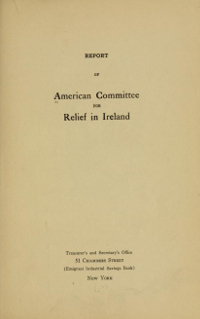
The American Committee for Relief in Ireland (ACRI) is founded through the initiative of Dr. William J. Maloney and others on December 16, 1920, with the intention of giving financial assistance to civilians in Ireland who have been injured or suffer severe financial hardship due to the ongoing Irish War of Independence.

The Committee is only one of several U.S. based philanthropic organisations that emerge following World War I with a view to influencing the post-war settlement from their perspective of social justice, economic development and long term stability in Europe. Some of them concentrate their efforts on events in Ireland, and while activists of Irish ethnicity are well represented, membership is far from confined to Americans of Irish heritage. Apart from the ACRI, bodies such as the American Commission on Irish Independence and the American Commission on Conditions in Ireland raise money and attempt to influence U.S. foreign policy in a manner sympathetic to the goal of Irish secession from the United Kingdom.

This period of Irish political radicalism coincides with a Red Scare in the United States. Jim Larkin, an Irish trade unionist, who has been closely associated with James Connolly in Ireland and with the Wobblies in the U.S., is serving a five-year sentence in Sing Sing prison for promoting his socialist agenda. While his political views differ fundamentally from most of the Sinn Féin leadership, Irish republicanism is seen by many of the American establishment as based on a questionable ideology. During the Irish War of Independence, the activities of Irish-American fund-raising organisations are viewed with suspicion and kept under close scrutiny by the intelligence services including J. Edgar Hoover, head of the General Intelligence Division of the Federal Bureau of Investigation. U.S. policy towards Irish concerns, initially hostile or at best indifferent, become somewhat less so following the 1920 U.S. presidential election and the landslide victory of Warren G. Harding over James M. Cox.

Following the burning of parts of Cork on December 11, 1920 by elements of the British security forces known as the Black and Tans, approaches are made by the city’s Lord Mayor, Donal O’Callaghan, to the American Red Cross for humanitarian assistance. The society, having taken advice from President Woodrow Wilson, the British embassy, the Foreign Office and the British Red Cross, decline at this time to act on his appeal. Numerous organisations and committees across the United States, operating independently in raising humanitarian aid money for Ireland realise that their funds will not be channelled through the U.S. Committee of the Red Cross and so another distribution channel is needed.

Five days after the inferno at Cork, a widely publicised meeting takes place at the Banker’s Club in New York City. It is organised by William Maloney with the intention of establishing a single nationwide organisation. It will have as its goal, explicitly and solely for the purpose of humanitarian relief, the raising and distribution in Ireland of $10 million. The body which soon emerges styles itself “The American Committee for Relief in Ireland.” One of its founding members, Levi Hollingsworth Wood, approaches a Dublin-based businessman and fellow Quaker, James Douglas, requesting his assistance in the local distribution of the funds on a non-partisan basis. In Ireland, Douglas speaks with Laurence O’Neill, the Lord Mayor of Dublin, who in turn contacts senior members of Sinn Féin to inform them of the wishes of the American Committee. These meetings culminate in the establishment of the Irish White Cross, for the purpose of local distribution of the Committee’s funds.


Leave a comment

Execution of Irish Republican Liam Mellows

liam-mellows

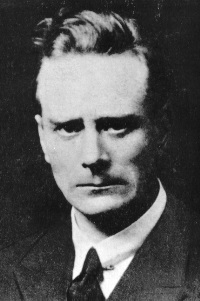
Liam Mellows, Irish republican and Sinn Féin politician, is executed by firing squad by Free State forces on December 8, 1922, in reprisal for the shooting of Teachta Dála (TD) Seán Hales.

Mellows is born at Hartshead Military Barracks, Ashton-Under-Lyne, Lancashire, England, to William Joseph Mellows, a British Army non-commissioned officer, and Sarah Jordan, of Inch, County Wexford. His family moves to 10 Annadale Avenue, Fairview, Dublin, in February 1895 when Sergeant Mellows is transferred there, however Liam remains in Wexford with his grandfather Patrick Jordan due to ill health. He attends the military school in Wellington Barracks in Cork and the Portobello garrison school in Dublin but ultimately refuses a military career much to his father’s disappointment, instead working as a clerk in several Dublin firms, including the Junior Army & Navy Stores on D’Olier Street.

A nationalist from an early age, Mellows approaches Thomas Clarke, who recruits him to Fianna Éireann, an organisation of young republicans.

Mellows is introduced to socialism when he meets James Connolly at Countess Markiewicz’s residence, recuperating after his hunger strike. He is active in the Irish Republican Brotherhood (IRB) and is a founder member of the Irish Volunteers, being brought onto its Organising Committee to strengthen the Fianna representation. He is arrested and jailed on several occasions under the Defence of the Realm Act. Eventually escaping from Reading Gaol, he returns to Ireland to command the “Western Division” of the Irish Republican Army (IRA) during the Easter Rising of 1916.

Mellows leads roughly 700 Volunteers in abortive attacks on Royal Irish Constabulary stations at Oranmore and Clarinbridge in County Galway and takes over the town of Athenry. However, his men are very badly armed and supplied and they disperse after a week, when British troops and the cruiser HMS Gloucester are sent west to attack them.

After this insurrection fails, Mellows escapes to the United States, where he is arrested and detained without trial in The Tombs in Lower Manhattan, New York, on a charge of attempting to aid the German side in World War I. After his release in 1918, he works with John Devoy and helps to organise Éamon de Valera’s fund-raising visit to America in 1919–1920.

Mellows returns to Ireland to become Irish Republican Army “Director of Supplies” during the Irish War of Independence, responsible for buying arms. At the 1918 general election of December, he is elected to the First Dáil as a Sinn Féin candidate for both East Galway and for North Meath. He considers the Anglo-Irish Treaty as signed to be a betrayal of the Irish Republic. A conference of 9 TDs is deputed to meet privately on January 5, 1922, to resolve the dispute and to achieve a unified front by compromise. The four other anti-Treaty TDs say there is agreement but Mellows does not and is seen thereafter by pro-Treaty TDs as one of their most implacable opponents. The following day the Dáil votes to approve the Treaty by a majority of 64 to 57.

Mellows is one of the more strident TDs on the approach to the Irish Civil War. In June 1922, he and fellow republicans Rory O’Connor, Joe McKelvey and Richard Barrett, among others, enters the Four Courts, which has been occupied by anti-Treaty forces since April. However, they are bombarded by pro-Treaty Free State forces and surrender after two days. Mellows has a chance to escape along with Ernie O’Malley but does not take it. Imprisoned in Mountjoy Gaol, Mellows, O’Connor, McKelvey and Barrett are executed by firing squad on December 8, 1922, in reprisal for the shooting of TD Seán Hales. Mellows is buried in Castletown cemetery, County Wexford, a few miles from Arklow. An annual commemoration ceremony is held at his grave site, in which a wreath is laid by a member of the Liam Mellows Commemoration committee.

Mellows is commemorated by statues in Oranmore and Eyre Square in Galway, in the official name of the Irish Defence Forces army barracks at Renmore and in the naming of Mellows Bridge in Dublin. Mellows Avenue in Arklow is named in his honour. He is also commemorated in the names of two hurling clubs, one in Galway and one in Wexford, and by Unidare RFC in Ballymun and their “Liam Mellows Perpetual Cup.”


Leave a comment

Premiere of “The Quare Fellow”

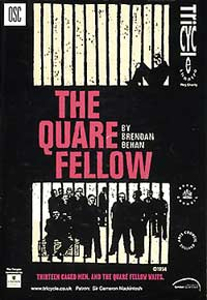
Brendan Behan’s first play, The Quare Fellow, premieres at the Pike Theatre in Dublin on November 19, 1954, to critical success. The title is taken from a Hiberno-English pronunciation of queer.

The Quare Fellow is initially offered to Dublin’s Abbey Theatre but is turned down. The play has its London première in May 1956 at Joan Littlewood‘s Theatre Workshop at the Theatre Royal Stratford East. On July 24, 1956, it transfers to the Comedy Theatre, London. In September 1956 the Abbey Theatre finally performs The Quare Fellow. It has such success that the Abbey’s artistic director, Ria Mooney, pushes the next play back to allow The Quare Fellow to run for six weeks. Its first New York performance is on November 27, 1958, at the Circle in the Square Theatre.

The play is set in Mountjoy Prison, Dublin. The antihero of the play, the Quare Fellow, is never seen or heard but rather functions as the play’s central conceit. He is a man condemned to die on the following day, for an unmentioned crime. Whatever it is, it revolts his fellow inmates far less than that of the Other Fellow, a very camp, almost Wildean, gay man.

There are three generations of prisoners in Mountjoy including boisterous youngsters who can irritate both other inmates and the audience and the weary old lags Neighbour and “methylated martyr” Dunlavin.

The first act is played out in the cramped area outside five cells and is comedic, sometimes rather like an Irish episode of Porridge. After the interval, the pace slows considerably and the play becomes much darker, as the time for the execution approaches. The focus moves to the exercise yard and to the workers who are digging the grave for the soon-to-be-executed Quare Fellow.

The play is a grimly realistic portrait of prison life in Ireland in the 1950s, and a reminder of the days in which homosexuality was illegal and the death penalty relatively common. The play is based on Behan’s own prison experiences, and highlights the perceived barbarity of capital punishment, then in use in Ireland. The play also attacks the false piety in attitudes to sex, politics and religion.

The Auld Triangle“, a song from the opening of the play, has become an Irish music standard and is known by many who are unaware of its link to The Quare Fellow.

In 1962 the play is adapted for the screen by Arthur Dreifuss and stars Patrick McGoohan, Sylvia Syms and Walter Macken. Although the film receives some favourable reviews, it is not regarded as a faithful adaptation of the play.


Leave a comment

The Closing of Ellis Island

Ellis Island, the gateway to America, shuts it doors on November 12, 1954, after processing more than 12 million immigrants, including an estimated two million Irish, since opening in 1892. Today, an estimated 40 percent of all Americans can trace their roots through Ellis Island, located in New York Harbor off the New Jersey coast and named for merchant Samuel Ellis, who owned the land in the 1770s.

On January 2, 1892, 15-year-old Annie Moore, from County Cork, becomes the first person to pass through the newly opened Ellis Island, which President Benjamin Harrison designates as America’s first federal immigration center in 1890. Prior to the opening of Ellis Island the processing of immigrants has been handled by individual states.

Not all immigrants who sail into New York have to go through Ellis Island. First- and second-class passengers submit to a brief shipboard inspection and then disembarked at the piers in New York or New Jersey, where they pass through customs. People in third class, though, are transported to Ellis Island, where they undergo medical and legal inspections to ensure they do not have a contagious disease or some condition that might make them a burden to the government. Only two percent of all immigrants are denied entrance into the United States.

Immigration to Ellis Island peaks between 1892 and 1924, during which time the 3.3-acre island is enlarged with landfill and additional buildings are constructed to handle the massive influx of immigrants. During the busiest year of operation, 1907, over 1 million people are processed at Ellis Island.

With the United States’ entrance into World War I, immigration declines and Ellis Island is used as a detention center for suspected enemies. Following the war, Congress passes quota laws and the Immigration Act of 1924, which sharply reduces the number of newcomers allowed into the country and also enables immigrants to be processed at U.S. consulates abroad. After 1924, Ellis Island switches from a processing center to serving other purposes, such as a detention and deportation center for illegal immigrants, a hospital for wounded soldiers during World War II and a Coast Guard training center. In November 1954, the last detainee, a Norwegian merchant seaman, is released and Ellis Island officially closes.

Beginning in 1984, Ellis Island undergoes a $160 million renovation, the largest historic restoration project in U.S. history. In September 1990, the Ellis Island Immigration Museum opens to the public and today is visited by almost 2 million people every year.


Leave a comment

Birth of Irish Folk Musician Tommy Makem

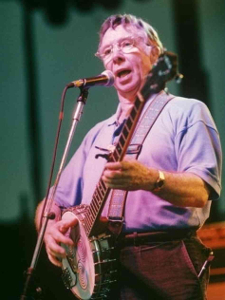
Thomas “Tommy” Makem, internationally celebrated Irish folk musician, artist, poet and storyteller, is born in Keady, County Armagh, on November 4, 1932. He is best known as a member of The Clancy Brothers and Tommy Makem. He plays the long-necked 5-string banjo, tin whistle, low whistle, guitar, bodhrán and bagpipes, and sings in a distinctive baritone. He is sometimes known as “The Bard of Armagh,” taken from a traditional song of the same name, and “The Godfather of Irish Music.”

Makem’s mother, Sarah Makem, is an important source of traditional Irish music, who is visited and recorded by, among others, Diane Guggenheim Hamilton, Jean Ritchie, Peter Kennedy and Sean O’Boyle. His father, Peter Makem, is a fiddler who also plays the bass drum in a local pipe band named “Oliver Plunkett,” after a Roman Catholic martyr of the reign of Charles II of England. His brother and sister are folk musicians as well. Makem, from the age of eight, is member of the St. Patrick’s church choir for 15 years where he sings Gregorian chant and motets. He does not learn to read music but he makes it in his “own way.”

Makem starts to work at 14 as a clerk in a garage and later he works for a while as a barman at Mone’s Bar, a local pub, and as a local correspondent for The Armagh Observer.

Makem emigrates to the United States in 1955, carrying his few possessions and a set of bagpipes from his time in a pipe band. Arriving in Dover, New Hampshire, he works at Kidder Press, where his hand was accidentally crushed by a press in 1956. With his arm in a sling, he leaves Dover for New York City to pursue an acting career.

The Clancys and Makem are signed to Columbia Records in 1961. The same year, at the Newport Folk Festival, Makem and Joan Baez are named the most promising newcomers on the American folk scene. During the 1960s, the Clancy Brothers and Tommy Makem perform sellout concerts at such venues as Carnegie Hall, and make television appearances on shows like The Ed Sullivan Show and The Tonight Show. The group performs for President John F. Kennedy. They also play in smaller venues such as the Gate of Horn in Chicago. They appear jointly in the UK Albums Chart in April 1966, when Isn’t It Grand Boys reaches number 22.

Makem leaves the group in 1969 to pursue a solo career. In 1975, he and Liam Clancy are both booked to play a folk festival in Cleveland, Ohio, and are persuaded to do a set together. Thereafter they often perform as Makem and Clancy, recording several albums together. He once again goes solo in 1988. Throughout the 1970s and 1980s he performs both solo and with Liam Clancy on The Irish Rovers‘ various television shows, which are filming in Canada and Ireland.

In the 1980s and 1990s, Makem is a principal in a well-known Irish music venue in New York, “Tommy Makem’s Irish Pavilion.” This East 57th Street club is a prominent and well-loved performance spot for a wide range of musicians. Among the performers and visitors are Paddy Reilly, Joe Burke, and Ronnie Gilbert. Makem is a regular performer, often solo and often as part of Makem and Clancy, particularly in the late fall and holiday season. The club is also used for warm-up performances in the weeks before the 1984 reunion concert of The Clancy Brothers and Tommy Makem at Lincoln Center for the Performing Arts. In addition, the after-party for Bob Dylan‘s legendary 30th Anniversary Concert Celebration at Madison Square Garden in 1992 is held at the Irish Pavilion.

In 1997 Makem writes a book, Tommy Makem’s Secret Ireland, and in 1999 premiers a one-man theatre show, Invasions and Legacies, in New York. His career includes various other acting, video, composition, and writing credits. He also establishes the Tommy Makem International Festival of Song in South Armagh in 2000.

Tommy Makem dies in Dover, New Hampshire, on August 1, 2007, following a lengthy battle with lung cancer. He continues to record and perform until very close to the end. Paying tribute to him after his death, Liam Clancy says, “He was my brother in every way.” He is buried next to his wife at New Saint Mary Cemetery in Dover.


Leave a comment

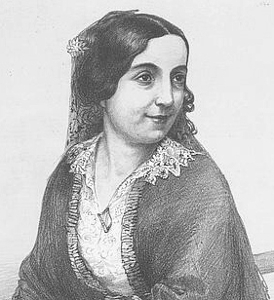
Birth of Soprano Catherine Hayes

Catherine Hayes, world-famous Irish soprano of the Victorian era, is born in Limerick, County Limerick, on October 25, 1818. According to London‘s Daily Express, “Hayes was the ‘Madonna‘ of her day; she was the 19th-century operatic equivalent of the world’s most famous pop star.”

Hayes is born into abject poverty. After five years of vocal study in Paris and Milan she makes her debut at the Italian Opera in Marseilles, in Vincenzo Bellini‘s I Puritani in May 1845, followed by performances of Gaetano Donizetti‘s Lucia di Lammermoor and Gioachino Rossini‘s Mosé in Egitto.

Her debut at La Scala in Milan quickly followed in 1845 with phenomenal success. Shortly thereafter the young Giuseppe Verdi becomes interested in her for one of his new operas. Her great success continues in Vienna, as well as in Venice, Florence, Genoa, Rome and other cities in Italy, where she becomes the most sought after Lucia di Lammermoor.

Early in 1849, Hayes accepts a contract to sing at the Royal Opera House, Covent Garden, London where she makes her debut in Linda di Chamounix in April. In June 1849, she receives an invitation to sing at Buckingham Palace for Queen Victoria and 500 guests. After an evening of Italian music, when the Queen requests an encore, Hayes with a smile sings the beautiful Irish rebel songKathleen Mavourneen.”

During Ireland’s Great Famine in November 1849, her emotional return to her native country results in rave notices for her performance in Lucia di Lammermoor and other operas and concerts in Dublin, Limerick and Cork. Her success is now almost complete.

In 1851 Hayes goes to the United States, where Jenny Lind is creating such a wave of success. Hayes gives concerts in New York City, Boston, Toronto, Philadelphia, Washington, D.C., Charleston, Savannah and New Orleans and forty-five other places including the river towns along the Mississippi River, with equal success. She meets presidents, statesmen and business leaders along the way. She is also destined to meet her future lover and husband in America, Jenny Lind’s former manager. Her travels take her to the “gold rush” in the San Francisco area in the 1850s, where her presence creates a furor, singing for the miners and the elite of San Francisco. The great showman P.T. Barnum sponsors her tour.

She sings in opera and concerts in Peru and Chile, then travels to Hawaii where she gives a concert before continuing on to Australia. Hayes is the first great European opera star to visit Australia. She is mentioned in most Australian history books about early culture in the young colony.  She also travels to Calcutta, India where she performs for the British Military and then on to Singapore and Batavia (Java) before returning to Australia for more opera and concerts.

Hayes returns to England in August 1856, after an absence of five years.  On October 8, 1857, at St. George’s, Hanover Square, she marries William Avery Bushnell. He soon falls into ill-health and dies at Biarritz, France, on July 2, 1858. After her husband’s death she takes part in concerts in London and the country towns.

Catherine Hayes dies in the house of a friend, Henry Lee, at Roccles, Upper Sydenham, Kent, on August 11, 1861, and is buried in Kensal Green Cemetery.