seamus dubhghaill

Promoting Irish Culture and History from Little Rock, Arkansas, USA


Leave a comment

Birth of George Noble Plunkett, Scholar & Revolutionary

George Noble Plunkett, scholar and revolutionary, is born on December 3, 1851, at 1 Aungier Street, Dublin, the youngest and only survivor from infancy of the three children of Patrick Joseph Plunkett (1817–1918), builder and politician, and his wife, Elizabeth (née Noble). The Plunketts are Catholic, claiming collateral descent from Archbishop of Armagh Oliver Plunkett, and nationalist: the two drummers from the republican army at Vinegar Hill in 1798 visit George’s cradle.

Plunkett is educated expensively: at a primary school in Nice, making him fluent in French and Italian, then at Clongowes Wood College, and, from 1872, at Trinity College Dublin (TCD), where his generous allowance allows him to study renaissance and medieval art. He enrolls at King’s Inns in 1870 and the Middle Temple in 1874, but is not called to the bar until 1886. While there he befriends Oscar Wilde and Jeremiah O’Donovan Rossa. In 1877, he endows a university gold medal for Irish speakers and publishes a book of poems, God’s Chosen Festival, and the following year he issues a pamphlet, The Early Life of Henry Grattan. He also writes articles for magazines, editing a short-lived one, Hibernia, for eighteen months from 1882. In 1883, he donates funds and property to the nursing order of the Little Company of Mary (Blue Sisters), and on April 4, 1884, Pope Leo XIII makes him a count.

On June 26, 1884, Plunkett marries Mary Josephine Cranny (1858–1944). The couple has seven children: Philomena (Mimi) (b. 1886), Joseph (b. 1887), Mary Josephine (Moya) (b. 1889), Geraldine (b. 1891), George Oliver (b. 1894), Fiona (b. 1896), and Eoin (Jack) (b. 1897).

Plunkett surprises many in 1890 by declaring for Charles Stewart Parnell against the Catholic hierarchy. In the 1892 United Kingdom general election in Ireland he is a Parnellite candidate for Mid Tyrone but withdraws from a potential three-cornered fight lest he let in the unionist. He is sole nationalist candidate for Dublin St. Stephen’s Green in the 1895 United Kingdom general election in Ireland, and at an 1898 by-election there he cuts the unionist majority to 138 votes. The reunited Irish Party wins the seat in 1900.

In 1894, Plunkett part-edits Charles O’Kelly‘s memoir The Jacobite War in Ireland. By 1900, when he publishes the standard biography Sandro Botticelli, he is supplementing his income by renewed artistic studies, which until 1923 finances his lease of Kilternan Abbey, County Dublin. His Pinelli (1908) is followed by Architecture of Dublin, and, in 1911, by his revised edition of Margaret McNair Stokes‘s Early Christian Art in Ireland. In 1907, he becomes director of the National Museum of Ireland, where he increases annual visits from 100 to 3,000.

Joseph Plunkett swears his father into the Irish Republican Brotherhood (IRB) in April 1916, sending him secretly to seek German aid and a papal blessing for the projected Easter rising. After its defeat, Plunkett is sacked by the National Museum of Ireland and deported with the countess to Oxford, and the following January he is expelled by the Royal Dublin Society (RDS). This earns him nomination as the surviving rebels’ candidate in the North Roscommon by-election. He returns to Ireland illegally on January 31, 1917, and wins the seat easily three days later. Pledging abstention from attendance at Westminster in accordance with Sinn Féin policy, he initiates a Republican Liberty League, which coalesces with similar groups such as Sinn Féin. In October this front becomes the new Sinn Féin, committed to Plunkett’s republic rather than to the “king, lords and commons“ of Arthur Griffith. Plunkett and Griffith become the new party’s vice-presidents, under Éamon de Valera.

On May 18, 1918, Plunkett is interned again. Released after Sinn Féin’s general election landslide (in which he is returned unopposed), he presides, Sinn Féin’s oldest MP, at the planning meeting for Dáil Éireann on January 17, 1919, and at its opening session on January 21. On the 22nd he is made foreign affairs minister by Cathal Brugha, an appointment reaffirmed by de Valera on April 10. He criticises his president for advocating a continuing Irish external relationship with Britain, and fails to organise an Irish foreign service. In February 1921, de Valera makes Robert Brennan his departmental secretary and a ministry takes shape, while Plunkett publishes a book of poems, Ariel. After uncontested “southern Irish“ elections to the Second Dáil, de Valera moves his implacable foreign minister from the cabinet to a tailor-made portfolio of fine arts. Plunkett’s Dante sexcentenary commemoration is overshadowed by news of the Anglo–Irish Treaty. Opposing this, Plunkett cites his oath to the republic and its martyrs including his son. He leaves his ministry on January 9, 1922.

Plunkett chairs the anti-treaty Cumann na Poblachta, which loses the June general election, though he is returned again unopposed. In the Irish Civil War the treatyites intern him and the republicans appoint him to their council of state. In the August 1923 Irish general election, his first electoral contest since 1917, the interned count tops the poll in County Roscommon. He is released in December.

When de Valera forms Fianna Fáil in 1926, Plunkett stays with Sinn Féin, and loses his deposit in the June 1927 Irish general election. A year later he publishes his last poetry collection, Eros. He runs for a new Cumann Poblachta na hÉireann in a County Galway by-election in 1936, but loses his deposit again. On December 8, 1938, with the other six surviving abstentionist Second Dáil TDs, he transfers republican sovereignty to the IRA Army Council.

Plunkett is a big man with a black beard which whitens steadily after his fiftieth birthday. He is always formally pleasant and courteous. His oratory is described by M. J. MacManus as “level, cultured tones . . . [more] used to addressing the members of a learned society than to the rough and tumble of the hustings” (The Irish Press, March 15, 1948). Theoretically and practically, he is more scholar than politician. His portrait is on display at the Royal Society of Antiquaries of Ireland (RSAI).

Plunkett dies from cancer on March 12, 1948, and is buried in Glasnevin Cemetery, survived by his children Geraldine (wife of Thomas Dillon), Fiona, and Jack. His grandson Joseph (1928–66), son of George Oliver Plunkett, inherits the title.

(From: “Plunkett, Count George Noble” by D. R. O’Connor Lysaght, Dictionary of Irish Biography, http://www.dib.ie, October 2009)

Leave a comment

Death of Patrick Dorrian, Lord Bishop of Down and Connor

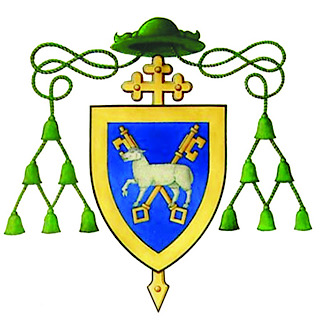
Patrick DorrianRoman Catholic prelate and 23rd Lord Bishop of Down and Connor, dies in Belfast on November 3, 1885.

Dorrian is born in Downpatrick, County Down, on March 29, 1814, one of four sons of Patrick Dorrian and his wife Rose (née Murphy). He is educated first by a Unitarian minister in the classical school in the town, where he excels, and then in St. Patrick’s College, Maynooth, where he is ordained in 1833.

Dorrian’s first appointment is as a curate in the then developing town of Belfast, attached to St Patrick’s Church, Belfast, where he ministers for ten years. At a relatively young age he is appointed parish priest in Loughinisland, County Down, (1847-60) at which time he becomes Bishop of Gabala (Qabala) and Coadjutor Bishop of the Diocese of Down and Connor to assist the ailing, frail and irenic Bishop Cornelius Denvir.

Dorrian is consecrated bishop on August 19, 1860, in St. Malachy’s Church, Belfast, and eventually succeeds as bishop five years later on May 4, 1865. He is known for his authoritarian style of leadership, referred to as “Cullenite“. As the post-famine population of Belfast grows, so too does sectarian attitudes, especially among those moving into the city from rural districts all over Ulster looking for work. He seeks to defend Catholic interests, insisting on the necessity of separate Catholic education and seeking, where possible, to influence the social and political interests of his church.

In this respect, historians Sean Connolly and Gillian McIntosh refer to Dorrian’s “pugnacious” presiding over the rapid expansion in priests, churches and religious houses in contrast to the “scholarly but ineffective” Bishop Denvir.

It is estimated Dorrian is responsible for doubling the number of Catholic churches in the city of Belfast, and in 1866, early in his episcopate, St. Peter’s Cathedral, Belfast in Derby Street in the Lower Falls area is first used as a pro-cathedral. His episcopal chair, placed in that church for the occasion, is still in use by the bishops of the Diocese of Down and Connor. He attends the First Vatican Council and is one of the leading Irish delegation to the event.

Dorrian dies at the Episcopal Palace, Chichester Park, Belfast, at 7:00 a.m., on November 3, 1885. His remains are interred within the chancel of St. Patrick’s Church, Belfast, on Friday, November 6.

At a meeting of the parish priests held in the chapel of St. Malachy’s College, on November 6, 1885, immediately after Dorrian’s funeral, Patrick MacAlister is elected Vicar Capitular of Down and Connor. McAllister is then named by Pope Leo XIII as Dorrian’s successor as the 24th Lord Bishop of Down and Connor.

In November 2017, the historic chapel of Belfast’s Mater Infirmorum Hospital is re-opened after extensive refurbishment. It has, as a result of its connection with Dorrian, become known as the Dorrian Chapel.


Leave a comment

Birth of Patrick Francis Moran, Third Archbishop of Sydney

Patrick Francis Moran, a prelate of the Catholic Church, the first cardinal appointed from Australia and the third Archbishop of Sydney, is born at LeighlinbridgeCounty Carlow, on September 16, 1830. Before his promotion to Archbishop, his scholarly research into the lives and times of the Irish Catholic Martyrs leads to the publication of many primary sources for the first time. These publications have since been used in recent beatifications and at least one canonization.

Moran’s parents are Patrick and Alicia Cullen Moran. Of his three sisters, two become nuns, one of whom dies nursing cholera patients. His parents die by the time he is 11 years old. In 1842, at the age of twelve, he leaves Ireland in the company of his uncle, Paul Cullen, rector of the Pontifical Irish College in Rome. There he studies for the priesthood, first at the minor seminary and then at the major seminary.

Moran is considered so intellectually bright that he gains his doctorate by acclamation. By The age of 25 he speaks ten languages, ancient and modern. He focuses on finding and editing important documents and manuscripts related to Irish ecclesiastical history. Some editions of his works remain important source materials to this day.

Moran is appointed vice-rector at the Pontifical Irish College and also takes the chair of Hebrew at Congregation for the Evangelization of Peoples (CEP). He is also some-time vice-rector of the Scots College in Rome. In 1866, he is appointed secretary to his mother’s half-brother, Cardinal Paul Cullen of Dublin. He is also appointed professor of scripture at Holy Cross College, Dublin. He founds the Irish Ecclesiastical Record (on which he later models the Australasian Catholic Record).

In 1869, Moran accompanies Cardinal Cullen to the First Vatican Council, a council also attended by Melbourne‘s then-first archbishop, James Alipius Goold. According to Michael Daniel, it is generally agreed that the definition of the Catholic doctrine of papal infallibility is based on Cullen’s proposal, and Ayres suggests that there is strong evidence that Cullen’s proposal is largely drafted by Moran. While in Rome and Ireland he is very active politically in opposing English Benedictine plans for monastic foundations undergirding the Catholic Church in Australia.

Moran is appointed coadjutor bishop of Ossory on December 22, 1871, and is consecrated on March 5, 1872 in Dublin by his uncle, Cardinal Paul Cullen. On the death of Bishop Edward Walsh, he succeeds as Bishop of Ossory on August 11, 1872. He champions Home Rule and is consulted by William Ewart Gladstone prior to the introduction of his Home Rule Bills.

Moran is personally chosen and promoted by Pope Leo XIII to head the Archdiocese of Sydney – a clear policy departure from the previous English Benedictine incumbents, John Bede Polding and Roger Vaughan, who were experiencing tension leading the predominantly Irish Australian Catholics. In the archbishop’s farewell audience with Leo XIII, it is evident that the intrigues of parties, the interference of government agencies and the influence of high ecclesiastics had made the matter almost impossible to decide by Propaganda. In the presence of others, the Pope says clearly: “We took the selection into our own hands. You are our personal appointment.” Moran is appointed to Australia on January 25, 1884, and arrives on September 8, 1884. He is created cardinal-priest on July 27, 1885, with the title of St. Susanna. The new Irish Australian cardinal makes it his business to make his presence and leadership felt.

Moran begins transforming the Sydney Saint Patrick’s Day festivities by inaugurating the celebration of a Solemn Mass at St. Mary’s Cathedral on Saint Patrick’s Day 1885. Over time the day’s events change from an Irish nationalist and political day into an occasion “for the demonstration of Irish Catholic power and respectable assimilation” as well as “for the affirmation of Irish Catholic solidarity.”

In 1886, it is estimated that Moran travels 2,500 miles over land and sea, visiting all the dioceses of New Zealand. In 1887, he travels 6,000 miles to consecrate fellow Irishman Matthew Gibney at Perth. He also travels to BallaratBathurstBendigoHobartGoulburnLismore, Melbourne and Rockhampton for the consecration of their cathedrals. Following the 1891 encyclical Rerum Novarum, he supports the right of labourers to better their conditions.

During his episcopate, Moran consecrates 14 bishops (he is the principal consecrator of William WalshMichael VerdonPatrick Vincent DwyerArmand Olier and also assists in consecrating Patrick Clune, among others). He ordains nearly 500 priests, dedicates more than 5,000 churches and professes more than 500 nuns. He makes five journeys to Rome on church business between 1885 and 1903, but does not participate in the papal conclave of 1903 because of the relatively short notice and the distance, making it impossible for him to reach Rome within 10 days of the death of Pope Leo.

Moran is a strong supporter of Federation, and in November 1896 attends the People’s Federal Convention in Bathurst. In March 1897, he stands as a candidate election of ten delegates from New South Wales to the Australasian Federal Convention. Although he states he will not attend the Convention in any official capacity, but in a solely individual one, his candidacy sparks a sectarian reaction. Twenty-nine per cent of voters give one of their ten votes to Moran, but he comes only thirteenth in number of total votes and is not elected.

From 1900 to 1901, Moran’s leadership survives a crisis when his personal secretary, Denis O’Haran, is named as co-respondent in the divorce case of the cricketer Arthur Coningham. Moran vigorously defends O’Haran and a jury finds in his favour.

Moran dies in Manly, Sydney, on August 16, 1911, aged 80. A quarter of a million people, the largest crowd ever to gather in Australia prior to that date, witness his funeral procession through the centre of Sydney. He is buried in St. Mary’s Cathedral, Sydney.


Leave a comment

Death of John MacHale, Catholic Archbishop of Tuam

John MacHale, Irish Roman Catholic Archbishop of Tuam and Irish nationalist, dies in Tuam, County Galway on November 7, 1881.

MacHale is born in Tubbernavine, near Lahardane, County Mayo on March 6, 1791, to Patrick and Mary Mulkieran MacHale. He is so feeble at birth that he is baptised at home by Father Andrew Conroy. By the time he is five years of age, he begins attending a hedge school. Three important events happen during his childhood: the Irish Rebellion of 1798, the landing at Killala of French troops, whom the boy, hidden in a stacked sheaf of flax, watches marching through a mountain pass to Castlebar, and a few months later the brutal hanging of Father Conroy on a false charge of high treason.

Being destined for the priesthood, at the age of thirteen, he is sent to a school at Castlebar to learn Latin, Greek, and English grammar. In his sixteenth year the Bishop of Killala gives him a bursarship at St. Patrick’s College, Maynooth. At the age of 24, he is ordained a priest by Daniel Murray, Archbishop of Dublin. In 1825, Pope Leo XII appoints him titular bishop of Maronia, and coadjutor bishop to Dr. Thomas Waldron, Bishop of Killala.

With his friend and ally, Daniel O’Connell, MacHale takes a prominent part in the important question of Catholic emancipation, impeaching in unmeasured terms the severities of the former penal code, which had branded Catholics with the stamp of inferiority. During 1826 his zeal is omnipresent. He calls on the Government to remember how the Act of Union in 1800 was carried by William Pitt the Younger on the distinct assurance and implied promise that Catholic emancipation, which had been denied by the Irish Parliament, should be granted by the Parliament of the Empire.

Oliver Kelly, Archbishop of Tuam, dies in 1834, and the clergy selects MacHale as one of three candidates, to the annoyance of the Government who despatches agents to induce Pope Gregory XVI not to nominate him to the vacant see. Disregarding their request, the pope appoints MacHale Archbishop of Tuam. He is the first prelate since the Reformation who has received his entire education in Ireland. The corrupt practices of general parliamentary elections and the Tithe War cause frequent rioting and bloodshed and are the subjects of denunciation by the new archbishop, until the passing of a Tithes bill in 1838. He also leads the opposition to the Protestant Second Reformation, which is being pursued by evangelical clergy in the Church of Ireland, including the Bishop of Tuam, Killala and Achonry, Thomas Plunket.

The repeal of the Acts of Union 1800, advocated by O’Connell, enlists MacHale’s ardent sympathy and he assists the Liberator in many ways, and remits subscriptions from his priests for this purpose. In his zeal for the cause of the Catholic religion and of Ireland, so long downtrodden, but not in the 1830s, he frequently incurs from his opponents the charge of intemperate language, something not altogether undeserved. In his anxiety to reform abuses and to secure the welfare of Ireland, by an uncompromising and impetuous zeal, he makes many bitter and unrelenting enemies, particularly British ministers and their supporters.

The Great Famine of 1846–47 affects his diocese more than any. In the first year he announces in a sermon that the famine is a divine punishment on his flock for their sins. Then by 1846 he warns the Government as to the state of Ireland, reproaches them for their dilatoriness, and holds up the uselessness of relief works. From England as well as other parts of the world, cargoes of food are sent to the starving Irish. Bread and soup are distributed from the archbishop’s kitchen. Donations sent to him are acknowledged, accounted for, and disbursed by his clergy among the victims.

The death of O’Connell in 1847 is a setback to MacHale as are the subsequent disagreements within the Repeal Association. He strongly advises against the violence of Young Ireland. Over the next 30 years he becomes involved in political matters, particularly those involving the church. Toward the end of his life, he becomes less active in politics.

MacHale attends the First Vatican Council in 1869. He believes that the favourable moment has not arrived for an immediate definition of the dogma of papal infallibility. Better to leave it a matter of faith, not written down, and consequently he speaks and votes in the council against its promulgation. Once the dogma had been defined, he declares the dogma of infallibility “to be true Catholic doctrine, which he believed as he believed the Apostles’ Creed“. In 1877, to the disappointment of the archbishop who desires that his nephew should be his co-adjutor, Dr. John McEvilly, Bishop of Galway, is elected by the clergy of the archdiocese, and is commanded by Pope Leo XIII after some delay, to assume his post. He had opposed this election as far as possible but submits to the papal order.

Every Sunday MacHale preaches a sermon in Irish at the cathedral, and during his diocesan visitations he always addresses the people in their native tongue, which is still largely used in his diocese. On journeys he usually converses in Irish with his attendant chaplain and has to use it to address people of Tuam or the beggars who greet him whenever he goes out. He preaches his last Irish sermon after his Sunday Mass, April 1881. He dies in Tuam seven months later, on November 7, 1881, and is buried in the cathedral at Tuam on November 15.

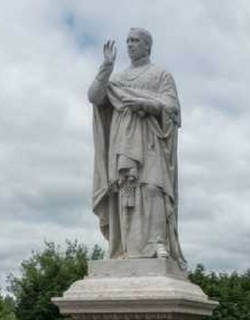
A marble statue perpetuates his memory on the grounds of the Cathedral of the Assumption of the Blessed Virgin Mary, Tuam. MacHale Park in Castlebar, County Mayo and Archbishop McHale College in Tuam are named after him. In his birthplace the Parish of Addergoole, the local GAA Club, Lahardane MacHales, is named in his honour. The Dunmore GAA team, Dunmore MacHales, is also named after him.


Leave a comment

Birth of Christopher Augustine Reynolds, Archbishop of Adelaide

Christopher Augustine Reynolds, the first Catholic Archbishop of Adelaide, South Australia, is born in Dublin on August 11, 1834.

Reynolds is the son of Patrick Reynolds and his wife Elizabeth, née Bourke. Educated by the Carmelites at Clondalkin, Dublin, he later comes under the influence of the Benedictines when he volunteers for the Northern Territory mission of Bishop Rosendo Salvado Rotea, and is sent to Subiaco near Rome to train for the priesthood. He leaves after three years and goes to the Swan River Colony with Bishop Joseph Serra to continue his training at New Norcia, arriving at Fremantle in May 1855. Probably because of poor health, he leaves the Benedictines and in January 1857 goes to South Australia. He completes his training under the Jesuits at Sevenhill and is ordained in April 1860 by Bishop Patrick Geoghegan. He is parish priest at Wallaroo (where he builds the church at Kadina), Morphett Vale and Gawler. When Bishop Laurence Sheil dies in March 1872, he is appointed administrator of the diocese of Adelaide. On November 2, 1873, in Adelaide he is consecrated bishop by Archbishop John Bede Polding.

Reynolds has a large diocese and in 1872-80 travels over 52,000 miles in South Australia. The opening up of new agricultural districts, an increase in Irish migrants and diocesan debts had produced a grave shortage of clergy. But his most urgent problem is conflicts between and within the clergy and laity over education, especially the role to be played by the Sisters of St. Joseph of the Sacred Heart. He supports the Sisters, reopens schools closed by Archbishop Sheil and, though opposed by the Bishop of the Diocese of Bathurst Matthew Quinn, helps the Superior, Mother Mary MacKillop, secure Rome’s approval for autonomy for her Sisterhood.

Reynolds is not a good administrator and his strenuous efforts to extend Catholic education after the Education Act of 1875 incurs alarming debts. In 1880-81 he visits Rome. On his return, increasingly concerned with finances, disturbed at the prospect of losing St. Joseph nuns and, to some extent misled by jealousy and intrigue, he dramatically reverses his policy towards the Sisterhood and on November 14, 1883, relieves Mother Mary of her duties as Mother Superior. Though the Plenary Council of the Bishops of Australasia, held in Sydney in 1885, support him, in 1888 Pope Leo XIII decrees a central government for the Sisterhood, to be located in Sydney. The council requests that Adelaide be raised to an archiepiscopal and metropolitan see and on September 11, 1887, Reynolds is invested archbishop by Cardinal Francis Moran.

Reynolds’s health is never robust and after a two-year illness he dies on June 12, 1893, in Adelaide, where he is buried. Although he is austere and hard-working, he leaves his successor church debts of over £56,000. A particularly fine preacher, he is widely respected for his missionary zeal and for an ecumenical spirit unusual for his time.

(From: Australian Dictionary of Biography, http://www.adb.anu.edu.au, Ian J. Bickerton)


Leave a comment

Death of John O’Reily, Archbishop of Adelaide

John O’Reily, the first Bishop of Port Augusta and the second Archbishop of Adelaide, dies in Adelaide, Australia on July 6, 1915.

O’Reily is born John O’Reilly on November 19, 1846, in Kilkenny, County Kilkenny, the son of Michael, a military officer, and Anne, née Gallagher. He completes his primary education at the parochial school of St. John’s Parish, and spends six and a half years at St. Kieran’s College. Due to poor health, he decides against pursuing a military career, and in 1864 he enters All Hallows College in Dublin to study for the priesthood. He learns the Irish language and studies mental philosophy, mathematics and ecclesiastical studies, achieving first prize in each of his classes.

After being ordained on June 21, 1869, O’Reily leaves Ireland for Western Australia in October, arriving in January 1870. Having served briefly in Newcastle (present day Toodyay) and Northam, he becomes a parish priest in Fremantle, establishing the West Australian Catholic Record in 1874 and serving as its publisher, editor and printer from 1883.

When the Diocese of Port Augusta is established in 1887, Pope Leo XIII names O’Reily as its first bishop. Concerned about the financial position of the diocese, which had inherited significant debt from the Diocese of Adelaide, he accepts the posting reluctantly. As bishop, he greatly improves the financial position of the new diocese, reducing its debt by half and earning a reputation as a competent administrator.

In 1894, O’Reily is appointed to replace the deceased Christopher Reynolds as Archbishop of Adelaide. The archdiocese he inherits is burdened with substantial debt, again left over from the old Diocese of Adelaide. Through the sale of church assets and a fundraising campaign, he is able to eliminate most of the Archdiocese’s liabilities while still investing in church infrastructure. He also actively participates in public discussions relating to education policy at a time when the role of the state in supporting religious education is topical. He publicly advocates government assistance for religious schools, stating that it is unfair Catholics pay taxes to support state schools, but receive no funding for their own.

In the later years of his life, poor health forces O’Reily to spend less time attending to his episcopal duties, and from 1905, he keeps to himself in his house in Glen Osmond, leading to the local press referring to him as the “Recluse of Glen Osmond.” Increasingly, his episcopal duties are fulfilled by Bishop of Port Augusta John Norton, who has to visit the more remote parts of O’Reily’s see on his behalf.

As he becomes more frail, O’Reily asks certain priests to accompany him when he travels, among whom is the Dominican prior Robert Spence. When O’Reily requests a coadjutor in 1913, he chooses Spence as his first preference for the role. Despite the reluctance of some clergy to the appointment of a religious as Archbishop, Spence is consecrated as coadjutor, with right of succession, in August 1914.

O’Reily dies at his house in Adelaide on July 6, 1915 and is buried under a large Celtic cross at the West Terrace Cemetery in Adelaide. He is highly regarded by many in South Australian society, with Adelaide’s daily newspapers praising his character, administrative ability and positive relations with non-Catholics.


Leave a comment

Death of Cardinal John Joseph Glennon

Cardinal John Joseph Glennon, prelate of the Roman Catholic Church, dies on March 9, 1946, in Dublin. He serves as Archbishop of St. Louis from 1903 until his death. He is elevated to the cardinalate in 1946.

Glennon is born on June 14, 1862, in Kinnegad, County Westmeath, to Matthew and Catherine (née Rafferty) Glennon. After graduating from St. Finian’s College, he enters All Hallows College near Dublin in 1878. He accepts an invitation from Bishop John Joseph Hogan in 1882 to join the newly erected Diocese of Kansas City in the United States. After arriving in Missouri in 1883, he is ordained to the priesthood by Bishop Hogan on December 20, 1884.

Glennon is then assigned to St. Patrick’s Church in Kansas City and, briefly returning to Europe, furthers his studies at the University of Bonn in Germany. Upon his return to Kansas City, he becomes rector of the Cathedral of the Immaculate Conception. He is later made vicar general (1892) and apostolic administrator (1894) for the diocese.

On March 14, 1896, Glennon is appointed Coadjutor Bishop of Kansas City and Titular Bishop of Pinara by Pope Leo XIII. He receives his episcopal consecration on the following June 29 from Archbishop John Joseph Kain, with Bishops Maurice Francis Burke and John Joseph Hennessy serving as co-consecrators. At age 34, he becomes one of the youngest bishops in the world.

Glennon is named Coadjutor Archbishop of St. Louis on April 27, 1903. He succeeds Archbishop Kain as the fourth Archbishop of St. Louis upon the latter’s death on October 13 of that year. Realizing the Cathedral of St. Louis can no longer accommodate its growing congregation, he quickly begins raising funds for a new cathedral, the cornerstone of which is later laid on October 18, 1908.

Glennon opens the new Kenrick Seminary in 1915, followed by the minor seminary in Shrewsbury. He delivers the eulogy at the funeral of Cardinal James Gibbons and is appointed an Assistant at the Pontifical Throne on June 28, 1921. He opposes British rule in Ireland and supports the leaders of the Easter Rising. He is an outspoken opponent of divorce, condemns gambling games, and prohibits dancing and drinking at church-sponsored events. He sometimes throws the opening ball for the St. Louis Cardinals, but does not play any sports himself, once saying, “I once tried golf, but I so disfigured the scenery that I never played again, in fear of public indignation and reprisal.”[2]

Despite a rather popular tenure, as Archbishop of St. Louis Glennon opposes racial integration in the city’s Catholic schools, colleges, and universities. During the early 1940s, many local priests, especially Jesuits, challenge the segregationist policies at the city’s Catholic schools. The St. Louis chapter of the Midwest Clergy Conference on Negro Welfare, formed locally in 1938, pushes the all-female Webster College to integrate first. However, in 1943, Glennon blocks the enrollment of a young black woman at the college by speaking privately with the Kentucky-based superior of the Sisters of Loretto, which staffs the college. When approached directly by pro-integration priests, he calls the integration plan a “Jesuit ploy,” and quickly transfers one of the complaining priests away from his mission at an African American parish.

The Pittsburgh Courier, an African American newspaper with national circulation, discovers Glennon’s intervention and runs a front-page feature on the Webster incident. In response, Father Claude Heithaus, professor of Classical Archaeology at the Catholic Saint Louis University, delivers an angry sermon accusing his own institution of immoral behavior in its segregation policies. Saint Louis University begins admitting African American students that summer when its president, Father Patrick Holloran, manages to secure approval from the reluctant Archbishop Glennon. Nevertheless, St. Louis maintains one of the largest numbers of African American parishes and schools in the country.

On Christmas Eve 1945, it is announced that the 83-year-old Glennon will be elevated to the College of Cardinals. He originally thinks himself too old to make the journey to Rome, but eventually joins fellow Cardinals-elect Francis Spellman and Thomas Tien Ken-sin on their flight, during which time he contracts a cold from which he does not recover. Pope Pius XII creates him Cardinal Priest of San Clemente al Laterano in the consistory of February 18, 1946.

During the return trip to the United States, Glennon stops in his native Ireland, where he is received by President Seán T. O’Kelly and Taoiseach Éamon de Valera. While in Dublin, he is diagnosed with uremic poisoning and dies on March 9, 1946, ending a 42-year tenure as Archbishop. The Cardinal’s body is returned to St. Louis and then buried at the Cathedral.

Glennon is the namesake of the community of Glennonville, Missouri. The only diocesan hospital for children, Cardinal Glennon Children’s Hospital, affiliated with Saint Louis University Hospital, is created in his name.

(Pictured: Cardinal John J. Glennon, photo by the St. Louis Dispatch)


Leave a comment

Birth of John MacHale, Archbishop of Tuam

John MacHale, Irish Roman Catholic Archbishop of Tuam and Irish nationalist, is born in Tubbernavine, near Lahardane, County Mayo on March 6, 1791.

MacHale’s parents are Patrick and Mary Mulkieran MacHale. He is so feeble at birth that he is baptised at home by Father Andrew Conroy. By the time he is five years of age, he begins attending a hedge school. Three important events happen during his childhood: the Irish Rebellion of 1798, the landing at Killala of French troops, whom the boy, hidden in a stacked sheaf of flax, watches marching through a mountain pass to Castlebar, and a few months later the brutal hanging of Father Conroy on a false charge of high treason.

Being destined for the priesthood, at the age of thirteen, he is sent to a school at Castlebar to learn Latin, Greek, and English grammar. In his sixteenth year the Bishop of Killala gives him a busarship at St. Patrick’s College, Maynooth. At the age of 24, he is ordained a priest by Daniel Murray, Archbishop of Dublin. In 1825, Pope Leo XII appoints him titular bishop of Maronia, and coadjutor bishop to Dr. Thomas Waldron, Bishop of Killala.

With his friend and ally, Daniel O’Connell, MacHale takes a prominent part in the important question of Catholic emancipation, impeaching in unmeasured terms the severities of the former penal code, which had branded Catholics with the stamp of inferiority. During 1826 his zeal is omnipresent. He calls on the Government to remember how the Act of Union in 1800 was carried by William Pitt the Younger on the distinct assurance and implied promise that Catholic emancipation, which had been denied by the Irish Parliament, should be granted by the Parliament of the Empire.

Oliver Kelly, Archbishop of Tuam, dies in 1834, and the clergy selects MacHale as one of three candidates, to the annoyance of the Government who despatches agents to induce Pope Gregory XVI not to nominate him to the vacant see. Disregarding their request, the pope appoints MacHale Archbishop of Tuam. He is the first prelate since the Reformation who has received his entire education in Ireland. The corrupt practices of general parliamentary elections and the Tithe War cause frequent rioting and bloodshed and are the subjects of denunciation by the new archbishop, until the passing of a Tithes bill in 1838. He also leads the opposition to the Protestant Second Reformation, which is being pursued by evangelical clergy in the Church of Ireland, including the Bishop of Tuam, Killala and Achonry, Thomas Plunket.

The repeal of the Acts of Union 1800, advocated by O’Connell, enlists MacHale’s ardent sympathy and he assists the Liberator in many ways, and remits subscriptions from his priests for this purpose. In his zeal for the cause of the Catholic religion and of Ireland, so long downtrodden, but not in the 1830s, he frequently incurs from his opponents the charge of intemperate language, something not altogether undeserved. In his anxiety to reform abuses and to secure the welfare of Ireland, by an uncompromising and impetuous zeal, he makes many bitter and unrelenting enemies, particularly British ministers and their supporters.

The Great Famine of 1846–47 affects his diocese more than any. In the first year he announces in a sermon that the famine is a divine punishment on his flock for their sins. Then by 1846 he warns the Government as to the state of Ireland, reproaches them for their dilatoriness, and holds up the uselessness of relief works. From England as well as other parts of the world, cargoes of food are sent to the starving Irish. Bread and soup are distributed from the archbishop’s kitchen. Donations sent to him are acknowledged, accounted for, and disbursed by his clergy among the victims.

The death of O’Connell in 1847 is a setback to MacHale as are the subsequent disagreements within the Repeal Association. He strongly advises against the violence of Young Ireland. Over the next 30 years he becomes involved in political matters, particularly those involving the church. Toward the end of his life he becomes less active in politics.

MacHale attends the First Vatican Council in 1869. He believes that the favourable moment has not arrived for an immediate definition of the dogma of papal infallibility. Better to leave it a matter of faith, not written down, and consequently he speaks and votes in the council against its promulgation. Once the dogma had been defined, he declares the dogma of infallibility “to be true Catholic doctrine, which he believed as he believed the Apostles’ Creed“. In 1877, to the disappointment of the archbishop who desires that his nephew should be his co-adjutor, Dr. John McEvilly, Bishop of Galway, is elected by the clergy of the archdiocese, and is commanded by Pope Leo XIII after some delay, to assume his post. He had opposed this election as far as possible but submits to the papal order.

Every Sunday MacHale preaches a sermon in Irish at the cathedral, and during his diocesan visitations he always addresses the people in their native tongue, which is still largely used in his diocese. On journeys he usually converses in Irish with his attendant chaplain and has to use it to address people of Tuam or the beggars who greet him whenever he goes out. He preaches his last Irish sermon after his Sunday Mass, April 1881. He dies in Tuam seven months later, on November 7, 1881.

A marble statue perpetuates his memory on the grounds of the Cathedral of the Assumption of the Blessed Virgin Mary, Tuam. MacHale Park in Castlebar, County Mayo and Archbishop McHale College in Tuam are named after him. In his birthplace the Parish of Addergoole, the local GAA Club, Lahardane MacHales, is named in his honour. The Dunmore GAA team, Dunmore MacHales, is also named after him.


Leave a comment

Death of Cardinal Michael Logue

Michael Logue, Irish prelate of the Roman Catholic Church, dies in Armagh, County Armagh, Northern Ireland on November 19, 1924. He serves as Archbishop of Armagh and Primate of All Ireland from 1887 until his death. He is created a cardinal in 1893.

Logue is born in Kilmacrennan, County Donegal in the west of Ulster on October 1, 1840. He is the son of Michael Logue, a blacksmith, and Catherine Durning. From 1857 to 1866, he studies at Maynooth College, where his intelligence earns him the nickname the “Northern Star.” Before his ordination to the priesthood, he is assigned by the Irish bishops as the chair of both theology and belles-lettres at the Irish College in Paris in 1866. He is ordained priest in December of that year.

Logue remains on the faculty of the Irish College until 1874, when he returns to Donegal as administrator of a parish in Letterkenny. In 1876, he joins the staff of Maynooth College as professor of Dogmatic Theology and Irish language, as well as the post of dean.

On May 13, 1879, Logue is appointed Bishop of Raphoe by Pope Leo XIII. He receives his episcopal consecration on the following July 20 from Archbishop Daniel McGettigan, with Bishops James Donnelly and Francis Kelly serving as co-consecrators, at the pro-cathedral of Raphoe. He is involved in fundraising to help people during the 1879 Irish famine, which, due to major donations of food and government intervention never develops into a major famine. He takes advantage of the Intermediate Act of 1878 to enlarge the Catholic high school in Letterkenny. He is also heavily involved in the Irish temperance movement to discourage the consumption of alcohol.

On April 18, 1887, Logue is appointed Coadjutor Archbishop of the Archdiocese of Armagh and Titular Archbishop of Anazarbus. Upon the death of Archbishop MacGettigan, he succeeds him as Archbishop of Armagh, and thus Primate of All Ireland, on December 3 of that year. He is created Cardinal-Priest of Santa Maria della Pace by Pope Leo XIII in the papal consistory of January 19, 1893.

Logue thus becomes the first archbishop of Armagh to be elevated to the College of Cardinals. He participates in the 1903, 1914, and 1922 conclaves that elect popes Pius X, Benedict XV, and Pius XI respectively. He takes over the completion of the Victorian gothic St. Patrick’s Cathedral in Armagh. The new cathedral, which towers over Armagh, is dedicated on July 24, 1904.

Logue publicly supports the principle of Irish Home Rule throughout his long reign in both Raphoe and Armagh, though he is often wary of the motives of individual politicians articulating that political position. He maintains a loyal attitude to the British Crown during World War I, and on June 19, 1917, when numbers of the younger clergy are beginning to take part in the Sinn Féin agitation, he issues an “instruction” calling attention to the teaching of the Roman Catholic Church as to the obedience due to legitimate authority, warning the clergy against belonging to “dangerous associations,” and reminding priests that it is strictly forbidden by the statutes of the National Synod to speak of political or kindred affairs in the church.

In 1918, however, Logue places himself at the head of the opposition to the extension of the Military Service Act of 1916 to Ireland, in the midst of the Conscription Crisis of 1918. Bishops assess that priests are permitted to denounce conscription on the grounds that the question is not political but moral. He also involves himself in politics for the 1918 Irish general election, when he arranges an electoral pact between the Irish Parliamentary Party and Sinn Féin in three constituencies in Ulster and chooses a Sinn Féin candidate in South Fermanagh – the imprisoned Republican, Seán O’Mahony.

Logue opposes the campaign of murder against the police and military begun in 1919, and in his Lenten pastoral of 1921 he vigorously denounces murder by whomsoever committed. This is accompanied by an almost equally vigorous attack on the methods and policy of the government. He endorses the Anglo-Irish Treaty in 1921.

In 1921, the death of Cardinal James Gibbons makes Logue archpriest (protoprete) of the College of Cardinals. He is more politically conservative than Archbishop of Dublin William Joseph Walsh, which creates tension between Armagh and Dublin. In earlier life he was a keen student of nature and an excellent yachtsman.

Cardinal Michael Logue dies in Ara Coeli, the residence of the archbishop, on November 19, 1924, and is buried in a cemetery in the grounds of St. Patrick’s Cathedral, Armagh.


Leave a comment

Birth of James Cardinal Gibbons, Archbishop of Baltimore

james-cardinal-gibbons

James Cardinal Gibbons, American prelate of the Catholic Church, is born in Baltimore, Maryland on July 23, 1834 to parents Thomas and Bridget (née Walsh) Gibbons who had emigrated from Toormakeady, County Mayo. In his role as Archbishop of Baltimore from 1877 to 1921, he serves as a bridge between Roman Catholicism and American Catholic values.

Gibbons is taken by his parents from Baltimore to Ireland in 1837. Following his father’s death in 1847, at the height of The Great Hunger, his mother moves the family back to the United States. He spends the next eight years as a grocer in New Orleans. In 1855 he enters a seminary in Baltimore, becoming a priest in 1861. He rises through the ranks of the Roman Catholic Church quickly, and by 1868 he is the youngest bishop in the United States. During a short stay in North Carolina, he writes The Faith of Our Fathers (1876), a defense of Catholicism that proves exceptionally popular, selling more than two million copies. He is elevated to Archbishop of Baltimore in 1877. He assumes a leadership role as the presiding prelate at the Third Plenary Council of Baltimore in 1884, and in 1886 he is made a cardinal by Pope Leo XIII.

As a leader of the Catholic Church hierarchy in the United States, Gibbons is outspoken in his praise for American democratic institutions and he advocates Americanization — the rapid assimilation of Catholic immigrants into American culture and institutions — both as a means to counter Protestant Americans’ suspicions toward Catholics and to avoid the fragmentation of the Catholic Church in the United States along ethnic lines. He is also sympathetic to the cause of organized labour and works to overcome suspicions within the Catholic Church toward the Knights of Labor, which has been considered a secret society by many clergymen.

On education, as on other social issues, Gibbons seeks ways of harmonizing the tenets of the Catholic faith with the principles of American democracy. He enters the controversy over control of parochial and public schools in 1891 when he defends Archbishop John Ireland’s experimental plan for cooperation between Catholic and public schools in the Minnesota towns of Faribault and Stillwater. To the dismay of conservative bishops, he refuses to condemn public education and encourages efforts to find common ground between the two systems. The Faribault-Stillwater plan remains controversial despite Gibbons’s support, and acrimony between the plan’s supporters and conservative opponents lingers until 1893.

During World War I, Gibbons is instrumental in the establishment of the National Catholic War Council, and afterwards supports the League of Nations. Although initially opposed to women’s suffrage, when the Nineteenth Amendment passes Gibbons urges women to exercise their right to vote “…not only as a right but as a strict social duty.”

James Cardinal Gibbons dies at the age of 86 in Baltimore on March 24, 1921. Throughout his career he is a respected and influential public figure. Although nonpartisan, he takes positions on a variety of foreign and domestic policy issues and is personally acquainted with every U.S. president from Andrew Johnson to Woodrow Wilson.