seamus dubhghaill

Promoting Irish Culture and History from Little Rock, Arkansas, USA


Leave a comment

Death of Donal McCann, Stage, Film & Television Actor

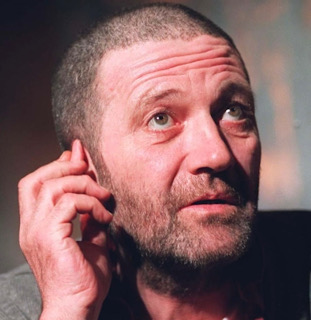
Donal McCann, Irish stage, film, and television actor, dies from pancreatic cancer in Dublin on July 17, 1999. He is best known for his roles in the works of Brian Friel and for his lead role in John Huston‘s last film, The Dead (1987). In 2020, he is listed as number 45 on The Irish Times list of Ireland’s greatest film actors.

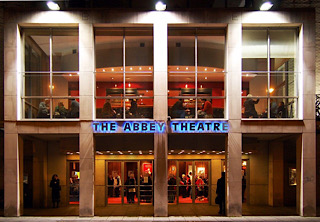
McCann is born on May 7, 1943, in Terenure, Dublin. His father is John J. McCann, a playwright and politician who serves twice as Lord Mayor of Dublin. Although he acts in a production of his father’s Give Me a Bed of Roses at Terenure College in 1962, he briefly studies architecture before taking a job as a trainee sub-editor at the Evening Press which allows him to pursue part-time acting classes at the Abbey School of Acting at the same time. He joins the Abbey Players in the late 1960s.

Among his most important early roles are Cú Chulainn in W. B. Yeats‘s On Baile Strand (1966), and as Estragon in a seminal production of Samuel Beckett‘s Waiting for Godot, partnering with Peter O’Toole as Vladimir (1969).

McCann’s career includes parts in many plays from the Irish literary canon, including Tarry FlynnThe Shaughran, and the Gate Theatre‘s highly acclaimed production of Seán O’Casey‘s classic Juno and the Paycock in the 1980s (McCann plays the “Paycock” (Captain Boyle) opposite Geraldine Plunkett as Juno and John Kavanagh as Joxer Daly) as well as a subsequent production of O’Casey’s The Plough and the Stars.

McCann develops a particularly fruitful relationship with the playwright Brian Friel. He plays the role of Gar O’Donnell, the public figure, in a film adaptation of Philadelphia, Here I Come! in 1970 and, despite popular belief, he never plays either public or private Gar on stage. He gives a landmark performance as Frank Hardy, the title character, in Faith Healer in 1980 (a role he reprised in 1994), continuing his relationship with Friel through productions of Translations (1988) and Wonderful Tennessee (1993).

Friel says that McCann’s work “contains extraordinary characteristics that go beyond acting … it is deeply spiritual.” Perhaps McCann’s most renowned role is as Thomas Dunne in Sebastian Barry‘s The Steward of Christendom. He wins the London Critics’ Circle Theatre Award (Drama Theatre) as best actor for this role in 1995. He reprises this role in a 1996 production at the Gate Theatre, Dublin and, following a twelve-week run at the Brooklyn Academy of Music in 1997, his “performance of unarguable greatness” (The New York Observer) had Newsweek hailing him as “a world-class star,” and The New York Times referring to this “astonishing Irish actor…widely regarded as the finest of them all.”

On the London stage, McCann plays in Prayer for My Daughter opposite Antony Sher (1978), and is Jean to Dame Helen Mirren‘s Julie in Miss Julie (1971). This is filmed for the BBC, and he much later plays Judge Brack with Fiona Shaw in the title role of Henrik Ibsen‘s Hedda Gabler, a production filmed for the BBC in 1993.

McCann begins his film career early, in 1966, in Walt Disney Pictures’s The Fighting Prince of Donegal (this later becomes a TV series). More significant roles include the title character’s father Shamie in Cal and one of the feuding brothers in Thaddeus O’Sullivan‘s December Bride (1990). He works a number of times with Neil Jordan (in AngelThe Miracle and High Spirits).

His best-known film role is as Gabriel Conroy in The Dead (1987), starring opposite Anjelica Huston and directed by her father, John Huston. Significant late roles include Bernardo Bertolucci‘s Stealing Beauty (1996) and in John Turturro‘s Illuminata (released in 1999, after McCann’s death).

McCann’s television work includes the featured role of Phineas Finn in the BBC’s serialised adaptation of Anthony Trollope‘s The Pallisers, Willie Burke in RTÉ‘s Prix Italia drama entry The Burke Enigma (1979) and Barney Mulhall in RTÉ’s Strumpet City (1980), as well as many one-off parts.

McCann plays in Bob Quinn‘s Irish language film Poitín (1979) and in Quinn’s somewhat experimental The Bishop’s Story (1995). After hearing that McCann is ill, Tom Collins asks Quinn to make a TV documentary about McCann for RTÉ called It Must Be Done Right (1999), after a remark by McCann on his craft. The film airs on RTÉ a week before McCann’s death.

In his private life, McCann is a quiet and unassuming man, but he battles both depression and alcoholism all his life. He has many friends in Irish theatre and artistic circles but also across all strata of life. His hobbies include sketching and he is passionate about horse racing.

Remembering McCann on the 25th anniversary of his death, Gerald Smyth writes, “In the melancholy of that life-worn voice could be heard the cadences of a lyric heart.”


Leave a comment

Death of Paolo Tullio, Writer & Award-Winning Chef

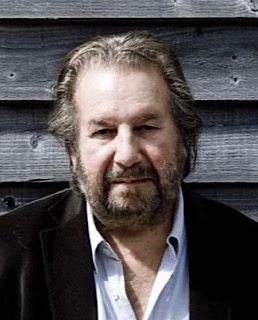
Paolo Luigi Mario Tullio, one of Ireland’s best-known chefs and food critics, dies in Dublin on June 5, 2015, following an illness. He is a writer and a Michelin star-winning head chef of the former restaurant Armstrong’s Barn in AnnamoeCounty Wicklow.

Tullio comes to Ireland in 1968 to study English, arts and philosophy at Trinity College Dublin (TCD), where he obtains a Master of Arts degree. After his study he holds several jobs, working as a clinical psychologist in St. Brendan’s Hospital, an interpreter and as a cattle-agent.

In 1977, Tullio takes over Armstrong’s Barn, serving food in a traditional Irish style. The restaurant closes in 1988. He does not sell the building when he closes the restaurant, instead he changes it into a recording studio. It is not a big hit so he holds several other jobs to pay the bills such as acting as a voice-over artist for commercials. After the demise of the studio, he renovates the building and turns it into a house.

Tullio sells “Annaglen,” the dwelling house attached to Armstrong’s Barn, and moves into Armstrong’s Barn itself. Before selling off Armstrong’s Barn in 2003, he builds a smaller house in a field close by.

Tullio receives several culinary awards for his cooking. In 1978, Armstrong’s Barn is awarded one Michelin star. The Michelin Guide awards the restaurant the “Red M,” indicating “good food at a reasonable price,” in 1980 and 1981.

He marries watercolour artist Susan Morley in 1975 after they meet each other at Trinity College Dublin. They have two children, but separate in 2004.

Tullio becomes a familiar face on television and even movies, acting as a guest critic on the popular RTÉ series The Restaurant. He writes restaurant reviews for the Irish Independent up until late 2014.

As an author, he pens North of Naples, South of Rome (1994), a book about where he is from in Italy and Mushroom Man (1998). He is also a frequent guest on Newstalk radio with Seán Moncrieff.

Tullio’s press manager, Noel Kelly, speaks of his passing: “The world is missing an incredible chef and culinary expert. He was one of life’s true gentlemen, a word overused but not in this case as Paolo was a gentleman to the core.”


1 Comment

Birth of Ivana Bacik, Labour Party Politician

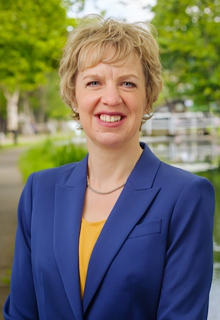
Ivana Catherine Bacik, Irish politician who has been the Leader of the Labour Party since March 24, 2022 and a Teachta Dála (TD) for the Dublin Bay South constituency since winning a by-election on July 9, 2021, is born in Dublin on May 25, 1968. She comes to prominence due to her abortion rights campaigning from the 1980s onward.

Bacik’s paternal grandfather, Charles Bacik, was a Czech factory owner who moved to Ireland in 1946. He eventually settled in Waterford, County Waterford, and in 1947 was involved in the establishment of Waterford Crystal. Her mother’s side of the family are Murphys from County Clare. Her father is an astronomer and is employed in a number of locations. As a result, she lives in London and South Africa, before moving to Crookstown, County Cork, at the age of six, when he becomes a physics lecturer in the Cork Institute of Technology. She attends the nearby national school in Cloughduv. When she is 11 years old, her family moves to the Sunday’s Well area of Cork city. At the age of 14, she moves to Dublin.

Bacik wins a scholarship to board at Alexandra College in Milltown, Dublin, and is awarded a sizarship at Trinity College Dublin. She has an LL.B. from Trinity and an LL.M. from the London School of Economics.

Bacik contests the Seanad Éireann elections in 1997 and 2002 as an independent candidate for the Dublin University constituency but is not successful.

She runs as a Labour Party candidate at the 2004 election to the European Parliament in the Dublin constituency. She runs with sitting MEP Proinsias De Rossa, who is also the party president, on the same ticket. She polls 40,707 first preference votes (9.6%) but is not elected.

In 2004, Bacik’s book Kicking and Screaming: Dragging Ireland into the 21st Century, is published by The O’Brien Press.

In 2007, she contested the Seanad Éireann elections for the third time in the Dublin University constituency, and is elected to the third seat, behind sitting Independent senators Shane Ross and David Norris. She initially sits as an Independent senator.

In February 2009, Bacik is included in an ‘All Star Women’s Cabinet’ in the Irish Independent. In March 2009, she confirmed claims made on a TV programme that she had taken two voluntary pay cuts of 10% in addition to a pension levy. In June 2009, she is the Labour Party candidate for the Dublin Central by-election. She comes in third with 17% of the first preference votes. She joins the Labour Party group in the Seanad in September 2009, and becomes Labour Party Seanad spokesperson for both Justice and Arts, Sports and Tourism. In November 2009, a feature by Mary Kenny of the Irish Independent includes Bacik in a list of women who “well deserved their iconic status.”

In May 2010, Bacik seeks Labour’s nomination to contest the next election in the Dublin South-East constituency but is not selected. In December 2010, she is added to the ticket as the second candidate beside Labour Party leader, Eamon Gilmore, in the Dún Laoghaire constituency for the 2011 Irish general election. Gilmore tops the poll, with Bacik receiving 10.1% of first preference votes but she is not elected. She is re-elected to Seanad Éireann at the subsequent election, after which she becomes Deputy Leader of the Seanad. She holds her seat in the Seanad in 2016 and in 2020.

On April 27, 2021, after the resignation of Eoghan Murphy from his Dáil seat in Dublin Bay South, Bacik announces her intention to stand in the upcoming by-election. She campaigns with an emphasis on providing affordable housing, as well as improving healthcare and childcare, tackling climate change, and achieving “a true republic in which church and state are separated.” During the campaign, she describes herself as having “more bills passed into law than any other Senator, on issues such as workers’ conditions, women’s health rights, and LGBT equality”. She also campaigns on increasing the number of sports amenities for children in the area, calling for unused Defence Forces football fields at the Cathal Brugha Barracks to be freed up for local sports, with the suggestion rejected by Fine Gael Minister for Defence Simon Coveney. Fine Gael complains to RTÉ after she features prominently on National Treasures, a prime-time TV show broadcast by RTÉ during the campaign. RTÉ has strict rules about fair coverage of candidates during campaigns. The national broadcaster blames an “inadvertent error” for the programme being shown three days before the election. A steering group within the broadcaster tells Fine Gael that “the broadcast should not have happened.” Consequentially, RTÉ has to show a special report on the by-election on Prime Time to “ensure fair coverage is given to all candidates.”

Bacik wins this election, receiving 8,131 (30.2%) first-preference votes. It is her fourth attempt as a Labour candidate, and she expresses her delight at the success at the count centre in the RDS. Following the election, she is described by The Irish Times as “a formidable activist and public intellectual” and that Fine Gael’s perceived antipathy towards their former TD, Kate O’Connell, may have contributed to the surge in support to Bacik from women voters. The newspaper claims that her election is “a long overdue morale boost” for Labour.

In August 2021, Bacik apologises for attending Katherine Zappone‘s controversial party in the Merrion Hotel, Dublin, in July of that year. She states that she believed that it took place within existing COVID-19 pandemic restrictions.

In March 2022, Bacik confirms she will run to succeed Alan Kelly as Labour Party leader. Kelly states that he believes that Bacik will succeed him. On March 24, 2022, she is confirmed as Labour Party leader unopposed at a party conference in Dublin. In a speech, she says she will focus on the rising cost of living and the serious and global problems facing the country. She pledges that Labour will fight the next election as a “standalone party” rather than joining any left-wing alliance.

At the 2024 Irish general election, Bacik is re-elected to the Dáil.

Bacik lives with husband Alan Saul and their two daughters in Portobello, Dublin.


Leave a comment

Birth of Michael Noonan, Former Fine Gael Politician

Michael Noonan, former Fine Gael politician, is born in Limerick, County Limerick, on May 21, 1943. He has been a member of every Fine Gael cabinet since 1982, serving in the cabinets of Garret FitzGeraldJohn Bruton and Enda Kenny.

The son of a local school teacher, Noonan is raised in Loughill, County Limerick. He is educated at the local National School and St. Patrick’s Secondary School in Glin, before studying to be a primary school teacher at St. Patrick’s CollegeDrumcondra, Dublin. He subsequently completes a BA and H.Dip. in English and Economics at University College Dublin (UCD). He begins to work as a secondary school teacher in Dublin. He develops an interest in politics from his mother, whose family had been heavily involved in Fine Gael at the local level in Limerick, and joins the Dublin branch of the party after graduating from university.

Having been involved in the local Fine Gael organisation in Limerick since the late 1960s, Noonan first holds political office in 1974, when he is elected as a member of Limerick County Council. Having built up a local profile he contests the 1981 Irish general election for the party and secures a seat in Limerick East. Upon taking his Dáil seat, he becomes a full-time politician, giving up his teaching post and resigning his seat on Limerick County Council. Though Fine Gael forms a coalition government with the Labour Party, as a first time Teachta Dála (TD), he remains on the backbenches. He serves as a TD from 1981 to 2020.

Noonan serves Minister for Justice from 1982 to 1986, Minister for Energy from January 1987 to March 1987, Minister for Industry and Commerce from 1986 to 1987, Minister for Health from 1994 to 1997, Leader of the Opposition and Leader of Fine Gael from 2001 to 2002, and Minister for Finance from 2011 to 2017.

In May 2017, Noonan announces he will be stepping down as Minister for Finance in the coming weeks when a new Taoiseach was appointed, and as a member of the Dáil at the next general election.

Noonan marries Florence Knightley, a native of CastlemaineCounty Kerry and a primary school teacher, in 1969. They have three sons (Tim, John and Michael) and two daughters (Orla and Deirdre). In May 2010, Noonan appears on RTÉ‘s The Frontline to talk about his wife’s battle with Alzheimer’s disease. Florence Noonan dies on February 23, 2012 of pneumonia.


Leave a comment

Birth of Cathal Goan, Former Director-General of RTÉ

Cathal Séamus Goan, Director-General of RTÉ from 2003 to 2011, is born on May 5, 1954, in Ardoyne, Belfast, Northern Ireland. He also plays a leading role in the launch of TG4.

Goan is an Irish language speaker. He studies Celtic studies at University College Dublin (UCD). He joins RTÉ in 1979 as an archivist with RTÉ Radio. He becomes a producer and senior producer on RTÉ Radio. In 1988, he moves to RTÉ Television and works on Today Tonight. Remaining in current affairs, he becomes editor of Cúrsaí, an Irish language television programme about arts and current affairs. He becomes Editor of Irish Language Programming in 1990.

Four years after being appointed Editor, Goan is approached to become “Ceannasaí” of the new Teilifís na Gaeilge. From August 1994, he manages the commencement of the new television channel. After a successful launch of the channel, where award-winning programming is produced during his tenure, he returns to RTÉ in 2000. He is appointed Director of Television and becomes a member of the RTÉ Executive Board.

Bob Collins retires as Director-General of RTÉ in 2003 to pursue a career elsewhere. It is announced in July 2003 that Goan will fill this position. He becomes the Director-General in October 2003. In 2008, he has a salary of €280,000, but it is reduced by €35,000. In 2006, he is announced as member of the board of National Concert Hall and serves there until May 2011. After the broadcast of a news item on nude pictures of Taoiseach Brian Cowen, Minister Michael Kennedy calls for Goan to “consider his position” as Director-General of RTÉ. He also receives criticism from Minister Éamon Ó Cuív in February 2010, when Sunday Mass is reduced to being broadcast just once a month on RTÉ Raidió na Gaeltachta.

Goan announces in July 2010 that he intends to step down at the end of his seven-year term. His resignation is accepted by the RTÉ Board.

Goan is married to Irish singer Maighread Ní Dhomhnaill.


Leave a comment

Birth of Dónal McKeown, Roman Catholic Bishop of Derry

Dónal McKeown, Roman Catholic prelate from Northern Ireland who has served as Bishop of Derry since 2014, is born in Belfast on April 12, 1950.

McKeown is one of four children born to James McKeown and his wife Rose (née McMeel), and is baptised in St. Patrick’s Church, Belfast. He is brought up in Randalstown, County Antrim, where he plays Gaelic football and hurling with Kickhams GAC Creggan.

McKeown attends primary school at Mount St. Michael’s Primary School, Randalstown, and secondary school as a boarder at St. MacNissi’s College, Camlough, between 1961 and 1968, completing his O-Levels and A-Levels with special distinctions in Modern Languages. Two of his teachers at St. MacNissi’s College are his future brother bishops, Anthony Farquhar and Patrick Walsh.

McKeown begins studying for the priesthood at St. Malachy’s College, Belfast, in 1968, and obtains a bachelor’s degree with honours in German and Italian from Queen’s University Belfast (QUB). He teaches English at a school in Dieburg, Germany, between 1970 and 1971, and subsequently works as Northern Ireland correspondent for the Catholic media company Katholische Nachrichten-Agentur between 1971 and 1973.

McKeown completes a licentiate in sacred theology at the Pontifical Gregorian University, Rome, between 1973 and 1978, during which he also works for Vatican Radio and as a correspondent for An Saol Mór, an Irish-language programme on RTÉ.

McKeown is ordained to the priesthood on July 3, 1977.

Following ordination, McKeown’s first pastoral assignment is as chaplain at Mater Infirmorum Hospital, before returning to Rome to complete his licentiate. He returns to the Diocese of Down and Connor in 1978, where he is appointed as a teacher at Our Lady and St. Patrick’s College, Knock, while also serving as assistant priest in Derriaghy. He returns to St. MacNissi’s College in 1983, where he continues his involvement with youth ministry and is given responsibility for organising the annual diocesan pilgrimage to Lourdes.

McKeown subsequently returns to St. Malachy’s College in 1987, where he teaches and serves as dean of the adjoining seminary, before succeeding Canon Noel Conway as president in 1995. During his presidency, he completes a Master of Business Administration at the University of Leicester in 2000, specialising in educational management.

McKeown has completed the Belfast Marathon on two occasions: as a priest with a team of 48 from Derriaghy in 1982, and as a bishop fundraising for a minibus for St. Malachy’s College in 2001.

McKeown is appointed auxiliary bishop-elect for the Diocese of Down and Connor and titular bishop of Cell Ausaille by Pope John Paul II on February 21, 2001, the first Irish bishop to be appointed in the third millennium. He is consecrated by the Bishop of Down and Connor, Patrick Walsh, on April 29 in St. Peter’s Cathedral, Belfast.

In response to a 2007 decision by Amnesty International to campaign for the legalisation of abortion in certain circumstances, McKeown supports the decision of Catholic schools in the diocese to disband their Amnesty International support groups, on the grounds that it is no longer appropriate to promote the organisation in their schools.

It is reported in an article in The Irish News that the mention of McKeown as a possible successor to Walsh as Bishop of Down and Connor is actively opposed by some priests in the diocese, who regard him as being “too soft” on the issue of integrated education. This opposition is branded a “Stop Donal” campaign.

McKeown also serves as a member of the Irish Catholic Bishops’ Conference, with responsibility for the promotion of Catholic education, youth ministry, university chaplaincies and the promotion of vocations. His interests include the interface between faith and the empirical sciences, and working with Catholic schools in Norway, Denmark, Lithuania, Poland and Germany.

McKeown also serves as a member of the Irish Catholic Bishops’ Conference and its committee on education and chairs its committees on vocations and youth. He leads the youth of the diocese to World Youth Day in 2002 and 2005 and also travels to Rome with his brother bishops for their quinquennial visit ad limina in 2006. He is also a regular contributor on Thought for the Day on BBC Radio Ulster.

McKeown is appointed Bishop-elect of Derry by Pope Francis on February 25, 2014. He is installed on April 6 in St. Eugene’s Cathedral, Derry.

Following the appointment of Noël Treanor as Apostolic Nuncio to the European Union on November 26, 2022, McKeown is announced as Apostolic Administrator of Down and Connor on January 21, 2023. He serves in this role until the installation of Alan McGuckian, following his appointment as Bishop of Down and Connor on February 2, 2024.

McKeown starts a 33-day journey of prayer toward the Consecration to Jesus Christ through Mary on January 9, 2025. The prayer takes place online each evening at 7:00 p.m. The 33 days of prayer take place the week following the Baptism of the Lord until the Feast of Our Lady of Lourdes on February 11.


Leave a comment

Death of Leslie Mary de Barra, Irish Nationalist & Republican

Leslie Mary de Barra (née Price), Irish nationalist and republican active during the Easter Rising of 1916, the Irish War of Independence and the Irish Civil War, dies in Cork, County Cork, on April 9, 1984. She becomes Director of Cumann na mBan and goes on to be chairman and President of the Irish Red Cross.

She is born Leslie Mary Price in Dublin on January 9, 1893, to Michael and Mary Price. Her father is a blacksmith, and she is one of six children. She wants to be a teacher and by 1911 has become a Monitress, a common way for girls to get into the teaching profession. Two of her brothers are involved in the Irish Volunteers and she is a member of Cumann na mBan. In advance of the Easter Rising, with the confusion over orders and lack of information, she states that she “did not question anything” as, with all that was happening, there are often odd events in her house. But they all wait for the mobilisation orders for the Rising.

De Barra’s role during the republican rebellion in Ireland, Easter 1916, is to act as a courier carrying messages and ammunition between the main headquarters in the General Post Office (GPO) and other posts. She does her role well during the Rising and gains the respect of many Irish Republicans. On the orders of Seán Mac Diarmada, one of the principal leaders of the rising, she and fellow Cumann na mBan member Bríd Dixon are promoted in the field and treated as officers. She later admits that the job was stressful. She is stationed both in the GPO and in the Hibernian Bank. It is while she is in the bank that she comes closest to death, standing beside Captain Thomas Weafer while he is shot. Another soldier who goes to his aid is also shot. She barely has time to grab Captain Weafer before he dies. She is the person sent to fetch a priest for the dying and wounded soldiers on the Thursday. By Friday evening, she is in the GPO and is with the group evacuated with Louise Gavan Duffy. Once they reach the hospital on Jervis Street, she parts company from Duffy and heads to Jacob’s factory to see how the rebels are getting on there. She is also arrested and held in Broadstone Station but quickly released.

By 1918, de Barra represents West Cork in the Cumann na mBan convention and becomes a member of the executive committee. She leaves her teaching career to focus fully on the organisation required by the republican movement in 1918. She travels the country by train and by bicycle to get women to join the local branches of the Cumann and take part in the activities needed by the movement. She is tasked by the Irish Republican Army’s (IRA) General Headquarters to set up specific lines of communication between Dublin and the Provincial commands. Within the year the organisation has grown from 17 to over 600 branches. She is Director of the organisation during the period up to the end of the war.

De Barra marries Tom Barry on August 22, 1921, in Cork during the Truce period in the lead up to the Anglo-Irish Treaty. At the wedding are men who later end up on opposite sides. Both Éamon de Valera and Michael Collins are guests. Her husband is staunchly Anti-Treaty even though he has been friends with Collins. Although her husband is a staunch republican and a major figure in the Irish War of Independence and the Irish Civil War, while she is serving in the GPO in Dublin during the rising, he is in Mesopotamia serving in the British Army in World War I.

In later years de Barra is central to the Irish Red Cross. Initially she gets involved by organising the care of children orphaned by World War II. She represents the Irish Red Cross at conferences in Toronto, Oslo, Monaco, New Delhi, Geneva, Vienna, The Hague, Athens, Istanbul and Prague. She and her husband handle refugees from Czechoslovakia and Poland. Through the Red Cross she is able to ascertain the status of Irish held by the Spanish during the Spanish Civil War, as officially Ireland remains neutral and cannot get involved. She is Chairman of the Irish Red Cross from 1950 to 1973.

De Barra is instrumental in the setting up of the Voluntary Health Insurance organisation in the late 1950s. In 1962, with the Red Cross she launches the “Freedom from hunger” campaign in Ireland which later becomes the organisation Gorta. She serves as chairman of Gorta also.

In 1956, a memorial to 1916 is unveiled in Limerick. It is designed by Albert Power and the commemoration of the Rising is held in May 1956 and the monument is unveiled by de Barra. In 1963 she is awarded an honorary degree from University College Dublin (UCD) along with Éamon de Valera and others.

In 1971, de Barra is part of a series to look back on the events leading to Irish Independence and her story is broadcast by Raidió Teilifís Eireann. In 1979 she wins the Henry Dunant Medal which is the highest award of the Red Cross Movement.

De Barra and her husband live on St. Patrick’s Street in Cork from the 1940s until his death in 1980. She dies in Cork on April 9, 1984, and is buried with her husband in St. Finbarr’s Cemetery. She is remembered today in the Leslie Bean de Barra Trophy awarded for the Cork Area Carer of the Year.


Leave a comment

Birth of Gaelic Footballer Bernard Brogan Jnr

Gaelic footballer Bernard Brogan Jnr is born on April 3, 1984, in Castleknock, Dublin. Born into a famous footballing family, he is the son of former All-Ireland winning and All Star player Bernard Brogan Snr and is the brother of former Dublin players Alan and Paul. His uncle Jim is also a former inter-county footballer for Dublin. Alongside most of his family, he attends St. Declan’s College on Navan Road.

Brogan wins the 2006 Sigerson Cup with Dublin City University (DCU). He scores one point in the game against Queen’s University Belfast (QUB). He is on the 2006 St. Oliver Plunketts/Eoghan Ruadh team that wins the Dublin AFL Division 2 league title with a win over Garda. He is named on the 2006 Dublin Bus/Evening Herald Blue Star football XV at left corner forward.

Brogan scores his first point for Dublin against Fermanagh in the 2007 National Football League (NFL). He makes his Championship debut for Dublin as a late sub in Dublin’s quarter-final win over Meath. He makes his first start for Dublin in the semi-final against Offaly but is substituted in the 45th minute. He regains his position for the final against Laois at Croke Park, scoring 1–01 in Dublin’s 3–14 to 1-14 Leinster title winning game. Along with brother Alan, he is nominated for an All Star Award in 2007 as half forward.

In 2008, Brogan wins the Dublin AFL Division 1 title with St. Oliver Plunketts/Eoghan Ruadh, scoring 1–05 in the final at Parnell Park. It is the first league title in the club’s history. With Dublin he wins the 2008 O’Byrne Cup by beating Longford in the final.

In 2009, Brogan wins another Leinster title with Dublin, but his season ends with defeat to Kerry in the All-Ireland quarter-final.

After an exceptional season for Dublin on the full forward line in 2010, Brogan is awarded an All Star and is named as 2010 Vodafone Footballer of the Year.

In 2011, Brogan wins an All-Ireland title with Dublin, the team’s first All-Ireland since 1995. He scores six points in the final against Kerry. He later reveals his celebrations were cut short as he had to do a drug test straight after the game. He passes with flying colours and resumes his celebrations.

In 2012, Brogan wins another Leinster title when Dublin beats Meath in the final. Then he misses an absolute sitter in the All-Ireland semi-final against Mayo. The miss haunts Brogan as Dublin loses the game by a narrow margin.

Brogan wins the 2013 NFL with Dublin against Tyrone at Cork. He scores five frees in the game. He then wins another Leinster title against Meath and is part of the Dublin team that wins the 2013 All-Ireland Senior Football Championship Final, defeating Mayo by 2–12 to 1-14. Brogan scores 2–03 in the match, is All-Ireland final man of the match and The Sunday Game names him their man of the match and includes him on their team of the year. He is then awarded an All Star for his performances in 2013.

Brogan wins the 2014 NFL with Dublin, but his season comes to an abrupt end when Donegal defeats Dublin in that year’s All-Ireland semi-final, a momentous result that sends shockwaves through the sport.

Following a third All-Ireland Senior Football title in September 2015, Brogan is appointed captain of the Ireland national international rules football team for the 2015 Series against Australia.

On October 24, 2019, Brogan announces his retirement from inter-county football. In total he plays 116 games for Dublin, league and championship, scoring 36 goals and 344 points (452), making him Dublin’s third top scorer of all time, behind Dean Rock (14-419; 461 in 89 games) and Jimmy Keaveney (30-402; 492 in 104 games).

In 2021, Brogan presents an episode of Shoulders of Giants, commissioned by Irish broadcaster RTÉ. In the programme, he charts the life and times of the former Dublin Gaelic footballer, and later manager, Kevin Heffernan, as well as the legacy he left Dublin football. The programme airs on RTÉ on December 12, 2021.


Leave a comment

Birth of Anne Bushnell, Jazz & Blues Singer

Anne Bushnell, Irish jazz and blues singer and cabaret performer, is born Anne Kavanagh in the Rotunda Hospital, Dublin, on March 28, 1939.

Bushnell is one of four children of John Kavanagh and Evelyn (née Ledwidge). Her father is a motor mechanic with a business on Arnott Street, Portobello, with the family living in Milltown. She dances on the stage of the Theatre Royal as a child and is a junior Irish champion dancer. She attends the St. Louis convent school in Rathmines, where she performs in plays and musicals and sings in the school choir. The nuns disapprove of her musical influences and try to dissuade her interest in jazz and “the music of the night.” Due to the family’s financial circumstances, she leaves school at the age of 16 and takes a job as a typist. She marries Tony Bushnell in April 1961. He is a salesman who shares her interest in music. The couple moves to Templeogue, and have a daughter, Suzanne, and a son, Paul. Paul is now a session musician based in Los Angeles, and Suzanne sings with a female vocal harmony group, Fallen Angels.

Bushnell continues to perform in amateur musicals, and from the early 1960s she sings with an Irish céilí band. With help from her husband’s musical family, she sings in Dublin jazz clubs from 1967, emerging as a well-respected jazz and blues vocalist and cabaret performer. She competes in the national song contest in 1968 singing Ballad to a Boy and becomes a resident singer in the RTÉ Light Orchestra. By the late 1960s, she is one of the busiest singers in Ireland, singing jingles for radio and TV commercials, and featuring on showband records as a backing singer. She is a regular guest on RTÉ television variety shows from 1970, including hosting Girls, girls, girls.

From 1972 to 1974, Bushnell is part of a group called Family Pride, which is a group of session musicians who record together regularly. They compete in the 1973 national song contest, playing in Dublin venues and on radio shows. The group has two top ten Irish hits. Their 1973 album, Family Pride, is not a chart success, however. She represents Ireland at a number of international contests and festivals as a solo artist, releasing a few singles and an unsuccessful album with CBS Records, Are You Ready (1977). She is a backing singer for two of Ireland’s entries to the Eurovision Song Contest in 1974 and 1980. She is a regular in stage musicals from the mid to late 1970s, in productions such as the tribute shows to Jacques Brel (1974) and Bing Crosby (1978), sometimes performing alongside her brother John Kavanagh. From the late 1970s she appears in pantomimes with Maureen Potter.

In 1984 Bushnell stars in a musical based on the life of Édith Piaf, No Regrets, written specially for her by Leland Bardwell. She is lauded for capturing Piaf’s stage presence and husky voice. The show suffers when it has to move from the Gaiety Theatre to the National Stadium. She reworks it into a successful one-woman show called The Little Sparrow and also devises a one-woman tribute to Judy Garland. Her cabaret act in the late 1980s is highly successful, featuring big numbers by Brel, Garland, and Piaf. Due to her talent at singing blues and jazz, she is awarded the freedom of New Orleans by its mayor in 1986.

Bushnell struggles with depression brought on initially by an underactive thyroid and later exacerbated by her father’s death and her husband’s unemployment in the late 1980s. Disheartened by the lack of recognition in Ireland and her family’s financial difficulties, she considers emigrating or returning to her career as a typist. To aid with her depression, she takes up painting in 1992, holding a number of exhibitions in Dublin. She continues to sing regularly until her death, often at events for charity. She is awarded the Cheshire Foundation award in 1994 for her charitable work. She also appears in the film Agnes Browne.

Bushnell dies of cancer on April 21, 2011, in Tallaght University Hospital, County Dublin, and is cremated at Mount Jerome Crematorium.


Leave a comment

Birth of Linda Martin, Singer & Television Presenter

Linda Martin, Northern Irish singer and television presenter, is born in Belfast, Northern Ireland on March 27, 1952. She is best known as the winner of the 1992 Eurovision Song Contest during which she represents Ireland with the song “Why Me?,” the first of a record three consecutive wins by Ireland. She is also known within Ireland as a member of the band Chips.

Martin is of Irish, Scottish and Italian ancestry. Her father’s family’s surname is originally Martini. Her paternal great-grandfather, Francis Martini, is born in Dublin to immigrants from Saronno, north of Milan, Italy. Two of her maternal great-grandparents, William Green and Elizabeth Nangle, have a coal-mining background and transferred to Belfast from Larkhall, Scotland.

Martin begins her musical career when she joins the band Chips in Omagh in 1969. They quickly become one of the top bands in Ireland on the live circuit, and release hit singles “Love Matters,” “Twice a Week” and “Goodbye Goodbye” during the mid-to-late 1970s. In 1972, she leaves Chips to be a vocalist with the new group Lyttle People but rejoins her former bandmates the following year.

The group appears on Opportunity Knocks in 1974 and appears a number of times on British television promoting their singles, but never scores a UK hit. With multiple entries to the Irish National finals of the Eurovision Song Contest, the band carries on into the 1980s. They score a final Irish hit in 1982 with “David’s Song (Who’ll Come With Me),” after which Martin leaves when she wins the Castlebar Song Contest with “Edge of the Universe” in 1983. From this point, she concentrates on a solo career as well as occasional live appearances with Chips until they recruit a new lead singer, Valerie Roe, in the late 1980s.

Martin participates in the National Song Contest four times as a member of Chips; however, they do not score successfully. She participates another four times in the contest as a soloist and once more as part of the group “Linda Martin and Friends.” With nine participations, she has been the most frequent entrant in the National Song Contest’s history. She wins the contest twice, going on to represent Ireland twice at the Eurovision Song Contest.

The first of these victories is in 1984 with the song “Terminal 3,” written by Johnny Logan. The song comes in second in the final, being beaten by eight points. “Terminal 3” reaches No. 7 in the Irish charts. The second victory is in 1992 when her song “Why Me?,” also written by Logan, goes on to win the final in Sweden. This becomes Ireland’s fourth victory in the Eurovision Song Contest, and the song reaches No. 1 in the Irish chart as well as becoming a hit in many European countries.

Martin is, at the time, one of only three artists to finish both first and second at Eurovision, behind Lys Assia and Gigliola Cinquetti. Since then, only Elisabeth Andreassen and Dima Bilan have achieved this, raising the number to five.

Martin is one of the hosts on the RTÉ quiz show The Lyrics Board and also serves as one of Louis Walsh‘s behind-the-scenes team on the first series of ITV‘s The X Factor. She also serves as a judge on the first, second and fourth seasons of RTÉ’s You’re a Star and on Charity You’re a Star in 2005 and 2006. While she is dismissed from later seasons, speaking on Saturday Night with Miriam on RTÉ television on July 28, 2007, she says that she is “open” to being invited back to the show. She does not rule out a return to Eurovision following Ireland’s dismal performance in the 2007 contest, finishing last with only five points.

Martin is a guest performer at Congratulations: 50 Years of the Eurovision Song Contest concert in Copenhagen, Denmark, in October 2005. She is also the Irish spokesperson for Eurovision Song Contest 2007 and is one of the five judges for Eurosong 2009. In 2012, she is the mentor for Jedward in the Irish Eurovision final Eurosong 2012.

During the interval of Eurovision 2013, the host Petra Mede presents a light-hearted history of the contest, during which she explains to viewers that Johnny Logan had won the competition three times, in 1980, 1987 and 1992. Appearing alongside Linda Martin in some vintage footage she jokes that he had won the third time disguised as a woman, saying, “I recognise a drag queen when I see one.” The joke proves controversial, particularly in the Irish media. However, on June 1, 2013, during an appearance on RTÉ’s The Saturday Night Show Martin says that she has actually benefited from all the publicity. On the same show she performs a cover of the song “Get Lucky” by Daft Punk.

Martin also appears in pantomime, in Dublin. She stars in Cinderella as the Wicked Stepmother, Snow White as the Evil Queen and Robin Hood as herself, at the Olympia Theatre. She tours Menopause The Musical with Irish entertainer Twink. While on tour, Twink describes Martin as a “cunt” during a tirade in May 2010. The two had been friends for 30 years but both say afterwards that they have no plans to speak to each other again.