seamus dubhghaill

Promoting Irish Culture and History from Little Rock, Arkansas, USA


Leave a comment

Birth of John McAlery, Association Football Pioneer

John McCredy McAlery, an Irish association football pioneer, is born in RathfrilandCounty Down, on November 29, 1848. His accomplishments include organizing the first ever properly organized football match in the history of Irish football in 1878, founding the first Irish football club in 1879, helping found the Irish Football Association in 1880, and wearing the captain‘s armband in Ireland‘s first ever international match in 1882. He is known as the “father of Irish association football.”

McAlery moves to Belfast to learn the drapery business and soon becomes very successful, opening the Irish Tweed House gentleman’s outfitters on Royal Avenue. A talented cricketer in his youth, his first involvement in the Belfast sport scene is helping in the formation of the Cliftonville Cricket Club in 1870, later serving as club treasurer. In 1878, during his honeymoon in Scotland, he witnesses his first ever association football match, and enjoys it so much he decides to introduce the sport back home.

The first match of organized association football on Irish soil is played on October 24, 1878, between Caledonian and Queen’s Park. McAlery invites the Scottish sides to play in the exhibition match at the Ulster Cricket Ground in an attempt to showcase the game to the Belfast crowd. Queen’s Park achieves a 3–2 victory, and more importantly, the demonstration is well received by the locals.

On September 20, 1879, less than a year later, McAlery places an advertisement in both the News Letter and the Northern Whig soliciting for individuals interested in becoming members of the Cliftonville Association Football Club.

The newly formed Cliftonville F.C. side plays their first match just nine days later, losing 2–1 to a team of rugby players called Quidnunces. They achieve their first victory on November 1 with a 2–0 defeat of Knock F.C., a team of former lacrosse players.

On November 18, 1880, McAlery organizes a meeting at the Queen’s Hotel in Belfast between the seven Irish football clubs that have been established at the time: AlexanderAvoniel, Cliftonville, Lisburn Distillery, Knock, Moyola Park and Oldpark. These teams become the founding members of the Irish Football Association (IFA), with Lord Spencer Chichester serving as its president and McAlery as secretary. In an appendix to the minutes of the meeting, McAlery writes: “If the spirit which pervaded from those present be acted upon the result will be a strong Association for promoting the game which we have espoused.”

The meeting also provides for Ireland’s first official football competition, the Irish FA Cup. In the first Cup final of the inaugural competition, played on April 9, 1881, Cliftonville is defeated by Moyola Park. They suffer the same fate the following year, losing to Queen’s Island in the final of the 1881–82 edition. McAlery, who captains Cliftonville while playing at fullback, wins his first trophy on his third try, as his club defeats Ulster to win the 1882–83 Irish Cup.

McAlery does not play much after this, deciding to focus on his administrative role in Irish football. He referees international matches until 1887, and remains the Irish FA secretary until 1888.

McAlery captains Ireland’s first ever international match on February 18, 1882, playing at right back. On a “bittery cold” Belfast night with occasional rain and hail, Ireland loses to the far more experienced England team by a score of 13–0. A week later, he makes his second and final international appearance, captaining his team again as they lose 7–1 to Wales in Wrexham.

McAlery retires to Whitehead, County Antrim, where he dies on December 3, 1925.

In 2013, a blue plaque erected by the Ulster History Circle is unveiled at Solitude, Cliftonville’s home ground, to commemorate McAlery’s efforts.


Leave a comment

Death of Ulick O’Connor, Writer, Historian & Critic

Ulick O’Connor, Irish writer, historian and critic, dies on October 7, 2019, in Rathgar, County Dublin.

Born in Rathgar on October 12, 1928, to Matthew O’Connor, the Dean of the Royal College of Surgeons, O’Connor attends Garbally CollegeBallinasloeSt. Mary’s College, Rathmines, and later University College Dublin (UCD), where he studies law and philosophy, becoming known as a keen sporting participant, especially in boxingrugby and cricket, as well as a distinguished debater. During his time at UCD he is an active member of the Literary and Historical Society. He subsequently studies at Loyola University, New Orleans. He was called to the bar in 1951.

After practising at the Irish Bar in Dublin, O’Connor spends time as a critic before turning to writing. His work spans areas such as biographypoetryIrish historydrama, diary, and literary criticism. He is a sports correspondent for The Observer from 1955 to 1961.

O’Connor is a well-known intellectual figure in contemporary Irish affairs and expresses strong opinions against censorship and the war on drugs. He contributes a regular poetry column to the Irish daily, the Evening Herald, also writes a column for the Sunday Mirror and a sporting column for The Sunday Times, as well as broadcasting on RTÉ.

O’Connor’s best-known writing is his biographies of Oliver St. John GogartyBrendan Behan, his studies of the early 20th-century Irish troubles and the Irish Literary Revival.

O’Connor is also known for the autobiographical The Ulick O’Connor Diaries 1970-1981: A Cavalier Irishman (2001), which details his encounters with well-known Irish and international figures, ranging from political (Jack Lynch and Paddy Devlin) to the artistic (Christy Brown and Peter Sellers). It also documents the progress of the Northern Ireland peace process during the same time, and the progress of the Northern Ireland Assembly. Although he travels extensively, he lives in his parental home in Dublin’s Rathgar. He is a member of Aosdána.

O’Connor’s great-grandfather is Matthew HarrisLand LeaguerFenian, and Irish Parliamentary Party (IPP) Member of Parliament. He is related to American actor Carroll O’Connor. He dies in Rathgar on October 7, 2019, five days short of his 91st birthday. He is buried at Dean’s Grange Cemetery, Deansgrange, County Dublin.


Leave a comment

Founding of the Football Association of Ireland

The Football Association of Ireland (Irish: Cumann Peile na hÉireann), the governing body for association football in the Republic of Ireland, is founded on September 2, 1921.

In the 19th century, association football outside of Ulster is largely confined to Dublin and a few provincial towns. The British Army teams play a role in the spread of the game to these areas, especially in Munster, as local clubs are initially reliant on them to form opposition teams, leading to the nickname “the garrison game.” Association football is played in relatively few Catholic schools as middle-class schools favour rugby union while others favour Gaelic games. The Irish Football Association (IFA) had been founded in 1880 in Belfast as the football governing body for the whole of Ireland, which was then a part of the United Kingdom and considered a Home Nation. The Leinster Football Association was an affiliate, founded in 1892 to foster the game in Leinster, outside of the Ulster heartlands. This was followed by the establishment of the Munster Football Association in 1901.

By 1913, the Leinster FA becomes the largest divisional association within the IFA, displacing the North East Ulster Football Association, yet all but two clubs in the 1913–14 Irish League are based in Ulster. While this largely reflects the balance of footballing strength within Ireland, southern members feel the IFA is doing little to promote the game outside of the professional clubs in its northern province. In the other provinces, association football is also under pressure from the Gaelic Athletic Association (GAA), which has banned members from playing or watching the sport as it is considered a “foreign” game. Furthermore, there is a growing feeling in Dublin of alleged Belfast bias when it comes to hosting matches and player selection for internationals. This view is not helped by the composition of the IFA’s sub-committees, with over half of the membership consisting of delegates hailing from the North-East, and the International Committee, who chooses the national team, containing just one member from Leinster. The Belfast members are mainly unionist, while the Dublin members are largely nationalistWorld War I increases the gulf between the northern teams and the clubs in the south as the Irish League is suspended and replaced by regional leagues, foreshadowing the ultimate split. Tensions are then exacerbated by the Irish War of Independence of 1919–21, which disrupts contact between northern and southern clubs further and prevents resumption of the Irish League. The security situation prompts the IFA to order the March 1920-21 Irish Cup semi-final replay between Glenavon and Shelbourne to be replayed in Belfast, rather than in Dublin as convention dictates. This proves to be the final straw and the Leinster FA confirms their decision to disaffiliate from the IFA at a meeting on June 8, 1921.

The Football Association of Ireland (FAI) is formed in Dublin on September 2, 1921, by the Leinster FA. The Free State League (originally the Football League of Ireland and now the League of Ireland) is founded in June of that year when the Leinster FA withdraws from the IFA. This is the climax of a series of disputes about the alleged Belfast bias of the IFA. Both bodies initially claim to represent the entire island. The split between Southern Ireland (which becomes the Irish Free State in December 1922) and Northern Ireland (which comes into existence as a jurisdiction in 1921) does not produce a split in the governing bodies of other sports, such as the Irish Rugby Football Union (IRFU). The Munster Football Association, originally dominated by British Army regiments, falls into abeyance on the outbreak of World War I, and is re-established in 1922 with the help of the FAI, to which it affiliates. The Falls League, based in the Falls Road of nationalist West Belfast, affiliates to the FAI, and from there Alton United wins the FAI Cup in 1923. However, when the FAI applies to join FIFA in 1923, it is admitted as the Football Association of the Irish Free State (FAIFS) based on a 26-county jurisdiction. (This jurisdiction remains, although Derry City, from Northern Ireland, are given an exemption, by agreement of FIFA and the IFA, to join the League of Ireland in 1985.) Attempts at reconciliation followed. At a 1923 meeting, the IFA rejects an FAIFS proposal for it to be an autonomous subsidiary of the FAIFS. A 1924 meeting in Liverpool, brokered by the English FA, almost reaches agreement on a federated solution, but the IFA insists on providing the chairman of the International team selection committee. A 1932 meeting agrees on sharing this role, but founders when the FAIFS demands one of the IFA’s two places on the International Football Association Board (IFAB). Further efforts to reach agreement are made through a series of conferences between the IFA and FAI from 1973 to 1980 during the height of the Troubles in Northern Ireland.

The IFA does not feel obliged to refrain from selecting Free State players for its international team. The name Football Association of Ireland is readopted by the FAIFS in 1936, in anticipation of the change of the state’s name in the pending Constitution of Ireland, and the FAI begins to select players from Northern Ireland based on the Constitution’s claim to sovereignty there. A number of players play for both the FAI “Ireland” (against FIFA members from mainland Europe) and the IFA “Ireland” (in the British Home Championship, whose members had withdrawn from FIFA in 1920). Shortly after the IFA rejoins FIFA in 1946, the FAI stops selecting Northern players. The IFA stops selecting southern players after the FAI complains to FIFA in 1950.

From the late 1960s, association football begins to achieve more widespread popularity. Donogh O’MalleyTD and then Minister for Education, begins a new programme of state-funded schools in 1966, many with association football pitches and teams. The Gaelic Athletic Association’s ban on members playing “foreign” games is lifted in 1971.  RTÉ television, founded in 1962, and British television (available nearly everywhere on cable or microwave relay from the 1970s), broadcast association football regularly. Above all, the increasing success of the international side from the late 1980s gives increased television exposure, more fans, and more funds to the FAI.

However, increased media exposure also highlights some inadequacies of its hitherto largely amateur organisation. In January 1999, the FAI announces a planned national association football stadium, to be called Eircom Park after primary sponsors Eircom. This is to be a 45,000-seat stadium in City West, modeled on the GelreDome in Arnhem. It gradually becomes apparent that the initial forecasts of cost and revenue have been very optimistic. FAI and public support for the project is also undermined by the announcement of the Stadium Ireland in Abbotstown, which would have 65,000 seats and be available free to the FAI, being funded by the state. The Eircom Park project is finally abandoned in March 2001, amid much rancour within the FAI.

During preparation for the 2002 FIFA World Cup, the captain of the senior football team, Roy Keaneleaves the training camp and returns to his home. He is critical of many aspects of the organisation and preparation of the team for the upcoming games, and public opinion in Ireland is divided. As a result of the incident, the FAI commissions a report from consultants Genesis into its World Cup preparations. The “Genesis Report” makes a number of damning criticisms regarding corruption and cronyism within the association, but is largely ignored. The complete report is never published for legal reasons. The FAI subsequently produces its own report of itself titled “Genesis II” and implements a number of its recommendations.

In 2002, the FAI announces a deal with British Sky Broadcasting to sell broadcasting rights to Ireland’s international matches, as well as domestic association football, to be televised on its satellite subscription service. The general public feels it should be on RTÉ, the free-to-air terrestrial service, in spite of their offering much lower rates. Faced with the prospect of the government legislating to prevent any deal, the FAI agrees to accept an improved, but still lower, offer from RTÉ.

In 2002, the FAI makes an unsuccessful bid with the Scottish Football Association to host UEFA Euro 2008.

Following the respectable performance of the national team in the 2002 FIFA World Cup, the team’s fortunes decline under the management of Mick McCarthyBrian Kerr and Steve Staunton.

In September 2006, Lars-Christer Olsson, CEO of UEFA, is quoted as anticipating that Lansdowne Road in Dublin (actually owned by the Irish Rugby Football Union) will stage the UEFA Cup Final in 2010, and that the FAI and the IFA will co-host the 2011 UEFA European Under-21 Championship. The 2010 final is ultimately awarded to Hamburg, but in January 2009, UEFA nameS Lansdowne Road as the host stadium for the renamed 2011 UEFA Europa League Final. In August 2010, an FAI spokesman says they will have repaid all of their stadium debt of €46 million within 10 years despite the disastrous sale of 10-year tickets for premium seats at the Aviva Stadium.

In November 2007, the FAI moves to new headquarters at the National Sports Campus in Abbotstown. Its headquarters since the 1930s had been a Georgian terraced house at 80 Merrion Square, which is sold for a sum variously reported as “in excess of €6m” and “almost €9m.”


Leave a comment

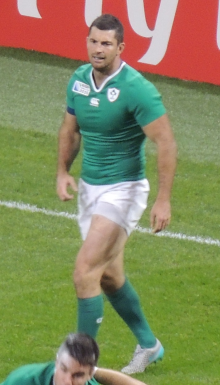
Birth of Rob Kearney, Former Rugby Union Player

Robert Kearney, former rugby union player, is born on a dairy farm on March 26, 1986, on the Cooley Peninsula in County Louth. He plays for 15 years for Leinster followed by a six-month stint in Australia, playing for Perth based side Western Force. He also plays over a decade for the Ireland national rugby union team with whom he earns 95 caps and goes on two British & Irish Lions tours in 2009 and 2013. As a youth he also plays rugby union for Clongowes Wood College and Gaelic football for Louth in the All-Ireland Minor Football Championship.

Kearney is the third of five children. He has an older brother, Richard, a younger brother Dave (who plays for Leinster) and a sister, Sara, the youngest of the five children. His elder brother Ross dies at the age of six following an accident in 1988. He is a seventh cousin of former U.S. President Joe Biden.

Like many of his peers, Kearney gets involved in athletics at an early age. The dominant sport in the area is Gaelic football. As a youth, he plays Gaelic for Naomh Muire, and in the Cooley Kickhams underage setup, before graduating to the Cooley senior football team at the age of 17 in 2004 and also Louth at minor level.

Kearney attends Clongowes Wood College in County Kildare for his secondary education. After his Leaving Certificate he moves to University College Dublin (UCD) on a sports scholarship, where he plays for the rugby team. He graduates in April 2010 with a Bachelor of Arts degree in economics. In 2005 he helps the U-20s team win the McCorry Cup, beating Dublin University Football Club (DUFC) in the final. In 2018, he is awarded the UCD Alumni Award in Sport.

Kearney plays for Leinster at both schoolboy and U-19 level before going on to represent them as a senior. He scores a hat-trick of tries on his debut for Leinster in a pre-season friendly win over Parma.

Kearney makes his Celtic League debut for Leinster in 2005 in a 22–20 defeat away to the Ospreys. He makes 32 appearances in the competition, scoring eight tries, with three penalties during a period in September 2006, when usual place kicker, Felipe Contepomi, is injured. He plays in his first Heineken Cup game in a 19–22 defeat against Bath at the Royal Dublin Society (RDS) on October 22, 2005. It is the first of ten appearances scoring ten tries in the process. He is part of Leinster’s Heineken Cup winning team in 2009 but misses the 2011 final due to injury. On May 21, 2012, the day after Leinster wins their second straight Heineken Cup, he is announced as the ERC Player of the Year for 2012. During the 2011–12 campaign he starts all nine European matches scoring six tries. He is crowned Leinster player of the year for the 2011–12 season. He confirms his departure from Leinster on September 24, 2020.

In late September 2020, it is confirmed that Kearney has signed a one-year contract with Australian side Western Force. He makes his Force debut in an 11–27 defeat to the Brumbies on February 19, 2021. He announces his retirement from rugby after one season with Western Force in Super Rugby AU and Super Rugby Trans-Tasman. Following his retirement, he returns to Louth GAA club Cooley Kickhams where he begins training in August 2021 for the first time since 2005.

Kearney represents Ireland at schoolboy and U-19 level, and tours with Ireland A in the 2006 Churchill Cup. He is first called into the Irish training squad for 2005’s autumn internationals but does not play. He is named in the Irish squad to the 2007 summer tour of Argentina and earns his first cap against Argentina on June 2, 2007, in a 16–0 defeat. During the 2008 Six Nations Championship he scores two tries, one against Scotland and one against England. He is a member of the victorious Ireland team that wins the 2009 Six Nations Championship, Triple Crown and Grand Slam. One of the most famous incidents in his career is a high tackle incident involving Italy‘s Andrea Masi in the first minute of a game. The incident is taken as an indication of the danger posed by Kearney in attack. He misses almost a year – from November 2010 until August 2011 – due to a knee injury that requires surgery.

In the 2011 Rugby World Cup, Kearney is selected but is injured for the first game against the United States. However, he plays in all the other matches which take Ireland through to the quarterfinals, in which they are knocked out by Wales, 22–10. He is selected in the Ireland squad for the 2012 Six Nations Championship and named in the starting team to play Wales in the opening match. He plays in all the other games, which see Ireland finish third in the table. He is also in the first Irish rugby team in 39 years to beat Australia on Australian soil, in the 2018 summer series. He is named in the Ireland squad for the 2019 Rugby World Cup in Japan, starting three of Ireland’s five matches and splitting time at fullback with Jordan Larmour.

Kearney is named in the British & Irish Lions squad for the 2009 tour to South Africa. He makes his Lions test debut as a substitute in the 26–21 first test defeat in Durban. Due to an injury to Lee Byrne, he is selected again for the second test in Pretoria. He scores the only try for the Lions in a 28–25 defeat. He then plays in the final test in Johannesburg which the Lions win 28–9. On April 30, 2013, he is named in his second British & Irish Lions squad.

Kearney marries Jess Redden in 2021, and their son is born in 2023.


Leave a comment

Ireland Wins the Rugby Triple Crown for First Time

Ireland wins the rugby Triple Crown for first time on March 10, 1894. In rugby union, the Triple Crown (Irish: An Choróin Triarach) is an honour contested annually by the national teams of England, Scotland, Ireland, and Wales as part of the Six Nations Championship. If any one team manages to win all their games against the other three then they win the Triple Crown.

The history of the Ireland national rugby union team begins in 1875, when Ireland plays its first international match, a 0–7 loss against England. Ireland has competed in the Six Nations (formerly known as the Five Nations and originally known as the Home Nations) rugby tournament since 1883. Ireland has also competed at the Rugby World Cup every four years since its inception.

Dublin University is the first organised rugby football club in Ireland, having been founded in 1854. The club is organised by students who have learned the game while at English public schools. During the third quarter of the nineteenth century, and following the adoption of a set of official rules in 1868, rugby football begins to spread quickly throughout Ireland, resulting in the formation of several other clubs which are still in existence, including North of Ireland F.C. (1868), Wanderers F.C. (1869), Queen’s University RFC (1869), Youghal RFC (1869), Lansdowne F.C. (1873), Dungannon RFC (1873), County Carlow F.C. (1873), University College Cork RFC (1874) and Ballinasloe RFC (1875) which amalgamates with Athlone RFC to form Buccaneers RFC.

In 1874, the Irish Football Union. reconstituted as the Irish Rugby Football Union after unification with the North of Ireland Union, is formed by Dublin University Football Club, Wanderers F.C., Engineers F.C., Lansdowne F.C., Bray, Portora, Dungannon RFC and Monaghan. Ireland loses their first test match against England 0-7 at The Oval on February 15, 1875. Both teams field twenty players in this match, as is customary in the early years of rugby union. It was not until 1877 that the number of players is reduced from twenty to fifteen. Ireland’s first home game is also against England in the same year. It is held at the Leinster Cricket Club in Rathmines as Lansdowne Road is deemed unsuitable. The first match at Lansdowne Road is held on March 11, 1878, with England beating Ireland by 2 goals and 1 try to nil.

It is not until 1881 that Ireland first wins a test, beating Scotland at Ormeau Cricket Ground in Belfast. Ireland turns up two men short for their game in Cardiff in 1884 and has to borrow two Welsh players. The first victory Ireland has at Lansdowne Road takes place on February 5, 1887. It is also their first win over England, by two goals to nil. On March 3, 1888, Ireland records their first win over Wales with a goal, a try and a drop goal to nil.

In 1894, Ireland follows the Welsh model of using seven backs instead of six for the first time. After victory over England at Blackheath, Ireland wins back-to-back matches for the first time when recording their first win over Scotland on February 24, 1894. Ireland goes on to beat Wales in Belfast on March 10, 1894, and wins the Triple Crown for the first time.

In the 1890s, rugby is primarily a game for the Protestant middle class, the only Catholic in Edmund Forrest’s 1894 team is Thomas Crean. Of the eighteen players used in the three games, thirteen are from three Dublin clubs – Wanderers, Dublin University and Bective Rangers – and the remaining five are from Ulster. They go on to win the Home international championship twice more before the century is out (1896 and 1899), so that by 1901 all four of the Home Unions have tasted success at a game that is growing in popularity with players and spectators.

(Pictured: The 1894 Ireland Rugby Union team, Kildare Observer, Irish News Archives)


Leave a comment

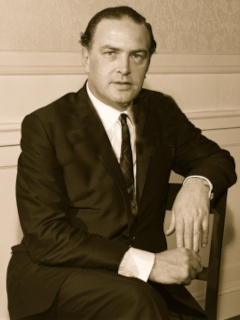
Birth of Donogh O’Malley, Fianna Fáil Politician & Rugby Union Player

Donogh Brendan O’Malley, Irish Fianna Fáil politician and rugby union player, is born on January 18, 1921, in Limerick, County Limerick. He serves as Minister for Education (1966-68), Minister for Health (1965-66) and Parliamentary Secretary to the Minister for Finance (1961-65). He also serves as a Teachta Dála (TD) for the Limerick East constituency (1954-68). He is best remembered as the Minister who introduces free secondary school education in the Republic of Ireland.

O’Malley is one of eight surviving children of Joseph O’Malley, civil engineer, and his wife, Mary “Cis” (née Tooher). Born into a wealthy middle-class family, he is educated by the Jesuits at Crescent College and later at Clongowes Wood College, County Kildare. He later studies at University College Galway (UCG), where he is conferred with a degree in civil engineering in 1943. He later returns to Limerick, where he works as an engineer before becoming involved in politics.

O’Malley plays rugby at provincial level for Munster, Leinster and Connacht and at club level for Bohemians and Shannon RFC. His chances at an international career are ruined by the suspension of international fixtures during World War II. It is at a rugby match in Tralee that he first meets Dr. Hilda Moriarty, who he goes on to marry in August 1947.

Although O’Malley runs as a Fianna Fáil candidate, he is born into a politically active family who supports Cumann na nGaedheal until a falling-out with the party in the early 1930s. He first becomes involved in local politics as a member of Limerick Corporation. He becomes Mayor of Limerick in 1961, the third O’Malley brother to hold the office (Desmond from 1941-43 and Michael from 1948-49). He is a strong electoral performer, topping the poll in every general election he runs in.

O’Malley is first elected to Dáil Éireann as a Fianna Fáil TD for Limerick East at the 1954 Irish general election. Fianna Fáil is not returned to government on that occasion. He spends the rest of the decade on the backbenches. However, his party is returned to power in 1957. Two years later, the modernising process begins when Seán Lemass takes over from Éamon de Valera as Taoiseach. Lemass introduces younger cabinet ministers, as the old guard who has served the party since its foundation in 1926 begin to retire.

In 1961, O’Malley joins the government as Parliamentary Secretary to the Minister for Finance. He is part of a new, brasher style of politician that emerges in the 1960s, sometimes nicknamed “the men in the mohair suits.” It is expected that this generation of politician, born after the Irish Civil War, will be a modernising force in post-de Valera Ireland.

Although his sporting background is in rugby and swimming, it is association football which O’Malley gets involved in at a leadership level, becoming President of the Football Association of Ireland despite never having played the sport.

Following Fianna Fáil’s retention of power in the 1965 Irish general election, O’Malley joins the cabinet as Minister for Health. He spends just over a year in this position before he is appointed Minister for Education, a position in which he displays renowned dynamism. Having succeeded Patrick Hillery, another dynamic young minister, he resolves to act swiftly to introduce the recommendations of an official report on education.

As Minister for Education, O’Malley extends the school transport scheme and commissions the building of new non-denominational comprehensive and community schools in areas where they are needed. He introduces Regional Technical Colleges (RTCs), now called Institutes of Technology, in areas where there is no third level college. The best example of this policy is the University of Limerick, originally an Institute of Higher Education, where O’Malley is credited with taking the steps to ensure that it becomes a university. His plan to merge Trinity College Dublin and University College Dublin arouses huge controversy, and is not successful, despite being supported by his cabinet colleague Brian Lenihan. Access to third-level education is also extended, the old scholarship system being replaced by a system of means-tested grants that give easier access to students without well-off parents.

Mid-twentieth century Ireland experiences significant emigration, especially to the neighbouring United Kingdom where, in addition to employment opportunities, there is a better state provision of education and healthcare. Social change in Ireland and policies intending to correct this deficit are often met with strong resistance, such as Noël Browne‘s proposed Mother and Child Scheme. As a former Health Minister, O’Malley has first-hand experience of running the department which had attempted to introduce this scheme and understood the processes that caused it to fail, such as resistance from Department of Finance and John Charles McQuaid. This influences his strategy in presenting the free-education proposal.

Shortly after O’Malley is appointed, he announces that from 1969 all education up to Intermediate Certificate level will be without cost, and free buses will bring students in rural areas to their nearest school, seemingly making this decision without consulting other ministers. However, he does discuss it with Lemass. Jack Lynch, who, as Minister for Finance, has to find the money to pay for the programme, is not consulted and is dismayed at the announcement.

By announcing the decision first to journalists and on a Saturday (during a month when the Dáil is in recess), the positive public reaction tempers resistance to the idea before the next cabinet meeting. O’Malley’s proposals are hugely popular with the public, and it is impossible for the government to go back on his word.

Some Irish commentators consider that O’Malley’s extension of education, changing Ireland from a land where the majority are schooled only to the age of 14 to a country with universal secondary-school education, indirectly leads to the Celtic Tiger boom of the 1990s-2000s when it is followed for some years by an extension of free education to primary degree level in university, a scheme that is launched in 1996 by the Labour Party and axed in 2009 by Fianna Fáil’s Batt O’Keeffe.

In 1967, O’Malley appoints Justice Eileen Kennedy to chair a committee to carry out a survey and report on the reformatory and industrial school systems. The report, which is published in 1970, is considered ground-breaking in many areas and comes to be known as the Kennedy Report. The Report makes recommendations about a number of matters, including the Magdalene laundries, in relation to which they are not acted upon. The report recommends the closure of a number of reformatories, including the latterly infamous reformatory at Daingean, County Offaly.

O’Malley’s reforms make him one of the most popular members of the government. He is affectionately known as “the School Man” for his work in education. His sudden death in Limerick on March 10, 1968, before his vision for the education system is completed, comes as a shock to the public. He is buried with a full Irish state funeral.

Following O’Malley’s death, his widow, Hilda O’Malley, does not run in the subsequent by-election for the seat he has left vacant. It is won narrowly by their nephew Desmond O’Malley. Hilda seeks the Fianna Fáil nomination for the 1969 Irish general election, but Fianna Fáil gives the party nomination to Desmond, as the sitting TD. Hilda runs as an Independent candidate in that election. After what proves a bitter campaign against her nephew, she fails to get the fourth seat in Limerick East by just 200 votes.
Leave a comment

Death of Lucius Gwynn, Academic & Sportsman

Lucius Henry Gwynn, Irish academic and sportsman who is noted for his prowess in both rugby union football and cricket, dies in Davos Platz, Switzerland, on December 23, 1902.

Gwynn is born in Ramelton, County Donegal, on May 5, 1873. He is a member of a family well known in Dublin at the time for its academic and sporting achievements. He is the fourth son of the Very Rev. John Gwynn, Regius Professor of Divinity at Trinity College Dublin (TCD), and Lucy Josephine, daughter of the Irish patriot William Smith O’Brien. He and his three immediate younger brothers, Arthur, Robin and Jack, all in turn captain their school and university cricket teams and play the game at first class level. He is also a talented rugby player.

Gwynn’s academic career outshines even his sporting achievements. He enters Trinity College Dublin as a foundation Scholar and achieves a double first in his degree finals. In 1899 he is elected a Fellow of Trinity College and commences what promises to be a distinguished academic career.

At school Gwynn is mainly a bowler, his brother Arthur being the superior bat, though this inequality is ironed out at university. He is captain of the Dublin University Cricket Club XI for two seasons, 1894 and 1895, then plays under Arthur’s captaincy. The three brothers make up a formidable threesome in those years.

Primarily noted for his bowling prowess during early outings with the Dublin University XI, Gwynn takes 44 wickets at an average of 8.14 in Trinity’s annus mirabilis of 1893, a season which witnesses victories over Leicestershire, Oxford University, Warwickshire (dismissed for a paltry total of 15 runs) and a draw against Essex.

Gwynn, a right-handed batsman, who records the highest first-class average (56.87) among those batsmen who complete ten innings or more during the English season of 1895, enjoys another remarkably productive season in 1896, plundering over a thousand runs in Trinity flannels, a superlative effort complemented by a haul of 93 wickets at 9.37. His irrepressible form reputedly earns him an invitation to represent England against Australia in the second Ashes Test at Old Trafford in July 1896. However, concurrent university examinations render him unable to participate. Instead, English cricket is introduced to the wizardry of K. S. Ranjitsinhji, who takes Gwynn’s place.

Gwynn makes his debut for Ireland against I Zingari in July 1892 and goes on to play for Ireland 13 times, his last game coming in May 1902 against Marylebone. Two of his matches for Ireland have first-class status.

Gwynn also plays first-class cricket in two Gentlemen v Players matches, representing the gentlemen, and four matches for Dublin University in 1895, for whom he makes his top score of 153 not out against Leicestershire. In all, he amasses 3,195 runs and 311 wickets for Dublin University, in addition to 499 runs and 14 wickets for Ireland.

Remarkably, Gwynn also represents Ireland seven times at rugby union, debuting against Scotland at Belfast in February 1893. He features in all three legs of Ireland’s 1894 Triple Crown-winning campaign.

In 1901 Gwynn marries Katharine Rawlins of Bristol. He is already suffering from persistent symptoms of debility and fatigue. A few months later a Harley Street physician diagnoses tuberculosis. He is admitted to a sanatorium at Davos Platz in Switzerland, but the illness has progressed too far for any treatment to succeed. He dies on December 23, 1902, at the age of 29. The couple’s only child, a daughter named Rhoda, is born in September 1902, just three months before his death.


Leave a comment

Birth of Tom McGurk, Journalist, Radio Presenter & Sportscaster

Tom McGurk (Irish: Tomás Mag Oirc), Irish poet, journalist, radio presenter and sportscaster, is born on December 20, 1946, in Cookstown, County Tyrone, Northern Ireland. He attends Portadown College and studies English and Philosophy at Queen’s University Belfast (QUB). He is involved in the Civil Rights demonstrations while at Queen’s.

McGurk first joins RTÉ in 1972, as a news reporter, moving on to present Last House and First House on television. In 1972 he wins a Jacob’s Award for his RTÉ Radio documentaries on Ireland’s islands. For 20 years he is the presenter of RTÉ Sport‘s rugby coverage, most notable of the Six Nations Championship and Internationals with the panel of George Hook and Brent Pope. He also spends time in the 1980s and 1990s in the UK, working for BBC Radio 4‘s Start of the Week as a presenter on the regional ITV station for the North West of England, Granada Television. On his return to Ireland, he presents the Sunday Show on RTE Radio 1. He also guest presents Tonight with Vincent Browne, on TV3. He presents a drive-time radio show on 4FM when it launches in 2009.

Until 2019, McGurk is a columnist with The Sunday Business Post. He then writes for The Currency until 2020.

McGurk writes the script for the TV film Dear Sarah based on the letters from Sarah Conlon, campaigning for the release of her husband (Giuseppe Conlon), son (Gerry Conlon) and sister Anne Maguire, caught up in the Guildford Four miscarriage of justice.

Among his poems is “Big Ned” about a farmer from Brockagh, County Tyrone.

While working for 4FM, the Director of the National Women’s Council of Ireland, Susan McKay, speaks out against an “uncouth and objectionable” interview McGurk conducts with her. The National Women’s Council has since refrained from giving interviews to 4FM.

From 1983 to 1996 McGurk is married to the broadcaster Miriam O’Callaghan, with whom he has four daughters. In 2003 he marries PR consultant Caroline Kennedy.

On December 5, 2017, the Irish Revenue Commissioners list of tax defaulters reveal that McGurk had made a settlement of €76,000 with the Revenue for the underpayment of income tax.


Leave a comment

Birth of Karl Mullen, Rugby Union Player & Gynecologist

Dr. Karl Daniel Mullen, rugby union player and consultant gynecologist who captains the Irish rugby team and captains the British Lions on their 1950 tour to Australia and New Zealand, is born on November 26, 1926, in Courtown Harbour, County Wexford.

Mullen is one of three sons and seven daughters of Daniel Mullen, an officer of the customs and excise, and his wife Annie (née Hargrove). After his parents move to Home Farm Road, Drumcondra, Dublin, he is educated at the Dominican St. Thomas’s Academy, Eccles Street, the Jesuit Belvedere College, Great Denmark Street, and the Royal College of Surgeons in Ireland (RCSI). He plays rugby and cricket at school, association football with Home Farm F.C., and golf in the summer months. Initially a centre, he becomes a prop on the Belvedere junior cup team and, after injury to a teammate, hooker on the senior cup team, which loses the Leinster Schools Rugby Senior Cup final to Castleknock College in 1944.

On January 25, 1947, Mullen makes his formal Irish debut in a 12–8 loss to France. He plays as hooker, winning 25 caps for Ireland from 1947 to 1952. A year later, on January 31, 1948, he plays his first game for Barbarian F.C. in a 9–6 victory over Australia in Cardiff, Wales. After helping Ireland to victory over France on January 1, 1948, at the age of 21, he captains Ireland for the first time, on February 14, 1948, leading them to an 11–10 victory over England at Twickenham Stadium.

Mullen captains the Irish team to their first Grand Slam in the 1948 Five Nations Championship and is one of eight players from that team who live to see the country’s next Grand Slam in 2009.

Ireland retains the triple crown in 1949 by beating Wales 5–0 in Swansea, ending a run of defeats on Welsh soil lasting fourteen years. The following season Ireland suffers from injuries and loses to both England and Wales, the latter securing the triple crown.

Mullen is selected to captain the 1950 Lions Tour to Australia and New Zealand. After appearing in the first two tests against New Zealand, a 9–9 draw and an 8–0 loss, he sustains an ankle injury in the latter game and concedes his place to Dai Davies of Wales. Returning for the second test against Australia, a resounding 24–3 victory, he also plays in a semi-official “British Isles RFU” team against Ceylon during their return journey in September.

Under Mullen’s captaincy Ireland regains the international championship in 1951. His last cap comes in a 14–3 loss to Wales at Lansdowne Road on March 8, 1952. In twenty-five successive appearances (fifteen as captain), he secured three international championships and two triple crowns for Ireland in four seasons, their most successful haul of the twentieth century.

Mullen’s distinguished rugby career has to be fitted around his medical studies. In 1945, he enters the RCSI, graduating L and LM (RCSI and RCPI) in 1949. Awarded the diploma in obstetrics (1952) and membership of the Royal College of Obstetricians and Gynaecologists (1956), he trains at Sir Patrick Dun’s Hospital, Jervis Street Hospital and the Rotunda hospitals. After serving as senior obstetrics registrar at the Derby City General Hospital (1953–56), he returns to Dublin to become a consultant obstetrician, based at Mount Carmel Community Hospital, Churchtown, Dublin, and develops a considerable private practice. By his retirement in 2002, he is estimated to have delivered over 40,000 babies. A proponent of sex education in schools, he appears on RTÉ‘s 7 Days in December 1970, outlining various methods of birth control and calling for a more honest and realistic approach to artificial contraception.

Mullen marries Doreen Kilbride, an accomplished soprano, on April 30, 1952, in Donnybrook, Dublin, interrupting their honeymoon to play for Old Belvedere R.F.C. in the Leinster Senior Cup final. They have eight children, three boys and five girls. In 1975, they move from Altamount, Dundrum, Dublin, to Tulfarris House, Blessington, County Wicklow, adjacent to Poulaphouca Reservoir, where they farm and bred Irish draught horses. In 1985, he sells the property and much of his art collection and moves to Kilcullen, County Kildare.

Mullen is one of eight surviving members of the 1948 team to witness Ireland’s second grand slam on March 21, 2009. Only weeks later, having suffered from a long illness, he dies on April 27, 2009, at his home, Gilltown Lodge, in Kilcullen.

(Pictured: Karl Mullen, captain of the British Lions rugby union team, 1950)


Leave a comment

Death of Middle-Distance Runner Noel Carroll

Noel Carroll, Irish middle-distance runner who wins a bronze medal in the 1969 European Indoor Games, dies on October 23, 1998. He sets European and World Records in the 1960s. He becomes the Dublin Corporation‘s first official spokesman, and later the chief executive of the Dublin Chamber of Commerce and leads the group which founds the Dublin Marathon.

Carroll is born in Annagassan, County Louth, on December 7, 1941, and leaves school to join the Irish Army where he begins running. In 1962, while competing in the Millrose Games in New York City, he is recruited by James F. “Jumbo” Elliott and attends Villanova University, where he joins the Villanova Wildcats and wins a number of track championships.

At Villanova, Carroll runs a sub-four-minute mile and in 1964, is the anchor for the team which breaks the 4 x 880-yard relay World Record. In the same year, he also sets the European Indoor record for the 880-yards and competes in the 1964 Summer Olympics in Tokyo, Japan, in the Men’s 800 metres finishing just outside of the qualifying places in heat 5 of the first round with a time of 1:51.1. When running against Bill Crothers in 1964, Sports Illustrated describes him as “one of the best middle-distance runners in the world.”

Carroll represents Ireland in the 400 metres (time: 46.8) and the 800 metres (time: 1:49) in the 1968 Summer Olympics in Mexico City, and continues to win national championships, fourteen in total. He wins a bronze medal in the 800m at the 1969 European Indoor Games in Belgrade.

In 1972, Carroll becomes the spokesman for the Dublin Corporation, now known as Dublin City Council, a post he holds until 1996, when he joins the Dublin Chamber of Commerce as its chief executive.

In 1980, Carroll leads a group which approaches the Business Houses Athletic Association and the Dublin Corporation with the idea for the Dublin Marathon. He is also among the 2,100 people who compete in the race that year. The winner of the Marathon receives the Noel Carroll Memorial Trophy presented each year by one of Carroll’s children.

Carroll dies on October 23, 1998, after suffering a heart attack while training at University College Dublin (UCD). In 2008, his four children take part in the Dublin Marathon to raise money for the Noel Carroll Building, the headquarters of a project in Kolkata, India, run by GOAL, a charity for which Carroll had served as the chairman.

Carroll’s grandson is the Irish rugby international player, Jordi Murphy.