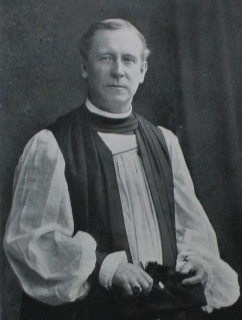
Bernard graduates with a BA in mathematics from Trinity College Dublin in 1880, is elected a Fellow there in 1884, and is later a member of the council of the university, where he holds the office of King’s Lecturer of Divinity from 1888 to 1902.
Bernard is appointed treasurer of St. Patrick’s Cathedral, Dublin, by the DeanHenry Jellett in 1897. On Jellett´s death, in December 1901, Bernard becomes a favorite to succeed him as Dean, a position to which he is elected by the chapter of the cathedral on February 6, 1902. He serves as such until 1911, when he is appointed Bishop of Ossory, Ferns and Leighlin. In 1915 he is appointed Church of Ireland Archbishop of Dublin, serving until 1919.
A prolific scholar, in many fields, including Church history, theology and philosophy, Bernard is the president of the Royal Irish Academy from 1916 to 1921 and Provost of Trinity College Dublin from 1919 to 1927. He is a member of the Board of National Education in Ireland, in which capacity he serves as examiner of mathematics in the 1880s. He is regarded as an unrepentant Unionist, representing their interests as a delegate to the 1917–18 Irish Convention.
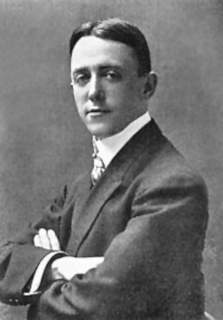
A baptismal certificate from St. Joseph’s Roman Catholic Church indicates that Cohan was born on July 3, but Cohan and his family always insist that he had been “born on the Fourth of July!” His parents are traveling vaudeville performers, and he joins them on stage while still an infant, first as a prop, learning to dance and sing soon after he could walk and talk. As a child, he and his family tour most of the year and spend summer vacations from the vaudeville circuit at his grandmother’s home in North Brookfield, Massachusetts.
In 1904 Cohan produces his first successful musical play, Little Johnny Jones, in which he plays the character The Yankee Doodle Boy. As a songwriter, he is a charter member of the American Society of Composers, Authors and Publishers (ASCAP). His popular song catalog includes “The Yankee Doodle Boy,” “Venus, My Shining Love,” “I Guess I’ll Have to Telegraph My Baby,” “My Musical Comedy Maid,” “Revolutionary Rag,” “Give My Regards to Broadway,” “You Remind Me of My Mother,” “Life’s a Funny Proposition After All,” “Mary’s a Grand Old Name,” “So Long, Mary,” “Forty-Five Minutes from Broadway,” “I Was Born in Virginia,” “Harrigan,” “Over There” (the song of World War I which earns Cohan the Congressional Medal of Honor), “In the Kingdom of Our Own,” “Nellie Kelly, I Love You,” “When June Comes Along With a Song,” “Molly Malone,” “Where Were You, Where Was I?,” “The Song and Dance Man,” “Billie” and the patriotic theme song and 2002 Towering Song Award winner, “You’re a Grand Old Flag.”
The more than 40 musical dramas Cohan writes, produces, directs and stars in on Broadway include The Governor’s Son, Forty-Five Minutes from Broadway, Little Johnny, George Washington, Jr., The Honeymooners, The Yankee Prince, The Little Millionaire, Hello, Broadway, The Talk of New York, Fifty Miles From Boston, The American Idea, The Man Who Owns Broadway, The Cohan Revue (1916, 1918), The Royal Vagabond, The Merry Malones, Little Nellie Kelly, The Rise of Rosie O’Reilly, Get-Rich-Quick Wallingford, Seven Keys to Baldpate, The Miracle Man, Hit the Trail Hailday, Broadway Jones, A Prince There Was, The Song and Dance Man, American Born, Gambling, Dear Old Darling, The Return of the Vagabond, The Tavern, Elmer the Great, The O’Brien Girl, Ah, Wilderness! and I’d Rather Be Right.
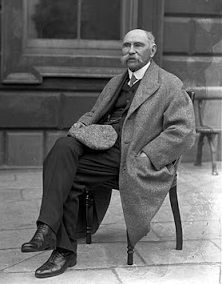
Hyde is born at Longford House in Castlerea, County Roscommon, on January 17, 1860. In 1867, his father is appointed prebendary and rector of Tibohine, and the family moves to neighbouring Frenchpark, in County Roscommon. He is home schooled by his father and his aunt due to a childhood illness. While a young man, he becomes fascinated with hearing the old people in the locality speak the Irish language.
Rejecting family pressure to follow previous generations with a career in the Church, Hyde instead becomes an academic. He enters Trinity College, Dublin, where he gains a great facility for languages, learning Latin, Greek, Hebrew, French, and German, but his great passion in life is the preservation of the Irish language.
After spending a year teaching modern languages in Canada, Hyde returns to Ireland. For much of the rest of his life he writes and collects hundreds of stories, poems, and folktales in Irish, and translates others. His work in Irish helps to inspire many other literary writers, such as W.B. Yeats and Lady Gregory.
In 1892, Hyde helps establish the Gaelic Journal and in November of that year writes a manifesto called The necessity for de-anglicising the Irish nation, arguing that Ireland should follow her own traditions in language, literature, and even in dress.
In 1893, Hyde founds the Gaelic League (Conradh na Gaeilge) along with Eoin MacNeill and Fr. Eugene O’Growney and serves as its first president. Many of the new generation of Irish leaders who play a central role in the fight for Irish independence in the early twentieth century, including Patrick Pearse, Éamon de Valera, Michael Collins, and Ernest Blythe first become politicised and passionate about Irish independence through their involvement in the Gaelic League. Hyde does not want the Gaelic League to be a political entity, so when the surge of Irish nationalism that the Gaelic League helps to foster begins to take control of many in the League and politicize it in 1915, Hyde resigns as president.
In 1938, Hyde is unanimously elected to the newly created position of President of Ireland, a post he holds until 1945. He is inaugurated on June 26, 1938, in the first inaugural ceremony in the nation’s history. He sets a precedent by reciting the Presidential Declaration of Office in Irish. His recitation, in Roscommon Irish, is one of a few recordings of a dialect of which Hyde is one of the last speakers. Upon inauguration, he moves into the long vacant Viceregal Lodge in Phoenix Park, since known as Áras an Uachtaráin.
Despite being placed in a position to shape the office of the presidency via precedent, Hyde by and large opts for a quiet, conservative interpretation of the office.
In April 1940 Hyde suffers a massive stroke and plans are made for his lying-in-state and state funeral, but to the surprise of everyone he survives, albeit paralysed and confined to a wheelchair. One of Hyde’s last presidential acts is a visit to the German ambassador Eduard Hempel on May 3, 1945, to offer his condolences on the death of Adolf Hitler, a visit which remains a secret until 2005.
Hyde leaves office on June 25, 1945, opting not to nominate himself for a second term. He opts not return to his Roscommon home due to his ill-health but rather moves into the former Secretary to the Lord Lieutenant’s residence in the grounds of Áras an Uachtaráin, where he lived out the remaining four years of his life.
Hyde dies in Dublin on July 12, 1949, at age 89. As a former President of Ireland, he is accorded a state funeral which, as a member of the Church of Ireland, takes place in Dublin’s Church of Ireland St. Patrick’s Cathedral. Since contemporary rules of the Roman Catholic Church in Ireland at the time prohibit Roman Catholics from attending services in non-Catholic churches, all but one member of the Catholic cabinet remains outside the cathedral grounds while Hyde’s funeral takes place. Hyde is buried in Frenchpark, County Roscommon at Portahard Church.
An announcement of the death, issued by the church’s press office in both Belfast and Dublin, says Ó Fiaich had appeared unwell to doctors accompanying the group of 600 pilgrims from his seat at Armagh in Northern Ireland.
Ó Fiaich is admitted first to a hospital in Lourdes, then flown by helicopter to Toulouse. Philippe Giovanni, director of the Rangueil Hospital there, says the cardinal died of a brutal cardiac arrest soon after being admitted.
While calling for a unified Ireland and criticizing British policy in Northern Ireland, Ó Fiaich, whose name is pronounced O’Fee, also castigates the violence of the Irish Republican Army, the predominantly Catholic outlawed guerrilla army that seeks to end British rule in Northern Ireland and unite it with the Republic of Ireland.
Ó Fiaich is appointed spiritual leader of Ireland’s four million Catholics in in 1977. Two years later Pope John Paul II makes him one of the first cardinals of his papacy.
Tributes to Ó Fiaich poured in from some both sides of the Irish border. In Dublin, TaoiseachCharles Haughey says he is “devastated, … deeply grieved.” Britain’s top official in Northern Ireland, Secretary of StatePeter Brooke, also expresses sadness. “We did not always agree about everything, but he treated me with the greatest possible courtesy, friendliness and warmth.”
However hardline Protestant leader Ian Paisley of Northern Ireland’s Democratic Unionist Party says Ó Fiaich is “the mallet of Rome against the Protestants of Northern Ireland.” He claims Ó Fiaich had “made an outrageous statement that the majority of bigotry in Ulster stemmed from the Protestant section of the community” and added, “He did not seem to realize that the IRA, which is carrying out the most atrocious of outrages … were the people who needed to be indicted with bigotry.”
In Belfast, Ulster Television suspends scheduled programs for an hour and airs a religious program and a news program about the cardinal.
Ó Fiaich retains close ties to Armagh, which had been dubbed “bandit country” because of the IRA activity. From the time he becomes primate, he speaks publicly of his wishes for a united Ireland. He visits IRA guerrillas in jail, calls the British Army’s fatal shooting of an Irish civilian murder, and says the border dividing Ireland is “unnatural.”
Following his death, Ó Fiaich lies in state at St. Patrick’s Cathedral, Armagh, where thousands of people line up to pay their respects.
Guinness is the third son of Arthur Guinness II (1768–1855), and his wife Anne Lee, and a grandson of the first Arthur (1725–1803), who had bought the St. James’s Gate Brewery in 1759. He joins his father in the business in his late teens, without attending university, and from 1839 he takes sole control within the family. From 1855, when his father dies, he has become the richest man in Ireland, having built up a huge export trade and by continually enlarging his brewery.
In 1851 Guinness is elected the first Lord Mayor of Dublin under the reformed corporation. In 1863 he is made an honorary LL.D. (Doctor of Laws) by Trinity College Dublin, and on April 15, 1867, is created a baronet by patent, in addition to which, on May 18, 1867, by royal licence, he has a grant of supporters to his family arms.
From 1860 to 1865, Guinness undertakes at his own expense, and without hiring an architect, the restoration of the city’s St. Patrick’s Cathedral, an enterprise that costs him over £150,000. In 1865 the building is restored to the dean and chapter and reopens for services on February 24. The citizens of Dublin and the dean and chapter of St. Patrick’s present him with addresses on December 31, 1865, expressive of their gratitude for what he has done for the city. The addresses are in two volumes, which are afterwards exhibited at the Paris Exhibition.
In recognition of his generosity, Guinness is made a baronet in 1867. He is one of the ecclesiastical commissioners for Ireland, a governor of Simpson’s Hospital, and vice-chairman of the Dublin Exhibition Palace. He dies the following year, on May 19, 1868, at his Park Lane home in London. At the time of his death, he is engaged in the restoration of Marsh’s Library, a building which adjoins St. Patrick’s Cathedral. The restoration is completed by his son Arthur.
Guinness is buried in Mount Jerome Cemetery, Dublin, in the family vault, on May 27, 1868. His personalty is sworn under £1,100,000 on August 8, 1868. A bronze statue of him by John Henry Foley is erected by the Cathedral Chapter in St. Patrick’s churchyard, on the south side of the cathedral, in September 1875, which is restored in 2006.
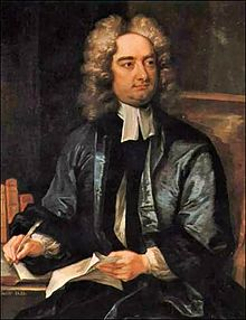
Swift is born in Dublin on November 30, 1667. His father, an attorney, also named Jonathan Swift, dies just two months before he is born. Without steady income, his mother struggles to provide for her newborn. Moreover, he is a sickly child. It is later discovered that he suffers from Ménière’s disease, a condition of the inner ear that leaves the afflicted nauseous and hard of hearing. In an effort to give her son the best upbringing possible, Swift’s mother gives him over to Godwin Swift, her late husband’s brother and a member of the respected professional attorney and judges group Gray’s Inn. Godwin Swift enrolls his nephew in the Kilkenny Grammar School (1674–1682), which is perhaps the best school in Ireland at the time. His transition from a life of poverty to a rigorous private school setting proves challenging. He does, however, make a fast friend in William Congreve, the future poet and playwright.
At age 14, Swift commences his undergraduate studies at Trinity College, Dublin. In 1686, he receives a Bachelor of Arts degree and goes on to pursue a master’s degree. Not long into his research, huge unrest breaks out in Ireland. The king of Ireland, England and Scotland is soon to be overthrown. What becomes known as the Glorious Revolution of 1688 spurs him to move to England and start anew. For 10 years, Swift works in Surrey‘s Moor Park and acts as an assistant to Sir William Temple.
During his Moor Park years, Swift met the daughter of Temple’s housekeeper, an 8-year-old named Esther Johnson. They become lovers for the rest of their lives until Johnson’s death. It is rumored that they marry in 1716, and that Swift keeps of lock of Johnson’s hair in his possession at all times.
During his decade of work for Temple, Swift returns to Ireland twice. On a trip in 1695, he takes all necessary requirements to become an ordained priest in the Anglican tradition. Under Temple’s influence, he also begins to write, first short essays and then a manuscript for a later book. Temple dies in 1699. Swift completes the task of editing and publishing Temple’s memoirs. He then leans on his priestly qualifications and finds work ministering to a pea-sized congregation just 20 miles outside of Dublin. For the next ten years, he gardens, preaches and works on the house provided to him by the church. He also returns to writing. His first political pamphlet is titled A Discourse on the Contests and Dissentions in Athens and Rome.
In 1704, Swift anonymously releases A Tale of a Tub and The Battle of the Books. Tub, although widely popular with the masses, is harshly disapproved of by the Church of England. Ostensibly, it criticizes religion, but Swift means it as a parody of pride. Nonetheless, his writings earn him a reputation in London and when the Tories come into power in 1710, they ask him to become editor of The Examiner, their official paper. After a time, he becomes fully immersed in the political landscape and begins writing some of the most cutting and well-known political pamphlets of the day, including The Conduct of the Allies, an attack on the Whigs. Privy to the inner circle of Tory government, he lays out his private thoughts and feelings in a stream of letters to his beloved Stella. They are later published as The Journal to Stella.
When he sees that the Tories will soon fall from power, Swift returns to Ireland. In 1713, he takes the post of dean at St. Patrick’s Cathedral in Dublin. While leading his congregation at St. Patrick’s, he begins to write what would become his best-known work. In 1726, at last finished with the manuscript, he travels to London and benefits from the help of several friends, who anonymously publish it as Travels into Several Remote Nations of the World, in Four Parts. By Lemuel Gulliver, First a Surgeon, and then a Captain of Several Ships, more simply known as Gulliver’s Travels. The book is an immediate success and has not been out of print since its first run.
Not long after the celebration of this work, Swift’s longtime love, Esther Johnson, falls ill. She dies in January 1728. Her death moves Swift to write The Death of Mrs. Johnson.
In 1742, Swift suffers a stroke and loses the ability to speak. On October 19, 1745, Jonathan Swift dies. He is laid to rest next to Esther Johnson inside Dublin’s St. Patrick’s Cathedral.
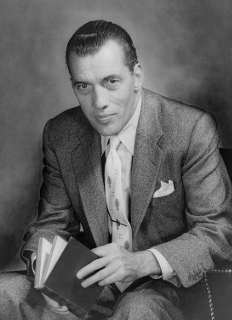
Sullivan is born on September 28, 1901, in Harlem, New York City, the son of Elizabeth F. (née Smith) and Peter Arthur Sullivan, a customs house employee, and grows up in Port Chester, New York. He is a gifted athlete in high school, earning 12 athletic letters at Port Chester High School.
Sullivan lands his first job at The Port Chester Daily Item, a local newspaper for which he had written sports news while in high school and then joins the paper full-time after graduation. In 1919, he joins The Hartford Post. The newspaper folds in his first week there but he lands another job on The New York Evening Mail as a sports reporter. After The Evening Mail closes in 1923, he bounced through a series of news jobs. In 1927, he joins The Evening Graphic as sportswriter and eventually sports editor. In 1929, when Walter Winchell moves to the New York Daily Mirror, he is made Broadway columnist.
Throughout his career as a columnist, Sullivan dabbles in entertainment, producing vaudeville shows with which he appears as master of ceremonies in the 1920s and 1930s, directing a radio program over the original WABC (now WCBS) and organizing benefit reviews for various causes. In 1941, he is host of the Summer Silver Theater, a variety program on CBS radio, with Will Bradley as bandleader and a guest star featured each week.
In 1948, producer Marlo Lewis gets the CBS network to hire Sullivan to do a weekly Sunday night TV variety show, Toast of the Town, which later becomes The Ed Sullivan Show. Debuting in June 1948, the show is originally broadcast from the Maxine Elliott’s Theatre on West 39th Street in New York City. In January 1953, it moves to CBS-TV Studio 50, at 1697 Broadway in New York City, which in 1967 is renamed the Ed Sullivan Theater. The theater is later the home of the Late Show with David Letterman and The Late Show with Stephen Colbert. Television critics initially give the new show and its host poor reviews.
In the 1950s and 1960s, Sullivan is a respected starmaker because of the number of performers who become household names after appearing on the show, including Elvis Presley, The Beatles, The Dave Clark Five, B.J. Thomas and the Jackson Five. He has a knack for identifying and promoting top talent and pays a great deal of money to secure that talent for his show.
By 1971, the show’s ratings have plummeted. In an effort to refresh its lineup, CBS cancels the program along with some of its other longtime shows. Sullivan is angered and refuses to do a final show, although he remains with the network in various other capacities and hosts a 25th anniversary special in June 1973.
In early September 1974, X-rays reveal that Sullivan has an advanced growth of esophageal cancer. Doctors give him very little time to live, and the family chooses to keep the diagnosis secret from him. Sullivan, still believing his ailment to be yet another complication from a long-standing battle with gastric ulcers, dies five weeks later on October 13, 1974, at New York’s Lenox Hill Hospital. His funeral is attended by 3,000 at St. Patrick’s Cathedral, New York, on a cold, rainy day. He is interred in a crypt at the Ferncliff Cemetery in Hartsdale, New York.
Hughes is the third of seven children of Patrick and Margaret (née McKenna) Hughes. He and his family suffer religious persecution in their native land. He is sent with his elder brothers to a day school in the nearby village of Augher, and afterwards attends a grammar school in Aughnacloy. The family emigrates to the United States in 1816 and settles in Chambersburg, Pennsylvania. Hughes joins them there the following year.
After several unsuccessful applications to Mount St. Mary’s College in Emmitsburg, Maryland, he is eventually hired as a gardener at the college. During this time, he befriends Mother Elizabeth Ann Seton, who is impressed by Hughes and persuades the Rector to reconsider his admission. Hughes is subsequently admitted as a regular student of Mount St. Mary’s in September 1820.
Hughes campaigns actively on behalf of Irish immigrants and attempts to secure state support for parochial schools. Although this attempt fails, he founds an independent Catholic school system which becomes an integral part of the Catholic Church’s structure at the Third Plenary Council of Baltimore (1884), which mandates that all parishes have a school and that all Catholic children be sent to those schools. In 1841, Hughes founds St. John’s College in New York City which is now Fordham University.
Hughes is appointed Apostolic Administrator of the diocese due to Bishop Dubois’ failing health. As coadjutor, he automatically succeeds Dubois upon the bishop’s death on December 20, 1842, taking over a diocese which covers the entire state of New York and northern New Jersey. He is a staunch opponent of Abolitionism and the Free-Soil movement, whose proponents often express anti-Catholic attitudes. Hughes also founds the Ultramontane newspaper New York Freeman to express his ideas.
Hughes becomes an archbishop on July 19, 1850, when the diocese is elevated to the status of archdiocese by Pope Pius IX. As archbishop, he becomes the metropolitan for the Catholic bishops serving all the dioceses established in the entire Northeastern United States. To the dismay of many in New York’s Protestant upper-class, Hughes foresees the uptown expansion of the city and begins construction of the current St. Patrick’s Cathedral on Fifth Avenue between 50th and 51st Street, laying its cornerstone on August 15, 1858. At the request of President Abraham Lincoln, Hughes serves as semiofficial envoy to the Vatican and to France in late 1861 and early 1862. Lincoln also seeks Hughes’ advice on the appointment of hospital chaplains.
Hughes serves as archbishop until his death. He is originally buried in St. Patrick’s Old Cathedral, but his remains are exhumed in 1882 and re-interred in the crypt under the altar of the new cathedral he had begun.
James Henthorn Todd, biblical scholar, educator, and Irish historian, is born in Rathfarnham, a Southside suburb of Dublin, on April 23, 1805. He is noted for his efforts to place religious disagreements on a rational historical footing, for his advocacy of a liberal form of Protestantism, and for his endeavours as an educator, librarian, and scholar in Irish history.
Todd is the son of Charles Hawkes Todd, a professor of surgery, and Eliza Bentley, and is the oldest of fifteen children. Noted physician Robert Bentley Todd is among his younger brothers. His father dies a year after he receives a B.A. from Trinity College, Dublin in 1825, diminishing his prospects for success. However, he is able to remain at the college by tutoring and editing a church periodical.
Todd obtains a premium in 1829, and two years later is elected Fellow, taking deacon’s orders in the same year. From that time until 1850, when he becomes a Senior Fellow, he is among the most popular tutors in Trinity College.
Todd takes priest’s orders in 1832. He begins publishing in earnest, including papers on John Wycliffe, church history, and the religious questions of his day. He is Donnellan Lecturer in 1838 and 1839, publishing works related to the Antichrist in which he opposes the views of the more extreme of his co-religionists who apply this term to the Roman Catholicism and the Pope. In 1840 he graduates Doctor of Divinity.
In 1837 Todd is installed Treasurer at St. Patrick’s Cathedral in Dublin and becomes Precentor in 1864. His style of preaching is described as simple and lucid, and his sermons interesting. He co-founds Saint Columba’s College in 1843, a school which promotes the Irish language for those who intend to take orders, as well as promoting the principles of the Church of Ireland.
In 1849 Todd is made Regius Professor of Hebrew at Trinity, and a Senior Fellow the following year. In 1852 he is appointed Librarian, and working alongside John O’Donovan and Eugene O’Curry, he classifies and arranges the collection of manuscripts. When his office receives money, he spends it on the acquisition of manuscripts and rare books, and he deserves much credit for the library’s high ranking as one of the chief libraries of Europe.
Todd’s secular achievements are no less remarkable. In 1840 he co-founds the Irish Archaeological Society and acts as its honorary secretary. He is elected a member of the Royal Irish Academy and strives actively to acquire transcripts and accurate accounts of Irish manuscripts from foreign libraries. He is honorary secretary from 1847 to 1855, and president from 1856 to 1861. In 1860 he is given an ad eundem degree at the University of Oxford.
Todd is a notable person among notable people. His work is widely respected and cited. Among his friends and acquaintances are lawyer and poet Sir Samuel Ferguson, Conservative Member of Parliament (MP) and Roman Catholic convert Edwin Wyndham-Quin, fellow historian William Reeves, artist Sir George Petrie, and the Stokes family (physician father William, future lawyer and Celticist son Whitley, and future antiquarian daughter Margaret).
James Henthorn Todd dies at his house in Rathfarnham on June 28, 1869, and is buried in the churchyard of St. Patrick’s Cathedral.
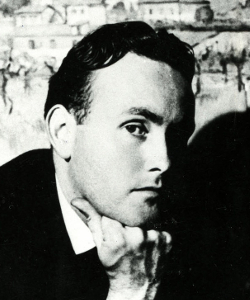
Hill is born at Southampton, Hampshire, on December 6, 1916, the son of a wealthy sugar trader. He first works as a theatre designer in Leningrad in the 1930s and later as an historian. In World War II he registers as a conscientious objector and works on a farm.
Hill’s long association with Ireland begins when he visits Glenveagh Castle in County Donegal to paint the portrait of the Irish American art collector Henry McIlhenny, whose grandfather had emigrated to the United States from the nearby village of Milford, and who subsequently made a fortune from his patent gas meter.
Hill begins to enjoy increased success as a portrait painter from the 1960s. His subjects include many notable composers, musicians, politicians and statesmen, such as broadcaster Gay Byrne, Jerusalem mayor Teddy Kollek and The Prince of Wales. He is also an enthusiastic art collector and traveller, with a wide range of friends such as Bryan Guinness and Isaiah Berlin. Greta Garbo visits Hill in the 1970s, a visit which forms inspiration for Frank McGuinness‘ 2010 play Greta Garbo Came to Donegal.
An exhibition of his work and personal art collection can be seen at the House and associated Glebe Gallery at Churchill, near Letterkenny. Another collection of his work is held at Mottisfont Abbey. Many of his landscapes portray scenes from Tory Island, where he has a painting hut for years, and starts and then mentors the artists’ community there, teaching the local fishermen how to paint. This leads to the informal but busy “Tory School” of artists such as James Dixon and Anton Meenan, who find that they have the time to paint and use their wild surroundings as a dramatic subject.
Hill is made a CBE in 1997. A Retrospective exhibition is arranged for and by him at the Royal Hibernian Academy in 1998. On January 13, 1999, he is made an honorary Irish citizen by the President of Ireland Mary McAleese.
Arthur Derek Hill dies at the age of 83 at a London hospital on July 30, 2000. He is buried in Hampshire in the South of England with his parents. Memorial services are held for him in Dublin at St. Patrick’s Cathedral, as well as St. James’s Church, Piccadilly, London, and his local Church in Trentagh, County Donegal.





 seamus dubhghaill