seamus dubhghaill

Promoting Irish Culture and History from Little Rock, Arkansas, USA


Leave a comment

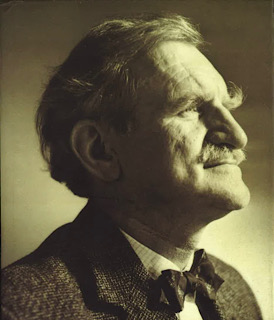
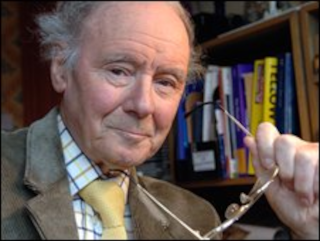
Birth of David Hammond, Singer & Folklorist

David Andrew (Davy) Hammond, singer, folkloristtelevision producer and documentary maker, is born on December 5, 1928, in Miss Kell’s nursing home on the Castlereagh Road in Belfast, Northern Ireland.

Hammond is the son of Leslie Hammond, a tram driver, and his wife Annie (née Lamont). His parents are not city people; his mother grew up near Ballybogy in the Ballymoney area of County Antrim, and his father, though from a family with roots in south County Londonderry, had lived in Ballymoney as a boy, and had been apprenticed to a blacksmith there. Both have a strong sense of their rural identity and maintain the Ulster Scots dialect of their childhood. They are never quite at home in the Belfast suburb of Cregagh, and in particular do not share the sectarian attitudes that are much more present in 1930s Belfast than they had been in north Antrim, one of the last strongholds of Presbyterian radicalism. Even as a boy, Hammond is interested in the old songs that his mother sang and realises that the traditions in which his parents had been nurtured are disappearing quickly in an increasingly urbanising and modernising world. When he encounters the work of Emyr Estyn Evans in the early 1940s, he is encouraged to document both rural tradition and the street life of the city, and he and a couple of friends, though still just teenagers, ride off on their bicycles to look for folklore in the hinterland of Belfast.

After primary school, Hammond wins a scholarship in 1941 to Methodist College Belfast, where he does well in examinations, and then goes to Stranmillis University College to train as a teacher. In his first job, in Harding Memorial primary school in east Belfast, he proves to be a popular, idealistic teacher, and is remembered by his pupils fifty years later as a fine singer and a teller of ghost stories, who had taken the class on memorable youth-hosteling trips to the Mourne Mountains. Youth hosteling and folklore collecting increases his awareness and understanding of the rich traditions of the whole community in the north of Ireland, and he is never constrained by political or religious barriers. His early career mirrors closely that of James Hawthorne, and their paths are to cross in later life.

Hammond is friendly with many others active in the cultural life of Northern Ireland and makes a name for himself as a song collector and eventually as an expert on all aspects of traditional singing. In 1956, he is awarded a scholarship to travel in the United States to meet the important pioneers of folk-music collecting and performance there. He records his first LP record of Ulster songs, I Am The Wee Falorie Man (1958), in the United States, and becomes friends with Pete Seeger, the Appalachian singer Jean Ritchie, with old blues singers, and notably with Liam Clancy, one of the three Clancy brothers who as a quartet with Tommy Makem are to popularise Irish folk music in the United States and elsewhere.

On returning to Belfast, Hammond takes a job in 1958 in Orangefield secondary school in the east of the city, where the highly regarded headmaster John Malone encourages new approaches to education. Among his pupils at Orangefield is George Ivan “Van” Morrison, who credits him with inspiring his interest in Irish traditional music. Hammond enjoys teaching but is increasingly drawn to folk-song performance and recording. He appears regularly on radio programmes of the BBC and Radio Éireann, and in 1964 joins the school’s department in BBC Northern Ireland. There, with colleagues like Sam Hanna Bell, James Hawthorne and others, he works on programmes such as Today and Yesterday in Northern Ireland, which for the first time introduces pupils (and many adults) to local history and to aspects of tradition. In 1968, with two friends, the poets Seamus Heaney and Michael Longley, he puts on poetry and traditional music events in schools all over the province. The Arts Council funds the Room to Rhyme project, which is immensely influential and inspiring, and is still talked about many years later by those who attended as children.

Hammond is creatively involved with hundreds of hours of broadcasting, in television as well as radio, and eventually for adults as well as children. He writes scripts, produces documentary series such as Ulster in Focusand Explorations, and brings an artistic sensibility to filming, as well as working sympathetically with traditional singers and craftspeople. Dusty Bluebells, a sensitively made film of Belfast children’s street games, wins the prestigious Golden Harp award in 1972. After he leaves the BBC to work as a freelance, and founds Flying Fox Films in 1986, he continues making documentaries on many aspects of Ulster life and heritage. His film called Steel Chest, Nail in the Boot and the Barking Dog (1986), about working in the Belfast shipyards, also wins a Golden Harp award. A companion book of the same name is published. Another book is Belfast, City of Song(1989), with Maurice Leyden. In 1979, he edits a volume of the songs of Thomas Moore. His documentary programmes include films about singers from Boho, County Fermanagh, and about the big houses of the gentry in Ireland. The Magic Fiddle (1991/2) examines the role of the instrument in the folk music of Ireland, ScandinaviaCanada, and the American south, while Another Kind of Freedom (1993) is about the experiences of a former Orangefield pupil, the Beirut hostage Brian Keenan. He also produces and directs the films Something to Write Home About (1998), Where Are You Now? (1999), and Bogland (1999), all of which explore Seamus Heaney’s home region and experiences.

The first poem in Heaney’s collection Wintering Out (1972) is entitled “For David Hammond and Michael Longley.” Their lifelong friendship leads to several other creative collaborations. In particular, after a distressing evening in 1972 when Hammond, affected by the despair and terror unleashed by Irish Republican Army (IRA) bombing of his city, is for once unable to sing, Heaney meditates on the experience in an essay and in an important poem, “The singer’s house” (subsequently included in his 1979 Field Work collection). The poem urges the singer to keep singing, to defend the values of art and friendship in a hostile time. Hammond collaborates with Dónal Lunny and other traditional musicians to bring out an LP also called The Singer’s House(1978), which includes Heaney’s poem on the album sleeve, and features some of the songs that he had made famous, such as “My Aunt Jane” and “Bonny Woodgreen,” from his vast repertoire of songs from Ulster. The album is reissued in 1980.

In 1995, Hammond is one of Heaney’s personal guests at the award of his Nobel prize in Stockholm, characteristically wearing his usual, mustard-yellow, cattle-dealer boots with evening dress. On another formal occasion, when he is awarded an honorary doctorate by Dublin City University in November 2003, he surprises the audience by standing up in his academic robes to sing “My Lagan love,” instead of giving an address. His unique, light mellow voice is an ideal vehicle for the traditional ballads which he knows so well. He records a number of records in the 1960s, including Belfast Street Songs, and publishes the book Songs of Belfast (1978). He also encourages traditional musicians like Arty McGlynn, and collaborates with them on various recording projects. He is well known for live and often impromptu performances at festivals and venues in Ireland and the United States. He also performs at the John F. Kennedy Center for the Performing Arts in Washington, D.C.

Hammond is also a notable collaborator with poets and dramatists, especially in the important Field Day Theatre Company project, of which he is a director, along with Seamus Heaney, Tom PaulinSeamus DeaneThomas Kilroy, and the project’s founders, Brian Friel and Stephen Rea. He supports the Field Day search for a “fifth province,” where history and community and culture can intersect, believing that to speak unthinkingly of “two traditions” is to perpetuate superficial political divisions. As he says in an interview in The Irish Times on July 4, 1998, songs can “take you out of yourself” and become bridges to unite people.

Hammond receives many honours. In 1994, he receives the Estyn Evans award for his contribution to mutual understanding, and his work is featured in several major events in his honour: in the University of North Florida (1999), in the Celtic Film Festival in Belfast (2003), and in Belfast’s Linen Hall Library (2005). A Time to Dream, a film about his life and work, is broadcast on BBC Northern Ireland in December 2008.

Hammond dies in hospital in Belfast, after a long illness, on August 25, 2008, survived by his wife Eileen (née Hambleton), whom he marries on July 19, 1954, and by their son and three daughters. His funeral in St. Finnian’s Church is a major cultural event, where friends sing, play and speak in his honour.

In Seamus Heaney’s last collection of poetry, Human Chain (2010), he includes a poignant farewell to Hammond. The poet imagines (or perhaps dreams) of another visit to the singer’s house, but this time “The door was open, and the house was dark.”

(From: “Hammond, David Andrew (‘Davy’)” by Linde Lunney, Dictionary of Irish Biography, http://www.dib.ie, December 2014)

Leave a comment

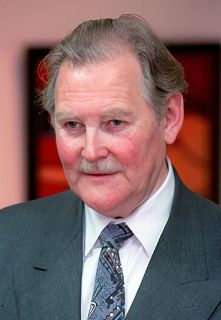
Death of Cathal O’Shannon, Journalist & Television Presenter

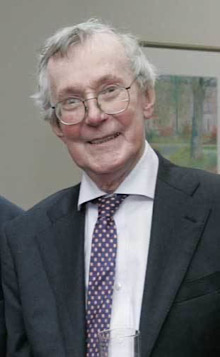
Cathal O’Shannon, Irish journalist and television presenter, dies in Dublin on October 22, 2011. He is a former journalist with The Irish Times and television reporter/presenter and documentary film maker with RTÉ. He is probably best known for presenting documentaries on Irish history, produced mainly for Irish television viewers and broadcast by RTÉ.

O’Shannon is awarded lifetime membership of the Irish Film & Television Academy in 2010, to which he says it is “particularly gratifying that it occurs before I pop my clogs”.

The Irish radio and television broadcaster Terry Wogan describes O’Shannon as possibly the greatest Irish television journalist of the 20th century.

O’Shannon is born in Marino, Dublin, on August 23, 1928, the son of Cathal O’Shannon (Sr.), a socialist and Irish Republican. He receives his formal education at Coláiste Mhuire in Parnell Square, Dublin. In 1945, despite his father’s politics, as a 16-year-old, he volunteers for war time service with the Royal Air Force in Belfast during World War II, utilizing a forged birth certificate to disguise being underage for enlistment with the British Armed Forces. After air crew training he is posted to the Far East, as a tail gunner in an Avro Lancaster bomber to take part in the Burma campaign, but the war ends with the downfall of the Japanese Empire before he is required to fly combat sorties.

O’Shannon first becomes a journalist with The Irish Times on leaving the Royal Air Force in 1947. Later he joins the Irish state broadcasting service Raidió Teilifís Éireann (RTÉ).

In July 1972, O’Shannon records a notable television interview with 31-year-old Muhammad Ali, when Ali is in Dublin to compete at Croke Park in a bout with Alvin Lewis.

O’Shannon receives a Jacob’s Award for his 1976 TV documentary, Even the Olives are Bleeding, which details with the activities of the “Connolly Column” in the Spanish Civil War. Two years later he is honoured with a second Jacob’s Award for his television biography Emmet Dalton Remembers (1978).

In 1978, O’Shannon leaves RTÉ to join Canadian company Alcan which is setting up an aluminum plant at Aughinish, County Limerick, in 1978. He is head-hunted to become its Director of Public Affairs, an important post at a time when there are environmental concerns about the effects of aluminum production. He admits that he is attracted by the salary, “five times what RTÉ were paying me,” but he also later says that one reason for the move is that he had become unhappy with working at RTÉ, stating in an interview that: “The real reason I got out of RTÉ was that they wouldn’t let me do what I wanted to do journalistically.” He had submitted proposals to the station’s editors for television documentary series on the Irish Civil War, and also one on the wartime Emergency period, but they had been rejected. While he enjoys the social life with lavish expenses which his public relations duties involve, his friends believe that he misses the varied life and travel of journalism. He retires early from Aughinish in 1992, and returns to making television documentaries with RTÉ.

In January 2007, O’Shannon’s last documentary, Hidden History: Ireland’s Nazis, is broadcast by RTÉ as a two-part series. It explores how a number of former Nazis and Nazi collaborators from German-occupied Europe went to live in Republic of Ireland after World War II, the best known of whom is Otto Skorzeny, who lives for a period in County Kildare. Others include such Breton nationalists as Alan HeusaffYann Fouéré and Yann Goulet, as well as two BelgiansAlbert Folens and Albert Luykx.

O’Shannon’s wife, Patsy, whom he met while they were working at The Irish Times office in London, dies in 2006. They had been married for more than 50 years.

On January 12, 2007, O’Shannon announces his retirement at the age of 80. In a 2008 television documentary, he admits that throughout his marriage he had been a serial womaniser and had repeatedly engaged in extra-marital affairs unbeknownst to his wife.

After weakening health for two years, and spending his last days in a hospice at Blackrock, O’Shannon dies at the Beacon Hospital in Dublin on October 22, 2011, in his 84th year. His body is reposed at Fanagans Funeral Home in Dublin on October 25, followed by a funeral the following day at Glasnevin Cemetery Chapel, where his remains are cremated afterward.

Director General of RTÉ Noel Curran says O’Shannon had brought into being “some of the great moments in the RTÉ documentary and factual schedule over the past five decades.” In tribute, RTÉ One shows the documentary Cathal O’Shannon: Telling Tales on November 10, 2011. It had originally aired in 2008 to mark his 80th birthday


Leave a comment

Birth of Sam Hanna Bell, Novelist, Playwright & Broadcaster

Sam Hanna Bell, Scottish-born Northern Irish novelistshort story writer, playwright, and broadcaster, is born in Glasgow to Ulster Scots parents on October 16, 1909.

Following the sudden death of his father in 1918, Bell is brought at the age of seven to live near Raffery in the Strangford Lough area of County Down. He lives with his mother and two brothers in a cottage with no electricity or running water. This is the setting of his acclaimed novel of Ulster rural life, December Bride (1951). He moves to Belfast in 1921, where he works at a variety of manual jobs before securing a post with the BBC in 1945. He is a co-founder of the left-leaning literary journal, Lagan, in 1943.

Bel’s first collection of short stories, Summer Loanen and Other Stories, is published in 1943. His novels include December Bride (1951), The Hollow Ball (1961), A Man Flourishing (1973) and Across the Narrow Sea (1987).

Bell is recruited to the BBC in 1946, along with fellow writer, W. R. Rodgers, by poet and radio producerLouis MacNeice. Some of his work as a radio producer is highly innovative. This is Northern Ireland, An Ulster Journey (1949) is a classic radio feature incorporating actuality, poetry, music and narration. In later work, Bell incorporates the voices of “ordinary people” in his attempt to paint a picture of Ulster as rooted in the lives and traditions of its people. His collaboration with W. R. Rodgers, The Return Room (1955), is one of the most important post-war Irish radio features and shows the influence of Dylan Thomas on Rodgers, the poet.

In the 1940s, along with his BBC colleague John Boyd, the essayist (and anti-Partition activist) Denis Ireland, actors Joseph Tomelty and J. G. Devlin, poets John Hewitt and Robert Greacen, and the Rev. Arthur Agnew, Bell is one of an intellectual set, “the club of ten” Linen Hall Library members that meets weekly next to the library in Campbell’s cafe.

In 1977, Bell is honoured with an MBE in recognition of his contribution to the cultural life of Northern Ireland.

December Bride is made into an acclaimed film in 1990. Reviewing the film, The Irish Times columnist and literary critic Fintan O’Toole says it is “not just a remarkable artistic achievement, but also a remarkable political one…restoring a richness and complexity to a history that has been deliberately narrowed.” In April 1999, December Bride is selected by award-winning novelist and critic Colm Tóibín and publisher, writer and critic Dame Carmen Callil, for inclusion in The Modern Library: The 200 Best Novels in English Since 1950 (Picador).

Bell dies on February 9, 1990, at 190 King’s Road, Knock, Belfast, aged 80, shortly before the premiere of the film of December Bride. On October 15, 2009, the eve of what would have been Bell’s centenary, a blue plaque is unveiled by Northern Ireland Minister of Culture, Arts and Leisure Nelson McCausland on the Belfast house where Bell had written December Bride. Such plaques are erected to commemorate and honour notable people.


Leave a comment

Birth of David Thornley, Irish Labour Party Politician

David Andrew Thornley, Irish Labour Party politician and university professor at Trinity College Dublin, is born in Surrey, England, on July 31, 1935.

Thornley is the youngest child of Welshman Frederick Edward Thornley and Dublin-born Maud Helen Thornley (née Browne). His parents, both civil servants, meet while working in Inland Revenue in Dublin in the 1910s.

Thornley receives a BA and PhD at Trinity College Dublin. His PhD is entitled “Isaac Butt and the creation of an Irish Parliamentary Party (1868–1879)” and is written under the supervision of Theodore William Moody. Working as a presenter on 7 Days since 1963, he is appointed Associate professor of Trinity in 1968. In 1964, he publishes the book Isaac Butt and Home Rule.

After joining Labour in 1969, Thornley is elected to Dáil Éireann as a Labour Party Teachta Dála (TD) for the Dublin North-West constituency at the 1969 Irish general election. He confronts the party leader Brendan Corish, who at the time of the Arms Crisis reportedly rejects out of hand any suggestion of military aid or use of force after the outbreak of violence in Northern Ireland.

Thornley considers himself to be “in the mould of James Connolly,” being a practising Catholic, Marxist and republican.

In December 1972, Thornley calls for the immediate release of Seán Mac Stíofáin, then leader of the Provisional Irish Republican Army. He is re-elected at the 1973 Irish general election. In April 1976, he loses the Labour Party whip after appearing on a Sinn Féin platform during Easter Rising commemorations. In September 1976, he votes for the Criminal Justice (Jurisdiction) Bill despite misgivings. He tells The Irish Times, “When I get very depressed, I drink too much. When I voted for the Criminal Justice (Jurisdiction Bill) I went on the batter for a forthnight [sic].” In February 1977, he is re-admitted to the Labour Parliamentary Party. He loses his seat at the 1977 Irish general election.

In 1978, Thornley joins the newly formed Socialist Labour Party (SLP) stating that he has done so because “There is no man in politics that I respect more than Noël Browne, despite our occasional differences. If the SLP is good for him, it’s good enough for me.”

Overweight, afflicted with undiagnosed diabetes, his judgement increasingly erratic, from the early 1970s Thornley suffers a steady deterioration of health, compounded by his heavy drinking, on which he relies to cope with stress and emotional depression. On one occasion he collapses in the Dáil and is attended by party colleague Dr. John O’Connell. He dies at the age of 42 on June 18, 1978, one week after admission into Jervis Street private nursing home. After a sung Latin Requiem Mass in St. Andrew’s Church, Westland Row, Dublin, he is buried in Bohernabreena Cemetery, County Dublin.

The Trinity College Labour Branch is formerly named the David Thornley Branch in his honour.


Leave a comment

Birth of Proinsias Mac Aonghusa, Journalist, Writer & Presenter

Proinsias Mac Aonghusa (English: Francis McGuinness), Irish journalist, writer, television presenter and campaigner, is born into an Irish-speaking household on June 23, 1933, in Salthill, Galway, County Galway. He becomes one of the most noted Irish language broadcasters and journalists of the 20th century.

Mac Aonghusa is the son of Criostóir Mac Aonghusa, a writer and Irish language activist, and Mairéad Ní Lupain, a nurse and native Irish speaker. The eldest of four siblings, he grows up speaking Irish as his first language and allegedly does not learn English until the age of eleven. His parents are left-wing Irish republicans who support Fianna Fáil and associate with the like-minded Máirtín Ó Cadhain and Peadar O’Donnell. His parents split when he is ten years of age. His mother takes his siblings away to Dublin while he and his father remain in Rosmuc, a remote village and part of the Galway Gaeltacht. As a teenager he is educated at Coláiste Iognáid (also known as St. Ignatius College), a bilingual school in Galway.

Upon leaving school, Mac Aonghusa first works as an actor at the Abbey Theatre in Dublin, performing in Irish language productions. In 1952, he becomes involved in Radio Éireann, first as an actor but later as a reader of short stories before advancing to becoming a newsreader, presenter and interviewer. As he advances his career, he works for RTÉ, UTV and BBC television from the 1960s. In 1962, he begins presenting An Fear agus An Sceal (The Man & his Story) on RTÉ television, an Irish language show which sees him interviewing a different guest of note about their life each episode. That same year he wins a Jacob’s Award for An Fear agus an Sceal, which he continues to host until 1964.

As well as attracting awards, An Fear agus an Sceal also brings controversy. Two interviews, one with Máirtín Ó Cadhain, one with Con Lehane, both criticise the measures practised by the Fianna Fáil government during World War II to suppress and imprison Irish republicans. In response, the Fianna Fáil government intervenes with RTÉ, and those episodes are not aired. This is not to be Mac Aonghusa’s only run-in with the Fianna Fáil government. After he recorded a programme in which he questioned the effectiveness of Ireland’s civil defence measures in the face of nuclear war, then Minister for Defence Kevin Boland has the episode suppressed. He once again runs afoul of the Fianna Fáil government when, after criticising the party in his anonymous weekly political gossip column in the Sunday Independent, then Minister for Agriculture Neil Blaney sees to it that the column is dropped. He is not deterred and returns anonymously as “Gulliver” in The Sunday Press and a gossip column on the back page of The Hibernia Magazine.

The latter half of Mac Aonghusa’s 1960s/70s broadcasting career is primarily associated with the Irish language current events show Féach, which he both presents and edits. He resigns from Féach in 1972 following a bitter dispute with the broadcaster and commentator Eoghan Harris.

Influenced by O’Donnell and Ó Cadhain in his youth, Mac Aonghusa also pursues left-wing republican politics as an adult. In 1958, he becomes, alongside David Thornley, Noël Browne, Owen Sheehy-Skeffington and Desmond Ryan, a member of the “1913 Club,” a group which seeks to ideologically reconcile Irish nationalism and socialism.

In 1959, Mac Aonghusa writes a series of six articles for The Irish Times in which he vehemently opposes the Fianna Fáil government’s proposal to abolish single transferable vote in Ireland in favour of first-past-the-post voting. He contends that first-past-the-post voting gives too much influence to party bosses, while proportional representation gives even small minorities representation, preventing them from feeling excluded by the state such as nationalists in Northern Ireland. In the referendum held on the matter on June 17, 1959, voters reject first past the vote by a margin of 2%. Fianna Fáil attempts to repeal proportional representation again in the late 60s, at which point Mac Aonghusa once again throws himself into the fight, leading a group called “Citizens for PR.” In the referendum of 1968, voters reject the first past the post system by over 20%. He later recalls that his defence of proportional representation his greatest achievement in politics.

In the 1960s, both Mac Aonghusa and his wife, Catherine, join the Sean Connolly branch of the Labour Party in Dublin. The branch had established a reputation as a haven for intellectuals who want a branch to themselves away from the many other Labour branches dominated by trade unionists. The branch comes to advocate for expressly socialist policies combined with on-the-ground grass-roots campaigning. Through the Sean Connolly Branch, both he and his wife begin to develop significant influence over the leader of the Labour party Brendan Corish.

In the 1965 Irish general election, Mac Aonghusa stands on behalf of the Labour party in the Louth constituency but is not elected. In 1966, he publishes a book of speeches by Corish, the speeches themselves mostly having been ghostwritten by his wife Catherine. The introduction of the book proclaims that Corish had developed a “brand of democratic republican socialism … broadened by experience and built firmly on Irish‐Ireland roots” and had rid the party of “do‐nothing backwoodsmen”, thereby becoming the “first plausible and respected Labour leader in Ireland”. It is at this same time that he is elevated to vice-chairman of the party. As vice-chair, he tries to convince Corish to stand in the 1966 Irish presidential election. When he fails to do so, he supports Fine Gael‘s Tom O’Higgins in his bid for the presidency. O’Higgins comes within 0.5% of beating the incumbent, an ageing Éamon de Valera.

It was around this same time that Mac Aonghusa becomes active in the Wolfe Tone Societies, a republican organisation linked almost directly to Sinn Féin. He suggests that republicans with “progressive views” should join the Labour party. In 1966, alongside Máirtín Ó Cadhain and other Gaeilgeoirí, he counter-protests and disrupts the Language Freedom Movement, an organisation seeking the abolition of compulsory Irish in the education system. For this, he and his allies are criticised as acting illiberally, while he maintains that those who oppose the Irish language are “slaves” unworthy of tolerance.

Mac Aonghusa’s open disdain for the conservative and trade union wings of the Labour, as well as his open embrace of republican sensibilities and tendency to make pronouncements on Labour policy without first consulting the party’s structures, bring him many internal enemies. An attempt is made to censure him for backing breakaway trade unions, but he is able to survive this. In 1966, he encourages the formation of the Young Labour League, an unofficial youth wing of the party led by Brian Og O’Higgins, son of former Sinn Féin president Brian O’Higgins. Mirroring his own position, the Youth League are Corish loyalists that openly rebel against the views of Labour’s conservative deputy leader James Tully. When the youth league begins publishing their own weekly newsletter, Labour’s administrative council condemns it after discovering material which is “violently” critical of Tully and other Labour conservatives. An ensuing investigation into the newsletter leads to Mac Aonghusa admitting that he had financed it and written some of the content, but not the anti-Tully material. After he refuses to co-operate with further investigations into the matter, he is expelled on January 12, 1967 for “activities injurious” to the party. In the aftermath, he portrays himself a left-wing martyr purged by a right-wing “Star chamber,” a tactic that garners him sympathy. Nevertheless, his expulsion is confirmed at the October 1967 party conference, despite one last appeal. His wife leaves the party alongside him.

In the aftermath of his expulsion from Labour, Mac Aonghusa expresses an interest in the social democratic wing of Fine Gael, which had been developing under Declan Costello since the mid-1960s. However, he does not join the party and instead runs as an independent candidate in the 1969 Irish general election in Dún Laoghaire–Rathdown. When he is not elected, he begins to refocus on the revival of the Irish language and with nationalist politics rather than being elected himself.

Upon the onset of the Troubles, Mac Aonghusa is initially supportive of Official Sinn Féin, however by 1972 he comes to resent them and, through the Ned Stapleton Cumann, their secret influence over RTÉ. During the Arms Crisis in 1970, he supports Charles Haughey and Neil Blaney, who stand accused of arranging to supply weapons to the Provisional IRA, in the pages of the New Statesman and other left‐wing journals. In this time period, he warns editors not to reprint his material in the Republic of Ireland as there is a de facto ban on him, and indeed, official attempts are made to block the transmission of his telexed reports.

Despite his earlier famed stark criticism of Fianna Fáil, Mac Aonghusa’s defence of Haughey leads to a friendship between the two men which results in him becoming one of Haughey’s loudest defenders throughout the rest of his career. His columns in The Sunday Press and Irish language paper Anois are accused of descending into self-parody in their stringent defences of Haughey.

During the 1970s, Mac Aonghusa writes a number of books covering significant figures in Irish republicanism. In order, he releases books on James Connolly, Patrick Pearse, Wolfe Tone and Éamon de Valera. In his work on De Valera, he emphasises what he perceives as the more radical aspects of the Fianna Fáil founder. During 1974 and 1975, he works as a United Nations Special Representative to the Southern Africa region with Seán MacBride, where they involve themselves in the South African Border War, and during which time Mac Aonghusa becomes involved in setting up a radio station in Namibia, linked to the South West Africa People’s Organisation (SWAPO) nationalist party.

In the 1980s, Haughey twice appoints Mac Aonghusa to the Arts Council as well as naming him president of Bord na Gaeilge (1989-93). This is an issue as Mac Aonghusa is already president of Conradh na Gaeilge. Being head of the main Irish language lobbying body as well as the state body responsible for the Irish language has an obvious conflict of interest. In 1991, following the announcement by Haughey that the government is to fund the creation of an Irish-language television station (launched in 1996 as Teilifís na Gaeilge), an elated Mac Aonghusa suggests that Haughey would be “remembered among the families of the Gael as long as the Gaelic nation shall survive.”

In 1992 there are calls for Mac Aonghusa to step down from Bord na Gaeilge after he pronounces that “every respectable nationalist” in West Belfast should vote for Sinn Féin’s Gerry Adams over the Social Democratic and Labour Party (SDLP) candidate Joe Hendron in the 1992 United Kingdom general election as he considers a defeat for Adams “a victory for British imperialism.” Nevertheless, he simultaneously advises voters in South Down to vote for the SDLP’s Eddie McGrady over Sinn Féin. He rails against his detractors at the Conradh na Gaeilge ardfheis that year, declaring that “The mind of the slave, of the slíomadóir, of the hireling and the vagabond is still fairly dominant in Ireland.”

As of 1995, Mac Aonghusa continues to label himself a socialist. In the foreword to the book, he writes about James Connolly that is released that year, he declares that “the abolition of capitalism is essential if the great mass of the people in all parts of the globe are to be emancipated.”

However, with the recent collapse of the Soviet Union in mind, Mac Aonghusa declares that the Stalinist regimes of Eastern Europe have not been socialist and argues that the social democracies of Scandinavia are what James Connolly had envisioned as the desired socialist society. In the same text, he accuses the Irish education system as well as Ireland’s media of obfuscating Connolly’s views on socialism and nationalism.

Mac Aonghusa battles through ill health in his final years but remains able to continue writing a number of books. His last publication, Súil Tharam (2001), comes just two years before his death in Dublin on September 28, 2003.

In 1955, Mac Aonghusa marries Catherine Ellis, a member of the Church of Ireland from Belfast. For her married name, she chooses to use “McGuinness,” the English language equivalent of Mac Aonghusa. Catherine McGuinness goes on to become a Senator and a Judge of the Circuit Court, High Court and Supreme Court over the course of her legal career. Together they have three children together.


Leave a comment

Birth of Cathal O’Shannon, Journalist & Television Presenter

Cathal O’Shannon, Irish journalist and television presenter, is born in Marino, Dublin, on August 23, 1928. He is a reporter with The Irish Times, and television reporter/presenter and documentary film maker with RTÉ. The Irish radio and television broadcaster Terry Wogan describes O’Shannon as possibly the greatest Irish television journalist of the 20th century.

O’Shannon is the son of Cathal O’Shannon (Sr.), a Socialist and Irish Republican. He receives his formal education at Colaiste Mhuire School, in Parnell Square, Dublin. Despite his father’s politics, as a 16-year-old he volunteeres for war time service with the Royal Air Force (RAF) in Belfast in 1945 during World War II. He utilizes a forged birth certificate to disguise being underage for enlistment with the British Armed Forces. After air crew training, he is posted to the Far East, as a tail gunner in an Avro Lancaster bomber to take part in the Burma campaign, but the war ends with the downfall of the Japanese Empire before he is required to fly combat sorties.

O’Shannon first becomes a journalist with The Irish Times on leaving the RAF in 1947. Later he joins the Irish state broadcasting service Raidió Teilifís Éireann (RTÉ).

In July 1972 O’Shannon records a notable television interview with 31-year-old Muhammad Ali, when Ali is in Dublin to compete at Croke Park in a bout with Alvin Lewis.

O’Shannon receives a Jacob’s Award for his 1976 TV documentary, Even the Olives are Bleeding, which details the activities of the “Connolly Column” in the Spanish Civil War. Two years later he is honoured with a second Jacob’s Award for his television biography Emmet Dalton Remembers (1978).

In 1978, O’Shannon leaves RTÉ to join Canadian company Alcan, which is setting up an aluminum plant at Aughinish, County Limerick, in 1978. He is head-hunted to become its Director of Public Affairs, an important post at a time when there are environmental concerns about the effects of aluminium production. He admits that he was attracted by the salary, “five times what RTÉ were paying me,” but he also later says that one of the reasons for the move is that he had become unhappy with working at RTÉ, stating in an interview that “The real reason I got out of RTÉ was that they wouldn’t let me do what I wanted to do journalistically.” He had submitted proposals to the station’s editors for a television documentary series on the Irish Civil War, and also one on the wartime Emergency period, but they had been rejected. While he enjoys the social life with lavish expenses which his public relations duties involve, his friends believe that he missed the varied life and travel of journalism. He retires early from Aughinish in 1992 and returns to making television documentaries with RTÉ.

In January 2007, O’Shannon’s last documentary, Hidden History: Ireland’s Nazis, is broadcast by RTÉ as a two-part series. It explores how a number of former Nazis and Nazi collaborators from German-occupied Europe go to live in the Republic of Ireland after World War II — the best known of whom is Otto Skorzeny, who lives for a period in County Kildare. Others include such Breton nationalists as Alan Heusaff, Yann Fouéré and Yann Goulet, as well as two Belgians, Albert Folens and Albert Luykx.

O’Shannon announces his retirement at the age of 80 on January 12, 2007.

O’Shannon is awarded lifetime membership in the Irish Film & Television Academy in 2010, to which he says is “particularly gratifying that it occurs before I pop my clogs.”

After weakening health for two years, and spending his last days in hospice at Blackrock, O’Shannon dies at the Beacon Hospital in Dublin on October 22, 2011. His body is reposed at Fanagans Funeral Home in Dublin on October 25, 2011, followed by a funeral the following day at Glasnevin Cemetery Chapel, where it is afterwards cremated.

O’Shannon’s wife, Patsy, whom he met while they were working for The Irish Times office in London, dies in 2006. They are married for more than 50 years. In a 2008 television documentary O’Shannon admits that throughout his marriage he had been a serial womaniser, who had repeatedly engaged in extra-marital affairs unbeknownst to his wife.

Director-General of RTÉ Noel Curran says O’Shannon had brought into being “some of the great moments in the RTÉ documentary and factual schedule over the past five decades.” In tribute, RTÉ One shows the documentary Cathal O’Shannon: Telling Tales on November 10, 2011. It had originally aired in 2008 to mark his 80th birthday.


Leave a comment

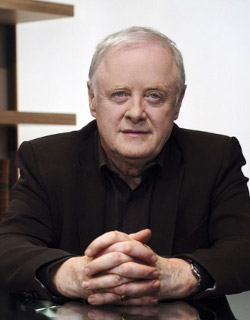
Birth of Gerry Robinson, Businessman & Television Presenter

Sir Gerrard Jude “Gerry” Robinson, Irish-born British business executive and television presenter, is born in Dunfanaghy, County Donegal on October 23, 1948. He is the former non-executive Chairman of Allied Domecq and the ex-Chairman/chief executive of Granada.

The ninth of ten children born to Anthony and Elizabeth Robinson, Robinson moves with his family to England in his early teens. He briefly trains to become a Catholic priest at St. Mary’s Missionary College of the Holy Ghost Fathers at Castlehead, Grange-over-Sands, Lancashire. He begins a career in accounting in 1965 as a clerk with the Matchbox toy company. While with the firm, he progresses through various accounting roles to become Chief Management Accountant in 1974. During that time he also qualifies as an Associate Chartered Management Accountant.

In 1974, Robinson leaves Matchbox to work for Lex Vehicle Leasing as a management accountant. He rises through the company and is ultimately appointed finance director. In 1980, he joins the UK franchise of Coca-Cola, owned at the time by Grand Metropolitan. In 1983 he is appointed managing director of Grand Metropolitan’s international services division. In 1987 he leads the successful £163m management buyout of the loss-making contract services and catering division of Compass Group, known as Compass Caterers. He joins Granada as CEO in 1991 and ousts Granada’s chairman, David Plowright, in 1992, which leads John Cleese to call Robinson “an upstart caterer.”

Robinson steers the company through various mergers, and hostile takeovers including London Weekend Television (1993) and Forte Group (1996). In 1999 he is the subject of a biography, Lord of the Dance, written by business journalist William Kay, and published by Orion Business Books. In 2005 he makes an unsuccessful attempt to oust Doug Flynn as CEO of Rentokil Initial and install himself as Executive chairman for a 5% stake in the company, then valued at £56M.

Robinson’s first foray into broadcasting is a revival of the BBC‘s Troubleshooter series, originally fronted by Sir John Harvey-Jones in the early 1990s. Titled I’ll Show Them Who’s Boss and co-produced by the Open University, in 2004 he goes into struggling businesses to try to turn them round by advice and mentoring.

In January 2007 following a similar format, he presents a three-part series, Can Gerry Robinson Fix the NHS? as he attempts to reduce waiting lists at Rotherham General Hospital. He returns a year later for a sequel, Can Gerry Robinson Fix the NHS? One Year On. In December 2009, he presents a programme in a similar format entitled Can Gerry Robinson Fix Dementia Care Homes?.

In June 2009 Robinson presents a special edition of The Money Programme entitled Gerry Robinson’s Car Crash investigating the history and future of the British motor industry. He regularly appears on British TV as a celebrity businessman. In July 2009 he starts a TV series called Gerry’s Big Decision, in which he reviews struggling companies and decides whether it is worth investing his own money to save them. From January 14 through February 18, 2011 he presents BBC Two show Can’t Take It with You, which helps people to write their wills.

Robinson also serves as chairman of the Arts Council England for six years from 1998, in which capacity he is one of the many victims of a spoof by British comedian Ali G. He has divorced and remarried and has four children. He lives in Raphoe, County Donegal and has established a botanical garden with a narrow-gauge railway – the Difflin Lake Railway – which is open to the public. He was knighted in the 2004 New Year Honours list.


Leave a comment

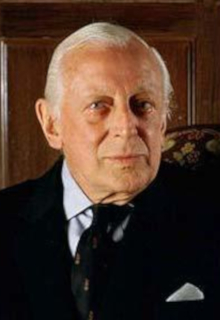
Birth of Alistair Cooke, Journalist & Broadcaster

alistair-cooke

Alistair Cooke, British journalist, television personality, and broadcaster, who describes himself as a “Lancastrian Irishman,” is born in Salford, Lancashire, England on November 20, 1908. He is best known for his lively and insightful interpretations of American history and culture.

The son of Samuel Cooke, a Wesleyan Methodist lay preacher, and Mary Elizabeth (Byrne) from County Sligo, He is educated at Blackpool Grammar School, Blackpool and wins a scholarship to Jesus College, Cambridge, where he gains an honours degree in English. Later he wins a Commonwealth Fund fellowship to study in the United States, first at Yale University (1932–33), then at Harvard University (1933–34). His cross-country travels during the summers of these years have a profound influence on his professional life.

Following a brief period as a scriptwriter in Hollywood, Cooke returns to England to become a film critic for the British Broadcasting Corporation (BBC) and later serves as London correspondent for the National Broadcasting Company (NBC) of the United States. In 1937 he returns to the United States, settles in New York City, and becomes an American citizen in 1941.

From the late 1930s, Cooke reports and comments on American affairs for BBC Radio and several major British newspapers. His weekly 15-minute program, Letter from America, broadcast from 1946 to 2004, is one of the longest-running series on radio. The texts of many broadcasts are collected in One Man’s America (1952) and Talk About America (1968). From 1956 to 1961 he hosts and narrates the weekly television “magazine” Omnibus, which wins numerous broadcasting awards.

Cooke’s interpretation of the American experience culminates in his BBC-produced television series America: A Personal History of the United States (1972–1973). In thirteen installments, filmed on location throughout the United States, he surveys some 500 years of American history in an eclectic and personal but highly coherent narrative. Alistair Cooke’s America (1973), the book based on the award-winning program, is a best-seller in the United States. From the 1970s to the early 1990s, as host of Masterpiece Theatre, he serves as an interpreter of British culture through the presentation of BBC dramatic television programming to American audiences.

Cooke’s other works include the critical biography Douglas Fairbanks: The Making of a Screen Actor (1940), Generation on Trial: The USA v. Alger Hiss (1950), based on his coverage of a celebrated Congressional investigation, The Vintage Mencken (1955), The Patient Has the Floor (1986), America Observed (1988), Memories of the Great and the Good (2000) and, with Robert Cameron, The Americans (1977).

On March 2, 2004, at the age of 95, following advice from his doctors, Cooke announces his retirement from Letter from America—after 58 years, the longest-running speech radio show in the world.

Alistair Cooke dies at midnight on March 30, 2004 at his home in New York City. He had been ill with heart disease, but dies of lung cancer, which had spread to his bones. He is cremated and his ashes are clandestinely scattered by his family in New York’s Central Park.