Josephine McNeill, Irish diplomat, dies in Dublin on November 19, 1969. She is the first Irish female diplomat appointed to represent Ireland abroad in a ministerial capacity.
McNeill is born Josephine Ahearne on March 31, 1895, in Fermoy, County Cork, the daughter of shopkeeper and hotelier, James Ahearne, and his wife Ellen Ahearne (née O’Brien). She attends the Loretto Convent, Fermoy, and goes on to graduate from University College Dublin (UCD) with a BA, H.Dip.Ed. in French and German. With this she begins a teaching career, at St. Louis’ Convent, Kiltimagh, at the Ursuline Convent, Thurles, and at Scoil Íde. Scoil Íde, the female counterpart to St. Enda’s School, had been established by her friend, Louise Gavan Duffy. She is fluent in the Irish language and takes an active part in the cultural elements of the Irish independence movement, such as literature and music. She is a member of Cumann na mBan, serving as a member of the executive committee in 1921.
After the death of her husband in 1938, McNeill becomes the honorary secretary of the council of the Friends of the National Collections, as well as serving as chair of the executive committee of the Irish Countrywomen’s Association until 1950. As a member of the Department of External Affairs advisory committee on cultural relations, she writes on economic, social and cultural issues. She represents Ireland at the UNESCO general assembly in Paris in 1949.
McNeill is an active member of Clann na Poblachta from its foundation in 1946. She is appointed the minister to the Netherlands in 1950 by Seán MacBride, making her the first Irish female diplomat to represent the Republic of Ireland abroad in a ministerial capacity. This appointment is not well received by diplomats in the Department of External Affairs. Her reports from The Hague focus on the issues the Netherlands faces with decolonisation. In 1955, she becomes the minister to Sweden, going on to hold the joint appointment to Austria and Switzerland from 1956 to 1960, after which she retires. While serving in Switzerland she puts aside the resentment she feels towards Éamon de Valera based on how he had treated her husband, to sit with him during a convalescence while de Valera recovers from an eye operation.
McNeill is an amateur pianist and collects paintings and porcelains. In 1933, she publishes the Irish language book, Finnsgéalta ó India.
Dryhurst is born to Alexander Robinson and Emily Egan. Her father is a dyer. She is known as Nannie to her sisters and she decides to change her name to Nannie Florence in honour of a young friend who had died. As a result she is known variously (and following her marriage) as N.F. Dryhurst, Nannie, Nora and Florence Dryhurst.
After the death of her father, Dryhurst takes a position as a governess as she speaks fluent French, German and Irish, as well as having considerable skill as an artist. She works first in Ireland and then in London. She looks after a doctor’s daughter, Nellie Tenison, and through them she meets the Dryhurst family. In 1882, she becomes engaged to British Museum official Alfred Robert Dryhurst and marries him in August 1884. Their first daughter, Norah, is born in 1885 and the second, Sylvia, in 1888.
Dryhurst soon gets involved with an anarchist group and writes regularly for the Freedom newspaper. She is friends with Charlotte Wilson and acts as editor when Wilson is away. In the early 1890s she takes over as editor completely for a period of time. She also works as a translator for Peter Kropotkin‘s works. She spends time teaching with Wilson, Agnes Henry, and Cyril Bell at the International Anarchist School set up in Fitzroy Square in London by Louise Michel. She gives active support to Spanish refugees fleeing repression and gives money to support the colony at Clousden Hill from 1895 to 1902.
Dryhurst supports a number of different countries attempting to gain independence. She becomes secretary of the Nationalities and Subject Races Committee and uses her writing in working toward Irish independence. She writes for various Irish newspapers and assists with the creation of The Irish Citizen. A friend of W. B. Yeats, she appears in his play The Land of Heart’s Desire in June 1904. She speaks Georgian, having learned it from Varlam Cherkezishvili, a close associate of Kropotkin. In 1906, she is a member of the Georgian Relief Committee and travels to the country. She speaks at an international conference at The Hague in support of Georgia. She is also a supporter of Indian independence.
It was through Dryhurst that the Gifford sisters get their connection to the Irish independence movement. She introduces Muriel Gifford to Thomas McDonagh and Grace Gifford to James Plunkett. After the executions of fifteen leaders of the Easter Rising in Dublin, she spends her time campaigning unsuccessfully for the reprieve of Roger Casement. Not all her activities are purely political. She is a neighbour of Martin Shaw and on her suggestion he founds the Purcell Operatic Society in 1899. She becomes the Society’s secretary. He rents accommodation near her and through her friends they find talented amateurs to put on their productions.
Dryhurst has a long affair with Henry Nevinson, a journalist she meets in 1892. The affair ends in 1912. She dies in 1930. Her papers are kept in the National Library of Ireland.
She is born Leslie Mary Price in Dublin on January 9, 1893, to Michael and Mary Price. Her father is a blacksmith, and she is one of six children. She wants to be a teacher and by 1911 has become a Monitress, a common way for girls to get into the teaching profession. Two of her brothers are involved in the Irish Volunteers and she is a member of Cumann na mBan. In advance of the Easter Rising, with the confusion over orders and lack of information, she states that she “did not question anything” as, with all that was happening, there are often odd events in her house. But they all wait for the mobilisation orders for the Rising.
De Barra’s role during the republican rebellion in Ireland, Easter 1916, is to act as a courier carrying messages and ammunition between the main headquarters in the General Post Office (GPO) and other posts. She does her role well during the Rising and gains the respect of many Irish Republicans. On the orders of Seán Mac Diarmada, one of the principal leaders of the rising, she and fellow Cumann na mBan member Bríd Dixon are promoted in the field and treated as officers. She later admits that the job was stressful. She is stationed both in the GPO and in the Hibernian Bank. It is while she is in the bank that she comes closest to death, standing beside Captain Thomas Weafer while he is shot. Another soldier who goes to his aid is also shot. She barely has time to grab Captain Weafer before he dies. She is the person sent to fetch a priest for the dying and wounded soldiers on the Thursday. By Friday evening, she is in the GPO and is with the group evacuated with Louise Gavan Duffy. Once they reach the hospital on Jervis Street, she parts company from Duffy and heads to Jacob’s factory to see how the rebels are getting on there. She is also arrested and held in Broadstone Station but quickly released.
By 1918, de Barra represents West Cork in the Cumann na mBan convention and becomes a member of the executive committee. She leaves her teaching career to focus fully on the organisation required by the republican movement in 1918. She travels the country by train and by bicycle to get women to join the local branches of the Cumann and take part in the activities needed by the movement. She is tasked by the Irish Republican Army’s (IRA) General Headquarters to set up specific lines of communication between Dublin and the Provincial commands. Within the year the organisation has grown from 17 to over 600 branches. She is Director of the organisation during the period up to the end of the war.
De Barra marries Tom Barry on August 22, 1921, in Cork during the Truce period in the lead up to the Anglo-Irish Treaty. At the wedding are men who later end up on opposite sides. Both Éamon de Valera and Michael Collins are guests. Her husband is staunchly Anti-Treaty even though he has been friends with Collins. Although her husband is a staunch republican and a major figure in the Irish War of Independence and the Irish Civil War, while she is serving in the GPO in Dublin during the rising, he is in Mesopotamia serving in the British Army in World War I.
In later years de Barra is central to the Irish Red Cross. Initially she gets involved by organising the care of children orphaned by World War II. She represents the Irish Red Cross at conferences in Toronto, Oslo, Monaco, New Delhi, Geneva, Vienna, The Hague, Athens, Istanbul and Prague. She and her husband handle refugees from Czechoslovakia and Poland. Through the Red Cross she is able to ascertain the status of Irish held by the Spanish during the Spanish Civil War, as officially Ireland remains neutral and cannot get involved. She is Chairman of the Irish Red Cross from 1950 to 1973.
De Barra is instrumental in the setting up of the Voluntary Health Insurance organisation in the late 1950s. In 1962, with the Red Cross she launches the “Freedom from hunger” campaign in Ireland which later becomes the organisation Gorta. She serves as chairman of Gorta also.
In 1956, a memorial to 1916 is unveiled in Limerick. It is designed by Albert Power and the commemoration of the Rising is held in May 1956 and the monument is unveiled by de Barra. In 1963 she is awarded an honorary degree from University College Dublin (UCD) along with Éamon de Valera and others.
In 1971, de Barra is part of a series to look back on the events leading to Irish Independence and her story is broadcast by Raidió Teilifís Eireann. In 1979 she wins the Henry Dunant Medal which is the highest award of the Red Cross Movement.
De Barra and her husband live on St. Patrick’s Street in Cork from the 1940s until his death in 1980. She dies in Cork on April 9, 1984, and is buried with her husband in St. Finbarr’s Cemetery. She is remembered today in the Leslie Bean de Barra Trophy awarded for the Cork Area Carer of the Year.
O’Connor is born on June 7, 1874, at Worcester, Massachusetts, the eldest of three sons and two daughters of Andrew O’Connor, a stonecutter from Lanarkshire, Scotland, who becomes a professional sculptor, and Marie Anne O’Connor (née McFadden), of County Antrim. Educated in Worcester public schools, at the age of 14 he becomes apprenticed to his father, helping him to design monuments for cemeteries. He is employed in the early 1890s on sculptural work for the World’s Columbian Exposition (Chicago World’s Fair), being active in the studio of William Ordway Partridge, and assisting Daniel Chester French on his colossal Statue of the Republic, a landmark of the 1893 Columbian exposition.
Moving to London (1894–98), O’Connor works on bas-reliefs in the studio of the painter John Singer Sargent, who uses him as a model for his mural Frieze of Prophets for the Boston Public Library. His first independent work, Sea Dreams, a relief of a head, is exhibited at the Royal Academy of Arts in 1896. Returning to the United States (1898–1903), he becomes a studio assistant of French, through whom he receives his first public commission, for the Vanderbilt Memorial Doors for St. Bartholomew’s Episcopal Church, Manhattan, New York, a project completed in 1902 to wide critical acclaim. He also executes the tympanum and lateral friezes.
Around 1900, O’Connor marries an artist’s model named Nora, by whom he has a daughter. In 1902, he hires as studio model Jessie Phoebe Brown from New Jersey and of County Down parentage. The following year he elopes with her to Paris, where they marry and have four sons, the youngest of whom, Patrick O’Connor, becomes an artist and gallery curator. Jessie continues for many years as his primary model, sitting for the heads of both female and male figures, O’Connor coarsening the features for the latter.
During his years in Paris (1903–14), O’Connor is influenced by the work of Auguste Rodin, whom he befriends. Among his pupils in Paris is the American sculptor and heiress Gloria Vanderbilt Whitney. He continues to fulfil numerous commissions for funerary and public monuments in the United States, an example of the former being the Recuillement in Sleepy Hollow Cemetery, near Tarrytown, New York. From 1906 he exhibits annually at the Salon in Paris, where he is the first foreigner to win a second-class medal, for his bronze statue of Gen. Henry Lawton. Included in his only exhibition at the Royal Hibernian Academy (1907) is a bronze relief of the prophet Nehemiah adapted from a panel of the Vanderbilt doors. The relief is subsequently included in his one-man show at the Galerie Hébrard, Paris in 1909.
In 1909, O’Connor wins a competition open to sculptors of Irish descent to execute a monument to Commodore John Barry, the County Wexford-born “father of the American navy,” for Washington, D.C. His design includes a frieze depicting events in Irish history, flanked by a group of three nude Irish emigrants entitled Exile from Ireland, and another group representing the Genius of Ireland, which includes a female figure of the “Motherland.” Probably owing to opposition from the Barry family to the depiction of their ancestor as a rough-and-ready sailor, the commission is not completed. His marble statue of Gen. Lew Wallace (author of Ben-Hur: A Tale of the Christ), a plaster of which is exhibited at the Salon in Paris in 1909, is placed by the state of Indiana in the National Statuary Hall in the United States Capitol, Washington, D.C. Another marble, Peace by Justice, is commissioned as a gift from the United States to the Peace Palace in The Hague in 1913.
Returning to Paris in the mid-1920s, O’Connor becomes the first foreigner to win a gold medal at the Salon des Artistes in 1928, for the marble sculpture Tristan and Iseult, now held in the Brooklyn Museum, New York. The French government makes him a Chevalier of the National Order of the Legion of Honour in 1929. In 1926 he had exhibited a plaster group, Monument aux morts de la Grande Guerre, at the Salon in Paris. The sculpture is requested in 1932 by the people of Dún Laoghaire, County Dublin, as a memorial to Christ the King, O’Connor obligingly altering the interpretation of his iconography. Imposed on a “Tree of life” are three figures of Christ, representing in turn “Desolation,” “Consolation” and “Triumph.” Cast in bronze, throughout World War II the statue remains hidden in Paris to avoid its being melted down for the valuable metal. Transported to Dún Laoghaire in 1949, due to clerical opposition to its unconventional iconography, it is not at first erected, but for years lay on its side in a garden in Rochestown Avenue until its eventual unveiling in 1978 as Triple Cross in Haigh Terrace, where it stands in Moran Park. His other chief work in Ireland is a bronze statue of Daniel O’Connell in the Bank of Ireland, College Green, Dublin. Inspired by Rodin’s famous Monument to Balzac, the work is executed at his studio in a converted stable at Leixlip Castle, County Kildare in 1931–32.
During the 1930s, O’Connor lives and works in London and Ireland, where he has residences at Glencullen House, County Wicklow, and 77 Merrion Square, Dublin. He dies at the latter address on June 9, 1941, and is buried in Glasnevin Cemetery. His own bronze relief, Le feu sacré, marks the grave. A portrait painting, executed by his son Patrick in 1940, is in Dublin City Gallery The Hugh Lane, which also holds twenty-six sculptures presented by O’Connor late in his life, and posthumously by his family. The collection includes a marble self-portrait bust of 1940, a bronze of the Lafayette cast by the gallery in 1984 from a reduced plaster model presented by the artist, and a bronze group entitled The Victim, on view in Merrion Square Park, from an uncommissioned and uncompleted war memorial conceived by O’Connor under the general title Le Débarquement. The National Gallery of Ireland has the Desolation maquette for the Triple Cross. A centenary exhibition of his work is held at Trinity College Dublin in 1974. His widow dies in Dublin in 1974.
(From: “O’Connor, Andrew” by Lawrence William White and Carmel Doyle, Dictionary of Irish Biography, http://www.dib.ie, October 2009)
Josephine McNeill, Irish diplomat, is born on March 31, 1895, in Fermoy, County Cork. She is the first Irish female diplomat appointed to represent Ireland abroad in a ministerial capacity.
McNeill is born Josephine Ahearne, the daughter of shopkeeper and hotelier, James Ahearne, and his wife Ellen Ahearne (née O’Brien). She attends the Loretto Convent, Fermoy, and goes on to graduate from University College Dublin (UCD) with a BA, H.Dip.Ed. in French and German. With this she begins a teaching career, at St. Louis’ Convent, Kiltimagh, at the Ursuline Convent, Thurles, and at Scoil Íde. Scoil Íde, the female counterpart to St. Enda’s School, had been established by her friend, Louise Gavan Duffy. She is fluent in the Irish language and takes an active part in the cultural elements of the Irish independence movement, such as literature and music. She is a member of Cumann na mBan, serving as a member of the executive committee in 1921.
After the death of her husband in 1938, McNeill becomes the honorary secretary of the council of the Friends of the National Collections, as well as serving as chair of the executive committee of the Irish Countrywomen’s Association until 1950. As a member of the Department of External Affairs advisory committee on cultural relations, she writes on economic, social and cultural issues. She represents Ireland at the UNESCO general assembly in Paris in 1949.
McNeill is an active member of Clann na Poblachta from its foundation in 1946. She is appointed the minister to the Netherlands in 1950 by Seán MacBride, making her the first Irish female diplomat to represent the Republic of Ireland abroad in a ministerial capacity. This appointment is not well received by diplomats in the Department of External Affairs. Her reports from The Hague focus on the issues the Netherlands faces with decolonisation. In 1955, she becomes the minister to Sweden, going on to hold the joint appointment to Austria and Switzerland from 1956 to 1960, after which she retires. While serving in Switzerland she puts aside the resentment she feels towards Éamon de Valera based on how he had treated her husband, to sit with him during a convalescence while de Valera recovers from an eye operation.
McNeill is an amateur pianist and collects paintings and porcelains. In 1933, she publishes the Irish language book, Finnsgéalta ó India.
Maclaine is born in County Monaghan in 1724, second son among two sons and one daughter of the Rev. Lauchlin Maclaine, a Presbyterian minister from Scotland, and Elizabeth Maclaine (née Milling). His brother, Archibald Maclaine, later becomes a minister. Educated locally, he is reckless, headstrong, and dismissive of his parents’ attempts to make him respectable. When his father dies he squanders his inheritance on a dissolute lifestyle and is forced to find work in London.
Maclaine considers joining the Irish Brigade in the French Royal Army, but is told that he would make little progress with them unless he becomes a Roman Catholic, which he is unwilling to do. Instead he enlists in Lord Albemarle‘s horse troops. Again his propensity for fast living costs him dearly, and he suffers a thrashing after he is discovered having an affair with an officer’s wife.
Around 1746 Maclaine marries the daughter of a publican on Oxford Road, London, and with her dowry of five hundred pounds establishes himself as a grocer and chandler in Welbeck Street, Cavendish Square. His wife dies in 1748, leaving one daughter.
Frustrated by his lack of opportunities, Maclaine decides to embark on a life of crime. Together with William Plunkett, an Irish apothecary who had attended to his wife, he decides to find a rich heiress to marry. Pretending to be a high-living gentleman, with Plunkett as his liveried servant, he exhausts all his money dancing and gambling but has little success in his quest. Undaunted, he now turns his hand to robbery and becomes a highwayman. This proves extremely profitable and he takes lodgings at St. James’s Street, where he passes himself off as an Irish squire, with Plunkett again in attendance.
A dashing, handsome man, Maclaine soon becomes a popular figure in London. His most infamous adventure occurs in November 1749 when he robs the famous diarist and politician Horace Walpole at Hyde Park. For the first and only time in his career, he fires a shot, as one of his pistols discharges accidentally, scorching Walpole’s face. He later insists that he would have committed suicide if he had killed his victim. Walpole’s retort is that he would be satisfied if Maclaine just allowed himself to be hanged. Overcome with guilt, Maclaine afterwards sends two letters to Walpole apologising for the injury and suggesting a duel if he wants satisfaction. Walpole wisely ignores the correspondence.
After visiting his brother at The Hague, where he impresses with his extravagant gifts and lifestyle, Maclaine again decides to seek an heiress. Together with Plunkett, who is visiting Ireland, he sets his sights on a woman with an income of £40,000, but the scheme comes to nothing.
Returning to his career as a highwayman, Maclaine commits a number of daring robberies in the summer of 1750. On June 26, 1750, he and Plunkett hold up the coach of the Earl of Eglinton on Hounslow Heath, which proves to be his undoing. One passenger makes public a list of his stolen possessions, and when Maclaine sells some of the items on July 19 the crime is traced to him. On July 27 he is arrested and immediately breaks down in prison, confessing everything. Weeping in his cell, he consistently blames Plunkett, who evaded capture, for leading him astray.
Maclaine’s trial on September 13 attracts enormous interest, especially from women who are enamoured of his romantic image. The jury finds him guilty without leaving the box. Sentenced to death, he attempts to read a plea for mercy but loses his nerve and is only able to speak a few words. After a few minutes of embarrassed silence he cries, “My lord, I can go no further.” His brother denounces him, and from his cell he writes a number of letters expressing regret for his actions.
Maclaine is executed at Tyburn on October 3, 1750, having informed a minister that he went to his execution “without being daunted but rather with eagerness.” A great crowd attends the execution, before whom he maintains a steady composure, and his last words to them are, “O God, forgive my enemies, bless my friends and receive my soul!” A later publication tells that, as the cart is about to be drawn from under him, a witness hears him say, “I must never more behold this beauteous sun! Do thou, O sun of righteousness, shine on my departing soul.” After his death an enduring legend develops around the story of “the gentleman highwayman” and “the ladies’ hero.”
Sykes joined HM Foreign Service in 1947 and serves at the Foreign Office from 1947 to 1948. He then serves in Nanjing (1948–50), Peking (1950–52) and returns to the UK to serve at the Foreign Office (1952–56). His next overseas postings take him to Brussels (1956–59), Santiago (1959–62) and Athens (1963–66), before returning to the Foreign Office (1967–69).
Sykes’ first posting as an ambassador comes with a posting to Havana (1970–72) before moving to be a Minister at the British Embassy in Washington D.C. (1972–1975). From there he returns to the Foreign Office as Department Under-Secretary between 1975 and 1977. He is then appointed as Ambassador to the Netherlands in 1977.
Sykes is leaving his residence in The Hague at 9:00 a.m. on March 22, 1979, and is getting into his silver Rolls-Roycelimousine when he is shot. He is sitting next to Alyson Bailes. The car door is held by Karel Straub, a 19-year-old Dutch national who works at the embassy. Straub is also shot in the attack. The chauffeur, Jack Wilson, is uninjured and drives Sykes to Westeinde Hospital, where he dies two hours later. Straub is transported by ambulance to the same hospital, where he also dies.
Police report that the shots came from around 10 yards away by two assailants wearing business suits, who escaped on foot following the attack. Suspects for the assassination are Palestinians or Iraqis, although no evidence is ever put forward. It is ultimately confirmed that the IRA had carried out the killings.
The IRA claims responsibility for the assassination in February 1980. In a statement they say of Sykes, “[he was] not just a Brit propagandist, as are all British ambassadors, but because he had been engaged in intelligence operations against our organisation.”
The ‘intelligence operations’ mentioned in the statement relate to a government report written by Sykes following the assassination of Christopher Ewart-Biggs. Ewart-Biggs was the British Ambassador to the Republic of Ireland and was killed by the IRA in 1976. Sykes produces diplomatic security guidelines as part of his report.
Sykes’ position as Ambassador to the Netherlands had been strained due to certain Dutch groups, which were sympathetic to the IRA, and consequent arms smuggling activities.
There is a memorial plaque to Sykes in St. Michael’s Church, Wilsford, Wiltshire.
(Pictured: “Sir Richard Sykes” by Bassano Ltd., half-plate film negative, 20 January 1966, National Portrait Gallery, London)
On August 28, 1979, a bomb explodes under an open‐air stage on the Grote Markt in Brussels, Belgium where a British Army band is preparing to give a concert, injuring at least 15 persons, including four bandsmen, and causes extensive damage. Mayor Pierre van Halteren of Brussels says the Irish Republican Army (IRA) claims responsibility for the bombing in a telephone call to city hall.
The bombing comes just a day after Earl Mountbatten of Burma and three others are killed in a bombing in the Irish Republic, and 18 British soldiers die in an attack in Northern Ireland. The IRA claims responsibility for both attacks.
The band is from the Duke of Edinburgh’s Royal Regiment, which is stationed in Osnabrück, West Germany. The bombing occurs only minutes before the band is to have begun a concert in the broad square, a major tourist site surrounded by centuries‐old buildings. However, only 6 of the 30 members of the band are on the makeshift stage when the bomb explodes at about 3:00 PM. The others had left the stage to change into their red dress uniforms after setting up music stands and instruments.
The band is held up in traffic and is late arriving for the concert. The police say that if the bomb had gone off later, during the concert, the casualty toll would have been heavier.
Before the IRA telephone call is reported, Earl Nicoll, military attaché at the British Embassy in Brussels, says, “I’d guess it is either the IRA or people sympathetic to their aims. It is clearly a manifestation they wanted to hit the band, not any Belgians.”
The temporary stage is used for daily concerts to mark the city’s 1,000th birthday. A police spokesman says the explosives were under the stage floor in the back, on the side away from the square. At the time of the explosion only a few hundred people, most of them tourists, are in the square, which is lined by outdoor cafes, flower stalls and centuries‐old guildhalls.
The blast creates a 90‐by‐30‐foot hole in the stage floor, and severely damages the back wall and the ceiling. It shatters windows in the ancient buildings. A police spokesman says investigators did not yet know what kind of bomb was used. Officials estimate the damage at $134,000 to $167,000.
A number of other recent terrorist attacks on the continent are blamed on the IRA. On March 22, 1979, Sir Richard Sykes, Britain’s Ambassador to the Netherlands, and his Dutch valet are shot and killed as the envoy leaves for work in The Hague. On the same day, a Belgian bank employee is shot to death in front of his home in suburban Brussels in what police believe is a case of mistaken identity on the part of the IRA. Officials believe the gunmen were after Sir John Killick, deputy chief of Britain’s mission to the North Atlantic Treaty Organization, which has its headquarters in Belgium.
On July 6, a bomb that officials believe to be planted by the IRA goes off in the British consulate building in Antwerp, Belgium, causing damage but no injuries. Four days later, two bombs go off at two British Rhine Army barracks in Dortmund, West Germany, causing extensive damage but again no injuries. The IRA claims responsibility for those and other bombings at facilities of the 50,000‐member Rhine Army.
(From: “I.R.A. Sets Off Bomb at Belgian Concert,” The New York Times, August 29, 1979)
William III, also widely known as William of Orange, dies at Kensington Palace on March 8, 1702, following a fall from his horse when it stumbles on a molehill. Upon his death, Anne accedes to the throne of Britain and Ireland.
A Protestant, William participates in several wars against the powerful Catholic King of France, Louis XIV, in coalition with Protestant and Catholic powers in Europe. Many Protestants herald him as a champion of their faith. In 1685, William’s Catholic uncle and father-in-law, James, becomes king of England, Scotland and Ireland. James’s reign is unpopular with the Protestant majority in Britain. William, supported by a group of influential British political and religious leaders, invades England in what becomes known as the Glorious Revolution. On November 5, 1688, he lands at the southern English port of Brixham. James is deposed and William and his wife become joint sovereigns in his place.
William’s reputation as a staunch Protestant enables him to take power in Britain when many are fearful of a revival of Catholicism under James. William’s victory at the Battle of the Boyne in 1690 is still commemorated by loyalists in Northern Ireland and Scotland.
William and Mary reign together until Mary’s death from smallpox on December 28, 1694, after which William rules as sole monarch. Despite his conversion to Anglicanism, his popularity plummets during his reign as a sole monarch. His reign in Britain marks the beginning of the transition from the personal rule of the House of Stuart to the more Parliament-centred rule of the House of Hanover.
On March 8, 1702, William dies of pneumonia, a complication from a broken collarbone following a fall from his horse, Sorrel. The horse had been confiscated from Sir John Fenwick, one of the Jacobites who had conspired against William. Because his horse had stumbled into a mole’s burrow, many Jacobites toast “the little gentleman in the black velvet waistcoat.” Years later, Winston Churchill, in his A History of the English-Speaking Peoples, states that the fall “opened the door to a troop of lurking foes.” William is buried in Westminster Abbey alongside his wife. His sister-in-law, Anne, becomes queen regnant of England, Scotland and Ireland.
William’s death means that he would remain the only member of the Dutch House of Orange to reign over England.
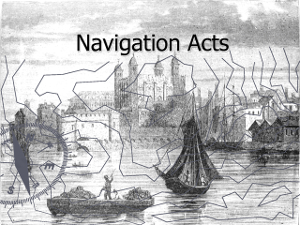
The stadtholder dies suddenly, however, and the States are now embarrassed by Cromwell taking the idea too seriously. The English propose the joint conquest of all remaining Spanish and Portuguese possessions. England would take America and the Dutch would take Africa and Asia. But the Dutch have just ended their war with Spain and already taken over most Portuguese colonies in Asia, so they see little advantage in this grandiose scheme and propose a free trade agreement as an alternative to a full political union. This again is unacceptable to the British, who would be unable to compete on such a level playing field, and is seen by them as a deliberate affront.
The Act bans foreign ships from transporting goods from outside Europe to England or its colonies, and bans third-party countries’ ships from transporting goods from a country elsewhere in Europe to England. These rules specifically target the Dutch, who control much of Europe’s international trade and even much of England’s coastal shipping. It excludes the Dutch from essentially all trade with England, as the Dutch economy is competitive with, not complementary to the English, and the two countries therefore exchange few commodities. This Anglo-Dutch trade, however, constitutes only a small fraction of total Dutch trade flows.
The Act is often mentioned as a major cause of the First Anglo-Dutch War, though it is only part of a larger British policy to engage in war after the negotiations have failed. The English naval victories in 1653 (the Battle of Portland, the Battle of the Gabbard and the Battle of Scheveningen) show the supremacy of the Commonwealth navy in home waters. However, farther afield the Dutch predominate and are able to close down English commerce in the Baltic and the Mediterranean. Both countries hold each other in a stifling embrace.
The Treaty of Westminster (1654) ends the impasse. The Dutch fail to have the Act repealed or amended, but it seems to have had relatively little influence on their trade. The Act offers England only limited solace. It cannot limit the deterioration of England’s overseas trading position, except in the cases where England herself is the principal consumer, such as the Canary Islands wine trade and the trade in Puglian olive oil. In the trade with the West Indies, the Dutch keep up a flourishing “smuggling” trade, thanks to the preference of English planters for Dutch import goods and the better deal the Dutch offer in the sugar trade. The Dutch colony of New Netherland offers a loophole through intercolonial trade wide enough to drive a shipload of Virginia tobacco through.
The 1651 Act, like other laws of the Commonwealth period, is declared void on the Restoration of Charles II of England, having been passed by “usurping powers.” Parliament therefore passes new legislation. This is generally referred to as the “Navigation Acts,” and, with some amendments, remains in force for nearly two centuries.




 The
The  seamus dubhghaill