seamus dubhghaill

Promoting Irish Culture and History from Little Rock, Arkansas, USA


Leave a comment

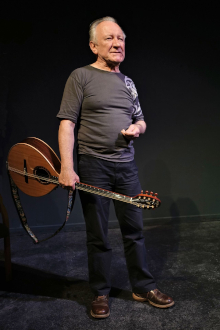
Death of Séamus Ennis, Musician, Singer & Music Collector

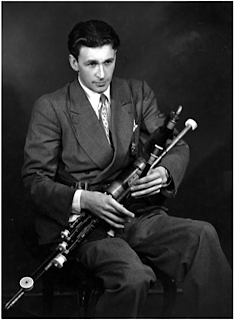
Séamus Ennis (Irish: Séamas Mac Aonghusa), Irish musician, singer and Irish music collector, dies in Naul, County Dublin, on October 5, 1982. He is most noted for his uilleann pipe playing and is partly responsible for the revival of the instrument during the twentieth century, having co-founded Na Píobairí Uilleann, a nonprofit organisation dedicated to the promotion of the uilleann pipes and its music. He is recognised for preserving almost 2,000 Irish songs and dance-tunes as part of the work he does with the Irish Folklore Commission. He is widely regarded as one of the greatest uilleann pipers of all time.

Ennis’s father, James, works for the Irish civil service at Naul, County Dublin. In 1908, James Ennis is in a pawn shop in London and purchases a bag containing the pieces of a set of old uilleann pipes. They were made in the mid nineteenth century by Coyne Pipemakers of Thomas Street in Dublin. In 1912, he comes in first in the Oireachtas competition for warpipes and second in the uilleann pipes. He is also a prize-winning dancer. In 1916, he marries Mary Josephine McCabe, an accomplished fiddle player from County Monaghan. They have six children, Angela, Séamus, Barbara, and twins, Cormac and Ursula (Pixie) and Desmond. Séamus is born on May 5, 1919, in Jamestown in Finglas, Dublin. James Ennis is a member of the Fingal trio, which includes Frank O’Higgins on fiddle and John Cawley on flute, and performs regularly with them on the radio. At the age of thirteen, Séamus starts receiving lessons on the pipes from his father. He attends a Gaelscoil, Cholmcille, and a Gaelcholáiste, Coláiste Mhuire, which gives him a knowledge of the Irish language that serves him well in later life. He sits in an exam to become Employment Exchange clerk but is too far down the list to be offered a job. He is twenty and unemployed.

Colm Ó Lochlainn is editor of Irish Street Ballads and a friend of the Ennis family. In 1938, Ennis confides in Colm that he intends to move to England to join the British Army. Colm immediately offers him a job at The Three Candles Press. There Ennis learns all aspects of the printing trade. This includes writing down slow airs for printed scores – a skill which later proves important. Colm is director of an Irish language choir, An Claisceadal, which Ennis joins. In 1942, during The Emergency, shortages and rationing mean that things become difficult in the printing trade. Professor Seamus Ó Duilearge of the Irish Folklore Commission hires the 23-year-old to collect songs. He is given “pen, paper and pushbike” and a salary of three pounds per week. Off he goes to Connemara.

From 1942 to 1947, working for the Irish Folklore Commission, Ennis collects songs in west Munster; counties GalwayCavanMayoDonegalKerry; the Aran Islands and the Scottish Hebrides. His knowledge of Scottish Gaelic enables him to transcribe much of the John Lorne Campbell collection of songs. Elizabeth Cronin of BallyvourneyCounty Cork, is so keen to chat to Ennis on his visits that she writes down her own songs and hands them over as he arrives, and then gets down to conversation. He has a natural empathy with the musicians and singers he meets. In August 1947, he starts work as an outside broadcast officer with Raidió Éireann. He is a presenter and records Willie ClancySeán Reid and Micho Russell for the first time. There is an air of authority in his voice. In 1951, Alan Lomax and Jean Ritchie arrived from the United States to record Irish songs and tunes. The tables are turned as Ennis becomes the subject of someone else’s collection. There is a photograph from 1952/53 showing Ritchie huddled over the tape recorder while Ennis plays uilleann pipes.

Late in 1951, Ennis joins the BBC. He moves to London to work with producer Brian George. In 1952, he marries Margaret Glynn. They have two children, the organist Catherine Ennis and Christopher. His job is to record the traditional music of England, ScotlandWales and Ireland and to present it on the BBC Home Service. The programme is called As I Roved Out and runs until 1958. Meeting up with Alan Lomax again, he is largely responsible for the album Folk and Primitive Music (volume on Ireland) on the Columbia Records label.

In 1958, after his contract with the BBC is not renewed, Ennis starts doing freelance work, first in England then back in Ireland, with the new TV station Teilifis Éireann. Soon he is relying totally on his musical ability to make a living. About this time, his marriage breaks down and he returns to Ireland. He suffers from tuberculosis and is ill for some time. In 1964, he performs at the Newport Folk Festival. His father gives him the pipes he had bought in 1908. Although most pipers can be classed as playing in a tight style or an open style, Ennis is in between. He is a master of the slow air, knowing how to decorate long notes with taste and discreet variation.

Two events will live in legend among pipers. The first is in Bettystown, County Meath, in 1968, when the society of Irish pipers, Na Píobairí Uilleann, is formed. Breandán Breathnach is playing a tape of his own piping. Ennis asks, “What year?” Breandán replies, “1948.” Ennis says, “So I thought.” For a couple of hours the younger players perform while Ennis sits in silence. Eventually he is asked to play. Slowly he takes off his coat and rolls up his sleeves. He spends 20 minutes tuning up his 130-year-old pipes. He then asks the gathering whether all the tape recorders are ready and proceeds to play for over an hour. To everyone’s astonishment he then offers his precious pipes to Willie Clancy to play a set. Clancy demurs but eventually gives in. Next, Liam O’Flynn is asked to play them, and so on, round the room. The second unforgettable session is in Dowlings’ Pub in Prosperous, County KildareChristy Moore is there, as well as most of the future members of Planxty.

Ennis never runs any school of piping but his enthusiasm infuses everyone he meets. In the early 1970s, he shares a house with Liam O’Flynn for almost three years. Finally, he purchases a piece of land in Naul and lives in a mobile home there. One of his last performances is at the Willie Clancy Summer School in 1982. He dies on October 5, 1982. His pipes are bequeathed to Liam O’Flynn. Radio producer Peter Browne produces a compilation of his performances, called The Return from Fingal, spanning 40 years.

Séamus Ennis Road in his native Finglas is named in his honour. The Séamus Ennis Arts Centre in Naul is opened in his honour, to commemorate his work and to promote the traditional arts. He is also the subject of Christy Moore’s song “The Easter Snow.” This is the title of a slow air Ennis used to play, and one after which he named his final home in Naul.
Leave a comment

Death of Sir Robert Prescott Stewart, Organist, Conductor & Composer

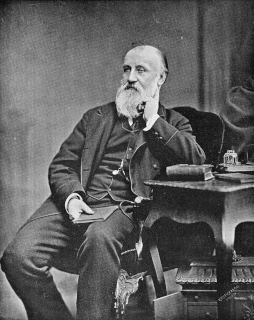
Sir Robert Prescott Stewart, organist, conductor, composer, teacher, and academic, dies in Dublin on March 24, 1894. He is one of the most influential (classical) musicians in 19th-century Ireland.

Stewart is born on December 16, 1825, the second of two sons of Charles Frederick Stewart of 6 Pitt Street (now Balfe Street), Dublin, librarian of King’s Inns. Nothing is known of his mother other than that she studies music with one of the Logier family, presumably the noted military musician and piano teacher Johann Bernhard Logier, a resident of Dublin from 1809.

Stewart is educated at Christ Church Cathedral school in Dublin, where he is a chorister. He begins to accompany choral services in his early teens, and in 1844 is appointed organist of Christ Church Cathedral and the Trinity College Dublin (TCD) chapel. In addition, in 1852 he becomes de facto organist of St. Patrick’s Cathedral, and holds all three positions concurrently for the rest of his life.

Stewart’s first conducting appointment is with the Dublin University Choral Society in 1846, to which he later adds similar appointments in Dublin, Bray, and Belfast. He is active as a teacher, both privately and from 1869 at the Royal Irish Academy of Music (RIAM), and as a critic with the Dublin Daily Express. On occupying the University of Dublin‘s chair of music in 1862, he takes steps to formalise requirements for the music baccalaureate, introducing examinations in a modern language, Latin (or a second modern language), English (literature and composition), arithmetic, and music history. As a result, though not until 1878, similar examinations are introduced at the University of Oxford and the University of Cambridge. In his professorial capacity he delivers in the 1870s public lectures on Bach, Handel, Wagner, church music, music education, organology, and, most notably, Irish music, in which he reveals an uncanny knowledge of the wire-strung harp and the uilleann pipes. He also contributes entries on Irish music and musicians to the first edition of George Grove‘s A Dictionary of Music and Musicians.

By all accounts, Stewart is a very adept musician, having perfect pitch, a formidable memory, and astonishing facility in transposition. Apparently an autodidact, he is the first Irish organist to cultivate pedal technique, while in the art of improvisation both Joseph Robinson and Sir John Stainer hold him to be the equal of Mendelssohn.

Intent on broadening his musical horizons, Stewart travels widely. From 1851 he is a regular visitor to London, and from 1857 makes frequent trips to Continental Europe, attending the Beethoven and Schumann festivals at Bonn in 1871 and 1873 respectively and Wagner’s first Bayreuth Festival in 1876. On the initiative of the Dublin University Choral Society, he is conferred with the simultaneous degrees of Mus.B. and Mus.D. at a special ceremony on April 9, 1851. On February 28, 1872, he is knighted at Dublin Castle by John Poyntz Spencer, 5th Earl Spencer, a social climb that Stewart, who has no independent income, can afford only by accumulating professional appointments and by relentless private teaching. In addition to successive townhouses in the vicinity of Merrion Square, he owns a smaller property on Bray Esplanade, named Holyrood.

Among Stewart’s compositions, his disciple James Culwick lists about forty part songs (of which several win prizes), more than twenty solo songs, fifteen anthems, several church services, a quantity of shorter liturgical music, and sixteen choral cantatas with orchestra. Three of the cantatas set texts by John Francis Waller: the 24-movement A Winter Night’s Wake (1858), The Eve of St. John (1860) and Inauguration Ode for the Opening of the National Exhibition of Cork (1852) for the opening of the Irish Industrial Exhibition in Cork. Other occasional pieces are Who Shall Raise the Bell? (The Belfry Cantata) for the inauguration of Trinity College campanile in 1854, Ode to Shakespeare (1870) for the Birmingham Triennial Music Festival, Orchestral Fantasia (1872) for the Boston Peace Festival, How Shall We Close Our Gates? (1873) for the Dublin Exhibition and Tercentenary Ode (1892) for the tercentenary of Trinity College Dublin.

Though Stewart destroys many of his works, his surviving music is consistently well crafted, and the rapid decline in the popularity of the odes is at least partly attributable to the tawdry and ephemeral character of their texts. Yet despite his esteem for Wagner, he never shakes off the conservative stylistic influences of Handel, Beethoven, and Mendelssohn, and the posthumous performance of his music has been restricted almost entirely to the Dublin cathedrals.

In August 1846 Stewart marries Mary Emily Browne, the daughter of Peter Browne of Rahins House, Castlebar, County Mayo. They have four daughters, of whom the eldest dies in 1858. Following Mary’s death on August 7, 1887, he marries on August 9, 1888, Marie Wheeler of Hyde, Isle of Wight, the daughter of Joseph Wheeler of Westlands, Queenstown (now Cobh).

Stewart dies in Dublin on March 24, 1894, and is buried at Mount Jerome Cemetery alongside his first wife and eldest daughter. Portraits of him are in the possession of the Dublin University Choral Society and the Royal Irish Academy of Music (RIAM), and his statue, erected on Leinster Lawn in 1898, still stands.

(From: “Stewart, Sir Robert Prescott” by Andrew Johnstone, Dictionary of Irish Biography, http://www.dib.ie, October 2009)


Leave a comment

Birth of Patrick “Patsy” Touhey

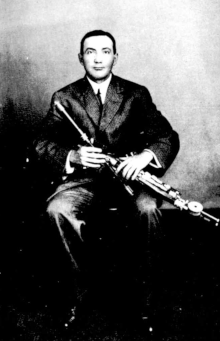
Patrick “Patsy” J. Touhey, a celebrated player of the uilleann pipes, is born on February 26, 1865, in Cahertinny, Bullaun, Loughrea, County Galway. His innovative technique and phrasing, his travels back and forth across the United States to play on the variety and vaudeville stage, and his recordings make his style influential among Irish American pipers. He can be seen as the greatest contributor to a distinctive American piping style.

According to Chief Francis O’Neill of the Chicago Police Department, in his seminal work O’Neill’s Irish Minstrels and Musicians, Touhey is the third generation of accomplished pipers stemming from his grandfather, Michael Twohill (the original spelling, b. ca. 1800), his father James and his uncle Martin, who are considered accomplished players. The family arrives in Boston around 1868, and his father arranges for his instruction from Bartley Murphy of County Mayo. However, at the age of ten Patsy loses his father and later lays the pipes aside.

In his late teens Touhey strays into a Bowery music hall where John Eagan, the “White Piper” of Galway, is engaged. Enthralled by Eagan’s virtuosity, he takes up the pipes again, and under the instruction of Eagan and Billy Taylor of Philadelphia soon becomes a master.

Touhey and Eagan tour the northeastern United States with “Harrigan’s Double Hibernian Co., Irish and American Tourists” in 1885 and 1886. This is his apparent introduction to theatrical life. Harrigan’s company stars Jeremiah “Jere” Cohan, the father of George M. Cohan, later a famous songwriter and showman. Despite a persistent legend, there is no evidence that Touhey plays publicly for the step-dancing of George M. Cohan, who is seven or eight years old at the time. Between 1886 and 1895 he appears in several theatre productions including “Inshavogue” and “The Ivy Leaf.” At the 1893 World’s Columbian Exposition in Chicago, he plays at the Irish Village, one of two rival Irish pavilions, and is later engaged for the 1904 World’s Fair in St. Louis (Louisiana Purchase Exposition). From about 1896 until 1921 he plays in vaudeville skits, trading jokes with his wife, Mary, and their on and off partner Charles Henry Burke. The shows include slapstick, low-brow gags, Irish nostalgia, and a piping finale to which Mary Touhey dances.

Chicago Police Chief Francis O’Neill, a prominent compiler of Irish dance tunes, calls Touhey “the genial wizard of the Irish pipers . . . A stranger to jealousy, his comments are never sarcastic or unkind, neither does he display any tendency to monopolize attention in company when other musicians are present.”

Touhey lives on Bristow Street in the Bronx, New York City, from at least 1900 until 1908. He and Mary live in rural East Haddam, Connecticut from 1908 to 1919, then in Freeport, New York from 1919 to 1922. In 1922 he moves back to the Bronx. He dies suddenly in his home at 1175 Concourse, New York, on January 10, 1923. He is buried in Saint Raymond’s Cemetery in the Bronx.

A statue of Patsy Touhey is unveiled in 2008 in Loughrea, near the place where he was born. It is a bronze sculpture by James MacCarthy that shows Touhey sitting on a limestone block and playing his pipes. Behind him, on the wall, there are three plaques with portraits of Peter and Vincent Broderick, two other local musicians, and Touhey himself. The statue is a tribute to the musical heritage of Loughrea and Galway, and a reminder of the connection between Ireland and its diaspora.

Recordings made of Tuohy in the 1900s have been digitised and made available on the website of the Irish Traditional Music Archive (ITMA), Dublin.


Leave a comment

Birth of Liam O’Flynn, Uilleann Piper & Traditional Musician

Liam O’Flynn, Irish uilleann piper and Irish traditional musician, is born on September 15, 1945, in Kill, County Kildare. In addition to a solo career and as a member of Planxty, he records with Christy Moore, Dónal Lunny, Andy Irvine, Kate Bush, Mark Knopfler, The Everly Brothers, Emmylou Harris, Mike Oldfield, Mary Black, Enya and Sinéad O’Connor.

O’Flynn is acknowledged as Ireland’s foremost exponent of the uilleann pipes and brings the music of the instrument to a worldwide audience. In 2007, he is named TG4 Musician of the Year at the Gradam Ceoil TG4, considered to be the foremost recognition given to traditional Irish musicians.

O’Flynn is born to musical parents. His father, Liam, is a teacher and fiddle player. His mother, Maisie (née Scanlan), who comes from a family of musicians from County Clare, plays and teaches piano. From an early age, he shows musical talent, and is encouraged to pursue his interest in the uilleann pipes by the piper Tom Armstrong. At the age of 11, he begins taking classes with Leo Rowsome. He is also influenced by Willie Clancy and Séamus Ennis. In the 1960s, he begins to receive recognition of his talent, winning prizes at the Oireachtas na Gaeilge and the Fleadh Cheoil. During his early years, he is sometimes billed as Liam Óg Ó Flynn.

In 1972, O’Flynn co-founds the Irish traditional music group Planxty, alongside Christy Moore, Andy Irvine and Dónal Lunny and remains a member throughout the band’s various incarnations. While Seán Ó Riada and The Chieftains had reinvigorated Irish traditional instrumental music in an ensemble format during the 1960s, Planxty builds on that foundation and takes it one step further. They bring a punch and vitality to acoustic music that draws heavily on O’Flynn’s piping virtuosity.

As O’Flynn grows in his skill as a musician and as he begins to meet pipers like Willie Clancy and Séamus Ennis, he becomes acutely aware of his position in the tradition of piping. His subsequent close friendship with Ennis, which starts as a master/pupil relationship, teaches him that there is much more to being a piper than playing tunes. He notes, “Seamus Ennis gave me much more than a bag of notes.”

“When I’m playing, I’m certainly lost within it. The only way to describe it, is that it’s like looking inwards. I think when a performer engages with the audience, and vice versa, it’s like a spell is cast and a terrific passage of feelings moves from the musician to the audience and back again.”

Following the break-up of Planxty in 1983, O’Flynn finds work as a session musician with such prominent artists as The Everly Brothers, Enya, Kate Bush, Nigel Kennedy, Rita Connolly, and Mark Knopfler. He also works on film scores, including Kidnapped (1979) and A River Runs Through It (1992). He is adventurous enough to work with avant-garde composer John Cage, but his most natural alliance is with neo-romantic composer Shaun Davey.

The Bothy Band are natural successors to the original Planxty, and one of its members, Matt Molloy, who subsequently joins The Chieftains, plays with The Chieftains’ fiddler Seán Keane on O’Flynn’s album, The Piper’s Call, which is performed in the 1999 BBC Proms season at the Royal Albert Hall. He also works on projects with Seamus Heaney, mixing poetry with music.

O’Flynn’s name is mentioned in Christy Moore’s song “Lisdoonvarna.”

O’Flynn dies in a Dublin hospital on March 14, 2018, following a long illness. His cremated remains rest at Newlands Cross Cemetery and Crematorium in Dublin.

The Liam O’Flynn Award is awarded each year by the Arts Council and the National Concert Hall to recognise individual creativity in Traditional Irish music. Awardees include Úna Monaghan, Barry Kerr, Jack Talty, Louise Mulcahy and Strange Boy (aka Jordan Kelly).


Leave a comment

Birth of Bill Whelan, Musician & Composer of “Riverdance”

Bill Whelan, composer and musician, is born in Limerick, County Limerick, on May 22, 1950. He is best known for composing a piece for the interval of the 1994 Eurovision Song Contest. The result, Riverdance, is a seven-minute display of traditional Irish dancing that becomes a full-length stage production and spawns a worldwide craze for Irish dancing and Celtic music. It also wins him a Grammy. Riverdance is released as a single in the UK in 1994, credited to “Bill Whelan and Anúna featuring the RTÉ Concert Orchestra.” It reaches number 9 and stays on the charts for 16 weeks. The album of the same title reaches number 31 in the album charts in 1995.

Whelan also composes a symphonic suite version of Riverdance, with its premiere performed by the Ulster Orchestra on BBC Radio 3 in August 2014.

Whelan is educated at Crescent College, University College Dublin and the King’s Inns. While he is best known for his Riverdance composition, he has been involved in many ground-breaking projects in Ireland since the 1970s. As a producer he works with U2 on their War album, Van Morrison, Kate Bush, The Dubliners, Planxty, Andy Irvine & Davy Spillane, Patrick Street, Stockton’s Wing and fellow Limerickman Richard Harris.

As an arranger and composer, Whelan’s credits include:

  • The Spirit of Mayo, performed by an 85-piece orchestra in Dublin‘s National Concert Hall and featuring a powerful Celtic drum corps and a 200 strong choir and choral group Anúna.

In theatre, Whelan receives a Laurence Olivier Awards nomination for his adaption of Gilbert and Sullivan‘s H.M.S. Pinafore. He writes original music for fifteen of W. B. Yeats‘s plays for Dublin’s Abbey Theatre and his film credits include Dancing at Lughnasa (starring Meryl Streep), Some Mother’s Son, Lamb (starring Liam Neeson) and the award-winning At the Cinema Palace.


Leave a comment

Death of Francis McPeake II, Uilleann Piper & Singer

Francis ‘Francie’ McPeake II, uilleann piper and singer, dies in Belfast on July 7, 1986. He is a crucial figure in preserving the great Ulster piping tradition.

McPeake is born on January 20, 1917 at 43 Malcolmson Street, Belfast, the son of Francis J. McPeake (1885–1971), piper and tram conductor, and Mary McPeake (née Loney). His father, a staunch nationalist, wins the Feis piping competition in Belfast in 1909 and represents Ireland together with a Welsh harper, John Page, at the Pan-Celtic Congress in Brussels in 1911. In July 1912 he wins first prize in the learners’ class when he attends the foundation of the Pipers’ Club in Dublin. He represents Ireland in many instances as one of relatively few pipers from Northern Ireland at the time.

McPeake continues the strong musical tradition in the family. He also plays the pipes and father and son are recorded by Peter Kennedy in 1952. They appear at the Royal Albert Hall in 1956 and later form the McPeake Trio along with his brother James, who plays the fiddle, the piano accordion, and later a harp made by McFall in Belfast. The trio comes to be known as The McPeakes. They sing in Irish and in English and are closely identified with particular songs, such as “The Jug of Punch,” “The Lament of Aughrim,” and “The Verdant Braes of Skreen,” though the one most associated with them is “Will You Go, Lassie, Go?”

The McPeakes win first prize at the international Eisteddfod in Wales in the late 1950s and acquire a strong international reputation with Bob Dylan being among their fans. The trio is later augmented by members of the next generation, recorded by Peter Kennedy again, and make several recordings, including Irish Folk (1964) and Welcome Home (1967), which is a cassette reissue of a 1962 album for the Topic Records label. Some of Kennedy’s recordings of the McPeake family are released on the compact disc Traditional Songs of Ireland (CD-SDL 411) in 1995. A fourth-generation family group follows, Clan McPeake, inheriting the commitment, much of the repertoire, and the verve of the earlier generations.

McPeakes’s gift for teaching is employed at the Francis McPeake School of Music, which is established in 1977, and he writes a well-reviewed tin whistle tutor entitled Smash the Windows, published by Appletree Press in 1981. He also forms the Clonard Traditional Music Society.

McPeake dies on July 7, 1986. The McPeake family remains closely associated with traditional music and with Belfast. The Francis McPeake International Summer School is established in 2004.

(From: “McPeake, Francis (‘Francie’)” by Ríonach uí Ógáin, Dictionary of Irish Biography, content licensed under a Creative Commons Attribution Non Commercial 4.0 International license)


Leave a comment

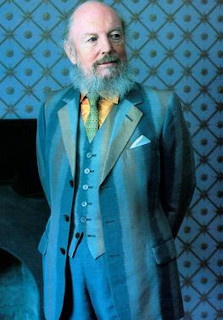
Birth of Garech Browne, Irish Arts & Music Patron

garech-domnagh-browne

Garech Domnagh Browne, art collector and notable patron of Irish arts and traditional Irish music, is born in Chapelizod, Dublin on June 25, 1939. He is often known by the Irish designation of his name, Garech de Brún, or alternatively Garech a Brún, especially in Ireland.

Browne is the eldest of the three sons of Dominick Browne, 4th Baron Oranmore and Browne and his second wife, Oonagh Guinness, daughter of Arthur Ernest Guinness and wealthy heiress to the Guinness fortune. His father has the rare distinction of sitting in the House of Lords for 72 years, until his death at the age of 100 in August 2002, without ever speaking in a debate.

As both his parents are married three times, Browne has two stepmothers and two stepfathers, as well as a number of older half-siblings. His only full brother, Tara Browne, is a young London socialite whose death at the age of 21 in a car crash in London’s West End helps inspire John Lennon when writing the song “A Day in the Life” with Paul McCartney. Browne is educated at Institut Le Rosey, Switzerland. Although a member of the extended Guinness family, he takes no active part in its brewing business.

When in Ireland, Browne lives at Luggala, set deep in the Wicklow Mountains in County Wicklow. The house, which he inherited from his mother, has been variously described as a castle or hunting lodge of large proportions. He once states he would rather have not been born, calling it “frightful to bring anyone into this world.”

Browne is a leading proponent for the revival and preservation of traditional Irish music through his record label Claddagh Records which he founds with others in 1959. His former home, Woodtown Manor near Dublin, is for many years a welcoming place for Irish poets, writers and musicians. The folk-pop group Clannad makes many recordings of their music there.

Browne is instrumental in the formation of the traditional Irish folk group The Chieftains. In 1962, after setting up Claddagh Records, he asks his friend, the famed uileann piper Paddy Moloney, to form a group for a one-off album. Moloney responds with the first line-up for the band, which goes on to achieve international commercial success.

Browne is interviewed at length for the Grace Notes traditional music programme on RTÉ lyric fm on 18 March 2010. He is a friend and patron of British artist Francis Bacon and in January 2017 is featured in the BBC documentary Francis Bacon: A Brush with Violence.

Garech Browne dies at the age of 78 in London on March 10, 2018. In his will and testament, he bequeaths to the city of Galway the granite remains of a medieval “bow gate.” The location of this gate, which had otherwise gone unmentioned by Browne, remains a mystery for over a year following his death. It is discovered on the grounds of the Luggala estate in 2019. According to a Galway historian, the gate may have formed part of the city’s defences in the 17th century, and was later removed from the city by Browne’s father, when it was probably taken to the Browne family home at Castle MacGarrett, just outside Claremorris in County Mayo. The gate is one of a number of items left to the Irish State by Browne.


Leave a comment

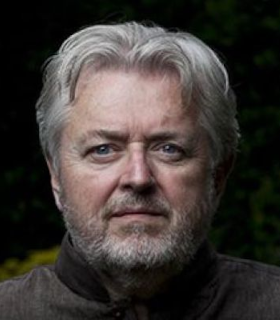
Birth of Dónal Lunny, Irish Folk Musician & Producer

donal-lunny

Dónal Lunny, Irish folk musician and producer, is born on March 10, 1947, in Tullamore, County Offaly. He plays left-handed guitar and bouzouki, as well as keyboards and bodhrán. As a founding member of popular bands Planxty, The Bothy Band, Moving Hearts, Coolfin, Mozaik, LAPD, and Usher’s Island, he has been at the forefront of the renaissance of Irish traditional music for over five decades.

Lunny attends secondary school at Newbridge College and, in 1963, joins the Patrician Brothers’ school for the Intermediate Certificate year. As a teenager, he joins an occasional trio called Rakes of Kildare, with his elder brother Frank and Christy Moore. They play mostly in pubs and are also booked for a couple of gigs, one at Hugh Neeson’s pub in Newbridge for Easter Monday in 1966.

In 1965, Lunny enrolls at Dublin‘s National College of Art & Design where he studies Basic Design and Graphic Design. He also develops an interest in metalwork leading him to become a skilled gold-and-silversmith, although he only practises the craft for a short time before devoting his energies fully to music. During his time in Dublin, he plays in a band called The Parnell Folk, with Mick Moloney, Sean Corcoran, Johnny Morrissey and Dan Maher.

When Moving Hearts breaks up in 1985, Lunny diversifies and becomes a producer. He is closely involved in the establishment of a new Irish record label, Mulligan Records (acquired in 2008 by Compass Records), and produces and plays on many of its early releases.

Lunny is the producer and music director of the soundtrack of Bringing It All Back Home, a BBC Television documentary series charting the influence of Irish music throughout the world. He produces albums for Paul Brady, Elvis Costello, Indigo Girls, Sinéad O’Connor, Clannad, Maurice Lennon, Baaba Maal, and Five Guys Named Moe. He appears on the compilation albums The Gathering (1981) and Common Ground (1996). In 1994, he produces Irish Australian singer/songwriter Mairéid Sullivan’s first recording, Dancer.

Lunny pushes new boundaries with his band Coolfin (1998) which includes uilleann piper John McSherry. He appears at the 2000 Cambridge Folk Festival, and the album that commemorates it. In 2001 he collaborates with Frank Harte on the album My Name is Napoleon Bonaparte. He produces the album Human Child (2007) by Faeroese Eivør Pálsdóttir, which is published in two versions, one English and one Faeroese.

As an arranger, Lunny works for The Waterboys, Fairground Attraction and Eddi Reader. Journey (2000) is a retrospective album. During 2003–2005, he is part of the reunited Planxty concert tour. He also produces Jimmy MacCarthy‘s album entitled Hey-Ho Believe, which is released on November 12, 2010.

Lunny is the brother of musician and producer Manus Lunny. He has a son, Shane, whose mother is singer Sinéad O’Connor.

(Pictured: Dónal Lunny at the Craiceann Bodhrán Festival 2016, Inis Oirr)


Leave a comment

Birth of Irish Folk Musician Finbar Furey

finbar-furey

Finbar Furey, multi-instrumental Irish folk musician, is born in Ballyfermot, Dublin on September 28, 1946. He is best known for his band of brothers, The Fureys.

Furey’s well-known musician father, Ted, starts him on the Uilleann pipes while he is very young. By his teens, he has won three All Ireland Medals, The Oireachtas, and many Feisanna. He is the only piper to win the All-Ireland, the Oireachtas medal and the four province titles in the same year. He is also an Irish Traveller.

Furey popularizes the pipes worldwide while on tour with his brother Eddie in the 1960s. In 1969, he and Eddie begin touring as backup musicians for the influential Irish folk group, The Clancy Brothers. He plays the pipes, as well as the banjo, tin whistle, and guitar with the group in live performances, on television, and on recordings. The Furey brothers leave the group the following year and begin performing as a duo again. They are awarded Single of the Year by John Peel in 1972.

When younger brothers Paul and George join the band several years later, The Fureys enjoy hits including When You Were Sweet Sixteen, Tara Hill, Green Fields of France, Red Rose Café and The Lonesome Boatman. In Britain, they become one of the first Irish folk groups to play on Top of the Pops.

In 1997, after nearly thirty years as The Fureys’ front man, Furey decides the time is right to follow his own path as a singer songwriter. He decides to step aside and pursue his solo career, to present his definitive one-man show and to explore new pastures as a singer, producer and writer.

In the early 2000s, Furey begins an acting career. His first appearance is in the Martin Scorsese film Gangs of New York. He also appears in Adam & Paul (2004), Strength and Honour (2007), short Paris Sexy (2010), and the RTÉ Television series Love/Hate.

In 2011 Furey releases the album Colours on Dolphin Music. The album features guest performances from Mary Black and Shayne Ward and is released in North America in 2012 on the Valley Entertainment record label.

In August 2013, Furey appears on the Irish television show The Hit. He records a single pitched by a songwriter, Gerry Fleming. The single, “The Last Great Love Song”, charts at number one in the Irish charts against Mundy‘s song “Jigsaw Man” written by Mark Walsh which charts at number five. The song is performed again with the RTÉ Concert Orchestra in the final and comes in first place in the public vote earning the title “The Ultimate Hit.”


Leave a comment

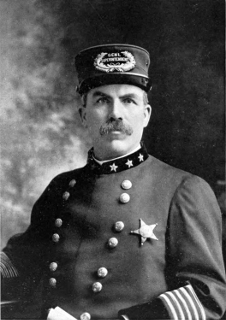
Birth of Francis O,Neill, Music Collector & Police Officer

francis-oneill

Francis O’Neill, Irish-born American police officer and collector of Irish traditional music, is born in Tralibane, near Bantry, County Cork on August 28, 1848. His biographer Nicholas Carolan refers to him as “the greatest individual influence on the evolution of Irish traditional dance music in the twentieth century.”

At an early age O’Neill hears the music of local musicians, among them Peter Hagarty, Cormac Murphy and Timothy Dowling. At the age of 16, he becomes a cabin boy on an English merchant vessel. On a voyage to New York, he meets Anna Rogers, a young emigrant whom he later marries in Bloomington, Illinois. The O’Neills move to Chicago, and in 1873 he becomes a policeman with the Chicago Police Department. He rises through the ranks quickly, eventually serving as the Chief of Police from 1901 to 1905. He has the rare distinction, in a time when political “pull” counts for more than competence, of being re-appointed twice to the position by two different mayors.

O’Neill is a flautist, fiddler and piper and is part of the vibrant Irish community in Chicago at the time. During his time as chief, he recruits many traditional Irish musicians into the police force, including Patrick O’Mahony, James O’Neill, Bernard Delaney, John McFadden and James Early. He also collects tunes from some of the major performers of the time including Patsy Touhey, who regularly sends him wax cylinders and visits him in Chicago. He also collects tunes from a wide variety of printed sources.

O’Neill retires from the police force in 1905. After that, he devotes much of his energy to publishing the music he has collected. He dies in Chicago, at the age of 87, on January 28, 1936.

In 2000, a life-size monument of Francis O’Neill playing a flute is unveiled next to the O’Neill family homestead in Tralibane, County Cork. The monument, and a commemorative wall are erected through the efforts of the Captain Francis O’Neill Memorial Company.

In 2008, Northwestern University Press issues Captain O’Neill’s Sketchy Recollections of an Eventful Life in Chicago, a non-musical memoir edited by Ellen Skerrett and Mary Lesch, O’Neill’s great-granddaughter, with a foreword by Nicholas Carolan of the Irish Traditional Music Archive. Carolan himself writes a musical biography of O’Neill, A Harvest Saved: Francis O’Neill and Irish Music in Chicago, which is published in Ireland by Ossian in 1997.

In August 2013, the inaugural Chief O’Neill Traditional Music Festival takes place in Bantry, County Cork, just a few miles from Tralibane. The 2013 event marks the centenary of the publication of O’Neill’s Irish Minstrels and Musicians. The event has taken place annually since.