seamus dubhghaill

Promoting Irish Culture and History from Little Rock, Arkansas, USA


Leave a comment

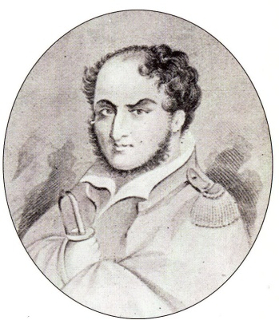
Death of Joseph Holt, United Irish General

joseph-holt

Joseph Holt, United Irish general and leader of a large guerrilla force which fights against British troops in County Wicklow from June–October 1798, dies at Kingstown, now Dún Laoghaire, near Dublin on May 16, 1826.

Holt is one of six sons of John Holt, a farmer in County Wicklow. He joins the Irish Volunteers in the 1780s and holds a number of minor public offices but becomes involved in law enforcement as a sub-constable, billet master for the militia and a bounty hunter. He is involved in the Battle of Vinegar Hill which is an engagement during the Irish Rebellion of 1798 on June 21, 1798, when over 15,000 British soldiers launch an attack on Vinegar Hill outside Enniscorthy, County Wexford.

Despite Holt’s apparent loyalism, he becomes a member of the Society of United Irishmen in 1797 and gradually begins to attract suspicion until finally in May 1798, his house is burned down by the militia of Fermanagh. He then takes to the Wicklow mountains, gradually assuming a position of prominence with the United Irish rebels. The defeat of the County Wexford rebels at Vinegar Hill on June 21 sees surviving rebel factions heading towards the Wicklow Mountains to link up with Holt’s forces.

Emerging to meet them, Holt is given much of the credit for the planning of the ambush and defeat of a pursuing force of 200 British cavalry in the Battle of Ballyellis on June 30, 1798. However, the subsequent Midlands campaign to revive the rebellion is a disaster, and he is lucky to escape with his life back to the safety of the Wicklow Mountains.

Holt largely holds out in expectation of the arrival of French aid but news of the defeat of the French in the Battle of Ballinamuck together with his ill-health brought about by the hardships of his fugitive life, age and family considerations prompt him to initiate contact with the Dublin Castle authorities with a view to a negotiated surrender. Dublin Castle is eager to end the rebellion in Wicklow and allows him exile after incarceration in the Bermingham Tower without trial in New South Wales.

Holt goes out on the Minerva and meets Captain William Cox who has been appointed paymaster of the New South Wales Corps. The ship arrives at Sydney on January 11, 1800, and shortly afterwards Holt agrees to manage Captain Cox’s farm. He always claims in Australia that he is a political exile and not a convict. In 1804 when the Castle Hill uprising occurs Holt, who is not involved, has been warned that evening that it is about to happen. During the night he sets up a defense of Captain Cox’s house. He is nonetheless afterwards hounded by Governor Philip Gidley King and many false witnesses are brought against him. Although there is no plausible evidence at all against him, he is exiled by King to Norfolk Island in April 1804, and there put to hard labour.

Holt is officially pardoned on January 1, 1811, and in December 1812, with his wife and younger son, takes passage to Europe on the Isabella. The ship is wrecked by a reef, so the passengers and crew are landed at Eagle Island, one of the Falkland Islands. He shows great resolution and ingenuity in making the best of the conditions on the island. He is rescued on April 4, 1813, but does not reach England until February 22, 1814, as he travels via the United States. He retires to Ireland where he lives for the rest of his life but regrets he had left Australia.

Joseph Holt dies at Kingstown, now Dún Laoghaire, near Dublin on May 16, 1826, and is buried in Carrickbrennan Churchyard at Monkstown.

Leave a comment

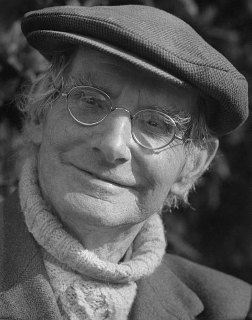
Birth of Frank Harte, Traditional Irish Singer

frank-harte

Frank Harte, traditional Irish singer, music collector, architect and lecturer, is born in Chapelizod, County Dublin on May 14, 1933. He emigrates to the United States for a short period, but later returns to Ireland where he works as an architect, lecturer at Dublin Institute of Technology in Rathmines, Dublin and in later life fully engages in songs in many ways.

Harte’s introduction to Irish traditional singing comes from a chance listening to an itinerant who is selling ballad sheets at a fair in Boyle, County Roscommon. He begins collecting early in life and by the end of his life has assembled a database of over 15,500 recordings.

Harte becomes a great exponent of the Dublin street ballad, which he prefers to sing unaccompanied. He is widely known for his distinctive singing, his Dublin accent having a rich nasal quality complementing his often high register. His voice mellows considerably by the time of his later recordings, allowing for an expressive interpretation of many love songs such as “My Bonny Light Horseman” on the album My Name is Napoleon Bonaparte. This is contrasted sublimely by his cogent interpretation of the popular “Molly Malone.” He also becomes more accustomed to singing with accompaniment which is not strictly part of the Irish singing tradition and does not come naturally to him.

Though Irish Republican in his politics, Harte believes that the Irish song tradition need not be a sectarian or nationalist preserve. He believes that songs are a key to understanding the past often saying, “those in power write the history, while those who suffer write the songs, and, given our history, we have an awful lot of songs.” Though considered a stalwart of traditional Irish singing and well aware of it, he does not consider himself to be a sean-nós singer.

Harte wins the All-Ireland Fleadh Cheoil singing competition on a number of occasions and in 2003 receives the Traditional Singer of the Year award from the Irish-language television channel TG4.

Harte records several albums and makes numerous television and radio appearances, most notably the Singing Voices series he writes and presents for RTÉ Radio, which is produced by Peter Browne in 1987. He is a regular at the Sunday morning sessions at The Brazen Head pub, along with Liam Weldon who runs the session. He is also an enthusiastic supporter of An Góilín Traditional Singer’s Club.

Harte appears at many American festivals including The Blarney Star in New York City, Gaelic Roots in Boston College, The Catskills Irish Arts Week, The Greater Washington Ceili Club Festival in Maryland and the Milwaukee Irish Fest and for seventeen years he is a veritable staple at the Irish Week every July in the Augusta Heritage Festival in Elkins, West Virginia where he often performs with Mick Moloney.

Frank Harte dies of a heart attack, aged 72, on June 27, 2005. His influence is still evident in singers such as Karan Casey and he continues to be remembered fondly in sessions and folk clubs on both sides of the Irish Sea.


Leave a comment

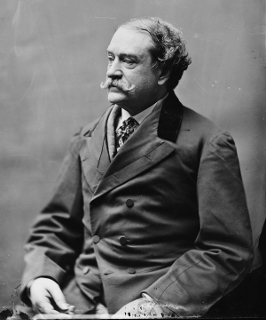
Birth of John Brougham, Actor & Dramatist

john-brougham

John Brougham, Irish American actor and dramatist, is born in Dublin on May 9, 1814.

Brougham’s father is an amateur painter and dies young. His mother is the daughter of a Huguenot, whom political adversity has forced into exile. He is the eldest of three children. Both of his siblings die in youth, and the father being dead, and the widowed mother left penniless, he is reared in the family and home of an uncle.

Brougham is prepared for college at an academy at Trim, County Meath, twenty miles from Dublin, and subsequently is sent to the University of Dublin. There he acquires classical learning and forms interesting and useful associations and acquaintances. He also becomes interested in private theatricals. He falls in with a crowd that puts on their own shows, cast by drawing parts out of a hat. Though he most always trades off larger roles so he can pay attention to his studies, he takes quite an interest in acting. He is a frequent attendant, moreover, at the Theatre Royal in Hawkins Street.

Brougham is educated with the intention of his becoming a surgeon and walks the Peth Street Hospital for eight months. However, misfortune comes upon his uncle, so he is obliged to provide for himself. Before leaving the university he, by chance, becomes acquainted with the actress Lucia Elizabeth Vestris.

Brougham goes to London in 1830 and, after a brief experience of poverty, suddenly determines to become an actor. He is destitute of everything except fine apparel, and he has actually taken the extreme step of offering himself as a cadet in the service of the East India Company. But, being dissuaded by the enrolling officer, who lends him a guinea and advises him to seek other employment, and happening to meet with a festive acquaintance, he seeks recreation at the Tottenham Theatre where Madame Vestris is acting.

Brougham’s acquaintance with Madame Vestris leads to him being engaged at the theatre, and he thus makes his first appearance on the London stage in July in Tom and Jerry, in which he plays six characters. In 1831 he is a member of Madame Vestris’s company and writes his first play, a burlesque. He remains with Madame Vestris as long as she and Charles Mathews retain Covent Garden Theatre, and he collaborates with Dion Boucicault in writing London Assurance, the role of Dazzle being one of those with which he becomes associated. His success at small or “low” comic roles such as Dazzle earn him the nickname “Little Johnny Brougham,” a moniker which he embraces, and which boosts his popularity with working-class audiences.

In 1840 Brougham manages the Lyceum Theatre, for which he writes several light burlesques, but in 1842 he moves to the United States, where he becomes a member of William Evans Burton‘s company, for which he writes several comedies, including Met-a-mora; or, the Last of the Pollywogs, a parody of John A. Stone and Edwin Forrest’s Metamora; or The Last of the Wamponoags, and Irish Yankee; or, The Birthday of Freedom.

Later Brougham is the manager of Niblo’s Garden, and in 1850 opens Brougham’s Lyceum, which, like his next speculation, the lease of the Bowery Theatre, is not a financial success, despite the popularity of such works as Po-ca-hon-tas; or, The Gentle Savage. He is later connected with James William Wallack‘s and Augustin Daly‘s theatres and writes plays for both.

In 1860 Brougham returns to London, where he adapts or writes several plays, including The Duke’s Motto for Charles Fechter. In November 1864 he appears at the Theatre Royal in his native Dublin in the first performance of Dion Boucicault’s Arrah-na-Pogue with Boucicault, Samuel Johnson and Samuel Anderson Emery in the cast.

After the American Civil War Brougham returns to New York City. Brougham’s Theatre is opened in 1869 with his comedies Better Late than Never and Much Ado About a Merchant of Venice, but this managerial experience is also a failure due to disagreements with his business partner, James Fisk. He then takes to playing the stock market. His last appearance onstage is in 1879 as “O’Reilly, the detective” in Boucicault’s Rescued.

John Brougham dies in Manhattan on June 7, 1880.


Leave a comment

Death of Justin McCarthy, Novelist & Politician

justin-mccarthy

Justin McCarthy, Irish nationalist and Liberal historian, novelist and politician, dies on April 24, 1912. He is a Member of Parliament (MP) from 1879 to 1900, taking his seat in the House of Commons of the United Kingdom of Great Britain and Ireland.

McCarthy is born in Cork, County Cork on November 22, 1830, and is educated there. He begins his career as a journalist at the age of 18 in Cork. From 1853 to 1859 he is in Liverpool, on the staff of the Northern Daily Times. In March 1855, he marries Charlotte Ailman. In 1860 he moves to London, as parliamentary reporter to the Morning Star, of which he becomes editor in 1864. He gives up his post in 1868 and, after a lecturing tour in the United States, joins the staff of The Daily News as leader-writer in 1870. In this capacity he becomes one of the most useful and respected upholders of the liberal politics of the time. He lectures again in America in 1870–71 and in 1886–87.

McCarthy is first elected to Parliament at a by-election on April 4, 1879, when he is returned unopposed as a Home Rule League MP for County Longford. He is re-elected unopposed as a Parnellite Home Ruler in 1880, and when the two-seat Longford constituency is split into two divisions under the Redistribution of Seats Act 1885, he is elected as an Irish Parliamentary Party member for the new single-seat Northern division of Longford. His sole opponent, a Conservative, wins only 6% of the votes.

At the 1886 general election, he is returned unopposed in North Longford, but also stands in Londonderry City, where he is declared the loser to the Irish Unionist Alliance candidate by the narrow margin of 1778 votes to 1781. However, the result is later overturned on petition and McCarthy opts to sit for Derry City. During the divorce controversy surrounding Charles Stewart Parnell in November 1890, the British Prime Minister William Ewart Gladstone expresses a warning, given to McCarthy as intermediary, that if Parnell retains leadership of the Irish Parliamentary Party it will mean the loss of the next election, the end of their alliance and Home Rule. When the annual party leadership election meeting is called later that month, the threat is somehow not conveyed to the members, who re-elect Parnell leader of the Party.

After a further historical meeting of the Irish Party MPs in early December, Parnell refuses to retire and the Party divides. McCarthy becomes chairman of the Anti-Parnellite group, the Irish National Federation, for a year in 1891–1892. His nationalism is of a temperate and orderly kind, and though his personal distinction singles him out for the chairmanship during the party dissensions of this period, he is in no active sense the political leader.

At the 1892 general election, McCarthy again stands both in North Longford and in Derry City. In each seat there is a two-way contest between the Anti-Parnellite McCarthy and a Unionist candidate, but the narrow Unionist victory in Derry is not overturned, and McCarthy sits for North Longford, where he wins over 93% of the votes. He is returned unopposed for North Longford in 1895 United Kingdom general election in Ireland and stands down from Parliament at the 1900 United Kingdom general election in Ireland.

It is claimed that McCarthy’s true vocation is literature. His earliest publications are novels, some of which, such as A Fair Saxon (1873), Dear Lady Disdain (1875), Miss Misanthrope (1878), and Donna Quixote (1879), attain considerable popularity. His most important work is his History of Our Own Times, which treats of the period between Queen Victoria‘s accession and her Diamond Jubilee. He begins a History of the Four Georges (1884–1901) and the latter half is written by his son, Justin Huntly McCarthy.

Justin McCarthy dies at the age of 81 in Folkestone, Kent, England on April 24, 1912.


Leave a comment

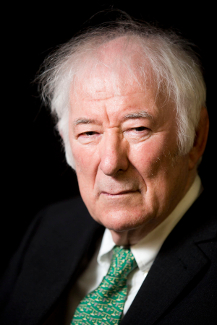
Birth of Poet Seamus Heaney

seamus-heaney

Seamus Justin Heaney, Irish poet, playwright and translator, is born in the townland of Tamniaran between Castledawson and Toomebridge, Northern Ireland on April 13, 1939. He is the recipient of the 1995 Nobel Prize in Literature.

Heaney’s family moves to nearby Bellaghy when he is a boy. He attends Queen’s University Belfast and begins to publish poetry. In the early 1960s he becomes a lecturer at St. Joseph’s College in Belfast. He lives in Sandymount, Dublin from 1976 until his death. He also lives part-time in the United States from 1981 to 2006. He is recognised as one of the principal contributors to poetry during his lifetime.

Heaney is a professor at Harvard University from 1981 to 1997, and its Poet in Residence from 1988 to 2006. From 1989 to 1994, he is also the Professor of Poetry at the University of Oxford. In 1996, he is made a Commandeur de l’Ordre des Arts et des Lettres. Other awards that he receives include the Geoffrey Faber Memorial Prize (1968), the E. M. Forster Award (1975), the PEN Translation Prize (1985), the Golden Wreath of Poetry (2001), the T. S. Eliot Prize (2006) and two Whitbread Book Awards (1996 and 1999). In 2011, he is awarded the Griffin Poetry Prize and in 2012 he receives a Lifetime Recognition Award from the Griffin Trust. His literary papers are held by the National Library of Ireland.

American poet Robert Lowell describes Heaney as “the most important Irish poet since Yeats,” and many others, including the academic John Sutherland, have said that he is “the greatest poet of our age.” Robert Pinsky states that “with his wonderful gift of eye and ear Heaney has the gift of the storyteller.” Upon his death in 2013, The Independent describes him as “probably the best-known poet in the world.” One of his best-known works is Death of a Naturalist, published in 1966.

Seamus Heaney dies in Blackrock, Dublin on August 30, 2013, while hospitalized following a fall a few days earlier. He is buried at the Cemetery of St. Mary’s Church, Bellaghy, Northern Ireland. The headstone bears the epitaph “Walk on air against your better judgement,” from one of his poems, The Gravel Walks.

President Michael D. Higgins, himself a poet, praises Heaney’s “contribution to the republics of letters, conscience and humanity.” Taoiseach Enda Kenny says that Heaney’s death has brought “great sorrow to Ireland, to language and to literature.”


Leave a comment

RMS Titanic Departs Southampton, England

titanic-departing-southampton-dock

The RMS Titanic leaves port in Southampton, England for her first and only voyage on April 10, 1912. Built by the Belfast shipbuilders Harland & Wolff, the RMS Titanic is the second of the three Olympic-class ocean liners — the first being the RMS Olympic and the third being the HMHS Britannic.

Following the embarkation of the crew the passengers begin arriving at 9:30 AM, when the London and South Western Railway‘s boat train from London Waterloo station reaches Southampton Terminus railway station on the quayside, alongside RMS Titanic‘s berth. In all, 923 passengers board RMS Titanic at Southampton, 179 First Class, 247 Second Class and 494 Third Class. The large number of Third Class passengers means they are the first to board, with First and Second Class passengers following up to an hour before departure. Stewards show them to their cabins, and First Class passengers are personally greeted by Captain Edward Smith upon boarding. Third Class passengers are inspected for ailments and physical impairments that might lead to their being refused entry to the United States, a prospect the White Star Line wishes to avoid, as it would have to carry anyone who fails the examination back across the Atlantic. A total of 922 passengers are recorded as embarking on RMS Titanic at Southampton. Additional passengers are to be picked up at Cherbourg, France and Queenstown.

The maiden voyage begins on time, at noon. An accident is narrowly averted only a few minutes later as RMS Titanic passes the moored liners SS City of New York of the American Line and what would have been her running mate on the service from Southampton, White Star’s RMS Oceanic. Her huge displacement causes both of the smaller ships to be lifted by a bulge of water and then dropped into a trough. SS City of New York‘s mooring cables cannot take the sudden strain and snap, swinging her around stern-first towards RMS Titanic. A nearby tugboat, Vulcan, comes to the rescue by taking SS City of New York under tow, and Captain Smith orders RMS Titanic‘s engines to be put “full astern.” The two ships avoid a collision by a matter of about 4 feet. The incident delays RMS Titanic‘s departure for about an hour, while the drifting SS City of New York is brought under control.

After making it safely through the complex tides and channels of Southampton Water and the Solent, RMS Titanic heads out into the English Channel. She heads for the French port of Cherbourg, a journey of 77 nautical miles. The weather is windy, very fine but cold and overcast. Four hours after RMS Titanic leaves Southampton, she arrives at Cherbourg and is met by the tenders SS Traffic and the SS Nomadic which have to be used to transfer passengers from shore to ship because Cherbourg lacks docking facilities for a ship the size of RMS Titanic. An additional 274 passengers are taken aboard. Twenty-four passengers who have booked passage only cross-channel from Southampton leave aboard the tenders to be conveyed to shore. The process is completed in about 90 minutes. At 8:00 PM RMS Titanic weighs anchor and departs for Queenstown on the south coast of Ireland with arrival scheduled late the following morning.

(Pictured: RMS Titanic departing the Southampton docks on April 10, 1912)


Leave a comment

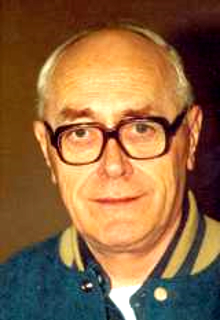
Birth of James White, Science Fiction Writer

james-whiteJames White, author of science fiction novellas, short stories and novels, is born in Belfast, Northern Ireland on April 7, 1928.

White is educated in Belfast at St. John’s Primary School and St. Joseph’s Technical Secondary School. As a teenager he lives with foster parents. He wants to study medicine but financial circumstances prevented this. Between 1943 and 1965 he works for several Belfast tailoring firms and then as assistant manager of a Co-op department store. He marries Margaret “Peggy” Sarah Martin, another science fiction fan, in 1955 and the couple has three children. He later works for the aeroplane builders Short Brothers as a technical clerk, publicity assistant and publicity officer.

White becomes a science fiction fan in 1941, attracted particularly by the works of E. E. “Doc” Smith, which features good aliens as well as evil ones, and of Robert A. Heinlein, many of whose stories concern ordinary people. In 1947 he meets another Irish fan, Walt Willis, and the two help to produce the fan magazines Slant and Hyphen, which feature stories and articles by noted authors including John Brunner, A. Bertram Chandler and Bob Shaw. In 2004 both White and Willis are nominated for the retrospective Hugo Award for Best Fan Writer of 1953, although neither wins. White says that he started writing stories because the Slant team felt that Astounding Stories of Super-Science was too dominated by prophesies of nuclear doom, and his friends dared him to write the kind of story that they all liked to read. Getting published is fairly easy during the 1950s, as the World War II restrictions on paper are ended, and there are at least 12 science magazines in Britain and about 40 in the United States. His first published short story, Assisted Passage, a parody of 1950s Anglo-Australian emigration policies, appears in the January 1953 edition of the magazine New Worlds. Further stories appear in New Worlds during the next few years, but White’s attempt to access the more lucrative American market by submitting stories to Astounding Stories of Super-Science stall after the publication of The Scavengers. As a result, White’s work is little-known outside the UK until the 1960s.

In 1957, Ace Books publishes White’s first novel, The Secret Visitors, which includes locations in Northern Ireland. Ace Books’ science fiction editor, Donald A. Wollheim, thinks the original ending is too tame and suggests that White should insert an all-out space battle just after the climactic courtroom scene. In November of the same year New Worlds publishes White’s novella Sector General, and editor John Carnell requests more stories set in the same universe, founding the series for which White is known best. White gains a steady following for his scientifically accurate stories, which are examples of hard science fiction in New Worlds, despite the magazine’s promotion of literary New Wave science fiction during the 1960s.

White keeps his job with Short Brothers and writes in the evenings, as his stories do not make enough money for him to become a full-time author. In 1980 he teaches a literature course at a Belfast branch of the Workers’ Educational Association. When diabetes has severely impaired his eyesight, he takes early retirement in 1984 and relocates to the north County Antrim resort town of Portstewart, where he continues to write. For many years he is a Council Member of the British Science Fiction Association and, with Harry Harrison and Anne McCaffrey, a Patron of the Irish Science Fiction Association. He is also a strong pacifist.

James White dies of a stroke in Portstewart, Belfast, Northern Ireland on August 23, 1999, while his novels Double Contact and The First Protector are being prepared for publication.


Leave a comment

Death of Songwriter & Lyricist Jimmy Kennedy

jimmy-kennedy

James Kennedy, a Northern Irish songwriter and lyricist, dies in Cheltenham, Gloucestershire, England on April 6, 1984. In a career spanning more than fifty years, he writes some 2,000 songs, of which over 200 become worldwide hits and about 50 are all-time popular music classics. Until the duo of John Lennon and Paul McCartney, Kennedy has more hits in the United States than any other Irish or British songwriter.

Kennedy is born near Omagh, County Tyrone, Northern Ireland. His father, Joseph Hamilton Kennedy, is a policeman in the Royal Irish Constabulary, which exists before the partition of Ireland. While growing up in Coagh, Kennedy writes several songs and poems. He is inspired by local surroundings such as the view of the Ballinderry river, the local Springhill house and the plentiful chestnut trees on his family’s property, as evidenced in his poem Chestnut Trees. Kennedy later moves to Portstewart, a seaside resort.

Kennedy graduates from Trinity College, Dublin, before teaching in England. He is accepted into the Colonial Service, as a civil servant, in 1927.

While awaiting a Colonial Service posting to the colony of Nigeria, Kennedy embarks on a career in songwriting. His first success comes in 1930 with The Barmaid’s Song, sung by Gracie Fields. Fellow lyricist Harry Castling introduces him to Bert Feldman, a music publisher based in London‘s “Tin Pan Alley,” for whom Kennedy starts to work. In the early 1930s he writes a number of successful songs, including Oh, Donna Clara (1930), My Song Goes Round the World (1931), and The Teddy Bears’ Picnic (1933), in which he provides new lyrics to John Walter Bratton‘s tune from 1907.

In 1934, Feldman turns down Kennedy’s song Isle of Capri, but it becomes a major hit for a new publisher, Peter Maurice. He writes several more successful songs for Maurice, including Red Sails in the Sunset (1935), inspired by beautiful summer evenings in Portstewart, Northern Ireland, Harbor Lights (1937) and South of the Border (1939), inspired by a holiday picture postcard he receives from Tijuana, Mexico, and written with composer Michael Carr. Kennedy and Carr also collaborate on several West End theatre shows in the 1930s, including London Rhapsody (1937). My Prayer, with original music by Georges Boulanger, has English lyrics penned by Kennedy in 1939. It is originally written by Boulanger with the title Avant de Mourir in 1926.

During the early stages of World War II, while serving in the British Army‘s Royal Artillery, where he rises to the rank of Captain, Kennedy writes the wartime hit, We’re Going to Hang out the Washing on the Siegfried Line. His hits also include Cokey Cokey (1945), and the English lyrics to Lili Marlene. After the end of the war, his songs include Apple Blossom Wedding (1947), Istanbul (Not Constantinople) (1953), and Love Is Like a Violin (1960). In the 1960s he writes the song The Banks of the Erne, for recording by his friend from the war years, Theo Hyde, also known as Ray Warren.

Kennedy is a patron of the Castlebar International Song Contest from 1973 until his death in 1984 and his association with the event adds great prestige to the contest. He wins two Ivor Novello Awards for his contribution to music and receives an honorary degree from the New University of Ulster. He is awarded the Order of the British Empire (OBE) in 1983.

Jimmy Kennedy dies in Cheltenham on April 6, 1984, at the age of 81, and was interred in Taunton, Somerset. In 1997 he is posthumously inducted into the Songwriter’s Hall of Fame.


Leave a comment

Death of Showband Icon Butch Moore

butch-moore

Butch Moore, born James Augustine Moore, Irish singer and showband icon during the 1960s, dies in Massachusetts on April 3, 2001. He is born in Dublin on January 10, 1938.

Moore plays with a number of bands before securing his big break with the Capitol Showband in 1958. Its lineup includes band leader, Des Kelly, and Paddy Cole, who is still involved in the entertainment business, and an early songwriter for the band is Phil Coulter. The Capitol achieves a considerable degree of success in the early 1960s attracting huge crowds in the State’s many ballrooms. It tours the United States in 1961, and two years later becomes the first showband to appear on the new RTÉ Television service. The Capitol plays in the London Palladium in 1964 on a night when the lineup includes Roy Orbison.

Moore marries Norah Sheridan in 1962. They have three children – Karen, Grainne and Gary.

Moore achieves celebrity status as Ireland’s first contestant in the Eurovision Song Contest in 1965. At the height of his success, he wins the National Song Contest to represent Ireland in the Eurovision Song Contest 1965, in Naples, singing Walking the Streets in the Rain. The song reaches number one on the Irish Singles Chart but fails to chart in the United Kingdom.

As the lead singer with the Capitol Showband, he rivals the Royal Showband’s Brendan Bowyer as Ireland’s most popular showband vocalist. His marriage to Norah breaks down in 1969 and his career begins to decline. He emigrates to the United States in 1970, where he spends the last 31 years of his life.

Moore marries Irish ballad singer Maeve Mulvany in 1972 in the United States. They form a very successful group known as “Butch N Maeve” with a mixture of ballads and pop. They also own a pub in Massachusetts named after one of their songs, The Parting Glass. They have three children, Rory, Tara and Thomas.

Although suffering from cancer of the esophagus, Butch Moore dies of a heart attack on April 3, 2001. His body is returned to Dublin and a funeral Mass is celebrated at St. Canice’s Church in Finglas. After his death, Maeve makes plans to move back to Ireland where she has bought a house in Cormeen, County Cavan, but she dies on February 14, 2004.


Leave a comment

Birth of Playwright Seán O’Casey

sean-ocasey

Seán O’Casey, Irish playwright renowned for realistic dramas of the Dublin slums in war and revolution, in which tragedy and comedy are juxtaposed in a way new to the theatre of his time, is born at 85 Upper Dorset Street in Dublin on March 30, 1880.

Born as John Casey into a lower middle-class Irish Protestant family, his father dies when he is six, and thereafter the family becomes progressively poorer. With only three years of formal schooling, he educates himself by reading. He starts work at 14, mostly at manual labour, including several years with the Irish railways.

O’Casey becomes caught up in the cause of Irish nationalism, and he changes his name to its Irish form and learns the Irish language. His attitudes are greatly influenced by the poverty and squalor he witnesses in Dublin’s slums and by the teachings of the Irish labour leader Jim Larkin. He becomes active in the labour movement and writes for The Irish Worker. He also joins the Irish Citizen Army, a paramilitary arm of the Irish labour unions, and draws up its constitution in 1914. At this time, he becomes disillusioned with the Irish nationalist movement because its leaders put nationalist ideals before socialist ones. He does not take part in the 1916 Easter Rising against the British authorities.

Disgusted with the existing political parties, he turns his energies to drama. His tragicomedies reflect in part his mixed feelings about his fellow slum dwellers, seeing them as incapable of giving a socialist direction to the Irish cause but at the same time admirable for their unconquerable spirit.

After several of his plays have been rejected, the Abbey Theatre in Dublin produces The Shadow of a Gunman (1923), set during the guerrilla warfare between the Irish Republican Army and British forces. In 1924 the Abbey stages Juno and the Paycock, his most popular play, set during the period of civil war over the terms of Irish independence. The Plough and the Stars (1926), with the 1916 Easter Rising as its background, causes riots at the Abbey by patriots who think the play denigrates Irish heroes. When first produced in the 1920s, these plays have an explosive effect on the audiences at the Abbey and help to enlarge the theatre’s reputation.

O’Casey goes to England in 1926, meets the Irish actress Eileen Carey Reynolds, marries her, and henceforth makes England his home. His decision to live outside Ireland is motivated in part by the Abbey’s rejection of The Silver Tassie, a partly Expressionist antiwar drama produced in England in 1929. Another Expressionist play, Within the Gates (1934), follows, in which the modern world is symbolized by the happenings in a public park. The Star Turns Red (1940) is an antifascist play, and the semiautobiographical Red Roses for Me (1946) is set in Dublin at the time of the Irish railways strike of 1911.

O’Casey’s later plays, given to fantasy and ritual and directed against the life-denying puritanism he believes has beset Ireland, include Cock-a-Doodle Dandy (1949), The Bishop’s Bonfire (1955), and The Drums of Father Ned (1958). His last full-length play is a satire on Dublin intellectuals, Behind the Green Curtains, published in 1961.

O’Casey’s three indisputably great plays are The Shadow of a Gunman, Juno and the Paycock, and The Plough and the Stars. All are tragicomedies set in the slums of Dublin during times of war and revolution. Violent death and the everyday realities of tenement life throw into relief the blustering rhetoric and patriotic swagger of men caught up in the struggle for Irish independence. The resulting ironic juxtapositions of the comic and tragic reveal the waste of war and the corrosive effects of poverty. His gifts are for vivid characterization and working-class language and, though he portrays war and poverty, he writes some of the funniest scenes in modern drama. His later plays are not considered as powerful or moving as his earlier realistic plays. In his later plays he tends to abandon vigorous characterization in favour of expressionism and symbolism, and sometimes the drama is marred by didacticism.

Six volumes of O’Casey’s autobiography appeared from 1939 to 1956. They are later collected as Mirror in My House (1956) in the United States and as Autobiographies (1963) in Great Britain. O’Casey’s letters from 1910 to 1941 are edited by David Krause in two volumes (1975, 1980).

Sean O’Casey dies of a heart attack at the age of 84 on September 18, 1964, in Torquay, Devon. He is cremated at the Golders Green Crematorium.