seamus dubhghaill

Promoting Irish Culture and History from Little Rock, Arkansas, USA


Leave a comment

Death of Bishop James Ussher

james-ussher

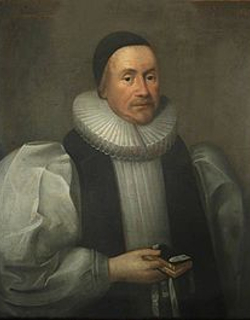
James Ussher, Archbishop of Armagh and Primate of All Ireland, dies in Reigate, Surrey, England on March 21, 1656. He is best known for his massive compendium of ancient history, The Annals of the World, in which he attempts to calculate the number of years that had elapsed since creation.

Ussher is born in Dublin on January 4, 1581. Early in life he is determined to pursue a career with the Church of England, a resolve quite similar to that of the Biblical Judge, Samuel.

A gifted polyglot, Ussher enters Dublin Free School and then the newly founded Trinity College, Dublin on January 9, 1594, at the age of thirteen (not an unusual age at the time). He receives his Bachelor of Arts degree by 1598 and is a fellow and MA by 1600. In May 1602, he is ordained in the Trinity College Chapel as a deacon (and possibly priest on the same day) in the Protestant Church of Ireland by his uncle Henry Ussher, the Archbishop of Armagh and Primate of All Ireland.

At the age of 26, Ussher becomes Professor and Chairman of the Department of Divinity at the University of Dublin, and he holds his professorship from 1609 to 1621. In 1625, he becomes Archbishop of Armagh, an office he apparently holds until his death. In 1628, King James I makes him a Privy Councillor.

Ussher is considered well-read and well-versed in history, a subject that soon becomes his primary focus. He writes several histories of the doings of the Irish and English churches dating back to Roman times. He also makes himself an expert in Semitic languages, an expertise that informs his argument in favor of the Masoretic Text of the Bible in preference to the Septuagint.

Ussher’s Confessions appear in 1643, followed in 1646 by his fifth work, Here I Stand. His most famous work, the dating of the creation as calculated from the Biblical record, appears in writing in the 1650s.

In 1656, Ussher goes to stay in the Countess of Peterborough’s house in Reigate, Surrey. On March 19, he feels a sharp pain in his side after supper and takes to his bed. His symptoms seem to have been those of a severe internal haemorrhage. Two days later, on March 21, 1656, he dies at the age of 75. His last words are reported as: “O Lord, forgive me, especially my sins of omission.” His body is embalmed and is to have been buried in Reigate, but at Oliver Cromwell‘s insistence he was given a state funeral on April 17 and is buried in the chapel of St. Erasmus in Westminster Abbey.

Ussher’s extensive library of manuscripts, many of them Middle Eastern originals, become part of the collection at the University of Dublin.
Leave a comment

Irish Protests of the War in Iraq

iraq-war-protest

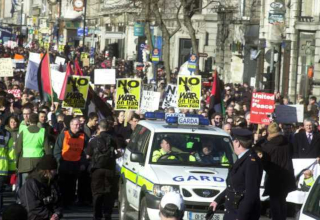
On the evening of March 20, 2003, up to 2,000 people take part in a protest outside the United States Embassy at Ballsbridge in Dublin to voice their opposition to the war in Iraq. This is one of numerous protests held in response to the Irish Anti-War Movement‘s call on Irish citizens to mount mass protests against the U.S.-led war in Iraq. The group says thousands of workers, students and school pupils had taken part in stoppages and walk-outs throughout the day.

Richard Boyd Barrett, the chairman of the IAWM, says, “The complicity of the Irish government in this murderous war through providing facilities for the U.S. military at Shannon Airport is an absolute disgrace. “This war has little support among ordinary people and has provoked a wave of anger and revulsion. We call on the people of Ireland to come out in their thousands at 6:00 PM tonight to their town centre demonstrations to show this carnage is not being mounted in our names.”

Earlier in the day, several hundred protesters gather outside Dáil Éireann to protest the Irish Government‘s decision to continue allowing U.S. military aircraft use Shannon Airport. The Dáil is holding a six-hour debate on a Government motion which, among other topics, contains a clause permitting U.S. forces continued use of Irish airspace and facilities.

A 10-minute work stoppage at noon is observed by thousands of people, the IAWM claims. They say hundreds of students in University College Dublin, Dublin City University, University of Limerick and the Waterford Institute of Technology walked out, as did secondary school students in several schools in Dublin. Up to 1,000 students from second level colleges in Derry take part in an hour-long city centre protest. Around 50 health workers at Connolly Hospital Blanchardstown, staff at the National Museum of Ireland in Kildare Street and Collins Barracks and workers at the Motor Taxation office in Cork also stop work.

The NGO Peace Alliance says it is “extremely disappointed” at the Government’s refusal to condemn the attack on Iraq. “We call upon thousands of Irish people to reject this shameful position by thronging the streets of Dublin and other cities and towns next Saturday” said the alliance’s co-ordinator, Brendan Butler.

SIPTU‘s National Executive Council also interrupts their monthly meeting. “This war is not only unnecessary but illegitimate in the context of international law”, says Joe O’Flynn, SIPTU General Secretary.

The Irish Congress of Trade Unions organises peace vigils on March 21 at the Spire of Dublin and other locations in various town and cities. Weekend anti-war protests take place in Dublin, Cork, Derry, Belfast, Galway, Sligo and Waterford.

(From: “Thousands protest against war at US Embassy” by Kilian Doyle, The Irish Times, March 20, 2003)


Leave a comment

The Adventurers’ Act Receives Royal Assent

coat-of-arms-of-the-united-kingdom

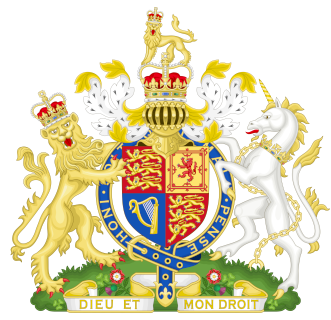
The Adventurers’ Act 1640, an Act of the Parliament of England which specifies its aim as “the speedy and effectual reducing of the rebels in His Majesty’s Kingdom of Ireland,” receives Royal assent on March 19, 1642.

The Act is passed by the Long Parliament as a way of raising funds to suppress the Irish Rebellion of 1641, which had broken out five months earlier. It invites members of the public to invest £200 for which they will receive 1,000 acres of lands that are to be confiscated from rebels in Ireland. Two and a half million acres of Irish land are set aside by the English government for this purpose. The entire island of Ireland is about 20.9 million acres.

The enactment is done at the request of King Charles in the House of Lords, joined by the House of Commons, and is unanimously accepted without any debate. The Act had been placed before the Houses for inspection but is not formally read into the record. The title of the Act – “An Act for the speedy and effectual reducing of the Rebels, in His Majesty’s Kingdom of Ireland, to their due Obedience to His Majesty, and the Crown of England” – is read aloud to Parliament, followed by the statement: “Le Roy le veult.”

The “Adventurers” are so called because they are risking their money at a time when the Crown has just had to pay for the Bishops’ Wars in 1639–40. “Reducing” the rebels means leading them back to the legal concept of the “King’s Peace.” King Charles cannot subsequently enforce the Act, but it is realised by his political opponents following the Cromwellian conquest of Ireland in 1649–1653 and forms the main legal basis for the contentious Act for the Settlement of Ireland 1652.

Ironically, in May 1642 the Confederate Irish rebels draft the Confederate Oath of Association that recognises Charles as their monarch.

The Adventurers’ Act is extended and amended by three other acts – Lands of Irish Rebels; Adventurers’ Subscriptions Act 1640 (c. 34), Lands of Irish Rebels; Adventurers’ Subscriptions Act 1640 (c. 35), and Irish Rebels Act 1640 (c. 37). All four receive Royal Assent in the summer of 1642, just before the start of the English Civil War, but are usually referred to as 1640 acts, which is the year the Long Parliament started to sit and the 16th year of Charles I’s reign.

In July 1643, Parliament passes the Doubling Ordinance which doubles the allocation of land to anyone who increases their original investment by 25%. The purpose of the Act is twofold, firstly to raise money for Parliament to help suppress the rebellion in Ireland, and secondly to deprive the King of the lands seized from rebels that would be his by prerogative.

To enforce the Acts the Cromwellian conquest of Ireland is launched in 1649. In 1653, Ireland is declared subdued, and the lands are allocated to the subscribers in what becomes known as the Cromwellian Settlement.

The Adventurers Act and the other three statutes are repealed by the Statute Law Revision Act 1950.


Leave a comment

Funeral of Coast Guard Captain Dara Fitzpatrick

dana-fitzpatrick-funeral

On Saturday, March 18, 2017, President Michael D. Higgins is among hundreds of mourners at St. Patrick’s Church in Glencullen for the funeral of Coast Guard Captain Dara Fitzpatrick, who died when her Sikorsky S-92 helicopter (call sign Rescue 116) crashed off the County Mayo coast on March 14.

The funeral cortege arrives at the church in Glencullen at 11:00 AM and is met by an honour guard from the Coast Guard and other rescue services. Captain Fitpatrick’s parents, four siblings, her young son Fionn, and other family members accompany the coffin into the church.

In addition to President Higgins, Taoiseach Enda Kenny and Minister for Transport, Tourism and Sport Shane Ross are in attendance, as is Fianna Fáil leader Micheál Martin. Also present are members of the Royal National Lifeboat Institution (RNLI), Civil Defence Ireland, mountain rescue and many other groups.

In his homily, Parish Priest Fr. Andrew O’Sullivan says St. Patrick’s church has seen many sad and tragic funerals but few as sad and sorrowful as this one. He pays tribute to the Fitzpatrick family and says they and the community have lost a loved and valued member. He adds that the congregations’ thoughts are with Captain Fitzpatrick’s three crew members who have yet to be found.

Fr. O’Sullivan says the family takes comfort from the fact that Dara had lived life to the fullest. Mourners hear that as well as being a loving mother, Dara was an avid traveler, cook and animal lover.

The funeral Mass is followed by cremation at Mount Jerome Crematorium.

Poor weather conditions off the west coast of Ireland hamper the search for the three missing crew members and the wreckage of the Coast Guard helicopter R116. On March 22, the wreckage of the main part of the helicopter is detected by underwater cameras about 60 metres off Blackrock Island. The body of co-pilot Captain Mark Duffy is found in the cockpit section of the wreckage. A helmet and lifejacket belonging to one of the two missing crewmen is discovered on a beach on the Mullet Peninsula on September 30, 2017.

(From: Captain Dara Fitzpatrick remembered during funeral service, RTÉ.ie, the website of Raidió Teilifís Éireann, Ireland’s National Public Service Broadcaster, March 18, 2017)


Leave a comment

Birth of Charlotte Milligan Fox, Composer & Music Collector

charlotte-milligan-fox

Charlotte Milligan Fox, Irish composer and music collector, is born on March 17, 1864 in Omagh, County Tyrone in what is now Northern Ireland.

Milligan is the eldest of eleven children born to Methodist parents Seaton Milligan (1837–1916) and Charlotte Burns (1842–1916), with nine surviving including Alice Milligan and Edith Wheeler. All nine children enroll at Methodist College Belfast which provides a privileged and exceptional education. She studies classical piano and composition at the Royal College of Music in London and the Conservatoires of Frankfurt and Milan. Following her marriage to Charles Eliot Fox in 1892, she settles in London.

In 1904 Fox co-founds with Alfred Perceval Graves the Irish Folk Song Society, an offshoot of the Folk-Song Society formed in 1898. Its aim is to collect and publish Irish airs and ballads, in addition to holding lectures and concerts on the subject. She acts as the society’s honorary secretary. The rules of the Society are collected in volume 4 of the Journal of the Irish Folk Song Society. The subscription is 5 shillings payable every January and committee meetings are held at the Rooms of the Irish Literary Society in London.

Fox is a musician in her own right and tours Ireland collecting folk songs and airs. She undertakes a series of tours of County Antrim between 1909 and 1910 with her sisters Edith Wheeler and Alice Milligan. The sisters record and transcribe songs by Irish singers, then publish articles and musical scores in The Journal of Irish Folk Song.

In 1910 Fox visits the east coast of the United States where the New York branch of the Irish Folk Song Society is formed. “The Bardic Recital” is produced on March 16 at the National Theatre in Washington, D.C. She collects and arranges the music for the play.

Fox rediscovers Edward Bunting‘s papers, and under the provision of her will they come to Queen’s University Belfast in 1916. From these papers she writes The Annals of the Irish Harpers. The publication of The Annals of the Irish Harpers stimulates a revival of interest in both the Irish harp and Edward Bunting. Alice Milligan nurses her sister prior to Fox’s death in London on March 25, 1916. An obituary of Charlotte Milligan Fox is in The Irish Booklover (1916). The Journal of the Irish Folk Song Society (1917) has a poem in remembrance of Charlotte Milligan Fox. The same issue has a memoir of Fox by Alice Milligan and an appreciation of Fox by Alfred Perceval Graves.

During 2010 and 2011, the Ulster History Circle mounts plaques for famous Ulster figures. Charlotte Milligan Fox and Alice Milligan have a plaque mounted on Omagh Library, 1 Spillar’s Place, Omagh, County Tyrone.


Leave a comment

The Launch of the SS Canberra

ss-canberra

The SS Canberra, an ocean liner in the P&O fleet which later operates on cruises, is launched in Belfast, Northern Ireland on March 16, 1960. She is built at the Harland & Wolff shipyard in Belfast at a cost of £17,000,000.

The ship is named on March 17, 1958, after the federal capital of Australia, Canberra. Her launch is sponsored by Dame Pattie Menzies, GBE, wife of the then Prime Minister of Australia, Robert Menzies. She enters service in May 1961 and begins her maiden voyage in June.

At the end of 1972 she is withdrawn and refitted to carry 1,500 single class passengers on cruises. Unusually, this transition from an early life as a purpose-built ocean liner to a long and successful career in cruising, occurs without any major external alterations, and with only minimal internal and mechanical changes over the years.

On April 2, 1982, Argentina invades the Falkland Islands, which initiates the Falklands War. At the time, SS Canberra is cruising in the Mediterranean Sea. The next day, her captain, Dennis Scott-Masson, receives a message asking his time of arrival at Gibraltar, which is not on his itinerary. When he calls at Gibraltar, he learns that the Ministry of Defence had requisitioned SS Canberra for use as a troopship. SS Canberra sails to Southampton, Hampshire, where she is quickly refitted, sailing on April 9 for the South Atlantic.

SS Canberra anchors in San Carlos Water on May 21 as part of the landings by British forces to retake the islands. Although her size and white colour make her an unmissable target for the Argentine Air Force, the liner is not badly hit in the landings as the Argentine pilots tend to attack the Royal Navy frigates and destroyers instead of the supply and troop ships. After the war, Argentine pilots claim they were told not to hit SS Canberra, as they mistook her for a hospital ship.

SS Canberra then sails to South Georgia island, where 3,000 troops are transferred from Queen Elizabeth 2. They are landed at San Carlos on June 2. When the war ends, SS Canberra is used as a cartel to repatriate captured Argentine soldiers, landing them at Puerto Madryn, before returning to Southampton to a rapturous welcome on July 11.

After a lengthy refit, SS Canberra returns to civilian service as a cruise ship. Her role in the Falklands War makes her very popular with the British public, and ticket sales after her return are elevated for many years as a result. Age and high running costs eventually catch up with her though, as she has much higher fuel consumption than most modern cruise ships. Although Premier Cruise Line makes a bid for the old ship, P&O had already decided that they do not want SS Canberra to operate under a different flag.

SS Canberra is withdrawn from P&O service in September 1997 and sold to ship breakers for scrapping on October 10, 1997, leaving for Gadani ship-breaking yard in Pakistan on October 31, 1997. Her deep draft means that she cannot be beached as far as most ships, and due to her solid construction, the scrapping process takes nearly a year instead of the estimated three months, being totally scrapped by the end of 1998.

The SS Canberra appears in the 1971 James Bond film Diamonds Are Forever as the liner where Mr. Wint and Mr. Kidd try to kill Bond. In 1997, singer/songwriter Gerard Kenny releases the single “Farewell Canberra” which is specially composed for the final voyage.


Leave a comment

Birth of Robert McCarrison, Physician & Nutritionist

robert-mccarrison

Major General Sir Robert McCarrison, physician and nutritionist in the Indian Medical Service, is born in Portadown, County Armagh in what is now Northern Ireland on March 15, 1878.

McCarrison is credited with being the first to experimentally demonstrate the effect of deficient dietaries upon animal tissues and organs. He also carries out human experiments aimed at identifying the cause of goitre, and includes himself as one of the experimental subjects. Much of his work is pioneering. His 1921 book Studies in Deficiency Disease is considered notable at the time, being published at a time when knowledge of vitamins and their role in nutrition is crystallizing.

McCarrison qualifies in Medicine at Queen’s College, Belfast in 1900. At age 23, he goes to India, where he spends 30 years on nutritional problems. His research in India on the cause of goitre wins widespread recognition and in 1913 he is promoted to do research. He attains the rank of major-general in the Indian Medical Service and founds the Nutritional Research Laboratories in Coonoor, where he remains until his retirement from the Indian Medical Service in 1935. After retiring, he returns to England and gives a series of three Cantor lectures on successive Mondays at the Royal Society of Arts, about the influence of diet on health. The first lecture focuses on the processes of nutrition; the second, on food essentials and their relationship to bodily structure and function; the third on disease prevention and physique improvement by attention to diet. The lectures are subsequently published in book form under the title Nutrition and Health, and at the time of the third edition in 1962, are still seen as relevant, with the advances of the preceding 25 years largely filling the details of the principles previously recognised by McCarrison.

McCarrison is made a Companion of the Order of the Indian Empire (CIE) in 1923, receives a knighthood in July 1933, and is appointed as Honourable Physician to the King in 1935.

After World War II, from 1945 to 1955, McCarrison serves as director of postgraduate medical education at the University of Oxford. He dies on May 18, 1960.


2 Comments

The Battle of Brunswick Street

*

The Battle of Brunswick Street occurs in Dublin on March 14, 1921, during the Irish War of Independence.

British authorities hang six Irish Republican Army (IRA) Volunteers in Mountjoy Gaol for crimes of high treason and murder on the morning of March 14, 1921. The Volunteers, including Francis Xavier Flood, Thomas Bryan, Patrick Doyle, Bernard Ryan and Dermot O’Sullivan, had been captured in an ambush at Drumcondra two months earlier.

The gates of Mountjoy Gaol are opened at 8:25 AM and news of the executions is read out to the distraught relatives of the dead. As many as 40,000 people gather outside the prison and many mournfully say the Rosary for the executed men.

By evening, the streets clear rapidly as the British-imposed curfew comes into effect at 9:00 PM each night. During this period, the city is a fearful place, patrolled by regular British troops and the much-feared paramilitary police, the Auxiliary Division, as people scurry home and await IRA retaliation for the hangings, which is not long in coming.

That very evening, IRA captain Peadar O’Meara sends as many as thirty-four IRA men out to attack police or military targets. They are armed with the standard urban guerrilla arms of easily hidden handguns and grenades. One young Volunteer, Sean Dolan, throws a grenade at a police station on nearby Merrion Square, which bounces back before it explodes, blowing off his own leg.

At around 8:00 PM, with the curfew fast approaching, a company of Auxiliaries based in Dublin Castle is sent to the area to investigate the explosion. It consists of one Rolls Royce armoured car and two trucks holding about sixteen men. Apparently, the Auxiliaries have some inside information as they head straight for the local IRA headquarters at 144 Great Brunswick Street, now Pearse Street. One later testifies in court that “I had been notified there were a certain number of gunmen there.”

The IRA is expecting the Auxiliaries. As soon as the Auxiliaries approach the building, fire is opened on them from three sides. What is described in newspapers as a “hail of fire” tears into the Auxiliaries’ vehicles. Five of the eight Auxiliaries in the first truck are hit in the opening fusillade, two of them fatally injured. The IRA fighters, however, are seriously outgunned. The Rolls Royce armoured car is impervious to small arms fire (except its tires, which are shot out) but mounts a Vickers heavy machine gun which sprays the surrounding houses with bullets. The uninjured Auxiliaries also clamber out of their trucks and return fire at the gun flashes from street corners and rooftops.

Civilian passersby fling themselves to the ground to avoid the bullets but four are hit, by which side it is impossible to tell. The British military court of inquiry into the incident finds that the civilians had been killed by persons unknown, if by the IRA then they were “murdered,” if hit by Auxiliaries the shootings were “accidental.”

The gunfire lasts only five minutes but in that time seven people, including the two Auxiliaries, are killed or fatally wounded and at least six more wounded. Three civilians lay dead on the street – Thomas Asquith is a 68-year-old caretaker, David Kelly is a prominent Sinn Féin member and head of the Sinn Féin bank, and Stephen Clarke, aged 22, is an ex-soldier and may have been the individual who tipped off the Auxiliaries about the whereabouts of the IRA meeting house. An internal IRA report notes that he is “under observation, as he was a tout for the enemy.” The wounded are spirited away by sympathetic fire brigade members and members of Cumann na mBan and treated at nearby Mercer’s Hospital.

Two IRA men are captured as they flee the scene. Thomas Traynor, a 40-year-old veteran of the Easter Rising, is carrying an automatic pistol, but claims to have had no part in the ambush itself. He had, he maintains, simply been asked to bring in the weapon to 144 Great Brunswick Street. The other is Joseph Donnelly a youth of just 17 years of age.

As most of the IRA fighters get away through houses, over walls and into backstreets, the Auxiliaries ransack St. Andrew’s Catholic Hall at 144 Great Brunswick Street but find little of value. Regular British Army troops quickly arrive from nearby Beggars Bush Barracks and cordon off the area, but no further arrests are made. Desultory sniping carries on in the city for several hours into the night.

(From: “The Pearse Street Ambush, Dublin, March 14, 1921” by John Dorney, The Irish Story (theirishstory.com), January 26, 2015)


Leave a comment

Ireland Joins the European Monetary System

counting cashIreland joins the new European Monetary System (EMS) on March 13, 1979. The EMS is an arrangement established in 1979 under the Jenkins Commission where most nations of the European Economic Community (EEC) link their currencies to prevent large fluctuations relative to one another.

After the demise of the Bretton Woods system in 1971, most of the EEC countries agree in 1972 to maintain stable exchange rates by preventing exchange rate fluctuations of more than 2.25%. In March 1979, this system is replaced by the European Monetary System, and the European Currency Unit (ECU) is defined.

The basic elements of the arrangement are:

  • The ECU: With this arrangement, member currencies agree to keep their foreign exchange rates within agreed bands with a narrow band of +/− 2.25% and a wide band of +/− 6%
  • An Exchange Rate Mechanism (ERM)
  • An extension of European credit facilities
  • The European Monetary Cooperation Fund: created in April 1973 and allocates ECUs to members’ central banks in exchange for gold and US dollar deposits

Although no currency is designated as an anchor, the Deutsche Mark and German Deutsche Bundesbank soon emerge as the centre of the EMS. Because of its relative strength, and the low-inflation policies of the bank, all other currencies are forced to follow its lead if they want to stay inside the system. Eventually, this situation leads to dissatisfaction in most countries, and is one of the primary forces behind the drive to a monetary union.

Periodic adjustments raise the values of strong currencies and lower those of weaker ones, but after 1986 changes in national interest rates are used to keep the currencies within a narrow range. In the early 1990s the European Monetary System is strained by the differing economic policies and conditions of its members, especially the newly reunified Germany, and the permanent withdrawal of the United Kingdom and Italy from the system in September 1992. Speculative attacks on the French franc during the following year lead to the so-called Brussels Compromise in August 1993 which establishes a new fluctuation band of +15%.

In May 1998, the European Monetary System is no longer a functional arrangement as the member countries fix their mutual exchange rates when participating in the euro. Its successor however, the ERM-II, is launched on January 1, 1999. In ERM-II the ECU basket is discarded and the new single currency euro becomes an anchor for the other currencies participating in the ERM-II. Participation in the ERM-II is voluntary and the fluctuation bands remain the same as in the original ERM, i.e. +15 percent, once again with the possibility of individually setting a narrower band with respect to the euro. Denmark and Greece become new members at this time.


Leave a comment

Birth of Pat Taaffe, National Hunt Jockey

pat-taaffe

Patrick “Pat” Taaffe, Irish National Hunt jockey, is born in Rathcoole, County Dublin on March 12, 1930. He famously rode Arkle to win three Cheltenham Gold Cups between 1964 and 1966.

Taaffe and Arkle, dominate National Hunt racing in the mid-1960s, winning the Irish Grand National, the King George VI Chase, two Hennessy Gold Cups, three Cheltenham Gold Cups and the Whitbread Gold Cup.

Taaffe is also a capable winner without the help of Arkle, winning a fourth Gold Cup with Fort Leney (1968), two Grand Nationals and records six Irish Nationals (1954 on Royal Approach, 1955 on Umm, 1959 on Zonda, 1961 on Fortria, 1964 on Arkle, 1966 on Flyingbolt).

Taaffe also wins the 1970 Grand National in Aintree, Liverpool on the Fred Rimell trained 15-1 shot, Gay Trip, twenty lengths clear of his nearest pursuer. After retiring as a jockey, he goes on to train Captain Christy, the 1974 Gold Cup winner. Although a brilliant horseman, the business side of training does not come naturally to him and his training career never flourishes.

Pat Taaffe dies at the age of 62 on July 7, 1992 in Royal City of Dublin Hospital of a heart condition, having previously undergone only the third heart transplant operation in Ireland (1989).