seamus dubhghaill

Promoting Irish Culture and History from Little Rock, Arkansas, USA


Leave a comment

Publication of the First Issue of “Sinn Féin”

File source: http://en.wikipedia.org/wiki/File:Sinn_F%C3%A9in_Newspaper.jpgThe first issue of Sinn Féin, a weekly Irish nationalist newspaper edited by the Dublin typesetter, journalist and political thinker Arthur Griffith, is published on May 5, 1906. It is published by the Sinn Féin Printing & Publishing Company, Ltd. (SFPP) between 1906 and 1914, and replaces an earlier newspaper called The United Irishman which is liquidated after a libel suit. Initially, Sinn Féin is a large format (slightly larger than a modern broadsheet), 4-page newspaper with 7 columns per page.

Trained as he was in the graphic side of newspaper production, Arthur Griffith has both a professional interest in and a profound understanding of visual culture. He is also very much aware of how visual discourses can be used to defend the Irish nation against cultural Anglicisation. In his newspaper propaganda he continually promotes the use of such discourses to develop a strong brand awareness for the Irish nation.

The most important graphic element of the Sinn Féin newspaper is the Déanta i nÉirinn symbol. This distinctive logo is created by the Irish Industrial Development Association (IIDA). The text in Irish means “Made in Ireland.” From the autumn of 1909, Griffith’s newspapers displays it proudly and very prominently on their front page between the words ‘sinn’ and ‘féin’ in the title-piece. It can also frequently be seen in advertisements and cartoons throughout. Both a trade description and a statement of Sinn Féin‘s industrial politics, this mark plays a fundamental role in the newspaper propaganda published by the SFPP.

For the first few years of its existence the circulation of Sinn Féin is limited. From January 1909 onwards, however, Griffith attempts to attract new readers by publishing a daily newspaper, the Sinn Féin Daily, with sensational articles from overseas, a fashion column aimed at women readers, and a new graphic approach. The daily newspaper is abandoned by the SFPP when it plunges the company into enormous debt.

Thanks to the purchase of two brand new Linotype machines, the newspaper becomes more attractive from a typographical point of view and easier to read. The addition of images give Sinn Féin a far less austere look and at the same time significantly improve its commercial appeal, with sales reaching a peak of 64,000 in September 1909. Foremost among these images are the large political cartoons which regularly appear on the front page. This user-friendly graphic discourse translates the National question into a series of emotionally charged life and death struggles set against familiar mythical and literary backdrops. At the same time, it illustrates Griffith’s instructions to the individual Sinn Féiner, indicating the path to follow and the dangers to avoid.

The man responsible for these cartoons is the Dublin-born designer, illustrator, and stained glass artisan Austin V. Molloy. At the age of twenty-two Molloy is hired by the SFPP to provide cartoons at a rate of 1 shilling and 6 pence per week. His work appears in the newspaper between August 1909 and April 1911. As is the case for many of the contributors to Sinn Féin, Molloy uses the Irish version of his name, Maolmhuidhe, to sign his contributions. His cartoons provide a snapshot of the issues preoccupying Sinn Féin’s propagandists between 1909 and 1911, namely the status of the Irish language, the development of Irish industry and the prevention of emigration.

Through The United Irishman and Sinn Féin Griffith demonstrates the need to arrogate legislature from the hands of the British by transferring Irish Parliament back to Dublin. However, Irish Parliamentary parties quite clearly cannot agree to Griffith’s urgings, as such a move would undermine the foundation of their existence in Westminster. Sinn Féin thus serves as conduit for Griffith’s opposition to the Acts of Union 1800.

The Sinn Féin weekly and the SFPP both come to an end when they are suppressed by the British Government in 1914.


Leave a comment

Death of IRA Blanket Protester Kieran Nugent

kieran-nugent

Kieran Nugent, volunteer in the Provisional Irish Republican Army, dies from a heart attack on May 4, 2000. He is best known for being the first person to start the blanket protest against the British Government’s treatment of republican prisoners.

Born in 1958, Nugent’s adolescence comes at a time when Northern Ireland is exploding into turmoil. On March 20, 1973, at the age of 15, he is standing with a friend on the corner of Merrion Street and Grosvenor Road when a car pulls up beside them and one of the occupants asks them for directions. Another occupant of the vehicle then opens fire with a submachine gun. Nugent is seriously wounded after being shot eight times in the chest, arms and back by the Ulster loyalists in the car. His friend, Bernard McErlean, aged 16, is killed.

At some point afterwards, Nugent joins the Provisional IRA. At the age of sixteen he is arrested by the British Army and spends five months on remand in Crumlin Road Gaol. When he is eventually tried, the case against him is withdrawn and he is released. He becomes an active volunteer until his arrest and internment, without trial, on February 9, 1975.

Nugent spends nine months in Cage 4 at the Long Kesh Detention Centre until November 12, 1975. He is arrested and imprisoned again on May 12, 1976, following the hijacking of a bus. On September 14, 1976, he is sentenced to three years and becomes the first Republican prisoner convicted since the withdrawal of Special Category Status for those convicted through juryless courts, due to the new British policy of ‘criminalisation’ introduced that March. Among other things, this change in policy means convicted paramilitaries can no longer wear their own clothes. Viewing himself as a political prisoner and not a criminal, he refuses to wear the uniform saying the prison guards would have to “…nail it to my back.” This begins the blanket protest.

Nugent is soon joined by Jackie McMullan, the next prisoner to don the blanket, followed by six more Irish republican prisoners from the Beechmount area of Belfast. By Christmas 1976 the number of participants has risen to over forty prisoners. Most incoming republican prisoners emulate Nugent, and this starts five years of prison protests in pursuit of political status, which culminates in the 1981 Irish hunger strike and the death of eleven, including seven IRA and three Irish National Liberation Army prisoners.

Nugent, the father of four, is found dead of a heart attack at his home in Anderstown, Belfast on May 4, 2000.


Leave a comment

Launch of RTÉ Lyric FM

rte-lyric-fm

RTÉ Lyric FM, an Irish 24-hour classical music and arts radio station owned by the public-service broadcaster Raidió Teilifís Éireann (RTÉ), is launched on May 3, 2016. The station, which is based in Limerick, County Limerick, is available on FM throughout Ireland, on Sky UK digital satellite in Ireland and the United Kingdom, and via the Internet worldwide.

RTÉ Lyric FM develops from FM3 Classical Music, which begins broadcasting on November 6, 1984. FM3 broadcasts classical music on the RTÉ Raidió na Gaeltachta (RnaG) network at breakfast time, lunchtime and in the evenings. The station is rarely marketed, except via promotions on RTÉ Radio 1, and has low listenership ratings. It is probably best known for occasionally simulcasting the stereo soundtrack of movies being shown on the RTÉ television channels prior to RTÉ’s deployment of NICAM digital stereo.

As Raidió na Gaeltachta expands broadcast hours, FM3’s service hours changed to 7:30 PM until 1:00 AM and 6:30 AM until 8:00 AM. Eventually it stays on air until breakfast time when RnaG comes back on.

On May 1, 1999, RTÉ puts in place an additional national FM transmitter network, and it is decided to separate FM3 from Radio na Gaeltachta, and expand its remit to include other types of minority music. The resulting station is Lyric FM (currently styled RTÉ lyric fm). It also moves from Dublin to Limerick as part of a policy of regionalisation. At the time of the station’s launch, RTÉ lyric fm’s digital studios in Cornmarket Row, Limerick, are the most advanced in the country.

RTÉ Lyric FM wins PPI National Station of the Year for the second time in 2004.

In May 2009, the station celebrates 10 years broadcasting. This is celebrated with a concert by the RTÉ National Symphony Orchestra and RTÉ Philharmonic Choir. Current presenters include Marty Whelan, George Hamilton, John Kelly, Liz Nolan, Paul Herriott, Niall Carroll, Lorcan Murray, Bernard Clarke, Aedín Gormley, and Ellen Cranitch.

RTÉ Lyric FM attracts an audience share of 1.6%. The current head of the station is Aodán Ó Dubhghaill.

Recent schedule changes have caused some dissent amongst listeners and the station has been accused of dumbing down. A petition is also launched to save the Sunday early morning programme “Gloria” presented by Tim Thurston.


Leave a comment

St. Patrick’s Cathedral Designated National Cathedral

st-patricks-cathedral-dublin

St. Patrick’s Cathedral, Dublin, is designated the National Cathedral of the Church of Ireland on May 2, 1872. Chapter members at St. Patrick’s are drawn from each of the twelve dioceses of the Church of Ireland.

St. Patrick’s Cathedral is dedicated on March 17, 1191. With its 141-foot spire, it is the tallest church (not cathedral) in Ireland and the largest.

St. Patrick’s Cathedral is founded on the spot where St. Patrick himself is believed to have baptized the first Irish believers into the Christian faith. The sacred well which St. Patrick used has been lost, but the Cathedral is built in the area where the conversions are believed to have taken place.

The first church is constructed here in the 5th century but St. Patrick’s as it stands now is built between 1191 and 1270. In 1311, the Medieval University of Dublin is founded here, and the church begins a place of higher education as well as a place of worship.

By the 16th century, however, St. Patrick’s falls into disrepair following the English Reformation, a time when the Church of England breaks away from the Roman Catholic Church. In 1537, St. Patrick’s becomes designated as an Anglican Church of Ireland, and it remains a part of the Church of Ireland to this day.

Repairs to the cathedral begin in the 1660s and continued in phases over the following decades to save it from falling into complete ruin.

As its status grows, St. Patrick’s begins to rival Christ Church Cathedral in importance. This is where the history of St. Patrick’s Cathedral takes a bit of a complicated turn in term of church definitions. The current cathedral building is often hailed as one of the best examples of medieval architecture in Dublin, however, it is only fair to point out that the structure went through a massive rebuild in the 1860s, mainly financed by money from Benjamin Guinness.

As one of Dublin’s two Church of Ireland cathedrals, St. Patrick’s is actually designated as the “National Cathedral of Ireland.” However, it lacks the one thing that usually makes a church a cathedral – a bishop. The Archbishop of Dublin actually has his seat at Christ Church Cathedral, which is designated as the local cathedral of the Diocese of Dublin and Glendalough. St. Patrick’s is instead headed by a dean who is the ordinary for the cathedral. This office has existed since 1219 with its most famous office holder being Jonathan Swift.

Today St. Patrick’s Cathedral plays host to a number of public national ceremonies. Ireland’s Remembrance Day ceremonies, hosted by the Royal British Legion and attended by the President of Ireland, take place there every November. Its carol service (the Service of Nine Lessons and Carols), celebrated twice in December, including every December 24, is a colourful feature of Dublin life. On Saturdays in autumn the cathedral hosts the graduation ceremonies of Technological University Dublin.

The funerals of two Irish presidents, Douglas Hyde and Erskine Childers, take place in St. Patrick’s Cathedral in 1949 and 1974 respectively. In 2006, the cathedral’s national prominence is used by a group of 18 Afghan migrants seeking asylum, who occupied it for several days before being persuaded to leave without trouble.


Leave a comment

Birth of Poet James Clarence Mangan

Mangan bust

James Clarence Mangan, Irish poet, is born on May 1, 1803, in Dublin. His poetry fits into a variety of literary traditions. Most obviously, and frequently, his work is read alongside such nationalist political authors as John Mitchel, as they appear in The Nation, The Vindicator and the United Irishman newspapers or as a manifestation of the 19th-century Irish Cultural Revival. He is also frequently read as a Romantic poet.

Mangan is the son of James Mangan, a former hedge school teacher and native of Shanagolden, County Limerick, and Catherine Smith from Kiltale, County Meath. Following his marriage to Smith, James Mangan takes over a grocery business in Dublin owned by the Smith family, eventually becoming bankrupt as a result. Mangan describes his father as having “a princely soul but no prudence,” and attributes his family’s bankruptcy to his father’s suspect business speculations and tendency to throw expensive parties. Thanks to poor record keeping, inconsistent biographies, and his own semi-fictional and sensationalized autobiographical accounts, his early years are the subject of much speculation. However, despite the popular image of him as a long-suffering, poor poet, there is reason to believe that his early years are spent in middle class comfort.

Mangan is educated at a Jesuit school where he learns Latin, Spanish, French, and Italian. He attends three schools before the age of fifteen. Obliged to find a job in order to support his family, he then becomes a lawyer’s clerk, and is later an employee of the Ordnance Survey and an assistant in the library of Trinity College, Dublin.

Mangan’s first verses are published in 1818. From 1820 he adopts the middle name Clarence. In 1830 he begins producing translations – generally free interpretations rather than strict transliterations – from German, a language he had taught himself. Of interest are his translations of Johann Wolfgang von Goethe. From 1834 his contributions begin appearing in the Dublin University Magazine. In 1840 he begins producing translations from Turkish, Persian, Arabic and Irish. He is also known for literary hoaxes as some of his “translations” are in fact works of his own, like Twenty Golden Years Ago, attributed to a certain Selber.

Mangan is friends with the patriotic journalists Thomas Davis and John Mitchel, who ultimately writes his biography. His poems are published in their newspaper The Nation.

Although Mangan’s early poetry is often apolitical, after the Great Famine he begins writing patriotic poems, including influential works such as Dark Rosaleen, a translation of “Róisín Dubh,” and A Vision of Connaught in the Thirteenth Century.

Mangan’s best known poems include Dark Rosaleen, Siberia, Nameless One, A Vision of Connaught in the Thirteenth Century, The Funerals, To the Ruins of Donegal Castle, Pleasant Prospects for the Land-eaters and Woman of Three Cows. He writes a brief autobiography, on the advice of his friend Charles Patrick Meehan, which ends mid-sentence. This is apparently written in the last months of his life, since he mentions his narrative poem of the Italian Gasparo Bandollo, which is published in the Dublin University Magazine in May 1849.

Mangan is a lonely and often difficult man who suffers from mood swings, depression and irrational fears, and becomes a heavy drinker and opium user. His appearance grows eccentric, and he is described by the artist WF Wakeman as frequently wearing “a huge pair of green spectacles,” padded shirts to hide his malnourished figure and a hat which “resembled those which broomstick-riding witches are usually represented with.” On June 20, 1849, weakened by poverty, alcoholism and malnutrition, he succumbs to cholera at the age of 46. He is buried in Glasnevin Cemetery in Dublin.

(Pictured: Memorial bust of James Mangan in St. Stephen’s Green, sculpted by Oliver Sheppard)


Leave a comment

Execution of Major Geoffrey Lee Compton-Smith

geoffrey-lee-compton-smith

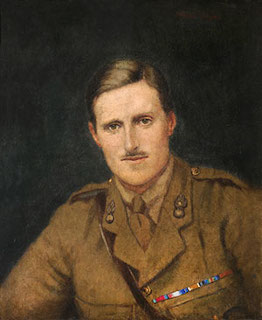
Major Geoffrey Lee Compton-Smith (DSO) of the 2nd Battalion of the Royal Welch Fusiliers is captured and executed by the Irish Republican Army (IRA) on April 30, 1921, during the Irish War of Independence.

Compton-Smith was born in 1889 in South Kensington, London. After finishing school, he decides not to follow the family tradition of studying law. He actually wants to become an artist, but his father insists that he join the army. He studies at the Royal Military College at Sandhurst and during World War I his regiment is sent to France. In 1917 he is wounded at the Battle of Arras, but he continues to fight on. He is awarded the Distinguished Service Order (DSO). In 1919 he is sent to serve in Ireland during the Irish War of Independence.

In 1919 Compton-Smith is commander of the British Army base at Ballyvonane, near Buttevant, but he is also an intelligence officer. As an officer he also sometimes presides over courts martial. In January 1921, for instance, three IRA volunteers are tried by him for involvement in the ambush at Shinanagh, near Charleville, and he sentences them each to six months.

February 1921 is a bad time for the IRA in County Cork. They suffer major losses at the ambushes at Clonmult and Mourne Abbey, and several volunteers are taken prisoner, four of whom are sentenced to death. The IRA believes that these death sentences might be commuted if a British officer is held as a hostage. This leads to the capture of Compton-Smith. On April 16, 1921, he travels to Blarney, supposedly on a sketching trip but actually to meet a nurse in Victoria Barracks with whom he is having an affair. The IRA has spies in Victoria Barracks who likely tip off the IRA that Compton-Smith is coming to Blarney. A squad led by Frank Busteed easily capture him after he gets off the train.

Busteed then meets with Jackie O’Leary, the IRA battalion commander. It is decided that Donoughmore is the perfect place to keep a hostage, because parts of the parish are remote and the IRA is strong there.

On April 18, under the cover of darkness, Compton-Smith is transferred by car to Knockane House, an abandoned big house in Donoughmore. The following night he is moved again, this time by pony and trap, to Barrahaurin, a remote townland in the Boggeragh Mountains. He is kept there for the last eleven days of his life, on the small farm of Jack and Mary Moynihan. He is held prisoner in a shed, always under guard. Every evening he is brought into the house, where he eats and stays at the fireside. He and his guards have conversations about history and politics.

The four IRA prisoners are executed on April 28, 1921. On April 30, O’Leary informs Compton-Smith that he is going to be executed. He then writes a final letter to his wife. He tells her that he will die with her name on his lips and her face before his eyes and that he will “die like an Englishman and a soldier.” He also writes a letter to his regiment and one to Lt. General Strickland.

After finishing his letters, Compton-Smith is led up into Barrahaurin bog behind the Moynihan house, to a place where his grave had already been dug and is given a final cigarette. In his witness statement Maurice Brew writes, “When removed to the place of execution he placed his cigarette case in his breast pocket of his tunic … He then lighted a cigarette and said that when he dropped the cigarette it could be taken as a signal by the execution squad to open fire.”

It is not until late May, following the discovery of the cache of letters in a Dublin raid, that the Compton-Smith family is informed of his death. His father, William, then starts a campaign to find his son’s body. He wrote letters to MPs and to the British Army, seeking information and help. He also writes to Erskine Childers but gets no reply. He offers a reward of £500 for information, but only The Irish Times agrees to print his advertisement.

In November 1921 a cousin of Compton-Smith’s wife, Gladys, meets Michael Collins in London and asks him for help in finding the body. Correspondence between Collins and the Compton-Smith family suggests that Collins is trying to help in 1922, but he fails to get any results before he is assassinated at Béal na Bláth later that same year.

On March 3, 1926, Compton-Smith’s grave is discovered by the Gardaí. The newspapers report that the remains, because of the conditions of the bog, “were not so badly decomposed as to render identification impossible.” The body is brought to Collins Barracks in Cork. On March 5 the Gardaí send a telegram to the Compton-Smiths, informing them that the body has been located.

The reburial of Compton-Smith is carried out with great dignity on March 19, 1926. The Irish Army escorts the coffin from Collins Barracks to Penrose Quay, where British forces from Spike Island take the coffin on board a boat. While the boat travels down the River Lee, the Irish Army’s guard of honour presents arms and sounds the “Last Post.” The British then bring the coffin to Carlisle Fort, near Whitegate, where it was buried in the in the British Military Cemetery with full military honours.


2 Comments

Death of Michael Joseph O’Rahilly

michael-joseph-o-rahilly

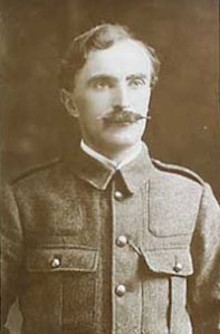
Michael Joseph O’Rahilly, Irish republican and nationalist known as The O’Rahilly, dies in Dublin on April 29, 1916, during the Easter Rising. He is a founding member of the Irish Volunteers in 1913 and serves as Director of Arms. Despite opposing the rising, he takes part and is killed in a charge on a British machine gun post covering the retreat from the General Post Office (GPO) during the fighting.

O’Rahilly is born in Ballylongford, County Kerry to Richard Rahilly, a grocer, and Ellen Rahilly (née Mangan). He has two siblings who live to adulthood, Mary Ellen “Nell” Humphreys (née Rahilly) and Anno O’Rahilly, both of whom are active in the Irish revolutionary period. He is educated in Clongowes Wood College (1890–1893). As an adult, he becomes a republican and a language enthusiast. He joins the Gaelic League and becomes a member of An Coiste Gnotha, its governing body. He is well traveled, spending at least a decade in the United States and in Europe before settling in Dublin.

In 1913 O’Rahilly is a founding member of the Irish Volunteers, who organize to work for Irish independence and resist the proposed Home Rule. He serves as the IV Director of Arms. He personally directs the first major arming of the Irish Volunteers, the landing of 900 Mausers at the Howth gun-running on July 26, 1914.

O’Rahilly is not party to the plans for the Easter Rising, nor is he a member of the Irish Republican Brotherhood (IRB), but he is one of the main people who trains the Irish Volunteers for the coming fight. The planners of the Rising go to great lengths to prevent those leaders of the Volunteers who are opposed to unprovoked, unilateral action from learning that a rising is imminent, including its Chief-of-Staff Eoin MacNeill, Bulmer Hobson, and O’Rahilly. When Hobson discovers that an insurrection is planned, he is kidnapped by the Military Council leadership.

Learning this, O’Rahilly goes to Patrick Pearse‘s school, Scoil Éanna, on Good Friday. He barges into Pearse’s study, brandishing his revolver as he announces, “Whoever kidnaps me will have to be a quicker shot!” Pearse calms him down, assuring him that Hobson is unharmed and will be released after the rising begins.

O’Rahilly takes instructions from MacNeill and spends the night driving throughout the country, informing Volunteer leaders in Cork, Kerry, Tipperary, and Limerick that they are not to mobilise their forces for planned manoeuvres on Sunday.

Arriving home, O’Rahilly learns that the Rising is about to begin in Dublin on the following day, Easter Monday, April 24, 1916. Despite his efforts to prevent such action, he sets out to Liberty Hall to join Pearse, James Connolly, Thomas MacDonagh, Tom Clarke, Joseph Plunkett, Countess Markievicz, Seán Mac Diarmada, Éamonn Ceannt and their Irish Volunteers and Irish Citizen Army troops. Arriving in his De Dion-Bouton motorcar, he gives one of the most quoted lines of the rising – “Well, I’ve helped to wind up the clock…I might as well hear it strike!” His car is used to fetch supplies during the siege and later as part of a barricade on Prince’s Street, where it is burned out.

O’Rahilly fights with the GPO garrison during Easter Week. One of the first British prisoners taken in the GPO is Second Lieutenant AD Chalmers, who is bound with telephone wire and lodged in a telephone box by the young Volunteer Captain and IRB activist, Michael Collins. Chalmers later recalls O’Rahilly’s kindness to him. In a statement to a newspaper reporter, he says that he was taken from the phone box after three hours and brought up to O’Rahilly, who ordered, “I want this officer to watch the safe to see that nothing is touched. You will see that no harm comes to him.”

On Friday, April 28, with the GPO on fire, O’Rahilly volunteers to lead a party of men along a route to Williams and Woods, a factory on Great Britain Street, now Parnell Street. A British machine gun at the intersection of Great Britain and Moore streets cuts him and several of the others down. He slumps into a doorway on Moore Street, wounded and bleeding badly but, hearing the English marking his position, makes a dash across the road to find shelter in Sackville Lane, now O’Rahilly Parade. He is wounded diagonally from shoulder to hip by sustained fire from the machine-gunner.

According to ambulance driver Albert Mitchell in a witness statement more than 30 years later, O’Rahilly still clung to life 19 hours after being severely wounded, long after the surrender had taken place on Saturday afternoon.

Desmond Ryan‘s The Rising: The Complete Story of Easter Week maintains that it “was 2:30 PM when Miss O’Farrell reached Moore Street, and as she passed Sackville Lane again, she saw O’Rahilly’s corpse lying a few yards up the laneway, his feet against a stone stairway in front of a house, his head towards the street.”


2 Comments

Resignation of John Miller Andrews, 2nd Prime Minister of Northern Ireland

john-miller-andrews

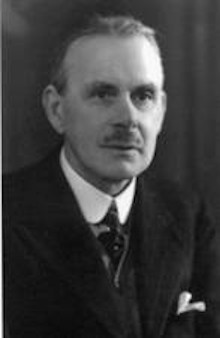
John Miller Andrews, the second Prime Minister of Northern Ireland, resigns on April 28, 1943 and is succeeded by Sir Basil Brooke, later Lord Brookeborough.

Andrews is born in Comber, County Down, on July 17, 1871, the eldest child in the family of four sons and one daughter of Thomas Andrews, flax spinner, and his wife Eliza Pirrie, a sister of William Pirrie, 1st Viscount Pirrie, chairman of Harland & Wolff. He is named after his maternal great-uncle, John Miller of Comber (1795–1883). As a young man, with his parents and family, he is a committed and active member of the Non-subscribing Presbyterian Church of Ireland. He regularly attends Sunday worship in the church built on land donated by his great-grandfather James Andrews in his home town Comber.

Andrews is educated at the Royal Belfast Academical Institution. In business, he is a landowner, a director of his family linen-bleaching company and of the Belfast Ropeworks. His younger brother, Thomas Andrews, who dies in the 1912 sinking of the RMS Titanic, is managing director of the Harland and Wolff shipyard in Belfast. Another brother, Sir James Andrews, 1st Baronet, is Lord Chief Justice of Northern Ireland.

In 1902 Andrews marries Jessie Ormrod, eldest daughter of Bolton stockbroker Joseph Ormrod at Rivington Unitarian Chapel, Rivington, near Chorley, Lancashire, England. They have one son and two daughters. His younger brother, Sir James, marries Jessie’s sister.

Andrews is elected as a member of parliament in the House of Commons of Northern Ireland, sitting from 1921 until 1953 (for Down from 1921–1929 and for Mid Down from 1929–1953). He is a founder member of the Ulster Unionist Labour Association, which he chairs, and is Minister of Labour from 1921 to 1937. He is Minister of Finance from 1937 to 1940, succeeding to the position on the death of Hugh MacDowell Pollock. On the death of James Craig, 1st Viscount Craigavon, in 1940, he becomes leader of the Ulster Unionist Party (UUP) and the second Prime Minister of Northern Ireland.

In April 1943 backbench dissent forces him from office. He is replaced as Prime Minister by Sir Basil Brooke. Andrews remains, however, the recognised leader of the UUP for three more years. Five years later he becomes the Grand Master of the Orange Order.  Throughout his life he is deeply involved in the Orange Order. He holds the positions of Grand Master of County Down from 1941 and Grand Master of Ireland (1948–1954). In 1949 he is appointed Imperial Grand Master of the Grand Orange Council of the World.

From 1949, he is the last parliamentary survivor of the original 1921 Northern Ireland Parliament, and as such is recognised as the Father of the House. He is the only Prime Minister of Northern Ireland not to have been granted a peerage. His predecessor and successor received hereditary viscountcies, and later prime ministers are granted life peerages.

Andrews serves on the Comber Congregational Committee from 1896 until his death, holding the position of Chairman from 1935 onward. He dies in Comber on August 5, 1956 and is buried in the small graveyard adjoining the Non-subscribing Presbyterian Church of Ireland.


Leave a comment

Phillip O’Reilly Surrenders to the Cromwellian Conquest of Ireland

settlement-of-ireland-1653

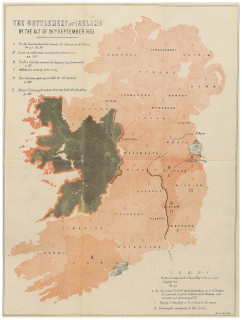
The last major body of Irish Catholic troops under Phillip O’Reilly surrender to the Cromwellian conquest of Ireland at Cloughoughter in County Cavan on April 27, 1653. This marks the end of the Irish Confederate Wars which began in 1641.

Colonel Philip O’Reilly is a member of parliament (MP) for County Cavan in the Parliament of Ireland from 1639 to 1641, and a leading member of the Irish Rebellion of 1641.

O’Reilly’s father, grandfather and several other ancestors are chiefs of the O’Reilly clan and Lords of Breifne O’Reilly. His mother is Catherine MacMahon. He resides at Bellanacargy Castle in the barony of Tullygarvey, near to present day village of Drung. Bellanacargy castle, anciently referred to as Ballynacarraig because it was built on a carraig (rock island) situated in the middle of the River Annalee, is destroyed in May 1689 by Williamite forces led by Thomas Lloyd.

As a young man O’Reilly serves for some time in the Spanish army but returns to Ireland. He is appointed Commissioner of the Peace in 1625 and High Sheriff of Cavan in 1629. He is elected as MP for County Cavan in 1639.

During the Parliamentary session of 1640 O’Reilly is enlisted by Rory O’Moore in the plot to start a rebellion against English rule in Ireland. O’Moore is a distant relation as his sister Cecilia O’Moore is married to O’Reilly’s first cousin, Tirlagh O’Neill. On the outbreak of the Irish Rebellion in October 1641 he is elected chief of the O’Reillys. As a result, the Irish Parliament expels him on November 16, 1641. On November 6, 1641 he orders a general gathering of his clansmen from 16 to 60 years of age, to be held at Virginia, and on December 11, 1641 he has possession of the whole county, except the Killeshandra castles of Keelagh and Croghan which are defended by Sir Francis Hamilton and Sir James Craig. He raises a brigade of twelve hundred men, composed chiefly of his name and family, and serves with distinction as lieutenant-general in the service of the Confederate Catholics of Ireland. The Assembly of Kilkenny appoints him Lord President of Ulster. His second cousin Myles O’Reilly is High Sheriff of Cavan in 1641 at the outbreak of the Rebellion.

O’Reilly is detained for treason by the English government in 1642. In his diary for June 3, 1644, the historian Sir James Ware II states, “Intelligence came to Dublin that Roger Moore and Philip O’Reilly, two of the first incendiaries were committed to prison at Kilkenny.” O’Reilly is further denounced by the Act for the Settlement of Ireland 1652 at the end of the rebellion. Following the collapse of the Irish confederacy, he formally surrenders to Oliver Cromwell at Cloughoughter Castle on April 27, 1653, being the last Irish garrison to do so. He secures favourable terms and is obliged to leave Ireland. He retires with his brigade into Spain and thence to the Netherlands, where he serves in the Spanish army for about two years and dies in 1655. He is buried in the Irish monastery of St. Dominick in Leuven, Belgium.


Leave a comment

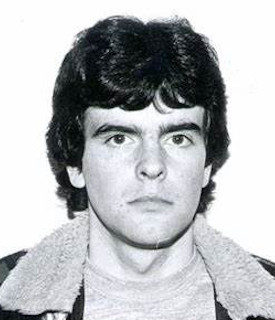
Death of IRA Volunteer Séamus McElwaine

seamus-turlough-mcelwaine

Séamus Turlough McElwaine, a volunteer in the South Fermanagh Brigade of the Provisional Irish Republican Army (PIRA), is killed on April 26, 1986, by the Special Air Service (SAS) while on active duty with Seán Lynch, who is seriously injured in the shooting.

McElwaine is born on April 1, 1960, the oldest of eight children, in the townland of Knockacullion, beside the hamlet and townland of Knockatallon, near the village of Scotstown in the north of County Monaghan. At the age of 14, he takes his first steps towards becoming involved in physical force republicanism when he joins Na Fianna Éireann. Two years later he turns down an opportunity to study in the United States and joins the Irish Republican Army (IRA), stating “no one will ever be able to accuse me of running away.”

McElwaine becomes Officer Commanding of the IRA in County Fermanagh by the age of 19. On February 5, 1980, he kills off-duty Ulster Defence Regiment (UDR) corporal Aubrey Abercrombie as he drives a tractor in the townland of Drumacabranagher, near Florencecourt. Later that year, on September 23, he kills off-duty Royal Ulster Constabulary (RUC) Reserve Constable Ernest Johnston outside his home in Rosslea. He is suspected of involvement in at least ten other killings.

On March 14, 1981, a detachment of the British Army surrounds a farmhouse near Rosslea, containing McElwaine and three other IRA members. Despite being armed with four rifles, including an Armalite, the IRA members surrender and are arrested. While on remand in Crumlin Road Gaol, McElwaine stands in the February 1982 Irish general election as an independent candidate for Cavan–Monaghan and receives 3,974 votes (6.84% of the vote). In May 1982 he is convicted of murdering the RUC and UDR members, with the judge describing him as a “dangerous killer” and recommending he spend at least 30 years in prison.

On September 25, 1983, McElwaine is involved in the Maze Prison escape, the largest break-out of prisoners in Europe since World War II and in British prison history. Thirty-eight republican prisoners, armed with six handguns, hijack a prison meals lorry and smash their way out of the prison. After the escape McElwaine joins an IRA Active Service Unit operating in the area of the border between Counties Monaghan and Fermanagh. The unit targets police and military patrols with gun and bomb attacks, while sleeping rough in barns and outhouses to avoid capture.

McElwaine holds a meeting with Pádraig McKearney and Jim Lynagh, members of the Provisional IRA East Tyrone Brigade, in which they discuss forming a flying column aimed at destroying police stations to create IRA-controlled zones within Northern Ireland. However, this plan never materialises. McKearney and Lynagh are later themselves killed in the Loughgall ambush.

On April 26, 1986, McElwaine and another IRA member, Seán Lynch, are preparing to ambush a British Army patrol near Rosslea, County Fermanagh when they are ambushed themselves by a detachment from the Special Air Service Regiment. Both are wounded but Lynch manages to crawl away. A January 1993 inquest jury returns a verdict that McElwaine had been unlawfully killed. The jury rules the soldiers had opened fire without giving him a chance to surrender, and that he was shot dead five minutes after being wounded. The Director of Public Prosecutions requests a full report on the inquest from the RUC, but no one has been prosecuted for McElwaine’s death.

McElwaine is buried in Scotstown, with his funeral attended by an estimated 3,000 people, including Gerry Adams and Martin McGuinness. McGuinness gives an oration describing McElwaine as “a brave intelligent soldier, a young man who gave up his youth to fight for the freedom of his country” and “an Irish freedom fighter murdered by British terrorists.”

In 1987 McElwaine’s father, Jimmy, a longtime member of Monaghan County Council, became the chairman of the Séamus McElwain Cumann of Republican Sinn Féin.

On April 1, 1990, a monument to McElwaine is erected in Corlat, County Monaghan. The oration is given by a Catholic priest, Father Piaras Ó Dúill, who compares McElwaine to Nelson Mandela, saying they both had the same attitude to oppression, and both refused to denounce principle. The inscription on the monument is a quote from Patrick Pearse: “As long as Ireland is unfree the only honourable attitude for Irishmen and Irishwomen is an attitude of revolt.” A monument to McElwaine and six other republicans is erected in Rosslea in 1998 and unveiled by veteran republican Joe Cahill.