Sir Joseph LarmorFRSFRSE, Irish and British physicist and mathematician who makes breakthroughs in the understanding of electricity, dynamics, thermodynamics, and the electron theory of matter, is born in Magheragall, County Antrim, on July 11, 1857. His most influential work is Aether and Matter, a theoretical physics book published in 1900.
In 1903 Larmor is appointed Lucasian Professor of Mathematics at Cambridge, a post he retains until his retirement in 1932. He never marries. He is knighted by King Edward VII in 1909.
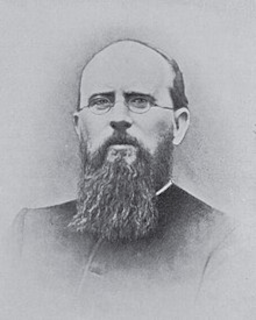
Potter receives his commission as District Inspector on April 27, 1901, having completed his cadetship at the Depot, Phoenix Park, Dublin. His first assignment is to Castlepollard, County Westmeath. During the 1909 ITGWU strike in Cork, he is temporarily posted there from Dublin and is also involved in policing the August 14 marches in Portadown. Having had charge of No. 4 Company at the Depot, he is assigned to Cahir in 1912.
On April 23, 1921, District Inspector Potter is captured by the 3rd Tipperary Brigade, IRA, following the Hyland’s Cross Ambush. This occurs near Curraghcloney, close to the village of Ballylooby. The ambush party is initially made up of a combination of the 1st and 2nd Flying Columns 3rd Tipperary Brigade. This is the largest force assembled to date by the Tipperary IRA in anticipation of a major battle. However, the convoy of military lorries that is expected never materialises. Dan Breen and Con Moloney return to Battalion Headquarters, while Seán Hogan‘s Column withdraws northward in the direction of the Galtee Mountains.
As Dinny Lacey‘s No.1 Column prepares to leave towards the south, a small party of British soldiers accompanying two horse-drawn carts unexpectedly approaches from Clogheen and are immediately fired upon. Amid some confusion Lacey’s scattered men withdraw southwards towards the Knockmealdown Mountains. One British soldier, Frank Edward Conday, is fatally wounded and two others from the relieving party are wounded.
By chance, Potter, who is returning by car from police duties at Ballyporeen, drives into a section of the withdrawing No.1 Column. Although in civilian attire, he is recognised by one of the IRA Volunteers and taken prisoner. As part of a new strategy, he is held as a hostage for the safe release of Thomas Traynor, an IRA volunteer and father of ten young children, then under sentence of death at Mountjoy Gaol. The IRA offers to release Potter in exchange for Traynor’s release. Traynor is executed. Traynor has since been honoured by the Irish state as one of “The Forgotten Ten.”
The Column, under sporadic fire from soldiers, alerted at the nearby Clogheen barracks, follow the contours of the mountains to the village of Newcastle. Losing their pursuers, they stay for a period of time at the townland of Glasha. Here Potter is detained in an out-building of a farm which is regularly used by the IRA as a safe house. From there the party is guided into the Nire Valley by a contingent of local Waterford Volunteers and on to the Comeragh Mountains.
Accounts from Rathgormack, County Waterford suggest he is kept for at least one night at a nearby Ringfort before being taken down the hill to a field then owned by Powers of Munsboro, where he meets his ultimate fate. At 7:00 PM, on April 27, following news of Traynor’s execution by hanging, he is shot to death, and hastily buried in a shallow grave on the banks of the River Clodiagh. A diary he kept during his period of captivity and some personal effects and farewell letters, are returned anonymously to his wife. It is the first confirmation she has that he has been killed. The artifacts are later lost when his son’s ship is torpedoed in 1942, during World War II.
(Pictured: Photo of District Inspector Gilbert Potter R.I.C. that appeared in the Press during his time in captivity)
Matt Connor, one of the most legendary Gaelic footballers of all time, is born in Walsh Island, County Offaly, on July 9, 1960. He plays with his local club Walsh Island and is a member of the Offaly senior inter-county team from 1978 until 1984 when he is seriously injured in a car crash, resulting in his needed use of a wheelchair.
In a six-year career with Offaly Connor scores a massive 13-142 and his performance in the 1980 All Ireland Senior Football Championship semi-final against Kerry when he scores 2-9 is regarded as one of the great individual performances.
Connor is a key player on the Offaly side that famously denies Kerry five-in-a-row in 1982 when he is joined by his brother Richie, who captains the side, and by his cousins Liam and Tomas, all from the small Walsh Island club just a couple of miles beyond Portarlington.
Connor is cruelly paralysed from the waist down following a car accident on Christmas Day 1984. He is only 24 years old at the time. Despite having his career cut short by injury, he remains heavily involved in Offaly GAA and serves as minor manager, senior selector and is also involved with the Irish international rules football team.
The Walsh Island native serves in TullamoreGarda station for many years and is remembered as one of the classiest forwards to ever have played the game. He retires following a 40-year career as a member of An Garda Síochána.
The Connor family has a long association with Laois through school, work and football. Connor is a regular in the press box in O’Connor Park which shares a facility with the wheelchair section and the VIP area. His older brother Richie is currently principal of Shanahoe National School and previously served as manager of the Laois and Offaly senior football teams.
In May 2020, the Irish Independent names Connor at number six in its “Top 20 footballers in Ireland over the past 50 years.”
McCracken’s father is Captain John McCracken, a Presbyterian of Scottish descent and a prominent shipowner. Her mother, Ann Joy, comes from a French ProtestantHuguenot family, which made its money in the linen trade and founded the Belfast News Letter. Her liberal and far-sighted parents send her to David Manson‘s progressive co-educational school, where ‘young ladies’ received the same education as the boys. She excels at mathematics.
As an adult, McCracken manages a successful muslin business in Belfast, which pioneers the production of patterned and checked muslin. She runs the business together with her sister and has at least one agent in Dublin.
McCracken is the sister of Henry Joy McCracken, one of the founding members of the Society of United Irishmen. In the aftermath of her brother’s defeat at the Battle of Antrim on June 7, 1798, she helps Henry Joy and some colleagues hide in the hills of south Antrim, bringing them clothes and money. She is arranging for a ship to take him to the United States when he is recognised by three Carrickfergus soldiers and arrested there on July 7, 1798.
McCracken shares her brother’s interest in reviving the oral-music tradition of Ireland and is a founding member of the Belfast Harp Society (1808–1813). She supports Edward Bunting in his collecting of traditional music, introducing him to people who can help, acting as his unofficial secretary and contributes anonymously to the second volume of his work The Ancient Music of Ireland in 1809. Bunting lives with the McCrackens for thirty-five years, before moving to Dublin 1819 and thereafter corresponds regularly with McCracken.
McCracken, like her brother, holds radical beliefs and these extend not just to the politics of the time, but to many social issues, such as poverty and slavery. She is dedicated to the poor of Belfast and from her earliest childhood she works to raise funds and provide clothes for the children of the Belfast Poorhouse, now known as Clifton House, Belfast. Following a visit from Elizabeth Fry she forms the Ladies Committee of the Belfast Charitable Society and is chair from 1832–1855. Thanks to the efforts of the committee a school, and later a nursery, is set up to educate the orphans of Belfast. She takes particular pains to find a suitable teacher, displaying a high level of dedication and compassion for her cause. The committee also inspects the homes where children of the poorhouse are apprenticed out.
McCracken leads the Women’s Abolitionary Ccmmittee in Belfast during the height of the anti-slavery movement and continues to promote the cause long after the spirit of radicalism had died in Belfast. By the 1850s, the liberality of the 1790s had largely evaporated in the aftermath of the failure of the Irish Rebellion of 1798, and the subsequent executions or exile of the leading protagonists.
At the age of 88, McCracken is to be seen at the Belfast docks, handing out anti-slavery leaflets to those boarding ships bound for the United States, where slavery is still practised. Her continued campaign long after the deaths of her counterparts serves to demonstrate the strength of radicalism that exists in certain circles of Belfast society at the close of the eighteenth century.
After her brother’s execution in Belfast, McCracken takes over the care of his illegitimate daughter, Maria, which is not universally accepted in her wider family. She lives with Maria and her family until her death at the age of 96 on July 26, 1866. She is buried in grave number 35 at Clifton Street Cemetery.
A blue plaque has been placed by the Ulster History Circle on the house at 62 Donegall Pass, Belfast, where McCracken lived for much of her later life.
Francis ‘Francie’ McPeake II, uilleann piper and singer, dies in Belfast on July 7, 1986. He is a crucial figure in preserving the great Ulster piping tradition.
McPeake is born on January 20, 1917 at 43 Malcolmson Street, Belfast, the son of Francis J. McPeake (1885–1971), piper and tram conductor, and Mary McPeake (née Loney). His father, a staunch nationalist, wins the Feis piping competition in Belfast in 1909 and represents Ireland together with a Welsh harper, John Page, at the Pan-Celtic Congress in Brussels in 1911. In July 1912 he wins first prize in the learners’ class when he attends the foundation of the Pipers’ Club in Dublin. He represents Ireland in many instances as one of relatively few pipers from Northern Ireland at the time.
McPeake continues the strong musical tradition in the family. He also plays the pipes and father and son are recorded by Peter Kennedy in 1952. They appear at the Royal Albert Hall in 1956 and later form the McPeake Trio along with his brother James, who plays the fiddle, the piano accordion, and later a harp made by McFall in Belfast. The trio comes to be known as The McPeakes. They sing in Irish and in English and are closely identified with particular songs, such as “The Jug of Punch,” “The Lament of Aughrim,” and “The Verdant Braes of Skreen,” though the one most associated with them is “Will You Go, Lassie, Go?”
The McPeakes win first prize at the international Eisteddfod in Wales in the late 1950s and acquire a strong international reputation with Bob Dylan being among their fans. The trio is later augmented by members of the next generation, recorded by Peter Kennedy again, and make several recordings, including Irish Folk (1964) and Welcome Home (1967), which is a cassette reissue of a 1962 album for the Topic Records label. Some of Kennedy’s recordings of the McPeake family are released on the compact disc Traditional Songs of Ireland (CD-SDL 411) in 1995. A fourth-generation family group follows, Clan McPeake, inheriting the commitment, much of the repertoire, and the verve of the earlier generations.
McPeakes’s gift for teaching is employed at the Francis McPeake School of Music, which is established in 1977, and he writes a well-reviewed tin whistle tutor entitled Smash the Windows, published by Appletree Press in 1981. He also forms the Clonard Traditional Music Society.
McPeake dies on July 7, 1986. The McPeake family remains closely associated with traditional music and with Belfast. The Francis McPeake International Summer School is established in 2004.
O’Reily is born John O’Reilly on November 19, 1846, in Kilkenny, County Kilkenny, the son of Michael, a military officer, and Anne, née Gallagher. He completes his primary education at the parochial school of St. John’s Parish, and spends six and a half years at St. Kieran’s College. Due to poor health, he decides against pursuing a military career, and in 1864 he enters All Hallows College in Dublin to study for the priesthood. He learns the Irish language and studies mental philosophy, mathematics and ecclesiastical studies, achieving first prize in each of his classes.
After being ordained on June 21, 1869, O’Reily leaves Ireland for Western Australia in October, arriving in January 1870. Having served briefly in Newcastle (present day Toodyay) and Northam, he becomes a parish priest in Fremantle, establishing the West Australian Catholic Record in 1874 and serving as its publisher, editor and printer from 1883.
When the Diocese of Port Augusta is established in 1887, Pope Leo XIII names O’Reily as its first bishop. Concerned about the financial position of the diocese, which had inherited significant debt from the Diocese of Adelaide, he accepts the posting reluctantly. As bishop, he greatly improves the financial position of the new diocese, reducing its debt by half and earning a reputation as a competent administrator.
In 1894, O’Reily is appointed to replace the deceased Christopher Reynolds as Archbishop of Adelaide. The archdiocese he inherits is burdened with substantial debt, again left over from the old Diocese of Adelaide. Through the sale of church assets and a fundraising campaign, he is able to eliminate most of the Archdiocese’s liabilities while still investing in church infrastructure. He also actively participates in public discussions relating to education policy at a time when the role of the state in supporting religious education is topical. He publicly advocates government assistance for religious schools, stating that it is unfair Catholics pay taxes to support state schools, but receive no funding for their own.
In the later years of his life, poor health forces O’Reily to spend less time attending to his episcopal duties, and from 1905, he keeps to himself in his house in Glen Osmond, leading to the local press referring to him as the “Recluse of Glen Osmond.” Increasingly, his episcopal duties are fulfilled by Bishop of Port Augusta John Norton, who has to visit the more remote parts of O’Reily’s see on his behalf.
As he becomes more frail, O’Reily asks certain priests to accompany him when he travels, among whom is the DominicanpriorRobert Spence. When O’Reily requests a coadjutor in 1913, he chooses Spence as his first preference for the role. Despite the reluctance of some clergy to the appointment of a religious as Archbishop, Spence is consecrated as coadjutor, with right of succession, in August 1914.
O’Reily dies at his house in Adelaide on July 6, 1915 and is buried under a large Celtic cross at the West Terrace Cemetery in Adelaide. He is highly regarded by many in South Australian society, with Adelaide’s daily newspapers praising his character, administrative ability and positive relations with non-Catholics.
Sebastian Barry, novelist, playwright and poet, is born in Dublin on July 5, 1955. He is noted for his lyrical literary writing style and is considered one of Ireland’s finest writers. He is named Laureate for Irish Fiction, 2019–2021.
Barry starts his literary career with the novel Macker’s Garden in 1982. This is followed by several books of poetry and a further novel, The Engine of Owl-Light (1987), before his career as a playwright begins with his first play produced in the Abbey Theatre, Boss Grady’s Boys (1988).
Both The Steward of Christendom and the novel The Whereabouts of Eneas McNulty, are about the dislocations, physical and otherwise, of loyalist Irish people during the political upheavals of the early 20th century. The title character of the latter work is a young man forced to leave Ireland by his former friends in the aftermath of the Irish War of Independence.
Barry has been twice shortlisted for the Man Booker Prize for his novels A Long Long Way (2005) and The Secret Scripture (2008), the latter of which wins the 2008 Costa Book of the Year and the James Tait Black Memorial Prize. His fifth novel, On Canaan’s Side (2011), is longlisted for the 2011 Man Booker Prize and wins the 2012 Walter Scott Prize. In January 2017, he is awarded the Costa Book of the Year prize for Days Without End (2016), becoming the first novelist to win the prestigious prize twice. The novel also wins The Walter Scott Prize and The Independent Booksellers’ Prize, and is longlisted for the Man Booker Prize 2017.
In 2001, Barry establishes his personal and professional archive at the Harry Ransom Center. More than sixty boxes of papers document his diverse writing career and range of creative output which includes drawings, poetry, short stories, novels, essays, and scripts.
Yeats is very sick as a child, spending three years in two different hospitals. She then goes to the Pension Henriette, a boarding school in Villars-sur-Bex, Switzerland from 1928–1930. In 1923 her Aunt Elizabeth “Lolly” gives her brush drawing lessons which aids her in winning first prize in the RDS National Art competition for children under eight years old in 1925 and 1926.
Yeats trains in the Royal Hibernian Academy school from 1933 to 1936 and works as a stage designer with the Abbey Theatre in Dublin. In 1936, at the age of 16, she is hired by the Abbey Theatre as assistant to Tanya Moiseiwitsch. She studies for four months at the School of Theatrical Design in Paris with Paul Colin in 1937. At 18, she begins her costume career on sets with Ria Mooney‘s company. At the Abbey, she designs the sets and costumes for revivals of W.B. Yeats’ plays The Resurrection and On Baile’s Strand (1938).
In 1938 Yeats designs the first production of W.B. Yeats’ play Purgatory, which is her most successful achievement. Purgatory is the last play that W.B Yeats sees on stage, and when it is performed it is a full house. When working on Purgatory, Hugh Hunt wants to have a moon on the back cloth of the production but Yeats refuses. “If she does not win, she is going to say that she doesn’t wish to have her name on the programme as a designer of the setting.” This could be the main reason why her name is not on many productions that she works on. She also designs the first play of her uncle Jack Yeats to receive professional production, Harlequin’s Positions.
In 1939 Yeats is promoted to head of design at the Abbey until her departure in May 1941. In 1939 it is commented that her designs are “getting arty” and not in keeping with the style of the Abbey. One of her last designs is her father’s last play, The Death of Cuchulain, for the Lyric Theatre on the Abbey stage, in 1949. She designs and stage-manages for the Peacock Theatre, the Cork Opera House, the Olympia Theatre, the Gaiety Theatre, the Austin Clarke Lyric Theatre, the Abbey Theatre and Players’ Theatre.
Among the work Yeats is credited with in the Abbey Theatre, she is also recorded as having worked on five productions in the Peacock Theatre with the Theatre Company: Alarm Among the Clerks (1937), The Phoenix (1937), Harlequin’s Positions (1939), The Wild Cat (1940), and Cavaliero (The Life of a Hawk) (1948).
Yeats chooses to move towards painting full-time beginning a brief study at the Dublin Metropolitan School of Art in 1941. She experiments with watercolour and wax. She has a touching naive expressionist style and is interested in representing domestic humanity. She designs many of the covers for the books of Irish-language publisher Sáirséal agus Dill over a twenty-year period from 1958. She does illustrations for books by Denis Devlin, Thomas Kinsella and Louis MacNeice, and works with many young designers, such as Louis le Brocquy.
The Royal Hibernian Academy holds a retrospective of her work in 1995, as does the National Gallery of Ireland in 2002. She donates her collection of Jack B. Yeats’ sketch books to the National Gallery of Ireland, leading to the creation of the Yeats Museum within the Gallery. Her brother, Michael, in turn, donates her sketchbooks to the Museum.
(Pictured: “Gossip & Scandal,” 1943 oil on canvas, by Anne Butler Yeats)
Bord Fáilte, the Irish Tourist Board, is founded on July 3, 1952, and is the predecessor organization of Fáilte Ireland (Ireland’s Welcome), which is the operating name of the National Tourism Development Authority of Ireland.
After the foundation of the Irish Free State in 1922, hoteliers and others create local tourism boards in various regions, which combine in 1924 into the Irish Tourism Association (ITA), a private organisation “promoting tourism to the benefit of the nation.” (An earlier, unionist-led, ITA existed from 1895 to 1921.) ITA lobbying leads to the Irish Tourist Board being established by the Tourist Traffic Act 1939. This is renamed An Bord Fáilte by the Tourist Traffic Act 1952, which creates a separate body, Fógra Fáilte, to handle publicity. The Tourist Traffic Act 1955 remerges the two as Bord Fáilte Éireann (BFÉ or “Bord Fáilte”). An Tóstal, a summer cultural festival held from 1953 to 1959, takes up the bulk of the authority’s work during this period. In 1963 the Council of Education, Recruitment and Training (CERT) is created to take over training of workers in the hospitality industry.
In 1964, eight regional tourist organisations (RTOs) are established which are intended to supersede the ITA. An extraordinary general meeting (EGM) called in 1964 to dissolve the ITA votes not to do so, but it nevertheless soon becomes defunct. The RTOs reduce in number to six in the 1980s, and are renamed regional tourist associations (RTAs) in 1996. In 1989 the Dublin RTO loses a High Court action to prevent BFÉ dissolving it. It is reconstituted as Dublin Tourism and more closely controlled by BFÉ.
In 2003 CERT and BFÉ merge to form Fáilte Ireland, to better co-ordinate with Tourism Ireland, the all-island body established under the Good Friday Agreement. The advent of travel websites reduces the usefulness of the RTAs and a 2005 PricewaterhouseCoopers report recommends substantial reorganisation. As a consequence all are dissolved in 2006, except Dublin Tourism, which is made a direct subsidiary of Fáilte Ireland. Dublin Tourism’s separate status ends in 2012 in line with a 2011 report by Grant Thornton International.
Fáilte Ireland played a leading role in The Gathering Ireland 2013, a year-long programme of events encouraging members of the Irish diaspora to visit their region of origin.
The legal name of the body is the National Tourism Development Authority, according to the National Tourism Development Authority Act 2003 which established it. The 2003 act also empowers the body to use the trading name of Fáilte Ireland. The word fáilte is Irish for “welcome.” In official Irish-language texts the form Fáilte Éireann has been used.
Morrow makes his full international debut for Northern Ireland in May 1990 against Uruguay. He goes on to win 39 caps for his country from then until 1999.
Morrow becomes a semi-regular with Arsenal in 1992–93. He plays most of his matches in midfield, replacing the injured Paul Davis as Arsenal reaches the League Cup and FA Cup finals. He starts the League Cup final against Sheffield Wednesday. After falling behind to a John Harkes goal, Arsenal equalises through Paul Merson, and then Merson sets up Morrow to score the winner, which is also his first for the club. In the celebrations after the match, Arsenal skipper Tony Adams attempts to pick up Morrow and parade him on his shoulders, but Adams slips, and Morrow awkwardly hits the ground. He breaks his arm and has to be rushed to hospital.
As a result, Morrow misses the rest of that season, including the 1993 FA Cup Final, where Arsenal completes the Cup Double. Before the final kicks off, he receives his League Cup winners’ medal.
Morrow is fit enough by the start of the next season but plays only 13 matches, compared to 25 the previous season. One of those is the scene of an Arsenal triumph, the club’s 1994 European Cup Winners’ Cup Final win over Parma. In an Arsenal midfield depleted of John Jensen and David Hillier, he makes his first appearance in the competition that season partnering 20-year-old Ian Selley in central midfield as Arsenal beats Parma 1–0 with an Alan Smith goal.
Morrow nearly leaves the club in March 1994, following an approach from the Premier League‘s bottom club Swindon Town, but the transfer falls through and he signs a new contract with Arsenal, where he spends three more years.
Morrow goes on to play over 20 matches the following season, including a second Cup Winners’ Cup final, which Arsenal loses to Real Zaragoza. He scores his second Arsenal goal in the League Cup once again against Sheffield Wednesday, and scores his first Arsenal league goal in a 3–1 defeat at Blackburn Rovers, who win the Premier League that season. However, he never finds favour under new Arsenal boss Bruce Rioch, who only gives the Irishman five matches in 1995–96.
After the arrival of Arsène Wenger in 1996, Morrow is told he is surplus to requirements at Highbury, and he is loaned to Queens Park Rangers (QPR) in March 1997, the deal being made permanent that summer. He plays 85 games for Arsenal in total, scoring three goals.
At QPR, Morrow is initially a regular, but the club struggles, going from contenders for promotion to the Premiership to facing relegation to the Football League Second Division. Injuries to his shoulder ligaments ruled him out for most of the 1999–2000 season, and he loses his place in the side. He later has a loan spell at Peterborough United, but it does not become permanent, and he is released on a free transfer in the summer of 2001.
Struggling to find a club in the United Kingdom, Morrow moves to the United States to play for Major League Soccer (MLS) side Dallas Burn. He spends two seasons at Dallas, who rename themselves FC Dallas in 2004, before retiring because of a persistent neck injury.
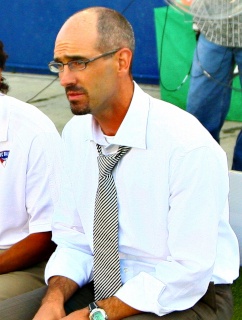
On February 3, 2004, Morrow is named as an assistant coach to FC Dallas but resigns in late May due to personal reasons. However, he returns to the club on January 27, 2005, under coach Colin Clarke. When Clarke is fired on November 7, 2006, Morrow is named interim head coach. On December 11, 2006, FC Dallas removes the ‘interim’ from his title. He is fired as coach on May 20, 2008.
On September 12, 2008, Morrow returns to Arsenal as International Partnerships – Performance Supervisor, managing Arsenal’s international partnerships, which includes the Colorado Rapids of Major League Soccer in the United States, BEC Tero of Thailand and Hoàng Anh Gia Lai of Vietnam, and assisting Arsenal’s academies in countries such as Egypt and Ghana. From 2014, he works as Arsenal’s head of youth development. He leaves Arsenal in 2019 following a coaching staff shake up.
On May 7, 2021, Morrow is appointed The FA’s head of player selection and talent strategy working across England men’s teams.




 seamus dubhghaill