seamus dubhghaill

Promoting Irish Culture and History from Little Rock, Arkansas, USA


Leave a comment

Birth of Peter O’Toole, Stage & Film Actor

peter-o-toole

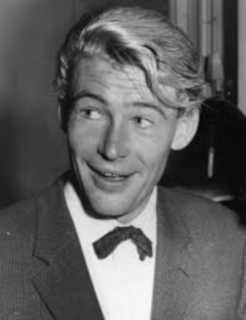
Peter Seamus O’Toole, British stage and film actor of Irish descent, is born on August 2, 1932, in Leeds, Yorkshire, England. Some sources give his birthplace as Connemara, County Galway. Records from the General Registry Office in Leeds confirm that O’Toole is born in the north England town in 1932.

O’Toole grows up in Leeds and is educated at the Royal Academy of Dramatic Art in London. He is a reporter for the Yorkshire Evening Post in his teens and makes his amateur stage debut at Leeds Civic Theatre. After serving two years in the Royal Navy, he acts with the Bristol Old Vic Company from 1955 to 1958 and makes his London debut as Peter Shirley in George Bernard Shaw’s Major Barbara (1956). He appears with the Shakespeare Memorial Company at Stratford-upon-Avon, Warwickshire, England, in 1960 in highly praised performances as Shylock in The Merchant of Venice and as Petruchio in The Taming of the Shrew, and he plays the lead in Hamlet for the inaugural production of the Royal National Theatre in London in 1963. A prominent film star by this point in his career, he continues to appear on stages throughout the world to great acclaim. He is named associate director of the Old Vic in 1980.

O’Toole makes his motion picture debut in Kidnapped in 1960 and two years later becomes an international star for his portrayal of T.E. Lawrence in David Lean’s epic Lawrence of Arabia (1962). In 1964 he plays Henry II of England in Becket, and he has the title role in Lord Jim (1965). He appears as Henry II again in The Lion in Winter (1968), a film notable for the witty verbal sparring matches between O’Toole and costar Katharine Hepburn. The Ruling Class (1972), a controversial black comedy that has become a cult classic, casts O’Toole as a schizophrenic English earl with a messiah complex.

Personal problems contribute to a decline in his popularity during the 1970s, but he makes a strong comeback in the early 1980s with three well-received efforts. He portrays a duplicitous and domineering movie director in The Stunt Man (1980), and his performance as the Roman commander Lucius Flavius Silva in the acclaimed television miniseries Masada (1981) is hailed as one of the finest of his career. His most popular vehicle during this period is My Favorite Year (1982), an affectionate satire on the early days of television, in which he plays Alan Swann, a faded Errol Flynn-type swashbuckling screen star with a penchant for tippling and troublemaking.

O’Toole subsequently maintains his status with fine performances in such films as the Oscar-winning The Last Emperor (1987), the cult favourite Wings of Fame (1989), and Fairy Tale: A True Story (1997), in which he portrays Sir Arthur Conan Doyle. Notable screen roles in the 21st century included King Priam in the historical epic Troy (2004), an aging romantic in Venus (2006), the voice of a haughty food critic in the animated Ratatouille (2007), and a priest in the historical drama For Greater Glory (2012). In addition, in 2008 he portrays Pope Paul III in the TV series The Tudors.

In 1992 O’Toole publishes a lively memoir, Loitering with Intent: The Child. A second volume, Loitering with Intent: The Apprentice, appears in 1996. He is nominated for an Academy Award eight times — for Lawrence of Arabia, Becket, The Lion in Winter, Goodbye, Mr. Chips (1969), The Ruling Class, The Stunt Man, My Favorite Year, and Venus — but never wins. In 2003 he is awarded an honorary Oscar. He receives an Emmy Award for his performance as Bishop Pierre Cauchon in the television miniseries Joan of Arc (1999).

O’Toole dies on December 14, 2013, at Wellington Hospital in St. John’s Wood, London, at the age of 81. His funeral is held at Golders Green Crematorium in London on December 21, 2013, where his body is cremated in a wicker coffin. His ashes are planned to be taken to Connemara, Ireland. They are being kept at the residence of the President of Ireland, Áras an Uachtaráin, by President Michael D. Higgins, an old friend of O’Toole. His family has stated their intention to fulfill his wishes and take his ashes to the west of Ireland.


Leave a comment

Birth of John B. Keane, Irish Playwright & Novelist

john-b-keane

John Brendan Keane, Irish playwright, novelist and essayist, is born in Listowel, County Kerry on July 21, 1928.

Keane is the son of a national school teacher, William B. Keane, and his wife Hannah Purtill. He is educated at Listowel National School and then at St. Michael’s College, Listowel. He works as a chemist’s assistant for A.H. Jones who dabbles in buying antiques. He has various jobs in the United Kingdom between 1951 and 1955 working as a street cleaner and a bartender and lives in a variety of places including Northampton and London. It is while he is in Northampton that he is first published in an unnamed women’s magazine for which he receives £15.

After returning from the UK, Keane is a pub owner in Listowel from 1955 where he writes plays for the local theatre company and sponsors, from 1971, the annual Listowel Writers’ Week. He marries Mary O’Connor at Knocknagoshel Church on January 5, 1955 and they have four children: Billy, Conor, John and Joanna.

His first play, Sive (1959), is initially rejected by the Abbey Theatre in Dublin but goes on to win the amateur All-Ireland Drama Festival. Later plays include The Field (1965), which is released in a bowdlerized film version in 1990, and Big Maggie (1969), which is produced on Broadway in 1982. In 1998 Keane is honoured with a medal from the Abbey for his contribution to Irish theatre.

Keane is an Honorary Life Member of the Royal Dublin Society from 1991, serves as president of Irish club of PEN International and is a founder member of the Society of Irish Playwrights as well as a member of Aosdána. He is named the patron of the Listowel Players after the Listowel Drama Group fractures. He remains a prominent member of the Fine Gael party throughout his life, never being shy of political debate.

John Keane dies of prostate cancer on May 30, 2002, in Listowel at the age of 73.

Keane’s nephew is the investigative journalist Fergal Keane. His son John is a journalist with the Kilkenny People while his son Billy regularly writes a column for the Irish Independent.


Leave a comment

Birth of Fiona Shaw, Actress & Director

fiona-shaw

Fiona Mary Shaw, accomplished classical actress and theatre and opera director, is born in Farranree, County Cork on July 10, 1958. She is best known for her role as Petunia Dursley in the Harry Potter films and her role portraying Marnie Stonebrook in the HBO series True Blood.

Shaw attends secondary school at Scoil Mhuire in Cork. She receives her degree at University College Cork. She trains at the Royal Academy of Dramatic Art (RADA) in London and is part of a ‘new wave’ of actors to emerge from the Academy. She receives much acclaim as Julia in the Royal National Theatre production of Richard Sheridan‘s The Rivals (1983).

Shaw’s theatrical roles include Celia in As You Like It (1984), Madame de Volanges in Les Liaisons Dangereuses (1985), Katherine in The Taming of the Shrew (1987), Lady Franjul in The New Inn (1987), Young Woman in Machinal (1993), for which she wins the Laurence Olivier Award for Best Actress, Winnie in Happy Days (2007), and the title roles in Electra (1988), The Good Person of Sechuan (1989), Hedda Gabler (1991), The Prime of Miss Jean Brodie (1998) and Medea (2000). She performs T. S. Eliot‘s poem The Waste Land as a one-person show at the Liberty Theatre in New York City to great acclaim in 1996, winning the Drama Desk Award for Outstanding One-Person Show for her performance.

Shaw plays Miss Morrison in the 1984 The Adventures of Sherlock Holmes episode “The Adventure of the Crooked Man” and Catherine Greenshaw in Agatha Christie’s Marple episode “Greenshaw’s Folly” in 2013.

Shaw notably plays the male lead in Richard II, directed by Deborah Warner in 1995. She has collaborated with Warner on a number of occasions, on both stage and screen. She has also worked in film and television, including My Left Foot (1989), Mountains of the Moon (1990), Three Men and a Little Lady (1990), Super Mario Bros. (1993), Undercover Blues (1993), Persuasion (1995), Jane Eyre (1996), The Butcher Boy (1997), The Avengers (1998), Gormenghast (2000), and five of the Harry Potter films in which she plays Harry Potter‘s aunt Petunia Dursley. She has a brief but key role in Brian DePalma‘s The Black Dahlia (2006).

In 2009, Shaw collaborates with Deborah Warner again, taking the lead role in Tony Kushner‘s translation of Bertolt Brecht‘s Mother Courage and Her Children. In a 2002 article for The Daily Telegraph, Rupert Christiansen describes their professional relationship as “surely one of the most richly creative partnerships in theatrical history.” Other collaborations between the two women include productions of Brecht’s The Good Woman of Szechuan and Henrik Ibsen‘s Hedda Gabler, the latter adapted for television.

Shaw appears in The Waste Land at Wilton’s Music Hall in January 2010 and in a Royal National Theatre revival of London Assurance in March 2010. In November 2010, she stars in Ibsen’s John Gabriel Borkman at the Abbey Theatre, Dublin alongside Alan Rickman and Lindsay Duncan. The play is also staged in New York’s Brooklyn Academy of Music in 2011.

Shaw appears in season four of American TV show True Blood. Her character, Marnie Stonebrook, has been described as an underachieving palm reader who is spiritually possessed by an actual witch. Her character leads a coven of necromancer witches who threaten the status quo in Bon Temps, erasing most of Eric Northman‘s memories and leaving him almost helpless when he tries to kill her and break up their coven.

In 2012, Shaw appears in the Royal National Theatre revival of Scenes from an Execution by Howard Barker.

The world’s largest solo theatre festival, United Solo Theatre Festival, recognizes her performance in The Testament of Mary on Broadway with the 2013 United Solo Special Award.

In 2018 Shaw begins portraying Carolyn Martens, head of the MI6 Russian Desk, in BBC America‘s Killing Eve, for which she wins the BAFTA Award for Best Actress in a Supporting Role in a Television Series. Later the same year, she plays a senior MI6 officer in Mrs. Wilson.


Leave a comment

Death of Máire Ni Scolai, Singer & Actress

maire-ni-scolai

Máire Ni Scolai, Irish language singer and actress, dies on June 29, 1985.

Ní Scolaí is born in May 24, 1909 in Dublin. She is the daughter of Michael Scully, a commercial traveler and Mary Scully (née Kavanagh). She attends the Central Model Schools, were she learns Irish through the pilot Irish language courses. She studies Irish further at Ring College, County Waterford. She moves to Galway with her sister Mona as a young adult, and begins teaching Irish singing and dancing. With the Irish language theatre, An Taibhdhearc, she plays a number of leading roles. In Micheál Mac Liammóir‘s 1928 production of Diarmaid agus Gráinne, she plays Gráinne.

Ní Scolaí’s interpretation of traditional Irish songs gains her fame, and she sings many times on 2RN as well as radio in France, Italy, the United States and the United Kingdom. She trains as a mezzo-soprano and licentiate of the Trinity College of Music, London, and is noted as one of the few people who combines classical music with sean-nós singing successfully. She wins awards at feiseanna such as Feis Chonnacht and Feis Shligigh, later becoming a judge. She is also an award winner at Aonach Tailteann, as well at the Welsh Eisteddfod, the Scottish mòd, the Manx Tynwald, and the Breton Bretagne celebrations. She performs at London’s Covent Garden and Queen’s Hall. She travels around Gaeltacht areas in Ireland to collect and save songs that might have otherwise been lost. The traditional singers she collects from included Cáit Uí Chonláin in Spiddal and Labhras “Binn” Ó Cadhla. HMV records and releases her performances of Seacht ndolas na Maighduine Mhuire, Caoineadh na dtrí Muire, and Eibhlín a Rún.

On September 9, 1931 she marries Liam Ó Buachalla at University Church, St. Stephen’s Green, Dublin. She dies on June 29, 1985, and is buried in Galway.

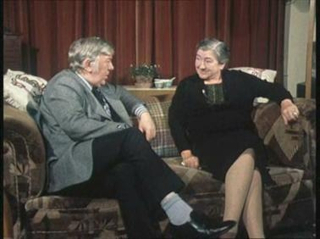
(Pictured: Ciarán Mac Mathúna and Máire Ní Scolaí (1976))


Leave a comment

John Kennedy’s Address to Oireachtas

jfk-address-to-oireachtas

United States President John F. Kennedy addresses a joint session of Houses of the Oireachtas in Dublin on June 28, 1963, on the third day of his Irish visit. It follows a visit earlier in the day to Cork where he is greeted like a rock star.

Kennedy makes a surprising mistake when speaking to a packed Dáil Éireann about one of the most momentous days for the Irish Brigade during the American Civil War. Somehow, Kennedy gets his dates and geography mixed up when he says, “The 13th day of September, 1862, will be a day long remembered in American history. At Fredericksburg, Maryland, thousands of men fought and died on one of the bloodiest battlefields of the American Civil War.” The date of the Battle of Fredericksburg where so many Irish are slaughtered is December 13 rather than September 13 as Kennedy states. Also, Fredericksburg is in Virginia and not Maryland.

Kennedy is accompanied on this European trip, which includes the famous Ich bin ein Berliner, speech by his counselor and speech writer Ted Sorensen, a master wordsmith and fastidious researcher who seems to have erred in the writing of the speech. It is unlikely that Kennedy mispronounced “December” as the transcript of the speech at the John F. Kennedy Presidential Library and Museum includes the incorrect dates. No one in Dáil Éireann appears to notice Kennedy’s error.

Aside from this mistake, the speech is uplifting and motivating to an Irish nation that is still young. Kennedy says:

“This has never been a rich or powerful country, and yet, since earliest times, its influence on the world has been rich and powerful. No larger nation did more to keep Christianity and Western culture alive in their darkest centuries. No larger nation did more to spark the cause of independence in America, indeed, around the world. And no larger nation has ever provided the world with more literary and artistic genius.

This is an extraordinary country. George Bernard Shaw, speaking as an Irishman, summed up an approach to life: Other people, he said “see things and . . . say ‘Why?’ . . . But I dream things that never were – and I say: ‘Why not?’” ”

The complete audio version of Kennedy’s speech can be heard on the John F. Kennedy Presidential Library and Museum website.


Leave a comment

Douglas Hyde Inaugurated First President of Ireland

douglas-hyde

Dr. Douglas Hyde, Gaelic scholar from County Roscommon, is inaugurated as the first President of Ireland on June 25, 1938.

Hyde is born at Longford House in Castlerea, County Roscommon, on January 17, 1860. In 1867, his father is appointed prebendary and rector of Tibohine, and the family moves to neighbouring Frenchpark, in County Roscommon. He is home schooled by his father and his aunt due to a childhood illness. While a young man, he becomes fascinated with hearing the old people in the locality speak the Irish language.

Rejecting family pressure to follow previous generations with a career in the Church, Hyde instead becomes an academic. He enters Trinity College, Dublin, where he gains a great facility for languages, learning Latin, Greek, Hebrew, French, and German, but his great passion in life is the preservation of the Irish language.

After spending a year teaching modern languages in Canada, Hyde returns to Ireland. For much of the rest of his life he writes and collects hundreds of stories, poems, and folktales in Irish, and translates others. His work in Irish helps to inspire many other literary writers, such as W.B. Yeats and Lady Gregory.

In 1892, Hyde helps establish the Gaelic Journal and in November of that year writes a manifesto called The necessity for de-anglicising the Irish nation, arguing that Ireland should follow her own traditions in language, literature, and even in dress.

In 1893, Hyde founds the Gaelic League (Conradh na Gaeilge) along with Eoin MacNeill and Fr. Eugene O’Growney and serves as its first president. Many of the new generation of Irish leaders who play a central role in the fight for Irish independence in the early twentieth century, including Patrick Pearse, Éamon de Valera, Michael Collins, and Ernest Blythe first become politicised and passionate about Irish independence through their involvement in the Gaelic League. Hyde does not want the Gaelic League to be a political entity, so when the surge of Irish nationalism that the Gaelic League helps to foster begins to take control of many in the League and politicize it in 1915, Hyde resigns as president.

Hyde takes no active part in the armed upheaval of the 1910s and 1920s, but does serve in Seanad Éireann, the upper house of the Irish Free State‘s Oireachtas, as a Free State senator in 1925-26. He then returns to academia, as Professor of Irish at University College Dublin, where one of his students is future Attorney General and President of Ireland Cearbhall Ó Dálaigh.

In 1938, Hyde is unanimously elected to the newly created position of President of Ireland, a post he holds until 1945. He is inaugurated on June 26, 1938, in the first inaugural ceremony in the nation’s history. He sets a precedent by reciting the Presidential Declaration of Office in Irish. His recitation, in Roscommon Irish, is one of a few recordings of a dialect of which Hyde is one of the last speakers. Upon inauguration, he moves into the long vacant Viceregal Lodge in Phoenix Park, since known as Áras an Uachtaráin.

Hyde’s selection and inauguration receive worldwide media attention and is covered by newspapers in Australia, New Zealand, South Africa, Argentina, and Egypt. Adolf Hitler “orders” the Berlin newspapers “to splash” on the Irish presidential installation ceremony. However, the British government ignores the event. The Northern Ireland Finance Minister, John Miller Andrews, described Hyde’s inauguration as a “slight on the King” and “a deplorable tragedy.”

Despite being placed in a position to shape the office of the presidency via precedent, Hyde by and large opts for a quiet, conservative interpretation of the office.

In April 1940 Hyde suffers a massive stroke and plans are made for his lying-in-state and state funeral, but to the surprise of everyone he survives, albeit paralysed and confined to a wheelchair. One of Hyde’s last presidential acts is a visit to the German ambassador Eduard Hempel on May 3, 1945, to offer his condolences on the death of Adolf Hitler, a visit which remains a secret until 2005.

Hyde leaves office on June 25, 1945, opting not to nominate himself for a second term. He opts not return to his Roscommon home due to his ill-health but rather moves into the former Secretary to the Lord Lieutenant’s residence in the grounds of Áras an Uachtaráin, where he lived out the remaining four years of his life.

Hyde dies in Dublin on July 12, 1949, at age 89. As a former President of Ireland, he is accorded a state funeral which, as a member of the Church of Ireland, takes place in Dublin’s Church of Ireland St. Patrick’s Cathedral. Since contemporary rules of the Roman Catholic Church in Ireland at the time prohibit Roman Catholics from attending services in non-Catholic churches, all but one member of the Catholic cabinet remains outside the cathedral grounds while Hyde’s funeral takes place. Hyde is buried in Frenchpark, County Roscommon at Portahard Church.


Leave a comment

Birth of RUC Chief Constable Hugh Annesley

hugh-annesley

Sir Hugh Norman Annesley, retired Royal Ulster Constabulary (RUC) Chief Constable, is born in Dublin on June 22, 1939. He serves as Chief Constable of the RUC from June 1989 to November 1996.

Annesley is educated at St. Andrew’s Preparatory School and the Avoca School for Boys in Blackrock. He joins the Metropolitan Police in London as a constable in 1958. Rising through the ranks to chief superintendent in 1974, he attends the Special Course (1963), Intermediate Command Course (1971) and Senior Command Course (1975) at the Police Staff College, Bramshill, before transferring to Sussex Police as Assistant Chief Constable (Personnel & Operations) in 1976.

Annesley attends the Royal College of Defence Studies in 1980 and the following year returns to the Metropolitan Police as Deputy Assistant Commissioner (Central & North West London). In 1983 he becomes Deputy Assistant Commissioner (Personnel) and in 1984 is director of the Force Re-organisation Team.

In April 1985, under the new organisational structure, Annesley is appointed Assistant Commissioner Personnel and Training (ACPT) and in 1987 becomes Assistant Commissioner Specialist Operations (ACSO). In 1986 he graduates from the FBI National Executive Institute in the United States. In 1989 he takes up command of the RUC, despite the post being widely expected to go to Geoffrey Dear. He holds the post until his retirement in 1996.

Annesley is awarded the Queen’s Police Medal (QPM) in the 1986 New Year Honours and is knighted in the 1992 New Year Honours.


Leave a comment

Birth of Boomtown Rats Guitarist Garry Roberts

garry-roberts

Garrick “Garry” Roberts, founding member and former lead guitarist of The Boomtown Rats, is born in Dublin on June 17, 1950.

Roberts’s father, Rex Roberts, played double bass with a dance band called The Melodists in the 1940s. The headmaster at The High School, Dublin, calls his father in one day to suggest that he consider move his son to a boarding school as he is spending a lot of time in detention.

After being bribed with the promise of a bicycle, Roberts is moved to a Quaker-run boarding school, Newtown School, Waterford. The move proves successful but not for the anticipated reasons. He quickly takes notice of the electric guitars of the school band and realizes that is to be his future.

In 1976, Roberts and Johnnie Fingers (Moylett) decide to put a band together and, between them, they recruit the other four members, Pete Briquette (bass), Gerry Cott (guitar), Simon Crowe (drums) and singer Bob Geldof to form The Boomtown Rats.

Following the breakup of The Boomtown Rats in 1986, Roberts works with Simply Red, Orchestral Manoeuvres in the Dark and Flesh For Lulu in the role of audio engineer on tours in the UK and the United States. He avoids playing the guitar in public for ten years, after which he and Simon Crowe play together for four years in the rhythm and blues four-piece band The Velcro Flies.

After fifteen successful years as an Independent Financial Adviser, Roberts becomes disillusioned with the life insurance industry and becomes a central heating engineer to keep himself occupied between gigs. Roberts and Crowe, with Darren Beale on second lead guitar, and Peter Barton on bass guitar and lead vocals, are now playing together as Boomtown Rats Roberts and Crowe, and are performing material from the Boomtown Rats’ first three albums across Europe and the UK.

Garry Roberts currently lives in Bromyard, Herefordshire, England.


Leave a comment

Death of Rory Gallagher, Irish Blues & Rock Guitarist

rory-gallagher

William Rory Gallagher, Irish blues and rock multi-instrumentalist, songwriter, and bandleader, dies at the age of 47, in London on June 14, 1995 of complications following a liver transplant.

Gallagher is born in Ballyshannon, County Donegal, on March 2, 1948. Both he and his brother Dónal are musically inclined and encouraged by their parents. At age nine, Gallagher receives his first guitar from them. After winning a talent contest when he is twelve, he begins performing with both his acoustic guitar and an electric guitar that he purchases with his prize money. It is, however, his purchase three years later of a 1961 Fender Stratocaster for £100 that becomes his primary instrument and most associated with him for the span of his lifetime.

Gallagher is initially attracted to skiffle after hearing Lonnie Donegan on the radio. While still in school, playing songs by Buddy Holly and Eddie Cochran, he discovers his greatest influence in Muddy Waters. He begins experimenting with folk, blues, and rock music.

While still a young teenager, Gallagher begins playing after school with Irish showbands. In 1963, he joins one named Fontana, a sextet playing the popular hit songs of the day. The band tours Ireland and the United Kingdom, earning enough money for Gallagher to make the payments on his Stratocaster guitar. Gallagher begins to influence the band’s repertoire and successfully moulds Fontana into The Impact, changing the line-up into a rhythm and blues group. The band plays gigs in Ireland and Spain until it disbands in London, with Gallagher and the bassist and drummer continuing to perform as a trio in Hamburg, Germany.

In 1966, Gallagher returns to Ireland and forms Taste, a blues rock and R&B power trio. Initially, the band is composed of Gallagher and Cork musicians Norman Damery and Eric Kitteringham. However, by 1968, Damery and Kitteringham are replaced by Belfast musicians John Wilson on drums and Richard McCracken on bass. Performing extensively in the UK, the group supports both Cream at their Royal Albert Hall farewell concert and the blues supergroup Blind Faith on a tour of North America.

After the break-up of Taste in 1970, Gallagher tours under his own name. He hires former Deep Joy bass player Gerry McAvoy to play on his self-titled debut album, Rory Gallagher. This is the beginning of a twenty-year musical relationship between Gallagher and McAvoy. The 1970s are Gallagher’s most prolific period, producing ten albums in the decade. In 1971 he is voted Melody Maker‘s International Top Guitarist of the Year, ahead of Eric Clapton. However, despite a number of his albums reaching the UK Albums Chart, Gallagher does not attain major star status. Though he sells over thirty million albums worldwide, it is his marathon live performances that win him the greatest acclaim.

In the 1980s Gallagher continues recording and embarks on a tour of the United States. In addition, he plays with Box of Frogs, a band formed in 1983 by former members of The Yardbirds.

In the later years of his life, Gallagher develops a phobia of flying. To overcome this he receives a prescription for a powerful sedative. This medication, combined with his alcohol use, results in severe liver damage. Despite his condition he continues touring. By his final performance on January 10, 1995 in the Netherlands, he is visibly ill and the remainder of the tour is cancelled. He is admitted to King’s College Hospital in London in March 1995. His liver is failing and the doctors determine that a liver transplant is the only possible course of action. After 13 weeks in intensive care, his health suddenly worsens when he contracts a Staphylococcal infection. Gallagher dies on June 14, 1995, and is buried in St. Oliver’s Cemetery just outside Ballincollig near Cork.


Leave a comment

Death of Novelist Arthur Henry Ward

arthur-henry-ward

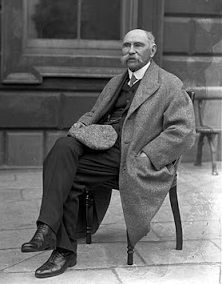
Arthur Henry “Sarsfield” Ward, prolific English novelist better known as Sax Rohmer, dies on June 1, 1959. He is best remembered for his series of novels featuring the master criminal Dr. Fu Manchu.

Born in Birmingham to a working class family on February 15, 1883, Ward initially pursues a career as a civil servant before concentrating on writing full-time. He works as a poet, songwriter and comedy sketch writer for music hall performers before creating the Sax Rohmer persona and pursuing a career writing fiction.

Like his contemporaries Algernon Blackwood and Arthur Machen, Ward claims membership to one of the factions of the qabbalistic Hermetic Order of the Golden Dawn. He also claims ties to the Rosicrucians, but the validity of his claims has been questioned. His doctor and family friend Dr R. Watson Councell may have been his only legitimate connection to such organisations.

Ward’s first published work comes in 1903, when the short story “The Mysterious Mummy” is sold to Pearson’s Weekly. His main literary influences are Edgar Allan Poe, Arthur Conan Doyle and M. P. Shiel.

Ward gradually transitions from writing for music hall performers to concentrating on short stories and serials for magazine publication. In 1909 he marries Rose Elizabeth Knox. He publishes his first book Pause! anonymously in 1910.

After penning Little Tich in 1911 as ghostwriter for the famous music hall entertainer of the same name, Ward issues the first Fu Manchu novel, The Mystery of Dr. Fu-Manchu, serialised from October 1912 to June 1913. It is an immediate success. The Fu Manchu stories, together with his more conventional detective series characters — Paul Harley, Gaston Max, Red Kerry, Morris Klaw and the Crime Magnet — make him one of the most successful and well-paid authors of the 1920s and 1930s. In the 28 years from 1931 to 1959, he adds no fewer than 10 new books to the Fu Manchu series.

Other works by Ward include The Orchard of Tears (1918), The Quest of the Sacred Slipper (1919), Tales of Chinatown (1922) and Brood of the Witch-Queen as well as numerous short stories.

Ward’s work is banned in Nazi Germany, causing him to complain that he could not understand such censorship, stating “my stories are not inimical to Nazi ideals.”

After World War II, Ward and his wife move to New York, only returning to London shortly before his death. He dies on June 1, 1959 at the age of 76, due to an outbreak of Influenza A virus subtype H2N2.