seamus dubhghaill

Promoting Irish Culture and History from Little Rock, Arkansas, USA


2 Comments

Founding of Clan na Gael in New York City

CREATOR: gd-jpeg v1.0 (using IJG JPEG v62), quality = 90

The Clan na Gael, an Irish republican organization in the United States in the late 19th and 20th centuries, is founded by John Devoy, Daniel Cohalan, and Joseph McGarrity in New York City on June 20, 1867. It is the successor to the Fenian Brotherhood and a sister organization to the Irish Republican Brotherhood (IRB). It has shrunk to a small fraction of its former size in the 21st century.

As Irish immigration to the United States begins to increase in the 18th century many Irish organizations are formed. In the later part of the 1780s, a strong Irish patriot character begins to grow in these organizations and amongst recently arrived Irish immigrants.

In 1858, the IRB is founded in Dublin by James Stephens. In response to the establishment of the IRB in Dublin, a sister organization is founded in New York City, the Fenian Brotherhood, led by John O’Mahony. This arm of Fenian activity in America produces a surge in radicalism among groups of Irish immigrants, many of whom had recently emigrated from Ireland during and after the Great Famine.

In October 1865, the Fenian Philadelphia Congress meets and appoints the Irish Republican Government in the United States. Meanwhile in Ireland, the IRB newspaper The Irish People is raided by the police and the IRB leadership is imprisoned. Another abortive uprising occurs in 1867, but the British remain in control.

After the 1865 crackdown in Ireland, the American organization begins to fracture over what to do next. Made up of veterans of the American Civil War, a Fenian army is formed. While O’Mahony and his supporters want to remain focused on supporting rebellions in Ireland, a competing faction, called the Roberts, or senate wing, wants this Fenian Army to attack British bases in Canada. The resulting Fenian raids strain U.S.–British relations. The level of American support for the Fenian cause begins to diminish as the Fenians are seen as a threat to stability in the region.

After 1867, the Irish Republican Brotherhood headquarters in Manchester chooses to support neither of the existing feuding factions, but instead promotes a renewed Irish republican organization in America, to be named Clan na Gael.

According to John Devoy in 1924, Jerome James Collins founds what is then called the Napper Tandy Club in New York on June 20, 1867, Wolfe Tone‘s birthday. This club expands into others and at one point at a picnic in 1870 is named the Clan na Gael by Sam Cavanagh. This is the same Cavanagh who killed the informer George Clark, who had exposed a Fenian pike-making operation in Dublin to the police.

Collins, who dies in 1881 on the disastrous Jeannette Expedition to the North Pole, is a science editor on the New York Herald, who had left England in 1866 when a plot he was involved in to free the Fenian prisoners at Pentonville Prison was uncovered by the police. Collins believes at the time of the founding in 1867 that the two feuding Fenians branches should patch things up.

The objective of Clan na Gael is to secure an independent Ireland and to assist the Irish Republican Brotherhood in achieving this aim. It becomes the largest single financier of both the Easter Rising and the Irish War of Independence.

Clan na Gael continues to provide support and aid to the Irish Republican Army (IRA) after it is outlawed in Ireland by Éamon de Valera in 1936 but becomes less active in the 1940s and 1950s. However, the organization grows in the 1970s. The organization plays a key part in the Irish Northern Aid Committee (NORAID) and is a prominent source of finance and weapons for the Provisional Irish Republican Army during the Troubles in Northern Ireland in 1969–1998.

The Clan na Gael still exists today, much changed from the days of the Catalpa rescue. In 1987 the policy of abstentionism is abandoned. As recently as 1997 another internal split occurs as a result of the IRA shift away from the use of physical force as a result of the 1998 Good Friday Agreement. The two factions are known to insiders as Provisional Clan na Gael (allied to Provisional Sinn Féin/IRA) and Republican Clan na Gael (associated with both Republican Sinn Féin/Continuity IRA and 32 County Sovereignty Movement/Real IRA, though primarily the former). These have been listed as terrorist organizations at various times by the UK Government.

(Pictured: Clan na Gael marching in the 1970 St. Patrick’s Day Parade in Philadelphia, photograph by John Hamilton)


Leave a comment

Death of John Bourke, U.S. Army Captain

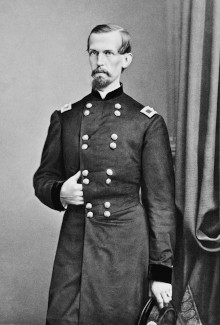
File source: http://en.wikipedia.org/wiki/File:John_Bourke.jpg

John Gregory Bourke, a captain in the United States Army and a prolific diarist and postbellum author, dies in Philadelphia, Pennsylvania on June 8, 1896. He writes several books about the American Old West, including ethnologies of its indigenous peoples.

Bourke is born in Philadelphia on June 23, 1846, to Irish immigrant parents, Edward Joseph and Anna (Morton) Bourke. His early education is extensive and includes Latin, Greek, and Gaelic. When the American Civil War begins, Bourke is fourteen. At sixteen he runs away from home. Claiming to be nineteen, he enlists in the 15th Regiment Pennsylvania Volunteer Cavalry, in which he serves until July 1865. He receives a Medal of Honor for “gallantry in action” at the Battle of Stones River, Tennessee, in December 1862. He later sees action at the Battle of Chickamauga.

Based on his service during the war, Bourke’s commander, Major General George Henry Thomas, nominates him for the United States Military Academy at West Point, New York. He is appointed cadet in the Academy on October 17, 1865. He graduates on June 15, 1869, and is assigned as a second lieutenant in the 3rd Cavalry Regiment. He serves with his regiment at Fort Craig, New Mexico Territory, from September 29, 1869, to February 19, 1870.

Bourke serves as an aide to General George Crook in the Apache Wars from 1872 to 1883. As Crook’s aide, he has the opportunity to witness every facet of life in the Old West — the battles, wildlife, the internal squabbling among the military, the Indian Agency, settlers, and Native Americans.

During his time as aide to General Crook during the Apache Wars, Bourke keeps journals of his observations that are later published as On the Border with Crook. This book is considered one of the best firsthand accounts of frontier army life, as Bourke gives equal time to both the soldier and the Native American. Within it, he describes the landscape, Army life on long campaigns, and his observations of the Native Americans. His passages recount General Crook’s meetings with Sitting Bull, Crazy Horse, and Geronimo as the General attempts to sign peace treaties and relocate tribes to reservations. He provides considerable detail of towns and their citizens in the Southwest, specifically the Arizona Territory.

In 1881 Bourke is a guest of the Zuni tribe, where he is allowed to attend the ceremony of a Newekwe priest. His report of this experience is published in 1888 as The use of human odure and human urine in rites of a religious or semi religious character among various nations.

Bourke marries Mary F. Horbach of Omaha, Nebraska, on July 25, 1883. They have three daughters together.

John Bourke dies in the Polyclinic Hospital in Philadelphia on June 8, 1896, and is buried at Arlington National Cemetery. His wife is buried beside him after her death.


Leave a comment

Birth of Joseph Shanahan, Bishop for Southern Nigeria

joseph-shanahan

Joseph Ignatius Shanahan B.Sc., C.S.Sp., priest of the Congregation of the Holy Spirit (Spiritans), is born on June 6, 1871 in Glankeen, Borrisoleigh, County Tipperary. He serves as a bishop in Nigeria, first as prefect apostolic of Lower Niger and then as vicar apostolic of Southern Nigeria.

Shanahan joins the Holy Ghost Order in France in 1886, where his uncle Pat Walsh (Brother Adelm) had also joined the Holy Ghost Fathers. In 1889, he is transferred to the French Juniorate of the Congregation in Cellule in the Auvergne. He makes his profession on Easter Sunday 1898 and his ordination takes place on April 22, 1900 in the Blackrock College chapel.

By mid-July 1902, Shanahan has received his appointment for Nigeria to help Fr. Léon Lejeune make bricks to build the first proper mission house in Onitsha.

Shanahan is instrumental in the setting up of the Saint Patrick’s Society for the Foreign Missions, sometimes known as the Kiltegan Fathers, when in 1920, following his ordination in Maynooth as Bishop for Southern Nigeria (then a British protectorate), he appeals to students in Maynooth College for missionaries to Nigeria and Africa.

In 1924 Bishop Shanahan founds a missionary society for women, the Missionary Sisters of the Holy Rosary, in Killeshandra, County Cavan.

Bishop Shanahan dies at Nairobi, Kenya, on Christmas Day 1943 aged 72 years, and is initially buried in the community cemetery in St. Mary’s School in Nairobi. However, in January 1956 his remains are brought back to Nigeria for the “second burial” in the Cathedral Basilica of the Most Holy Trinity, Onitsha.

Always revered as a saint by those in close contact with him, Shanahan’s cause for Beatification is introduced officially on November 15, 1997 in Onitsha cathedral.


Leave a comment

Birth of Alice Stopford Green, Historian & Nationalist

NPG x74642,Alice Stopford Green (nÈe Alice Sophia Amelia Stopford),by Henry Herschel Hay Cameron (later The Cameron Studio)

Alice Stopford Green, Irish historian and nationalist, is born in Kells, County Meath on May 30, 1847. She is noted for proving the Irish had a rich culture before English rule. A strong supporter of the Anglo-Irish Treaty of 1921, she is nominated to the first Seanad Éireann in December 1922.

Stopford Green is born Alice Sophia Amelia Stopford. Her father, Edward Adderley Stopford, is Rector of Kells and Archdeacon of Meath. Her paternal grandfather is Edward Stopford, the Church of Ireland Bishop of Meath, and she is a cousin of Stopford Brooke and Mother Mary Clare. From 1874 to 1877 she lives in London where she meets the historian John Richard Green. They are married in Chester on June 14, 1877; however, he dies in 1883. John Morley publishes her first historical work, Henry II, in 1888.

In the 1890s Stopford Green becomes interested in Irish history and the nationalist movement as a result of her friendship with John Francis Taylor. She is vocal in her opposition to English colonial policy in South Africa during the Boer Wars and supports Roger Casement‘s Congo Reform movement. Her 1908 book The Making of Ireland and its Undoing argues for the sophistication and richness of the native Irish civilisation. She is active in efforts to make the prospect of Home Rule more palatable to Ulster Unionists. She is closely involved in the Howth gunrunning.

Stopford Green moves to Dublin in 1918 where her house at 90 St. Stephen’s Green becomes an intellectual centre. She supports the pro-Treaty side in the Irish Civil War and is among the first nominees to the newly formed Seanad Éireann in 1922, where she serves as an independent member until her death in Dublin on May 28, 1929, two days shy of her 82nd birthday. She is one of four women elected or appointed to the first Seanad in 1922.


Leave a comment

Birth of Bob Tisdall, Olympic Gold Medalist

bob-tisdall

Robert (“Bob”) Morton Newburgh Tisdall, gold medalist in the 400 metres hurdles at the 1932 Summer Olympics in Los Angeles, is born on May 16, 1907, in Nuwara Eliya, Ceylon (now Sri Lanka).

Born to a family of Irish landed gentry, he lives on his father’s plantation in Ceylon until the age of five, when they return to the family home in Nenagh, County Tipperary. Following prep school at Mourne Grange, he goes on to Shrewsbury School, where he wins the Public Schools 402 metres, and at Gonville and Caius College, Cambridge, where he wins a record four events – 402 metres and 110 metres hurdles, long jump and shot put – in the annual match against Oxford. This record is only equaled nearly 60 years later.

Tisdall sets South African and Canadian records in the 201 metres low hurdles in 1929, a year later setting Greek records in the same event. While at Cambridge in March 1932, he decides to try for a place on the Irish Olympic squad and, after he runs a record 54.2 seconds for the Irish Championship 402 metres hurdles in June that year, the authorities agree to let him run in his new event at the Los Angeles Olympic Games.

Tisdall had run only six 400 metres hurdles when he wins the gold medal at the 1932 Olympic Games in a world record time of 51.7 seconds, which is not recognised under the rules of the time because he had a hit a hurdle. Later, because of the notoriety of this incident, the rules are changed and the President of the International Olympic Committee, Juan Antonio Samaranch, presents Tisdall with a Waterford Crystal rose bowl with the image of him knocking over the last hurdle etched into the glass. Though the International Amateur Athletic Federation (IAAF) did not recognise the record at the time, they now recognise the mark, giving Tisdall credit for setting the milestone of being the first man under 52 seconds.

Following his victory, Tisdall is invited to a dinner in Los Angeles where he is seated next to Amelia Earhart on one side and Douglas Fairbanks, Jr. on the other.

Later in life, Tisdall lives in South Africa, where he runs a gymnasium during the day, which he converts to a night club after dark. He grows coffee in Tanzania, but moves to Nambour, Queensland in 1969 with his wife Peggy, where he farms fruit crops and cattle. He admits to running his last race at the age of 80, though he runs in the Sydney Olympics torch relay at age 93. At that point he is the oldest living recipient of an individual track and field Olympic medal。

At the age of 96 Tisdall falls down a steep set of rock stairs and breaks his shoulder, ribs and ruptures his spleen. He never completely recovers and dies on July 27, 2004. At that time, he is the world’s oldest track and field Olympic Gold medalist. He does not want a funeral because “they are altogether too sad.” His wake is attended by family and a few friends.

In 2002, three statues honouring Olympic champions with links to Nenagh, Matt McGrath, Johnny Hayes and Bob Tisdall, are unveiled in front of the Nenagh Courthouse.


Leave a comment

Birth of Composer Michael William Balfe

michael-william-balfe

Michael William Balfe, Irish composer best remembered for his opera The Bohemian Girl, is born in Dublin on May 15, 1808.

Balfe’s musical gifts become apparent at an early age. He receives instruction from his father, a dancing master and violinist, and the composer William Rooke. His family moves to Wexford when he is a child.

In 1817, Balfe appears as a violinist in public, and in this year composes a ballad, first called “Young Fanny” and afterwards, when sung in Paul Pry by Lucia Elizabeth Vestris, “The Lovers’ Mistake”. In 1823, upon the death of his father, he moves to London and is engaged as a violinist in the orchestra of the Theatre Royal, Drury Lane. He eventually becomes the leader of that orchestra. While there, he studies violin with Charles Edward Horn and composition with Charles Frederick Horn.

While still playing the violin, Balfe pursues a career as an opera singer. He debuts unsuccessfully at Norwich in Carl Maria von Weber‘s Der Freischütz. In 1825, Count Mazzara takes him to Rome for vocal and musical studies and introduces him to Luigi Cherubini. In Italy, he also pursues composing, writing his first dramatic work, a ballet, La Perouse. He becomes a protégée of Gioachino Rossini‘s, and at the close of 1827, he appears as Figaro in The Barber of Seville at the Italian opera in Paris.

Balfe soon returns to Italy, where he is based for the next eight years, singing and composing several operas. In 1829 in Bologna, he composes his first cantata for the soprano Giulia Grisi, then 18 years old. He produces his first complete opera, I rivali di se stessi, at Palermo in the carnival season of 1829—1830.

Balfe returned to London in May 1835. His initial success takes place some months later with the premiere of The Siege of Rochelle on October 29, 1835, at Drury Lane. Encouraged by his success, he produces The Maid of Artois in 1836, which is followed by more operas in English. In July 1838, Balfe composes a new opera, Falstaff, for The Italian Opera House, based on The Merry Wives of Windsor, with an Italian libretto by S. Manfredo Maggione.

In 1841, Balfe founds the National Opera at the Lyceum Theatre, but the venture is a failure. The same year, he premieres his opera, Keolanthe. He then moves to Paris, presenting Le Puits d’amour in early 1843, followed by his opera based on Les quatre fils Aymon for the Opéra-Comique and L’étoile de Seville for the Paris Opera. Meanwhile, in 1843, he returns to London where he produces his most successful work, The Bohemian Girl, on November 27, 1843, at the Theatre Royal, Drury Lane. The piece runs for over 100 nights, and productions are soon mounted in New York, Dublin, Philadelphia, Vienna, Sydney, and throughout Europe and elsewhere.

From 1846 to 1852, Balfe is appointed musical director and principal conductor for the Italian Opera at Her Majesty’s Theatre. There he first produces several of Giuseppe Verdi‘s operas for London audiences. He conducts for Jenny Lind at her opera debut and on many occasions thereafter.

In 1851, in anticipation of The Great Exhibition in London, Balfe composes an innovative cantata, Inno Delle Nazioni, sung by nine female singers, each representing a country. He continues to compose new operas in English, including The Armourer of Nantes (1863), and writes hundreds of songs. His last opera, nearly completed when he dies, is The Knight of the Leopard and achieves considerable success in Italian as Il Talismano.

Balfe retires in 1864 to Hertfordshire, where he rents a country estate. He dies at his home in Rowney Abbey, Ware, Hertfordshire, on October 20, 1870, and is buried at Kensal Green Cemetery in London, next to fellow Irish composer William Vincent Wallace. In 1882, a medallion portrait of him is unveiled in Westminster Abbey.

In all, Balfe composes at least 29 operas. He also writes several cantatas and a symphony. His only large-scale piece that is still performed regularly today is The Bohemian Girl.


Leave a comment

The Execution of Joe Brady

joe-brady

Joe Brady is hanged at Kilmainham Gaol in Kilmainham, Dublin on May 14, 1883 for the murder of Lord Frederick Cavendish in Phoenix Park, Dublin. Four others are also executed for the murders.

Brady is a member of the Irish National Invincibles, usually known as the Invincibles, a splinter group of the Irish Republican Brotherhood. This group of assassins is active in Dublin between late 1881 and 1883, with an intent to kill the authorities in Dublin Castle.

After numerous attempts on his life, Chief Secretary for Ireland William Edward “Buckshot” Forster resigns in protest of the Kilmainham Treaty. The Invincibles settle on a plan to kill the Permanent Under Secretary Thomas Henry Burke at the Irish Office. The newly installed Chief Secretary for Ireland, Lord Frederick Cavendish, is walking in Phoenix Park with Burke on Saturday, May 6, 1882, the day of his arrival in Ireland, when the assassins strike.

The first assassination in the park is committed by Brady, who attacks Burke with a 12-inch knife, followed in short order by Tim Kelly, who knifes Cavendish. Both men use surgical knives. The British press expresses outrage and demands that the “Phoenix Park Murderers” be brought to justice.

A large number of suspects are arrested. By playing one suspect against another, Superintendent Mallon of G Division of the Dublin Metropolitan Police gets several of them to reveal what they know. The Invincibles’ leader, James Carey, and Michael Kavanagh agree to testify against the others. Carey is ultimately given passage to South Africa but is shot on board the Melrose Castle by Patrick O’Donnell. O’Donnell is brought back to England and hanged in December 1883.

Brady, Michael Fagan, Thomas Caffrey, Dan Curley and Tim Kelly are hanged by William Marwood in Kilmainham Gaol in Dublin beginning with Brady’s execution on May 14 and and continuing until June 4. Others are sentenced to long prison terms.

No member of the founding executive, however, is ever brought to trial by the British government. John Walsh, Patrick Egan, John Sheridan, Frank Byrne, and Patrick Tynan are welcomed in the United States, where sentiment toward the murders is less severe, although not celebratory.

Brady by all accounts was a mountain of a man. The Times writes following his execution: “He was brought up as a stonemason of herculean strength, his occupation developing the muscular power of his arms, which told with such terrible effect when he drove the knives into the bodies of Lord Cavendish and his secretary T. H. Burke.”

Kilmainham Gaol contains the graves of the Invincibles convicted and executed for the Phoenix park stabbings.


Leave a comment

First Production of the Irish Literary Theatre

CREATOR: gd-jpeg v1.0 (using IJG JPEG v62), quality = 75

The first production of the Irish Literary Theatre, The Countess Cathleen, is performed on May 8, 1899. Like many of William Butler Yeats’ plays, it is inspired by Irish folklore. In a time of famine, demons sent by Satan come to Ireland to buy the souls of the starving people. The saintly Cathleen disposes of her vast estates and wealth in order to feed the peasants, yet the demons thwart her at every turn. At last, she sacrifices her own soul to save those of the poor.

Yeats, Lady Gregory and Edward Martyn publish a “Manifesto for Irish Literary Theatre” in 1897, in which they proclaim their intention of establishing a national theatre for Ireland. The Irish Literary Theatre is founded by Yeats, Lady Gregory, Martyn and George Moore in Dublin in 1899. It proposes to give performances in Dublin of Irish plays by Irish authors.

In 1899 Lady Gregory secures a temporary licence for a play to be given at the Antient Concert Rooms in Great Brunswick Street (now Pearse Street) in Dublin and so enables the Irish Literary Theatre to give its first production. The play chosen is The Countess Cathleen by Yeats. It is done by a very efficient London company that includes May Whitty (Dame May Webster) and Ben Webster. The next production given is Martyn’s play The Heather Field.

In the following year the Irish Literary Theatre produces three plays at the Gaiety Theatre in Dublin: Maeve by Edward Martyn, The Last Feast of Fianna by Alice Milligan and The Bending of the Bough by George Moore. The Bending of the Bough is staged during the Second Boer War which begins on October 11, 1899.

The Irish Literary Theatre project lasts until 1901, when it collapses due to lack of funding.

The use of non-Irish actors in these productions is perceived to be a failure, and a new group of Irish players is put together by the brothers William and Frank Fay, among others. These go on to form the Irish National Theatre Society, which leads to the founding of the Abbey Theatre in Dublin in 1904.


Leave a comment

Creation of the Diocese of Galway

cathedral-of-our-lady-assumed-into-heaven-and-st-nicholas

The Diocese of Galway is created on April 23, 1831. The diocese has its origins in the ancient Kilmacduagh monastery and the Wardenship of Galway (1484–1831). Following the abolition of the Wardenship by the Holy See in 1831, the first Bishop of the new Diocese of Galway is appointed in the same year.

In 1866, Bishop John McEvilly of Galway is made Apostolic Administrator of the diocese of Kilmacduagh and Kilfenora. When he is appointed coadjutor bishop to the Archdiocese of Tuam in 1878, he retains Galway until he succeeds as archbishop in 1881. McEvilly continues to oversee Kilmacduagh and Kilfenora until 1883 when Pope Leo XIII unites the diocese with the neighbouring Diocese of Kilmacduagh. At the same time, the ordinary of the United Diocese of Galway and Kilmacduagh is appointed, in perpetuum, as the Apostolic Administrator of the Diocese of Kilfenora.

The bishopric of Kilmacduagh had been a separate title until 1750 when Pope Benedict XIV decrees that it is to be united with the bishopric of Kilfenora. Since Kilmacduagh is in the Ecclesiastical province of Tuam while Kilfenora is in the Province of Cashel, it is arranged that the ordinary of the united dioceses is to be alternately bishop of one diocese and apostolic administrator of the other. The first holder of this unusual arrangement is Peter Kilkelly, who had been Bishop of Kilmacduagh since 1744. He becomes Apostolic Administrator of Kilfenora in September 1750. Since that date, Kilfenora has been administered by that united diocese as an apostolic vicariate. Since the territory of an apostolic vicariate comes directly under the pope as “universal bishop”, the pope exercises his authority in Kilfenora through a “vicar.”

The geographic remit of the see includes the city of Galway, parts of County Galway and the northern coastal part of County Clare. Large population centres include Ennistymon, Oranmore and Oughterard. The cathedral church of the diocese is the Cathedral of Our Lady Assumed into Heaven and St. Nicholas. It is in the ecclesiastical province of Tuam and is subject to the Metropolitan Archdiocese of Tuam. The deanery of Kilfenora, previously a diocese in its own right, lies in the ecclesiastical province of Cashel. The Ordinary is Bishop Brendan Kelly who is appointed on December 11, 2017.

(Pictured: The Cathedral of Our Lady Assumed into Heaven and St. Nicholas)


Leave a comment

Death of Captain William O’Shea

william-o-shea

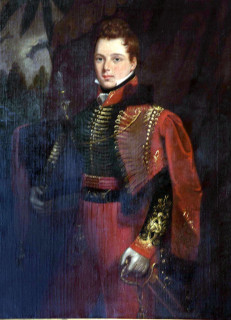
Captain William Henry O’Shea, Irish soldier and Member of Parliament (MP), dies in Hove on the south coast of England on April 22, 1905. He is best known for being the ex-husband of Katharine O’Shea, the long-time mistress of the Irish nationalist leader Charles Stewart Parnell.

Born in Dublin in 1840, O’Shea is a captain in the 18th Royal Hussars of the British Army.

Around 1880, O’Shea’s wife, Katharine O’Shea, enters into a relationship with the Irish nationalist leader Charles Stewart Parnell, with whom she has three children. O’Shea, who is already separated from his wife, is aware of the relationship.

In 1882 when the Liberal Government is secretly negotiating with Parnell for the terms of his release from Kilmainham Gaol where he is being held on suspicion of “treasonable practices”, the President of the Board of Trade Joseph Chamberlain chooses O’Shea as its intermediary, unaware of Parnell’s affair with Mrs. O’Shea or of the fact that the newly born first child of their liaison is dying. O’Shea spends six hours negotiating with Parnell in the prison, extracting the surprising concession that Parnell would tacitly support the Government after his release. It has been suggested that O’Shea won this concession, which reflected well on him, by threatening Parnell with public exposure of his affair with Mrs O’Shea.

In 1886, following insinuations of the Parnell affair and O’Shea’s complicity in it appearing in The Pall Mall Gazette, O’Shea abstains from voting on the Irish Home Rule bill and resigns his parliamentary seat the following day. However, he only files for divorce in 1890 after his wife’s aunt, from whom he is expecting a large inheritance, dies in 1889 leaving her estate in trust for his wife, thus allegedly violating the terms of O’Shea’s marriage contract. However, that will is overturned upon appeal, and the aunt’s legacy is shared among Katharine O’Shea’s siblings.

After the divorce the two surviving children of Parnell and Katharine O’Shea are given into Captain O’Shea’s custody.

O’Shea is MP for Clare from 1880 to 1885 and Galway Borough for a short period in 1886. Although supported by Parnell, he is never a member of the Irish Parliamentary Party.