seamus dubhghaill

Promoting Irish Culture and History from Little Rock, Arkansas, USA


Leave a comment

Death of Composer Michael William Balfe

michael-william-balfe

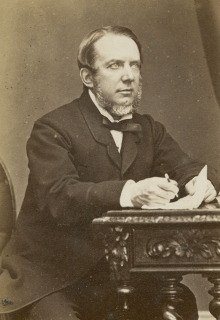
Michael William Balfe, Irish composer best remembered for his opera The Bohemian Girl, dies in Dublin on October 20, 1870.

Balfe is born in Dublin on May 15, 1808, where his musical gifts become apparent at an early age. He receives instruction from his father, a dancing master and violinist, and the composer William Rooke. His family moves to Wexford when he is a child.

In 1817, Balfe appears as a violinist in public, and in this year composes a ballad, first called “Young Fanny” and afterwards, when sung in Paul Pry by Lucia Elizabeth Vestris, “The Lovers’ Mistake”. In 1823, upon the death of his father, he moves to London and is engaged as a violinist in the orchestra of the Theatre Royal, Drury Lane. He eventually becomes the leader of that orchestra. While there, he studies violin with Charles Edward Horn and composition with Charles Frederick Horn.

While still playing the violin, Balfe pursues a career as an opera singer. He debuts unsuccessfully at Norwich in Carl Maria von Weber‘s Der Freischütz. In 1825, Count Mazzara takes him to Rome for vocal and musical studies and introduces him to Luigi Cherubini. In Italy, he also pursues composing, writing his first dramatic work, a ballet, La Perouse. He becomes a protégée of Gioachino Rossini‘s, and at the close of 1827, he appears as Figaro in The Barber of Seville at the Italian opera in Paris.

Balfe soon returns to Italy, where he is based for the next eight years, singing and composing several operas. In 1829 in Bologna, he composes his first cantata for the soprano Giulia Grisi, then 18 years old. He produces his first complete opera, I rivali di se stessi, at Palermo in the carnival season of 1829—1830.

Balfe returned to London in May 1835. His initial success takes place some months later with the premiere of The Siege of Rochelle on October 29, 1835, at Drury Lane. Encouraged by his success, he produces The Maid of Artois in 1836, which is followed by more operas in English. In July 1838, Balfe composes a new opera, Falstaff, for The Italian Opera House, based on The Merry Wives of Windsor, with an Italian libretto by S. Manfredo Maggione.

In 1841, Balfe founds the National Opera at the Lyceum Theatre, but the venture is a failure. The same year, he premieres his opera, Keolanthe. He then moves to Paris, presenting Le Puits d’amour in early 1843, followed by his opera based on Les quatre fils Aymon for the Opéra-Comique and L’étoile de Seville for the Paris Opera. Meanwhile, in 1843, he returns to London where he produces his most successful work, The Bohemian Girl, on November 27, 1843, at the Theatre Royal, Drury Lane. The piece runs for over 100 nights, and productions are soon mounted in New York, Dublin, Philadelphia, Vienna, Sydney, and throughout Europe and elsewhere.

From 1846 to 1852, Balfe is appointed musical director and principal conductor for the Italian Opera at Her Majesty’s Theatre. There he first produces several of Giuseppe Verdi‘s operas for London audiences. He conducts for Jenny Lind at her opera debut and on many occasions thereafter.

In 1851, in anticipation of The Great Exhibition in London, Balfe composes an innovative cantata, Inno Delle Nazioni, sung by nine female singers, each representing a country. He continues to compose new operas in English, including The Armourer of Nantes (1863), and writes hundreds of songs. His last opera, nearly completed when he dies, is The Knight of the Leopard and achieves considerable success in Italian as Il Talismano.

Balfe retires in 1864 to Hertfordshire, where he rents a country estate. He dies at his home in Rowney Abbey, Ware, Hertfordshire, on October 20, 1870, and is buried at Kensal Green Cemetery in London, next to fellow Irish composer William Vincent Wallace. In 1882, a medallion portrait of him is unveiled in Westminster Abbey.

In all, Balfe composes at least 29 operas. He also writes several cantatas and a symphony. His only large-scale piece that is still performed regularly today is The Bohemian Girl.


2 Comments

Birth of Activist Mary Ellen Spring Rice

mary-ellen-spring-rice

Mary Ellen Spring Rice, Irish nationalist activist during the early 20th century, is born into an aristocratic Anglo-Irish family in London, England on October 14, 1880.

Spring Rice is the daughter of Thomas Spring Rice, 2nd Baron Monteagle of Brandon, and a great-granddaughter of the British Chancellor of the Exchequer, Thomas Spring Rice, 1st Baron Monteagle of Brandon. Her maternal grandfather is the bishop, Samuel Butcher. She is brought up on the family’s Mount Trenchard estate overlooking the River Shannon. It is a progressive, liberal household and independence of thought is encouraged. So too is the Gaelic culture and, at home, she and her brothers are taught how to fluently speak the Irish language.

Before World War I, Spring Rice hosts many Irish nationalist and Conradh na Gaeilge meetings at her home, and she becomes a close friend of Douglas Hyde and her cousin Nelly O’Brien. During 1913 and 1914, she is actively involved in gun-running, most notably the Howth gun-running.

This involves helping to ship weapons to be used in an Irish uprising from Germany into Ireland. Together with Molly Childers, she raises £2,000 towards the purchase of 900 Mauser rifles from Germany, many of which are used in the 1916 Easter Rising. She sails on the Asgard to collect the guns and helps to unload them in Ireland.

During the Irish War of Independence, Spring Rice allows her Mount Trenchard home to be used as a safe house by Irish Republican Army fighters and the family boat is used to carry men and arms over the Shannon Estuary.

Con Collins stays with Spring Rice regularly. She helps train local women as nurses to tend to wounded nationalists and acts as an IRA message carrier between Limerick and Dublin. Throughout this time, she maintains her aristocratic façade and society connections, inviting senior Liberal Party politicians to Mount Trenchard to pressure them to support Irish independence.

Spring Rice starts to suffer from tuberculosis in 1923, and dies unmarried in a sanatorium in Clwyd, Wales, on December 1, 1924. She is buried in Ireland, where her coffin is draped in the Irish tricolour and escorted by an IRA guard of honour.

(Pictured: Mary Ellen Spring-Rice and Molly Childers with the German guns on board Asgard, 1914.)


Leave a comment

Birth of Charles Monck, 1st Governor General of Canada

charles-stanley-monck

Charles Stanley Monck, 4th Viscount Monck GCMG PC, the last Governor-General of the Province of Canada and the first Governor General of Canada after Canadian Confederation, is born on October 10, 1819 in Templemore, County Tipperary. Prior to Confederation he is concurrently Lieutenant Governor of both Canada West and Canada East. He is the son of Charles Monck, 3rd Viscount Monck, and his wife Bridget née Willington.

Monck obtains a law degree from Trinity College, Dublin. He marries his first cousin Lady Elizabeth Louise Mary Monck on July 24, 1844, and in 1849 he inherits his father’s title of Viscount Monck. In 1852 he is elected MP for Portsmouth, and from 1855 to 1858 he serves as Lord of the Treasury under Henry John Temple, 3rd Viscount Palmerston.

In 1861 Monck is appointed Governor General of British North America as well as Governor of the Province of Canada. During this time, the Canadian colonies are beginning to organise themselves into a confederation. The American Civil War has just broken out, and the Trent Affair causes diplomatic tension between the United States and Britain. The Canadian government is eager to gain some measure of independence during this turbulent period. The Quebec Conference, the Charlottetown Conference, and the London Conference, at which the details of confederation are discussed, all take place during Monck’s time as governor. Monck supports the idea, and works closely with John A. Macdonald, George Brown, George-Étienne Cartier, and Étienne-Paschal Taché, who form the “Great Coalition” in 1864.

In 1866 Monck becomes a peer with the title Baron Monck. When the Canadian colonies become a semi-independent confederation the next year, he becomes the country’s first Governor General. He is also responsible for establishing Rideau Hall as the residence of the Governor General in Ottawa.

In 1869 Monck is succeeded by John Young, 1st Baron Lisgar. He returns home to Ireland, where he becomes Lord Lieutenant of Dublin in 1874. He dies in Enniskerry, County Wicklow on November 29, 1894.


Leave a comment

Birth of Richard D’Alton Williams, Physician & Poet

richard-dalton-williams

Richard D’Alton Williams, physician and poet, is born in Dublin on October 8, 1822. He is the son of James and Mary Williams, who come from County Westmeath. He grows up in Grenanstown, a townland near the Devil’s Bit in County Tipperary, where his father farms for Count Dalton. He is educated at Tullabeg Jesuit College and St. Patrick’s, Carlow College.

Williams becomes a member of the Young Ireland movement and contributes poetry to The Nation under the pseudonym “Shamrock.” He is immediately successful. In the January 21, 1843 edition there appears: “Shamrock is a jewel. He cannot write too often. His verses are full of vigour, and as natural as the harp of Tara.”

Later in 1843 Williams goes to Dublin to study medicine at Saint Vincent’s Hospital. In 1848 he brings out a newspaper, the Irish Tribune, to take the place of the suppressed United Irishman, founded by John Mitchel. Before the sixth weekly publication, it is seized by the Government, and proceedings are instituted against the editors, Williams and his friend Kevin Izod O’Doherty. On October 30, 1848, at a third trial, O’Doherty is convicted of treason and transported to Australia while Williams is successfully defended by lawyer and fellow poet Samuel Ferguson two days afterwards on the same charge. He then resumes his medical studies, takes out his degree at Edinburgh, Scotland in 1849 and emigrates to the United States in 1851.

Williams is married to Elizabeth Connolly on September 8, 1856, with whom he has four children of whom the youngest is commemorated in Lines on the Death of his Infant Daughter, Katie.

In the United States Williams practises medicine until he becomes ill and dies of tuberculosis in Thibodaux, Louisiana on July 5, 1862. He is buried there in St. Joseph’s Cemetery. His headstone is later erected that year by Irish members of the 8th New Hampshire Volunteer Infantry, then encamped in Thibodaux.


Leave a comment

Death of Charles Stewart Parnell

charles-stewart-parnell

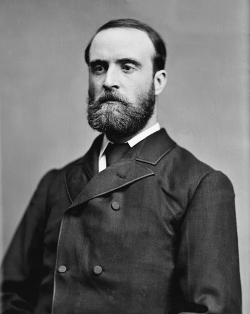
Charles Stewart Parnell, Irish nationalist politician and one of the most powerful figures in the British House of Commons in the 1880s, dies of pneumonia at age 45 in Hove, East Sussex, England on October 6, 1891.

Born into a wealthy and powerful Anglo-Irish Protestant landowning family in County Wicklow on June 27, 1846, Parnell enters the House of Commons in 1875. He is a land reform agitator and becomes leader of the Home Rule League in 1880, insisting on operating independently of the Liberals, and winning great influence by his balancing of constitutional, radical, and economic issues, and by his skillful use of parliamentary procedure. He is imprisoned in Kilmainham Gaol in 1882 but, being a very capable negotiator, is released when he renounces violent extra-Parliamentary action in an informal agreement, the Kilmainham Treaty, with British Prime Minister William Ewart Gladstone. That same year he reforms the Home Rule League as the Irish Parliamentary Party, which he controls minutely as Britain’s first disciplined democratic party.

The hung Parliament of 1885 sees him hold the balance of power between Gladstone’s Liberals and Robert Gascoyne-Cecil, 3rd Marquess of Salisbury‘s Conservatives. His power is one factor in Gladstone’s adoption of Home Rule as the central tenet of the Liberal Party. His reputation peaks in 1889-1890 when letters published in The Times linking him to the Phoenix Park murders of 1882 are shown to have been forged by Richard Pigott. However, the Irish Parliamentary Party splits in 1890 after the revelation of Parnell’s long adulterous love affair, causing many English Liberals, many of them nonconformists, to refuse to work with him, and strong opposition from Catholic bishops. He heads a small minority faction until his death in 1891.

parnell-marker

In describing Parnell, Gladstone says, “I do not say the ablest man; I say the most remarkable and the most interesting. He was an intellectual phenomenon.” Liberal leader H. H. Asquith calls him as one of the three or four greatest men of the 19th century, while Richard Haldane, 1st Viscount Haldane describes him as the strongest man the House of Commons has seen in 150 years. Historian A.J.P. Taylor says, “More than any other man he gave Ireland the sense of being an independent nation.”

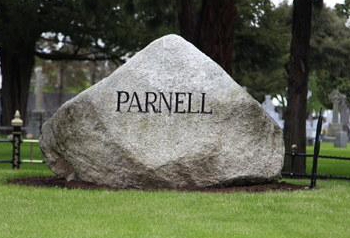
Charles Stewart Parnell dies of pneumonia at age 45 in his home at 10 Walsingham Terrace, Hove, England on October 6, 1891, in the arms of his wife Katharine. Though an Anglican, his funeral on October 11 is at the Irish National nondenominational Glasnevin Cemetery in Dublin and is attended by more than 200,000 people. His notability is such that his gravestone of unhewn Wicklow granite, erected in 1940, reads only “Parnell.”


Leave a comment

Birth of Brian O’Nolan, Novelist & Playwright

brian-o-nolan

Brian O’Nolan, Irish novelist, playwright and satirist considered a major figure in twentieth century Irish literature, is born in Strabane, County Tyrone on October 5, 1911.

O’Nolan attends Blackrock College where he is taught English by President of the College, and future Archbishop, John Charles McQuaid. He also spends part of his schooling years in Synge Street Christian Brothers School. His novel The Hard Life is a semi-autobiographical depiction of his experience with the Christian Brothers.

O’Nolan writes prodigiously during his years as a student at University College, Dublin (UCD), where he is an active, and controversial, member of the well-known Literary and Historical Society. He contributes to the student magazine Comhthrom Féinne (Fair Play) under various guises, in particular the pseudonym Brother Barnabas. Significantly, he composes a story during this same period titled “Scenes in a Novel (probably posthumous) by Brother Barnabas”, which anticipates many of the ideas and themes later to be found in his novel At Swim-Two-Birds.

In 1934 O’Nolan and his student friends found a short-lived magazine called Blather. The writing here, though clearly bearing the marks of youthful bravado, again somewhat anticipates O’Nolan’s later work, in this case his Cruiskeen Lawn column as Myles na gCopaleen. Having studied the German language in Dublin, he may have spent at least parts of 1933 and 1934 in Germany, namely in Cologne and Bonn, although details are uncertain and contested.

A key feature of O’Nolan’s personal situation is his status as an Irish government civil servant, who, as a result of his father’s relatively early death, is obliged to support ten siblings, including an elder brother who is an unsuccessful writer. Given the desperate poverty of Ireland in the 1930s to 1960s, a job as a civil servant is considered prestigious, being both secure and pensionable with a reliable cash income in a largely agrarian economy. The Irish civil service is fairly strictly apolitical, prohibiting Civil Servants above the level of clerical officer from publicly expressing political views. This fact alone contributes to his use of pseudonyms, though he had started to create character-authors even in his pre-civil service writings. He rises to be quite senior, serving as private secretary to Seán T. O’Kelly and Seán McEntee.

Although O’Nolan is a well-known character in Dublin during his lifetime, relatively little is known about his personal life. On December 2, 1948, he marries Evelyn McDonnell, a typist in the Department of Local Government. On his marriage he moves from his parental home in Blackrock to nearby Merrion Street, living at several further locations in South Dublin before his death. The couple has no children.

O’Nolan is an alcoholic for much of his life and suffers from ill health in his later years. He suffers from throat cancer and dies from a heart attack in Dublin on the morning of April 1, 1966.


Leave a comment

Birth of Charles Villiers Stanford, Composer & Conductor

charles-villiers-stanford

Sir Charles Villiers Stanford, composer, music teacher, and conductor, is born in Dublin on September 30, 1852.

Stanford is born into a well-off and highly musical family, the only son of John James Stanford, a prominent Dublin lawyer, Examiner to the Court of Chancery in Ireland and Clerk of the Crown for County Meath, and his second wife, Mary, née Henn. He is educated at the University of Cambridge before studying music in Leipzig and Berlin. He is instrumental in raising the status of the Cambridge University Musical Society, attracting international stars to perform with it.

While still an undergraduate, Stanford is appointed organist of Trinity College, Cambridge. In 1882, at the age of 29, he is one of the founding professors at the Royal College of Music, where he teaches composition for the rest of his life. From 1887 he is also Professor of Music at Cambridge. As a teacher, he is skeptical about modernism and bases his instruction chiefly on classical principles as exemplified in the music of Johannes Brahms. Among his pupils are rising composers whose fame go on to surpass his own, such as Gustav Holst and Ralph Vaughan Williams. As a conductor, he holds posts with the Bach Choir and the Leeds Triennial Music Festival.

Stanford composes a substantial number of concert works, including seven symphonies, but his best-remembered pieces are his choral works for church performance, chiefly composed in the Anglican tradition. He is a dedicated composer of opera, but none of his nine completed operas has endured in the general repertory. Some critics regard him, together with Hubert Parry and Alexander Mackenzie, as responsible for a renaissance in music from the British Isles. However, after his conspicuous success as a composer in the last two decades of the 19th century, his music is eclipsed in the 20th century by that of Edward Elgar as well as former pupils.

In September 1922, Stanford completes the sixth Irish Rhapsody, his final work. Two weeks later he celebrates his 70th birthday and thereafter his health declines. On March 17, 1924, he suffers a stroke and dies on March 29 at his home in London, survived by his wife and children. He is cremated at Golders Green Crematorium on April 2 and his ashes are buried in Westminster Abbey the following day.

Stanford’s last opera, The Travelling Companion, composed during World War I, is premiered by amateur performers at the David Lewis Theatre, Liverpool in 1925 with a reduced orchestra. The work is given complete at Bristol in 1928 and at Sadler’s Wells Theatre, London, in 1935.

Stanford receives many honours, including honorary doctorates from University of Oxford (1883), University of Cambridge (1888), Durham University (1894), University of Leeds (1904), and Trinity College, Dublin (1921). He is knighted in 1902 and in 1904 is elected a member of the Prussian Academy of Arts, Berlin.


Leave a comment

Birth of Seán Keating, Romantic-Realist Painter

sean-keating-an-allegory

Seán Keating, Irish romantic-realist painter who painted some iconic images of the Irish War of Independence and of the early industrialization of Ireland, is born in Limerick, County Limerick on September 28, 1889.

Keating studies drawing at the Limerick Technical School before a scholarship arranged by William Orpen allows him to go study at the Metropolitan School of Art in Dublin at the age of twenty. Over the next few years, he spends two weeks or so during the late summer on the Aran Islands and his many portraits of island people depict them as rugged heroic figures.

In 1914 he wins the RDS Taylor award with a painting titled The Reconciliation. The prize includes £50.00 which allows him to go to London to work as Orpen’s studio assistant in 1915. In late 1915 or early 1916, he returns to Ireland where he documents the Irish War of Independence and the subsequent Irish Civil War. Examples include Men of the South (1921–22) which shows a group of Irish Republican Army (IRA) men ready to ambush a military vehicle and An Allegory (first exhibited in 1924), in which the two opposing sides in the Irish Civil War are seen to bury the tri-colour covered coffin amid the roots of an ancient tree. The painting includes a self-portrait of the artist.

Keating is elected an Associate of the Royal Hibernian Academy (RHA) in 1918, and a full member in 1923. One of the cardinal achievements of the Irish Free State in the 1920s is the building, in partnership with Siemens, of a hydro-electric power generator at Ardnacrusha, near Limerick. Between 1926 and 1927, at his own volition, he produces a considerable number of paintings related to this scheme. He exhibits several examples of the paintings in the RHA exhibitions in 1927 and 1928. Most of the paintings are now in the collection of ESB Group.

In 1936 group of prominent Limerick politicians, artists and patrons establish the first Limerick City Collection of Art from various donations and bequests. Keating is part of this artist-led initiative to form a municipal art gallery in Limerick similar to those already in Dublin and Cork. The collection is formed primarily out of donations and bequests. As a pivotal member of the committee, Keating himself donates many works to the collection which is first exhibited as a municipal collection in the Savoy Cinema, Limerick City on November 23, 1937. It is not until 1948 that an extension to the rear of Limerick Free Library and Museum becomes the home to the City Collection as the Limerick Free Art Gallery. In 1985 the Library and Museum are transferred to larger buildings.

In 1939 Keating is commissioned to paint a mural for the Irish pavilion at the New York World’s Fair. He is President of the RHA from 1950 to 1962, and shows at the annual exhibition for 61 years from 1914. Although he is an intellectual painter in the sense that he consciously sets out to explore the visual identity of the Irish nation, and his paintings show a very idealised realism, he fears that the modern movement will bring back a decline in artistic standards. Throughout his career, he exhibits nearly 300 works at the RHA and also shows at the Oireachtas.

Seán Keating dies on December 21, 1977 at the Adelaide Hospital in Dublin and is buried at Cruagh Cemetery, Rathfarnham. The 1978 RHA Exhibition features a small memorial collection of his work.

Posthumous exhibitions of his work are mounted by The Grafton Gallery, Dublin (1986) and the Electricity Supply Board (1987). Sean Keating – The Pilgrim Soul, a documentary presented and written by his son Justin Keating, airs on RTÉ in 1996.

(Pictured: Photograph of Keating’s “An Allegory” painted between 1922 and 1924. The painting represents Keating’s own disillusionment and loss of idealism resulting from the outbreak of the Irish Civil War. The only figure of the group addressing the observer is a self-portrait of the artist.)


Leave a comment

Drowning of Anna Catherine Parnell

anna-catherine-parnell

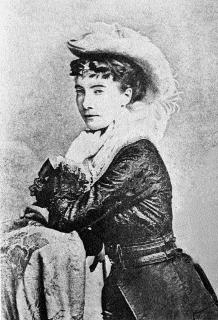
Anna Catherine Parnell, Irish nationalist and younger sister of Irish Nationalist leader Charles Stewart Parnell, drowns at Ilfracombe, Devon, England on September 20, 1911.

Parnell is born at Avondale House near Rathdrum, County Wicklow, the tenth of eleven children of John Henry Parnell, a landlord, and Delia Tudor Stewart Parnell, an Irish American and daughter of Admiral Charles Stewart of the United States Navy. She has very little formal education as a child, but the family has an extensive library which she is encouraged to read by her mother. After her father dies in 1859, she moves with the family to Dublin. Delia Parnell is an active socialite while in Dublin and exposes her children to a wide variety of political views.

In 1865 the family moves to Paris, but Parnell feels stifled by upper class society rules imposed upon her. She is in Paris when the Franco-Prussian War breaks out in 1870 and is active in the American Ladies’ Committee fundrasing and setting up hospitals. She returns alone to Dublin in 1870 to study art.

Parnell moves to London in 1875 to continue studying art. When her brother Charles is elected as a Member of Parliament (MP) for Meath, she becomes increasingly political. She frequently visits Parliament during debates, sitting in the Ladies’ Gallery. She writes articles about the debates in a column titled Notes From the Ladies’ Cage in the Celtic Monthly. In 1879 she joins her sister, Fanny Parnell, a poet, in New York City where they raise money in support of the Irish National Land League. The sisters work closely with their brother Charles and Michael Davitt but are critical of how the funds raised in America are being used in Ireland. In October 1880 the sisters found the New York Ladies’ Land League with their mother as president. They raised thousands of dollars sent to Ireland.

Parnell returns in Dublin in late 1880. When it seems that the Land League men are likely to be arrested, it is suggested that a women’s league in Ireland could take over the work in their absence. Public opinion at the time is against women in politics, but the Ladies’ Land League is founded on January 31, 1881, with Parnell as its effective leader.

When Charles Parnell and other leaders are imprisoned in 1881, as predicted, the Ladies’ Land League takes over their work. Though it is envisioned as a place holder until the men are released, Parnell organises branches throughout Ireland, encouraging women to play an active role in Land League activities. Offices are given to the ladies but little help. They raise funds for the League and for the support of prisoners and their families. They distribute Land League wooden huts to shelter evicted tenant families and by the beginning of 1882 they have 500 branches, thousands of women members and considerable publicity. They distribute £60,000 in relief aid.

This puts the Ladies’ Land League in serious debt. Parnell approaches her brother Charles, requesting money to settle the debts. Charles, who distrusts her understanding of politics, agrees to provide the money under the condition that the Ladies’ Land League is disbanded. She agrees, disbanding in 1882, but she never forgives Charles.

After her brother’s death in 1891 Parnell lives the rest of her life in the south of England under the assumed name Cerisa Palmer. She writes an angry account of her Land League experiences in Tale of a Great Sham, which is not published until 1986. She makes one last political appearance when she campaigns for a Sinn Féin candidate in a 1907 by-election.

By the summer of 1911, the 59-year-old Parnell is staying in lodgings at Ilfracombe in Devon. An enthusiastic swimmer since childhood, she bathes every day, and on September 20, disregarding a warning of dangerous seas, she goes swimming as usual. She is seen to be in difficulties and the alarm is raised, but by the time rescuers reached her, she is dead. Unlike her brother, whose funeral in Dublin had been the occasion for a massive outpouring of grief and remorse, Anna Parnell was buried quietly in the churchyard of Holy Trinity Church in Ilfracombe, in the presence of just seven strangers, and far away from the scenes of her greatest efforts and notoriety.


Leave a comment

Alleged Marriage of Catherine Coll & Juan Vivion de Valera

catherine-and-eamon-de-valera

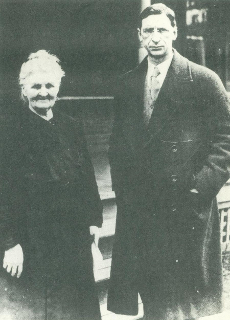
Allegedly, Catherine Coll and Juan Vivion de Valera are married in St. Patrick’s Church, Greenville, New Jersey on September 19, 1881. They are the parents of Irish statesman and politician Éamon de Valera, who serves as the 3rd President of Ireland and Taoiseach.

Catherine Coll is born on December 21, 1856, in Bruree, County Limerick and emigrates to New York City in 1879. She first takes a job with a wealthy French family that is living in Manhattan. This is where she allegedly meets Juan Vivion de Valera (born 1854), a Spanish sculptor who comes to the home of her employers to give music lessons to the children.

It is alleged that Vivion de Valera, always in poor health, leaves his young family behind in 1885 and travels to Colorado, hoping that perhaps the healthier air will help him out only to die within a few months.

Though Éamon de Valera’s official biography (Longford/O’Neill, Hutchinson, London, 1970) states that his parents were married at St. Patrick’s Church on September 19, 1881, the parish records show no record of any Coll–de Valera wedding either at St. Patrick’s or any church, nor were any civil records found, in the vicinity during the period from 1875 to 1887. Also, initially de Valera is not registered in his father’s name.

However, not merely is there no record of the wedding. No record exists of the existence of a “Juan Vivion de Valera” anywhere in the United States: no birth certificate, no baptismal certificate (if he was a Catholic), no marriage certificate and no death certificate. While it is possible that he was born abroad and so either had a foreign birth certificate or was not registered, the absence of a death certificate for someone stated definitely in Éamon de Valera’s family history to have died in the United States has puzzled researchers. Some scholars have questioned whether Juan Vivion de Valera ever existed.

There has been a mischievous suggestion that he was related to the French painter Achille Devéria as Éamon de Valera “was known to be particularly fond of his works.” This claim is hardly likely given that Devéria was a painter of erotica, and de Valera nothing if not a prude. It should also be noted that Devéria died in 1857, at least 20 years before Éamon de Valera was born.

It has also been alleged by some that Catherine Coll invented Juan de Valera to give her son legitimacy.

(Pictured: Irish republican leader and founder of Fianna Fail, Éamon de Valera, with his mother Catherine Coll, April 01, 1927)